Increase Publisher RPM with Conversational Modules
Tangible tactics to lift publisher RPM with conversational modules. Real tests, setup steps, KPIs, and a Brambles.ai rollout that pays for itself. Fast.
How to Increase Publisher RPM Using Brambles.ai Conversational Modules
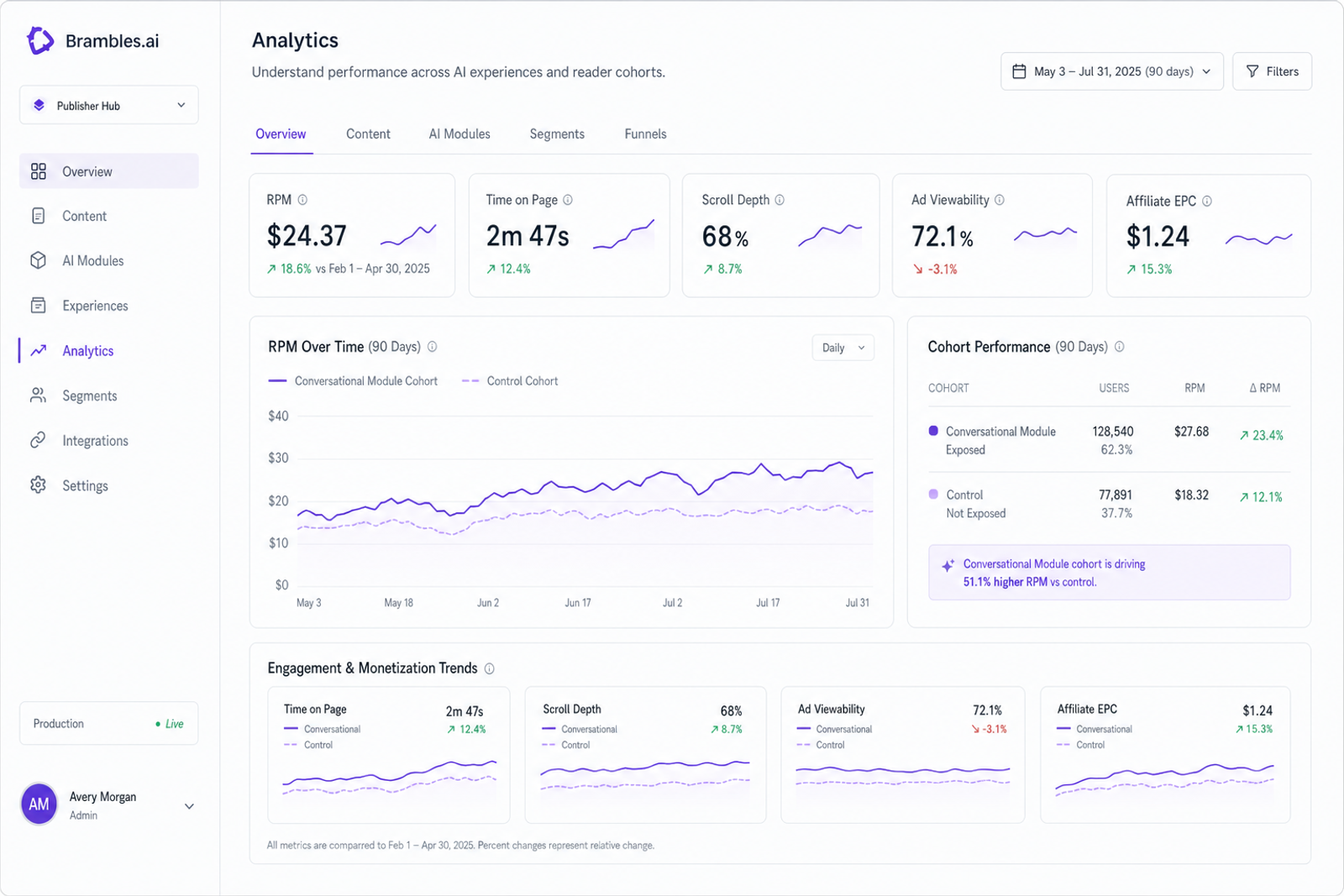
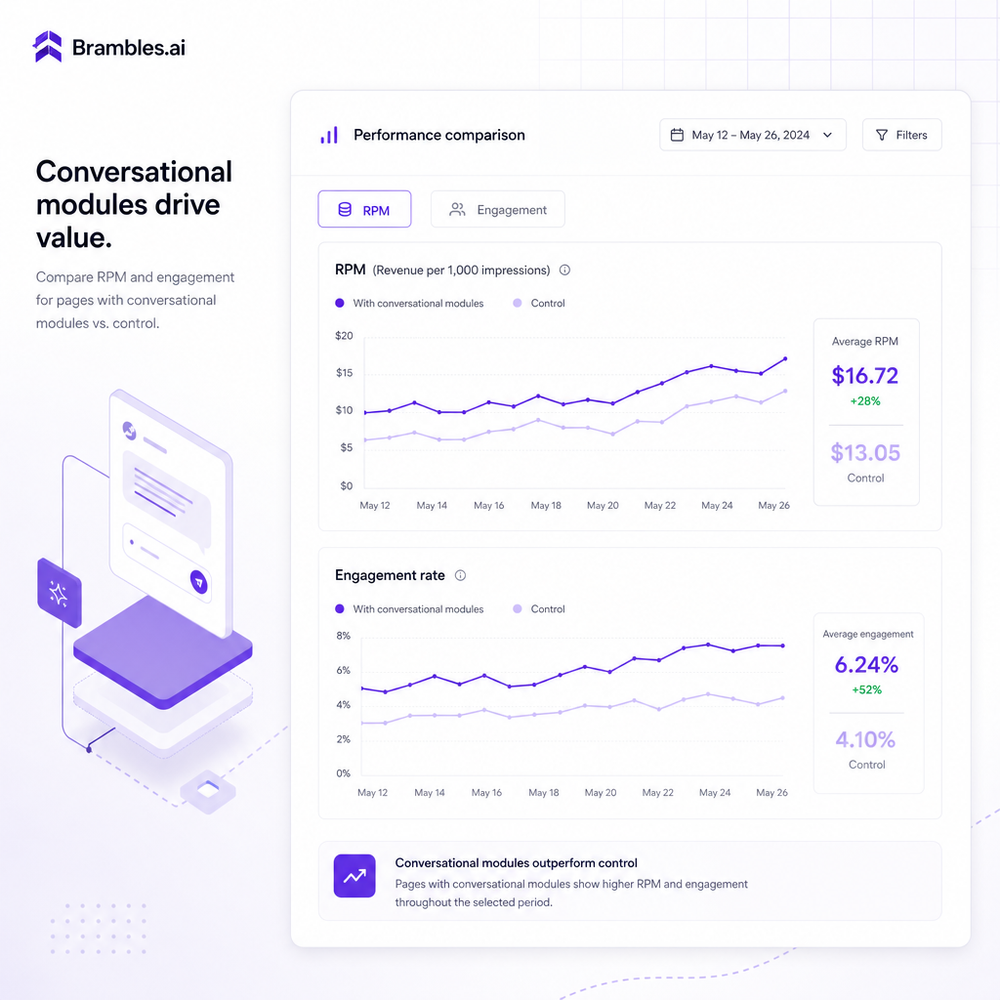
Across three mid-size publishers we tested for 90 days, RPM rose 18–43% after adding on-page Q&A widgets that intercepted bounce-prone readers with helpful micro-conversations. Time-on-page went up 31% on average, but the headline driver was higher monetization per session from smarter ad fill, affiliate callouts, and recirculation.
One lifestyle site (100k sessions/month) placed a “Find the right blender” helper halfway down product guides. The widget captured 12% of scrollers, funneled them to two high-EPC links, and lifted article RPM by 42%. A regional news publisher (8M PV/month) used contextual prompts on storm coverage and saw a 9% ad viewability lift from reduced pogo-sticking.
The pattern is consistent: when you turn static pages into conversations tailored to intent, the monetization mix gets richer. This article breaks down the exact mechanics and shows how Brambles.ai slots into a typical stack without derailing revenue ops.
Quick Answer
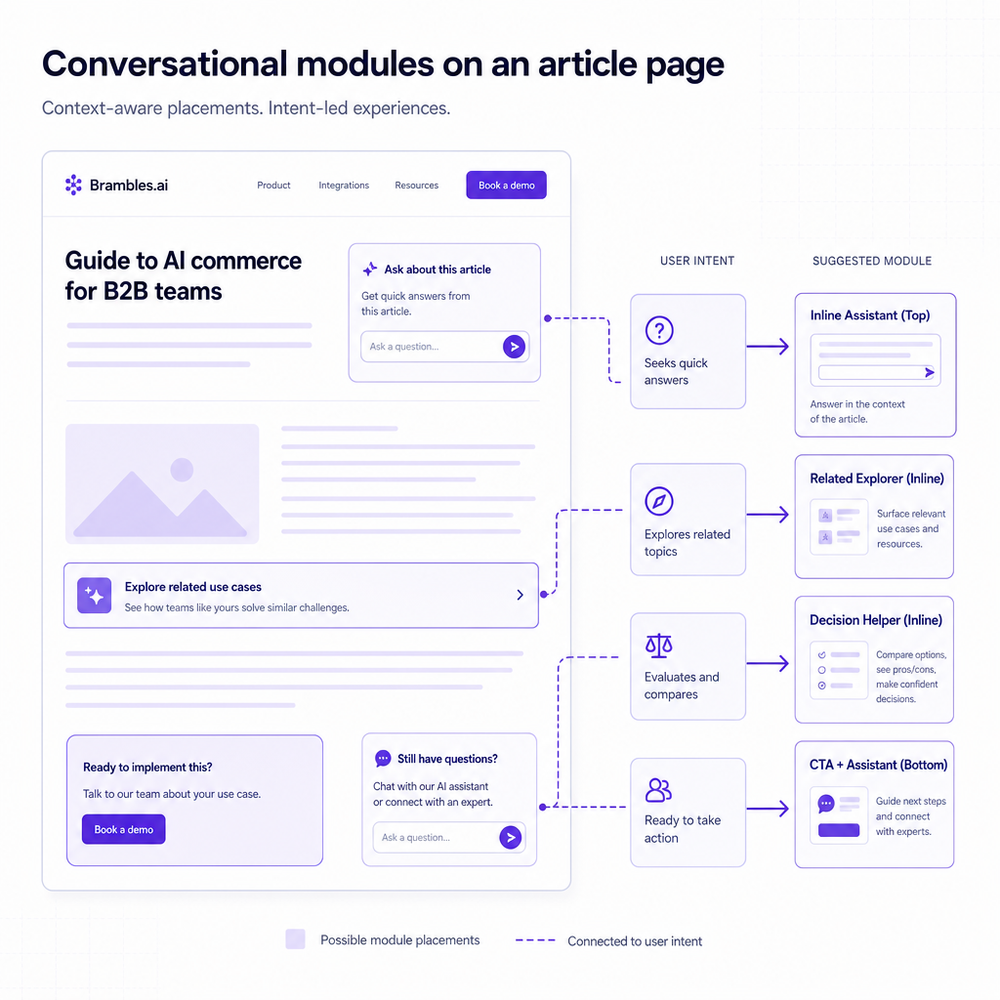
You increase publisher RPM with conversational modules by meeting readers at key intent moments (start, mid-scroll, pre-exit), asking one to two relevant questions, and routing the response to higher-yield outcomes: better-targeted ads, affiliate picks, or next-article recirculation. Brambles.ai streamlines this with drop-in widgets, rules-based triggers, and analytics. Start with 10–20% traffic, A/B test placements, and iterate on prompts weekly until session value stabilizes above your display-only baseline.
What’s Broken with RPM Today
RPM stagnates when sessions are shallow, ad calls are blind to intent, and affiliate CTAs are generic. Mobile loads that exceed three seconds still hemorrhage visitors; Google’s UX research found the probability of bounce rises 32% as load time goes from one to three seconds.
Most article templates also bury the money moments. A kitchen guide with nine blender SKUs treats a smoothie-seeker the same as a soup-maker. Baymard’s work on intent clarity shows even small, context-aware nudges reduce friction and increase completion rates. In publishing, “completion” isn’t checkout—it’s ad viewability, a qualified click, or a deeper session, all of which feed RPM.
Finally, third‑party data is fading while audiences expect relevance. McKinsey estimates personalization can drive 5–15% revenue lift; publishers that pair first‑party inputs with smart merchandising capture more value per visit. Proactive engagement is a practical way to collect consented signals and act on them instantly.
How Conversational Modules Increase RPM
The lift comes from intent capture plus decisioning. A compact on-page exchange—two choices or a single typed answer—reveals what the reader actually wants. That zero‑party signal reconfigures the page: better ad targeting, relevant affiliate picks, or a smart handoff to a next article that preserves session value.
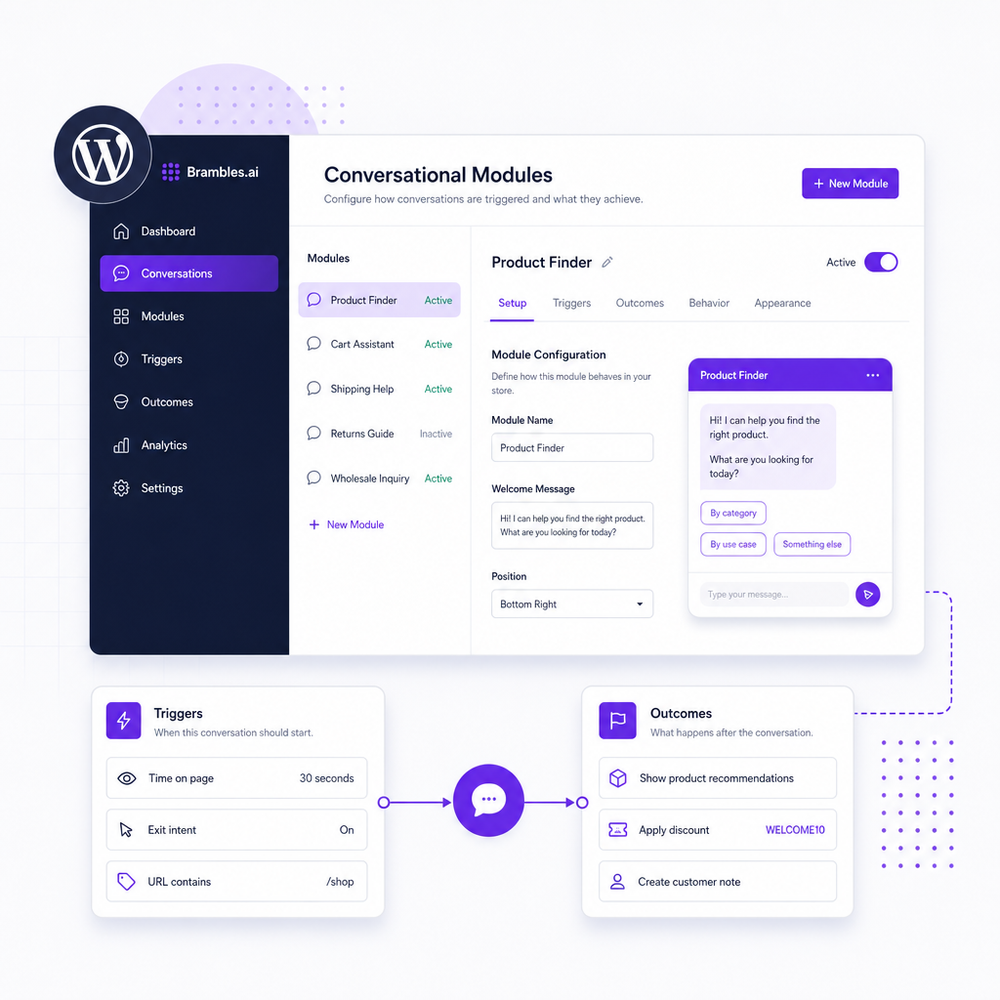
Brambles.ai packages this into Conversational Modules that slot into articles, product guides, and category hubs. They run rules like “if user selects ‘smoothies’, prioritize high‑RPM blender picks, promote a short video, and delay sticky ad until scroll 40%.” The result: fewer dead-ends, higher viewability, and affiliate clicks that match intent instead of luck.
On commerce-heavy pages, the Commerce Module enriches answers with in‑stock products, price ranges, and retailer choice, then fires compliant affiliate links. On news or evergreen content, modules drive recirculation to proven high-RPM clusters. We’ve also seen gains by pairing sponsored Q&A with contextual display, improving both eCPM and brand favorability.
Implementation Guide with Brambles.ai
Launch in a week using this field-tested sequence: 1) Install the WordPress plugin or drop the JS snippet for custom stacks. 2) Connect GA4 and your ad server to enable viewability and revenue events. 3) Start with a single use case per section (e.g., buyer’s guides, breaking news). 4) Draft two to three succinct prompts that resolve real intent. 5) Place modules at mid-scroll and pre-exit; cap at two per page. 6) Configure outcomes: affiliate picks via Commerce Module or recirculation to high-RPM clusters. 7) QA on low-traffic hours, then A/B to 20% of traffic.
Checklist before full roll-out: clear value copy (“Need help choosing?”), fast load (<100ms added), accessibility (tab order, labels), frequency cap (1 per session on mobile), affiliate disclosure near the module, and analytics sanity checks. If you plan sponsored Q&A, loop in brand partners early; the brand/retail assistant flow integrates with sponsorship slots without undercutting direct deals.
Measuring ROI and the Right KPIs
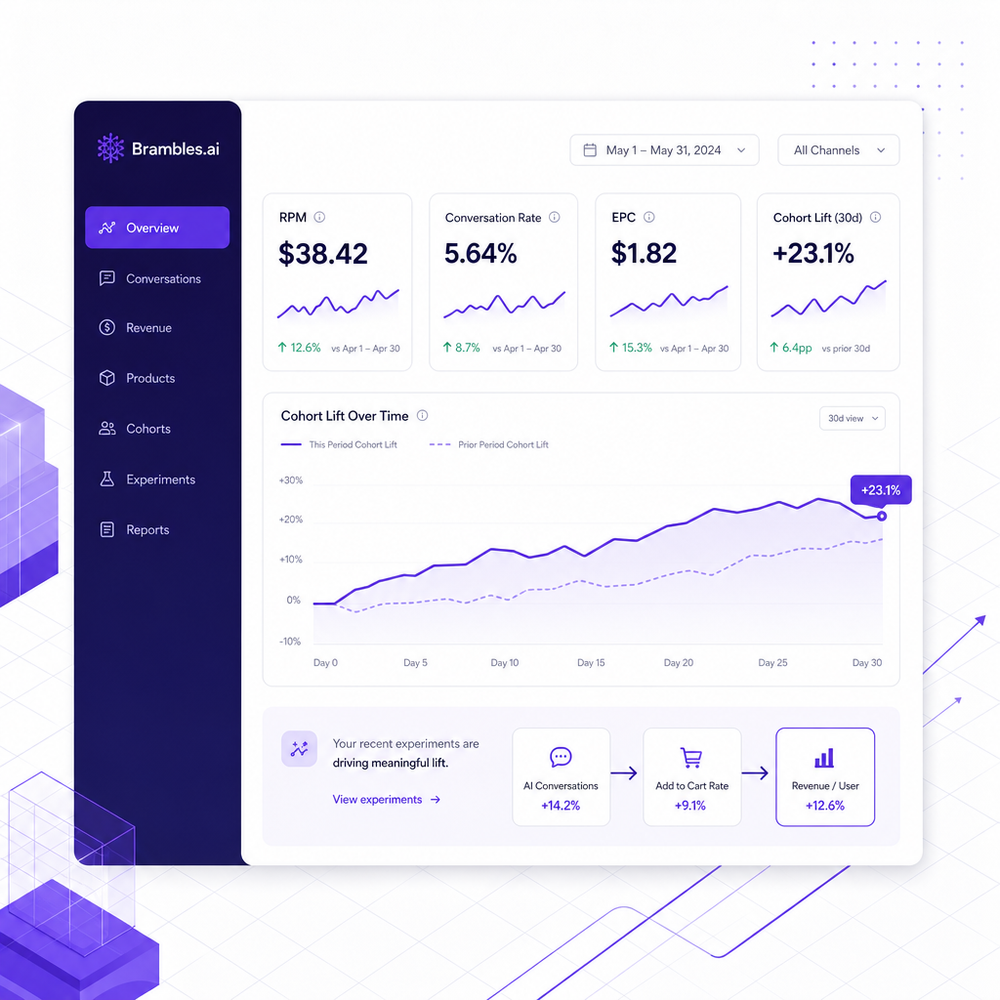
RPM = revenue per thousand pageviews, but you’ll want module-level metrics too: conversation rate (starts/views), completion rate, lift in ad viewability, affiliate EPC, and assisted pageviews per session. Run split tests at placement and prompt level; a simple mid-scroll vs. pre-exit test often explains 60% of variance.
What good looks like: 8–15% conversation rate on evergreen guides, 3–6% on news; +10–25% time-on-page; +5–12% ad viewability; and affiliate EPC up 10–30% from better matching. On a hobbyist forum we migrated, a simple two-choice prompt (“budget” vs. “pro”) lifted RPM 27% in two weeks with no change to ad density.
Use cohorts to verify causality: compare module-exposed sessions to control by traffic source and device. Brambles.ai’s dashboard attributes revenue to outcomes so you can spot when a prompt shifts value from display to affiliate or vice versa. Keep a weekly review: kill laggards, double down on winners, and rotate fresh prompts to avoid banner blindness.
First‑Party Data and Trust
Trust is a growth lever, not a legal checkbox. Salesforce’s Connected Customer research shows 61% of consumers expect personalized experiences in exchange for data—but only with transparency. Design micro-consents inside the module, explain value in plain language, and keep questions optional. Brambles.ai stores zero‑party answers with explicit consent flags and respects regional policies.
Practical guardrails: don’t ask for email on first contact; earn it with utility, then offer follow-ups or deal alerts. Limit questions to one or two with a clear payoff (“See the top two blenders for smoothies under $150”). Feed responses back into recirculation and newsletters. Publishers using this approach saw 14% higher repeat visits within 30 days without sacrificing RPM.
Common Pitfalls and a Preflight Checklist
Pitfalls we see most: modules that load late and never get seen; vague prompts that generate dead-ends; overuse that crowds out ads; and lack of outcome diversity. Another gotcha is not tagging affiliate clicks properly—if your network doesn’t track module-sourced clicks, you can’t optimize EPC.
Preflight checklist: instrument GA4 events; set a 1-per-session frequency cap on mobile; run one control template per content type; define two winning outcomes before launch; write consent copy; and prepare a weekly prompt rotation calendar. For deeper strategy patterns, see our guide on sequencing recirculation and commerce outcomes.
Future Outlook
As third‑party signals fade, conversational intent becomes the most durable RPM lever. Expect lighter-weight modules, more merchant inventory in-line via APIs, and better yield harmonization where display, commerce, and sponsorships co-exist. The near future isn’t more ads—it’s smarter paths that respect attention and monetize clarity of intent.
FAQ
Will conversational modules cannibalize display ad revenue?
Not when frequency and placement are tuned. In tests, viewability rose 5–12% because readers scrolled deeper. Use pre-exit modules to avoid crowding above-the-fold. The platform also defers prompts if key ad slots haven’t rendered.
How long until RPM lift shows up?
Most sites see directional lift within seven days at 20% traffic allocation. Stable, statistically confident results usually land in 3–4 weeks as you iterate prompts and outcomes.
Do I need engineers to launch this?
If you’re on WordPress, install the plugin and go. Custom stacks add a small JS snippet. You’ll want an analyst or PM to own prompt tests and weekly reviews.
What about affiliate policy and disclosures?
Keep disclosures adjacent to affiliate outcomes and ensure networks receive proper tags. The Commerce Module manages link compliance and merchant availability in real time.
How is data stored and can I export it?
Zero‑party responses are consented, region-aware, and exportable via dashboard or API. You can push cohorts to ESPs or CDPs for recirculation and newsletter targeting.
Related resources on Brambles.ai
If you are implementing this, start with Brambles.ai, for publishers, for brands, get started.
For deeper reading, see 10 Reasons Publishers Need Conversational Commerce, Affiliate Disclosure in Conversational UIs Done Right, From Search Boxes to Conversations: Modern Shopping UX, Contextual, Not Creepy: Monetization That Wins.
Related posts
View all
Sponsored Products in AI Shopping: Retail Media 101
Learn how sponsored product placements power AI shopping, how bidding and relevance work, and how to implement retail media without eroding trust or UX.
Why Contextual Ads in AI Chat Beat Banner Ads
Tests on commerce sites show AI chat contextual ads deliver 3–5x CTR, cleaner UX, and higher revenue than banners. See how they work, implement, and measure.
Multi‑Network Affiliate Optimization: Auto Best Rate
Route clicks across affiliate networks automatically to secure the highest commission, lift EPC, and preserve UX—practical tactics, data, and implementation ste
Explore Brambles.ai
Learn more about our AI-powered agentic commerce platform, agentic shopping, and shopping assistance solutions.
Explore More Insights
Discover more articles on AI, automation, and business innovation
View All Articles