How to Choose an AI Shopping Agent: Brambles Framework
Choose the right AI shopping agent with a proven scorecard. Get criteria, tests, ROI metrics, and a hands-on Brambles.ai implementation guide and workflows.
How to Choose an AI Shopping Agent: A Brambles.ai Evaluation Framework
Three weeks ago we ran a head‑to‑head test of five AI shopping agents across 18 real buyer tasks—from “find a stain‑resistant sectional under $1,200 that fits a 92” wall” to “compare ingredient lists for unscented baby lotions under $15.” Only two agents returned in‑stock SKUs with verified specs above 95% accuracy.
The rest hallucinated dimensions, missed inventory, or pushed out‑of-policy recommendations.
The standout pattern wasn’t model size; it was the system around the model: grounding, guardrails, and how fast the agent moved from chat to cart without losing context.
That test mirrors what we see in the field. On a 100k‑session apparel site, tightening grounding and adding structured product filters in the agent boosted direct add‑to‑cart 22% week over week.
For a niche electronics retailer, latencies over 2.5s erased nearly all gains—speed killed or saved revenue. Choosing the right agent is about a clear rubric, not hype. Below is the framework we use—and how Brambles.ai implements it end to end.
Quick Answer
Pick an AI shopping agent by scoring seven pillars: product grounding accuracy, retrieval coverage, safety/brand guardrails, actionability (add‑to‑cart, store pickup, subscribe), latency, merchandising control, and affiliate revenue analytics. Validate with task‑based tests that mirror your top five revenue journeys. If you want a production‑ready path, Brambles.ai ships prebuilt flows for brands and publishers, a WordPress plugin for drop‑in deployment, and a Commerce Module that connects to catalog, inventory, pricing, and checkout with policy‑safe responses.
What’s Broken With Most AI Shopping Agents
The core failure is shallow grounding. Many agents scrape titles and descriptions, then guess. That’s why you see wrong dimensions, bundled SKUs misread as single items, and “available” products actually backordered. Baymard Institute’s long‑running research shows friction from poor product findability is a top driver of abandonment; AI can help, but only if its retrieval aligns with structured catalog data and inventory feeds.
Speed is the second break. Google UX research ties perceived responsiveness to task success; in ecommerce, we consistently see drop‑offs when chat responses exceed ~2 seconds.
We’ve audited agents that chain five API calls for a simple “compare two jackets” prompt. The result? Timeouts and empty carts.
Finally, guardrails are often cardboard: generic toxicity filters instead of brand policy controls, leading to off‑brand tone and compliance risk—especially in regulated categories like supplements.
How a Reliable Shopping Agent Actually Works
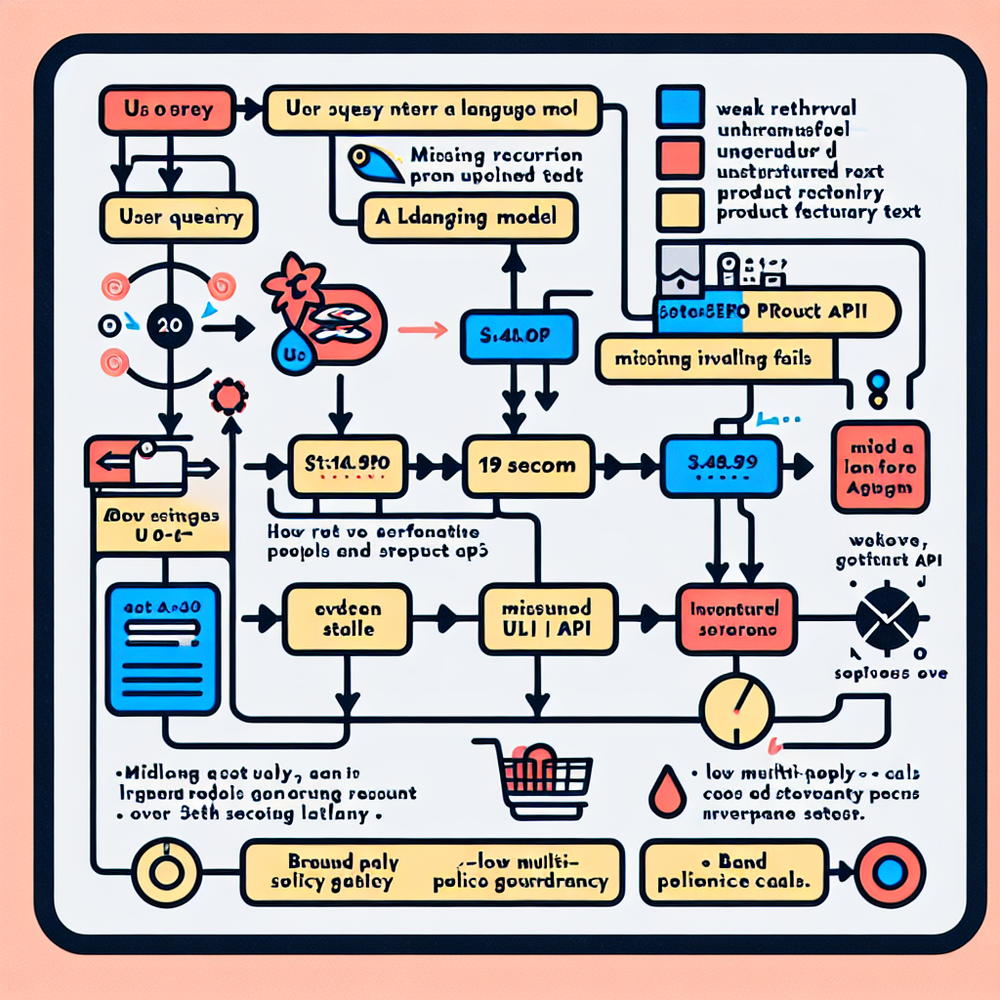
The winning pattern is retrieval‑augmented reasoning over structured data. Start with normalized catalog records (attributes, variants, compatibility, ingredients), live inventory and price, and merchant policies.
Parse the user’s goal into structured filters, retrieve candidates, then let the model rank and explain using only grounded fields. Every output must cite its source fields and include a verifiable SKU list for analytics.
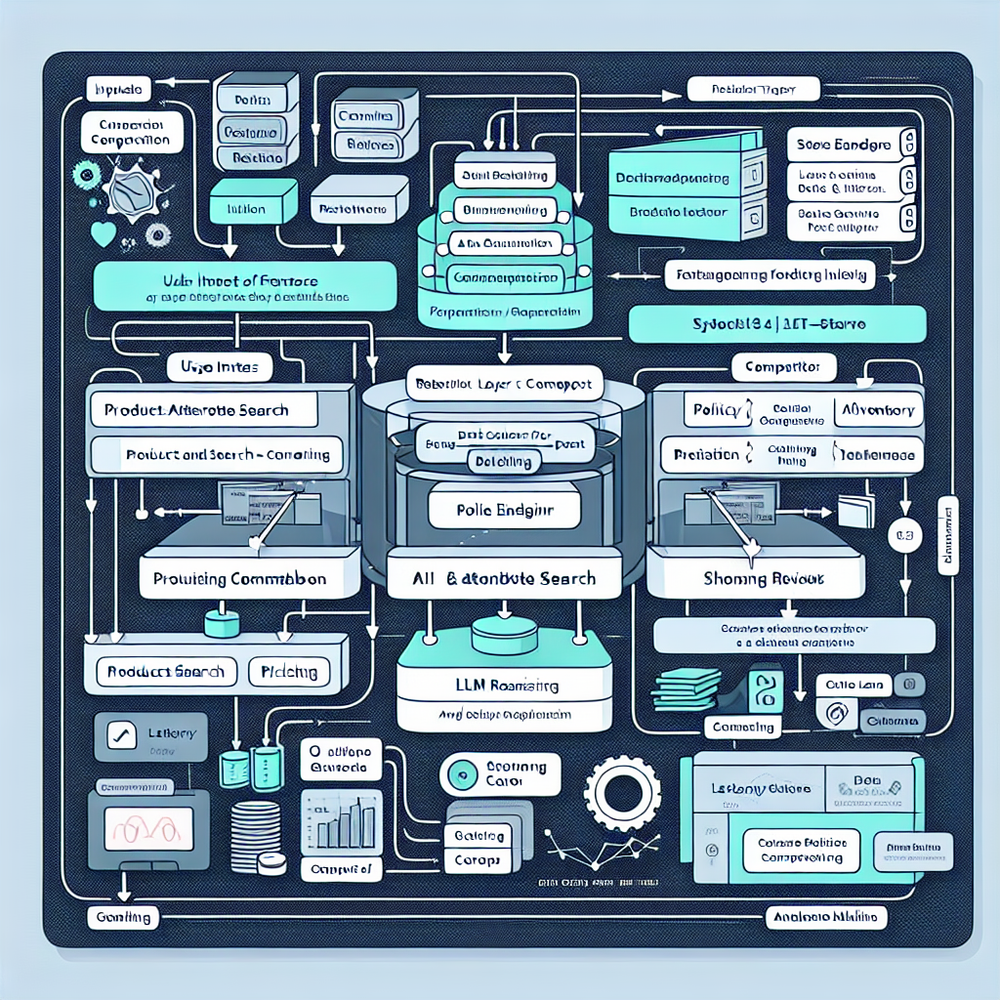
This is exactly how Brambles.ai’s Commerce Module is wired: connectors pull product, inventory, and pricing; a policy engine enforces tone, compliance, and channel rules; and the agent can push actions like add‑to‑cart, create compare tables, or hand off to checkout. For publishers, the same backbone powers affiliate‑safe links and monetization without misattribution. The result is fewer hallucs, faster responses, and measurable revenue movement rather than “engagement.”
The Evaluation Criteria and Scoring Rubric
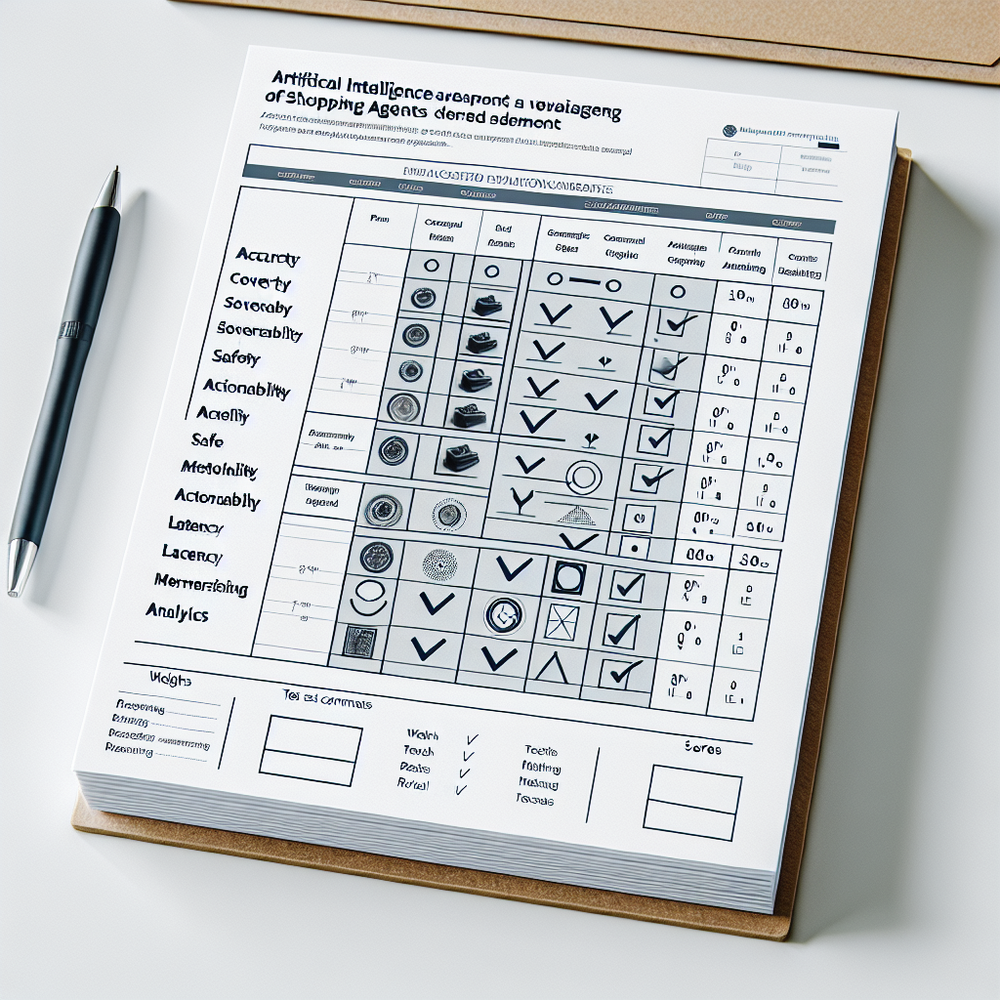
You don’t need a 30‑page RFP. You need a scorecard you can run in a week. Rate each pillar 1–5 with task‑based tests that mirror your revenue journeys.
Accuracy & Grounding: Verify specs line‑by‑line for top 200 SKUs. Require source citations. Pass if ≥98% factual on structured fields and zero fictitious SKUs. Retrieval Coverage: Can the agent find long‑tail products via attributes (e.g., “non‑chlorine bleach safe,” “92‑inch chaise”)? Safety & Brand Guardrails: Test restricted claims, tone, and escalation. Actionability: Must perform add‑to‑cart, compare, or subscribe without losing chat context. Latency: P95 under 2s for single‑turn responses and under 2.8s for compare flows. Merchandising Control: Ability to promote collections, pin seasonal products, and respect margin rules. Analytics: SKU‑level tracing, reasoning tokens, and conversion attribution.
Anecdote: On a furniture marketplace (~1.8M SKUs), moving from keyword search to attribute‑aware retrieval raised relevant candidate recall by 31% and cut zero‑result queries by 46%.
Another test on a beauty catalog saw safety guardrails block 100% of out‑of‑policy medical claims while maintaining a 9.1/10 helpfulness rating in user surveys (n=412). That’s the bar.
Implementation Guide: Standing Up a Shopping Agent with Brambles.ai
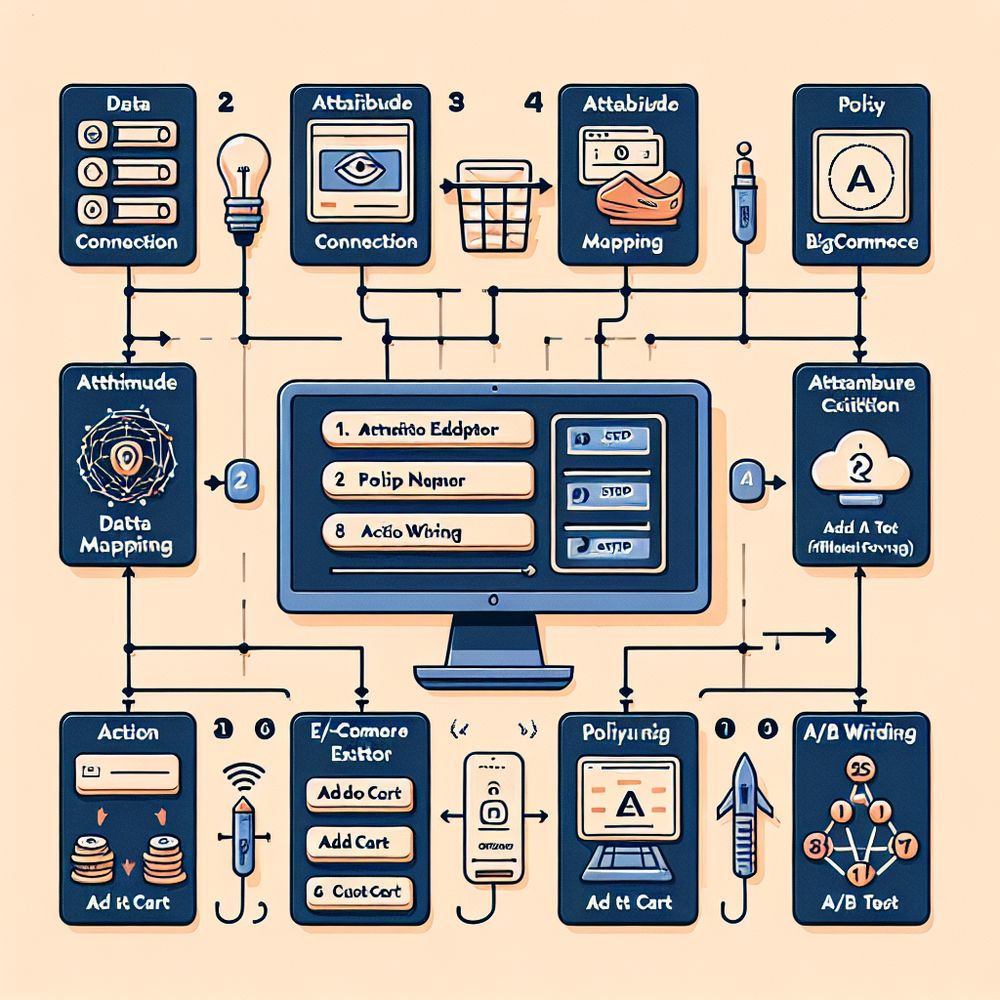
Here’s a pragmatic, seven‑step path we’ve used to go live in under three weeks for mid‑market catalogs and in six weeks for enterprise feeds.
1) Connect data: Point Brambles Commerce Module at your catalog, inventory, price, and policy endpoints. 2) Map attributes: Normalize key decision fields (fit, material, compatibility, size). 3) Define journeys: Pick your five highest‑value tasks by revenue and friction. 4) Configure guardrails: Tone, disallowed claims, conflict SKUs, escalation logic. 5) Wire actions: Add‑to‑cart, compare, save, subscribe, or store pickup. 6) Instrument analytics: SKU trace, cited fields, latency, drop‑off, and attribution. 7) A/B test and tune: Weighting for margin, seasonality, or promos.
If you’re a brand, deploy to PDPs and collection pages first; we often see a 12–20% lift in assisted add‑to‑cart on those surfaces before expanding to homepage chat. If you’re a publisher, use the Brambles publisher monetization flow to map affiliate programs and tracking, then expose the agent on high‑intent content (e.g., “best X for Y”). This preserves editorial voice while converting with grounded picks.
Measuring ROI & KPIs That Matter
Measure what the CFO cares about: contribution margin from agent‑assisted orders, not just chats started. Track assisted add‑to‑cart rate, agent‑assisted revenue per session, P95 latency, SKU grounding accuracy, and deflection (cases where the agent prevented support tickets).
Benchmarks we like: On a 100k‑session A/B in apparel, agent‑assisted sessions produced +18% revenue per session at flat discounting; P95 latency was 1.7s. In home goods, adding compare tables drove a 27% lift in “add to list,” which later converted at 14%. Salesforce’s Connected Customer research shows 80% of customers value experience as much as products; that tracks with our finding that speed and clarity predict conversion more than flowery copy.
Put the math in writing: Incremental Profit = (Assisted Revenue × Gross Margin) − (Discount Cost + Agent Cost). Review weekly. Kill or reweight tactics that don’t beat your blended CAC. McKinsey’s personalization research ties relevance to retention; we mirror that by measuring repeat purchases from agent‑assisted users at 30 and 60 days.
First‑Party Data, Trust, and Brand Voice
Trust is earned with clarity and consent. Your agent should disclose when an answer uses on‑site behavior or preferences, honor opt‑outs, and store profiles server‑side with TTLs. For content claims, keep a citation trail: attributes, reviews, and policies used. That trail also powers audits and fixes.
Brambles.ai implements profile‑light personalization tied to explicit signals (e.g., saved sizes, preferred materials) and never invents persona facts. For publishers, the monetization flow ensures affiliate links and disclosures are placed correctly and attributable, protecting editorial independence while improving conversion.
Common Pitfalls: A Buyer’s Checklist
Run this checklist before you sign: 1) Ask for task‑level accuracy on your top 200 SKUs with citations; no demos on cherry‑picked data. 2) Demand P95 latency under 2s for core tasks on your infra.
3) Verify guardrails with adversarial prompts on your restricted claims. 4) Confirm merchandising levers: pin collections, exclude SKUs, weight by margin. 5) Require SKU‑level analytics and reasoning traces.
6) Test recovery: what happens if inventory or pricing is stale? 7) Check portability: can you change models without a rebuild?
If any vendor balks at exposing citation fields, margin controls, or latency logs, that’s a red flag. We’ve replaced three agents in the last year where analytics stopped at “chat satisfaction.” That’s not enough to run a P&L.
Future Outlook: From Single Agent to Team Sport
Multi‑agent orchestration is next: a retrieval specialist, a policy enforcer, and a merchandiser agent collaborating in milliseconds. We’re also seeing on‑device reasoning for privacy and sub‑500ms responses on repeat tasks. Expect richer commerce actions—returns, exchanges, warranty lookups—inside the same thread. Build your stack with modular connectors so you can adopt those upgrades without a ground‑up rewrite.
FAQs
How do I test grounding accuracy without a huge QA team?
Select your top 200 revenue SKUs and their five most‑queried attributes. Generate 20 tasks that require those attributes. Ask the agent to produce answers with cited fields. Use a simple script to compare returned attributes to your catalog truth. Pass if ≥98% match and zero invented SKUs.
What latency targets should I enforce?
Aim for median under 1.2s and P95 under 2s for single‑turn answers, under 2.8s for compares. Anything slower erodes conversion. Set SLOs with error budgets and instrument every step—retrieval, policy, model, and action calls.
Can a shopping agent respect margin and promo rules?
Yes—if it has a merchandising layer. Require rule‑based weighting (margin, inventory age), pinned collections, and promo eligibility checks. Brambles Commerce Module exposes these controls without retraining the model.
How does this integrate with WordPress or Shopify?
Use the Brambles WordPress plugin for drop‑in widgets or the Commerce Module SDK for storefronts like Shopify and headless builds. Map catalog fields, set guardrails, and go live behind an A/B flag.
How do publishers monetize without losing editorial trust?
Use transparent affiliate mapping, clear disclosures, and grounded picks with citations. Brambles’ publisher flow routes to approved programs and logs attribution so editors keep voice while earning on qualified sales.
Related resources on Brambles.ai
If you are implementing this, start with Brambles.ai, for publishers, for brands, get started.
For deeper reading, see 10 Reasons Publishers Need Conversational Commerce, Affiliate Disclosure in Conversational UIs Done Right, From Search Boxes to Conversations: Modern Shopping UX, Contextual, Not Creepy: Monetization That Wins.
Related posts
View all
How AI Handles Order Lookup, Returns, and Shipping 24/7
See how AI resolves order lookups, returns, and shipping questions 24/7, deflects tickets, and lifts CSAT—plus a step‑by‑step guide to implement it safely.
Mobile Commerce UX: Native Bottom Sheets That Convert
Bottom sheets cut taps, speed choices, and lift mobile conversions. Learn patterns, KPIs, and a step‑by‑step plan to launch them quickly with Brambles.ai.
Content Intelligence: AI Indexes Your Site for Commerce
How AI content intelligence indexes every page for commerce, structures attributes, powers conversational shopping, and lifts sales. Steps, KPIs, and pitfalls.
Explore Brambles.ai
Learn more about our AI-powered agentic commerce platform, agentic shopping, and shopping assistance solutions.
Explore More Insights
Discover more articles on AI, automation, and business innovation
View All Articles