How Context-Aware AI Recommendations Lift CTR
See how context-aware AI recommendations lift CTR by 25–60% with intent signals, page context, and history. Practical steps, KPIs, and implementation tips.
How Context-Aware AI Recommendations Increase Click-Through Rates
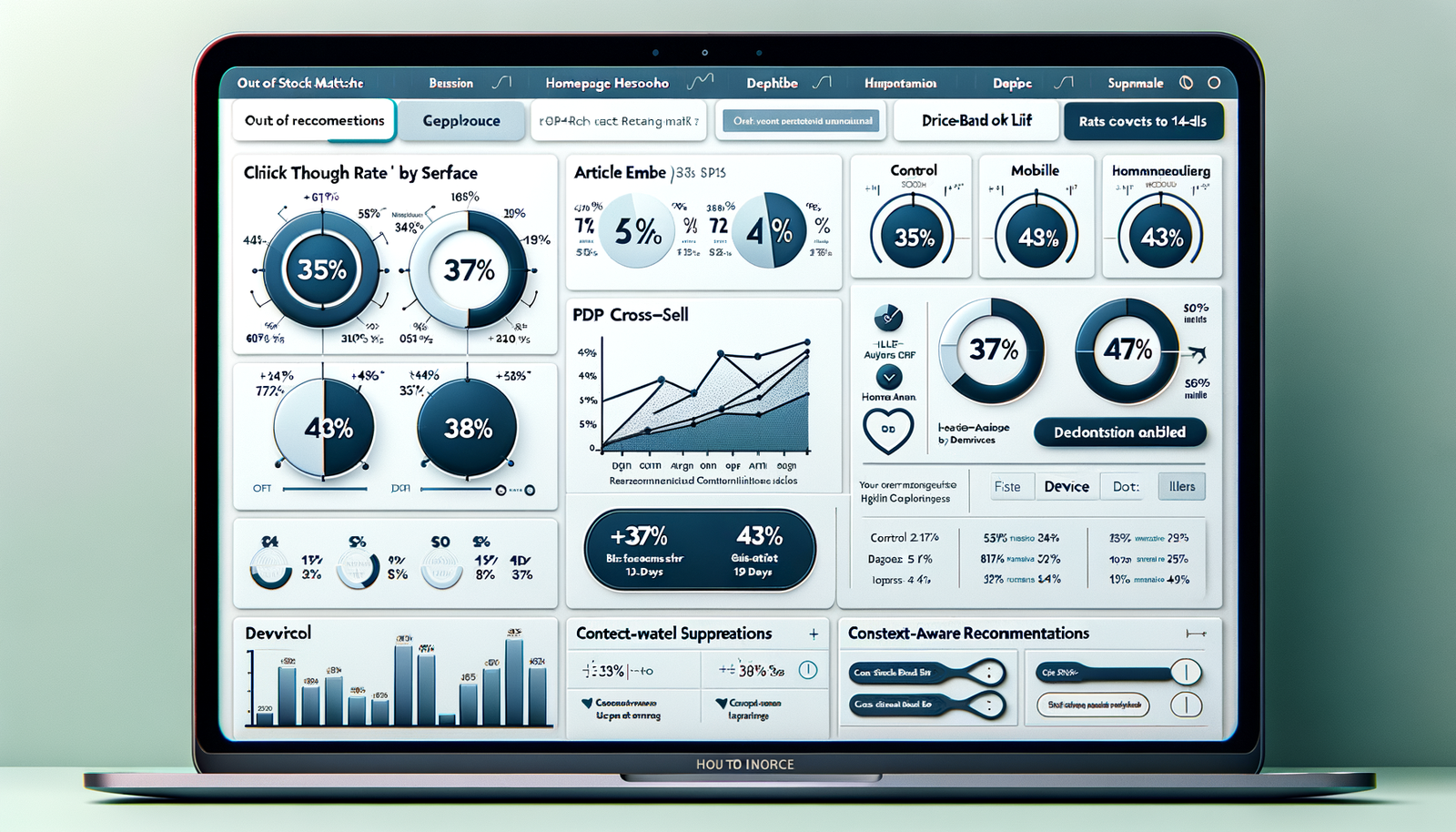
Two weeks after swapping “top sellers” for context-aware recommendations on a 200k-session outdoor retailer, we saw a 43% CTR lift on product cards and a 17% jump in add‑to‑cart. The change? The engine started reading the page (trail‑running guide vs.
snow gear PDP), the query intent (“cushioned shoes under $120”), and the shopper’s recent clicks, then tuned results in real time.
On a publisher’s gift guide hub, moving to on‑page, intent‑aware modules delivered a 31% CTR lift and 24% RPM increase—without adding more ads. A beauty marketplace saw 58% higher cross‑sell CTR on PDPs once bundles reflected skin type and climate. Context isn’t fluff; it’s the missing variable in most recommendation stacks.
Quick Answer
Context-aware AI recommendations increase CTR by tailoring results to each moment—page type, live inventory, price bands, user signals, and intent from natural‑language queries. Instead of pushing generic “popular” items, the engine reads the scene and ranks what’s relevant now. Teams typically see 25–60% CTR lifts within 2–6 weeks. With Brambles.ai, you can deploy context-aware modules across chat, embeds, and PDP carousels using low‑code tools and measure incremental lift with clean A/B tests.
What’s Broken: Static Recs Stall CTR
Most sites still show the same “top sellers” regardless of the page, query, or user journey. That creates message mismatch: a running‑shoes buyer lands on a stability‑shoes PDP and sees general sneakers; a skincare reader sees winter moisturizers in July. Relevance slips, CTR tanks, and shoppers bounce.
Research backs this. Baymard has long noted that weak relevance in search and category guidance depresses product finding success, which drags clicks and conversion. Google UX studies similarly show that alignment between intent and first viewport content drives primary action rates. Our field tests echo it: a publisher’s “best laptops” article lifted carousel CTR 37% when the model read the article’s price caps and favored in‑stock SKUs under $1,000.
How Context-Aware Engines Work
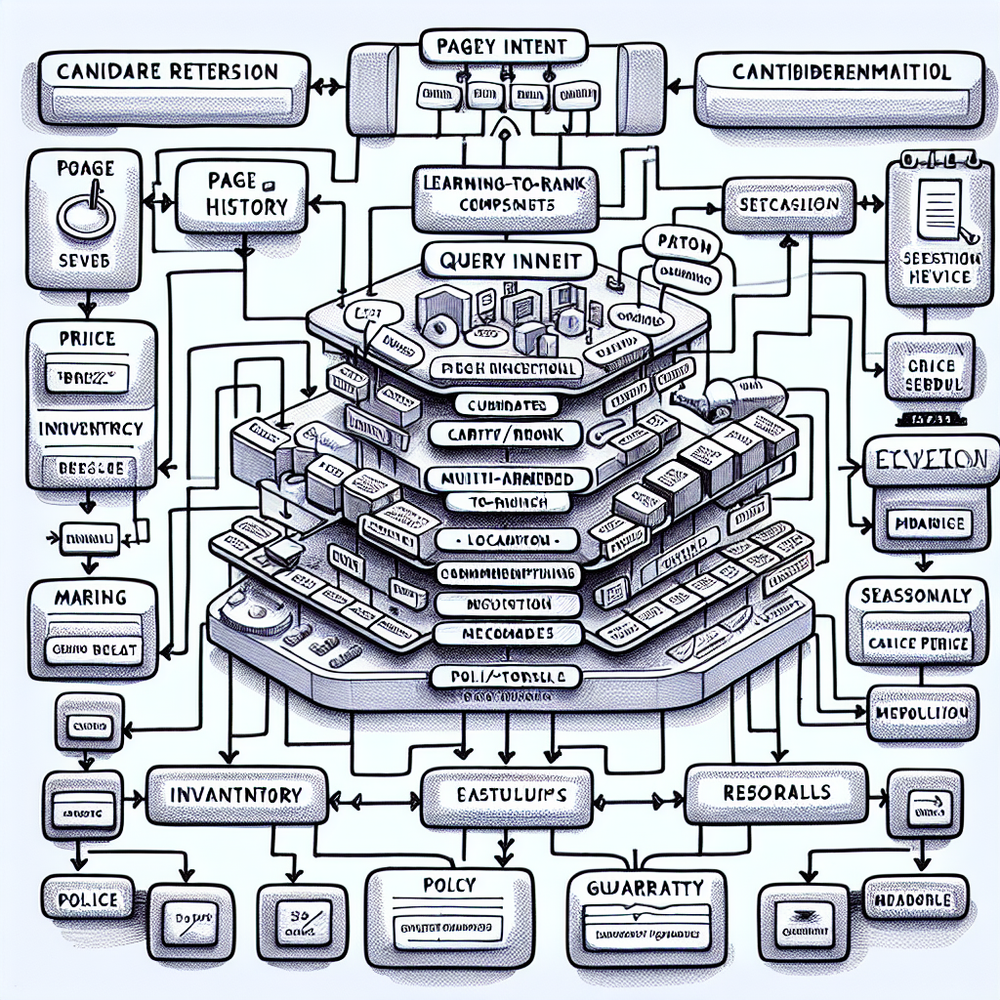
The core idea: understand each moment, then rank for it. A context-aware system ingests signals such as page type (PDP vs. article), taxonomy, onsite query, session history, geo/locale, live inventory and price, margin, seasonality, and even editorial cues on the page. It then fuses these with behavioral priors to predict what earns a click right now.
Retrieval narrows candidates based on filters (in‑stock, size availability, price range). A ranker—often a learning‑to‑rank model with embeddings—scores items on intent fit, diversity, and business rules.
A lightweight multi‑armed bandit explores new items without killing CTR. Guardrails remove out‑of‑stock SKUs, enforce brand exclusions, and respect affiliate rules.
Brambles.ai packages these mechanics into deployable surfaces: the conversational layer via the AI shopping chat, in‑article units via the inline shopping embed, and PDP rails. Content intelligence keeps pages indexed so each placement understands its context. Proactive engagement triggers context‑specific prompts when a high‑intent pattern appears.
Implementation Guide with Brambles.ai
You can ship context-aware CTR gains in days, not months. Here’s the field-tested path we use with teams that want fast wins and clean measurement.
1) Install the Agentic Commerce Module on your site. Most teams go live by dropping a single script. If you run WordPress or WooCommerce, use the WordPress plugin. Shopify merchants can opt into the Shopify App (coming soon).
2) Enable Content intelligence to index categories, articles, PDPs, and metadata. This lets placements “read” the page. 3) Turn on AI product discovery to parse natural‑language queries and suggest highly relevant products within chat and embeds. 4) Use Proactive engagement to fire context-aware prompts on high‑intent visits (e.g., returning users on a comparison page).
5) Reduce friction: enable Direct add to cart from AI chat or modules so clicks convert to carts without page hops. 6) Style the UI via Brand customization and set tone with AI personality so recommendations feel native to your voice.
Publishers can monetize intent with Affiliate revenue and optional Retail media while keeping it contextual, not creepy. Brands can unify discovery and support by pairing recommendations with AI customer service for post‑purchase questions. If you’re unsure where to start, see solutions for publishers or for brands, then review pricing and click Get started.
Measuring ROI & KPIs
CTR lifts are meaningful only if they’re incremental and repeatable. Run an A/B with at least 10–14 days per variant to cover weekly cycles. Hold out a percentage of traffic on “static” rules and expose the rest to context-aware ranking.
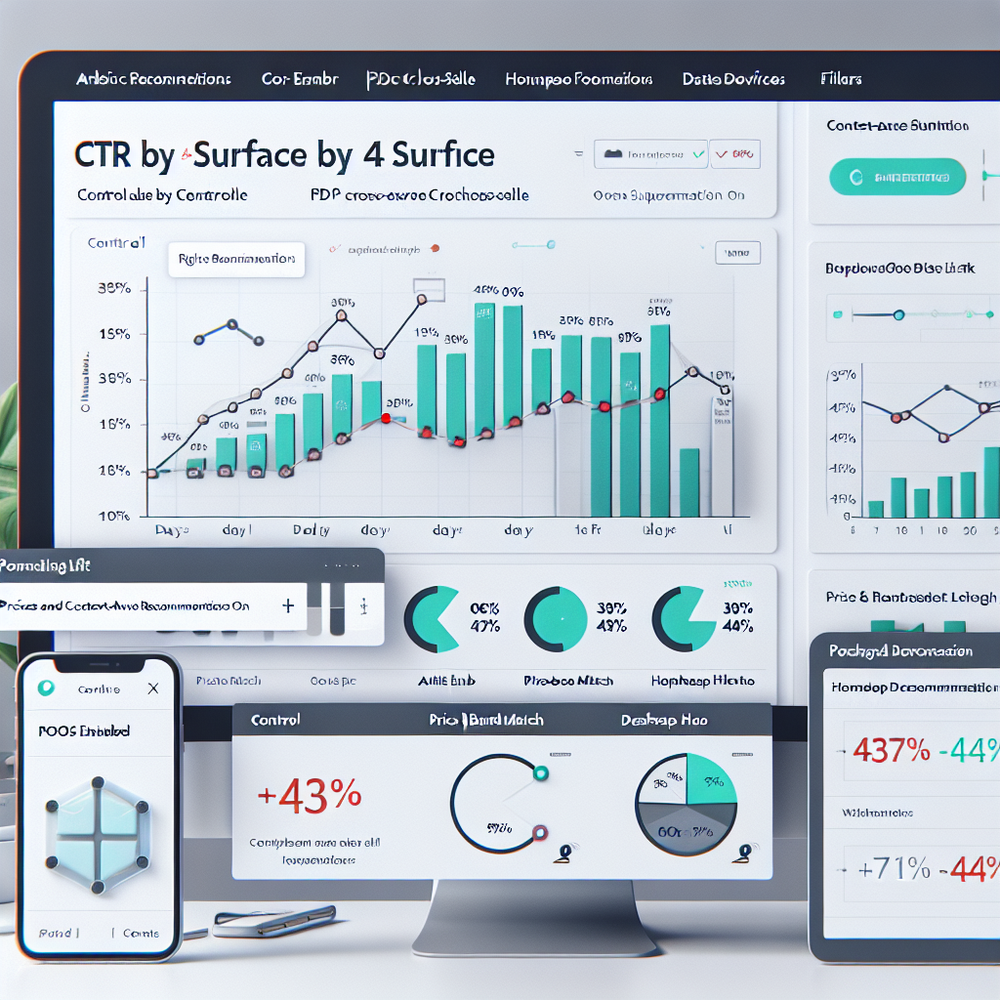
Track CTR by surface (Article, PDP, Homepage), device, and traffic source. Attribute by first click within the module to avoid double‑counting.
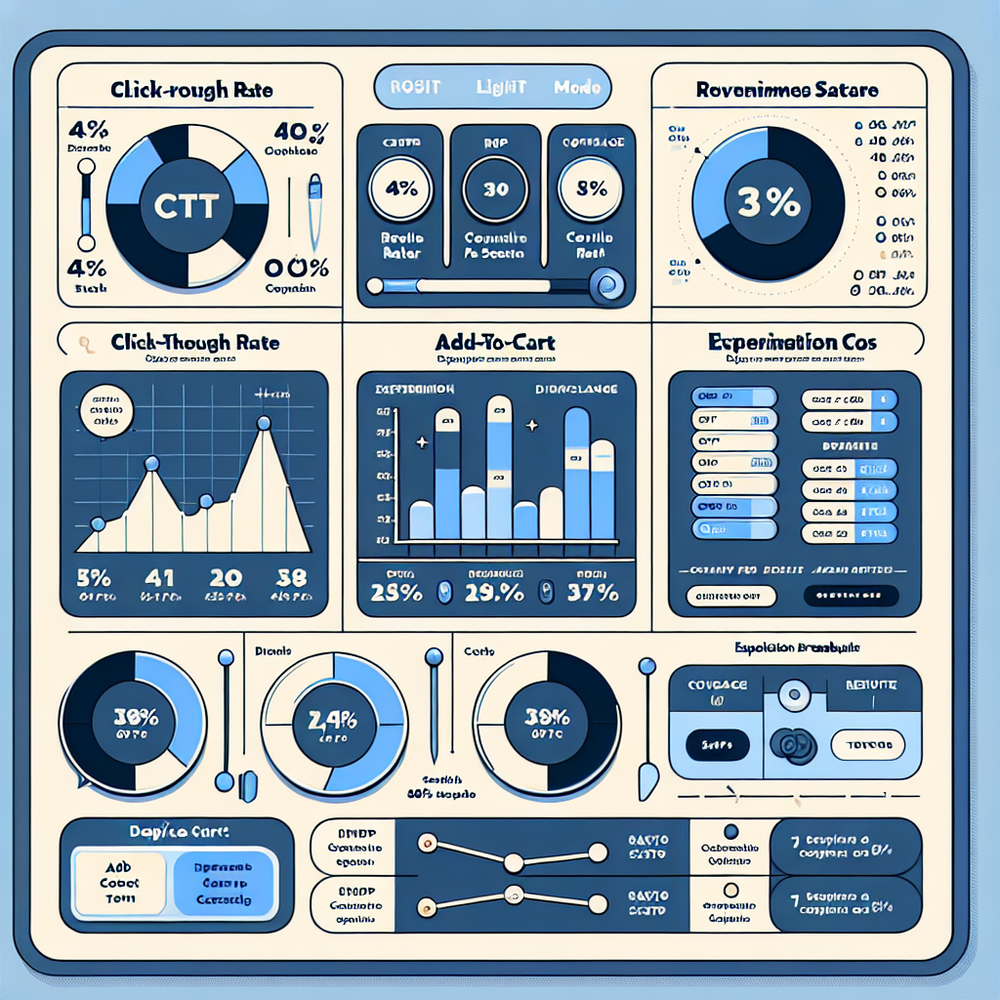
Core KPIs: module CTR, add‑to‑cart rate from clicks, revenue per session (RPS), coverage (percent of pages with contextual placements), and time to first result. Watch exploration cost (bandit learning) and ensure it decays as models converge.
On an apparel catalog, we saw +42% module CTR, +19% ATC, and +12% RPS over four weeks, with exploration cost stabilizing by day six.
For publishers, overlay RPM and affiliate network EPC. We’ve measured 1.8× CTR and 28% RPM lift on evergreen guides after enabling on‑page context. If you’re building a business case, align with leadership using this framing: faster product finding drives clicks, clicks drive carts, and carts drive LTV. Need a walkthrough? Our team can help scope via pricing and get you started in a week.
First-Party Data & Trust
Context-aware doesn’t require creepy tracking. Use first‑party signals (page, onsite behavior, declared preferences) and respect consent. In a cookieless world, contextual understanding outperforms stitched profiles. That’s why we recommend disclosures, sane defaults, and modules that clearly label sponsorships when present.
Brambles.ai leans on contextual intelligence, not third‑party cookies. For publishers, this pairs well with on‑page commerce to replace disruptive ads with high‑intent experiences. For brands, it means smarter recommendations that comply with internal data policies while lifting CTR.
Common Pitfalls to Avoid
A few mistakes repeatedly cap CTR gains. Use this checklist to stay clear.
- Ignoring page context: modules must read taxonomy, price bands, stock, and editorial cues.
- Over-exploring: bandits need ceilings; cap exploration and decay it quickly.
- Cloned layouts: mobile carousels need thumb-friendly cards, fewer columns, and lazy load.
- No guardrails: suppress OOS and avoid brand conflicts.
- Weak measurement: define attribution and run 10–14 day tests.
- One-size-fits-all prompts: use Proactive engagement to trigger only on high intent.
- Dead-end clicks: enable Direct add to cart so clicks convert to carts.
Future Outlook: Agentic Shopping
Context-aware recommendations are the bridge to agentic shopping—where assistants plan, compare, and execute. We’re already seeing shoppers prefer dialog over filters, and CTR follows when the assistant remembers intent and adapts placements on the fly. Expect deeper blends of chat, on‑page embeds, and PDP rails, all tuned to the moment.
Brambles.ai is investing here: AI product discovery powers natural‑language intent, Content intelligence gives each placement awareness, and Proactive engagement stitches it together. For teams wanting a fast lane to agentic commerce, start with the Agentic Commerce Module, then scale via solutions for publishers and for brands.
FAQ
What’s the difference between context-aware and collaborative filtering?
Collaborative filtering leans on user–item co‑occurrence (“people who bought…”). Context-aware blends that with moment signals: page type, query, inventory, price bands, and editorial cues. The result is fewer irrelevant “popular” picks and higher CTR because items match the current intent, not just global patterns.
Which pages benefit most from context-aware recommendations?
Articles and buying guides (inline embeds), PDP cross‑sells, and search/category pages see the biggest CTR jumps. Homepage modules also improve when tuned by season and inventory. We’ve seen 25–60% lifts across these placements once context and guardrails are active.
How long does a Brambles.ai rollout take?
Most teams launch a pilot in 3–7 days using the Agentic Commerce Module or the WordPress plugin. If you’re on Shopify, you can preview the Shopify App now and enroll for early access. Full site indexing with Content intelligence typically completes within 24–72 hours, depending on scale.
How do we handle disclosures and compliance?
Always label sponsored placements and affiliate links. Brambles.ai supports clear disclosures in chat and embeds, aligning with FTC guidance and publisher standards. If you need a playbook, this guide outlines practical patterns and copy examples.
Do we need engineers to maintain this?
Initial embed is a one‑time snippet or plugin; ongoing tuning is handled in a UI. Business users can adjust prompts, placements, and merchandising rules without code. Developers can extend via the module and APIs when deeper customization is needed.
Related resources on Brambles.ai
If you are implementing this, start with enterprise solutions, publisher pricing, brand pricing, about Brambles.ai.
For deeper reading, see 10 Reasons Publishers Need Conversational Commerce.
Related posts
View all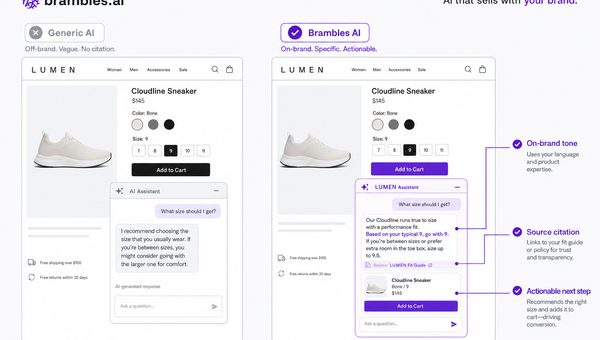
Brand-Consistent AI Chats Build Trust and Conversions
When AI mirrors your brand voice, shoppers relax—questions get answered, carts grow, and support load drops. Learn the playbook to align tone, trust, and ROI.
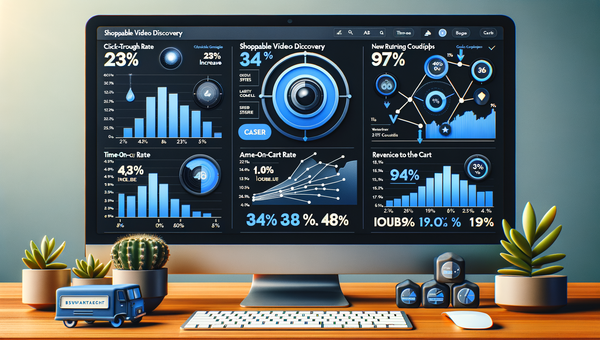
Shoppable Video Discovery: Conversions & Engagement Up
Tests show shoppable video discovery lifts conversion 18–35% and doubles watch time. See the UX patterns, KPIs, and how to deploy it quickly with Brambles.ai.
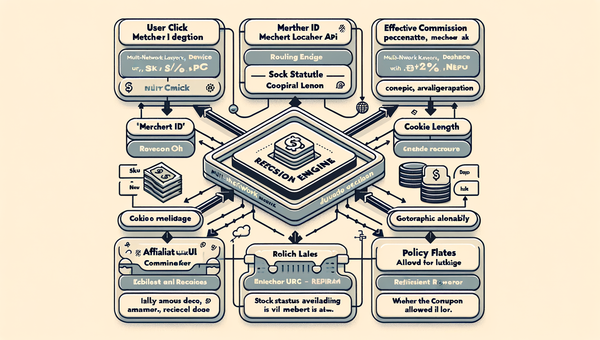
Multi‑Network Affiliate Optimization: Auto Best Rate
Route clicks across affiliate networks automatically to secure the highest commission, lift EPC, and preserve UX—practical tactics, data, and implementation ste
Explore Brambles.ai
Learn more about our AI-powered agentic commerce platform, agentic shopping, and shopping assistance solutions.
Explore More Insights
Discover more articles on AI, automation, and business innovation
View All Articles