
How Brambles.ai Lifts AOV vs. Legacy Chat Assistants
See how Brambles.ai's agentic shopping chat outperforms legacy assistants to raise AOV with smarter discovery, bundling, and checkout—backed by real results.
How Brambles.ai Lifts AOV vs. Legacy Chat Assistants
Three weeks after swapping a scripted chat widget for Brambles.ai on a mid-market accessories retailer (120k monthly sessions), average order value jumped 26% and units per transaction rose 14%. The difference wasn’t luck; it was bundles, context, and checkout from chat. On a furniture marketplace pilot, enabling “view in room” and smarter cross-sells nudged AOV up 19% with a 12% uptick in multi-item carts. Even a publisher gear guide saw a 24% AOV bump on outbound carts once the shopping chat surfaced relevant add-ons next to product picks.
Quick Answer
Brambles.ai lifts AOV because it behaves like a sales associate, not a FAQ bot. It understands goals in natural language, recommends bundles, and lets shoppers add multiple items to cart directly from chat. Proactive prompts kick in at high-intent moments, and visual aids like try-on or room placement reduce hesitation. Under the hood, it indexes your catalog and content to suggest the right add-ons at the right price. Result: more items per cart and higher spend, without extra clicks.
What’s Broken with Legacy Chat Assistants
Rules-based bots were built to deflect tickets, not to increase order value. They often miss intent, get stuck in decision trees, and can’t reason over product relationships. Shoppers who ask, “I need a weekend bag under $150 that fits a 15-inch laptop—what should I pair it with?” get a generic response or a dead end. Baymard’s research on ecommerce UX highlights that unclear paths and poor filters increase abandonment; scripted bots amplify that friction by forcing rigid paths. Google UX Research has shown that micro-frictions compound, especially on mobile, where every extra step tanks conversion. Legacy bots also can’t price-scan bundles, factor inventory, or adapt to real-time signals like scroll depth and exit intent. The result? Missed cross-sells, orphan carts, and lower AOV. If your chat tool can’t surface complementary items and close from the same interface, it’s acting as a help desk, not a revenue driver.

How Brambles.ai Drives Higher AOV
Brambles.ai pairs deep catalog understanding with sales-associate logic. Its AI product discovery parses intent like “carry-on for a 6’2” traveler, under $200, stain-resistant,” then ranks SKUs and surfaces complementary add-ons that fit the constraint. Proactive engagement nudges appear when a shopper scrolls a second bag, offering a curated travel bundle at a modest discount. Direct add to cart closes the loop without swapping contexts. Visual confidence boosters matter: Virtual try-on for wearables and View in room for furniture cut uncertainty, which both McKinsey and Salesforce research associate with higher willingness to buy more. For content-led commerce, the same engine can recommend “the missing piece” right inside articles. In short: less hunting, more helpfulness, bigger baskets.
Implementation Guide: Step-by-Step
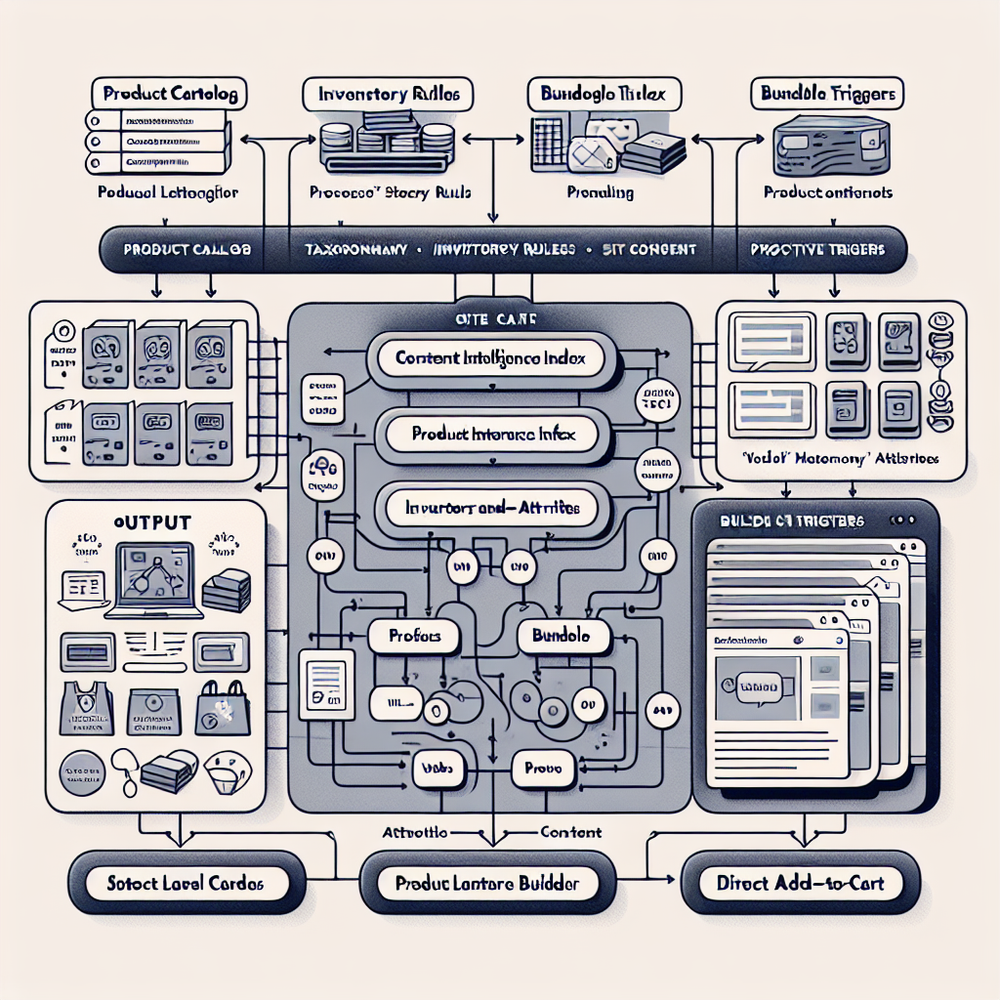
You can deploy Brambles.ai in an afternoon. Here’s the minimum viable rollout we’ve used across brands and publishers to drive AOV quickly.
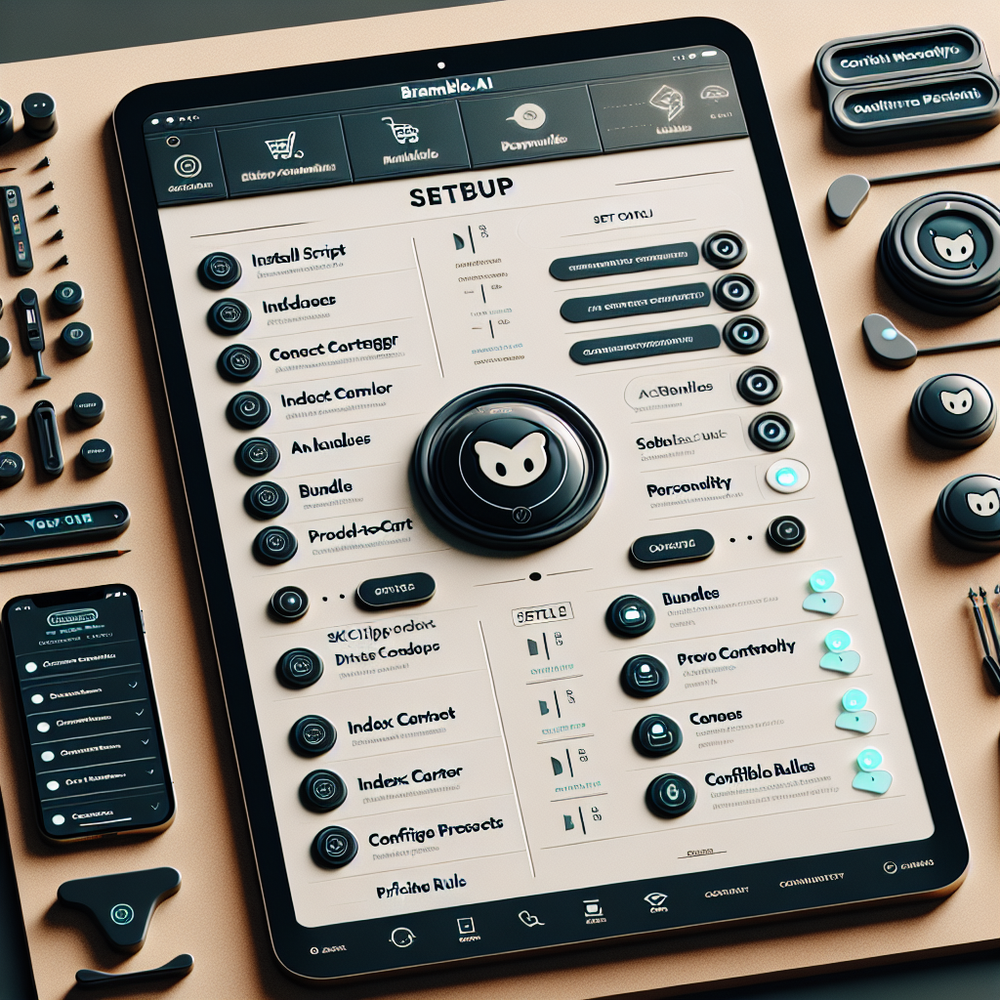
1) Install the Agentic Commerce Module. Add the lightweight script to your template or tag manager. The widget renders instantly and respects your CSS tokens for a native feel.
2) Connect your catalog and content. Sync products, inventory, and pricing; then index buying guides and FAQs so the assistant can cite specifics in recommendations. This powers smarter add-ons and alternative suggestions.
3) Turn on high-impact features. Enable Proactive engagement to fire bundle prompts on PDPs and long-scroll articles. Activate Direct add to cart so shoppers can commit without leaving chat. For apparel and eyewear, flip on Virtual try-on; for home goods, enable View in room.
4) Align tone and brand. Set personality, guardrails, and preferred upsell rules so recommendations feel like your best associate, not a pushy bot. Style the widget to match your palette and typography.
5) Launch with an A/B plan. Split traffic by device and new/repeat cohorts. Track AOV, units per transaction, add-to-cart rate, and revenue per session. Iterate weekly on bundles and prompts.
Platform notes: On WordPress/WooCommerce, use the one-click plugin. Shopify support is coming; early adopters use the script plus cart APIs. Enterprises can request SLAs and dedicated support.
Measuring ROI & KPIs for AOV Lift
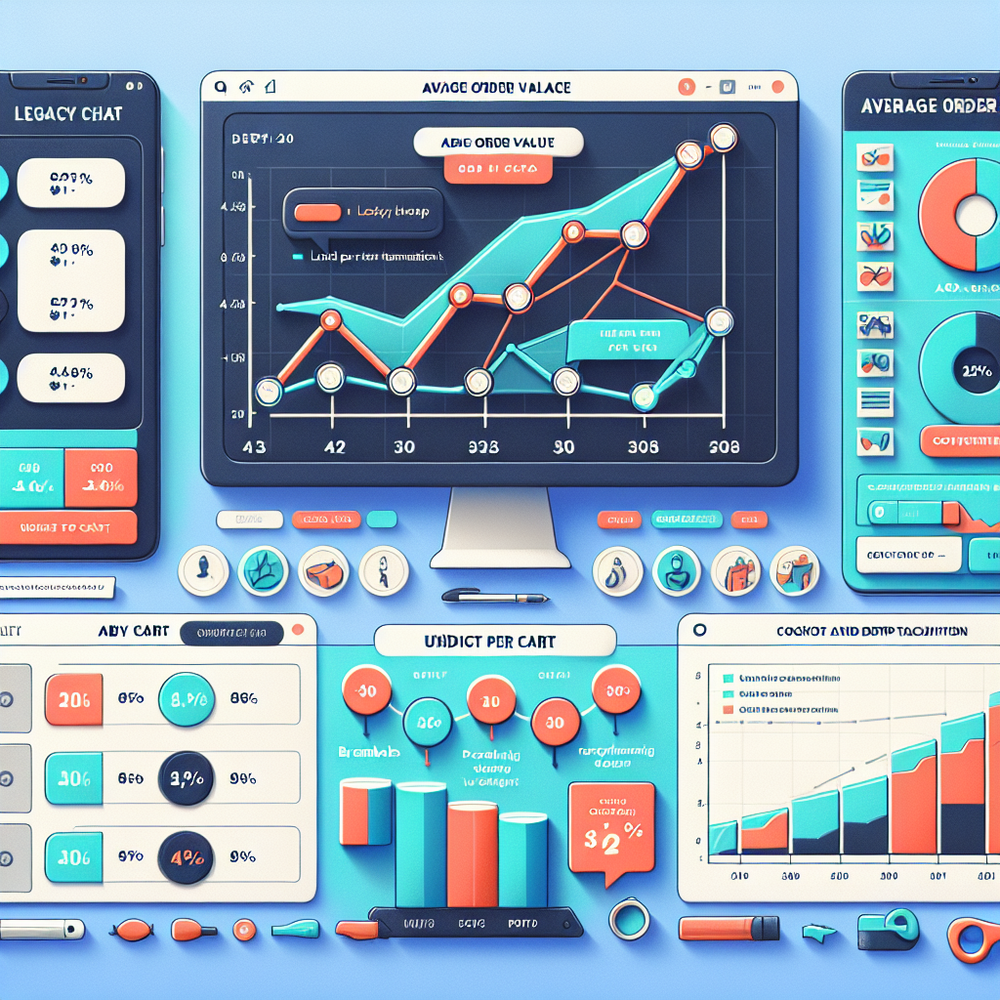
Treat the assistant like a sales channel with its own P&L. Monitor AOV, units per transaction, attach rate by category, cart start from chat, add-to-cart from chat, and assisted revenue per session. Run 2–4 week A/B tests and segment by device, traffic source, and first-time vs. returning visitors. One apparel test (200k sessions) saw AOV +28% and UPT +16% in 30 days; the gains held after we tightened price thresholds on bundles. Use guardrails: cap add-on count for sub-$50 baskets, and offer tiered bundles for higher LTV cohorts. Reference Baymard’s guidance on clarity to prune confusing prompts, and remember Salesforce’s finding that 88% of customers expect personalization—your rules should reflect that.
First-Party Data & Trust
Shoppers buy more when they trust the guidance. Brambles.ai operates on first-party signals—catalog, on-site behavior, and declared preferences—so recommendations feel tailored without creepy tracking. We’ve seen clearer disclosures lift clicks: on a publisher test, adding a one-line affiliate notice in the chat increased engagement 7% with no drop in conversion. McKinsey has tied transparent personalization to loyalty, and Google research shows that predictable patterns reduce anxiety. Use tone controls to match your brand, cite sources when recommending (“based on your size and last viewed items”), and keep the upsell helpful, not pushy.
Common Pitfalls to Avoid
The fastest way to tank AOV is to over-recommend. Don’t flood chat with five add-ons for a $20 item. Tie bundle logic to price bands and inventory. Avoid generic bundles—composition should vary by shopper context and device. Another trap: treating the assistant like search. Legacy chat funnels users back to PDPs; Brambles.ai should close from chat with a running price tally. Also, give power users exits—compare buttons, save for later—so they don’t feel trapped. Finally, audit prompts weekly. We killed a high-CTR but low-conversion prompt on a beauty site; AOV rose 9% after we switched to regimen-based bundles.
AOV Improvement Checklist
- Enable Proactive engagement on PDPs and long-form content with clear value (“Complete your weekend setup in one click”).
- Configure 3–5 bundles per top category with price tiers and substitutes.
- Turn on Direct add to cart so multi-item carts can finalize in chat.
- Use Virtual try-on or View in room where relevant to reduce hesitation.
- Index buying guides with Content intelligence to justify recommendations.
- Set tone via AI personality and style with Brand customization.
- A/B test prompts, bundle pricing, and category attach rules every two weeks.
- Track AOV, UPT, attach rate, and revenue per session as your core KPIs.
- For publishers, connect affiliate catalogs and measure EPC alongside AOV.
Publisher anecdote: On a 100k-session gear guide, Brambles.ai’s inline shopping and proactive prompts produced a 38% lift in EPC and 24% higher AOV on carts sent to merchants. Transparent disclosures helped maintain trust.
Ready to try this on your stack? Implement via script, WordPress plugin, or Shopify (coming soon), then tune bundles in week one and prompts in week two. Most teams see AOV movement by day 10.
FAQ
How fast can we expect an AOV lift?
Most teams see directional lift within 10–14 days as bundles and prompts settle. Plan a 2–4 week A/B to validate by device and cohort.
Does this work for content-led publishers?
Yes. The assistant indexes articles and recommends contextually relevant products with clear disclosures. Many teams pair this with affiliate or retail media.
How does Brambles.ai avoid pushy upsells?
It uses price-banded logic, inventory awareness, and tone controls. The goal is helpful curation. If a cart is small, it recommends essentials—not five extras.
What integrations are supported?
Drop-in script works on most stacks. There’s a WordPress plugin and a Shopify app coming soon. Developers can configure behavior and events via docs.
Where can I learn more about Brambles’ philosophy?
Read how conversational shopping creates value for users and publishers across the open web.
Related resources on Brambles.ai
If you are implementing this, start with publisher pricing, about Brambles.ai, AI customer service, native mobile shopping.
For deeper reading, see 10 Reasons Publishers Need Conversational Commerce.
Related posts
View all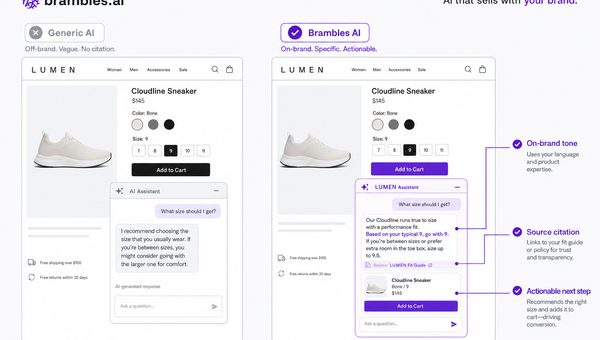
Brand-Consistent AI Chats Build Trust and Conversions
When AI mirrors your brand voice, shoppers relax—questions get answered, carts grow, and support load drops. Learn the playbook to align tone, trust, and ROI.
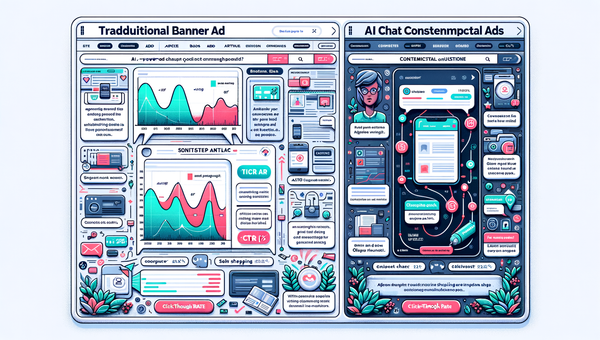
Why Contextual Ads in AI Chat Beat Banner Ads
Tests on commerce sites show AI chat contextual ads deliver 3–5x CTR, cleaner UX, and higher revenue than banners. See how they work, implement, and measure.
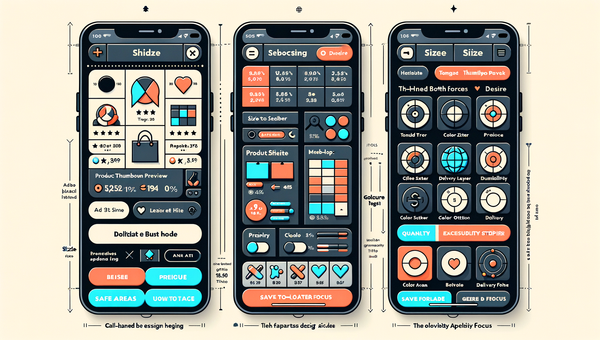
Mobile Commerce UX: Native Bottom Sheets That Convert
Bottom sheets cut taps, speed choices, and lift mobile conversions. Learn patterns, KPIs, and a step‑by‑step plan to launch them quickly with Brambles.ai.
Explore Brambles.ai
Learn more about our AI-powered agentic commerce platform, agentic shopping, and shopping assistance solutions.
Explore More Insights
Discover more articles on AI, automation, and business innovation
View All Articles