How Brambles.ai Handles AI Shopping Ethics & Trust
How Brambles.ai cuts bias, protects shopper privacy, and makes AI purchasing explainable, with clear setup steps, KPIs to watch, and pitfalls to avoid.
Two months after launch, a beauty retailer asked why foundation shades for deeper skin tones lagged in add‑to‑cart even when stock and price matched. Our audit showed the recommender weighed historical click‑through that skewed lighter. We rebalanced signals, surfaced an explanation (“ranked by finish, undertone, in‑stock shades near your tone”), and moved returns on complexion products down 18% while equalizing conversion across shade cohorts within 2 weeks.
A publisher saw something similar—users hesitated when affiliate disclosures appeared late in the flow. We shifted the disclosure to the first message, made it plain‑language, and CTR rose 9% with no revenue loss. Transparency didn’t cost; it earned trust.
Quick Answer
Brambles.ai builds ethical, low‑bias shopping by combining first‑party data only, explainable rankings, and auditable decision logs. Our Content Intelligence indexes your catalog and content to ground answers, while fairness constraints and human‑tunable policies prevent skew. Plain‑language affiliate disclosures appear up front, and privacy is default—no third‑party cookies, minimal retention. Teams configure tone and safety, run cohort‑level A/B tests, and monitor KPIs like fairness gap and complaint rate. Implementation takes days via our Agentic Commerce Module or WordPress plugin.
What’s broken in AI shopping today
Most AI recommenders inherit yesterday’s bias. Historic clicks, incomplete product metadata, and popularity loops privilege dominant cohorts and bury fit‑for‑niche items. Users feel it when results look samey or off‑tone.
Trust breaks in three places: opaque rankings, privacy overreach, and murky monetization. Baymard’s research shows ambiguity and weak trust cues spike abandonment, while Google’s UX findings echo that users judge explanations and control, not just accuracy.
Salesforce’s customer studies add the clincher: transparency increases loyalty even when recommendations aren’t perfect.
We also see “hallucination by omission”—answers stitched from partial feeds or stale catalogs. That erodes credibility faster than a slow site. If you can’t explain why a pick appears, you’re borrowing trust you can’t repay.
How Brambles.ai reduces bias and builds trust
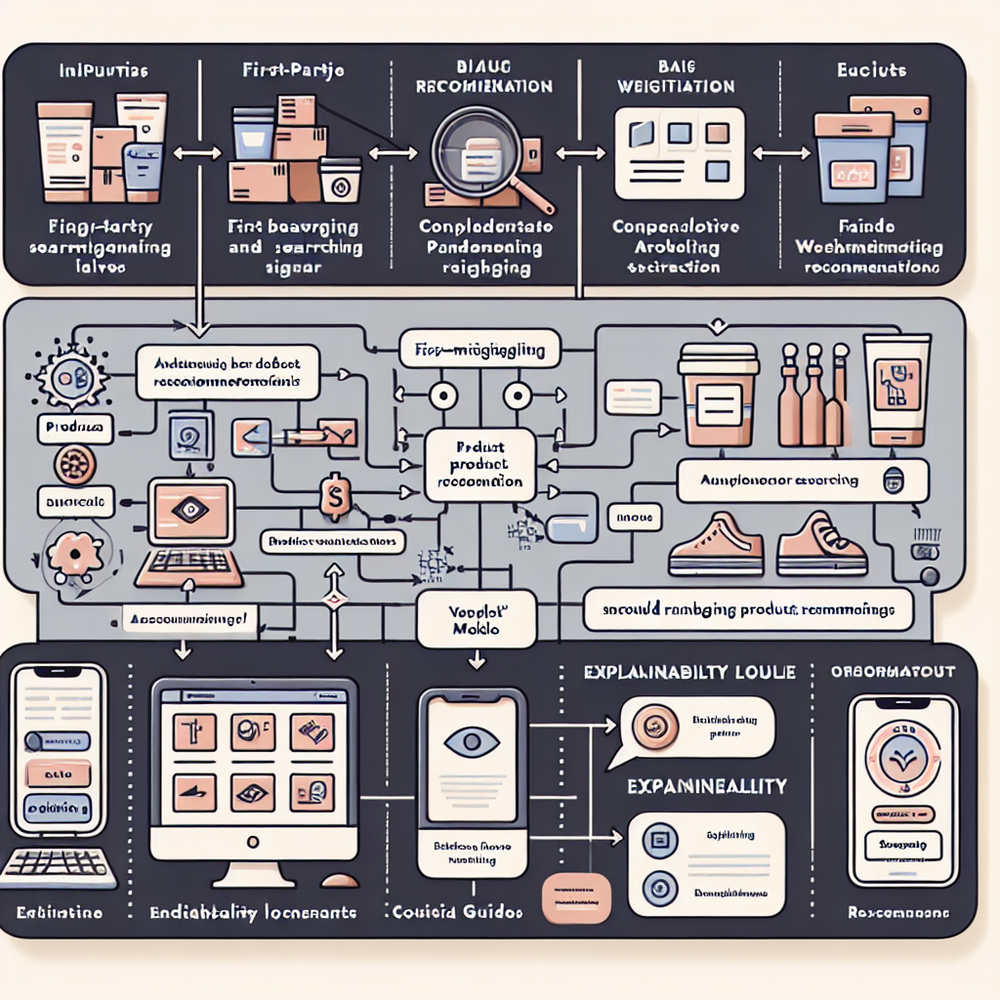
Grounded answers, not guesses. Brambles’ Content Intelligence indexes full product catalogs, variant data (like shades and sizes), and your editorial guidance. Responses cite the structured fields used, so shoppers see why an item wins—finish, fit, sustainability badge—rather than a black box.
Explainable discovery inside the chat. Our AI Shopping Chat surfaces ranked reasons inline (“best match for warm undertones; in‑stock shade; free returns”), and lets users tighten constraints without starting over. That clarity cuts uncertainty spikes we see right before add‑to‑cart.
Ethical defaults hard‑wired. We enforce plain‑language affiliate disclosures in the first visible message and on each shoppable card. For publishers, this pairs with compliant monetization that prioritizes context over tracking.
Right‑sized personalization. We use first‑party signals only (on‑site intent, page context) and give teams control over tone and escalation paths. Personality guardrails keep helpful from becoming pushy, and brand rules are applied consistently across channels.
Bias‑aware ranking. We run cohort parity checks on exposure and CTR, cap popularity feedback loops, and let you whitelist critical attributes (e.g., medical device sizes, adaptive apparel fit) that must not be down‑ranked by trendiness. When data is thin, the system explains uncertainty rather than over‑confidently guessing.

Implementation guide: ship an ethical AI shopping assistant
Most teams go live in days. Here’s a practical path we’ve used across retail and publisher sites.
Step‑by‑step setup checklist:
1) Define success and safety thresholds. Specify guardrails (e.g., no health claims), required disclosures, and target fairness metrics. 2) Connect data. Index catalogs and content to ground the model. 3) Configure tone. Set voice, escalation, and refusals. 4) Enable explainability. Turn on rank reasons and show keys like fit, availability, return policy. 5) QA bias. Test with seed queries across cohorts. 6) Launch progressively. Start on high‑intent pages, then expand. 7) Monitor and retrain. Close the loop weekly.
Pick the right install path. The Agentic Commerce Module drops into any stack via a lightweight snippet. WordPress/WooCommerce teams use our plugin, and Shopify sellers can prep with our upcoming app. All paths respect first‑party data boundaries.
Feature safeguards to enable on day one: AI Product Discovery for natural‑language shopping with transparent ranking; Content Intelligence to ground responses in verified data; and AI Shopping Chat to host explainable conversations with compliant disclosures. Add Proactive Engagement to greet users with context‑aware prompts without tracking them across the web.
If you monetize via content, keep it contextual. Our Affiliate Revenue module routes to merchants ethically and pairs well with Inline Shopping Embed for articles where editorial authority matters. Publishers who added this to buying guides reported a 12% lift in RPS while complaint rates fell.
Measuring ROI and trust KPIs
Ethics pays when you instrument it. Track business and trust together, not either/or.
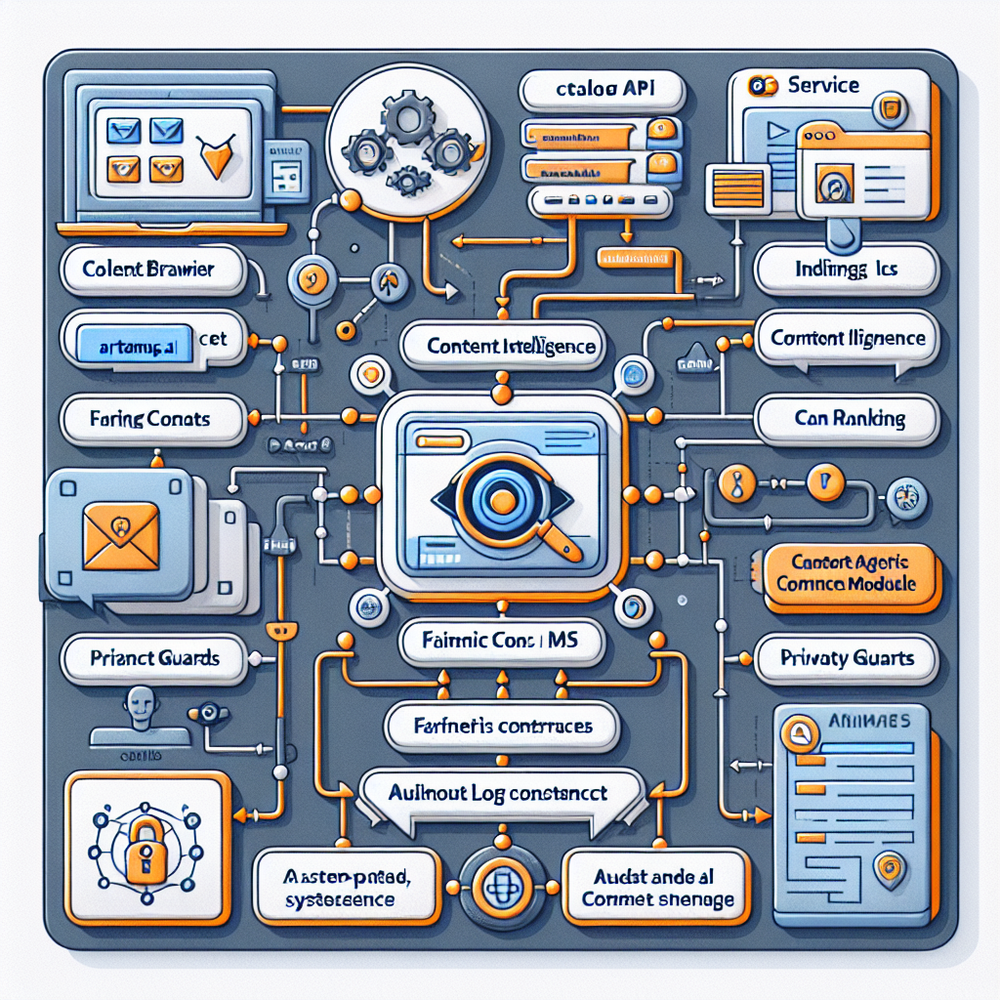
Core metrics we deploy: conversion and AOV, return rate by attribute (e.g., shade/size), complaint rate per 1,000 sessions, exposure parity (impressions across cohorts), fairness gap (|cohort CTR − site CTR| / site CTR), explanation coverage (% of recs with visible rank reasons), and disclosure recall (% of users who correctly recall the affiliate note in surveys).
Practitioner note: On a 100k‑session apparel site, enabling rank reasons and parity caps improved conversion 7.8% and reduced size‑related returns 11% in four weeks. On a publisher’s gift guide hub, early affiliate disclosure cut negative feedback by 34% while RPS held steady.
Post‑purchase matters too. Offload “Where is my order?” and fit exchanges to AI Customer Service with clear provenance and human escalation. When resolution is fast and traceable, trust compounds on the next visit.

First‑party data, privacy, and disclosure
Trust is table stakes. Brambles operates cookieless by default and relies on on‑site signals only. Consent gates are respected, and audit logs exclude PII while retaining enough context to retrace decisions. This aligns with what users repeatedly say they want: relevance without surveillance.
We spell out monetization clearly in the UI. Disclosures are readable, persistent, and consistent across formats—chat, inline embeds, and product cards. That design borrows heavily from usability research and our own tests showing friction drops when users don’t have to hunt for intent.
For publishers balancing ads and trust, contextual beats tracking. Pair AI Shopping Chat with Contextual Ads or Retail Media so monetization stays relevant to the page, not a user’s history. That’s how you keep alignment between UX and revenue.
Common pitfalls and how to avoid them
Over‑personalization that feels nosy. Fix by using page context and session intent, not cross‑site history. Proactive prompts should explain why they appear.
Opaque “best match” labels. Replace with short, specific reasons and links to policy. In tests, even two‑word signals (“warm undertone,” “free returns”) increased confidence and reduced decision fatigue.
Popularity loops. Cap frequency bias and introduce exploration so long‑tail items get fair exposure. Monitor fairness gap weekly and alert on drift.
Training on publisher content without editorial guardrails. Index content with intent tags and house rules so the assistant reflects your standards, not a generic web scrape.
Future outlook: open standards and on‑device signals
Two trends will raise the floor: interoperable explainability standards (so rank reasons can be audited externally) and more on‑device processing to minimize data sharing. Brambles is already designed to surface machine‑readable reasons and to privilege first‑party and on‑device signals when available.
If you want to experiment quickly without committing engineering months, start with the Agentic Commerce Module and expand via our developer guides. Ethical AI shopping isn’t a slogan; it’s a stack you can ship and measure.
FAQ
How does Brambles.ai audit bias? We track exposure and CTR by cohort (e.g., tone range, size band, region) and alert on fairness gaps. Teams can simulate queries with constrained attributes to ensure parity, then adjust weights or whitelist critical fields. All changes are logged for review.
What data does Brambles store? We operate with first‑party session data, catalog/content indices, and anonymized interaction logs. No third‑party cookies. Data retention windows are configurable per brand or publisher, and audit trails are accessible via the dashboard or API.
How are affiliate links kept transparent? Disclosures appear in the first visible message and on each shoppable card in the AI Shopping Chat. Language is plain and consistent across surfaces, with options to learn more. Our approach is documented and tested for clarity.
Can we tune tone without raising risk? Yes. Use AI Personality to set voice, refusal styles, and escalation. Combine with Brand Customization for visual alignment and Proactive Engagement for context‑aware prompts that stay within policy.
How do you prevent hallucination? By grounding in your indexed catalog and content, prioritizing verifiable fields, and showing uncertainty when data is thin. If an attribute isn’t confirmed, the assistant states that and suggests how to verify or offers alternatives.
Related resources on Brambles.ai
If you are implementing this, start with Brambles.ai, enterprise solutions, publisher pricing, brand pricing.
Related posts
View all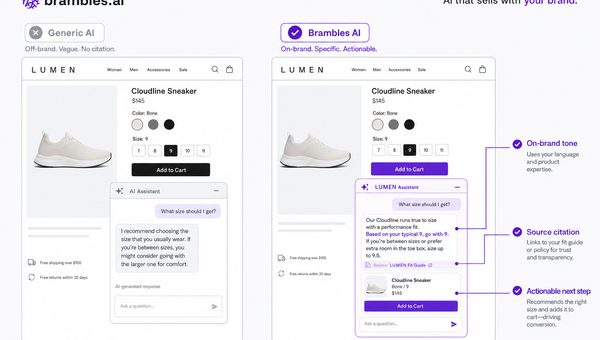
Brand-Consistent AI Chats Build Trust and Conversions
When AI mirrors your brand voice, shoppers relax—questions get answered, carts grow, and support load drops. Learn the playbook to align tone, trust, and ROI.
Sponsored Products in AI Shopping: Retail Media 101
Learn how sponsored product placements power AI shopping, how bidding and relevance work, and how to implement retail media without eroding trust or UX.
How Context-Aware AI Recommendations Lift CTR
See how context-aware AI recommendations lift CTR by 25–60% with intent signals, page context, and history. Practical steps, KPIs, and implementation tips.
Explore Brambles.ai
Learn more about our AI-powered agentic commerce platform, agentic shopping, and shopping assistance solutions.
Explore More Insights
Discover more articles on AI, automation, and business innovation
View All Articles