AI Shopping Tools vs Agents: What Brambles.ai Delivers
Shoppers don’t need another AI tool; they need an agent that plans, asks, and buys. See how Brambles.ai’s agentic commerce works and how to start today.
AI Shopping Tools vs AI Shopping Agents: What Brambles.ai Actually Provides
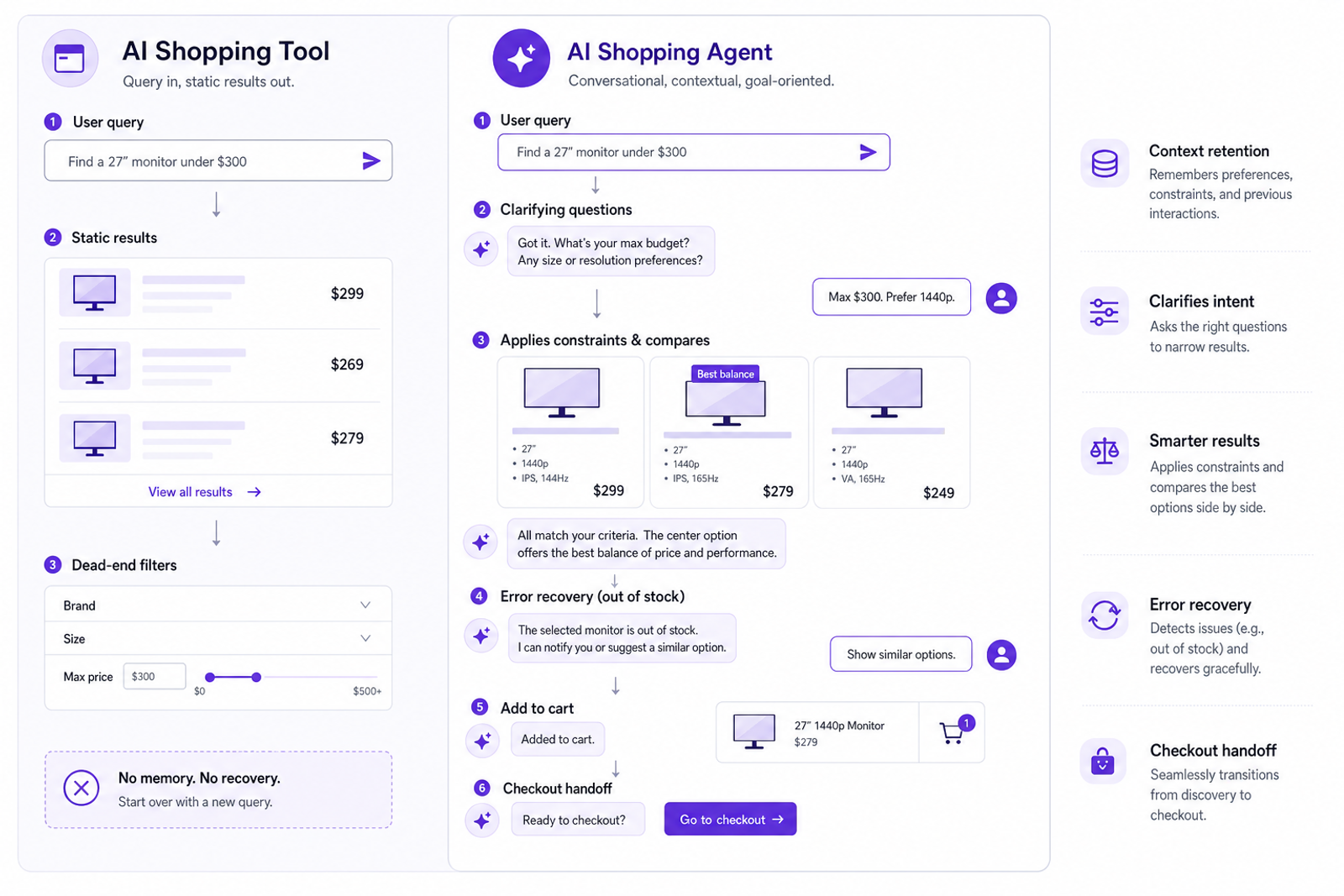
On a 60k‑session home goods site, swapping a keyword‑driven “AI shopping tool” for an actual agent lifted AOV 18% and reduced exits from PDPs by 23%. A fashion retailer saw a 32% jump in assisted conversion when the agent learned to ask clarifying questions like “Is this for travel or the office?” Those weren’t new banners or discounts. They were behavioral gains from moving beyond tools that only fetch results to an agent that plans, reasons, and finishes the job.
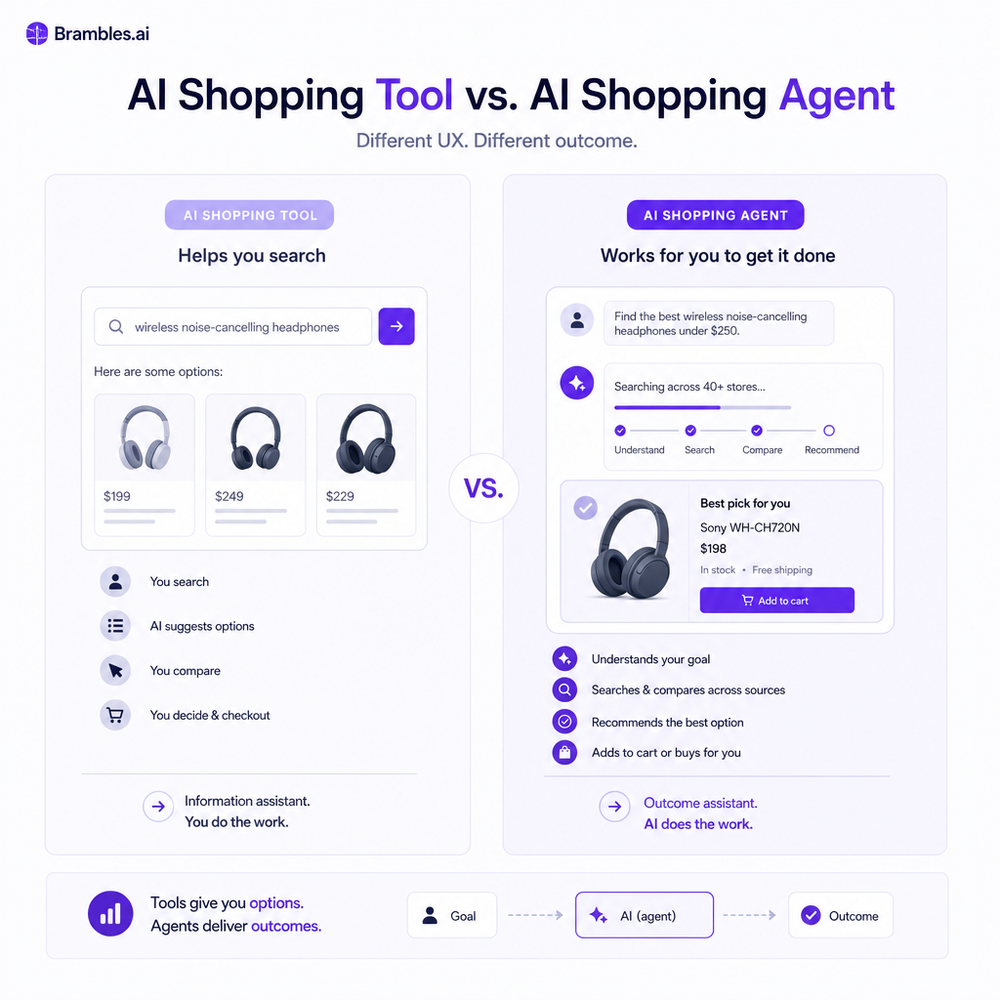
Most teams use “tool” and “agent” interchangeably. That’s where projects stall. Tools answer queries. Agents coordinate tasks across systems, handle edge cases, and keep context until checkout. If you’re wondering where Brambles.ai lands: we provide a true shopping agent built for publishers and brands—with the rails to transact, disclose, and measure profit, not just clicks.
Quick Answer
AI shopping tools surface lists; AI shopping agents guide decisions and complete actions. Brambles.ai provides a full agent: it understands intent, compares products, asks follow‑ups, and can add items to cart directly. It runs inside a floating chat or inline embed, uses first‑party context, and supports both publisher monetization and brand checkout. If you need a concrete outcome (conversion, revenue per session, fewer support escalations), you want an agent—not just a tool.
What’s Broken With “AI Shopping Tools”
The problem with most “AI tools” is UX debt. They answer the first question but lose the thread at the second. Shoppers refine, compare, and validate. Tools typically can’t do those multi‑turn moves, so users bounce back to search or open more tabs. Baymard’s research shows shoppers abandon when comparison and attribute clarity are weak; tools rarely fix that because they don’t reason across steps (Baymard Institute, 2023).
Teams also underestimate orchestration. A list of “top sellers” isn’t enough. An effective agent asks, “What’s your budget?” then adjusts filters, handles out‑of‑stock gracefully, and remembers constraints like size or shipping deadlines. Google UX Research consistently notes users expect continuity across steps, not isolated answers (Google UX Research). Tools don’t carry memory, and that breaks trust.
How Agents Actually Work
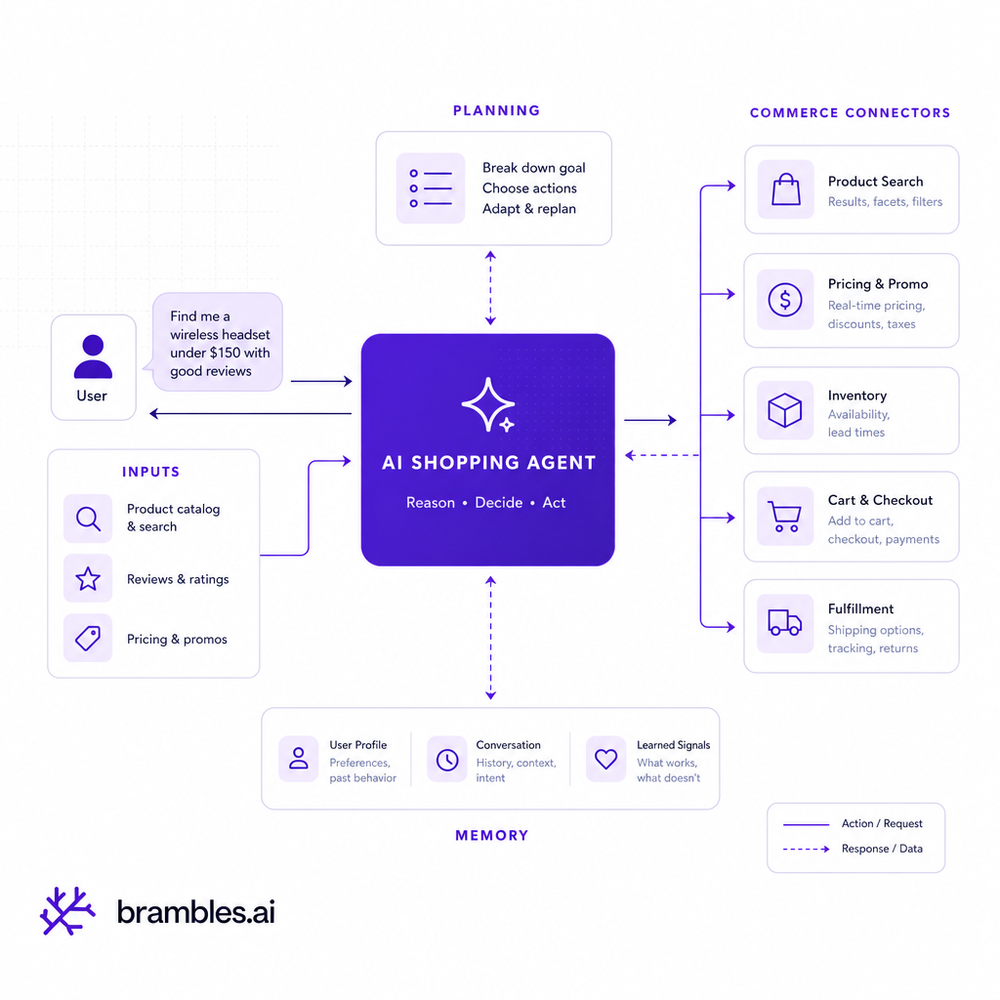
Agents plan, not just predict. Under the hood, they translate a shopper’s goal into steps: clarify intent, gather constraints, search and filter, compare options, validate availability, and complete an action. They maintain a working memory of preferences and constraints and call tools (catalog, pricing, shipping, cart) as needed. That orchestration—not the model alone—drives outcomes like conversion lift.
Brambles’ agent uses first‑party context and your content to improve reasoning. Our Content Intelligence indexes your site structure, PDP attributes, buying guides, and FAQs so the agent cites specifics and avoids hallucination. When a user says “I need a carry‑on that fits Delta,” the agent pulls cabin dimensions from content and maps sizes accordingly. That’s why users feel “understood”—it’s grounded in your data, not generic web text.
What Brambles.ai Provides Under the Hood
Brambles.ai delivers an end‑to‑end shopping agent, not a point tool. You can deploy it as a floating assistant or embed it inline in articles and PDPs. It learns from page context and your catalog, engages proactively, and can complete the cart handoff for brands—or route to high‑quality affiliate offers for publishers.
Key features you’ll actually use: 1) AI Product Discovery for natural‑language shopping that turns vague goals into ranked, comparable picks. 2) Direct Add to Cart so the assistant can add variants and quantities without breaking flow. 3) Affiliate Revenue for publishers to monetize recommendations across 1B+ products with transparent disclosure. Optional modules like Virtual Try‑On and View in Room help remove fit and space anxiety where relevant.
For brands and retailers, the agent reduces friction at decision time and increases attachment rate with smart bundles. For publishers, it turns evergreen guides into shoppable conversations with contextual monetization—no creepy retargeting required. If you’re exploring channel mix and compliance, our guidance on disclosure in chat UIs is a good starting point.
Implementation Guide: From Zero to Live Agent
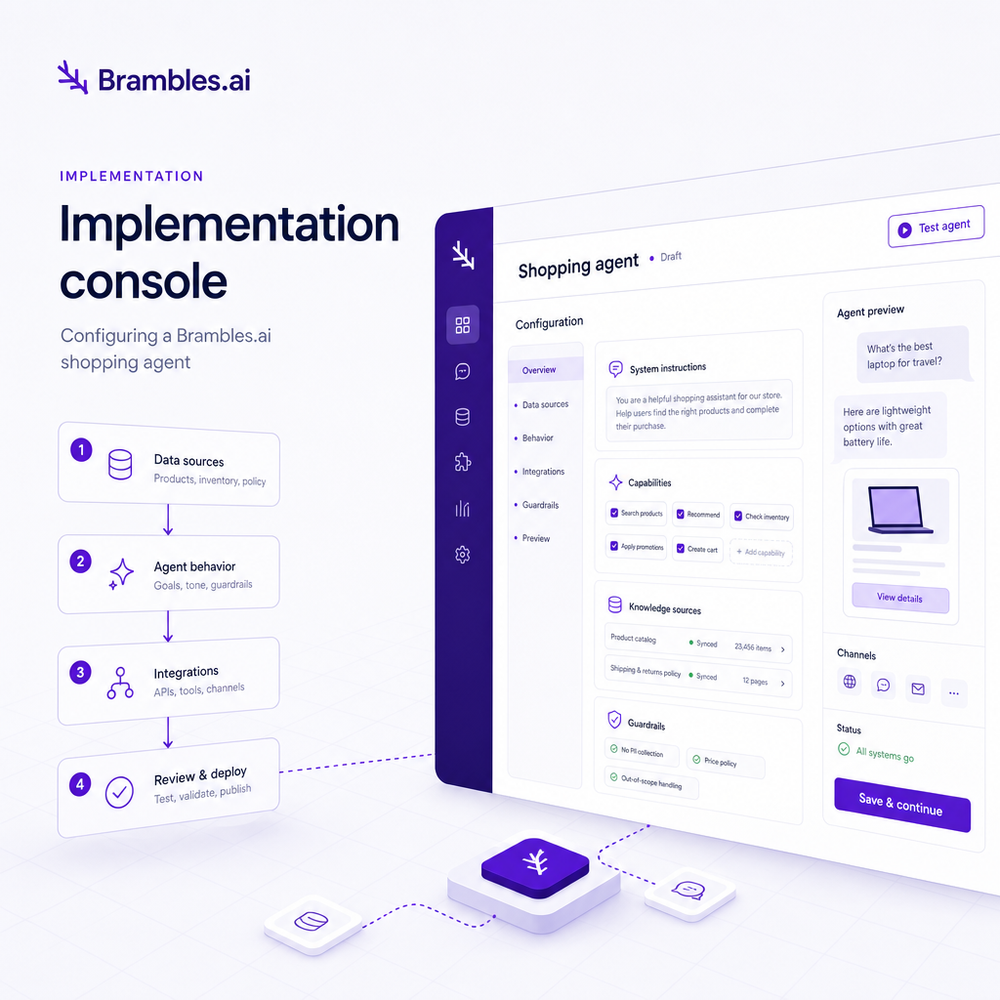
You can launch in days, not quarters. The fastest path is our Agentic Commerce Module—one script, then configure. For CMS/ecommerce stacks, use our WordPress plugin or Shopify app (coming soon). Dev teams can go deeper with APIs and custom tool connectors.
Step‑by‑step: 1) Install the script or plugin. 2) Index your catalog and content for grounding. 3) Map cart/checkout (brands) or affiliate networks (publishers). 4) Configure tone, logo, and triggers. 5) Set guardrails and disclosures. 6) Launch to 10–20% of traffic and measure. 7) Roll out sitewide. Most teams reach first value in under 2 weeks.
Anecdote: a mid‑market apparel brand integrated cart and PDP context in 10 days; the agent drove a 14% lift in revenue per session on mobile within two weeks. A publisher with 8M monthly sessions added affiliate mapping and saw a 21% RPM increase on buying guides without adding ad slots.
Implementation Checklist (Don’t Skip These)
Use this to keep launch tight and measurable: - Define the primary outcome (e.g., revenue per session, AOV, lead capture). - Choose surfaces (floating chat on PDPs, inline embeds in guides). - Ground the agent with content indexing before training prompts. - Wire cart/affiliate early; avoid “recommendation purgatory.” - Turn on proactive prompts only where intent is clear. - Add disclosure copy and guardrails. - Set control and treatment audiences. - Instrument attribution end‑to‑end. - Schedule weekly experiments and model updates.
Measuring ROI & KPIs
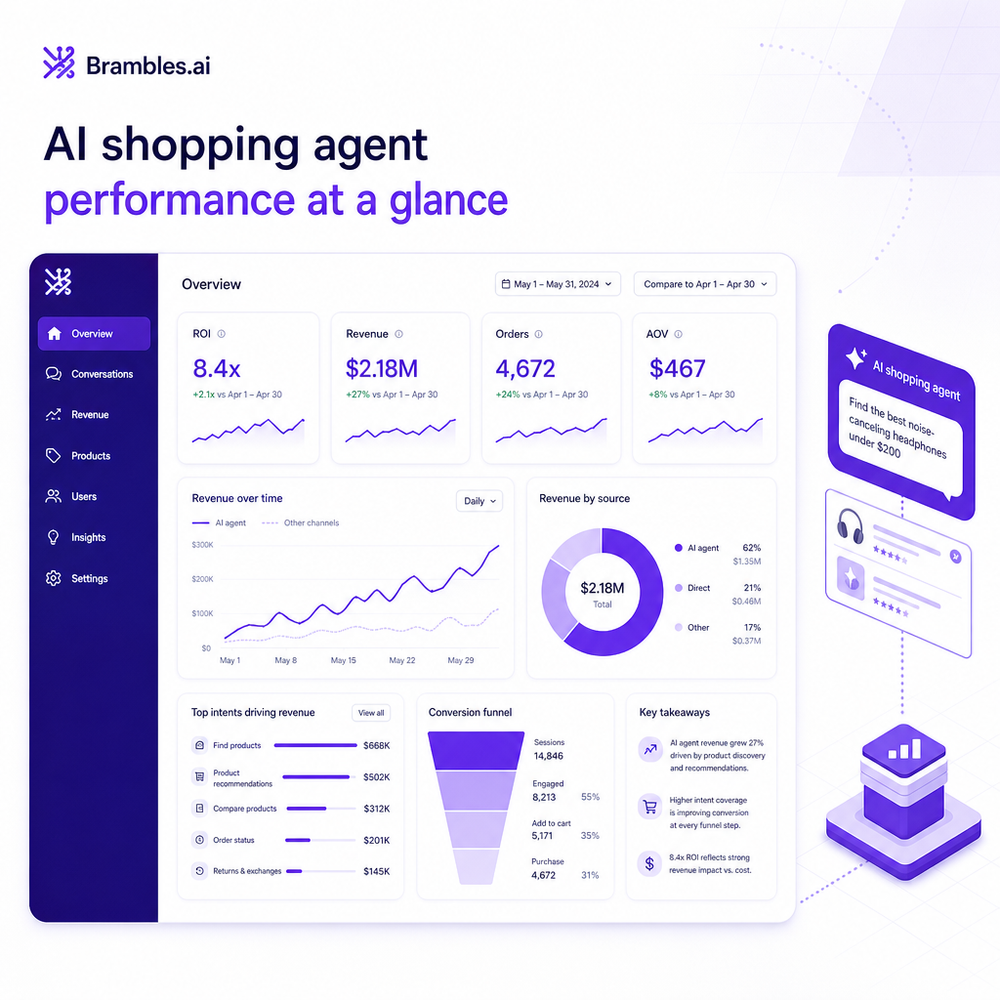
Agents should pay for themselves quickly. Focus on revenue per session, conversion rate, AOV, attach/bundle rate, and customer service deflection if you enable support flows. McKinsey notes AI‑powered personalization can drive 10–20% revenue uplift; we see the lift concentrated where the agent closes the last mile (McKinsey).
Two quick patterns from the field: - When we enabled Direct Add to Cart plus back‑in‑stock alternatives, a consumer electronics client saw a 9% conversion lift on OOS sessions. - Adding Proactive Engagement only on comparison pages increased interaction rate 38% without hurting bounce. Attribution clarity matters; Salesforce reports 76% of customers expect consistent interactions across touchpoints (Salesforce Connected Customer).
First‑Party Data, Disclosure, and Trust
Trust comes from relevance and restraint. First‑party signals (page context, on‑site behavior) are enough to personalize without third‑party cookies. Our Content Intelligence uses those signals to cite product attributes and policy details, which reduces buyer anxiety. For publishers, transparent affiliate disclosure in the conversation protects UX and compliance.
You can control tone and brand expression, too. With AI Personality and Brand Customization, the agent speaks in your voice and looks native, which matters for repeat usage. If you support post‑purchase flows, AI Customer Service handles order lookups and simple returns without handing users off to a different bot.
If you’re mapping strategy, our view is simple: contextual conversations beat ads that chase people around the web. We’ve written about why a cookieless, ad‑light shopping internet is not only doable—it converts better when questions are answered in‑flow.
Common Pitfalls to Avoid
Don’t ship a “demo brain.” Agents fail when they aren’t grounded in your content and inventory. Avoid generic prompts, wide‑open proactive triggers, and unclear attribution. Map out‑of‑stock and budget constraints explicitly. Give the agent a way to act (add to cart or affiliate link) or it becomes a Q&A toy. Finally, don’t hide disclosure; users reward clarity with trust and higher completion rates.
Future Outlook: Agents Owning the Last Mile
The next 12–24 months are about giving agents real capabilities: direct checkout, richer visualization, and omnichannel continuity. Expect tighter loops with AR try‑ons and room planning where fit matters, and more retailer‑publisher collaboration on retail media that respects UX. The winners will measure incremental profit per session, not clicks. If you’re ready to test now, start small, ground deeply, and expand based on measured lift.
FAQ
What’s the core difference between a tool and an agent?
A tool answers a query once. An agent keeps context, asks clarifying questions, and completes actions like adding to cart or sourcing an alternative—closing the loop that tools leave open.
How fast can we launch Brambles.ai?
Most sites go live in 1–2 weeks. Install the module or plugin, index content, wire cart or affiliate, set disclosures and tone, then A/B. Enterprise rollouts with SLAs are supported.
Can it support both brands and publishers?
Yes. Brands connect catalog, inventory, and cart for checkout. Publishers use affiliate mapping and retail media while keeping conversations contextual and disclosed.
Which features matter most on day one?
Start with AI Product Discovery, Proactive Engagement on high‑intent pages, and Direct Add to Cart (for brands) or Affiliate Revenue (for publishers). Add AR modules once core KPIs are stable.
Related resources on Brambles.ai
If you are implementing this, start with about Brambles.ai, native mobile shopping, contextual ads, video discovery.
Related posts
View all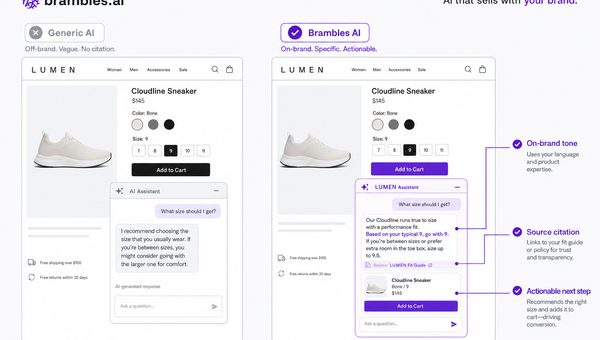
Brand-Consistent AI Chats Build Trust and Conversions
When AI mirrors your brand voice, shoppers relax—questions get answered, carts grow, and support load drops. Learn the playbook to align tone, trust, and ROI.
Sponsored Products in AI Shopping: Retail Media 101
Learn how sponsored product placements power AI shopping, how bidding and relevance work, and how to implement retail media without eroding trust or UX.
Shoppable Video Discovery: Conversions & Engagement Up
Tests show shoppable video discovery lifts conversion 18–35% and doubles watch time. See the UX patterns, KPIs, and how to deploy it quickly with Brambles.ai.
Explore Brambles.ai
Learn more about our AI-powered agentic commerce platform, agentic shopping, and shopping assistance solutions.
Explore More Insights
Discover more articles on AI, automation, and business innovation
View All Articles