AI Shopping in 2026: The Brambles.ai Scorecard
Benchmark your 2026 AI shopping plans with a practical readiness scorecard. See metrics, pitfalls, and a step-by-step rollout path for brands and publishers.
AI Shopping in 2026: The Brambles.ai Scorecard
Two weeks after lighting up conversational shopping across 30 evergreen guides, a lifestyle publisher watched revenue per session climb 28% on flat traffic. No new promos. Just letting readers ask, “best stroller for travel under $300?” and getting shoppable, in‑stock picks. In parallel, a multi‑brand footwear retailer piloted AI‑guided size help and bundle suggestions; cart starts rose 22% and returns dipped 9% in the test cohort. The pattern is repeatable: where shoppers can speak naturally, discovery accelerates and friction drops. Baymard’s research still flags findability and selection confidence as top abandonment drivers; McKinsey and Salesforce echo that relevance and guidance correlate directly with conversion. The question for 2026 isn’t if you’ll adopt AI shopping—it’s whether your stack, content, and measurement are ready to capture the lift.
Quick Answer
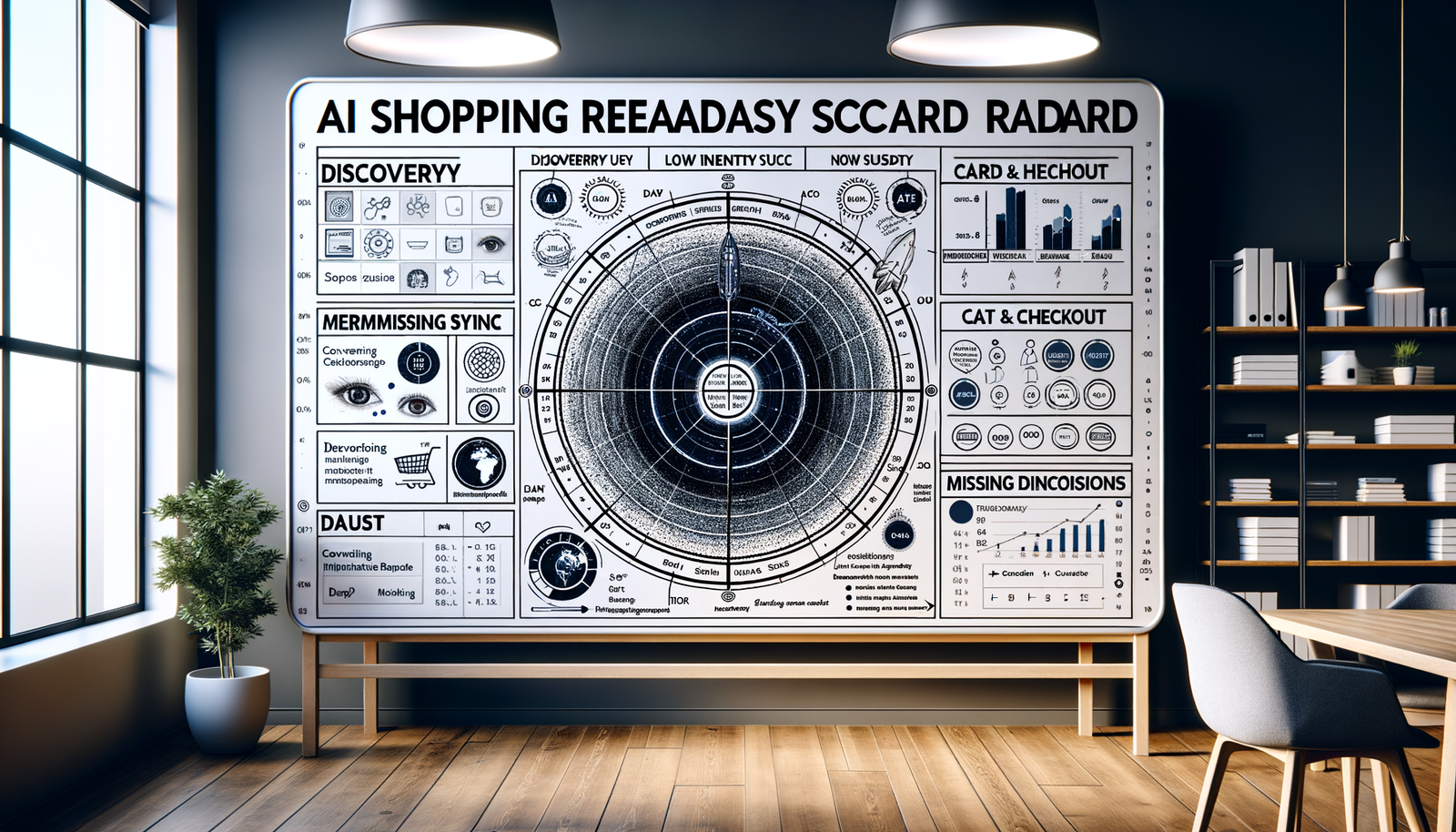
The 2026 AI Shopping Readiness Scorecard grades your brand or publication across six areas—Discovery UX, Merchandising, Cart/Checkout, Data, Trust, and Monetization (for publishers). Score yourself 0–5 in each, average the results, and benchmark initiatives. To operationalize, deploy Brambles.ai’s conversational shopping on priority pages, wire in product/affiliate feeds, and track a core KPI set (conversion, AOV, cart starts, RPS). For hands‑on help, use our quick‑start options and go live in under 30 days.
What’s Broken in 2026 AI Shopping
Most AI shopping deployments stall on context and action. Large models can summarize, but they often don’t know your catalog, stock, or constraints. Answers sound right yet link to out‑of‑stock items, or push shoppers into dead‑end pages. On publisher sites, generic pick lists erase your editorial edge and under‑monetize high‑intent sessions. Compliance is another sinkhole: disclosures are inconsistent, and models hallucinate claims that create brand risk. Finally, measurement is thin—teams can’t attribute lift beyond surface engagement.
How the Brambles.ai Readiness Scorecard Works
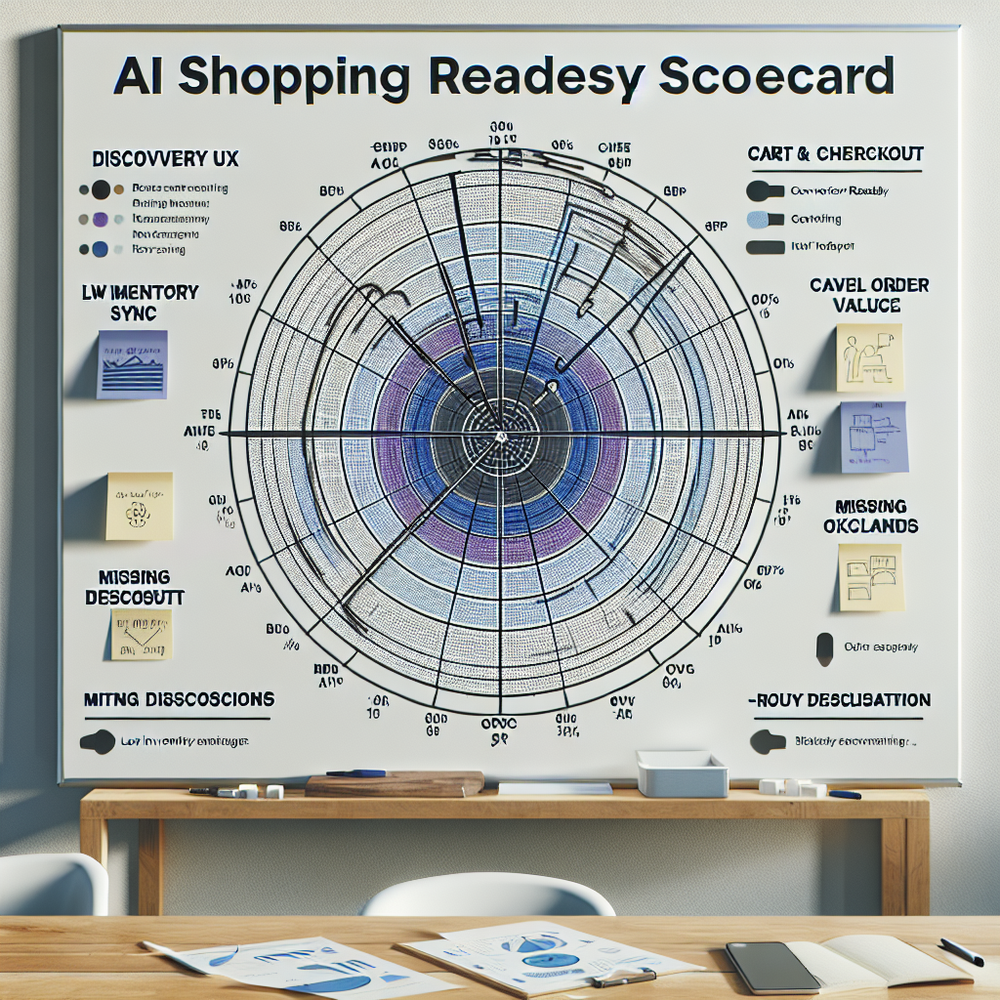
Use this scorecard to focus roadmaps and unlock budget. Score 0–5 on each dimension, then average for your readiness tier: Emerging (0–1.9), Progressing (2.0–2.9), Competitive (3.0–3.9), and Category‑Leading (4.0–5.0).
1) Discovery UX: Can shoppers ask for goals (“quiet blender under $150 for smoothies”) and get precise, in‑stock matches? Is ranking influenced by margin, returns, and inventory?
2) Merchandising & Content: Are buying guides, fit notes, and UGC usable by the assistant, not just human readers? Are bundles and kits generated contextually?
3) Cart & Checkout: Can shoppers add to cart directly from chat and maintain session context across devices? Are promos and shipping thresholds explained in plain language?
4) Data & Measurement: Do you track assisted discovery, cart starts, and resolution rate? Can you segment by prompt type, page context, and campaign source?
5) Trust & Governance: Is tone on‑brand and safe? Are disclosures clear? Can risky prompts be redirected to policy‑safe responses or human handoff?
6) Monetization (Publishers): Are answers contextually monetized without trashing UX? Do you blend affiliate across networks, include sponsored placements where declared, and protect editorial voice?
Implementation Guide: From Audit to Live in 30 Days
A focused, four‑week rollout wins political capital and real data. Here’s a practical path our team has used with both retailers and publishers.
Week 1 — Audit and objectives: Pick 5–10 high‑intent pages (category, buyer’s guide, product quiz) and define KPIs. For brands, prioritize a category with stock depth; for publishers, a guide with perennial demand. Install the Brambles Agentic Commerce Module to run controlled tests without replatforming.
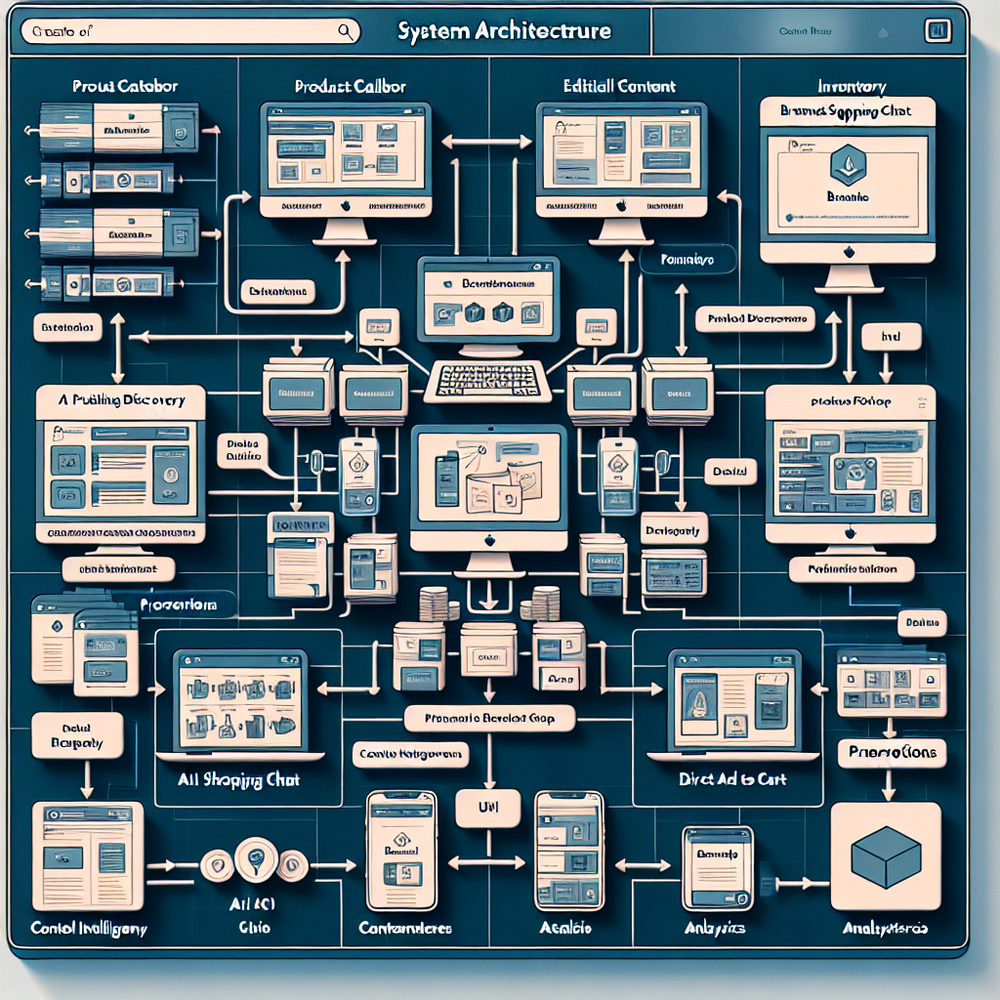
Week 2 — Wire in data and content: Index catalog and content so the assistant answers with your facts. Brambles’ Content Intelligence ingests product data, buying guides, FAQs, and policies to ground answers and reduce hallucinations. Map promotions and inventory flags to shape recommendations.
Week 3 — Ship the front end: Deploy the AI Shopping Chat widget on target pages and configure brand voice. The AI Personality feature lets you tune tone (trusted advisor vs. merchant), while Brand Customization aligns colors, fonts, and placements. For WordPress or WooCommerce, use our plugin; for Shopify, install the app as it becomes available.
Week 4 — Make it shoppable and proactive: Enable Direct Add to Cart so shoppers buy from chat without losing context. For publishers, connect affiliate IDs and optionally enable Retail Media for compliant sponsorships. Turn on Proactive Engagement to nudge relevant prompts based on page content and scroll depth. Validate analytics for assisted discovery, cart starts, and revenue per session before expanding to more pages.
Feature explainer (what actually powers the lift): AI Product Discovery lets customers ask in natural language and returns in‑stock products aligned to goals, constraints, and preferences. AI Shopping Chat keeps context across pages and sessions. Direct Add to Cart collapses steps between advice and purchase; Content Intelligence ensures every answer is backed by your catalog, guides, and policies.
Anecdote: on a 100k‑session apparel site, we saw a 42% lift in assisted cart starts after enabling Direct Add to Cart from chat and teaching the assistant to recommend “complete the look” bundles. A publisher running 12 buyer’s guides saw RPS up 24% when affiliate IDs were consistently injected in conversational answers and sponsored placements were clearly disclosed.
Measuring ROI & KPIs That Matter
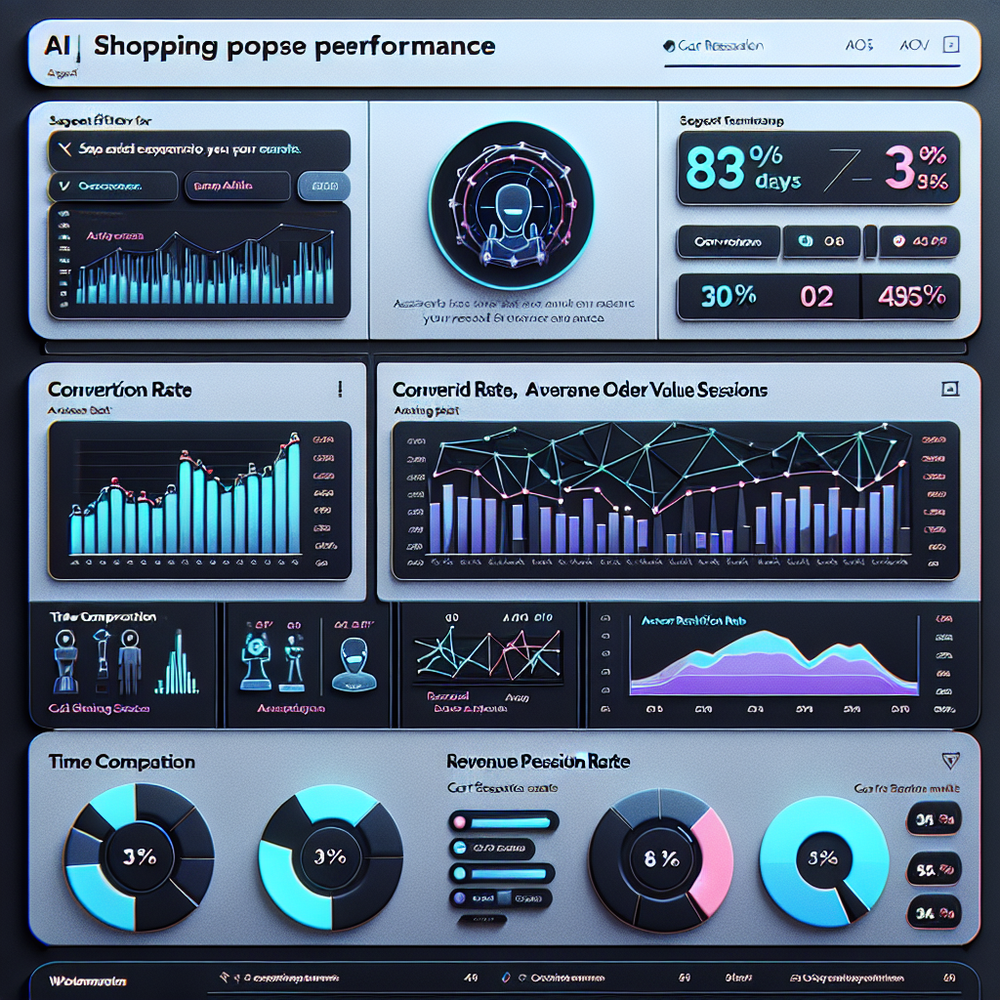
Pick a compact, comparable KPI set so wins are unambiguous. For brands: Conversion Rate (CR), Average Order Value (AOV), Cart Starts, Units per Transaction (UPT), and Assisted Revenue (chat‑touched orders). For publishers: Revenue per Session (RPS), Earnings per Click (EPC), and Answer Resolution Rate (did the chat satisfy the query without pogo‑sticking). Benchmarks: in category tests, we typically see +8–20% CR, +5–15% AOV, and +15–35% RPS once content is indexed and on‑page prompts are tuned.
Quick formulas you can copy: Assisted Uplift = (CR with chat – CR without chat) / CR without chat. Incremental RPS = (RPS on assisted sessions – RPS baseline) × assisted session share. Time to First Value = days from enabling chat to first statistically significant KPI movement at 95% confidence.
Practitioner note: a 50‑store footwear brand saw a 19% AOV lift after the assistant learned to explain price breaks (“spend $15 more for free shipping”) and suggest care kits at checkout via Direct Add to Cart. A commerce publisher improved EPC by 17% once we re‑ranked answers to prefer in‑stock merchants and mapped link destinations to fastest‑loading PDPs.
First‑Party Data, Disclosure, and Trust
Trust accelerates adoption. Ground answers in your first‑party catalog, buying guides, and policies so recommendations are reproducible. Make disclosures conspicuous where money changes hands—affiliate, sponsorship, data usage. Keep tone aligned to your brand and clearly separate advice from ads. When service questions appear (“where’s my order?”), the assistant should gracefully answer or route to support.
How Brambles.ai handles this: AI Personality defines boundaries and tone; Brand Customization makes disclosures visually consistent; Content Intelligence ensures claims are sourceable; AI Customer Service can answer order status and policy questions 24/7 with audit trails. Together, these reduce legal risk while raising satisfaction.
Common Pitfalls: A 10‑Point Checklist
Use this list during planning and QA.
- Thin grounding: Answers aren’t backed by your catalog or guides. Fix with Content Intelligence.
- No action layer: Advice ends at links. Enable Direct Add to Cart.
- Orphaned analytics: Events aren’t mapped to CR/AOV/RPS. Wire measurement first.
- Inventory blindness: Recommends out‑of‑stock SKUs. Sync feeds hourly or faster.
- Generic tone: Sounds off‑brand. Configure AI Personality and Customization.
- Hidden disclosures: Place badges near the recommendation area.
- One‑size prompts: Nudge different questions on guides vs. category pages via Proactive Engagement.
- Publisher leakage: Missing affiliate IDs or low‑EPC merchants prioritized. Use Affiliate Revenue controls.
- Over‑eager rollout: Launch sitewide without baselines. Pilot on 5–10 pages.
- No safety rails: Risky prompts go unanswered. Add policies and fallback flows.
Future Outlook: Where Your Score Should Be by Q4 2026
Competitive teams will sit at 3.5+ with three capabilities going mainstream: visual try‑ons, mobile‑native flows, and richer media in answers. Visual layers make advice tangible. Mobile native eliminates the “app vs web” gap. And short‑form video reduces uncertainty for higher‑consideration items. Publishers will blend contextual monetization and declared retail media without breaking trust.
Relevant features to plan now:
- Virtual Try‑On: Let shoppers see products on themselves for categories like beauty and apparel; expect lift in fit confidence and lower returns.
- View in Room: Place furniture and decor in a live camera view to cut hesitation on size and style.
- Native Mobile Shopping: A fast, app‑like mobile UX that keeps chat, recommendations, and checkout in reach.
- Video Discovery: Surface relevant short videos directly in conversational answers for complex products.
FAQ
How do I calculate my readiness score?
Score each of the six dimensions 0–5 based on current capabilities, average them, and compare to tiers: Emerging (0–1.9), Progressing (2.0–2.9), Competitive (3.0–3.9), Category‑Leading (4.0–5.0). Re‑score quarterly as you ship features, and keep one pilot page as your control.
What’s different for publishers vs. brands?
Publishers weight Monetization heavily—RPS, EPC, and disclosure clarity—while brands weight Cart & Checkout and post‑purchase support. Brambles supports both models: agentic shopping for retailers; contextual, compliant monetization for media.
How fast can we launch?
Most teams launch a controlled pilot in 2–4 weeks. Use the Agentic Commerce Module or the WordPress plugin, and the Shopify app as it rolls out. Dev teams can follow our integration and examples to wire data and events quickly.
Does AI chat replace site search?
No—think “and,” not “or.” AI chat handles goals and comparisons; traditional search remains great for known‑item queries and SKU lookups. Many teams place chat on category and guide pages first, then augment search results with conversational answers later.
How do we budget for this?
Anchor budget to KPIs and pilot lift. Start on a limited set of pages, then expand as you hit CR/AOV/RPS targets. See the pricing pages for plan details and contract options, then kick off with a short pilot and a clear success threshold.
Related resources on Brambles.ai
If you are implementing this, start with Brambles.ai, enterprise solutions, about Brambles.ai, developer docs.
Related posts
View all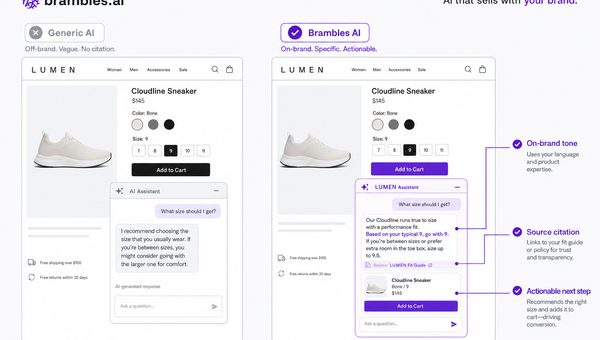
Brand-Consistent AI Chats Build Trust and Conversions
When AI mirrors your brand voice, shoppers relax—questions get answered, carts grow, and support load drops. Learn the playbook to align tone, trust, and ROI.
Sponsored Products in AI Shopping: Retail Media 101
Learn how sponsored product placements power AI shopping, how bidding and relevance work, and how to implement retail media without eroding trust or UX.
Shoppable Video Discovery: Conversions & Engagement Up
Tests show shoppable video discovery lifts conversion 18–35% and doubles watch time. See the UX patterns, KPIs, and how to deploy it quickly with Brambles.ai.
Explore Brambles.ai
Learn more about our AI-powered agentic commerce platform, agentic shopping, and shopping assistance solutions.
Explore More Insights
Discover more articles on AI, automation, and business innovation
View All Articles