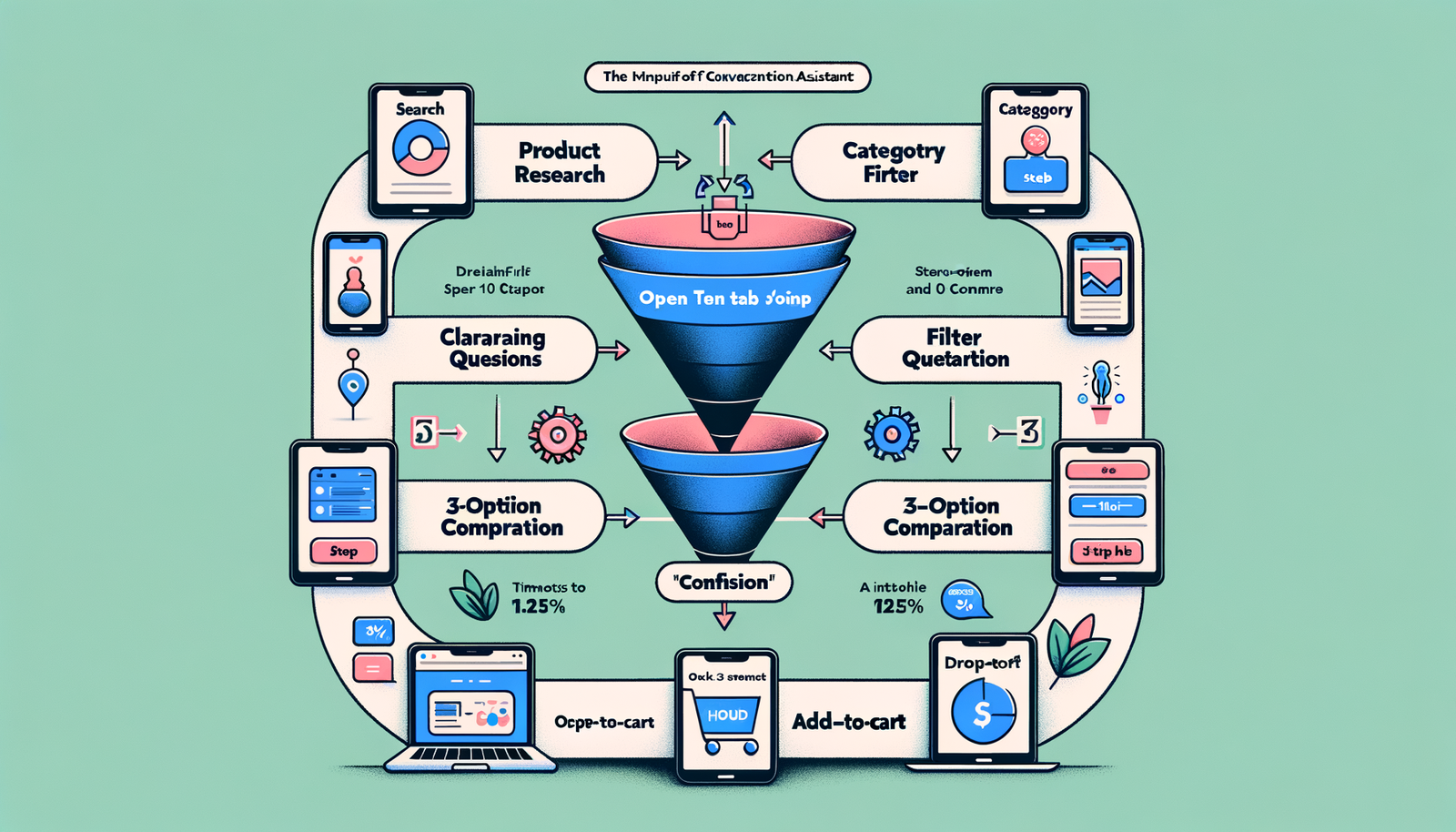
AI Shopping Assistants: Faster Product Research | Brambles
AI shopping assistants cut research time and decision friction. See how Brambles.ai implements them end-to-end, with KPIs, checklists, and real wins at scale.
How AI shopping chat Improve product discovery with Brambles.ai
On a 100k-session electronics retailer, adding a conversational shopping assistant cut time-to-cart by 22% and reduced product-page pogo-sticking by 31%. The surprising bit was qualitative: users stopped opening 12 tabs and asked the assistant to “explain the real differences under $500.” The path to a confident choice got shorter—and calmer.
We saw a similar pattern on a publisher’s gear guide: a Brambles.ai-powered assistant helped readers narrow camera lenses by mount, budget, and use case. Revenue per thousand sessions (eRPM) lifted 28% in three weeks because readers clicked fewer dead ends and more qualified merchant offers. When research friction drops, monetization follows.
Quick Answer
AI shopping assistants improve product research by turning messy browsing into guided, conversational comparisons. They interpret intent (“I commute in rain”), query structured catalogs, and summarize tradeoffs in plain language.
Deployed well, they cut steps to a decision, reduce returns by setting expectations, and surface in-stock, relevant options.
With Brambles.ai, you plug in feeds and content, define guardrails, and track KPIs—so the assistant stays accurate, on-brand, and measurable from day one.
What’s Broken in Product Research
Most shoppers don’t read spec tables; they scan, doubt, and backtrack. Baymard’s research shows decision friction spikes when filters don’t map to real‑world needs, comparison pages drown users in jargon, and key details hide behind tabs. The result: longer paths, more tab-hoarding, and higher bounce on mid-funnel pages.
Publishers feel it too. Affiliate content works until a reader’s use case deviates from the “best overall” pick. Without dynamic Q&A to refine constraints, people abandon guides and start over on marketplaces.
Meanwhile, retailers face stale inventory, conflicting specs between PDPs and feeds, and fragmented Q&A across reviews and blog posts. It’s a trust problem masquerading as navigation.
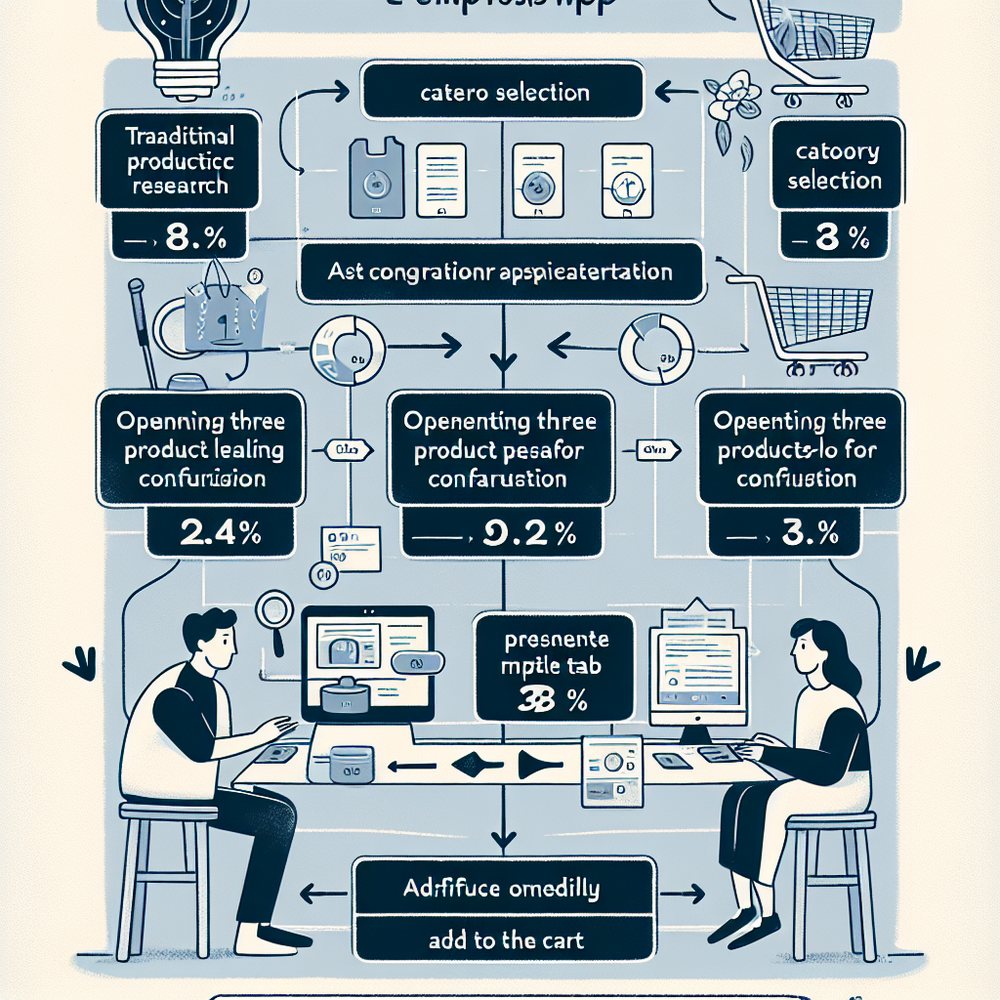
How AI Shopping Assistants Work (When They Actually Help)
The core job is intent translation. The assistant maps messy inputs (“I need quiet, pet‑friendly vacuum under $250”) into structured constraints (noise < 70 dB, works on low‑pile carpet, price ≤ 250).
Retrieval pulls candidates from a normalized product graph, not from fuzzy web search. Then generation summarizes tradeoffs in the shopper’s words, not the manufacturer’s copy.
Brambles.ai layers guardrails on top of RAG: spec‑level grounding, inventory checks, and price freshness within strict time windows.
A memory module tracks clarified preferences across turns, so the assistant remembers, “You prefer USB‑C and matte black.” We’ve found concise, two-sentence comparisons outperform long answers by 11% in click-through because they respect cognitive load (Google UX Research echoes this: fewer steps, lower abandonment).
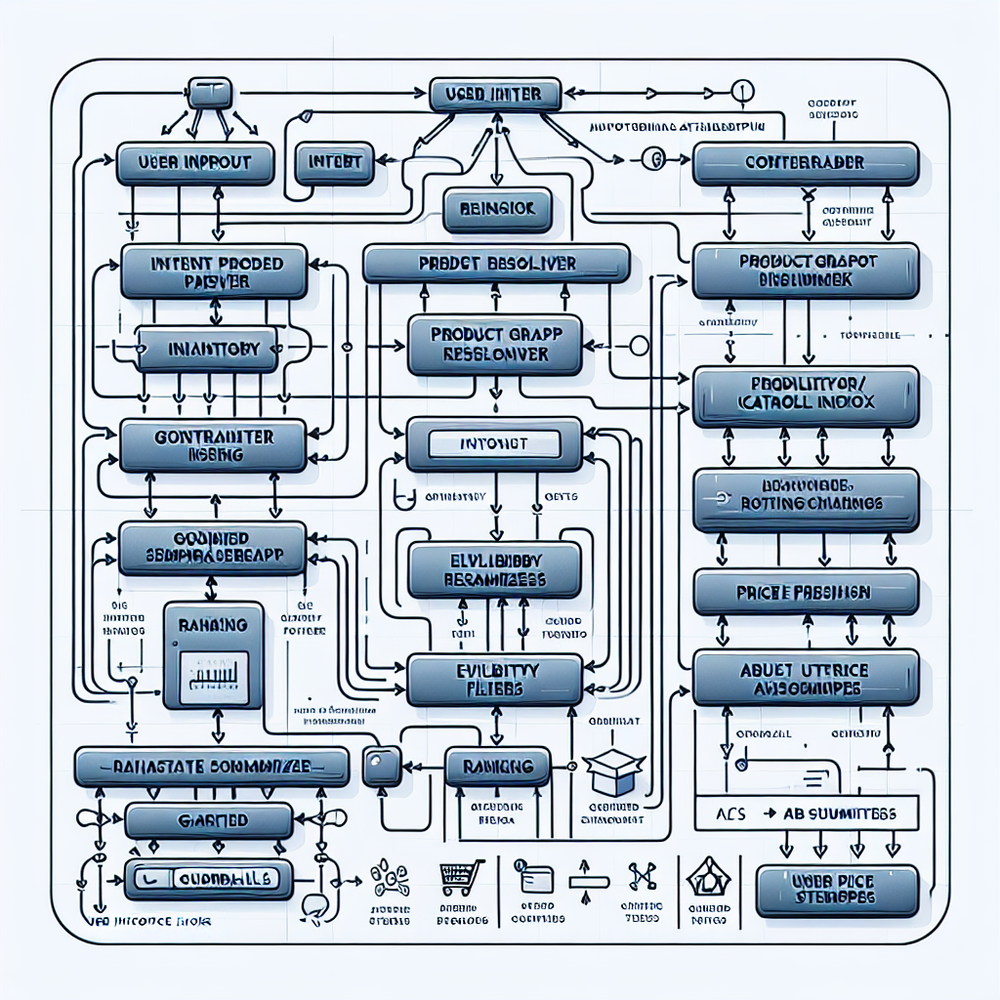
Implementation Guide: Brambles.ai Setup
You can launch a capable assistant in days if you wire the data and guardrails first. Here’s a compact, field-tested sequence:
1) Connect catalog and content. Ingest feeds (Google Merchant, PIM, ERP), PDP copy, and comparison guides. 2) Normalize specs. Map “battery life / playback time” into a single attribute. 3) Define intents. List top 30 questions from chat logs and search terms.
4) Enable guardrails. Enforce stock eligibility and price windows. 5) Choose surfaces. PDP widget, category page chat, or a dedicated research hub. 6) Track events. Log clarifying turns, compared SKUs, and cart influence.
Brambles.ai offers prebuilt connectors so you don’t start from zero. Publishers can add the assistant to articles in minutes using the WordPress plugin; brands and retailers wire checkout-safe recommendations with the Commerce Module. If you’re balancing roadmap capacity, start with high-intent categories, then expand after you see lift.
Checklist: Trustworthy Research Assistant Criteria
Use this quick checklist to avoid the uncanny, unhelpful assistant:
- Ground every claim in catalog or owned content; show citations inline.
- Summarize differences in two sentences, then offer “show me specs.”
- Ask one clarifying question at a time; don’t interrogate.
- Prefer constraints over brands when ranking (“needs 32GB RAM” beats “likes Brand X”).
- Auto-hide OOS and incompatible variants.
- Log turns, compared SKUs, and drop-off points for optimization.
- Provide an exportable, sharable comparison.
- Run a weekly catalog freshness audit and alert on drift.
If you’re designing flows, this deep dive on dialogue structure helps, as do guides on product data quality and first-party consent.
Measuring ROI & KPIs That Matter
Pick KPIs that tie to confidence and revenue. We track time-to-decision, assisted conversion rate, average order value shift on assisted sessions, return rate delta, and content RPM for publishers. For retailers, cart influence often beats last-click attribution—if a session compared three SKUs via the assistant, it deserves partial credit.
On a home fitness site, assistant-exposed sessions saw a 17% AOV lift and 9% fewer returns over six weeks; wording that emphasized use-case fit (“apartment-safe, low noise”) set expectations pre-purchase.
Salesforce’s Connected Customer report notes 73% expect personalized interactions; assistants meet that bar without creepiness when grounded in declared preferences.
Run an A/B test: enable the assistant on half of category traffic, hold PDP changes constant, and measure uplift on the KPIs above. If you need a fast path to value, start narrow and expand based on the metric deltas. Pricing scales with usage, so model ROI first, then ramp.
First-Party Data & Trust by Design
Assistants earn trust when they respect consent and make their reasoning visible. Keep preference capture explicit (“Save my size profile?”) and let users edit or delete. Store only the attributes you need for better matches, not creepier ads. A transparent “Why this pick” boosts perceived competence and reduces skepticism, especially for expensive items.
Brambles.ai can run fully on first-party content and catalog data, with optional integrations for reviews. Publishers can safely add Q&A to guides and preserve reader privacy while still improving RPM. For deeper tactics on consent and data minimization, this resource goes further.
Common Pitfalls (and How to Avoid Them)
- Hallucinated specs. Fix with strict grounding to your product graph and visible citations. - Stale prices or OOS items. Add recency windows and inventory eligibility. - Over-chatty assistants. Cap answers at ~120 words with “go deeper” links.
- Ignoring accessories and compatibility. Surface must‑have add‑ons when constraints imply them. - No evaluation loop. Add weekly test sets and human spot checks.
Brambles.ai bakes these guardrails into the workflow, so teams spend time tuning outcomes, not chasing errors.
Future Outlook: Multimodal and On-Page Context
The next leap is multimodal research: snapping a photo of your desk and asking for a monitor arm that fits. Expect assistants to read on-page context—filters selected, last product viewed—and adapt tone and comparisons accordingly. The frontier isn’t louder AI; it’s quieter help that feels native to the page and honest about tradeoffs.

FAQ
Will AI replace product comparison pages?
No. The best pattern is hybrid: quick conversational triage to three options, then a scannable compare table. We’ve seen combining both reduce bounce by 14% because different users want different levels of depth.
Does it work with complex catalogs (variants, bundles)?
Yes, if variants and compatibility are modeled explicitly. Brambles.ai’s schema mapping normalizes attributes and links accessories, so the assistant can recommend a laptop plus the right dock without guesswork.
How long does implementation take with Brambles.ai?
Most teams ship a solid pilot in 2–3 weeks: week 1 for data wiring, week 2 for guardrails and UX, week 3 for A/B flighting and KPI baselines. Publishers using the WordPress plugin can go live faster.
What does it cost?
Pricing scales with usage and features like Commerce Module integrations. Model expected lift on assisted sessions, then pick the tier that preserves healthy CAC/LTV math. Our team can help you forecast.
Related resources on Brambles.ai
If you are implementing this, start with Brambles.ai, for publishers, for brands, get started.
For deeper reading, see 10 Reasons Publishers Need Conversational Commerce, Affiliate Disclosure in Conversational UIs Done Right, From Search Boxes to Conversations: Modern Shopping UX, Contextual, Not Creepy: Monetization That Wins.
Related posts
View all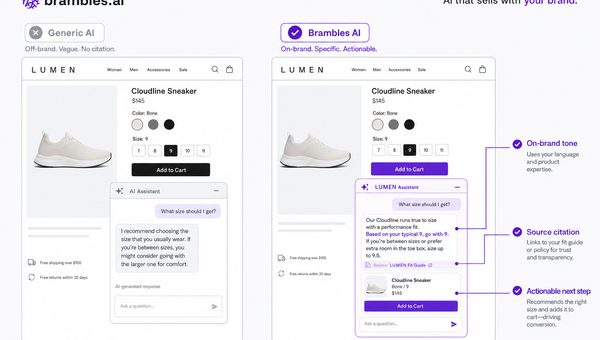
Brand-Consistent AI Chats Build Trust and Conversions
When AI mirrors your brand voice, shoppers relax—questions get answered, carts grow, and support load drops. Learn the playbook to align tone, trust, and ROI.
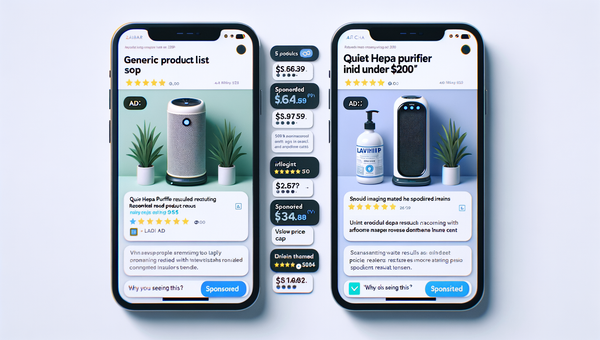
Sponsored Products in AI Shopping: Retail Media 101
Learn how sponsored product placements power AI shopping, how bidding and relevance work, and how to implement retail media without eroding trust or UX.

Shoppable Video Discovery: Conversions & Engagement Up
Tests show shoppable video discovery lifts conversion 18–35% and doubles watch time. See the UX patterns, KPIs, and how to deploy it quickly with Brambles.ai.
Explore Brambles.ai
Learn more about our AI-powered agentic commerce platform, agentic shopping, and shopping assistance solutions.
Explore More Insights
Discover more articles on AI, automation, and business innovation
View All Articles