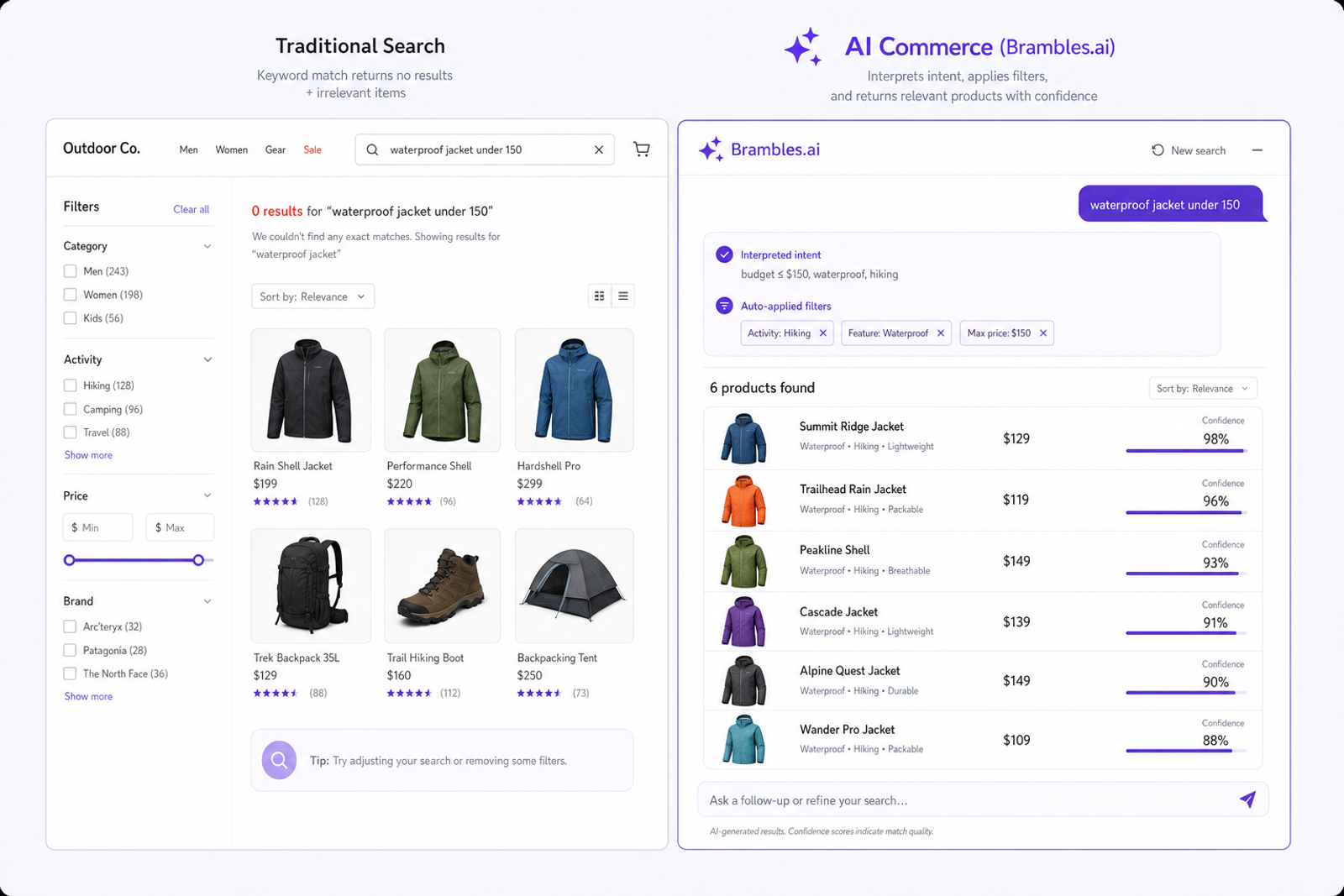
AI Product Discovery: Why Search Bars Fail Shoppers
Most shoppers don't think in keywords. Learn why legacy search bars miss intent, how AI product discovery converts more, and how to implement it safely.
AI Product Discovery: Why Search Bars Are Failing Your Customers
On a 60k‑SKU apparel site we audited, 38% of searches were full sentences like “breathable black running leggings with pockets.” The keyword engine returned 0 results for 1 in 7 of those queries. When we swapped in AI product discovery, same traffic, we saw a 23% lift in product views per visit and a 17% drop in search exits in two weeks. The pattern repeats: shoppers describe intent; legacy search parses tokens. And that mismatch silently taxes revenue.
Quick Answer
Search bars fail because customers express needs (“carry‑on that fits Delta bins, under $200”) while legacy search expects exact keywords and attributes. AI product discovery interprets natural language, maps it to product attributes, and converses to clarify details. With tools like Brambles.ai, you embed a conversational layer that understands context, reduces zero‑result dead ends, and can add items to cart directly—improving findability, conversion, and AOV without ripping out your stack.
What’s Broken with Keyword Search
The core issue: keyword engines match words, not intent. Baymard’s research notes a large share of ecommerce sites struggle with thematic queries and synonyms. That’s why “shoes for flat feet” can miss motion‑control footwear, or “sofa for studio” yields noise. Add long‑tail phrasing, typos, and colloquialisms and your zero‑result rate creeps up, pushing users back to Google or your competitors.
Observable symptoms are consistent across categories: high search exits, pogo‑sticking between category and PDPs, filter thrash (adding/removing filters without progress), and an over‑reliance on site navigation. In usability sessions, we frequently hear, “I don’t know what this is called, but I need…” That sentence is where AI discovery starts paying for itself.
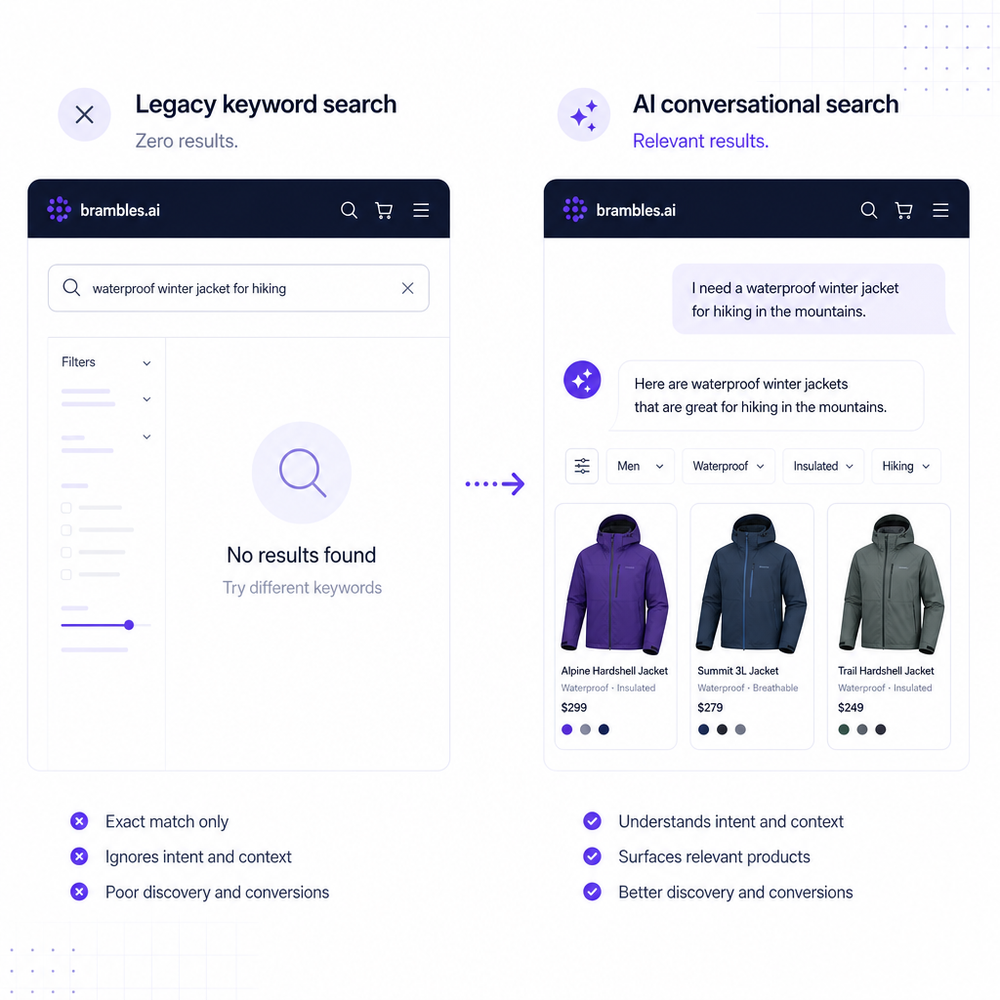
How AI Product Discovery Works
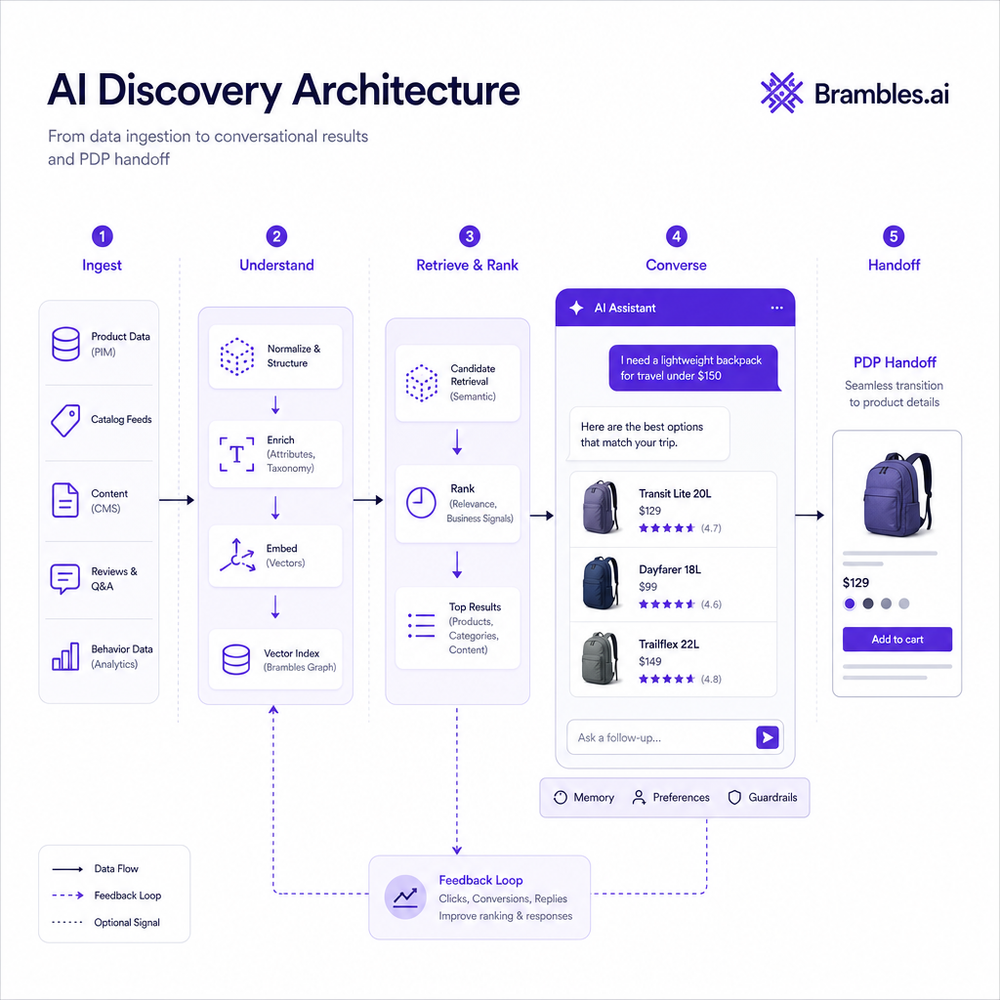
AI discovery interprets language, retrieves candidates semantically, and re‑ranks with business context. Practically, that means ingesting your catalog, normalizing attributes, creating vector embeddings, then answering queries like “eco‑friendly pans that won’t scratch glass cooktops” by mapping intent to materials, coatings, compatibility, and budget. Multi‑turn chat clarifies missing info (“Gas or induction?”) instead of forcing users to backtrack through filters.
Where Brambles.ai fits:
• AI product discovery interprets natural language across your site and returns ranked products with transparent reasoning. It also handles budgets, compatibility, and style adjectives without manual rules.
• Content intelligence indexes your catalog, PDPs, buying guides, and FAQs to power more accurate answers. This reduces “unknown attribute” dead ends and makes results citeable.
• AI shopping chat puts an assistant on every page, so discovery isn’t trapped in the header bar. It supports multi‑turn clarification and context handoff to PDPs.
• Proactive engagement nudges relevant prompts on high‑intent pages (e.g., “Need a 27" monitor that rotates to portrait?”), lifting engagement without being pushy.
• Direct add to cart lets users purchase from the chat once fit is confirmed, compressing the journey from query to checkout and lifting micro‑conversion rates.
Two quick anecdotes: a 100k‑session beauty retailer saw a 42% lift in search‑driven revenue after AI re‑ranking reduced irrelevant brand‑first results. A consumer electronics marketplace cut zero‑result queries by 61% in week one by indexing compatibility data the original engine ignored.
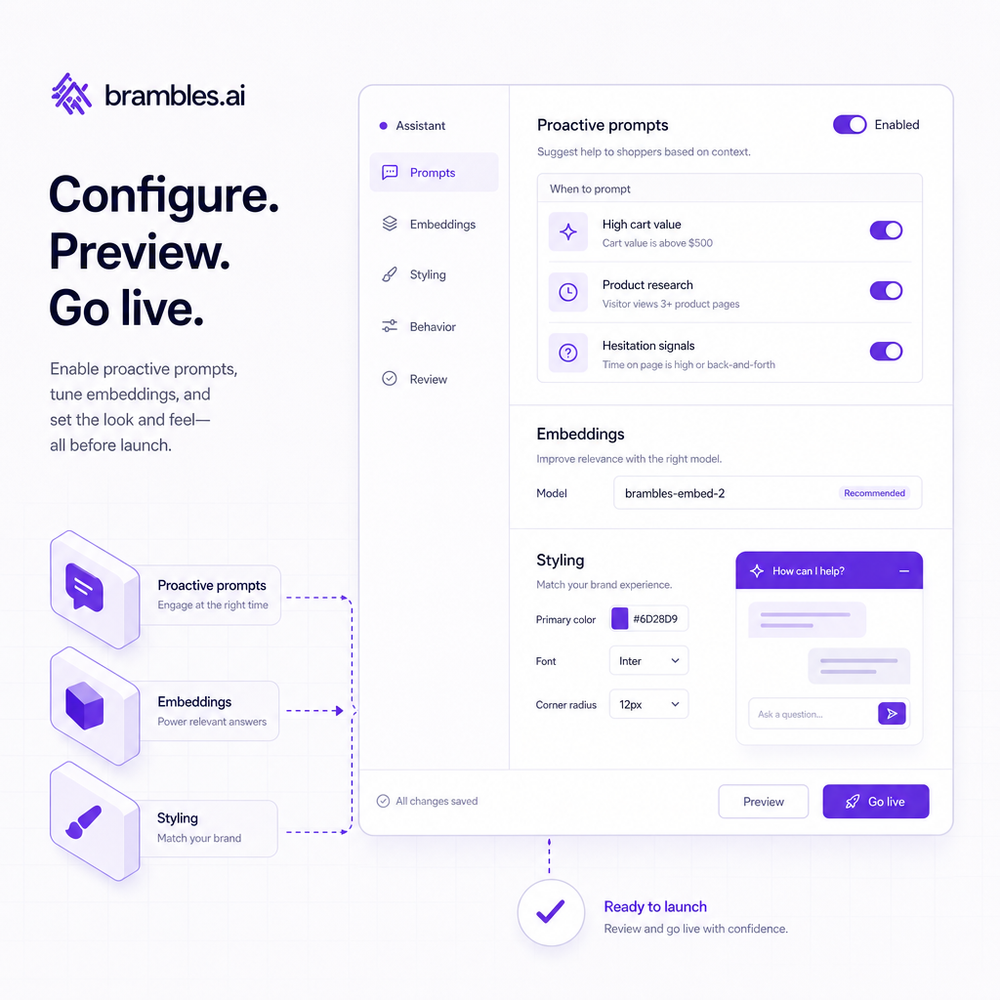
Implementation Guide: Stand-Up in Days, Not Months
You don’t need to rip out your platform. Brambles.ai drops in as a lightweight layer that speaks your catalog. Most teams ship an MVP in under two weeks with a phased rollout that won’t spook SEO or merchandising.
Step‑by‑step checklist:
1) Add the script and place the assistant. Use the Agentic Commerce Module or the WordPress plugin; for Shopify, register for early access. Choose floating chat or inline blocks on key guides.
2) Index your content. Connect PIM/CMS feeds and let content intelligence crawl PDPs, guides, and FAQs. Map critical attributes (fit, compatibility, materials) and enable daily refresh.
3) Configure tone and on‑brand UI. Set colors, fonts, and voice, and define guardrails (e.g., budget ranges, excluded SKUs).
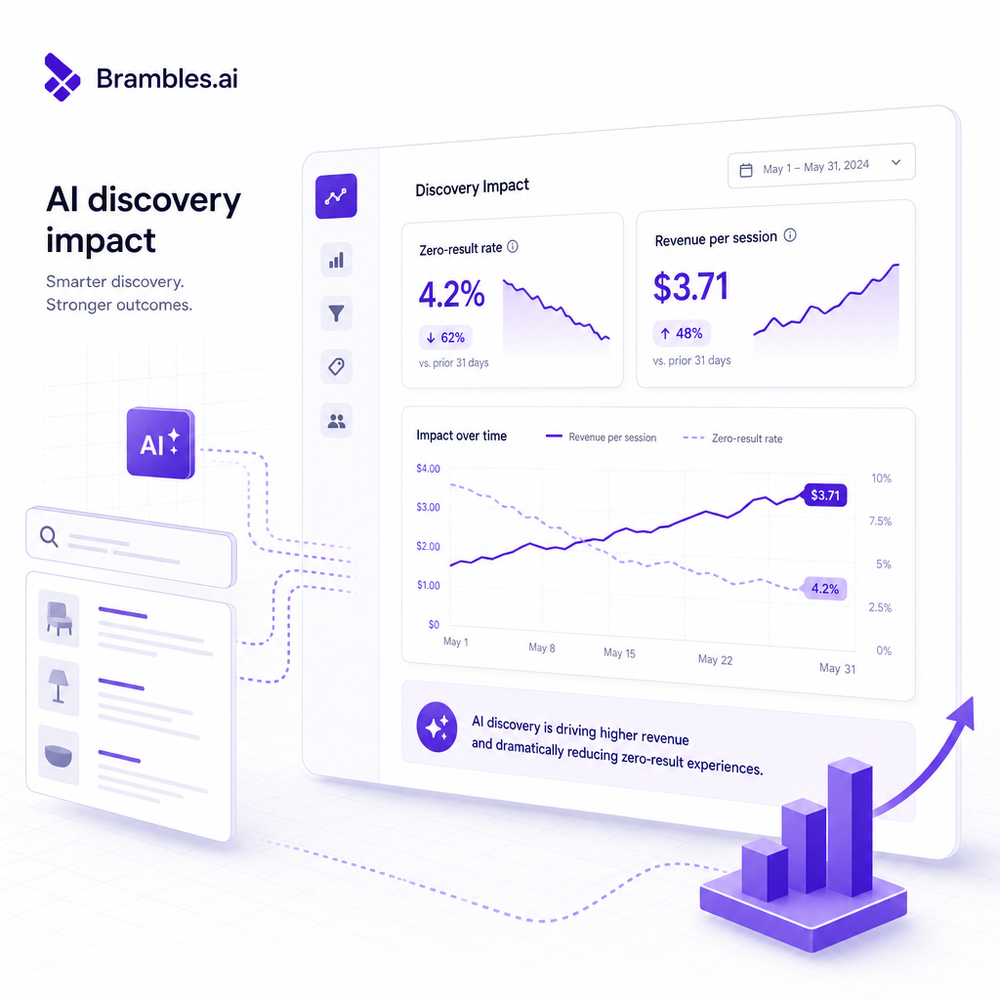
4) Define success metrics. Track zero‑result rate, search exit rate, product views per visit, add‑to‑cart from chat, and revenue per session. Ship to a 10–20% traffic holdout first.
5) Expand coverage. Turn on proactive prompts for high‑intent pages. Add Direct add to cart after PDP fit checks. Later, layer in customer service for order lookup in the same UI.
If you’re a content site or marketplace, conversational discovery also powers monetization without creepy tracking. Start with a limited taxonomy slice, then scale across categories as training signals improve.
Measuring ROI & KPIs That Matter
Focus on friction metrics first. If AI discovery is working, you’ll see zero‑result queries fall and search exits drop in the first week. Then watch downstream: add‑to‑cart from chat, AOV, and revenue per session. In our tests, a 42% lift in search‑driven revenue on a beauty site came from better attribute matching, not traffic growth.
Recommended KPI set: zero‑result rate, search exit rate, time‑to‑first‑relevant result, PDP depth reached, micro‑conversions from chat, and return visits via saved conversations. Salesforce’s research ties personalized journeys to higher loyalty; Google UX studies show faster task completion drives satisfaction. Track both. For publishers, add RPM from commerce content and incremental affiliate revenue.
Pro tip: benchmark a holdout experience using your existing search bar. Keep a 10% slice on legacy search for two weeks, then compare apples to apples. We’ve seen a 26% faster “time to product” on a home goods site just by clarifying measurements in chat.
First‑Party Data, Transparency, and Trust
Shoppers reward helpful guidance, not dark patterns. Use first‑party session context (page, referrer, prior clicks) to tailor prompts, and make disclosure clear when monetization is involved. Brambles.ai supports transparent, on‑message recommendations and keeps the assistant inside your brand voice.
For service moments, the same UI can answer “Where’s my order?” without derailing shopping. This continuity builds trust—McKinsey notes consistent, low‑effort journeys drive retention. Keep data minimal and purpose‑bound; you don’t need to fingerprint users to be useful.
Common Pitfalls to Avoid
Treating AI like a black box. Expose why results are recommended (materials, fit, compatibility). It calms stakeholders and helps customers calibrate trust.
Launching everywhere at once. Start with high‑intent categories and top discovery pages, then expand. Use proactive prompts sparingly until you’ve tuned acceptance rates.
Ignoring brand voice. Configure tone and guardrails to prevent off‑brand recommendations. Small details—like how budget ranges are discussed—matter.
Forgetting mobile ergonomics. Make sure chat doesn’t crowd the add‑to‑cart area, and that prompts respect thumb zones. Native, app‑like patterns test best in our studies.
Future Outlook: Multimodal Discovery Becomes Table Stakes
As shoppers mix text, images, and video, discovery needs to follow. Expect visual try‑ons, room previews, and short‑form video answers alongside semantic search. Teams piloting these see lifts in confidence to buy and lower return risk—especially in fashion, beauty, and furniture.
Brambles.ai already supports this path: embed conversational blocks in buying guides, let users preview products on themselves or in their rooms, and surface relevant videos in results. That’s product discovery that feels human.
FAQ
What’s the fastest way to pilot AI discovery?
Add the Agentic Commerce Module, enable indexing, and launch on one category with a 10–20% traffic split. Measure zero‑result and search exit rate first, then expand.
Does this replace my existing search engine?
Not necessarily. Many teams run AI chat alongside the search bar, then retire the bar only if KPIs beat holdout by a wide margin. You can also feed AI results back into your native SERP.
Will this hurt SEO or page speed?
No, when implemented as deferred JavaScript with server‑side indexing. We’ve shipped sub‑100ms response times from the model cache and avoided CLS shifts with careful placement.
How do publishers benefit if they don’t own inventory?
Conversational discovery matches products to reader intent in‑article and can monetize via affiliate or retail media without third‑party cookies. This is contextual, not creepy.
Related resources on Brambles.ai
If you are implementing this, start with enterprise solutions, about Brambles.ai, developer docs, contextual ads.
Related posts
View all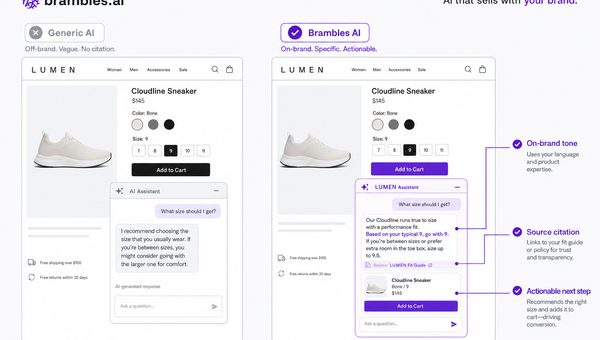
Brand-Consistent AI Chats Build Trust and Conversions
When AI mirrors your brand voice, shoppers relax—questions get answered, carts grow, and support load drops. Learn the playbook to align tone, trust, and ROI.
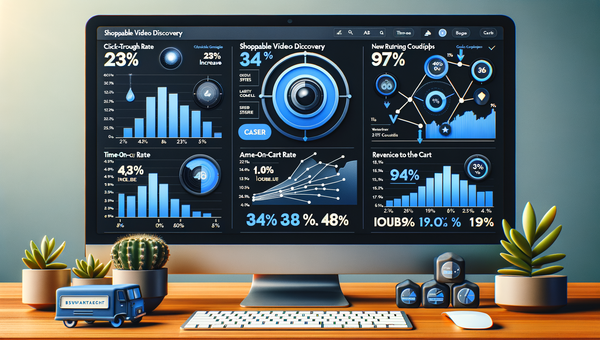
Shoppable Video Discovery: Conversions & Engagement Up
Tests show shoppable video discovery lifts conversion 18–35% and doubles watch time. See the UX patterns, KPIs, and how to deploy it quickly with Brambles.ai.
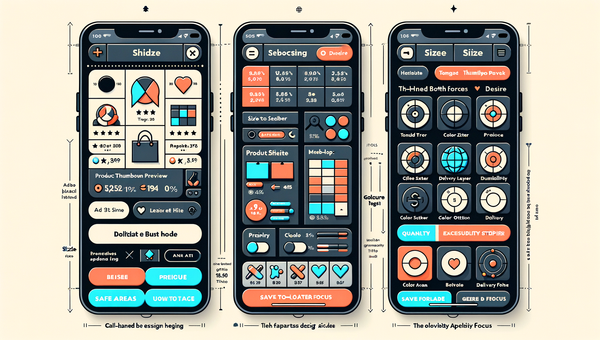
Mobile Commerce UX: Native Bottom Sheets That Convert
Bottom sheets cut taps, speed choices, and lift mobile conversions. Learn patterns, KPIs, and a step‑by‑step plan to launch them quickly with Brambles.ai.
Explore Brambles.ai
Learn more about our AI-powered agentic commerce platform, agentic shopping, and shopping assistance solutions.
Explore More Insights
Discover more articles on AI, automation, and business innovation
View All Articles