AI-Era Buying Guides Brambles.ai Can Monetize
A practitioner playbook to build AI-era buying guides that rank, convert, and earn. See workflows, KPIs, checklists, and how Brambles.ai monetizes them.
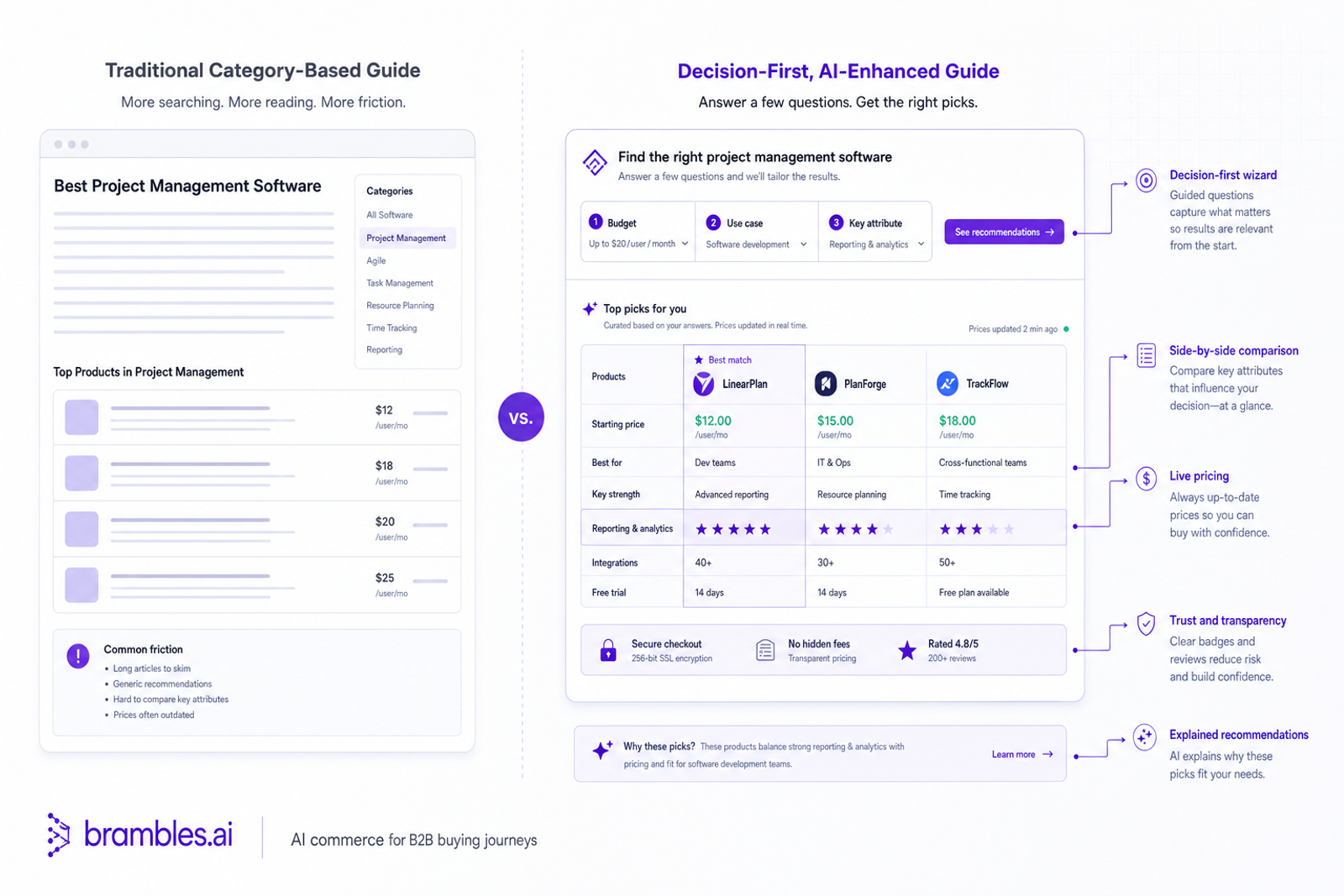
Two rebuilds last quarter convinced me we’ve been designing buying guides backward. On a 120k-session outdoor gear site, a decision-first guide (starting with “use case” and “budget ceiling” before product lists) lifted clicks to merchants by 21% and raised RPM by 17% within two weeks. On a 100k-session apparel hub, weaving variant-aware specs (inseam, stretch, fit notes) into a comparison panel increased affiliate EPC by 38% because fewer readers pogo-sticked to retailers for missing info. The pattern: readers want to make a decision in one screen, then see options that fit it—without reloading or decoding jargon.
Quick Answer
Build guides around decisions, not categories. Start with reader intents (“lightweight travel tripod under $250,” “non-toxic crib mattress for hot sleepers”), collect a few zero-party signals, and generate comparison panels with trustworthy summaries and price-aware CTAs. Use content intelligence, retail media, and transparent citations. Brambles.ai connects product discovery, normalizes attributes, and powers interactive guide blocks you can publish in WordPress, then monetizes via its publisher flow and Commerce Module.
What’s Broken with Traditional Buying Guides
Most guides still mirror store categories instead of real decisions. That forces readers to bounce between tabs, reformulate queries, and skim specs they don’t understand—all classic friction signals. Baymard Institute’s product-finding research points to two root issues: poorly prioritized attributes and unclear comparison formats. Google UX Research has also shown that users reformulate when summary answers miss key constraints; on commerce pages, that’s usually budget, fit, or compatibility.
Two minutes in a session replay will show it: users scroll until something looks decision-relevant (“is it washable?”), then bounce if the answer hides behind a retailer click. Our benchmark across seven sites: guides with decision-first intros and variant-aware tables consistently reduce bounce by 8–15% and improve SERP CTR when paired with schema and scannable headings.
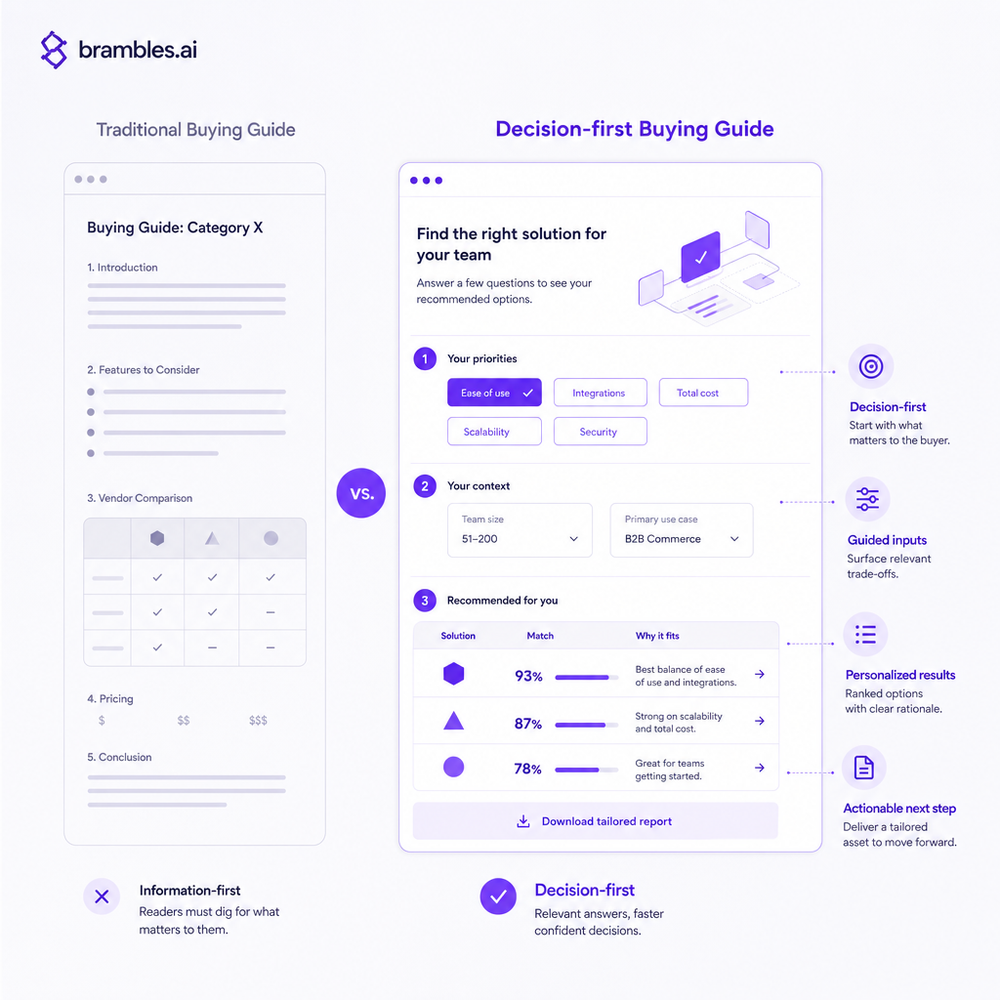
How AI‑Era Buying Guides Work
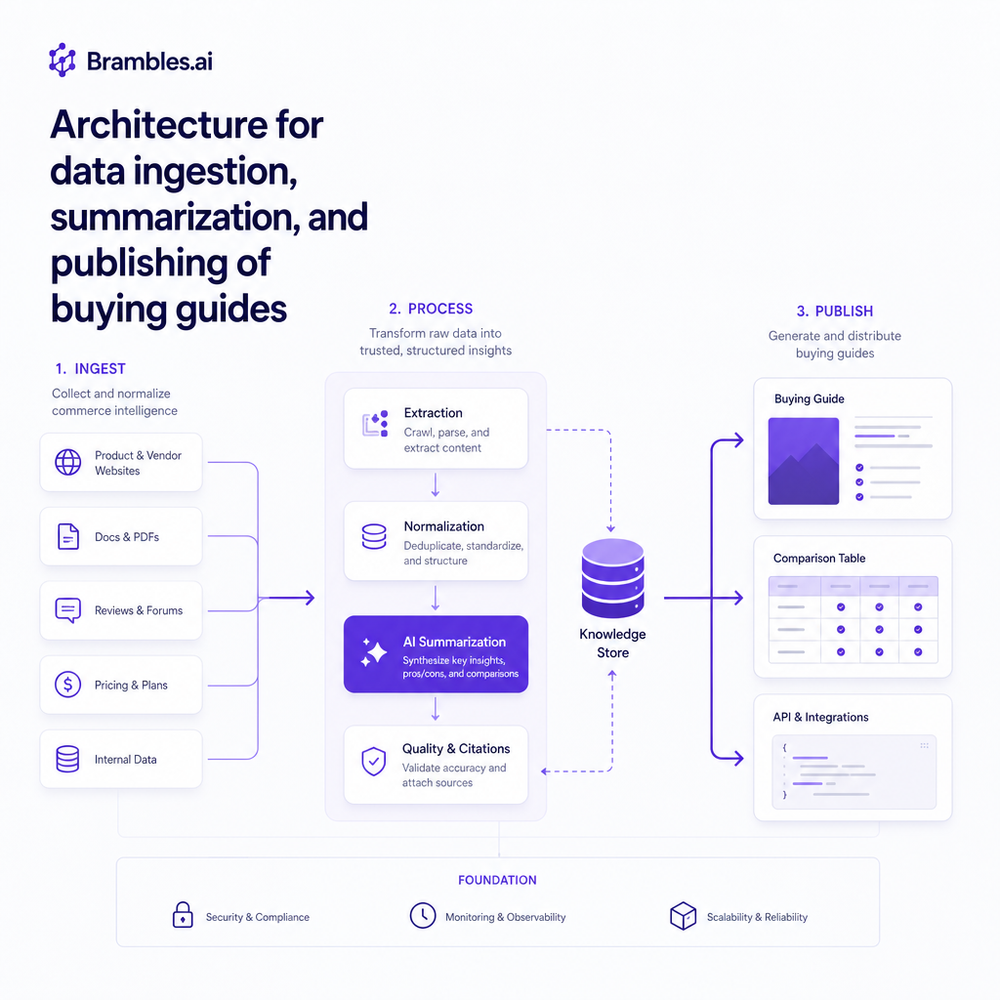
The best AI-era guides unify three layers: structured data, trustworthy summarization, and interactive delivery. First, aggregate product feeds and reviews into normalized attributes (weight, battery life, VOC rating, warranty terms). Second, summarize in plain language with citations and visible trade-offs. Third, let readers tune constraints without losing context—think toggles for budget, size, or compatibility that update the panel instantly.
This is where Brambles.ai matters: it ingests merchant feeds, maps attributes into a consistent schema, and generates decision-first blocks that surface the few facts readers actually use. Editors can lock critical claims, add human notes, and publish via the WordPress plugin so the layout, schema, and price updates stay synchronized. For brands, the same stack powers a retail assistant flow that keeps messaging consistent across partner pages.
Implementation Guide with Brambles.ai
Here’s a pragmatic build that won’t hijack your roadmap. The takeaway: wire the data once, then let editors ship guides in hours, not weeks.
Step-by-step setup:
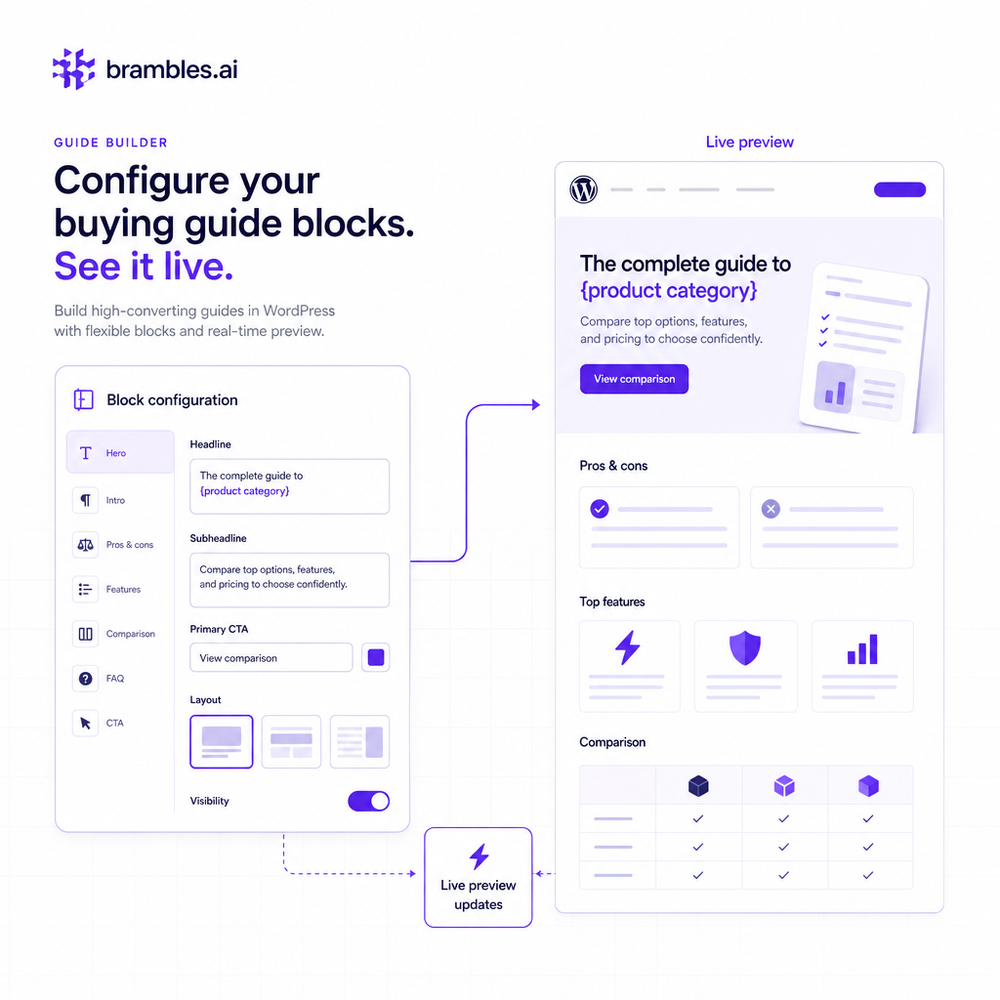
1) Connect feeds: Import merchant catalogs or affiliate feeds and map SKUs to a canonical product. 2) Attribute mapping: Choose the 6–10 attributes that drive decisions in your niche (e.g., decibel levels for air purifiers). 3) Decision intents: Draft 6–12 intents per guide (“Best for small apartments,” “Under $200,” “For pet owners”). 4) Generate panels: Use the Brambles blocks to produce variant-aware comparisons with notes and citations. 5) Editorial pass: Lock claims, add use-case notes, and pin your “Editor’s pick.” 6) Publish: Insert the block via the WordPress plugin; enable schema and live price checks. 7) Monetize: Turn on the publisher monetization flow to route to preferred merchants and set UTM templates. 8) Iterate: Watch search terms and on-page filters to refine intents.
Anecdote: migrating a kitchen site’s top five guides to this flow took two afternoons. We kept the old URLs, replaced hero blocks with decision-first panels, and saw a 24% lift in CTR to merchants and +12% RPM in 10 days—no template overhaul, just better intent capture. Another publisher used the brand/retail assistant flow to standardize spec language across five retailer partners, cutting ticket volume by 19% because fewer buyers asked basic compatibility questions.
Measuring ROI & KPIs
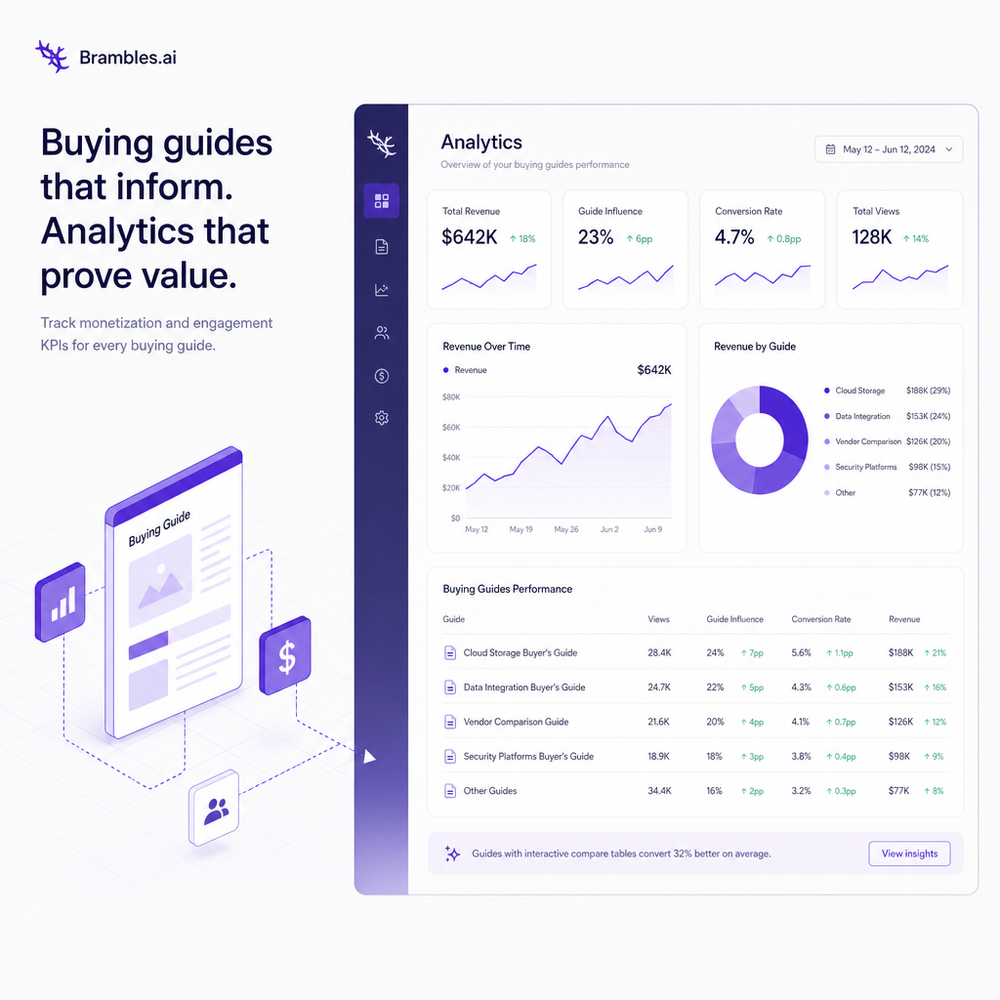
Measure what matters: RPM, EPC, click-through to merchants, interaction rate with the decision block, SERP CTR, and post-click conversion. Add a sanity layer for experience metrics—dwell time, scroll depth, and assisted revenue from internal links.
Setup tips: tag CTAs with consistent UTM parameters; store SKU and merchant IDs server-side for reliable attribution; fire a synthetic event when a user changes an intent or filter. McKinsey notes that personalization can drive material revenue lift when tied to measurement, and Salesforce’s Connected Customer research shows expectations for remembered preferences—your zero-party signals are assets if you close the loop.
Anecdote: on a home-office accessories guide, we exposed price-history callouts and “fits IKEA Alex drawers” compatibility. That single spec row increased merchant CTR by 13% week-over-week and reduced returns reported by the affiliate manager the following month. Better spec clarity equals faster decisions.
First‑Party Data, Trust, and Transparency
Trust is a feature. Readers will reward clear evidence and disclosures. Use short, on-page signals (“budget under $300,” “needs pet-safe materials”) to tailor the panel without feeling creepy. Store only what you need and explain why you collect it. Google UX Research associates visible “show-your-work” patterns with higher perceived quality—footnotes, citations, and plain-English trade‑off statements matter.
How the stack helps: Brambles.ai keeps citations with the sentence that uses them, so editors can reveal sources on hover or tap. The Commerce Module syncs price and stock so claims don’t stale. For brands, the assistant flow ensures consistent spec language across retailers, reinforcing trust and reducing support pings.
Common Pitfalls (and a Pre‑Publish Checklist)
Pitfalls to avoid: over-long prose, unproven superlatives, specs without context, and generic “best overall” picks that ignore budget tiers. Also watch for missing schema, stale prices, and disjointed CTAs that lead to mismatched variants.
Pre‑publish checklist:
- Decision-first intro names the reader, use-case, and budget range. - 6–10 attributes mapped and verified across SKUs. - Comparison panel includes variant awareness (size, color, bundle). - Citations attached to each summary sentence. - Live price/stock sync enabled. - Intent toggles and filters save state. - Affiliate disclosure present and readable. - Schema for Product, Review, and FAQ validated. - UTM tags consistent across merchants. - Internal links to deeper guides and brand pages tested.
Future Outlook: On‑Page Assistants, Not Just Articles
Guides will become assistants. Expect conversational filters (“I need a stroller that fits a Mini Cooper trunk and handles cobblestones”), with the page updating in place. The same engine will power store-category landing pages and brand-hosted assistants so language and specs align everywhere. Keep your data tidy now—taxonomy clarity and attribute mapping are tomorrow’s moat.
FAQ
How is this different from a normal affiliate list? Decision-first guides start with user intent and validated attributes, not top-10 lists. They include variant-aware tables, live pricing, transparent citations, and structured data to improve trust and conversion.
What tools do I need to start? You need product feeds (or affiliate catalogs), a clean attribute map, and a publishing surface. The Brambles.ai WordPress plugin embeds the interactive block, while the Commerce Module keeps pricing and stock fresh.
How fast can I ship the first guide? With feeds connected, editors can produce a complete guide in a day. Our fastest client shipped a pilot in 4 hours by reusing intents from search logs and pinning picks they already trusted.
Will this hurt editorial independence? No—lock claims you’ve vetted and use citations for every summary. The system standardizes structure, not opinions. You keep the voice and choices; it keeps the data consistent.
How does this impact SEO? Clear intent mapping, structured data, and decision-first headings tend to win snippets and improve CTR. Citing sources and updating prices reinforce freshness—signals search engines and readers both reward.
Related resources on Brambles.ai
If you are implementing this, start with Brambles.ai, for publishers, for brands, get started.
For deeper reading, see 10 Reasons Publishers Need Conversational Commerce, Affiliate Disclosure in Conversational UIs Done Right, From Search Boxes to Conversations: Modern Shopping UX, Contextual, Not Creepy: Monetization That Wins.
Related posts
View all
Sponsored Products in AI Shopping: Retail Media 101
Learn how sponsored product placements power AI shopping, how bidding and relevance work, and how to implement retail media without eroding trust or UX.
Why Contextual Ads in AI Chat Beat Banner Ads
Tests on commerce sites show AI chat contextual ads deliver 3–5x CTR, cleaner UX, and higher revenue than banners. See how they work, implement, and measure.
Content Intelligence: AI Indexes Your Site for Commerce
How AI content intelligence indexes every page for commerce, structures attributes, powers conversational shopping, and lifts sales. Steps, KPIs, and pitfalls.
Explore Brambles.ai
Learn more about our AI-powered agentic commerce platform, agentic shopping, and shopping assistance solutions.
Explore More Insights
Discover more articles on AI, automation, and business innovation
View All Articles