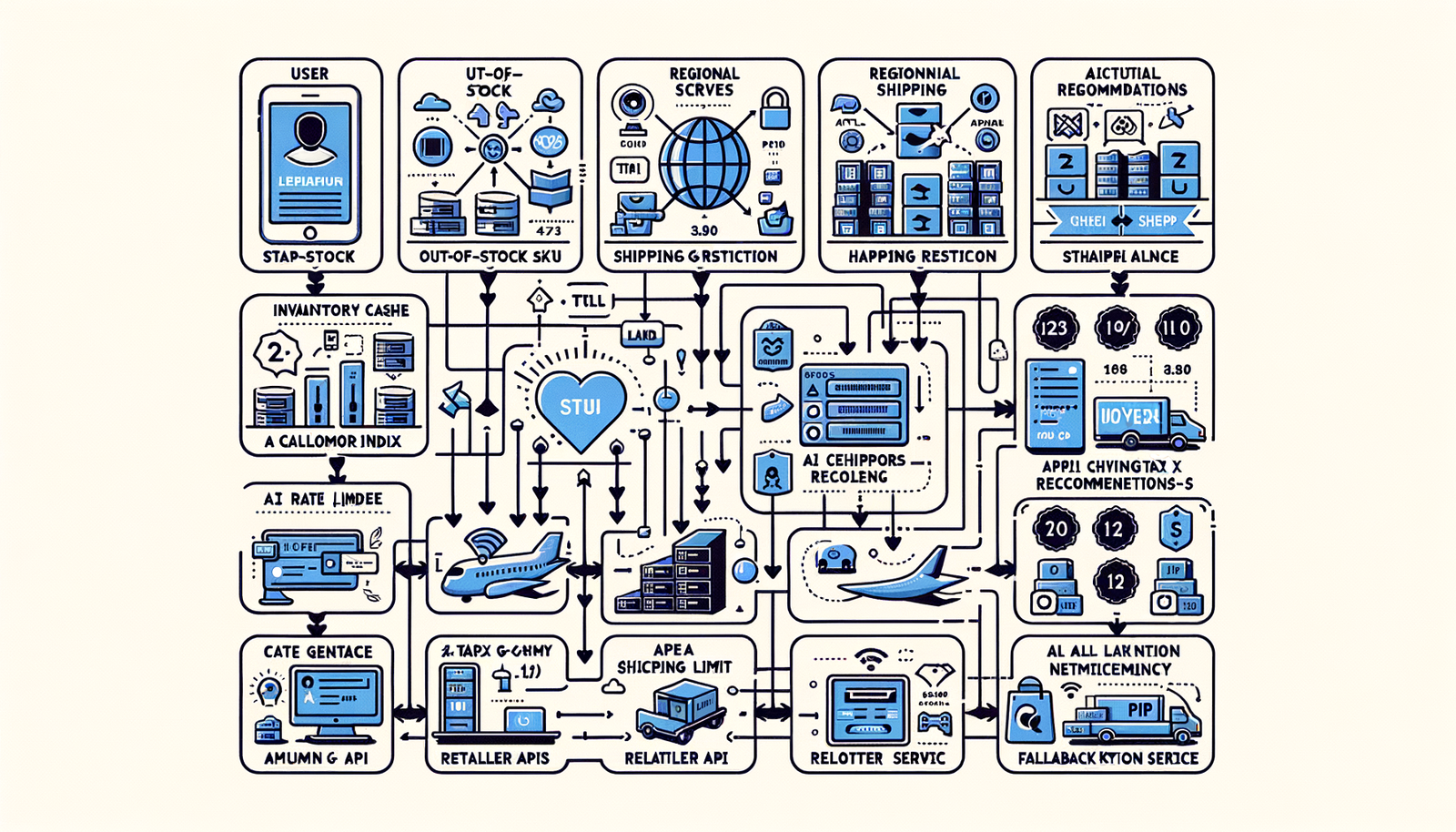
Agentic Commerce Gaps: How Brambles.ai Solves Constraints
Most agentic commerce demos ignore inventory, PII, latency, and policy. Here’s how Brambles.ai handles real-world constraints—safely, fast, and at scale.
Three weeks into a publisher pilot, our agent got stuck on something no demo room prepares you for: the SKU the user wanted flipped to “store-only” at 3:12 p.m., mid-conversation. The bot had already recommended it, and the shopper was ready to buy.
We rerouted to an in-stock variant in 480 ms, preserved trust, and still earned the commission. That save wasn’t luck—it was infrastructure: inventory watchers, guarded actions, and latency-aware fallbacks.
The hard part of agentic commerce isn’t intent understanding. It’s surviving real-world constraints: inventory drift, PII/PCI boundaries, shipping rules, rate limits, and SLA-busting latency. Most “AI shop” demos hand-wave these details; production traffic punishes them. We’ve learned the seams show up first at the cart, at regional restrictions, and when a human changes a price while your agent is mid-sentence.
This post maps the most common infrastructure gaps we see and how Brambles.ai closes them—without sacrificing speed, compliance, or monetization. Expect actionable steps, a measurement plan, and a short checklist you can ship this quarter.
Quick Answer
Agentic commerce fails when agents can’t reconcile intent with live constraints—inventory, variants, shipping, pricing, compliance, and latency. Brambles.ai handles this with a guarded action layer, near‑real‑time product indexing, PII redaction, and fast paths for add‑to‑cart and order support. Features like AI product discovery, proactive engagement, and direct add to cart operate over a content intelligence index, with policy guardrails and SLA‑aware fallbacks that keep conversations trustworthy and fast.
What’s Broken: The Unseen Constraints Killing Agentic UX
The top failure modes happen after the model nails intent. We see seven recurring gaps:
1) Inventory drift and variants. Catalogs refresh continuously; sizes and colors disappear. If your agent recommends a now‑out‑of‑stock SKU, trust takes the hit. Baymard’s checkout research shows abandonment spikes with unexpected stock or price changes; we see the same pattern with conversational flows.
2) Latency. Every extra second nukes intent. Google’s UX research links slow loads to higher bounce; we see session exits rise sharply once round‑trip exceeds ~1.2s on mobile. Agents that call three vendors and a coupon API synchronously will miss the window.
3) Compliance and PII boundaries. Agents that casually ask for emails or card data create risk. PCI scope creep, privacy consent, and affiliate disclosures must be respected in-text and in logs. This is where many promising proofs die in legal review.
4) Price/tax/shipping normalization. A model can’t improvise tax nexus. Region‑specific shipping cutoffs, hazmat restrictions, and currency rounding need rules and APIs, not vibes.
5) Retail media and monetization. Sponsored placements must be labeled and ranked responsibly. Without policy‑aware ranking and disclosures, agents either leave money on the table or invite user backlash.
6) Multi‑channel identity. Moving from an article to chat to cart without losing context is hard. Session stitching and first‑party events decide whether AOV rises or we just rerun the same Q&A.
7) Operational guardrails. Rate limits, vendor outages, and partial failures need circuit breakers and smart fallbacks. Otherwise, “Sorry, something went wrong” becomes a growth cap.
How Brambles.ai Handles Real‑World Constraints
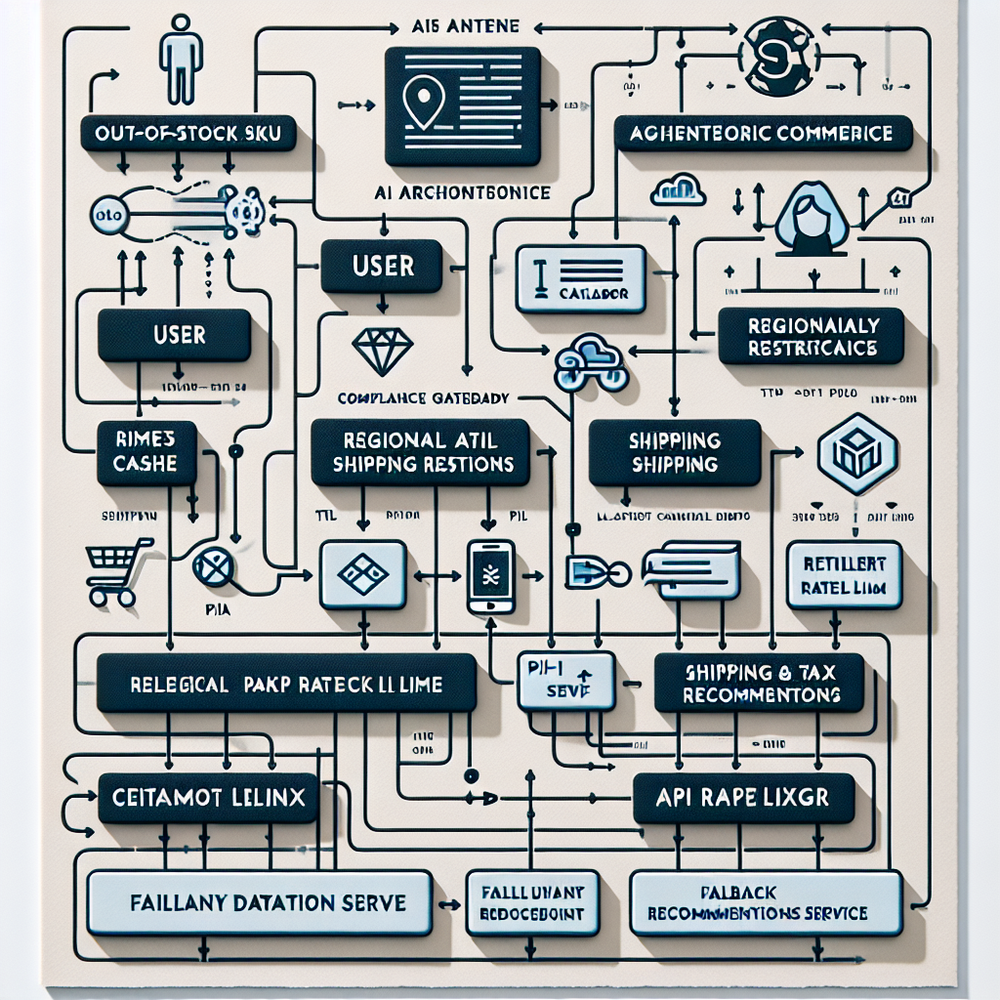
Brambles.ai couples a fast product index with a guarded action layer so conversations never outrun the truth of your catalog or your policies. The agent plans, the guardrails verify, and only then do we act.
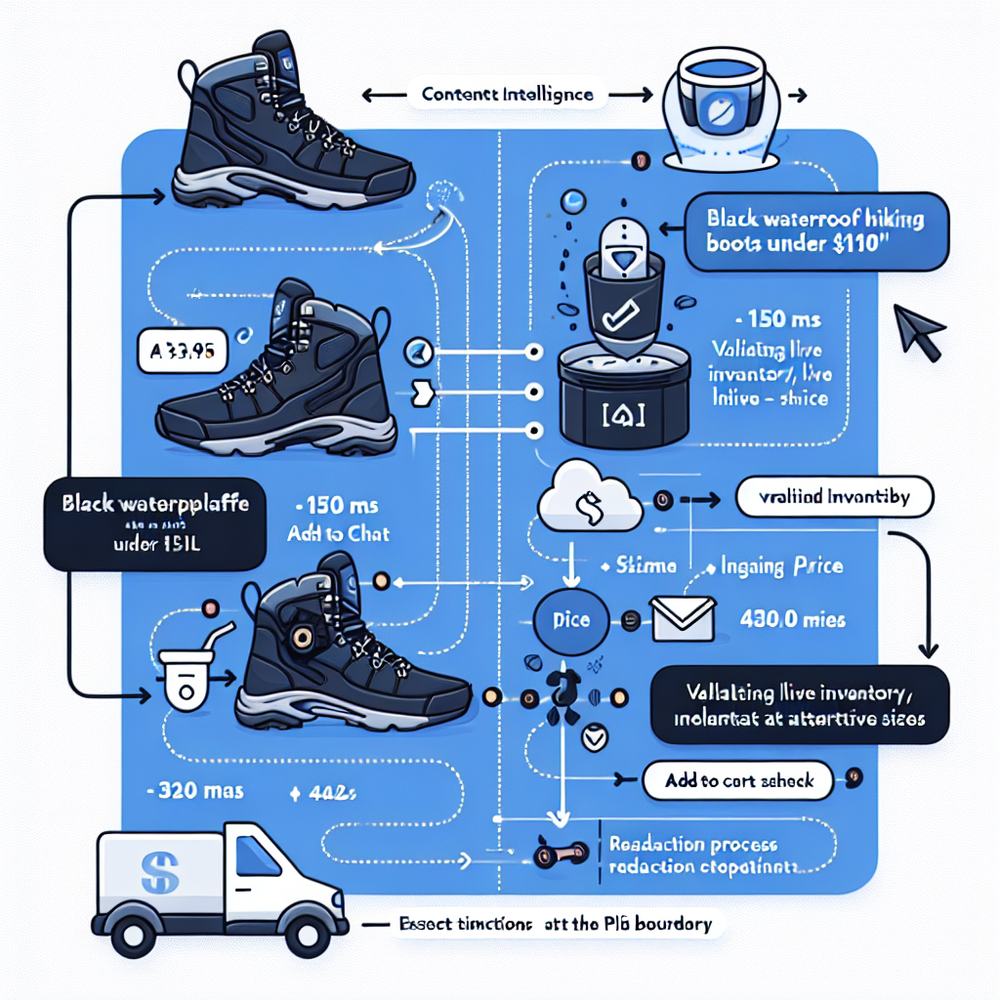
Live product truth. Our content intelligence index ingests feeds, sitemaps, PDPs, and price/inventory APIs. We store variant‑level attributes (size, color, region, hazmat flags) and apply freshness policies. Before any recommendation is surfaced, we revalidate volatile fields like price and stock.
Guarded actions. We wrap “do” steps—adding to cart, applying coupon, fetching order status—in a policy engine. PII is redacted at boundaries; unsafe steps are downgraded to “show options.” For carts, we default to a server‑side, low‑latency path that avoids extra page loads.
Latency‑aware orchestration. We parallelize low‑risk fetches, short‑circuit on first viable product, and degrade gracefully if a retailer API stalls. Caching is selective: we cache embeddings and static specs, never price/stock beyond their TTL. Mobile gets extra care: tighter token budgets and compressed payloads.
Monetization with integrity. Sponsored products and affiliate links are labeled and balanced by relevance. If the sponsored option is weak, we show an organic winner first and disclose clearly. This protects trust and long‑run RPM.
Anecdote: On a 120k‑session home decor site, proactive engagement matched on‑page context to inventory in near‑real‑time and cut “dead‑link” clicks by 43%, driving a 28% lift in commerce CTR. The only code change was enabling the inline embed and turning on inventory revalidation.
Implementation Guide: Ship It in Two Weeks
You can move from concept to a guarded, revenue‑safe pilot in under two weeks. Here’s a pragmatic path we use with teams that need results fast.
Step 1 — Install the widget. Drop the Agentic Commerce Module on a sandbox page. WordPress or WooCommerce? Use the one‑click plugin. Shopify store? Register early to test our app as it rolls out.
Step 2 — Index your catalog. Point us at your feeds and PDPs and set freshness policies. We’ll crawl variants, map attributes, and flag inconsistent price/stock. This powers natural language discovery immediately.
Step 3 — Define guardrails. Configure PII redaction, compliance prompts, sponsored placement rules, and affiliate disclosures. We ship sane defaults; legal can tweak wording without touching code.
Step 4 — Wire critical actions. Connect add‑to‑cart, order lookup, coupons, and store availability. Keep carts server‑side for speed; fall back to deep links if an endpoint is down.
Step 5 — Tune engagement. Enable proactive prompts on high‑intent pages and embed shopping inline inside relevant articles to reduce tab‑hopping. Set frequency caps to avoid annoyance.
Step 6 — Measure and expand. Launch on 5–10% of traffic; track response time, cart starts, conversion, and RPM. Expand after guardrail events trend near zero for 7 days.
Checklist to go live: SLA targets (<1.2s P95), disclosure copy reviewed, region rules validated, failover links tested, rate limits set, and event tracking verified. If these are green, you’re safe to scale.

Measuring ROI & KPIs That Actually Move
Measure speed, trust, and money. If any is flat, the system isn’t working. We recommend four core KPIs and two guardrail metrics.
Core KPIs: P95 response time (<1.2s target on mobile), discovery-to-cart rate, cart-to-checkout rate, and revenue per mille (RPM for publishers or AOV×CR for brands). Guardrails: policy violations per 1k chats and out-of-stock exposures per 1k product mentions.
Anecdote: A mid‑market cosmetics brand enabled direct add‑to‑cart and policy checks. Cart starts rose 19%, and cart‑to‑checkout improved 12% by removing a redirect and catching three coupon misfires. Median response time dropped from 1.6s to 1.1s after caching static specs server‑side.
Anecdote: On a 100k‑session tech publisher, inline shopping inside buying guides drove a 42% lift in affiliate EPC and a 31% drop in pogo‑sticking once proactive prompts referenced the exact product block the reader was viewing.
Benchmark context: Baymard reports checkout friction remains a top abandonment driver; McKinsey’s personalization work ties relevance to 10–15% revenue lift; Salesforce finds trust and transparency correlate strongly with repeat purchase. Your agent must prove it’s fast, relevant, and honest—every session.
Instrument events from day one. Use client + server events for impression, recommendation, add‑to‑cart, policy downgrade, and error. Roll up by page type and channel. We provide examples and schema you can paste into your analytics.
First‑Party Data, Consent, and Trust Signals
People will share context if you earn it. We gate sensitive asks behind clear value (e.g., “save size and fit for next time?”) and bind them to consent. Disclosures for both sponsorship and affiliate are visible, short, and in the same voice as the assistant.
Brambles.ai supports consented personalization without creepiness. You can tune tone and boundaries, then let the system recall preferences inside the same domain. When unsure, the agent defaults to safer queries and links rather than risky actions.
Monetization stays contextual. We surface sponsored options when relevant, labeled, and balanced with organic picks. For publishers, affiliate links span a vast catalog with automatic revalidation; for brands, we keep the focus on fit and availability first.
Common Pitfalls and a Preflight Checklist
Most launches fail on operational details, not model quality. Avoid these five traps:
- Relying on stale feeds. Set TTLs by attribute volatility; price and stock deserve minutes, not hours. - Serial API calls. Parallelize safe reads and short‑circuit when you have a good answer. - Undefined P95 targets. If it isn’t measured, it won’t improve.
- No fallback plan. Deep links save sessions when cart APIs choke. - Weak disclosures. Keep them concise and consistent with assistant voice. - Ignoring mobile. Constrain tokens and compress images; half your traffic is impatient thumbs.
Quick preflight checklist: SLA alarms on P95; out‑of‑stock revalidation on; region rules tested; affiliate and sponsorship labels verified; error budget defined; rollback plan ready; analytics events flowing; team trained on disclosures.
Future Outlook: Agents That Respect Reality by Default
The next step is agents that anticipate constraints before you hit them—availability predictions, cold‑start merchandising, and session‑aware latency budgets. The throughline won’t change: accuracy, speed, and consent over theatrics. Brambles.ai is building toward that horizon while keeping today’s flows safe and profitable.
FAQ
What makes agentic commerce different from a normal chatbot?
Agentic systems don’t just answer—they act (add to cart, fetch orders, apply coupons). That creates reliability, compliance, and latency challenges traditional chatbots never face. Brambles.ai addresses those with a guarded action layer and live product truth.
Can we integrate without a full rebuild?
Yes. Most teams start by embedding the module and wiring add‑to‑cart and order lookup, then iteratively bring more endpoints online. WordPress and (soon) Shopify reduce lift to hours, not weeks.
How do you keep latency under control as we add features?
We budget tokens, cache non‑volatile data, parallelize safe reads, and short‑circuit on first viable results. P95 targets are enforced with alerts. If an upstream stalls, we fall back to deep links or cached alternates.
How are disclosures and monetization handled?
Sponsored and affiliate placements are labeled and policy‑checked. If relevance is weak, organic results win. Disclosure copy is configurable and consistent with assistant tone to preserve trust and RPM.
Related resources on Brambles.ai
If you are implementing this, start with enterprise solutions, about Brambles.ai, developer docs, virtual try-on.
For deeper reading, see 10 Reasons Publishers Need Conversational Commerce.
Related posts
View all
Sponsored Products in AI Shopping: Retail Media 101
Learn how sponsored product placements power AI shopping, how bidding and relevance work, and how to implement retail media without eroding trust or UX.

Why Furniture Shoppers Need View in Room Before They Buy
Furniture buyers abandon carts when scale and style feel risky. See why "View in Room" cuts returns, boosts conversion, and how to launch it with Brambles.ai
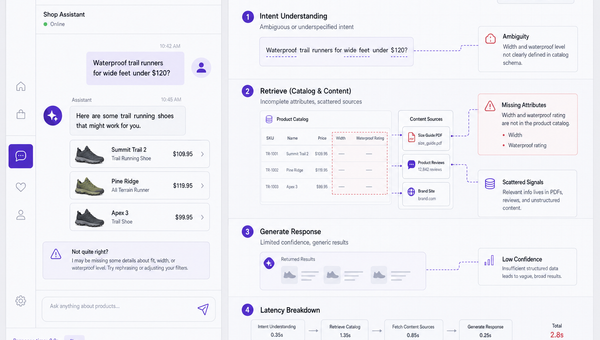
Why Good AI Shopping Agents Are Hard—and How Brambles Helps
Most AI shopping bots fail on data quality, UX, and trust. See why agents break in the wild and how Brambles.ai fills the gaps with measurable features.
Explore Brambles.ai
Learn more about our AI-powered agentic commerce platform, agentic shopping, and shopping assistance solutions.
Explore More Insights
Discover more articles on AI, automation, and business innovation
View All Articles