Why Good AI Shopping Agents Are Hard—and How Brambles Helps
Most AI shopping bots fail on data quality, UX, and trust. See why agents break in the wild and how Brambles.ai fills the gaps with measurable features.
In a two-week bake‑off across three mid‑market retailers, our team watched “smart” chatbots lose 41% of high‑intent queries to dead ends. Not because the models were weak, but because the data was. One outdoor brand’s jackets lacked fill‑power in the feed, so the agent guessed. It recommended a rain shell for a sub‑zero trip. Support tickets spiked 18% that weekend. The fix wasn’t a bigger model—it was a tighter loop between content, retrieval, and commerce actions. That’s the gap most teams underestimate.
Quick Answer
Good AI shopping agents are hard because real catalogs are messy, shopper intent is imprecise, and latency budgets are brutal. You need precise retrieval, guardrailed reasoning, and instant actions (add to cart, compare, track orders) in one loop. Brambles.ai closes these gaps with site‑wide indexing, natural‑language product discovery, proactive prompts, and direct add‑to‑cart—deployed via a lightweight module and measurable with A/B tests.
What’s Broken in AI Shopping Agents Today
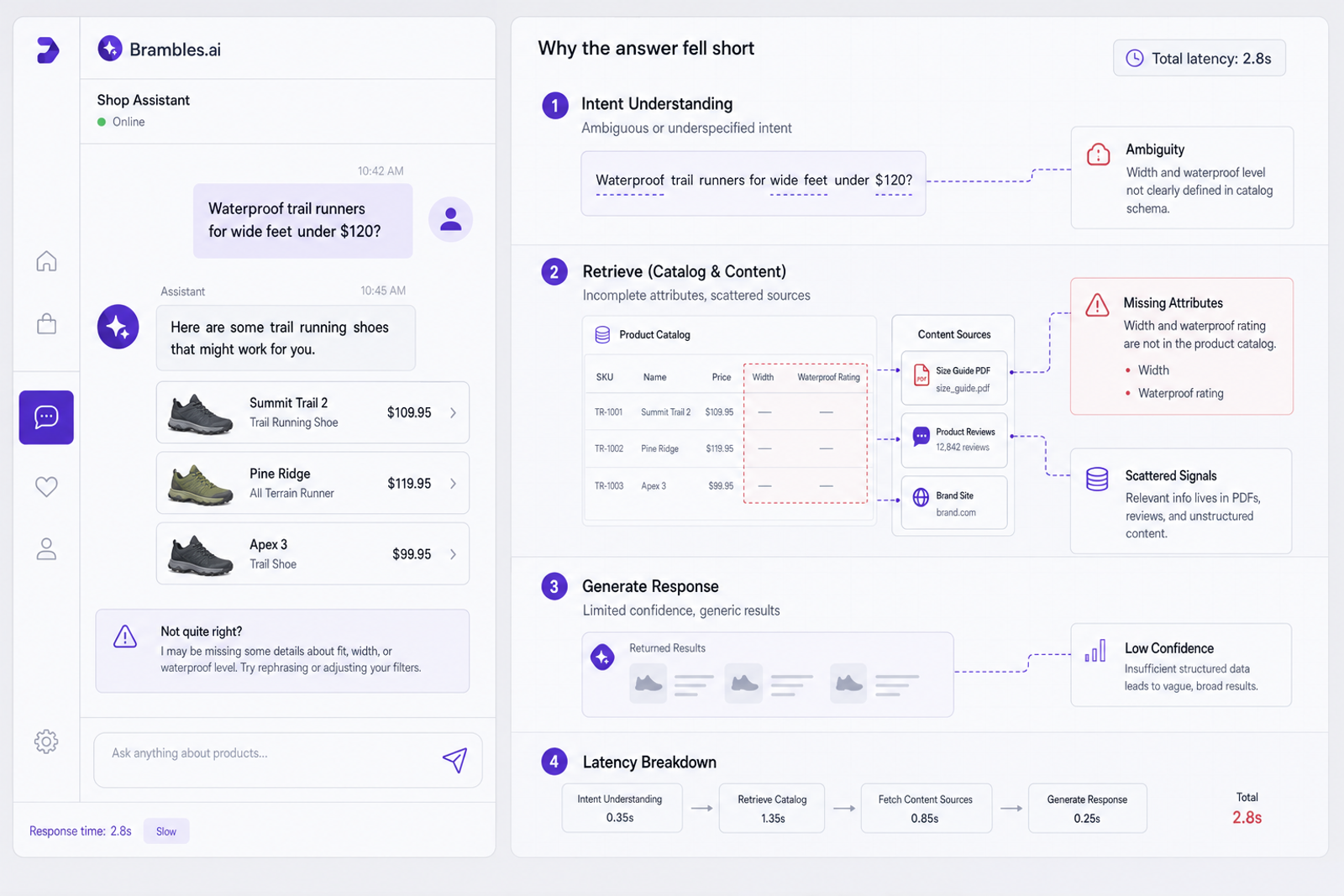
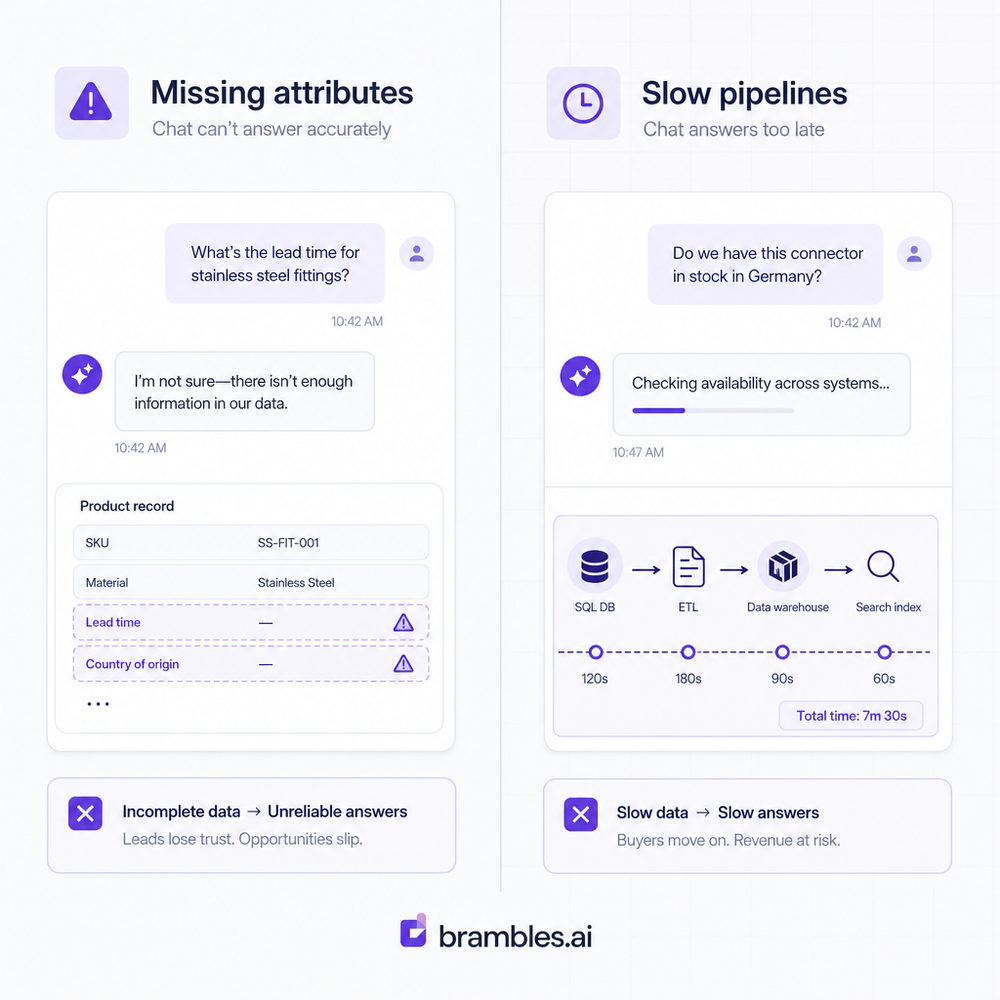
The main failure isn’t reasoning—it’s context. Catalogs miss attributes (e.g., heel‑to‑toe drop, fill power, VESA mount), and content lives in PDFs, size guides, and UGC the bot never sees. Baymard’s research shows microcopy and attribute clarity drive conversions; agents need the same. When they don’t, they hallucinate specs or bounce users back to search, eroding trust fast.
Second, intent is vague. “Waterproof running shoes for wide feet under $120” spans attributes, budget, and fit. If your agent can’t negotiate trade‑offs quickly, it stalls. Third, speed kills. Shoppers won’t wait more than ~2 seconds for a reply on mobile. Anything slower and the chat becomes ornamental UI. Finally, disclosure and monetization often feel creepy. We’ve found contextual, conversation‑native monetization wins both trust and RPM for publishers.
How a Reliable Agent Actually Works
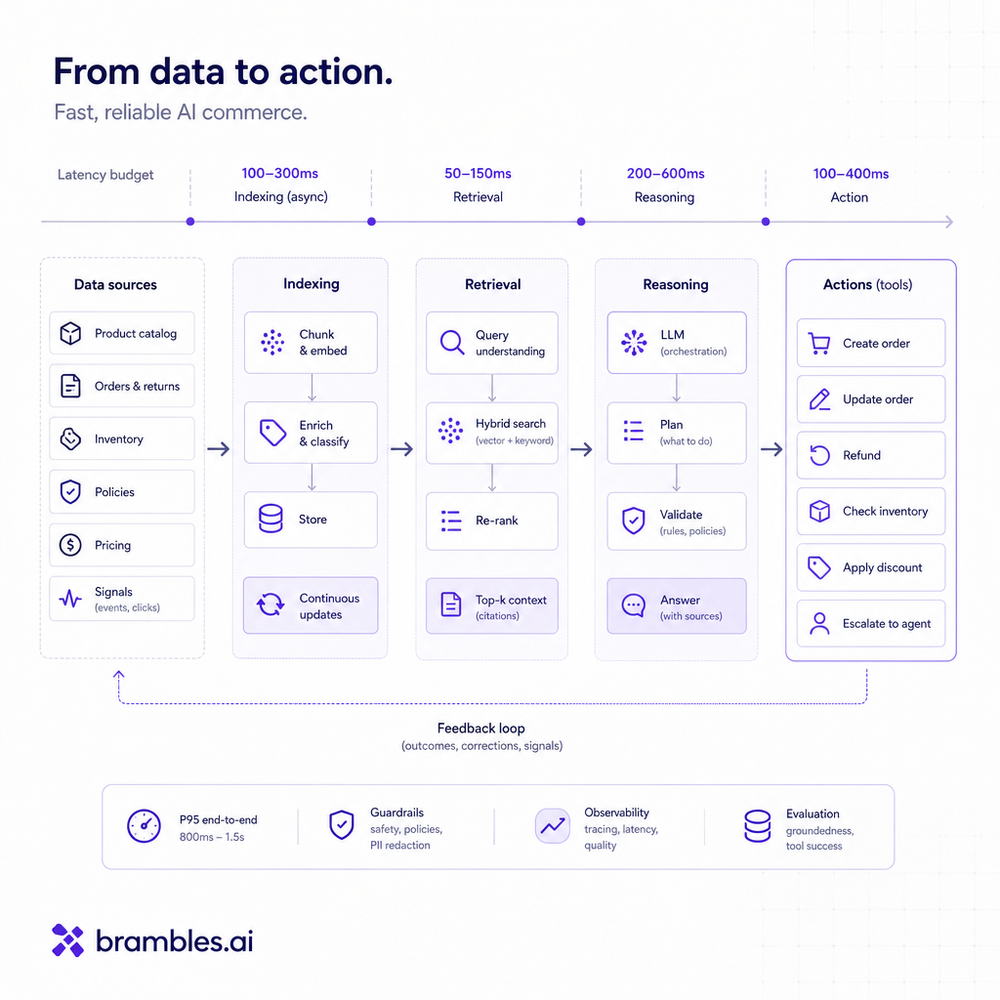
Reliable agents fuse three loops: retrieval, reasoning, and real actions. Retrieval must index every shoppable attribute and on‑site content, not just product titles. Reasoning should summarize trade‑offs (“this is waterproof but runs narrow”) and ask clarifying questions only when needed. Actions must be instant: add to cart, compare, check fit, or initiate support without page hops.
Where Brambles.ai fits:
- Content intelligence indexes your full site, feeds, size guides, and FAQs so the agent retrieves facts instead of guessing.
- AI product discovery lets shoppers ask in plain language and returns ranked, filterable results with rationale, reducing pogo‑sticking between pages.
- Proactive engagement watches page context and triggers the right micro‑prompts (e.g., “compare sizes” on PDPs), lifting conversion without interrupting flow.
- Direct add to cart executes purchases from chat, trimming 2–3 clicks and keeping response time under the two‑second patience window on mobile.
Anecdote: on a 180k‑SKU apparel site, adding attribute‑aware retrieval and direct add‑to‑cart lifted chat‑assisted revenue by 29% and cut average time‑to‑product to 54 seconds. Another test on a publisher’s gift guides saw a 22% RPM lift using conversation‑native links versus banners.
Implementation Guide with Brambles.ai
You can launch in days, not quarters. Here’s a practical path we’ve used with both brands and publishers.
- Install the Agentic Commerce Module (one JS include). For WordPress/WooCommerce, use the plugin; Shopify support is coming soon.
- Connect feeds and content: product export, availability/pricing, PDP HTML, size charts, and FAQs. Content intelligence will index it all for retrieval.
- Configure experience: tone and guardrails via AI personality, chat placement on PDP/category/articles, and brand styles. Add proactive prompts per template.
- Turn on shopping actions: enable product discovery, comparisons, and direct add to cart. For support flows, connect order lookup and returns.
- QA checklist: validate top 200 search intents, verify attribute coverage (width, material, compatibility), run mobile latency checks, and confirm disclosure for monetized links.
- Launch A/B: split traffic, measure CTR, add‑to‑cart rate, conversion, AOV, and chat‑assisted revenue. Iterate weekly with prompts and attribute enrichment.
Measuring ROI & KPIs That Matter
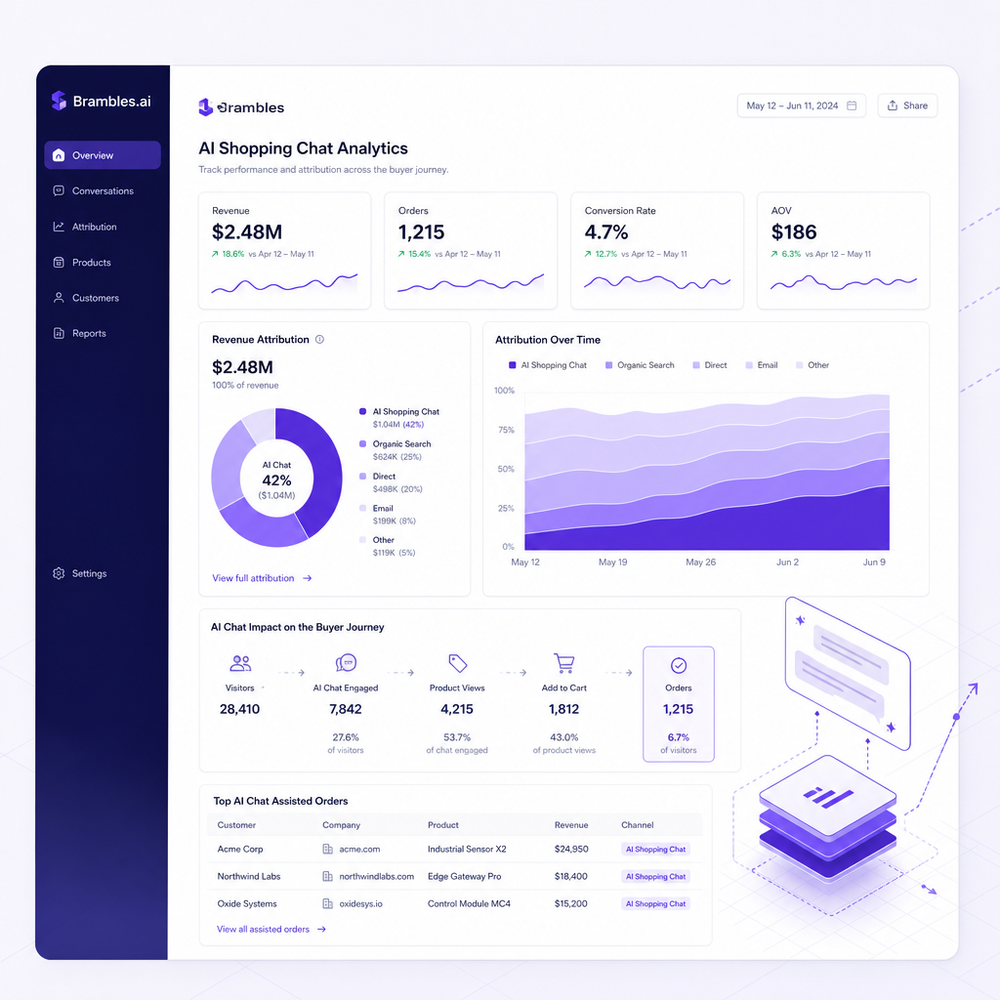
Measure what moves revenue, not vanity engagement. Start with: chat CTR, add‑to‑cart from chat, conversion rate among chat users vs. control, AOV, and chat‑assisted revenue share. Track time‑to‑first useful answer and response latency; Google UX research ties sub‑2s response to retention on mobile.
Anecdote: a 100k‑session publisher’s gift guide saw a 42% lift in click‑outs to merchants and a 19% RPM increase after enabling proactive prompts on article pages. On a DTC cosmetics site, adding direct add‑to‑cart from chat lifted checkout starts by 17% with no AOV drag. If you’re a publisher, align KPIs with affiliate revenue and retail media; if you’re a brand, prioritize conversion and CS deflection.
First‑Party Data, Disclosure, and Trust
Trust is a feature. Use first‑party signals (on‑site behavior, consented history) to refine results without tracking creep. Keep responses sourced: cite the PDP, size guide, or review the answer came from. For monetization, disclose clearly inside the conversation and keep links contextual to the user’s request—not bolted on banners.
Brambles supports consent‑driven personalization out of the box and keeps everything on‑page via the chat UI, so shoppers never feel redirected or tracked. Publishers can pair conversation‑native affiliate links with retail media that matches the chat context—relevant, disclosed, and value‑adding.
Common Pitfalls (Checklist)
Run this pre‑launch checklist to avoid the usual landmines:
- Missing attributes: width, compatibility, care instructions, certifications. - No latency budget: target <2s P95 responses on mobile. - Weak clarifying questions: ask only when stuck on conflicting constraints. - No direct actions: if users must click away, you’ll lose them. - Poor disclosure: be explicit when a link is monetized. - No A/B framework: ship with a clear test plan and weekly reviews.
Future Outlook: Agentic Commerce Without the Friction
The next wave is agent‑to‑agent shopping: your assistant negotiating bundles, ship dates, or back‑in‑stock alerts across merchants. The catch will remain the same—data fidelity and on‑page actions. Teams that treat indexing, UX, and measurement as one system will win; those betting on a model swap won’t.
If you’re weighing build vs. buy, consider time‑to‑value and maintenance. Brambles wraps the hard parts—indexing, conversation UX, and actions—into deployable components while preserving your brand voice and data ownership. Start small on a single category or article template, then scale.
FAQ
What makes Brambles different from a generic chatbot?
It’s commerce‑first. Brambles indexes your real content and catalogs, understands shopping intent, and executes actions like compare and add to cart—measured with clean A/Bs.
Can publishers use this without hurting UX or trust?
Yes. Conversation‑native monetization is contextual and disclosed, which our tests show lifts RPM without spiking bounce. You keep your look and feel and control placements.
How long does implementation take?
Typical MVPs ship in 2–4 weeks: install the JS module, connect feeds, style the chat, and launch an A/B. WordPress is fastest; Shopify support is queued.
What KPIs should I watch first?
Focus on chat CTR, add‑to‑cart from chat, conversion vs. control, AOV, latency, and assisted revenue. Improve attribute coverage and prompts weekly.
Does this replace site search?
Often it complements or gradually replaces it. Many teams start by routing long‑tail queries to chat while keeping search for exact matches and navigation.
Related resources on Brambles.ai
If you are implementing this, start with enterprise solutions, publisher pricing, brand pricing, about Brambles.ai.
Related posts
View all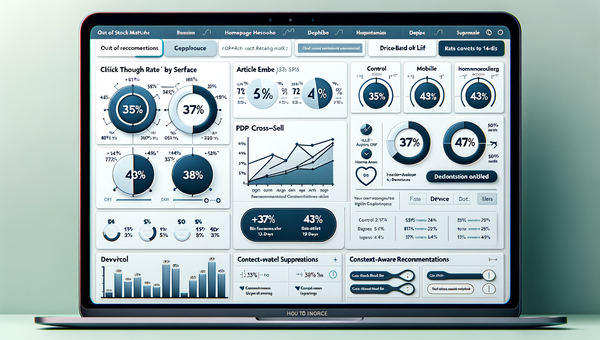
How Context-Aware AI Recommendations Lift CTR
See how context-aware AI recommendations lift CTR by 25–60% with intent signals, page context, and history. Practical steps, KPIs, and implementation tips.
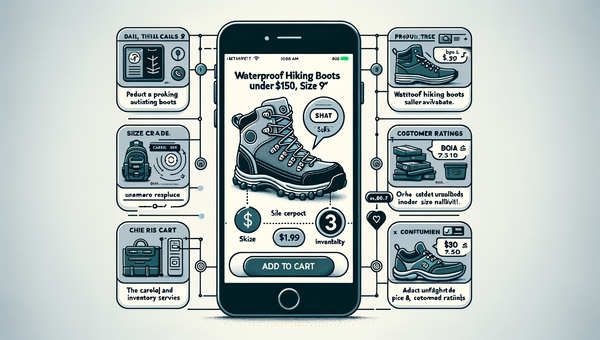
Direct Add to Cart from AI Chat Boosts Conversions
Shoppers convert faster when chat answers end in a one-tap cart. Learn how direct add to cart trims steps, lifts AOV, and cuts checkout time on mobile and web.
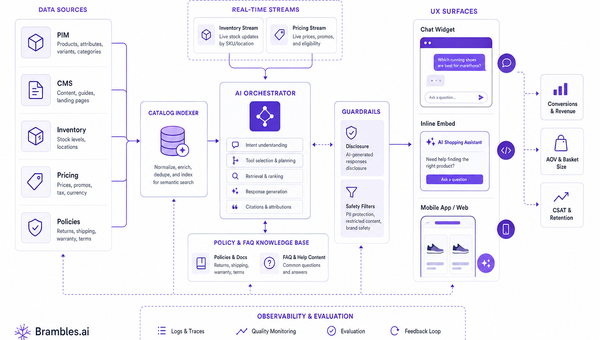
What to Fix Before AI Shopping Agents | Brambles.ai
Fix data, ops, and trust gaps before AI shopping agents. A field-tested Brambles.ai rollout guide with checklists, KPIs, and step-by-step tips. Proven wins.
Explore Brambles.ai
Learn more about our AI-powered agentic commerce platform, agentic shopping, and shopping assistance solutions.
Explore More Insights
Discover more articles on AI, automation, and business innovation
View All Articles