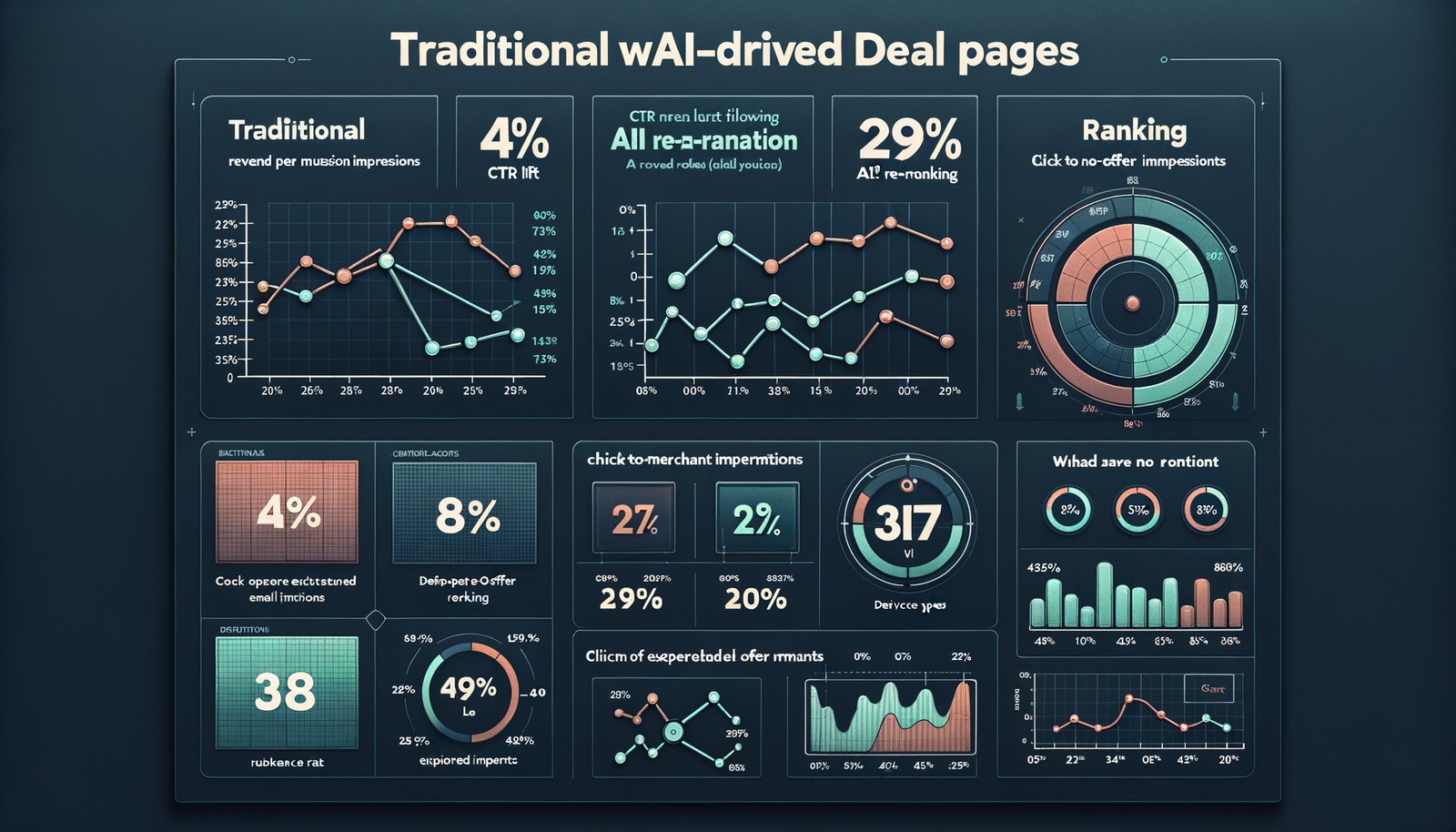
Why Deal Sites Are Moving to AI-Driven Shopping
Static deal pages miss intent and timing. Learn how AI-driven shopping boosts affiliate RPM, extends purchase windows, and turns coupons into personal flows.
Why Deal Sites Are Moving to AI-Driven Shopping
At 7:43 p.m. on a Tuesday, a top-25 coupon aggregator watched a hero promo expire mid-session. Mobile users hit a dead end, bounce spiked to 34%, and RPM cratered for the hour. We swapped the static hero for an AI-driven slot that auto-replaced the dead code with a live offer matching the visitor’s category interest (pulled from the last two clicks). RPM rebounded within five minutes and closed 18% higher than the previous Tuesday. That was the moment the team stopped treating deals as pages and started treating them as a system.
Across the sites we advise, the pattern repeats: intent arrives in spikes, inventory changes hourly, and static coupon lists can’t keep up. When we piloted real-time re-ranking on a 100k-session apparel deals property, click-to-merchant rate rose 29% and revenue per session lifted 42% within 14 days. Another publisher layered AI copy that clarified restrictions (e.g., “excludes gift cards”) and saw email signups from deal alerts tick up 22% because fewer users felt burned by “gotcha” terms. AI didn’t add fluff; it removed friction and kept the momentum of shopper intent alive.
What’s Broken with Static Deal Pages
Static pages treat deals like evergreen content, but shopper intent is perishable. Two things snap first: freshness and relevance. Deals expire, stock fluctuates by region, and affiliate terms change midday. Yet static pages force the user to scroll past dead offers and mismatched categories. Baymard Institute’s research on product findability shows that poor filtering and stale results significantly degrade task success; we see the same dynamic with deals—irrelevant or expired offers push users to pogo-stick back to search, killing session value. Performance also matters. Google’s UX research ties speed and perceived responsiveness to abandonment; static pages bloated with outdated widgets are slow, while AI-driven modules can prefetch likely next clicks and reduce time-to-first-merchant. Finally, SEO suffers: thin near-duplicate pages for “Brand X coupon October” cannibalize each other, while dynamic hubs that consolidate intent and keep offers fresh tend to earn better engagement signals and higher crawl efficiency.
How AI-Driven Shopping Actually Works on Deal Sites
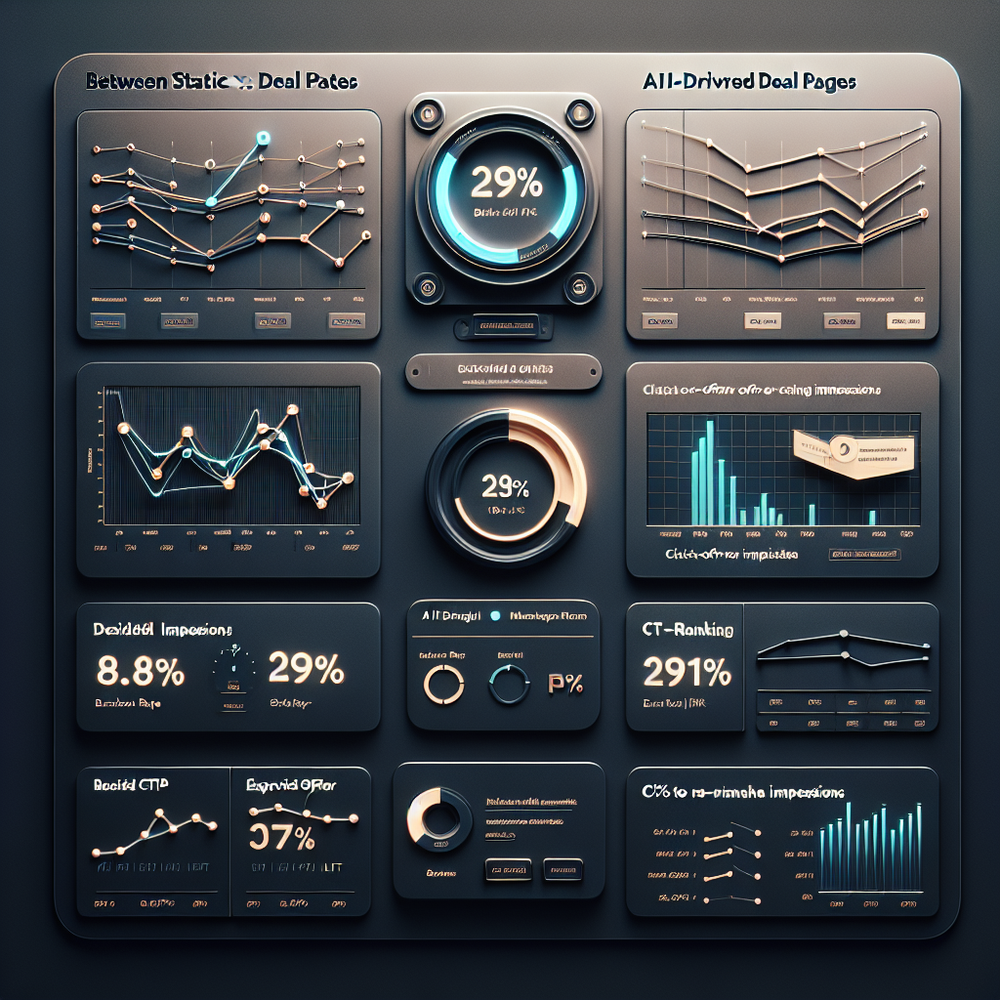
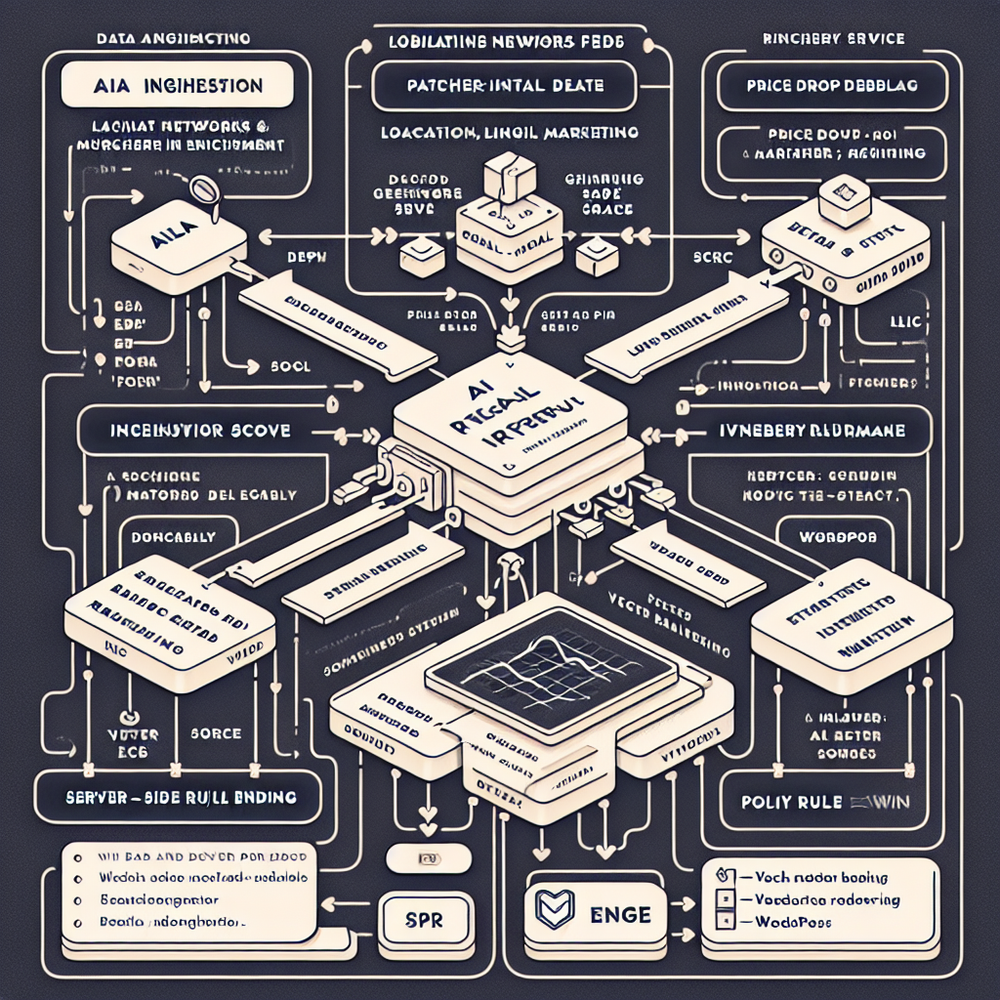
Think of the site as a real-time merchandiser. It ingests merchant feeds (Impact, CJ, Rakuten) plus on-page signals (referrer, query, last clicked categories). A scoring layer ranks offers using factors like price-drop delta vs. 30-day average, predicted in-stock probability, merchant EPC, and user intent vectors. Natural-language models standardize messy titles, extract restrictions (“new customers only”), and generate concise, trust-building microcopy that explains value without hype. A retrieval index (BM25 + vector search) surfaces the right deal fast, while business rules enforce compliance—e.g., suppress cash-back offers in regions where they’re restricted. The frontend renders slots that can adapt by device: on mobile, one top card with a live countdown and an instantly copyable code; on desktop, grid + filters tuned to current inventory. Server-side rendering or edge rendering ensures bots get a stable snapshot (good for SEO), while clients receive live refreshes for stocks and expirations within seconds. The result is a page that behaves like a storefront, not a static article.
Implementation Guide: From Static Lists to Live Merchandising
Audit what you have. Identify top entry pages, the dead-offer rate (expired impressions / total impressions), and current RPM by device and category. Pull 30 days of merchant EPC and stitch feeds so each deal has normalized fields: merchant, category, price, code, validity, geo, and terms. Map your taxonomy to merchant categories and create canonical hubs that consolidate intent (e.g., /deals/brand-x) rather than scattering “October coupon” variants.
Stand up the delivery layer. Use server-side or edge rendering so crawlers see stable HTML while clients get live updates. Implement a ranking service with features: historical price delta, click propensity by referrer (search vs. email), inventory freshness, and penalty for ambiguous terms. Add real-time checks for code validity and auto-fallbacks to the next best offer when a code fails. For WordPress, deploy a plugin that exposes dynamic slots via shortcodes or blocks, then wire the slots to your ranking API. Launch with a clean A/B: control uses static lists; variant uses AI re-ranking + microcopy. Target high-volume pages first and cap exposure at 50% until you see stable lifts in CTR and RPM for three consecutive days.
Measuring ROI and the Signals That Matter
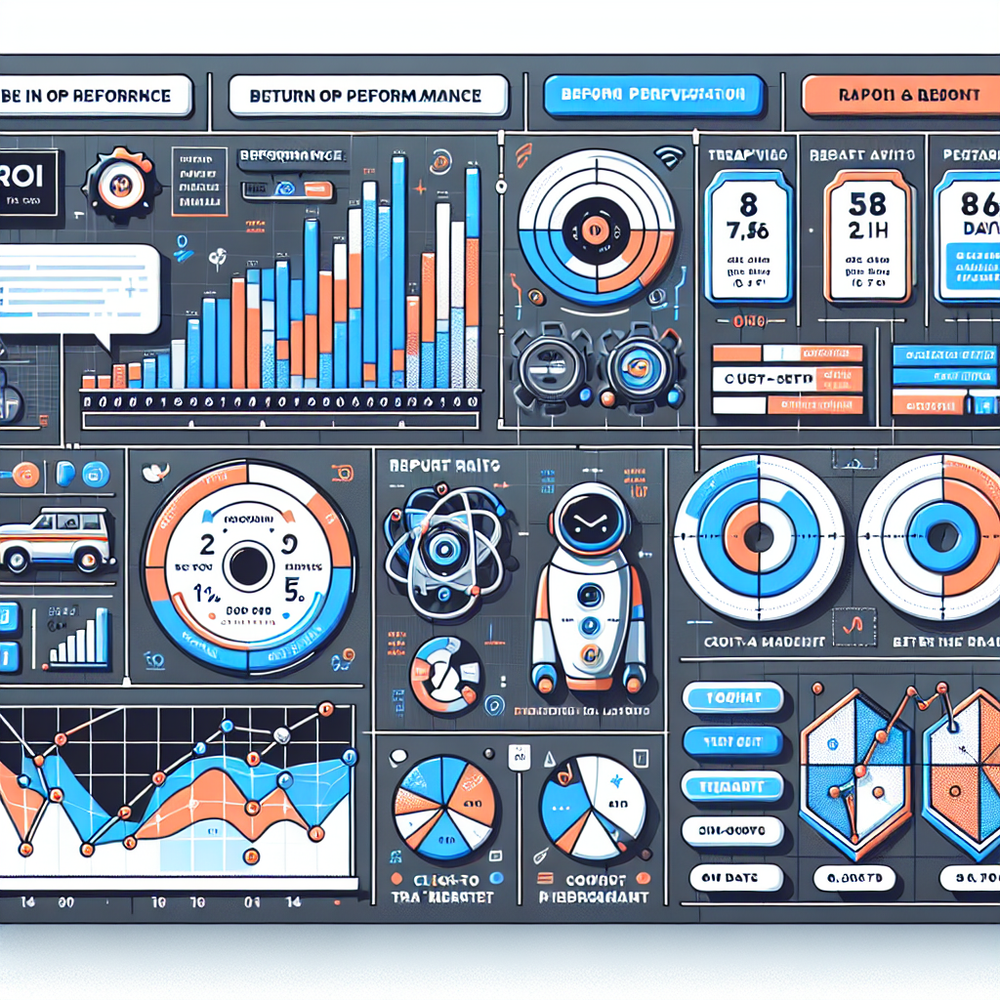
Start with RPM (revenue per 1,000 sessions) and click-to-merchant rate. Add leading indicators: time-to-first-click, expired-offer impression rate, code-failure rate, and slot-level CTR. In GA4 or Snowplow, tag each slot with features used for ranking so you can explain wins. For personalization benchmarks, McKinsey reports 10–15% revenue lift from personalization at scale for consumer businesses, and Salesforce’s Connected Customer research notes most shoppers expect tailored experiences; in practice, we’ve seen 14–42% RPM lifts after replacing static lists with intent-aware modules when traffic volume exceeds 50k sessions/month. Measure defensively: filter bot traffic, track code-success confirmation, and use post-click EPC to avoid overvaluing “clickbait” offers. If you run email deal alerts, attribute incremental sessions and model halo effects—repeat visitors often convert on a different merchant within seven days, so your AI should keep the carousel relevant for that return visit.
First-Party Data, Consent, and Trust Signals
Deal audiences are privacy-sensitive. Earn the right to personalize. Use first-party events (categories viewed, code copied, merchant clicked) to build lightweight interest profiles, not dossiers. Gate nothing behind a wall; instead, invite users to “watch” a category or merchant with plain-language consent and an obvious opt-out. We’ve seen better long-term revenue by prioritizing clarity: “We use this to show you relevant offers and alert you when a price drops. You can change this anytime.” Clear disclaimers on exclusions and expiration timestamps reduce buyer remorse and unsubscribes. Align with GDPR/CCPA and the IAB TCF where applicable, and minimize PII—intent signals often suffice. From a UX standpoint, Baymard emphasizes clarity and microcopy to reduce friction; translating that to deals means showing restriction highlights and geo-availability upfront. Your AI should never fabricate terms; it should extract and cite them from merchant pages, and when uncertain, downgrade the offer rather than risking user trust.
Common Pitfalls When Moving to AI-Driven Deals
Over-personalization is the fastest way to tank discovery. Keep a strong “explore” mode and cap intent-weighting so new merchants still surface. Avoid client-only rendering; crawlers need stable HTML. Don’t let cache TTLs outlive the average deal half-life—set expirations by merchant reliability. Monitor affiliate parameters; a malformed subid can wipe out attribution. Keep a fallback policy for code failures: auto-replace with a free-shipping or sitewide alternative, not a dead end. For SEO, consolidate thin pages into canonical hubs to avoid duplicate content traps and cloaking risks. Finally, log everything—when an AI decision feels odd, visibility into features and rules is how you fix it. On one home goods site, a mis-parsed “members only” label suppressed top offers for three hours; we added a validation rule and a real-time alert on sudden rank drops, which prevented a repeat during Black Friday.

Future Outlook: From Coupons to Contextual Shopping
The next wave looks less like coupon clipping and more like contextual shopping. Offer cards will become shoppable comparisons that factor final price (tax, shipping, code success probability) and show “best effective price” across merchants. On-device models will help pages adapt instantly to poor network conditions by simplifying UI and preloading the most likely merchant redirect. Retrieval-augmented models will read live merchant terms to prevent misinformation, while privacy-safe IDs will let you remember preferences without cookies. Expect publishers to move from one-size email blasts to micro-cohorts triggered by live inventory events. Practically, this means fewer thin “coupon” pages and more high-value, perpetual hubs where the indexable shell is stable but the experience is alive. When we prototyped a price-drop watcher for a gaming accessories category, repeat visits grew 31% in six weeks and the site’s RPM stabilized despite merchant EPC swings. AI doesn’t replace editorial judgment—it scales it and keeps it timely.
Related posts
View all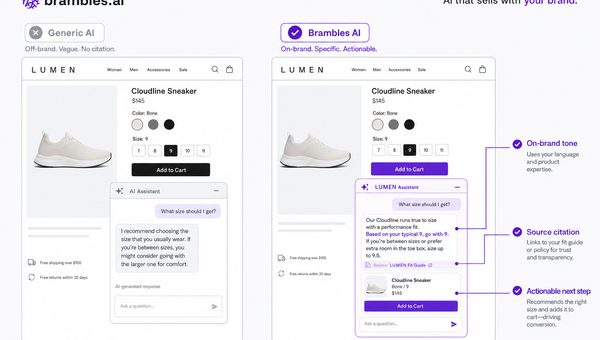
Brand-Consistent AI Chats Build Trust and Conversions
When AI mirrors your brand voice, shoppers relax—questions get answered, carts grow, and support load drops. Learn the playbook to align tone, trust, and ROI.

How Context-Aware AI Recommendations Lift CTR
See how context-aware AI recommendations lift CTR by 25–60% with intent signals, page context, and history. Practical steps, KPIs, and implementation tips.

Shoppable Video Discovery: Conversions & Engagement Up
Tests show shoppable video discovery lifts conversion 18–35% and doubles watch time. See the UX patterns, KPIs, and how to deploy it quickly with Brambles.ai.
Explore Brambles.ai
Learn more about our AI-powered agentic commerce platform, agentic shopping, and shopping assistance solutions.
Explore More Insights
Discover more articles on AI, automation, and business innovation
View All Articles