
Why AI Is Replacing Display Ads for Content Monetization
Publishers are replacing low-CPM banners with AI-driven, shoppable content that lifts RPM, respects privacy, and improves UX. Here’s how to implement it right.
On a mid-market publisher doing ~18M pageviews/month, replacing 30% of banner slots with AI-generated, in-article commerce units pushed RPM from $8.60 to $14.10 in six weeks while average CLS fell 32%. Scroll depth went up, not down. Another test on a 600k-session cooking site swapped two MPU banners for shoppable ingredient bundles; click-to-cart hit 1.8%, average order value landed at $42, and net revenue was 3.2x their AdSense baseline. A B2B software review hub that tuned offers by intent (setup guides vs comparisons) saw revenue per session climb 28% and bounce fall 11% after a 90-day holdout, with the same traffic mix. The pattern is consistent: when content recommendations are context-perfect and margin-aware, readers treat them like help, not ads. This piece breaks down what’s broken with banners, how AI-driven commerce works, and exactly how to implement it—without wrecking UX or trust. If you run WordPress, you can accelerate setup with the Brambles.ai WordPress plugin and our Commerce Module; install, set guardrails, and ship a controlled A/B in a day.
What’s broken with traditional display ads
Display economics have been sliding for years: low viewability on mobile, heavy script stacks, and rising privacy constraints squeeze CPMs while hammering UX. Programmatic auctions incentivize density and refresh, which collide with Core Web Vitals. Google’s Web Vitals case studies show that layout shifts correlate with engagement and revenue loss; we’ve seen this firsthand—reduce CLS by even 0.05 and time-on-page stabilizes. Baymard’s UX research has long cataloged how visual instability and intrusive UI erode task completion. On top of that, cookie deprecation and tracking prevention limit cross-site targeting, pushing bids down and making behavioral segments brittle. Readers notice. Banners feel like interruptions, not service. Editorial teams notice too; templates get slower and harder to maintain with each new tag. The net: banners sell attention at a discount and rent your real estate to someone else’s brand. AI commerce flips the value exchange by turning your content into a native path to a relevant product, kit, course, or trial—inside the reading flow, not bolted on the side.

How AI commerce replaces banners (and why it works)
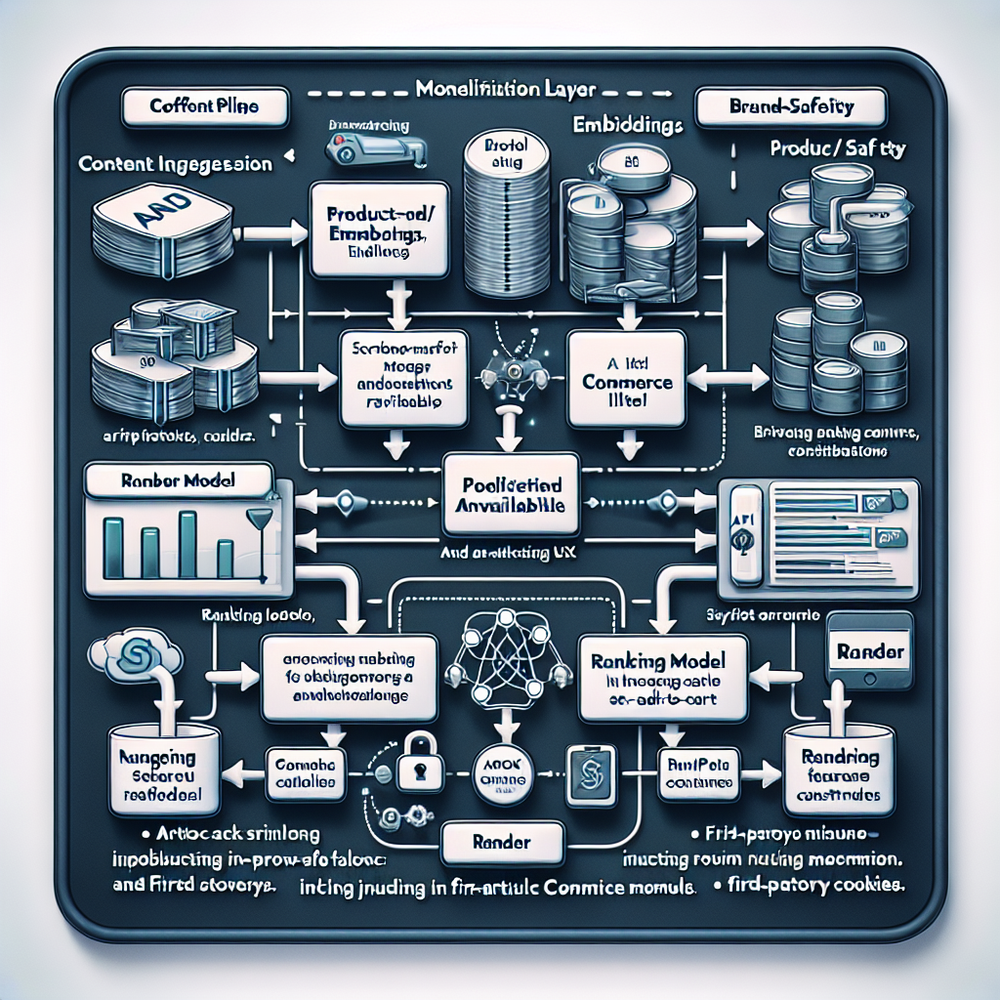
AI-driven commerce identifies intent inside the prose, not just on the page. The system parses headings, entities, verbs, and task structure (e.g., “Materials,” “Ingredients,” “Steps,” or “Compare”) to score where a reader is in the journey. It matches that intent with a curated catalog (including margins, stock, and merchant reliability) and renders a unit that reads like a helpful suggestion: a ready-to-buy kit, a comparison module, or a trial prompt that mirrors the article’s language. A ranking model weighs semantic relevance, expected margin, historical CTR/CVR by slot, and UX constraints like allowable ad density and CLS budget. Guardrails keep it honest—no injections near the first paragraph, no units in FAQs, no price anchors that contradict editorial. Because the content and offer share context, readers don’t have to context-switch; engagement climbs. McKinsey’s work on personalization repeatedly ties relevance to revenue growth, and Google’s UX research shows helpful, stable experiences outperform interruptive patterns. Net effect: fewer pixels, more value, better RPM.
Implementation guide (ship an A/B in a week)
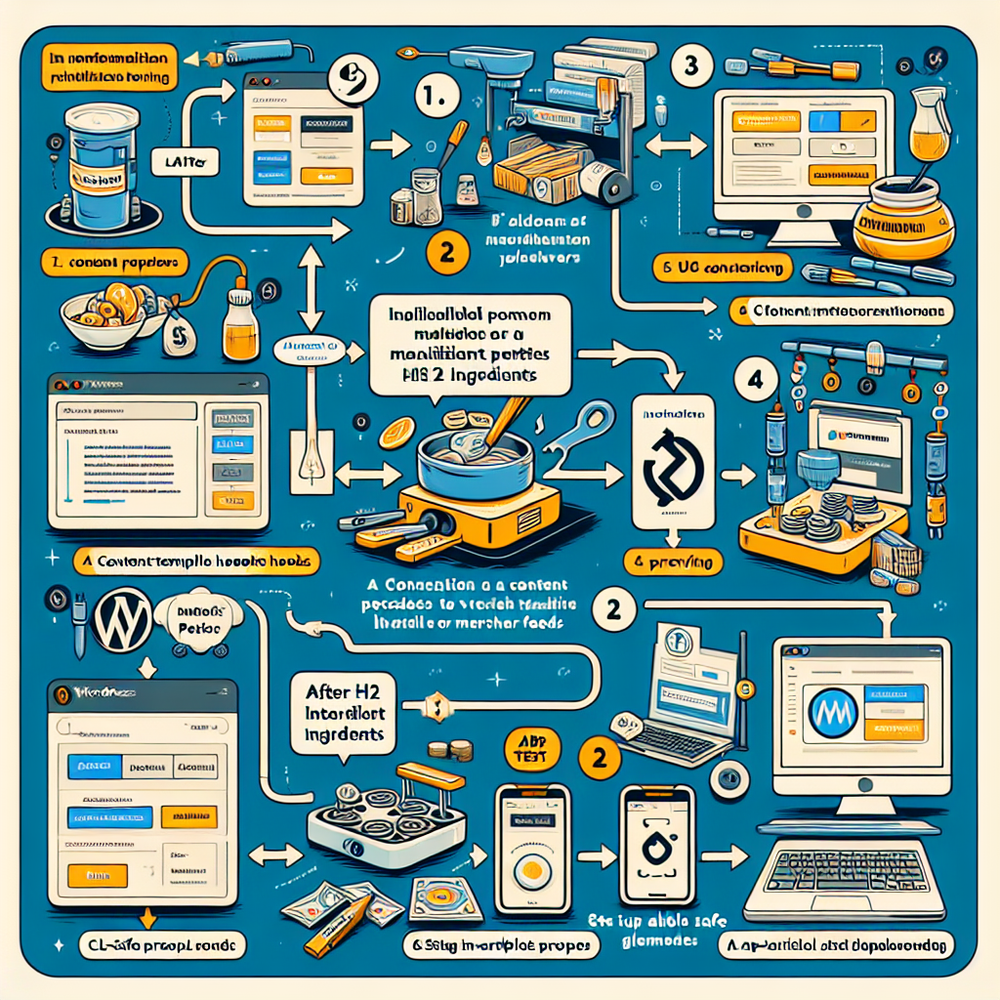
1) Inventory and intent mapping: Audit 50–100 high-traffic pages. Mark likely “intent nodes”: after Ingredients or Materials, before Step 1, after a Pros/Cons section, or at the end of a comparison. Note DOM anchors and ensure they are stable across templates. 2) Catalog prep: Connect affiliate feeds or merchant APIs. Add margin and availability fields; normalize categories; dedupe identical SKUs across networks. Flag must-carry brands and no-go categories. 3) Rendering and guardrails: Implement a lightweight renderer with a CLS budget (reserve height), responsive breakpoints, and accessible controls. Disallow injection in the first screenful; cap at 1–2 units per 1200 words. 4) Experiment design: Hold out 10–20% of traffic by template as control. Track per-session RPM, CTR, CVR, AOV, and CLS. 5) Editorial alignment: Match the module voice to the publication; borrow subhead language. 6) Shipping on WordPress: install the Brambles.ai WordPress plugin, enable the Commerce Module, map template hooks to intent nodes, and start a 14-day A/B. You can also download our WordPress plugin directly if you prefer a manual install.
Measuring ROI and the KPIs that matter
Optimize against money, not clicks. Core metrics: RPM (revenue per 1,000 pageviews), session value, CTR to the module, click-to-cart rate, conversion rate, AOV, EPC, and net margin after affiliate fees or payout tiers. Add quality metrics—CLS, LCP, scroll depth, and dwell—to ensure you aren’t trading future revenue for short-term clicks. Establish a clean baseline: two weeks of stable traffic, with control and treatment randomly assigned at the session level. Attribute revenue in a privacy-safe way: preference first-party events (cart and checkouts where possible), and only then affiliate conversions. Use cohorting: new vs returning, search vs social, evergreen vs news. On the 18M-pageview test, revenue lift stabilized by day 10; we locked the win at +64% RPM with a 12% higher session value than display-heavy pages. Expect a learning curve—models need a week of interactions to calibrate relevance and margin weights. Document your stop-loss: if CLS or LCP degrade beyond threshold, pause the experiment automatically.

First‑party data and trust (the real moat)
The shift away from third‑party cookies forces a better habit: rely on first‑party context and explicit consent. AI commerce can run on page semantics, on-site behavior, and declared preferences—no fingerprinting or cross‑site tracking needed. Salesforce’s Connected Customer research consistently finds that people reward transparency; tell readers why they’re seeing an offer, and let them mute categories forever with one click. Maintain a privacy ledger: what signals you use, where you store them, retention windows, and your legal basis. Put a simple “Why this recommendation?” affordance in the unit. Respect price integrity: if editorial says the budget pick is $79, don’t inject a $129 option. Brand safety matters too; inherit your article’s tagging (e.g., “kids,” “medical,” “finance”) and enforce stricter policies for sensitive topics. When a hiking site we support added a clear explainer and per-category muting, complaints dropped to near zero and engagement rose—the trust dividend is real.
Common pitfalls to avoid
Over-insertion is the top mistake. Two well-placed modules beat five. Next is catalog drift: stale or out-of-stock offers kill trust. Automate availability checks and swap logic. Don’t chase CTR at the cost of fit; a flashy discount that barely relates to the paragraph performs once and poisons future clicks. Watch mobile first; reserve space to eliminate layout shifts and keep tap targets large. Align incentives—optimize for net margin and reader satisfaction, not just clicks. Avoid SEO hazards: keep modules crawl-light (use nofollow on external merchant links), maintain fast LCP, and ensure the content still stands alone without the module. Finally, don’t skip governance. Give editors a “never show here” kill switch and an easy way to pin a preferred merchant when journalistic reasons apply. Baymard’s work on trust and Google’s guidance on page experience both point to the same truth: when experiences feel stable and respectful, conversion follows.
Future outlook: native, margin‑aware, and on‑device
Two shifts are arriving fast. First, margin-aware ranking will get richer as publishers integrate first-party checkout or deeper merchant APIs (stock, shipping SLAs, return rates). Expect models to optimize for lifetime value, not just the first sale. Second, more inference will move on-device or within privacy-preserving sandboxes, which keeps latency low and data local. We’re already seeing strong results from lightweight embeddings cached per template, refreshed nightly. Creative will evolve too: not banners, but context-matched mini-comparisons, build-your-kit modals, or timed post-read suggestions that reflect what the reader just learned. The winners will look less like ad ops and more like product teams: catalog quality, UX discipline, measurement rigor, and consent-centered data. Replace filler impressions with helpful, in-flow recommendations and your revenue stops depending on someone else’s targeting graph. That’s the quiet revolution replacing display ads—useful beats interruptive, every time.
Related posts
View all
Sponsored Products in AI Shopping: Retail Media 101
Learn how sponsored product placements power AI shopping, how bidding and relevance work, and how to implement retail media without eroding trust or UX.
Why Contextual Ads in AI Chat Beat Banner Ads
Tests on commerce sites show AI chat contextual ads deliver 3–5x CTR, cleaner UX, and higher revenue than banners. See how they work, implement, and measure.

Virtual Try‑On for Ecommerce: AI Replacing Fitting Rooms
AI virtual try‑on lets shoppers test products, replacing fitting rooms while lifting conversion and cutting returns. Learn how it works and how to implement.
Explore Brambles.ai
Learn more about our AI-powered agentic commerce platform, agentic shopping, and shopping assistance solutions.
Explore More Insights
Discover more articles on AI, automation, and business innovation
View All Articles