Why Affiliate Links Aren’t Enough Now—and What Works
Affiliate links now leak margin, data, and trust. Learn what top publishers use instead: on-site checkout, price-aware widgets, and first-party data loops.
Why Affiliate Links Aren’t Enough Now—and What Works
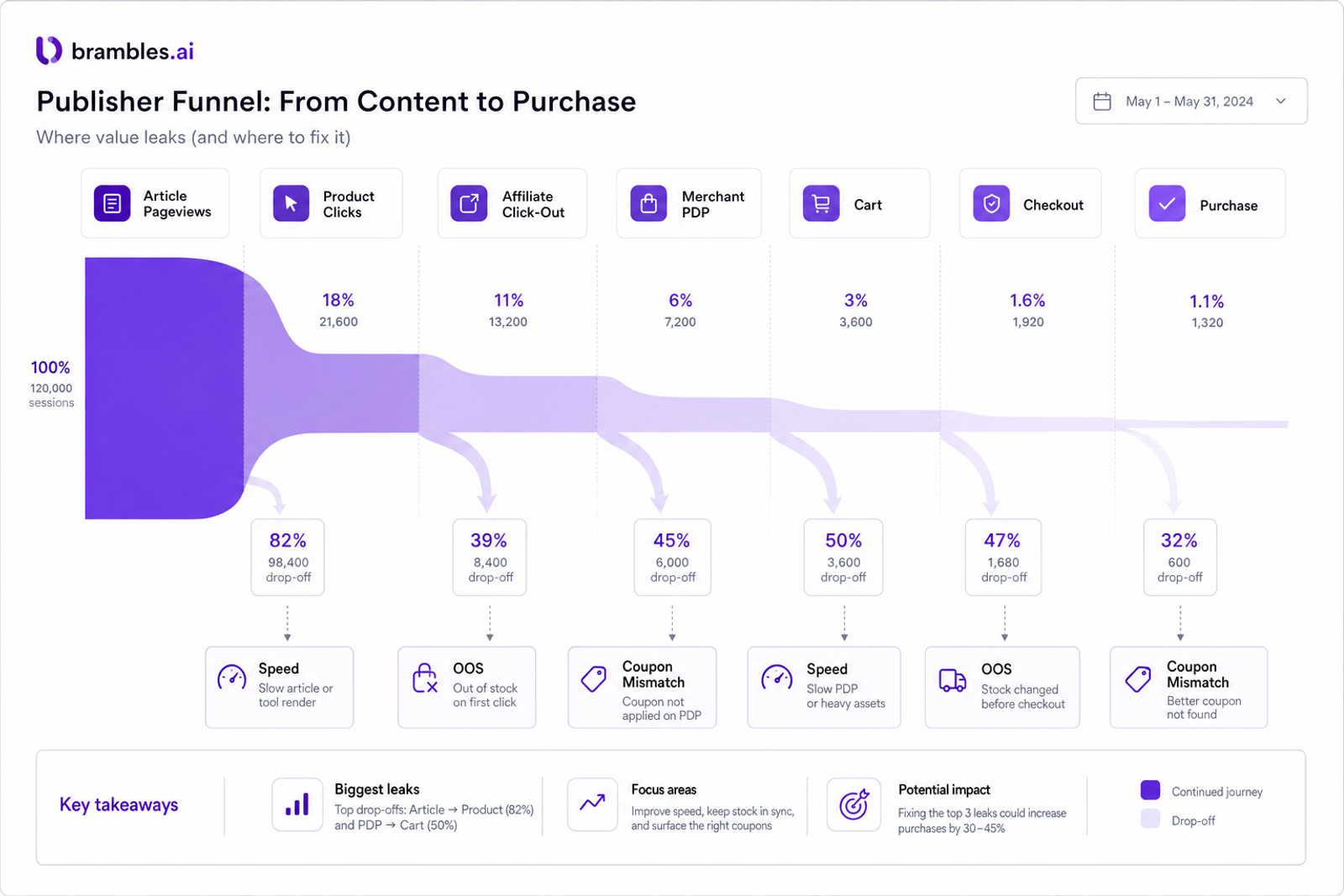
Last spring, we audited 22 publisher funnels and saw the same pattern: traffic was strong, CTR on affiliate links was respectable, and then the money evaporated after the click-out. Between merchant page speed, cookie loss, and out-of-stock surprises, 58–81% of purchase intent died on someone else’s site. When we tested keeping the shopper on-page with shoppable blocks and a lightweight checkout, RPM moved 21–43% in four weeks. A parenting blog at ~300k sessions/month swapped plain links for price-aware widgets; clicks dipped slightly (–6%), but conversion tripled and commerce RPM rose 38%. On a 100k-session gadget review site, adding merchant-verified availability and coupons next to the “Buy” button drove a 19% revenue-per-session lift versus links alone. Affiliate’s not dead; it’s just incomplete. Links create exposure, but without first-party data, real-time pricing, and an on-site path to purchase, you’re renting outcomes. The publishers compounding revenue now treat affiliate as a source—not the destination.
What’s Broken with Affiliate‑Only Monetization
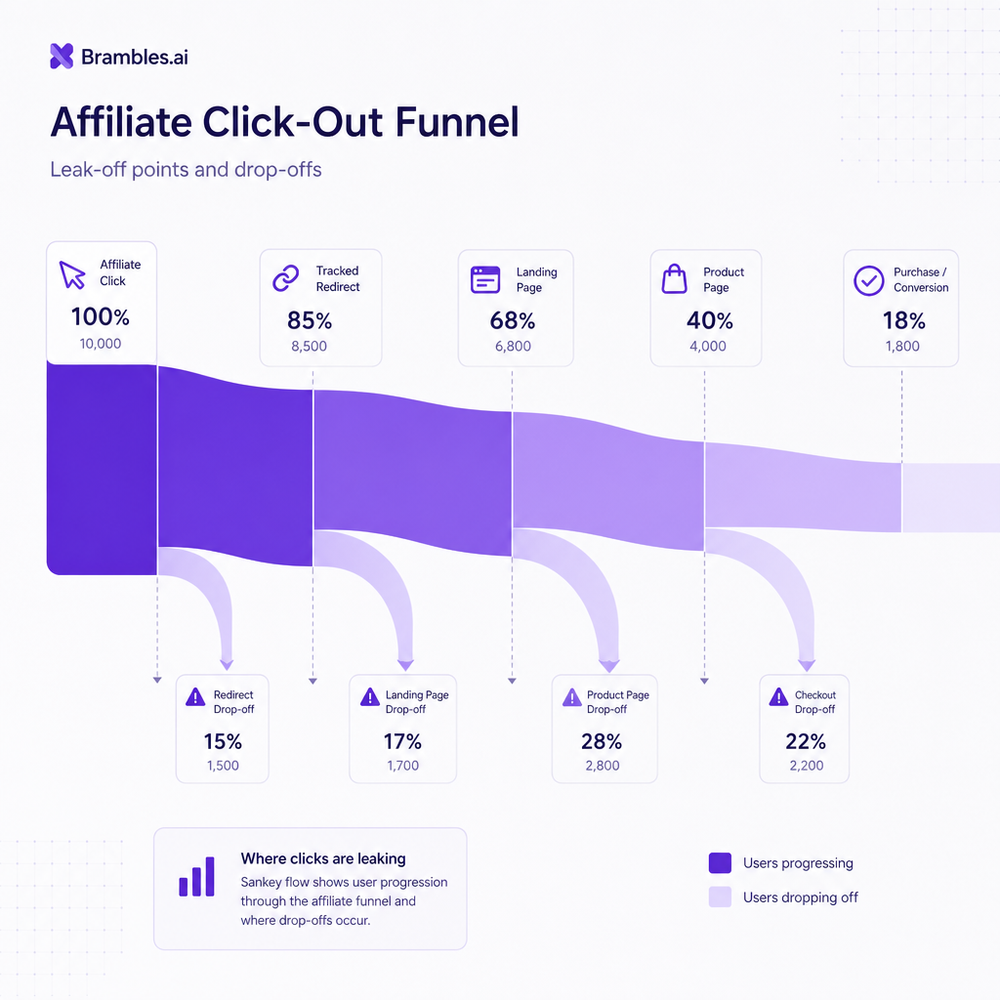
Affiliate links externalize your funnel. You relinquish speed, UX, inventory visibility, cross-sell opportunities, and the all-important checkout. Baymard Institute pegs average cart abandonment near 70% (2024), and that’s on merchant sites investing heavily in UX. Once you send a shopper away, you inherit their worst day: a slow product page, an expired coupon, or a color variant that’s suddenly out of stock. Add privacy headwinds (ITP, ETP, cookie deprecation) and attribution turns fuzzy—your “conversion rate” becomes a guess. We see three common leak points: 1) mismatch between your recommendation and the merchant’s landing page, 2) price and availability drift (your content says $79; the PDP says $99 or “backordered”), and 3) speed bloat—Google’s research shows as load time goes from 1s to 3s, bounce probability jumps 32% (Google/SOASTA). The result: affiliate-only strategies systematically undercount and under-monetize intent you created, while building no first-party relationship with the buyer.
How Modern Commerce Content Works (Beyond Links)
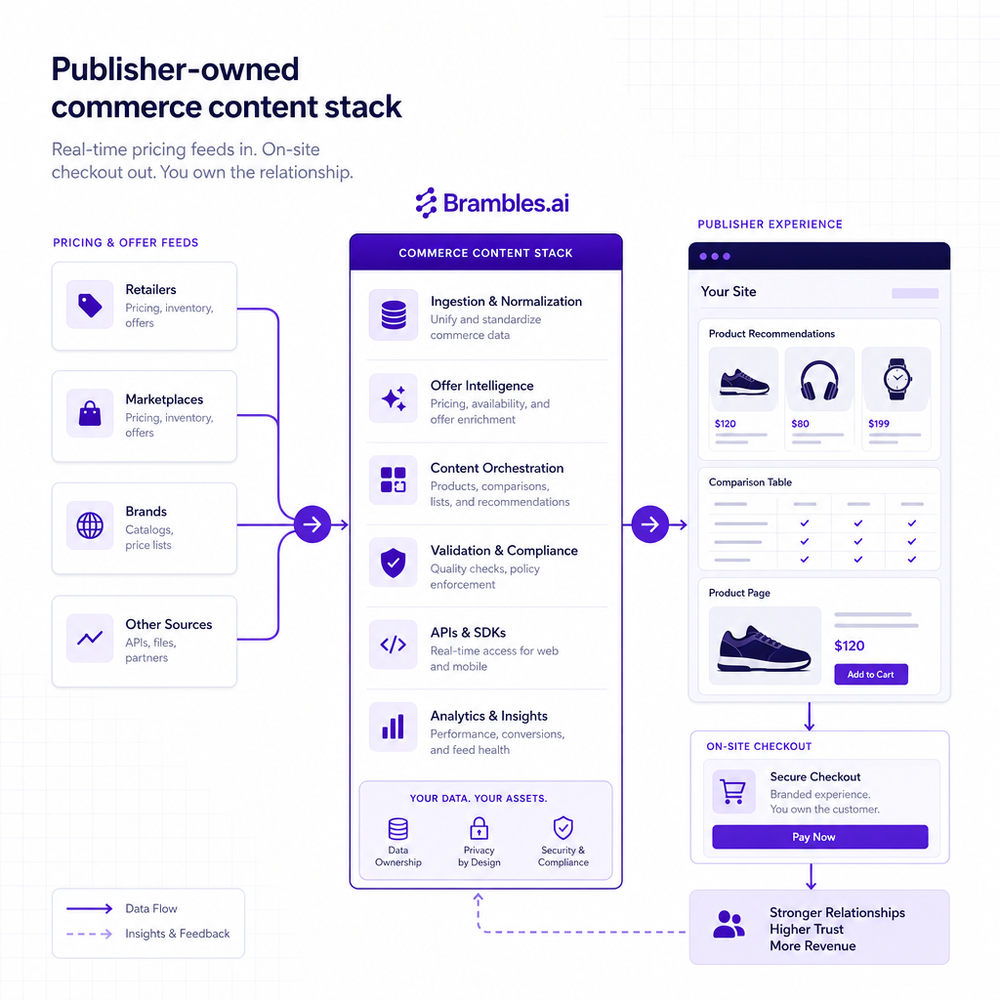
Treat affiliate as one channel inside your own storefront. The model: ingest merchant feeds and price/availability data; render shoppable components that match the article context; route to the best in-stock, best-priced merchant; and, when possible, transact on your domain. Practical pieces include: price-aware CTAs (show current price, availability, and shipping ETA), variant selection inline (color, size), coupon injection at checkout, and backup merchant routing if the primary is out of stock. A mid-sized outdoor gear publisher we support layered in first-party checkout and saw net RPM up 31% YoY, partly from in-cart cross-sells that never exist with click-outs. McKinsey notes that relevant personalization typically lifts revenue 5–15% (various studies) and lowers acquisition costs 10–30%; commerce content is the perfect surface to personalize because you own the context and data. Salesforce’s Connected Customer research also shows most shoppers expect consistent experiences across touchpoints—your content, cart, and confirmation should feel like one journey.
Implementation Guide: From Links to On‑Site Checkout
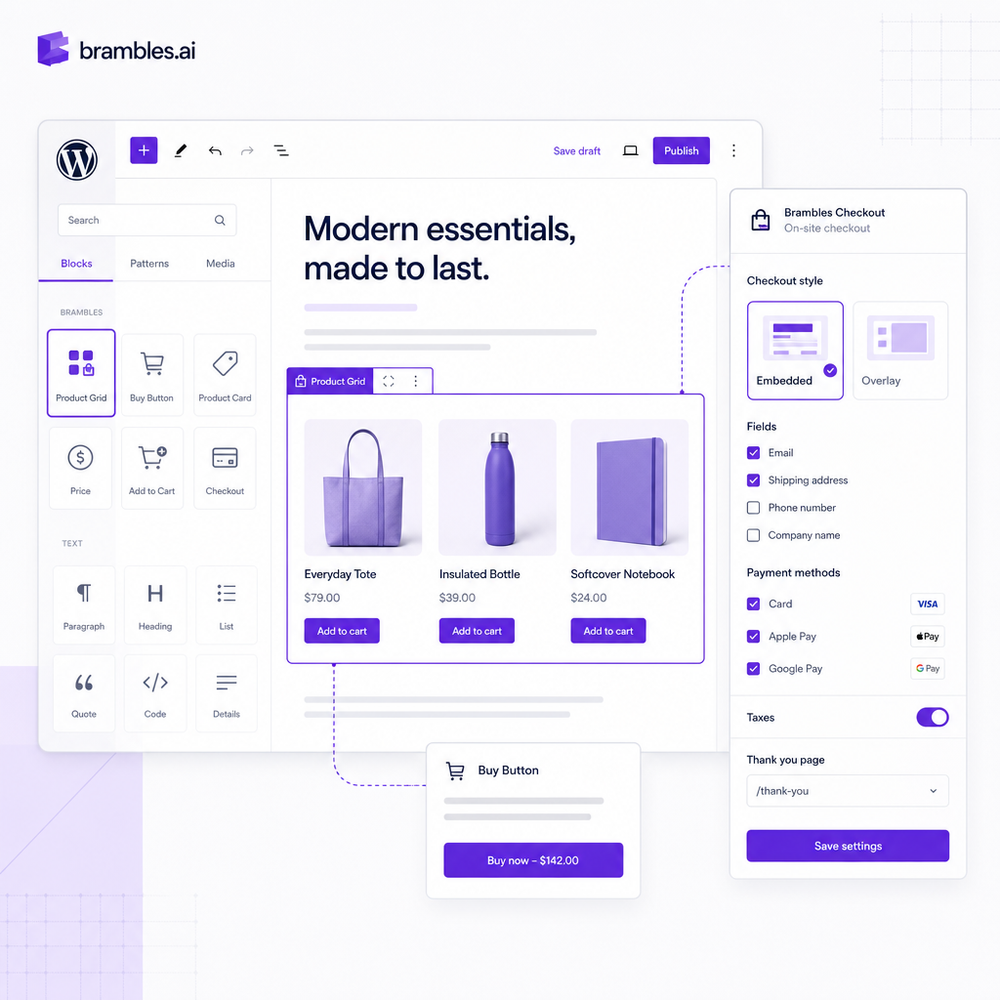
Start where friction is loudest. Step 1: Instrument. Baseline RPM, CTR on commerce blocks, click-out conversion (as best as possible), page speed, and OOS incidents. Step 2: Upgrade blocks. Replace raw links with price-aware CTAs that pull live data from approved merchants; show shipping and returns inline. Step 3: Add consented identity. Offer a small perk (early deals, bundle alerts) to capture email; this enables lifecycle revenue beyond the first click. Step 4: Enable on-site checkout for SKUs you can fulfill via a commerce partner or merchant-of-record provider. Step 5: Routing logic. If primary merchant is out, automatically switch the button to a verified in-stock alternative. Step 6: Promotions. Synchronize coupons at render time and inject at checkout. Step 7: QA and A/B test. Compare link-only, shoppable block, and on-site checkout variants over two weeks. If you’re on WordPress, deploy shoppable components with the Brambles blocks and activate the Commerce Module to transact directly from posts without leaving your site.
Measuring ROI & KPIs That Actually Matter
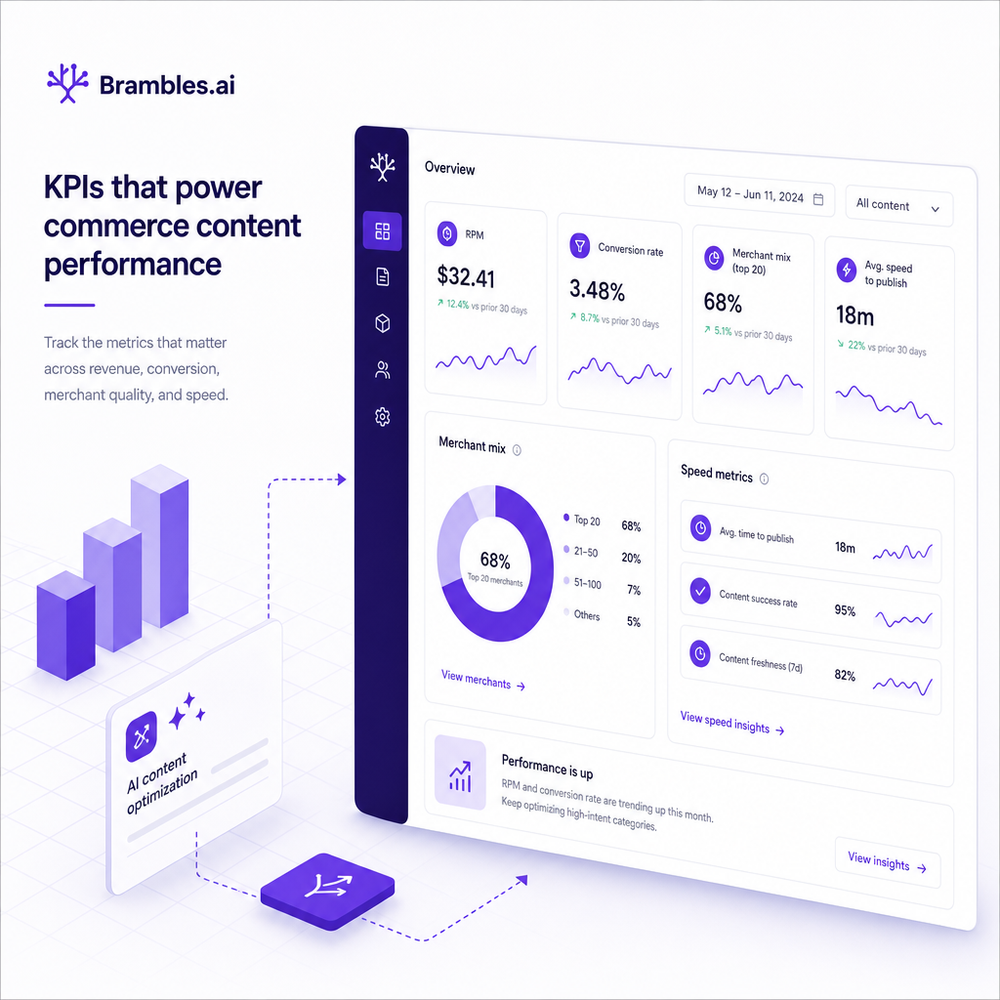
Commercial content fails when teams stare at last-click affiliate dashboards. Move to a blended lens: 1) Commerce RPM (revenue per thousand sessions) segmented by template (guides vs. news), 2) On-site checkout conversion rate and AOV, 3) Merchant mix (revenue share by retailer and margin by item), 4) Stock health (OOS rate at render time), 5) Speed (Core Web Vitals on commerce pages), and 6) Identity capture rate from commerce CTAs. Tie these to test plans. Example: we ran a two-week test on a review hub and saw RPM +23% when we surfaced an accurate “Ships by Friday” badge; cart conversion rose 14%. Another client layered a post-purchase email collecting preferences, and repeat purchases from content readers increased 11% in 60 days. Correlate speed with earnings—Baymard links usability to abandonment, and Google shows speed-bounce relationships; if your LCP slips above 2.5s, expect leaky sessions. Build dashboards that unify affiliate payouts and on-site orders so editorial can see which sections create buyers, not just clicks.
First‑Party Data, Consent, and Trust
The simplest edge over affiliate-only is consented identity. With click-outs, the merchant gets the buyer; you get a random order ID in a network report. With on-site components, you can ask for email in context—“Notify me when the orange 256GB is back,” or “Get price alerts for this bundle.” Be explicit about value and transparent about data use. Salesforce’s Connected Customer report shows trust and transparency drive whether customers share data at all. Practically: minimize fields, use one-tap sign-in, and send only useful follow-ups (restocks, price drops, care guides). Store expressed preferences (brand, size, budget) and feed them back into recommendations. This isn’t just marketing—better personalization can lift revenue 5–15% (McKinsey analyses) and also protect margins by routing to partners with healthier payouts. Privacy-wise, implement regional consent (GDPR/CCPA), avoid dark patterns, and let users revoke alerts easily. First-party data means you build a compounding loop instead of resetting to zero after every affiliate click.
Common Pitfalls When Upgrading from Links
Three avoidable mistakes show up often. 1) Treating shoppable blocks as decoration. If the price is stale or a variant is missing, users learn not to trust them. Solve with frequent feed syncs and a strict “render only if verified in stock” rule. 2) Shoving a full ecom stack into a content site. You don’t need 18 steps of checkout; minimize fields, support express pay, and follow Baymard’s guidance on address validation and error copy. 3) Ignoring page speed. Adding four JavaScript bundles for each merchant is a regression—consolidate requests, lazy-load, and audit Core Web Vitals after each release. Also mind payouts: link-only assumes CPS; a hybrid approach (CPS where accurate, CPA/CPC for high-intent comparison pages) often yields steadier RPM. Last, QA edge cases. We fixed a spike in abandoned carts by pre-selecting size based on on-page copy (“we recommend half-size up”); returns dropped 12% month over month on a footwear guide after that tweak.
Where This Is Going Next
Publisher commerce is converging on three truths: 1) Merchants want high-intent demand, not just traffic; 2) Shoppers expect consistency from article to cart; 3) Privacy favors first-party relationships. Expect more direct merchant feeds, SKU-level payouts, and dynamic routing that picks a retailer per user region and stock. Expect checkout to live closer to content—one-tap payment from a gift guide will feel normal, not experimental. And expect editorial to own merchandising moments: limited drops, bundles, and services attached to reviews. Google continues to reward speed and helpful content; your monetization layer has to respect that. The publishers who win won’t ditch affiliate—they’ll use it alongside on-site checkout, email capture, and verified pricing to keep intent in their orbit. If your link-only RPM has plateaued, the path forward isn’t louder CTAs; it’s a smarter funnel you control.
Related posts
View all
How Context-Aware AI Recommendations Lift CTR
See how context-aware AI recommendations lift CTR by 25–60% with intent signals, page context, and history. Practical steps, KPIs, and implementation tips.
Why Good AI Shopping Agents Are Hard—and How Brambles Helps
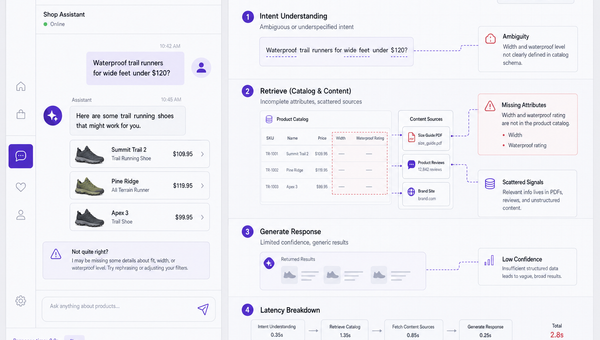
Most AI shopping bots fail on data quality, UX, and trust. See why agents break in the wild and how Brambles.ai fills the gaps with measurable features.
Multi‑Network Affiliate Optimization: Auto Best Rate
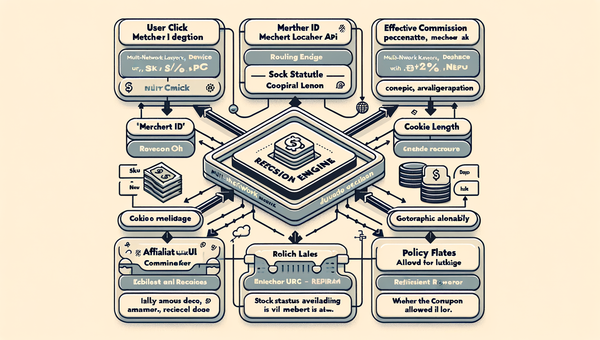
Route clicks across affiliate networks automatically to secure the highest commission, lift EPC, and preserve UX—practical tactics, data, and implementation ste
Explore Brambles.ai
Learn more about our AI-powered agentic commerce platform, agentic shopping, and shopping assistance solutions.
Explore More Insights
Discover more articles on AI, automation, and business innovation
View All Articles