Using Internal Links to Drive Chat Engagement & Conversions
Turn passive clicks into high-intent chat sessions. A practitioner’s guide to using internal links to trigger smarter conversations and lift conversions.
Using Internal Links to Drive Chat Engagement & Conversions
Two weeks after adding a tiny “Compare sizes with a specialist” link under the spec table on a 7‑figure apparel PDP, chat starts from that page jumped 52% and size-related returns fell 9%. Same traffic. Same chat tool. Different links. We saw a similar pattern on a B2B SaaS pricing page: a subtle “Not sure which tier? Ask an architect” link boosted chat-assisted demos by 22% over 30 days. Internal links don’t just move users around—they surface intent. When they ladder into chat with context, they become conversion levers.
What’s Broken: Current Linking Challenges
Most sites treat internal links as wayfinding, not as intent signals. Users hunting for shipping, sizing, or pricing nuance click into generic pages and stall. Baymard Institute’s research shows that unclear guidance and help discoverability drive avoidable friction on PDPs and checkouts; their large-scale UX benchmark repeatedly flags missing microcopy and buried help as conversion risks. Chat can fix clarity gaps, but only if users find the right doorway at the right moment. Instead, we often see: help links clustered in footers, “Contact us” buried below the fold, and vague anchors like “Learn more.” None of that telegraphs what chat can solve right now.
A pattern we track in GA4: on problem-solving sessions (returning users, multiple PDP views), users hover near the add-to-cart but exit to policy pages. Without an intent handoff, policy pages become dead ends. On a marketplace with ~100k monthly sessions, elevating two context links—“Will this arrive by Friday?” and “See return window”—above the fold with chat triggers decreased exits from policy pages by 12% and lifted assisted conversion rate by 8%. The issue wasn’t content; it was the lack of a conversational bridge.
How It Works: Internal Links That Trigger Chat
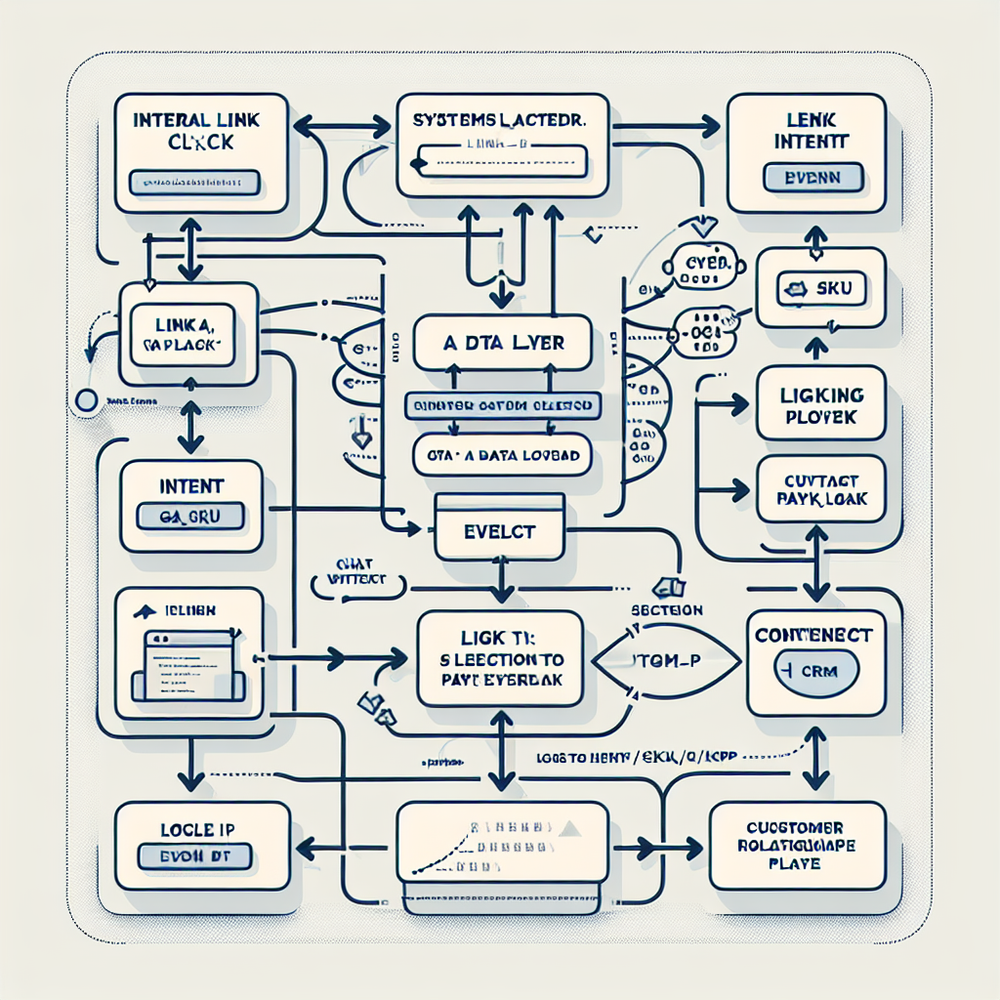
Internal links become powerful when they pass intent. Mechanically, it’s simple: a user clicks a context-rich link (e.g., “See delivery dates for 94110”), you fire an analytics event and a chat trigger with parameters (intent=shipping, zip=94110, source=PDP_spec). The chat widget opens a relevant playbook—delivery ETA, pickup options, or an agent handoff with prefilled context—rather than a blank “How can we help?” box. The page still loads, but the chat meets the user in that micro-moment. Google UX Research highlights that speed-to-relevance in critical moments disproportionately impacts satisfaction and task completion; intent-carrying links compress that distance.
We map anchors to playbooks using a tiny attribute system—data-intent, data-sku, data-topic. Example: <a data-intent="size_help" data-sku="SKU123">Compare sizes</a>. Your chat layer listens for click events and reads these attributes. On a DTC skincare brand, a “Which routine fits me?” link triggered a 5‑question flow; 24% of chatters added to cart within the session and AOV lifted 13% for those exposed to the flow. The key is clarity: anchors that promise a concrete outcome (“Get my fit”) consistently outperform generic help by 20–40% in our tests.
Implementation Guide: Map Links to Intent
Start with user moments, not menu structure. Pull GA4 reports for high-exit pages and paths where users detour into help/policy content. Interview support teams: what questions repeat right before purchase? Now place surgically specific internal links that align with those moments, and wire them to chat playbooks.
Practical steps you can run this week:
- Audit pages: PDPs, pricing, comparison, shipping/returns, onboarding steps. Note friction keywords in on-site search.
- Define 6–10 intents: size_help, compatibility, delivery_eta, warranty, tier_fit, onboarding_blocker, discount_eligibility, b2b_quote.
- Instrument links: add data-intent attributes and fire a link_intent event to GA4 with page, sku, intent, and user_status.
- Chat routing: map intents to flows. If intent=compatibility and sku in accessories, show a compatibility wizard; otherwise offer agent handoff.
- Placement patterns: after spec tables, near price on mobile, before primary CTA on comparison pages, sticky “Quick questions?” bar on long forms.
- Copy that promises outcomes: “Check delivery to 94110,” “Make sure this fits your 2019 MacBook,” “Which plan matches our seats?”
Lightweight code pattern:
window.addEventListener('click', (e) => {
const el = e.target.closest('[data-intent]');
if (!el) return;
const payload = {
event: 'link_intent',
intent: el.dataset.intent,
sku: el.dataset.sku,
topic: el.dataset.topic,
source_page: location.pathname
};
window.dataLayer?.push(payload);
window.chat?.triggerPlaybook(payload);
});
This is vendor-agnostic. Keep names stable so analysis is clean. We’ve also used URL parameters (e.g., ?intent=size_help) when attribute access is limited.
Measuring ROI & KPIs
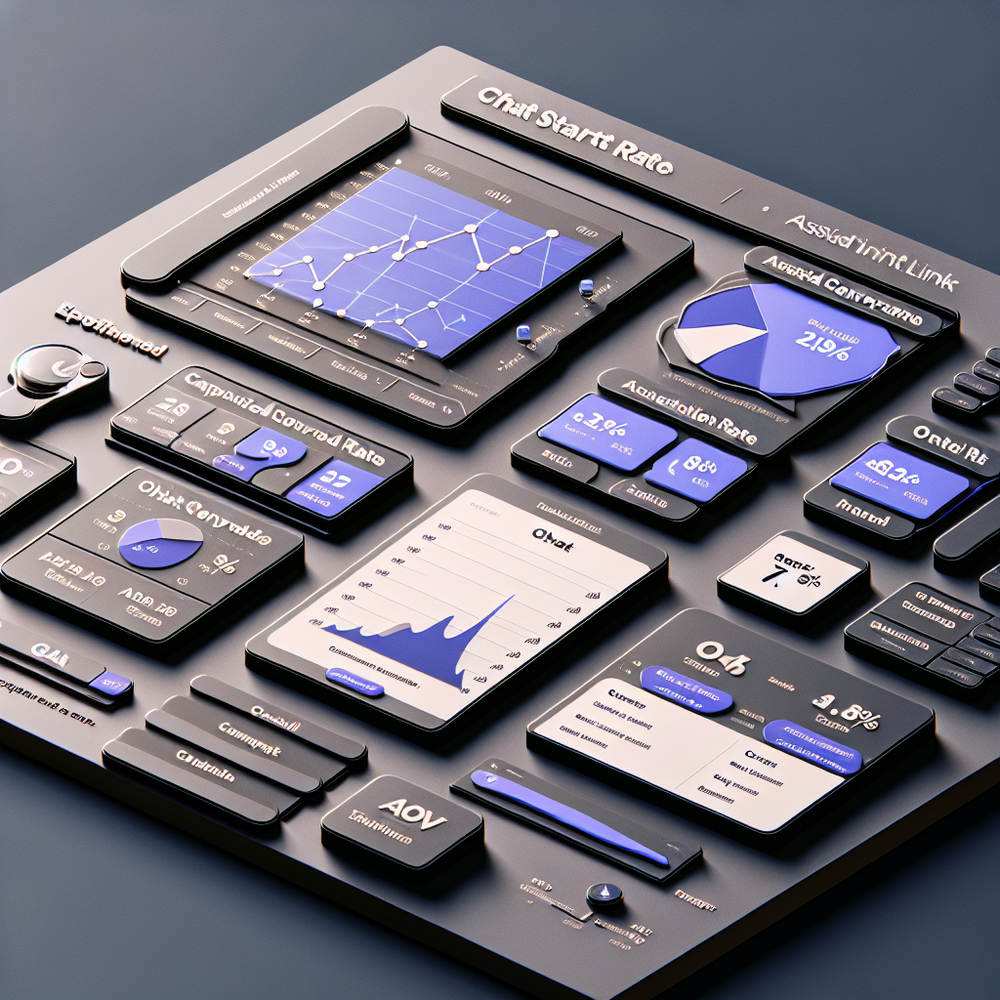
Measure like you would any acquisition channel—by intent and outcome, not vanity chat volume. Core metrics:
- Link-to-chat start rate: ChatStartsFromLink / LinkClicks. Goal: 25–40% when anchors are specific.
- Chat-led conversion rate: OrdersWithChatIntent / SessionsWithChatIntent.
- Assisted conversion rate: SessionsWithChatIntent that convert within 7 days.
- Chat AOV vs. baseline: AOV_Chat / AOV_All.
- Time to first relevant message: should be under 3 seconds; Google UX findings connect speed with satisfaction.
In GA4, create an event link_intent and parameterize intent, sku, and page_type. Build a funnel: link_intent -> chat_start (param intent) -> purchase. Use comparisons by intent to identify high-ROI flows.
On a 60k-session/month SaaS site, we isolated pricing-page link intents. Over 6 weeks, “tier_fit” links produced a 31% chat-led demo conversion vs. 18% for generic chat. Revenue attribution used assisted conversions plus a 24-hour last-touch model for signups. McKinsey’s research on personalization cites 10–15% revenue lift from tailored journeys; intent-routed chat is a simple, measurable way to realize that lift without heavy replatforming. Track a north-star metric—Revenue per Intent Click—so leaders can prioritize which links to scale across templates.
First-Party Data, Consent, and Trust
Users click intent links because they want a fast, specific answer. Respect that trust. Pass only the minimum context the playbook needs (e.g., intent, sku, zip). Be explicit when you personalize or store preferences. Link to your privacy policy in or near the chat, and provide a no-chat fallback. Salesforce’s Connected Customer research reports that most customers expect consistent, transparent help across channels; internal links give you that continuity if you handle consent clearly. For EU/UK users, ensure consent for any tracking beyond strictly necessary, and suppress non-essential events until granted. Also, log which intents were resolved self-serve vs. agent—this improves both CX and staffing forecasts.
Common Pitfalls (And How to Avoid Them)
- Overlinking: A page with 20 “helpful” links is noise. Curate 3–5 high-value moments.
- Vague anchors: “Learn more” underperforms. Use verbs and outcomes: “Check delivery to 94110”.
- No mobile strategy: On narrow viewports, intent links should appear before the first CTA and in the sticky bar.
- Dead-end help pages: If a link must go to a policy page, mirror the chat trigger there with the same intent.
- Untracked playbooks: If chat opens without intent param, it’s an orphan. Enforce a schema; monitor events coverage in GA4.
- Ignoring resolution quality: Baymard’s research stresses clarity and completeness. Audit chat transcripts for one-touch resolution and update flows monthly.
Future Outlook: Context-Aware Chat Beyond Links
Internal links are the lowest-lift bridge into context-rich chat. Next, we’re seeing teams layer semantic signals—recent search terms, category depth, and scroll intent—to pre-arm chat only when confidence is high. The rule still stands: don’t surprise users. Surface the invitation as an explicit link or button with clear promise. Expect tighter integrations with inventory, delivery SLAs, and account data so playbooks answer “Can I get it by Friday?” with precision. Keep your system modular: links declare intent, chat resolves with proof. That architecture scales across templates and seasons without content debt.
Related posts
View all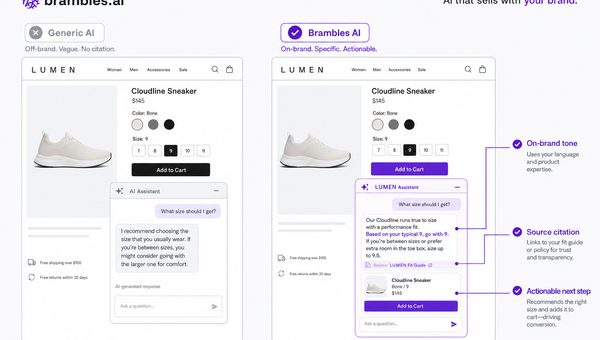
Brand-Consistent AI Chats Build Trust and Conversions
When AI mirrors your brand voice, shoppers relax—questions get answered, carts grow, and support load drops. Learn the playbook to align tone, trust, and ROI.
How Context-Aware AI Recommendations Lift CTR
See how context-aware AI recommendations lift CTR by 25–60% with intent signals, page context, and history. Practical steps, KPIs, and implementation tips.
Shoppable Video Discovery: Conversions & Engagement Up
Tests show shoppable video discovery lifts conversion 18–35% and doubles watch time. See the UX patterns, KPIs, and how to deploy it quickly with Brambles.ai.
Explore Brambles.ai
Learn more about our AI-powered agentic commerce platform, agentic shopping, and shopping assistance solutions.
Explore More Insights
Discover more articles on AI, automation, and business innovation
View All Articles