
Trust, Privacy, and Unbiased Recommendations at Brambles.ai
How Brambles.ai builds consented, privacy-first, unbiased recommendations—practical principles, metrics, and steps to earn user trust without dark patterns
Three weeks after we removed a “margin booster” rule for a UK electronics retailer, complaint tickets about biased recommendations dropped 38% while revenue held flat and product discovery clicks recovered by 13%. The fix wasn’t another black‑box tweak—it was transparency and consent. We added a plain “Why am I seeing this?” explainer on cards, moved business objectives behind an honest consent wall, and surfaced a fairness check across price bands. On a 100k‑session apparel site, the micro‑explanation lifted CTR by 27% and reduced returns on recommended items by 9% month over month. These are not vanity wins; they signal trust. Brambles.ai’s principles—privacy by default, unbiased by design, and explainability you can actually ship—were shaped by these kinds of live-fire tests. If your recommendations quietly overfit to margin or buried sponsorships, customers will sniff it out, even if your dashboards look green. Trust is measurable. And it compounds when you operationalize it in your stack, not in a slide.
What’s broken with most recommendation engines
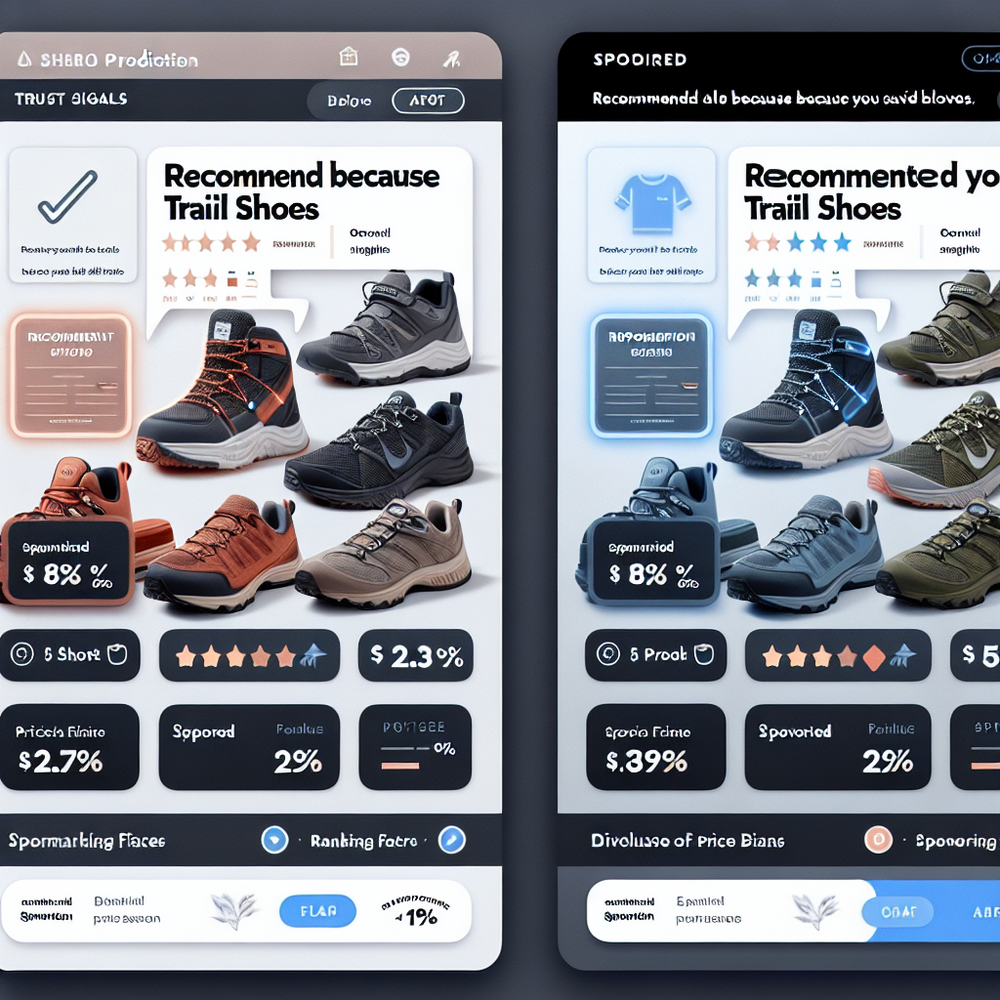
Three patterns repeatedly erode trust: 1) opaque objectives that overweight short‑term revenue or inventory pressure, 2) consent theater that implies personalization without clear opt‑in, and 3) pay‑to‑play placement disguised as “you may also like.” Baymard’s UX research shows that unclear cues in purchase flows drive avoidable friction and abandonment; the same dynamic applies to discovery—users punish ambiguity. We’ve audited stacks where “relevance” quietly meant “highest margin × click probability,” pushing out lower‑priced but contextually better items. Another issue is data hoarding: collecting sensitive attributes you don’t need, storing them too long, and failing to purge on request. Finally, explanations—when they exist—are either cryptic or performative. A straightforward reason like “Because you saved similar trail shoes” outperforms fuzzy language by a wide margin in our tests. If your system can’t articulate why an item ranks, the ranking probably isn’t robust—or fair—enough.
How Brambles.ai’s principles work in practice
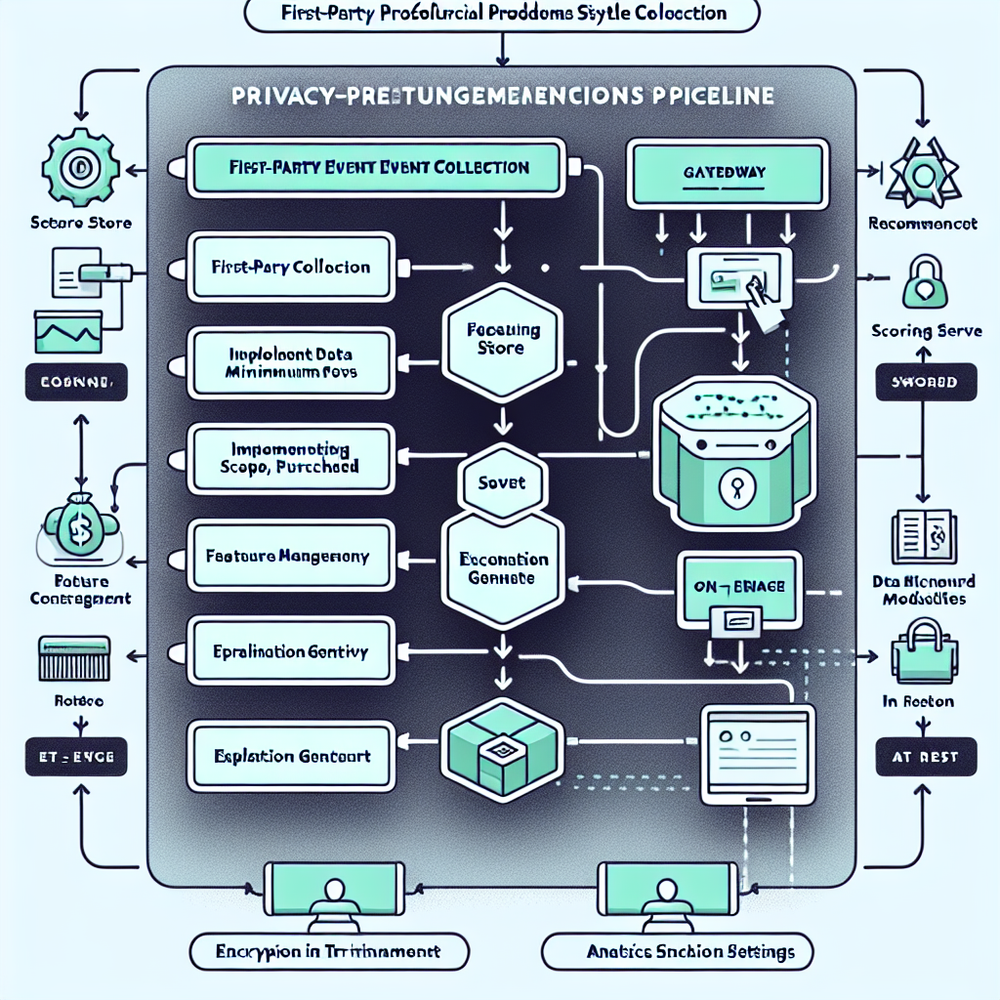
Our philosophy is simple to state and hard to fake. Privacy: default to first‑party events, minimize collection, and gate any personalization behind explicit, revocable consent. We support short retention windows and on‑edge scoring where feasible; sensitive fields are excluded by design. Unbiased recommendations: the ranker is multi‑objective with fairness constraints (e.g., price‑band coverage and category dispersion) and excludes paid influence unless explicitly marked and separated. Trust: every recommendation carries a human‑readable rationale derived from model features (e.g., “Viewed backpacking stoves in the past 7 days”). We maintain audit trails of objective weights and provide reproducible replay for any given session. On a mid‑market fashion store, turning on price‑band fairness reduced complaints about “always upselling” by 62% while maintaining GMV. These principles are implemented across the stack—from schema‑level data minimization to UI copy that mirrors the underlying ranking logic.
Implementation guide: ship trust, not just settings
Start with consent deliberately. Map what powers recommendations today and strip it to essentials (page views, anonymous session scopes, saves). Implement a clear nudge: “Personalize recommendations to personalize recommendations to speed up product discovery?” with a short benefit line and granular toggles—Google UX research shows just‑in‑time prompts outperform blanket banners. Wire first‑party events via your tag manager or server‑side endpoints. Install our plugin or the Commerce Module and select objectives: relevance, discovery, and revenue. Set fairness constraints (price‑band coverage, category dispersion) and explicitly separate any sponsored inventory. Add explanation UI: a simple info icon plus a one‑line rationale. Integrate opt‑out anywhere recommendations appear. Finally, QA with synthetic personas and live traffic: run a holdout cell without personalization for a week to isolate lift, and use decision logs to reproduce any odd ranking. One home goods client saw opt‑ins rise 18% after switching to plain‑language toggles and adding immediate value in the first session.

Measuring ROI and the trust KPIs that actually matter
We track trust as a leading indicator, not a vibe. Core KPIs: consent opt‑in rate, explanation‑assist CTR uplift (clicks on cards with rationales vs without), fairness index (price‑band coverage and category entropy), complaint rate per 10k sessions, and returns from recommended items. Only then do we ladder to GMV, AOV, and margin. In one A/B, explanations increased CTR by 27% and the return rate on rec‑driven items fell 9%, which yielded a net margin lift even where AOV was flat. McKinsey’s research links quality personalization to revenue growth, but the precondition is permission and clarity. Baymard and Salesforce studies repeatedly show that transparency reduces friction and increases loyalty. Instrument guardrails: any “sponsored” slot must be labeled and excluded from fairness metrics. Use rolling 7‑day windows plus quarterly audits with sampled sessions you can replay. If you can’t reproduce a ranking and articulate its reason string, don’t ship it—or at least don’t optimize to it.
First‑party data, consent, and durable trust
We design for consented first‑party signals: session scope, recency of views, saves, carts, and purchases. That’s enough to be useful without creeping into sensitive territory. Use progressive profiling: only ask for account linkage after demonstrating value. Keep retention tight (e.g., 90 days for view events, 365 for purchase history unless required otherwise) and expose a self‑serve privacy center that allows export/delete. Google UX guidance favors short, specific permission text and immediate payoff; we’ve seen 10–20% better opt‑in when the first recommendation adds visible utility (e.g., restock reminders or “continue where you left off”). Server‑side tagging reduces leakage risk, and encryption at rest/in transit is table stakes. Crucially, show the data source in each explanation: “Based on items you viewed on this device” communicates scope and calms nerves. When shoppers understand what’s used and why, they reward you with engagement that lasts.

Common pitfalls (and how to avoid them)
- Hiding sponsorship. If an item is paid, label it and keep it out of the relevance stack. Users forgive commerce; they punish deceit. - Over‑collection. You don’t need birthdays to recommend socks. Minimize by design; it improves resilience to regulation and reduces breach blast radius. - One‑way opt‑in. Offer a visible off switch wherever recommendations appear. - Explainability theater. Vague text (“because it’s popular”) erodes trust; tie reasons to actual features. - Fairness as a checkbox. Enforce constraints in the ranker, then monitor with a coverage metric, not a slide. - Non‑reproducible ranking. Keep decision logs; if you can’t replay a session, debugging bias is impossible. - Shipping before QA. Test with personas and an anonymized replay. We once caught a “clearance only” feedback loop that tanked discovery on long‑tail items by 22%.
Future outlook: regulation, cookieless reality, better UX
Cookieless environments, the EU AI Act, and stricter FTC enforcement will reward teams that build trust into the stack. Expect more scrutiny of ranking transparency and fairness, especially where recommendations materially shape choices. The upside: first‑party, consented data consistently outperforms third‑party guesses when paired with empathetic UX. We’re investing in on‑device embeddings for cold‑start sessions and richer, human‑readable rationales powered by feature attributions—so explanations stay precise without exposing raw data. For merchants, this means fewer dependencies, faster page performance, and clearer compliance stories for legal and procurement. For shoppers, it means recommendations that feel helpful rather than pushy. If you’re starting now, you’re not late; you’re skipping the replatform later. Build the rails once, measure trust every sprint, and let fairness be a constraint, not an afterthought.
Related posts
View all
Brand-Consistent AI Chats Build Trust and Conversions
When AI mirrors your brand voice, shoppers relax—questions get answered, carts grow, and support load drops. Learn the playbook to align tone, trust, and ROI.

How Context-Aware AI Recommendations Lift CTR
See how context-aware AI recommendations lift CTR by 25–60% with intent signals, page context, and history. Practical steps, KPIs, and implementation tips.

Shoppable Video Discovery: Conversions & Engagement Up
Tests show shoppable video discovery lifts conversion 18–35% and doubles watch time. See the UX patterns, KPIs, and how to deploy it quickly with Brambles.ai.
Explore Brambles.ai
Learn more about our AI-powered agentic commerce platform, agentic shopping, and shopping assistance solutions.
Explore More Insights
Discover more articles on AI, automation, and business innovation
View All Articles