Top AI Affiliate Tools for Bloggers (2025 Guide)
Real test data and field notes on the top AI affiliate tools for bloggers—what to use, how to implement, and the KPIs that prove profit, not just clicks.
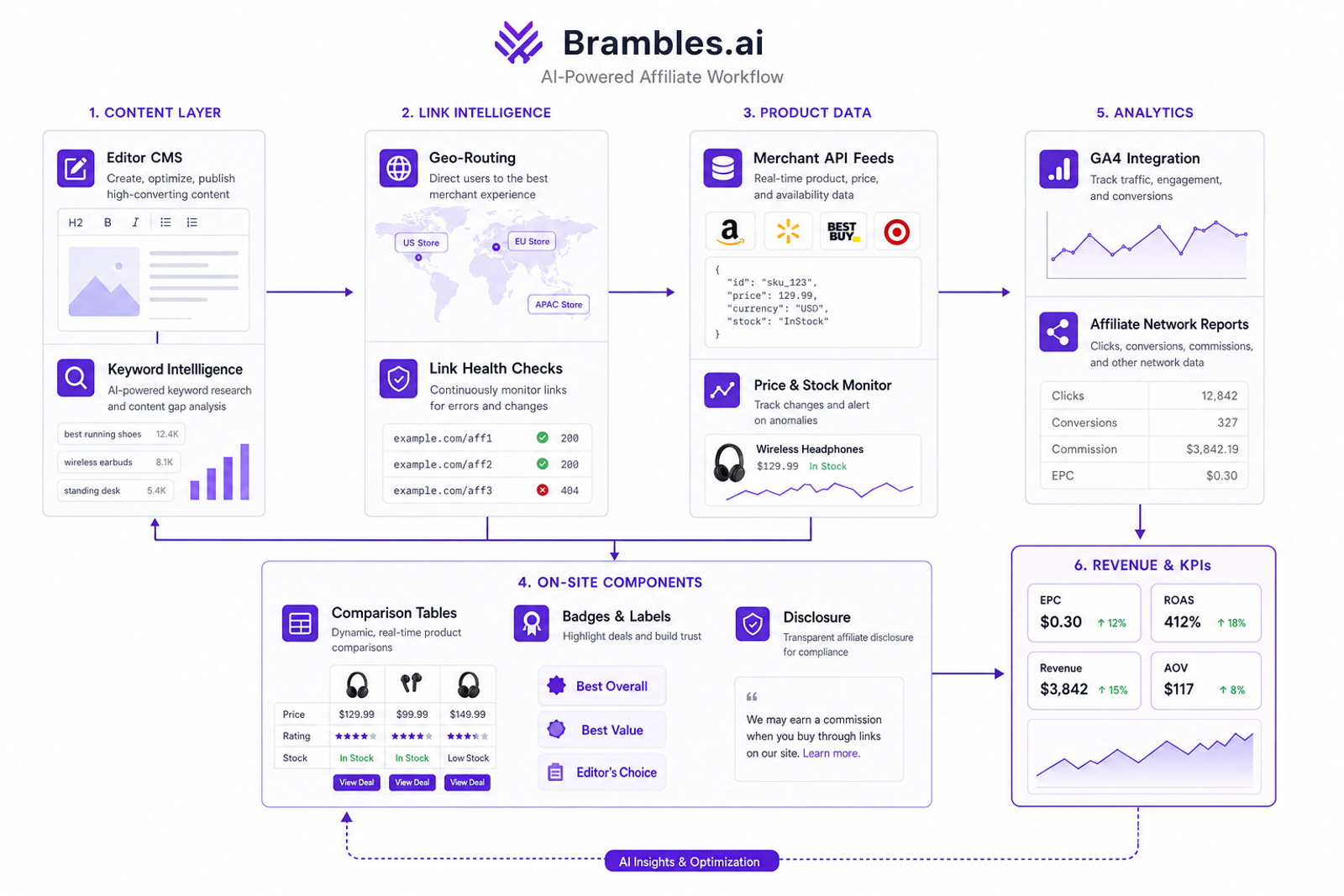
Two weeks after we wired a price-aware comparison table into a cookware review, RPM jumped 28% with fewer clicks. The table auto-swapped to merchants with stock and better EPC, and added a “best value today” note only when price gaps were >8%. Readers clicked less but bought more. That’s the pattern across top AI affiliate tools: they quietly remove friction you don’t see until you measure at article-level granularity.
On a travel blog, a geo-routing link layer stopped sending Canadians to US-only landing pages; EPC rose 22% in 10 days. For a tech-deals newsletter, we pushed an LLM-powered product-matching script that rebuilt old posts with current SKUs and live pricing—traffic was flat, revenue up 31% month‑over‑month. The stack isn’t magic. It’s a repeatable set of tools that handle product discovery, linking, price/stock, and reporting so you can obsess over angles and trust signals instead of spreadsheets.
What’s Broken in Affiliate Right Now
Three issues keep sabotaging affiliate revenue generation: stale links, irrelevant offers, and weak measurement. Stale links creep in as SKUs rotate; the article ranks but points to out‑of‑stock pages or worse, 404s. Irrelevant offers happen when you lock into one merchant’s catalog and miss better price/stock elsewhere. And measurement? Most bloggers track clicks, not earnings per session or article‑level ROAS, so they optimize for eye candy instead of payout.
UX makes it fragile. If comparison blocks are slow or inconsistent across native mobile shopping experience, readers bail before they see the value. Baymard Institute’s UX research highlights how cluttered product information and inconsistent price presentation kill scannability—precisely where many affiliate tables go wrong. Google’s guidance on Core Web Vitals adds a second punch: slow, janky UI drags engagement, which drags rankings, which drags revenue. None of this is controversial; it’s what you see when you replay sessions and compare EPC pre/post UI fixes.
How the AI Stack Works (Without the Hype)
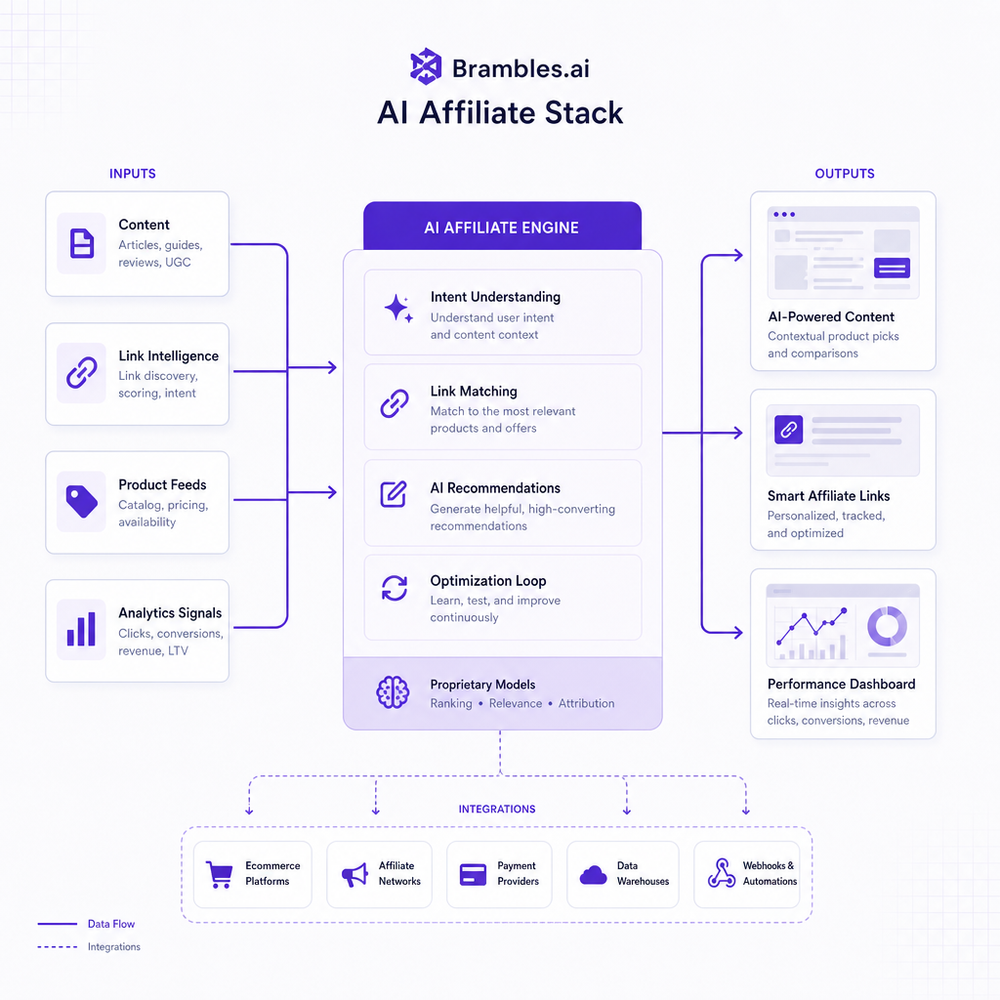
Think of four layers. Discovery: content intelligence like Clearscope, Surfer, or Frase cluster queries, map intent, and surface SERP gaps so your posts answer buyer questions that convert. Linking: tools such as Geniuslink and Lasso auto‑convert keywords, apply geo‑routing, and warn you when a link dies or commissions change. Offer selection: price/stock watchers—Sovrn Commerce/Skimlinks, Affilimate’s price comparison, or homegrown API polling—ensure your blocks show what’s actually buyable at a competitive price. Experience: components like AAWP or TableLabs render tables and cards that load fast, show consistent specs, and handle disclosures automatically.
Two extras pay off fast. First, a lightweight on‑site recommendation layer (think chat or quiz) that maps a reader’s intent to 2–3 products and explains the trade‑offs. Second, a feedback loop: article‑level EPC and ROAS feed back into your templates so winning patterns (e.g., “price delta badge when >7%”) propagate. McKinsey has long shown personalization lifts revenue; in affiliates, the smallest personalization is often just showing the right merchant and labeling why. Keep it elegant, fast, and explainable.
Implementation Guide: Tool-by-Tool Setup
Start with measurement so you don’t argue with guesses later. In GA4, create content groupings for monetized posts and capture outbound click events with merchant/network dimensions. In your affiliate dashboard (Affilimate, Affluent.io, or Looker Studio pulls), standardize EPC, AOV, and conversion rates across networks. Record a 14‑day baseline. You’ll use this to validate tool lifts instead of eyeballing CTR.
Link intelligence. Deploy Geniuslink or a similar router for geo/currency logic and link health. For WordPress, pair with Lasso or Pretty Links to centralize destinations and auto‑replace legacy slugs. Turn on warnings for 404s and commission changes. Add a weekly job that dumps orphaned links (clicks without earnings) so you can swap merchants or de‑emphasize the block.
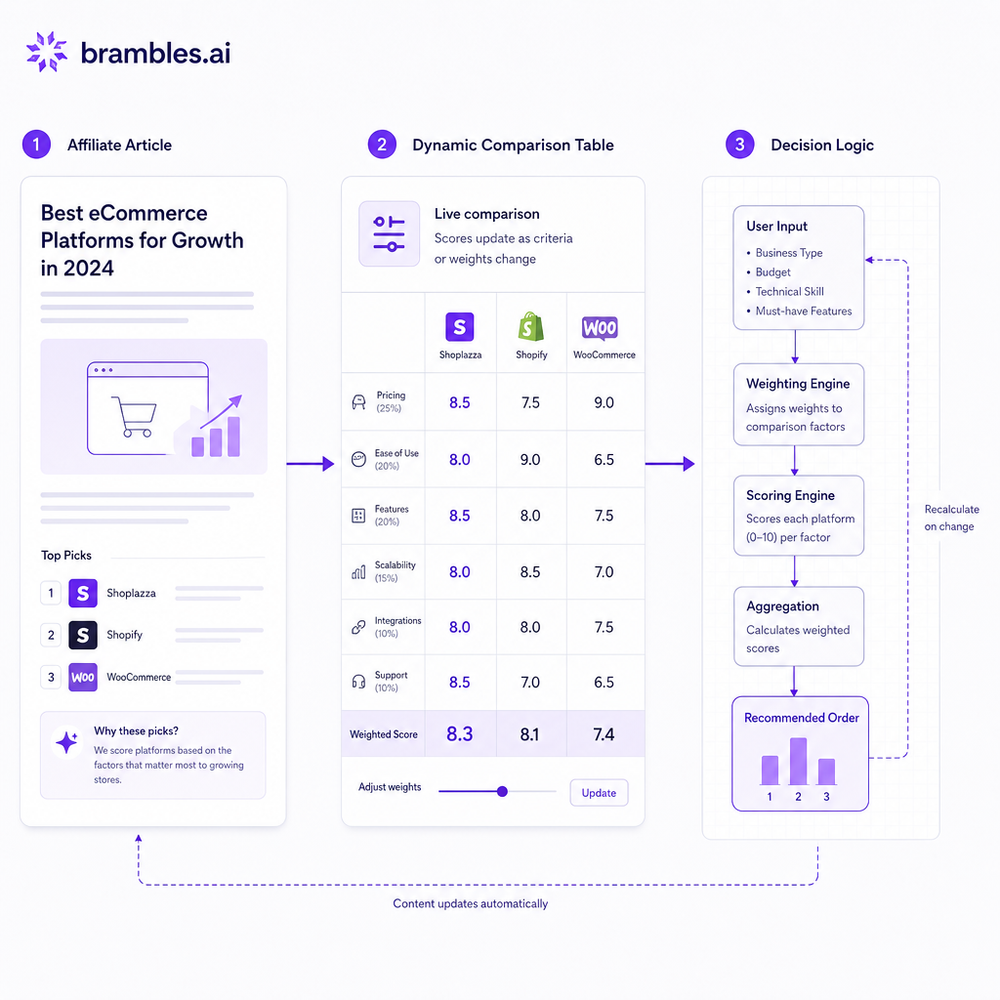
Offer selection and display. AAWP or TableLabs render fast, structured blocks; connect them to live price/stock where possible (API, feed, or Affilimate’s price comparison). Establish your guardrails: price advantage threshold (e.g., show “best price” badge only if >5% cheaper), minimum stock, and a fallback merchant. Cache price blobs to avoid hammering APIs. Keep the disclosure line within the component—no one hunts for footnotes.
Content intelligence. Use Clearscope/Surfer/Frase to align with intent without stuffing. If a cluster wants “best budget mirrorless,” lead with the buying criteria and 2–3 picks. Draft with an AI assistant if you must, but keep your hands on the wheel: add teardown photos, proprietary tests, and return‑policy notes that tools can’t invent. Google’s Helpful Content guidance rewards first‑hand detail; your measurements and nuances are the moat.
On‑site assistance. If you’re ready to test a conversational recommender, deploy a lightweight module that only suggests products you actually review, and that can cite the specific section or spec table. This can be done with a small knowledge base of your reviews plus product metadata. Keep logs so you can see which prompts convert and which confuse.
Measuring ROI & KPIs That Actually Matter
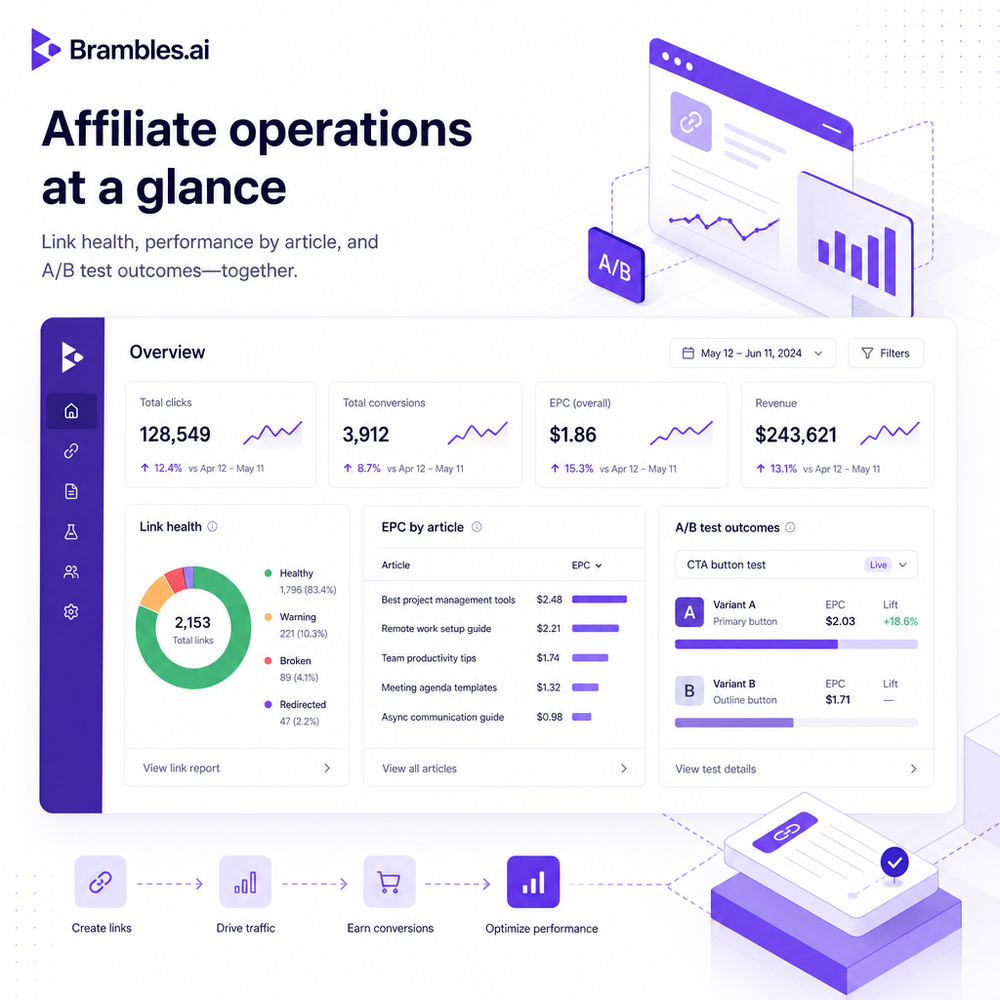
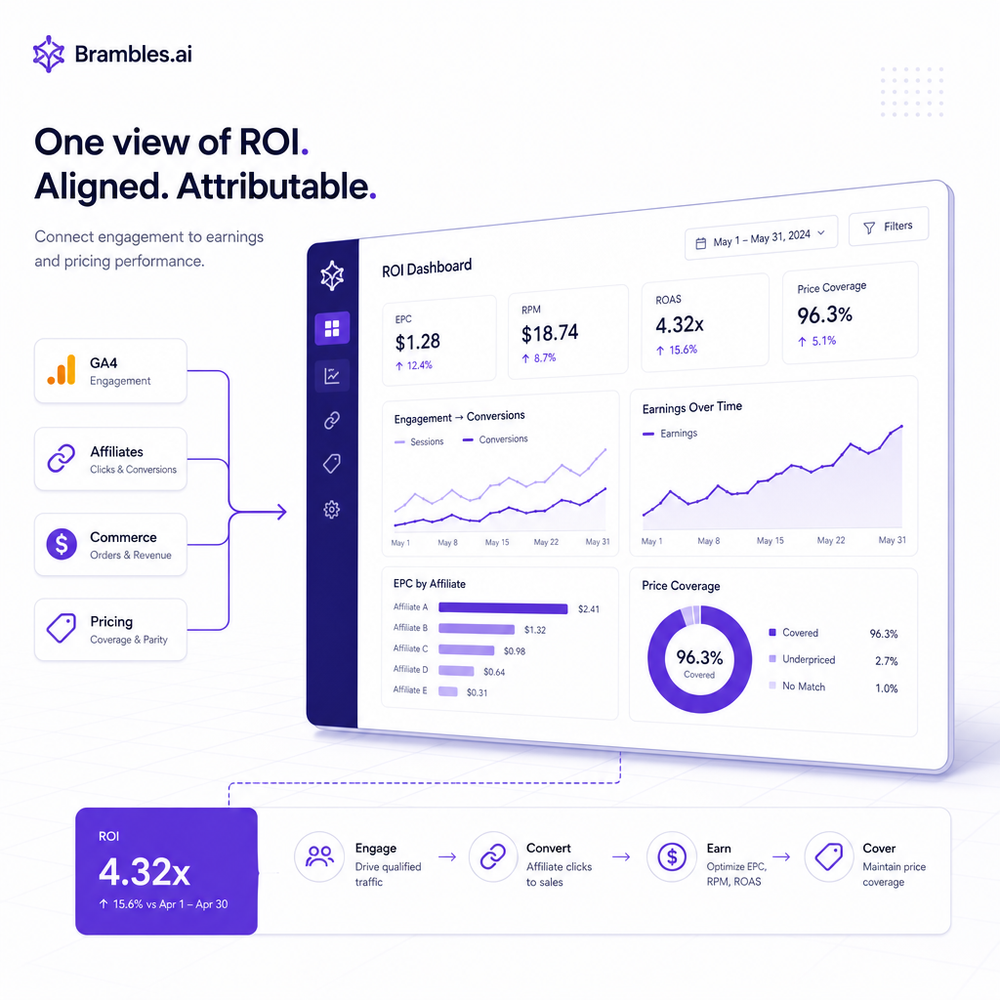
Track outcomes, not vanity. Article-level EPC (earnings per click) and RPM (revenue per 1,000 sessions) tell you whether content or UI changes made money. Add ROAS per article: affiliate revenue divided by content costs (writing, design, tools) for that piece. If you run paid distribution, break it out separately.
Operational KPIs expose hidden drivers: price coverage (percent of SKUs with fresh price/stock), link health (broken or out‑of‑stock links per 100), merchant share of wallet (earnings by merchant vs clicks), and discount delta (avg % difference between the top two merchants). When discount delta widens, your dynamic badges should fire; you’ll see EPC rise even if CTR dips.
Anecdote: On a photography guide, we replaced a generic “Buy at Amazon” hero button with a price‑aware block that showed two merchants and a soft nudge (“B&H is $24 lower today”). CTR fell 6% but EPC rose 18% and RPM rose 21% over 21 days. The point: optimize for payout, not clicks. Validate lifts with a holdout group or article‑level A/B testing, and beware seasonality—compare against a 28‑day trailing average when possible.
First-Party Data, Disclosures, and Trust
Trust pays. Salesforce’s State of the Connected Customer highlights how transparency shapes buying behavior; for affiliates, that means clear disclosures and accurate, recent information. Bake disclosures into each component, not just the page header. Show how you test, note return policies, and timestamp price refreshes (“Prices checked 2 hours ago”).
First‑party data hygiene matters. Use first‑party cookies for engagement and server‑side event forwarding where appropriate. Keep UTM parameters clean (source=affiliate, merchant=slug) so Looker Studio blends correctly with network data. If you run a conversational recommender, log only what you need and respect consent preferences. When in doubt, defer to local regulations and network policies—many explicitly forbid scraping checkout pages for pricing.
Anecdote: We added a tiny “Why these picks” dropdown to a coffee gear guide that linked to our test protocol and grinder calibration notes. Conversion didn’t spike overnight, but article RPM rose 9% over a month with fewer refunds reported by merchants. Readers didn’t need persuasion; they needed to believe the picks matched their use case.
Common Pitfalls (and Practical Fixes)
Over‑automation. Set firm guardrails for AI rewriting. Never let a script alter verdicts or add specs you haven’t verified. Keep a human-in-the-loop for anything that touches E‑E‑A‑T signals.
Fragile price scraping. Prefer official merchant APIs or sanctioned feeds; if you must scrape, cache aggressively and display a timestamped disclaimer. Build a fallback to a trusted default merchant when feeds fail.
Geo and currency mismatches. Your link router should detect locale and currency; test with VPN profiles and browser language toggles. Make sure your comparison tables reflect the reader’s context, not yours.
Template bloat. Heavy comparison widgets tank interaction to next content. Audit INP/LCP in PageSpeed Insights. If a table hurts Core Web Vitals, cut weight: server‑render, lazy‑load images, and trim vendor JS.
Misaligned incentives. Networks with slightly higher commission but lower conversion can quietly tax revenue. Watch article‑level ROAS and merchant share; test neutral layouts that don’t anchor users on your favorite logo.
What’s Next for AI Affiliate Tools
Three trends to prepare for: merchant‑agnostic knowledge bases, real‑time offer streams, and explainable recommendations. Your content library plus structured product data will power on‑site helpers that answer with receipts: citations to your tests, specs, and current prices. Networks are opening better APIs so you can normalize commissions and returns in near real‑time. And the tools that win will explain themselves—why this pick, why this merchant, and what changed since yesterday. That’s how you build profit and trust at the same time.
If you’re on WordPress and want a fast path: get your link routing and tables in order, wire article‑level EPC and ROAS, then test a lightweight, citation‑driven assistant on 3–5 top earners before rolling out network‑wide. Keep your notes, publish them, and treat your process like a product. That’s how the best affiliate blogs compound.
Related posts
View all
Why Contextual Ads in AI Chat Beat Banner Ads
Tests on commerce sites show AI chat contextual ads deliver 3–5x CTR, cleaner UX, and higher revenue than banners. See how they work, implement, and measure.
Multi‑Network Affiliate Optimization: Auto Best Rate
Route clicks across affiliate networks automatically to secure the highest commission, lift EPC, and preserve UX—practical tactics, data, and implementation ste
White-Label AI Chat: Full Brand Customization for Stores
Deploy a white-label AI shopping chat that looks, speaks, and converts like your brand. See setup steps, KPIs, pitfalls, and how Brambles.ai handles it E2E.
Explore Brambles.ai
Learn more about our AI-powered agentic commerce platform, agentic shopping, and shopping assistance solutions.
Explore More Insights
Discover more articles on AI, automation, and business innovation
View All Articles