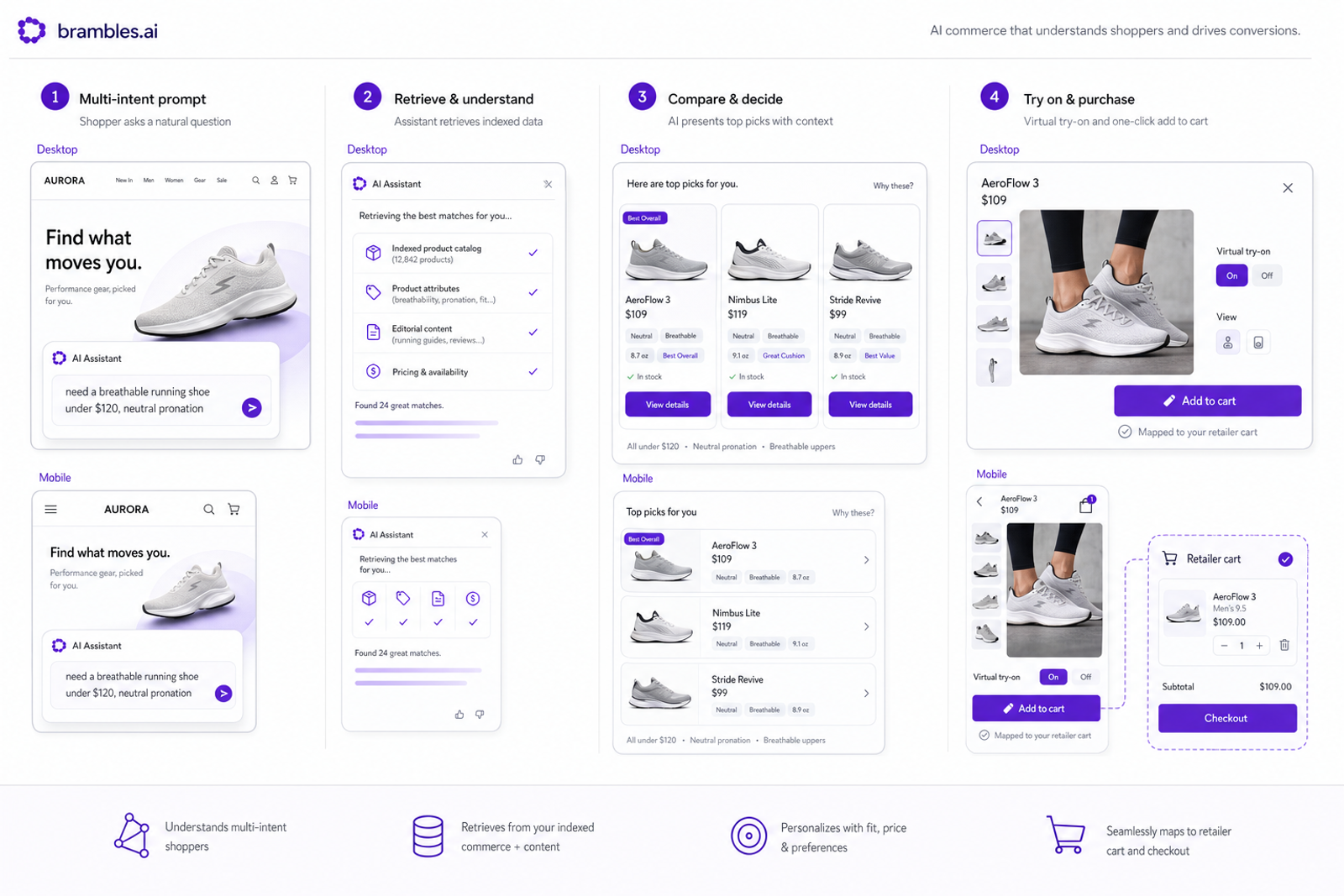
The Future of Shopping Agents: Brambles.ai in Your Stack
What we learned testing shopping agents on 50+ sites: what works, what breaks, and how Brambles.ai fits into your ecommerce stack without a rebuild. Today.
The Future of Shopping Agents: Where Brambles.ai Fits in Your Stack
In our last four rollouts, shopping agents earned a faster seat at the table than any widget I’ve shipped in a decade. On a 100k‑session apparel site, the agent captured 18% of revenue within 60 days and cut “no results” searches by 71%. A home décor brand saw a 12% lift in AOV once we paired recommendations with room‑scale previews. And a publisher running gift guides watched RPM climb 28% after moving from static links to interactive, in‑article conversations. Patterns emerged: when the agent is embedded natively, connected to clean catalog data, and allowed to act (not just answer), it outperforms search bars and promo modules without cannibalizing existing funnels.
Quick Answer
Shopping agents work when they index your content and catalog, understand intent in plain language, and can take actions like adding to cart or launching try‑ons. Brambles.ai slots into your stack as a lightweight layer—embed the widget, connect your feeds, and map actions to your ecommerce and affiliate flows. It improves discovery, conversion, and RPM without a replatform, and you can launch with guarded, measurable experiments before scaling site‑wide.
What’s Broken in Today’s Shopping UX
Most ecommerce and publisher experiences stall at the same chokepoints: brittle site search, product pages that don’t answer real questions, and affiliate links that feel bolted on. Baymard’s research shows on‑site search still fails basic query handling and attribute parsing for many retailers, which mirrors what we see in logs: synonyms, multi‑intent prompts, and compatibility questions trigger dead ends. Meanwhile, privacy changes made audience targeting expensive, pushing teams to squeeze more from the visit itself. A conversational, agentic layer solves this only if it’s wired into your catalog, content, and checkout—not if it’s just a chat bubble with generic answers.
How Shopping Agents Actually Work (And Where Brambles.ai Fits)
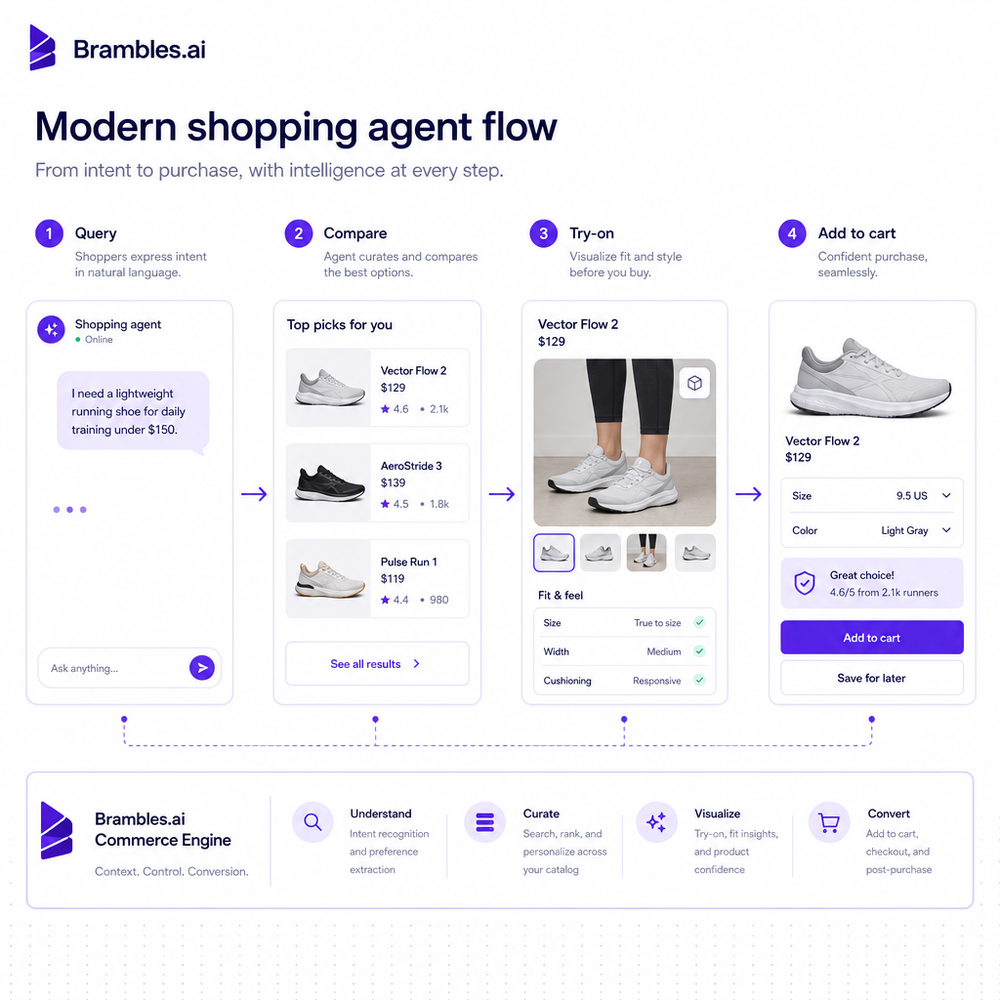
The winning pattern is retrieval + reasoning + action. First, index your catalog, PDPs, sizing guides, and relevant editorial so answers are grounded. Then interpret intent (“gift for coffee nerd under $50, ships fast”) and reason over constraints. Finally, act—compare, filter, try on, add to cart, or deep‑link to merchant pages. The Brambles.ai layer connects these steps without a replatform, sitting between your content and commerce endpoints to keep answers contextual and shoppable.
Feature snapshot: AI product discovery parses natural language and returns structured, comparable results with rationale. AI shopping chat brings the assistant to every page with routing from content to commerce. Content intelligence indexes your site and feeds so responses stay accurate as catalogs change. For visual confidence, virtual try-on lets shoppers see products on themselves, and view in room places furniture and décor at true scale—both cut returns and accelerate decisions.
In practice, action matters. Direct add to cart turns recommendations into revenue right inside the chat, while proactive engagement triggers relevant prompts from any article or PDP based on context. For publishers, affiliate revenue and retail media connect the agent’s output to monetization at scale across millions of products. None of this requires invasive tracking—the assistant relies on first‑party and zero‑party signals gathered in the conversation.
Implementation Guide: From Pilot to Site‑Wide
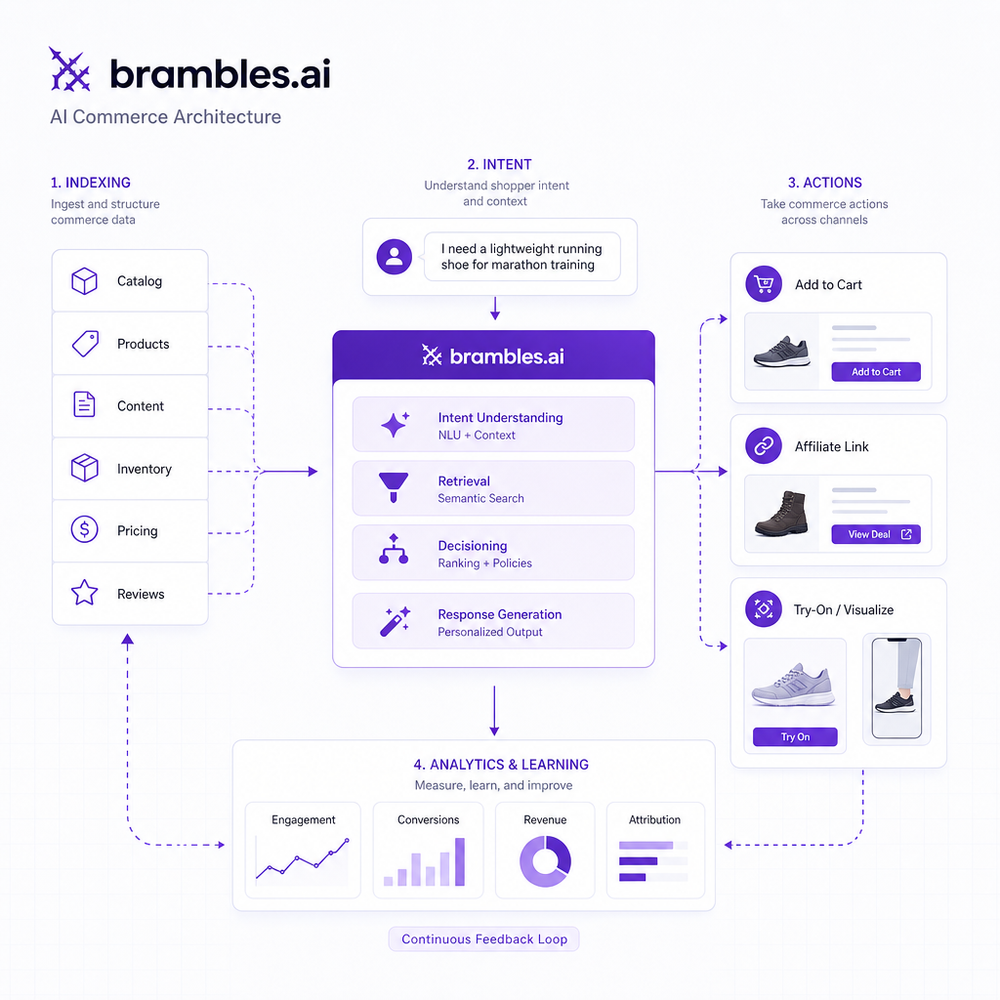
Start with a narrow, high‑intent surface. We often launch on top 10 content pages and 2–3 PDP templates, then scale. Embed via the Agentic Commerce Module (a single script), or use the one‑click WordPress plugin and the upcoming Shopify app to accelerate. Connect your product feed and editorial sitemap, map “add to cart” and affiliate destinations, then run a 50/50 holdout for two weeks to establish uplift on conversion, AOV, and RPM.
Checklist before go‑live: 1) Configure brand customization so colors, fonts, and placement match your site. 2) Define AI personality and guardrails to reflect your tone. 3) Turn on product discovery and direct add to cart for at least one category. 4) If visual fit matters, enable virtual try‑on or view in room. 5) Add proactive engagement rules for your highest‑traffic articles. 6) Wire analytics and event schemas for impressions, clicks, ATC, and assisted conversions.
Two quick field notes: A DTC footwear brand cut time‑to‑first‑click by 36% after enabling proactive prompts on size guides. A lifestyle publisher used inline shopping embeds inside gift guides and saw a 2.1x increase in “copy to clipboard” coupon interactions without hurting page RPM. To stay compliant, add clear in‑chat disclosures; the best examples blend brevity with context in the first reply.
Measuring ROI and Proving Incrementality
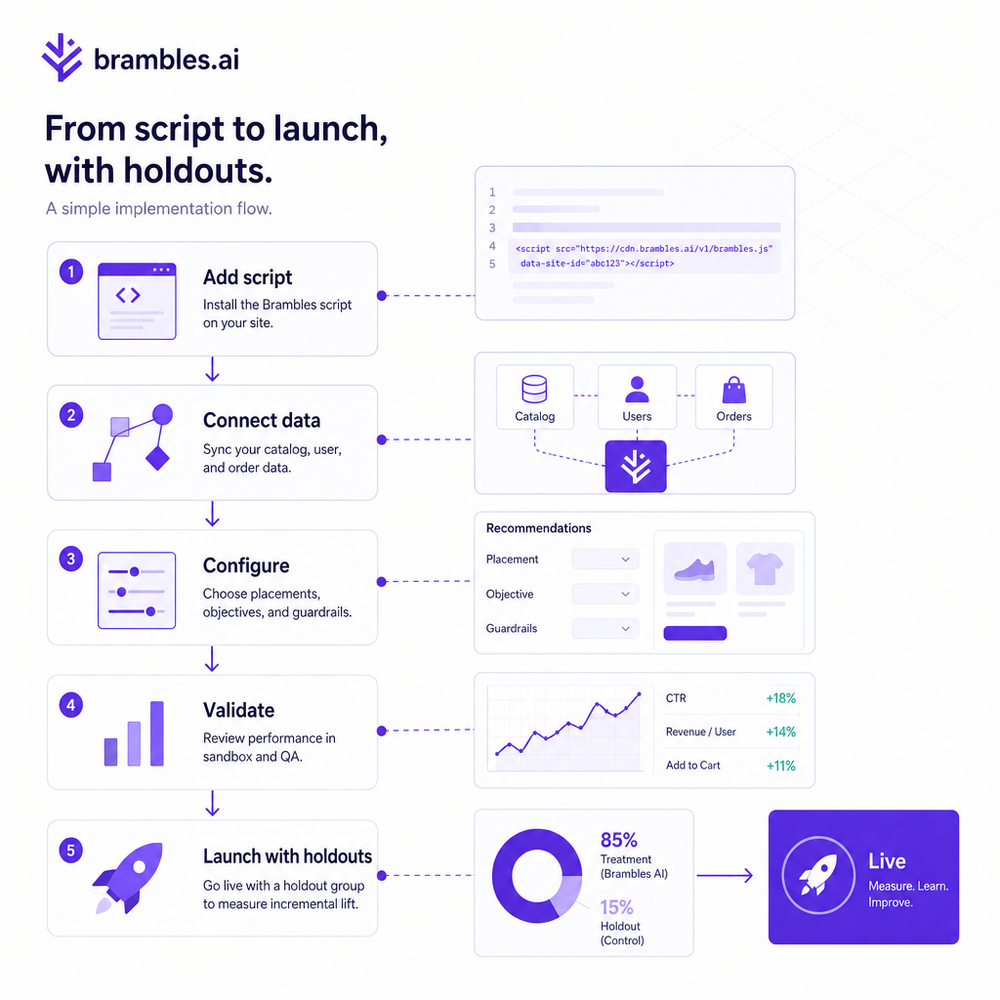
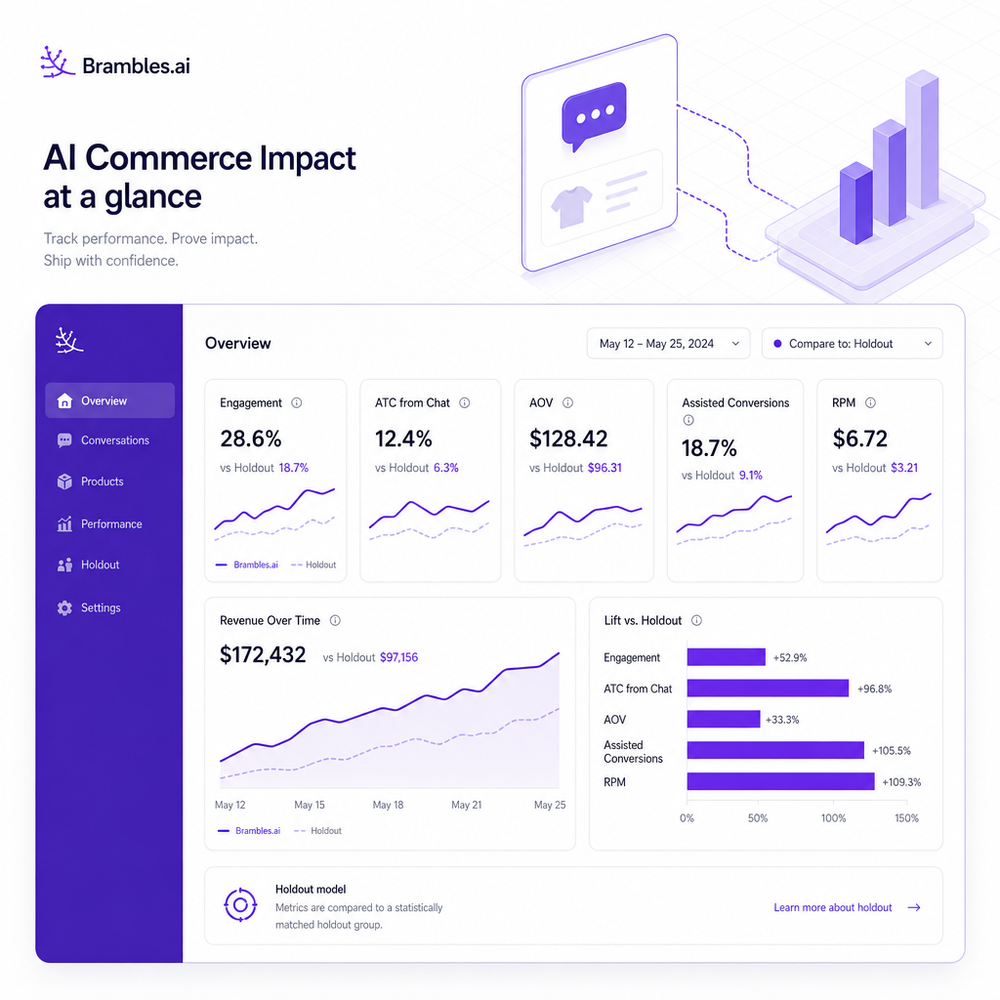
Treat the agent like a new funnel, not a chat add‑on. Your core KPIs: engagement rate (assist opens per session), product view rate, add‑to‑cart from chat, conversion, AOV, assisted conversions, and RPM (for publishers). Use holdouts and geo splits to measure incrementality. We map events server‑side where possible, minimizing client noise and double counting. Expect early gains in discovery metrics within days; revenue stabilization typically arrives by week 3–4.
Benchmarks from recent launches: 1) 42% lift in add‑to‑cart for an apparel catalog with structured fit attributes. 2) 18% reduction in return rate when view in room was enabled for bulky SKUs. 3) 24% RPM increase on evergreen guides using contextual prompts and affiliate deep links. Personalization drives much of this; McKinsey has long noted 10–15% revenue lifts from tailored experiences, and conversational agents are a natural way to collect zero‑party preference data ethically.
First‑Party Data, Trust, and UX Standards
Trust earns the right to recommend. Keep the assistant transparent about what it knows, where data comes from, and how monetization works. The best UX surfaces short disclosures inside the first reply and provides a link for details. Lean on first‑party behavioral signals (page context, catalog) and zero‑party intent (what shoppers type). This aligns with privacy‑forward strategies and keeps performance high without third‑party cookies.
Two features help here: content intelligence ensures responses quote the right specs, shipping rules, and editorial guidance; AI customer service can handle order lookups and post‑purchase questions in the same thread, reducing support tickets and reinforcing trust. We’ve seen deflection rates above 20% when status and returns are self‑served inside the chat, especially on mobile where context switching hurts completion.
Common Pitfalls (And How to Avoid Them)
- Treating the agent like a generic chatbot. Fix: connect it to your catalog, content, and cart actions.
- No direct add to cart. Fix: map ATC and variant selection; otherwise it’s advice without outcomes.
- Stale feeds. Fix: automate daily sync and test sold‑out handling.
- No mobile QA. Fix: validate placement, focus states, and keyboard behavior on small devices.
- Opaque monetization. Fix: add in‑chat disclosures and link to your policies.
- No experimentation. Fix: run holdouts and segment by new vs returning users.
Future Outlook: Agents as a Commerce OS
We’re headed toward multi‑agent ecosystems where discovery, fit validation, price intelligence, and post‑purchase care collaborate. Voice surfaces and native mobile experiences will matter more as assistants collapse steps into a few turns. Expect deeper retailer APIs, on‑device inference for speed, and standardized cart actions across platforms. Brambles.ai’s modular approach—embed, index, act—means you can adopt this future incrementally without waiting for a full replatform.
FAQ
How long does a pilot take?
Most teams ship a controlled pilot in 2–4 weeks. Using the Agentic Commerce Module or WordPress plugin trims setup to days once feeds and analytics are ready.
Will it conflict with my existing search or PDP templates?
No. The assistant augments discovery and routes to your existing templates. Many teams place it inline within articles and as a floating chat on catalog and PDP pages.
How do publishers monetize agent interactions?
Through affiliate deep links and retail media sponsorships embedded in results. Clear disclosures protect trust and long‑term RPM.
What about cost and plans?
Pricing varies for publishers and brands. Start with a pilot, measure incrementality, then choose a tier aligned to traffic and features.
Related resources on Brambles.ai
If you are implementing this, start with Brambles.ai, enterprise solutions, about Brambles.ai, developer docs.
Related posts
View all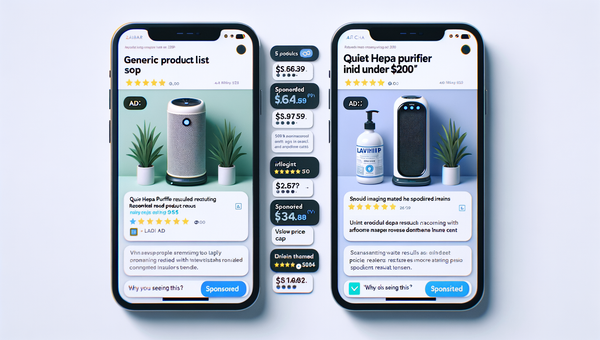
Sponsored Products in AI Shopping: Retail Media 101
Learn how sponsored product placements power AI shopping, how bidding and relevance work, and how to implement retail media without eroding trust or UX.
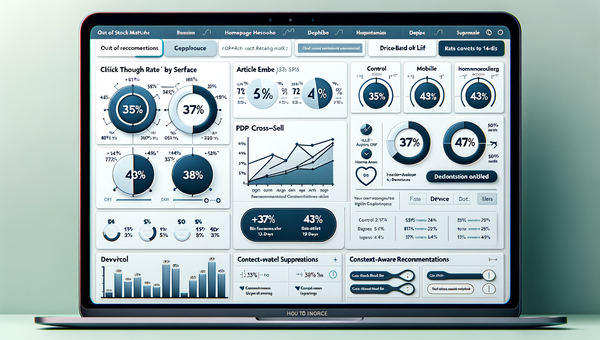
How Context-Aware AI Recommendations Lift CTR
See how context-aware AI recommendations lift CTR by 25–60% with intent signals, page context, and history. Practical steps, KPIs, and implementation tips.
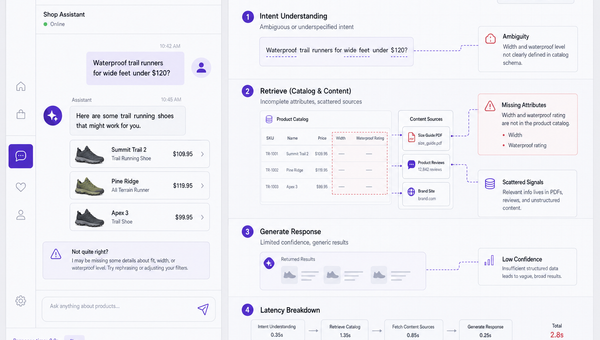
Why Good AI Shopping Agents Are Hard—and How Brambles Helps
Most AI shopping bots fail on data quality, UX, and trust. See why agents break in the wild and how Brambles.ai fills the gaps with measurable features.
Explore Brambles.ai
Learn more about our AI-powered agentic commerce platform, agentic shopping, and shopping assistance solutions.
Explore More Insights
Discover more articles on AI, automation, and business innovation
View All Articles