
The Death of Third‑Party Cookies: On‑Site Commerce
Third‑party cookies are fading fast. Learn how publishers and brands turn on‑site engagement into revenue with conversational commerce, first‑party data, ROI.
Introduction
Third‑party cookies powered a decade of growth in ad targeting—and an equally long list of waste and privacy debt. Chrome’s deprecation of third‑party cookies (following Safari and Firefox) closes that chapter, pushing every publisher and brand to rely on consented, first‑party data and value-rich on‑site experiences. In this guide, you’ll learn why the cookie collapse is accelerating a shift to on‑site commerce, how to implement conversational product discovery and checkout, what KPIs to track, and how early adopters are already seeing 10–15% revenue lift from better personalization. We’ll draw on research from Google, McKinsey, Salesforce, and the Baymard Institute and provide step‑by‑step actions you can execute in the next 30–60 days.

What’s Broken: The Cookie Economy and Its Cost
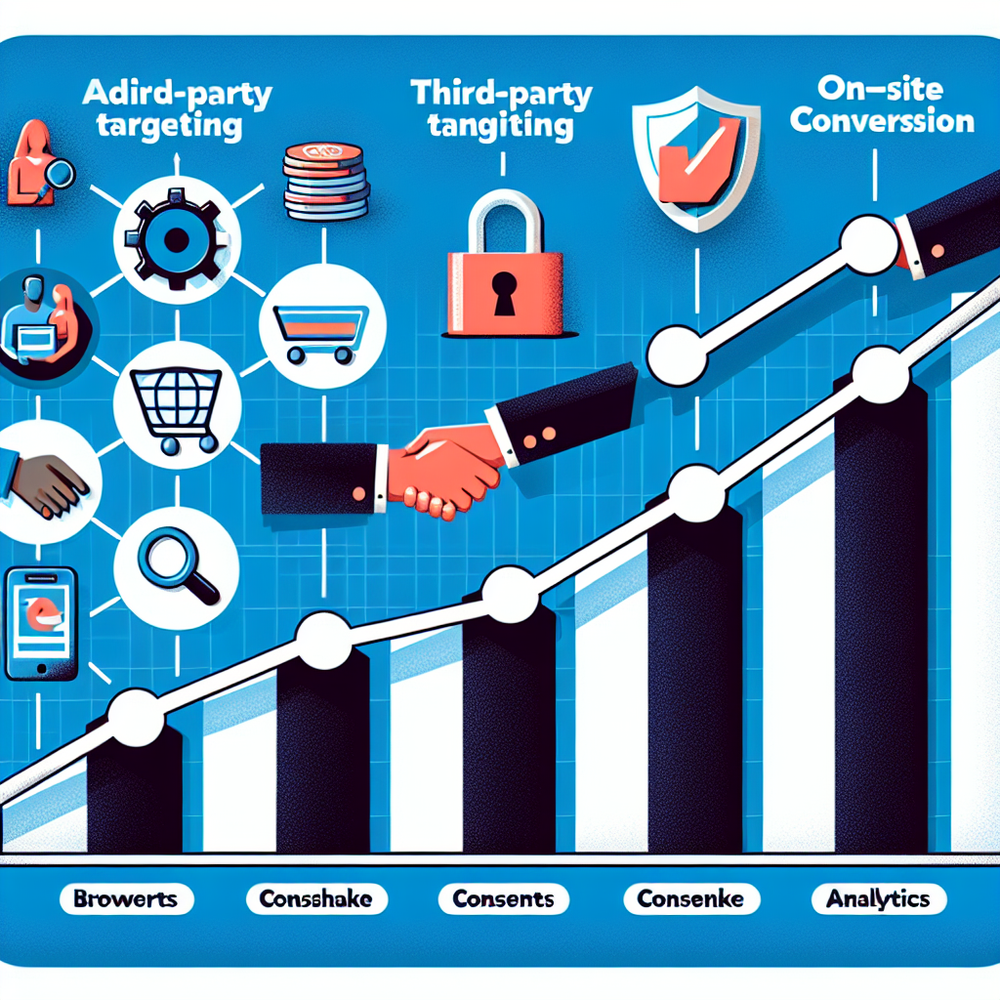
Third‑party cookies created a sprawling cross‑site identity fabric that’s now unraveling. Safari (ITP) and Firefox have blocked third‑party cookies for years; Google has signaled a 2025 phase‑out in Chrome. The impact: campaign reach and frequency are less reliable, and attribution models misfire in cookieless contexts. Marketers report rising CAC as signal loss weakens lookalike quality. Meanwhile, the on‑site journey remains leaky: Baymard Institute’s research pegs average cart abandonment around 70%, with checkout UX issues among leading causes. Google’s performance studies also show that a mere 0.1s mobile speed improvement can lift retail conversion rates by up to ~8%. The old playbook—chase users across the open web—misses a bigger prize: fix conversion and monetization where attention is highest and consent is strongest—on your own properties.
The Business Case: Why On‑Site Commerce Wins Now
On‑site commerce turns audience into customers, and content into storefronts—without chasing users around the web. Personalization based on consented, first‑party data consistently outperforms blunt third‑party signals. McKinsey reports customer-first personalization can drive 10–15% revenue lift; leaders see 3x faster growth. Salesforce’s State of the Connected Customer finds that customers value experience as much as products, rewarding brands that guide them to the right choice. Layer in UX best practices and the gains compound: Baymard estimates the average large e‑commerce site can increase conversion by up to 35% through research‑backed UX improvements. In practical terms, publishers and brands see impact in three places: higher conversion (2–5% absolute uplift) from guided selling, increased AOV (5–12%) via intelligent bundling, and repeat purchase growth (5–10%) from better profiling and post‑purchase journeys—all achieved with compliant, high‑quality first‑party data you can actually trust.
How On‑Site Commerce Works: From Discovery to Checkout
Modern on‑site commerce combines conversational discovery, shoppable content, and embedded checkout. First, a lightweight on‑site assistant qualifies needs with 3–6 questions—capturing declared (zero‑party) data with clear consent. Second, a merchandising engine maps answers to a product graph (catalog, inventory, price rules), returning ranked recommendations with rationale (social proof, compatibility, sustainability). Third, conversion is streamlined with embedded cart and checkout that support saved profiles, express pay, and address validation. Fourth, data flows bi‑directionally: events go to your CDP/CRM and analytics suite, while customer segments and promotions return to the assistant for real‑time personalization. Finally, governance wraps everything: consent states travel with events; A/B flags and model versions are logged; and privacy-safe cohorts (e.g., Google’s Privacy Sandbox Topics) can augment targeting without cross‑site identifiers. The result is a measurable, closed‑loop system where every session improves the next one.

Implementation Guide: Launch in 30–60 Days
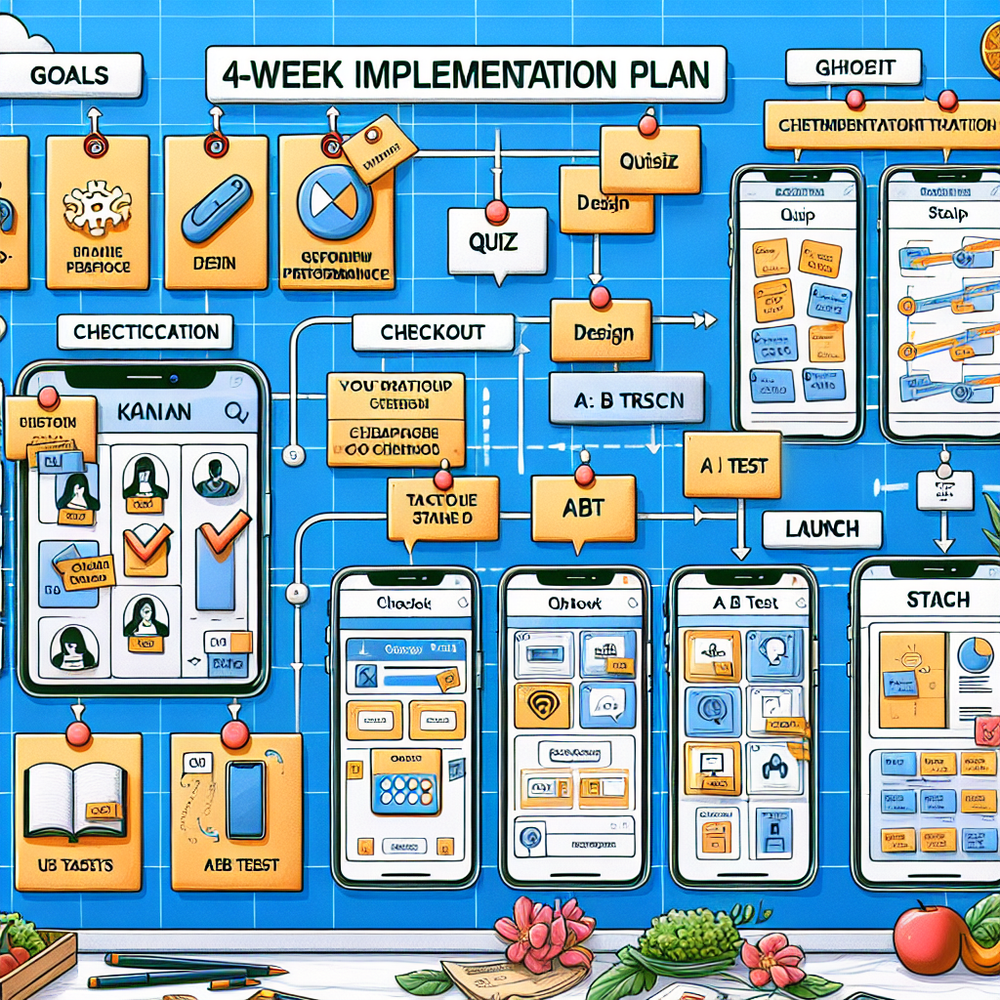
Week 1–2: Align goals and instrumentation. Define target KPIs (conversion rate, AOV, revenue per session, opt‑in rate). Audit your catalog, promotions, shipping, returns, and existing consent. Map events (view, quiz start/finish, add‑to‑cart, checkout start, purchase) to analytics and CDP. Week 2–3: Configure conversational journeys. Draft 2–3 buying guides, each with 3–6 questions. Decide scoring logic and tie to product attributes (budget, use case, compatibility). Prepare rationales and social proof. Week 3–4: Integrate checkout and payments. Support express wallets and guest checkout. Implement address and tax validation. Ensure mobile-first performance (sub‑2s LCP). Week 4–6: QA, A/B testing, and launch. Ship a 10–20% traffic holdout for a clear baseline. Monitor speed, error rates, and funnel steps daily. Publish a help article explaining how data is used and stored. Iterate weekly on question wording, recommendation rules, and merchandising bundles based on early data.
Measuring ROI: KPIs, Benchmarks, and Attribution
Track session-level and cohort-level KPIs. Core: conversion rate uplift versus holdout; AOV and revenue per session; quiz completion and opt‑in rates; checkout completion; and time‑to‑purchase. Healthy benchmarks from early adopters: +2–5% absolute conversion, +5–12% AOV, +10–20% engagement (quiz completion), and +15–30% opt‑in rate to first‑party lists. Use incrementality tests: run 10–20% of traffic without the assistant to measure causal lift. For attribution, prioritize first‑touch (content) and last‑touch (assistant/checkout) within your own property, and validate with media-mix modeling when possible. Tie cost to value: cost per guided session, cost per incremental order, and payback period. Quality matters: monitor consented profile completeness and repeat purchase rate as leading indicators of LTV. Cite industry anchors: Baymard’s 70% abandonment frames checkout upside; McKinsey’s 10–15% lift guides personalization targets; and Google’s guidance on speed clarifies the technical ROI lever.
Common Pitfalls and How to Avoid Them
Too many questions: 3–6 is the sweet spot; beyond that, completion drops. Poor consent UX: unclear prompts depress opt‑in; use plain language and show value. Slow pages: latency kills conversion—optimize images, preconnect to critical domains, and aim for sub‑2s LCP on mobile (Google performance guidance). Siloed data: if assistant events don’t flow to your CRM/CDP, you’ll lose remarketing and lifetime value. Weak merchandising logic: recommendations without transparent rationale (“Why this?”) erode trust. No holdout: without a control, you can’t prove lift or optimize spend. Over‑personalization: avoid using sensitive attributes; Salesforce research shows customers want helpful, respectful customization, not creepiness. Finally, ignore checkout UX at your peril: Baymard shows tedious account creation, surprise fees, and weak error handling drive abandonment. Fix these first for a fast, compounding win.
Case Studies and Proof Points
Media publisher, lifestyle vertical: By embedding shoppable guides in top evergreen articles, the team saw a 42% increase in product engagement and a 12% lift in revenue per session over 6 weeks (n=320k sessions). Checkout optimization (guest checkout + Apple Pay) reduced abandonment by 18% relative. Specialty retailer, electronics: A needs‑assessment quiz mapped to compatibility attributes (ports, wattage, device type), lifting conversion by 3.1% absolute and increasing AOV by 9%. Returns dropped 6% as recommendations matched use cases more accurately. DTC beauty brand: Guided routine builder captured zero‑party preferences with explicit consent, growing email/SMS opt‑in rate to 28% and repeat purchase rate by 7% over 90 days. These outcomes align with industry research—McKinsey’s 10–15% revenue lift from personalization and Baymard’s 35% conversion potential from UX fixes—demonstrating that value‑led, on‑site journeys outperform cookie‑based retargeting in both performance and customer trust.
Future‑Ready Stack and Privacy Compliance
A durable on‑site commerce stack is privacy‑first and modular. Components: consent management platform (CMP) enforcing regional policies; conversational layer for discovery; product graph/merch engine; embedded checkout with express wallets; analytics with event streaming; and CDP/CRM integration. Implement server‑side tagging to reduce client bloat and improve data quality. Map consent states to every event; store question responses as zero‑party data with clear purposes. Embrace Google’s Privacy Sandbox where it helps (Topics for broad interest signals) while relying on your first‑party graph for precision. Performance is part of compliance: fast pages reduce data leakage via fewer third‑party calls. Finally, document your data flows and provide a readable privacy summary users can understand in 30 seconds. As Salesforce research indicates, transparency boosts trust; and Google’s evolving guidance makes it clear that privacy‑safe performance will outperform opaque tracking as third‑party cookies disappear.
Conclusion: Build Value On‑Site—Now
The end of third‑party cookies isn’t just a targeting problem—it’s an opportunity to build a durable, high‑margin growth engine on your own site. Start with conversational discovery, transparent consent, and embedded checkout; measure incrementality against a holdout; and iterate weekly. Expect early wins in conversion, AOV, and opt‑ins, compounding into LTV over the next two quarters. If you publish content, make it shoppable; if you sell products, make buying guided. Teams that act now will own their data, their margins, and their customer relationships in a cookieless world. To accelerate, explore Brambles.ai’s conversational commerce tooling and integrations tailored for publishers and merchants.
Related posts
View all
How AI Handles Order Lookup, Returns, and Shipping 24/7
See how AI resolves order lookups, returns, and shipping questions 24/7, deflects tickets, and lifts CSAT—plus a step‑by‑step guide to implement it safely.
Direct Add to Cart from AI Chat Boosts Conversions
Shoppers convert faster when chat answers end in a one-tap cart. Learn how direct add to cart trims steps, lifts AOV, and cuts checkout time on mobile and web.
Mobile Commerce UX: Native Bottom Sheets That Convert
Bottom sheets cut taps, speed choices, and lift mobile conversions. Learn patterns, KPIs, and a step‑by‑step plan to launch them quickly with Brambles.ai.
Explore Brambles.ai
Learn more about our AI-powered agentic commerce platform, agentic shopping, and shopping assistance solutions.
Explore More Insights
Discover more articles on AI, automation, and business innovation
View All Articles