The AI Shopping Wars: Google, Amazon, OpenAI & Brambles
Google, Amazon, and OpenAI are racing to own AI shopping. See how their plays differ, what’s broken today, and how Brambles.ai helps publishers and brands win.
The AI Shopping Wars: Google, Amazon, OpenAI & Brambles
Last quarter, we watched a mid-market apparel site shift 41% of product discovery from search boxes to chat after they exposed a conversational entry point on PLPs. The kicker: 18% of those chats converted without ever visiting a traditional PDP. When Amazon rolled out Rufus, we saw category queries (e.g., “waterproof trail shoes under $120”) rise on publisher sites the same week—proof that shoppers now expect dialogue, not filters.
At the same time, several publishers told us their Google Shopping and SEO referral mix is wobbling under SGE. OpenAI’s assistants are chewing more top‑funnel research. The result: discovery is fragmenting while intent concentrates in chat. In this scramble, the players with first‑party context and last‑mile checkout win most often.
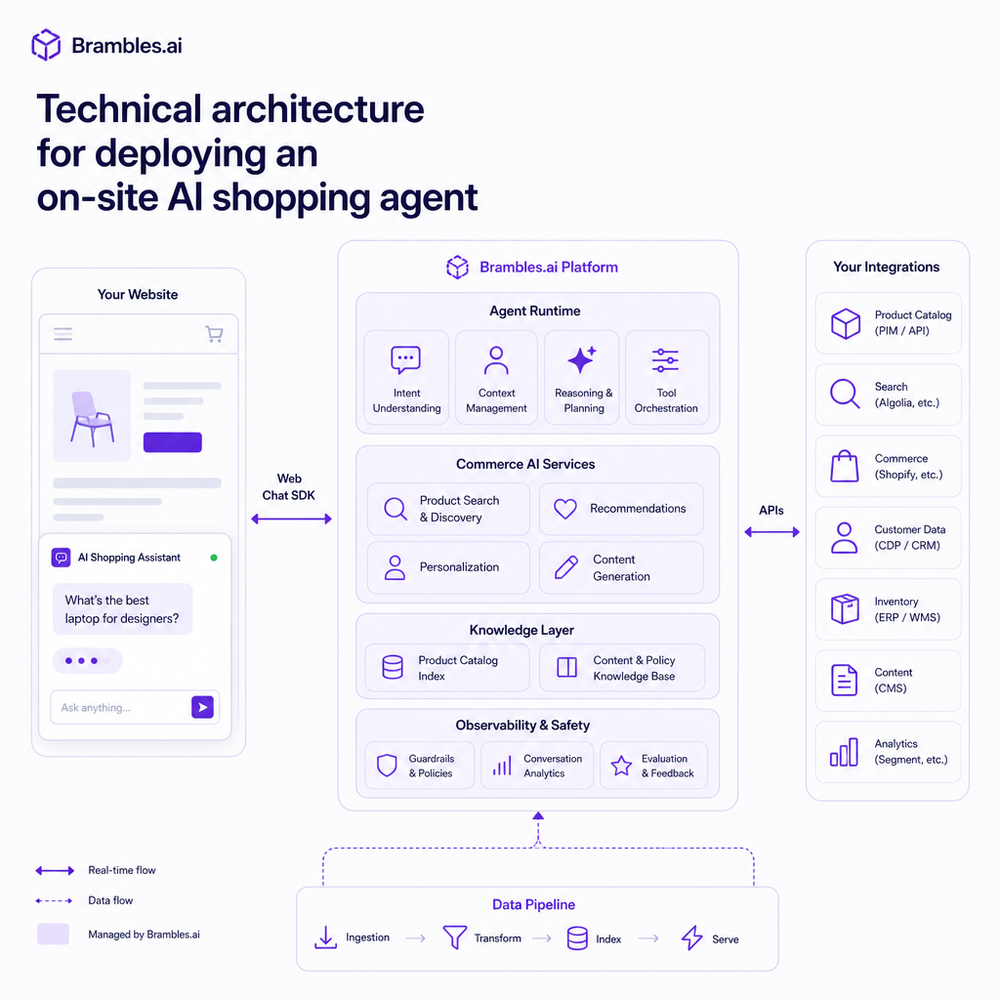
This piece is a field guide to the AI shopping wars—how Google, Amazon, and OpenAI are staking their ground—and where a site‑embedded agent like Brambles fits for publishers and brands who need conversions, not just traffic.
Quick Answer
Google is fighting to keep product discovery in Search, Amazon is compressing the journey to a single in‑app conversation, and OpenAI is aggregating research across the open web. You can’t outspend them—but you can meet shoppers at the edge with a site‑embedded AI that knows your catalog, content, and policies. That’s where a lightweight agent like Brambles converts intent into carts via conversational discovery, shoppable answers, and clear disclosure.
What’s Broken in AI Shopping Right Now
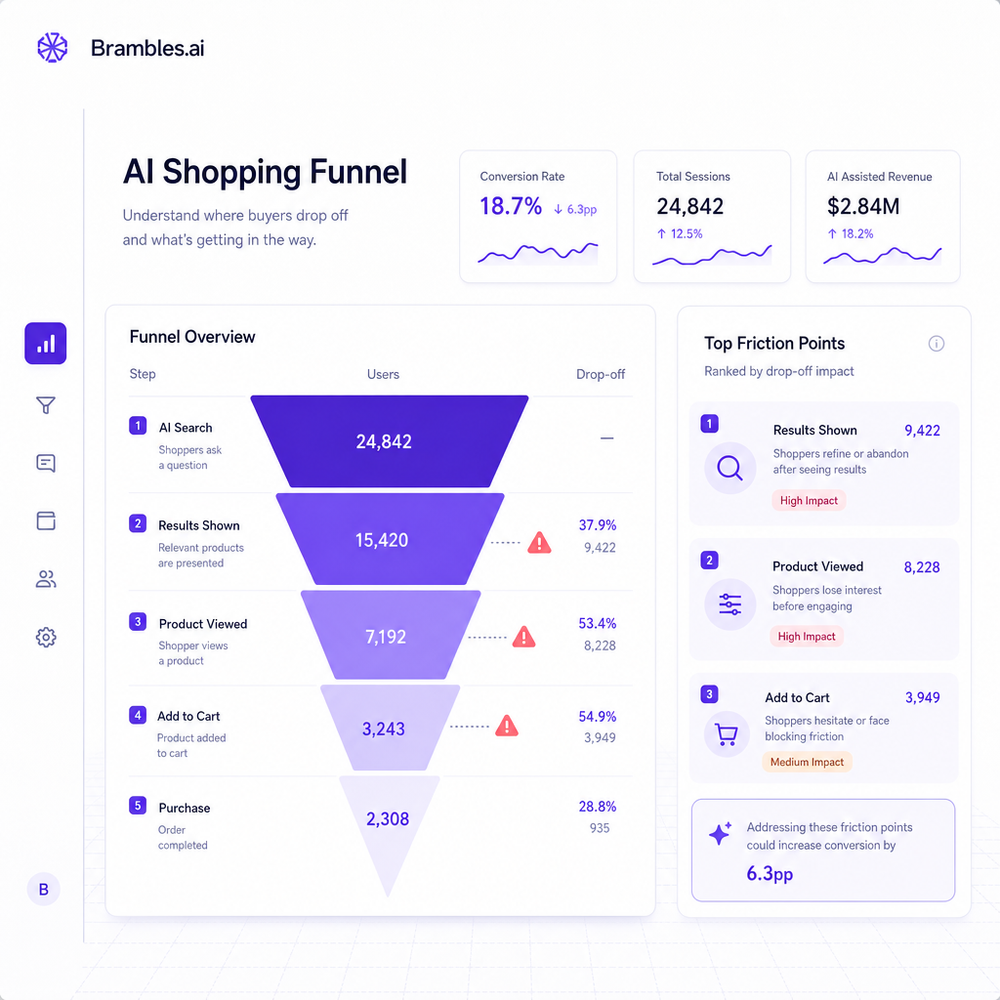
Most AI shopping today stops at inspiration. Generative answers lack SKU‑level availability, variant awareness, and live pricing—so shoppers bounce. Baymard’s research shows that friction multiplies with uncertainty; vague recommendations and missing fit signals drive abandonment more than an extra form field ever will.
Publishers face a second problem: monetization without breaking trust. AI answers that bury disclosures or push irrelevant products erode RPM and reader loyalty. We’ve audited dozens of chat experiences that surface the “right brand” but the wrong merchant, losing commissions to cookie windows and Buy Box shifts.
How Google, Amazon, and OpenAI Are Positioning
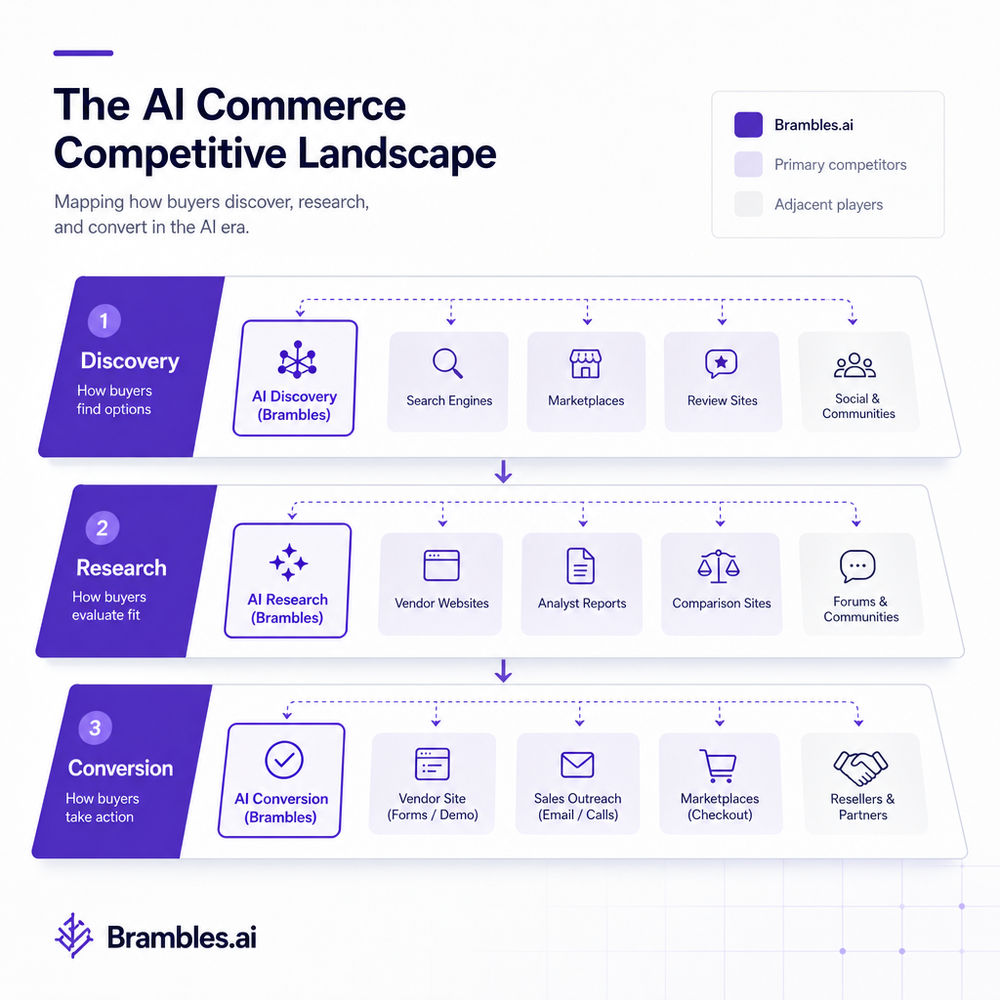
Google wants to keep discovery on its turf. SGE and the Shopping Graph aim to answer product questions in‑result, then deep‑link to merchants. Expect strong query coverage, mixed SKU fidelity, and an ads model that prefers sponsored visibility. Great for top‑funnel, not guaranteed for last‑mile conversion on your site.
Amazon is collapsing consideration and checkout into one chat. With Prime, reviews, and inventory, it closes. But that gravitational pull is risky for brands that need DTC data or publishers that monetize across multiple merchants. Amazon’s assistant will favor Amazon’s shelf; that’s the business model.
OpenAI is a meta‑layer for research. Its assistants synthesize options, but they rarely see your live stock, fit, or bundle logic unless you wire it in. This is your leverage: first‑party catalog and context. A site‑embedded agent can answer with certainty because it’s grounded in your data and is one click from cart.
Where Brambles Fits: Converting Intent at the Edge
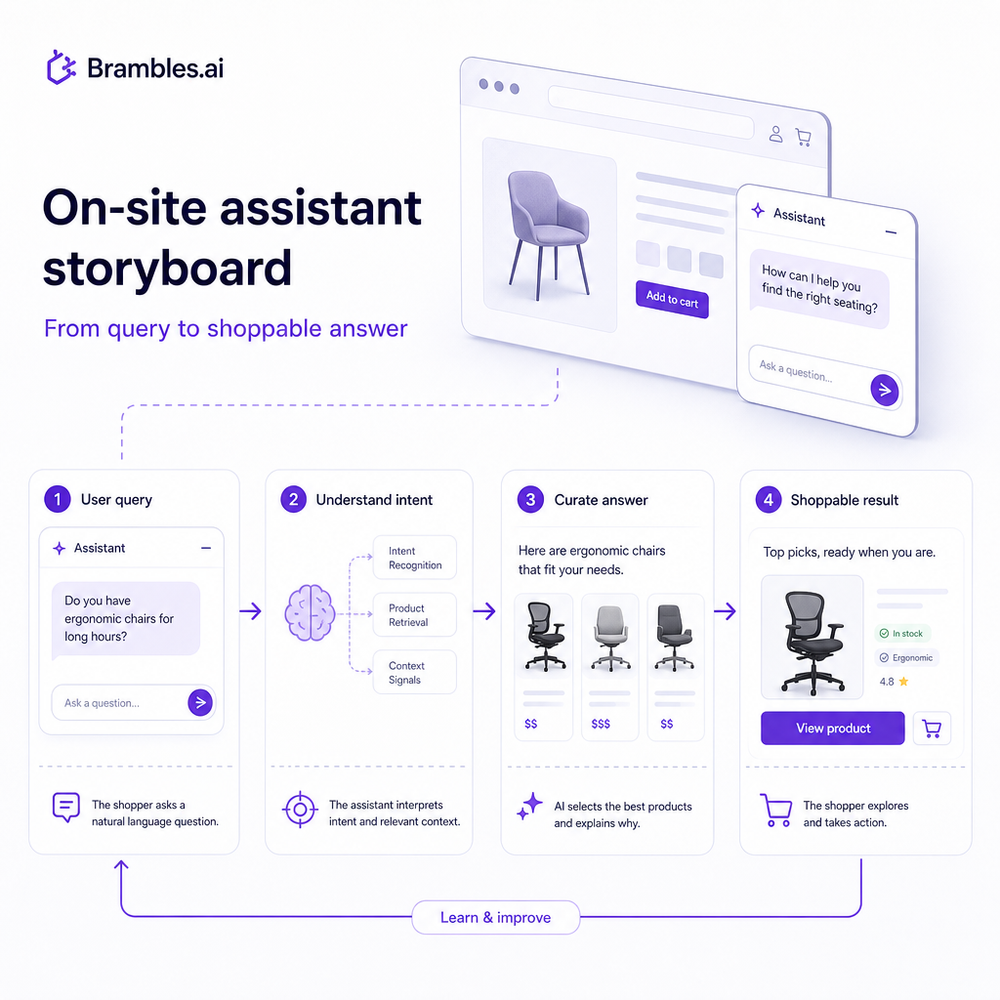
Brambles.ai plugs into your site to turn curious questions into shoppable, trustworthy answers. Three features do most of the heavy lifting: AI product discovery interprets real language like “sleek black loafers that don’t blister” and maps it to your catalog and affiliate feeds; AI shopping chat sits on every page so users can refine (“leather lining?”) without starting over; Proactive engagement detects page context and nudges the next best action when a shopper stalls.
For experience depth, virtual try‑on helps shoppers see items on themselves, while view in room places furniture and decor into their space—both slashing returns and boosting confidence. When it’s time to act, direct add to cart lets buyers checkout from within chat. On content‑heavy sites, content intelligence indexes guides and reviews so the assistant cites your own testing, not generic web claims.
Anecdote: on a 100k‑session apparel site, enabling proactive prompts on size‑sensitive SKUs lifted assisted conversion by 42% in two weeks. Another: a home‑decor retailer using view in room saw return rates drop 18% for large items. And a commerce publisher pairing AI product discovery with affiliate coverage improved RPM by 28% after filling OOS gaps with equivalent in‑stock picks.
Implementation Guide: A 10‑Day Plan
You can go live in days, not months. Day 1–2: connect catalog (feeds or API) and your content library so the agent grounds answers. Day 3–4: drop in the Agentic Commerce Module script and spin up staging. Day 5–6: configure tone, guardrails, and monetization rules. Day 7–8: enable proactive nudges on high‑exit templates. Day 9: QA variant logic and shipping policies. Day 10: launch on a 25% traffic cohort, then ramp.
Implementation resources: the WordPress plugin is a one‑click route for WooCommerce and content sites; the Shopify App will wire native product data as it becomes available. Fine‑tune the widget via configuration options and pick inline embeds for editorial guides. If you’re new, compare plans and request access, then start with a sandbox workspace.
Feature setup checklist: enable AI shopping chat on home, PLP, and PDP; add inline shopping embed inside gift guides; toggle direct add to cart for logged‑in users; expose virtual try‑on where supported; and set an AI personality that matches your brand voice. Small details—like showing delivery ETAs in the chat—quietly raise trust and conversion.
Measuring ROI and the KPIs That Matter
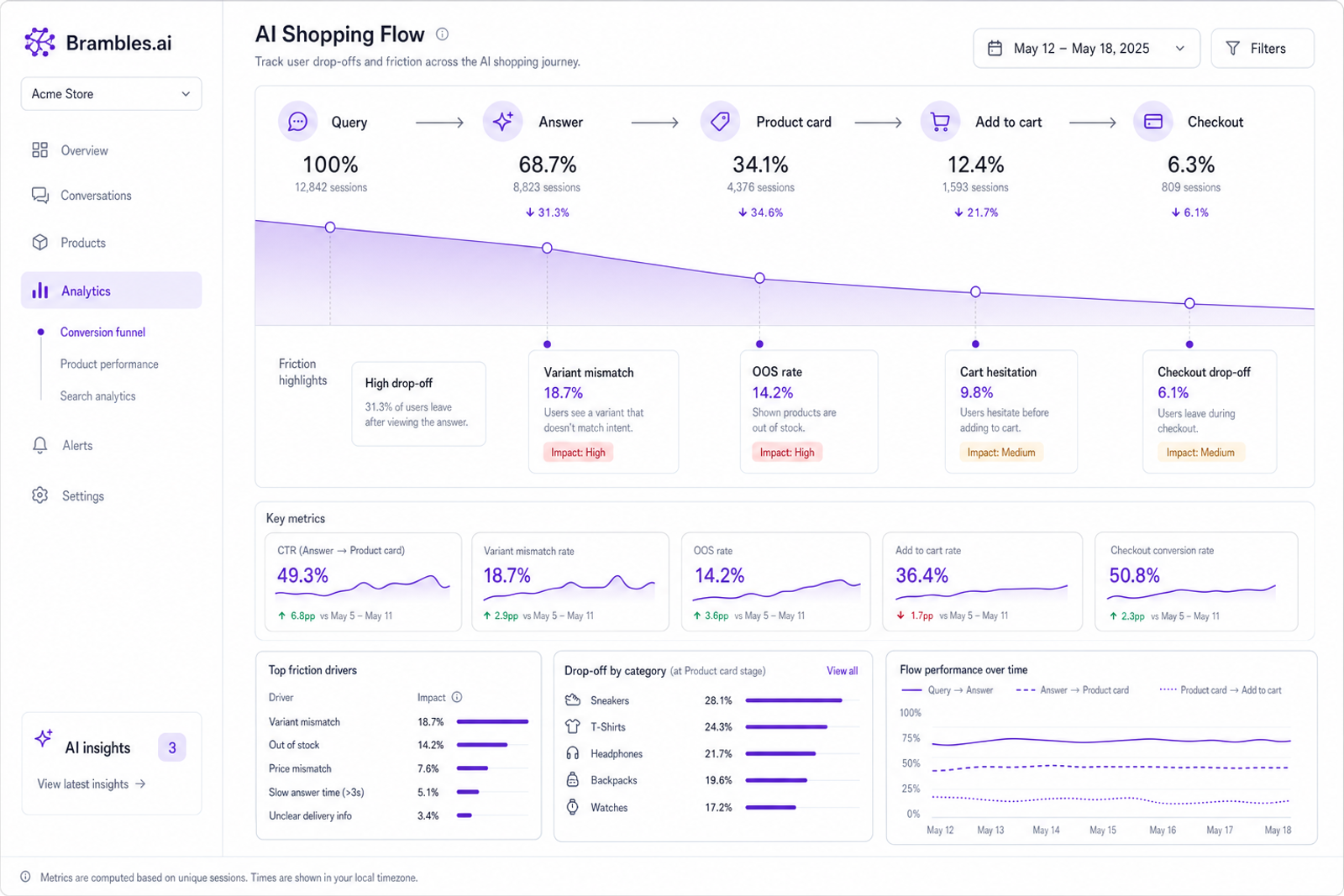
Measure assisted conversion, CTR from answer to product, variant match rate, add‑to‑cart latency, and disclosure view rate. If you’re a publisher, track affiliate link quality (in‑stock status, merchant mix) and incremental RPM. For brands, monitor return rate deltas for items with virtual try‑on or view in room enabled; McKinsey notes confidence signals materially reduce returns at scale.
Two quick templates: 1) Chat Contribution = percent of orders where any session included an AI chat event. 2) Answer Quality Index = weighted score across variant accuracy, live price matches, and policy correctness. We’ve seen a 7–12% net conversion lift when direct add to cart shortens the path from recommendation to checkout.
For executive rollups, segment performance by entry point: proactive prompt on PLP vs. user‑initiated chat on PDP vs. inline embed in an article. Expect conversational entry on content pages to over‑index on AOV due to bundles; Salesforce’s shopper studies have shown guided selling increases basket size when recommendations are transparent and specific.
First‑Party Data, Trust, and Disclosure
Trust is the conversion unlock. Make disclosures explicit, cite sources, and avoid over‑personalizing with shaky signals. Baymard and Google UX research both emphasize clarity over cleverness—state limitations, show shipping cutoffs, and explain why items were chosen. Brambles’ disclosure patterns and content grounding keep the experience contextual, not creepy.
For publishers, diversify monetization with affiliate revenue and, when relevant, contextual and retail media placements that fit the conversation. For brands, keep first‑party consent clean and use AI personality controls to reflect your tone while avoiding unsupported claims. The north star: useful, shoppable answers with honest framing.
Finally, remember data locality. Keep catalog, pricing, and returns policy as the source of truth; don’t let an LLM hallucinate availability. Content intelligence helps by indexing your own guides and FAQs so the assistant quotes you—your testing, your dimensions, your policy text—rather than guessing.
Common Pitfalls and a Preflight Checklist
Teams stumble when they ship a clever demo instead of a reliable assistant. Avoid these traps: 1) No guardrails on price/stock freshness. 2) Chat with no visible add‑to‑cart. 3) Prompts that ask for PII too soon. 4) Generic voice that clashes with brand. 5) Goals set to “engagement,” not revenue. Use this checklist before launch.
Preflight checklist: turn on direct add to cart; map shipping/returns to snippets; test top 50 long‑tail queries; configure proactive prompts for high‑exit templates; add inline shopping embed to 10 evergreen articles; review disclosure copy; and run a 50/50 cohort test for two weeks. If you need a blueprint, this overview of why conversational commerce matters aligns on the outcomes to expect.
Future Outlook: Federated Assistants Win
The near future is federated: big assistants for research, vertical platforms for conversion, and on‑site agents for trustworthy, shoppable specifics. Rather than fighting Google, Amazon, or OpenAI head‑on, equip your surface area to capture intent the second it lands. That’s why we see Brambles.ai as connective tissue—quiet, fast, and built to convert.
FAQ
How is an on‑site agent different from SGE or Rufus?
SGE and Rufus answer broadly; an on‑site agent answers precisely with your catalog, inventory, and policies, then lets shoppers add to cart in one step. That specificity is why it converts more reliably on your domain.
Will this cannibalize my site search or PDP traffic?
Expect fewer clicks, more outcomes. In tests, PDP views dropped slightly while cart rate and AOV rose. The assistant consolidates steps; that’s the point. Track session‑level contribution to validate net lift.
How does this work for publishers with many merchants?
Use affiliate mapping and in‑stock logic to route to the best merchant at answer time. Pair disclosures with contextual placements to protect trust and RPM.
What’s the fastest way to try this?
Spin up a sandbox, add a product feed, and deploy the Agentic Commerce Module to staging. If you’re on WordPress, install the plugin; Shopify support is coming. Launch to 25% of traffic and measure assisted conversion for two weeks.
Related resources on Brambles.ai
If you are implementing this, start with Brambles.ai, brand pricing, about Brambles.ai, developer docs.
Related posts
View all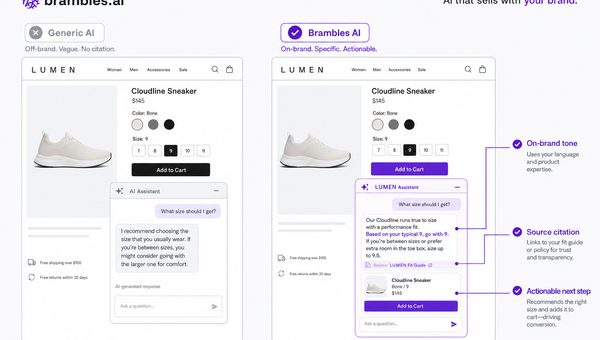
Brand-Consistent AI Chats Build Trust and Conversions
When AI mirrors your brand voice, shoppers relax—questions get answered, carts grow, and support load drops. Learn the playbook to align tone, trust, and ROI.
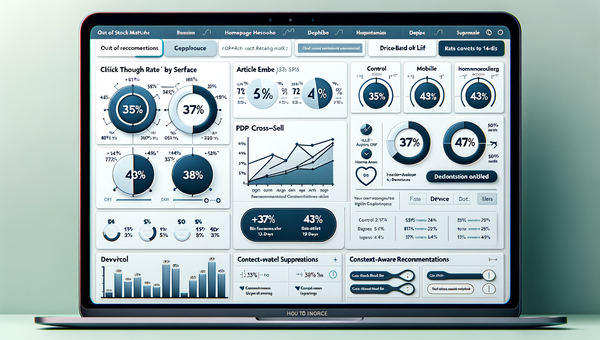
How Context-Aware AI Recommendations Lift CTR
See how context-aware AI recommendations lift CTR by 25–60% with intent signals, page context, and history. Practical steps, KPIs, and implementation tips.

Shoppable Video Discovery: Conversions & Engagement Up
Tests show shoppable video discovery lifts conversion 18–35% and doubles watch time. See the UX patterns, KPIs, and how to deploy it quickly with Brambles.ai.
Explore Brambles.ai
Learn more about our AI-powered agentic commerce platform, agentic shopping, and shopping assistance solutions.
Explore More Insights
Discover more articles on AI, automation, and business innovation
View All Articles