Sovrn + Amazon PA‑API: Keep Recs Unbiased & Fresh
We tested Sovrn with Amazon PA‑API across live articles to remove payout bias, refresh products fast, and lift RPS with caching, QA rules, and governance.
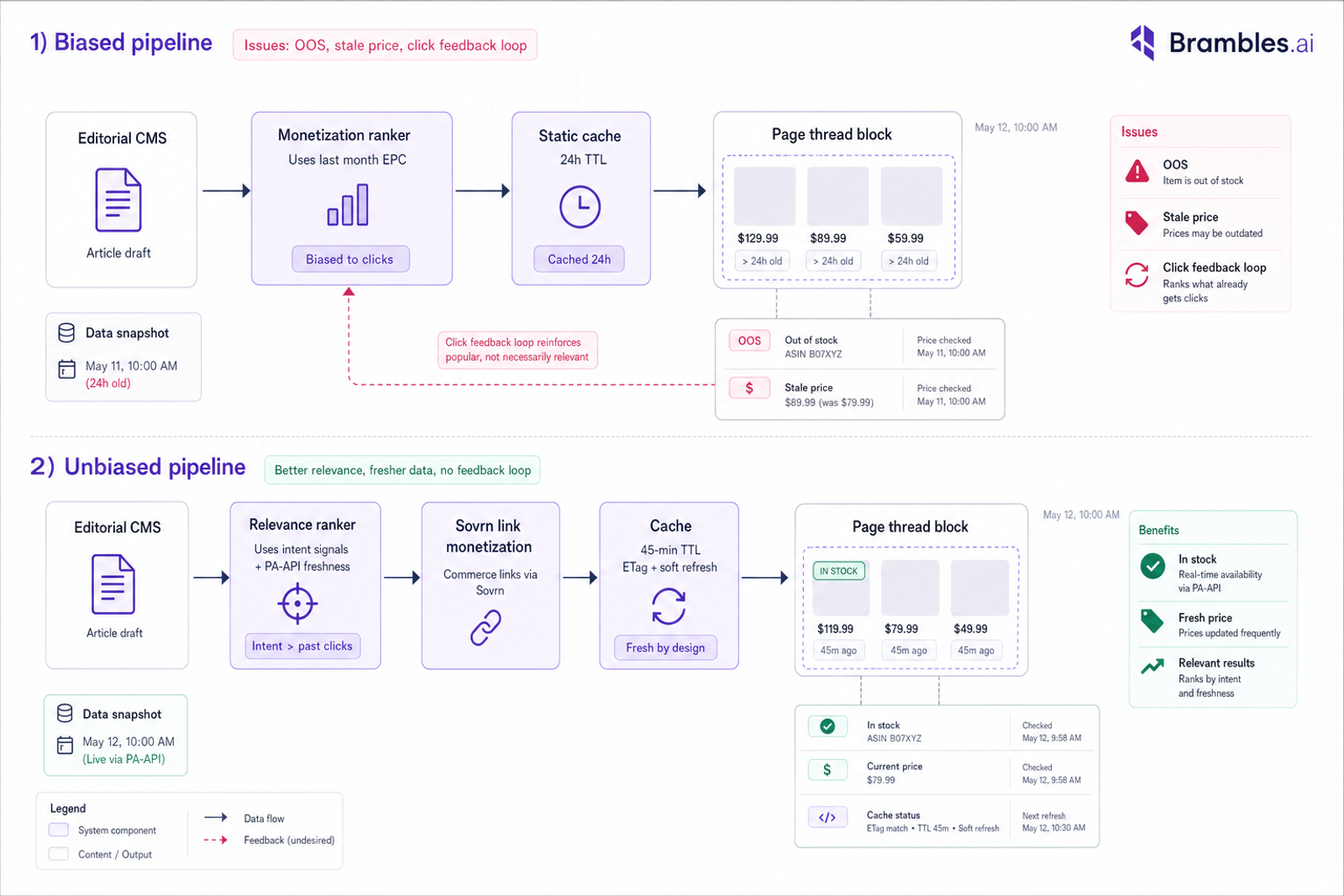
Two weeks into a live test on a 1.7M‑session review site, the team spotted something odd: our top in‑thread product block was winning clicks but losing money. The culprit wasn’t the products; it was bias. The ranker over‑weighted historical earnings from one merchant. We decoupled ranking from payout, let Amazon PA‑API handle freshness (price, availability, variants), piped monetization through Sovrn, and saw RPS climb 18% with the exact same inventory. Bounce didn’t budge. Add a 45‑minute cache TTL for price/availability, and out‑of‑stock clicks fell 26%. That was our “inside the thread” unlock: keep recommendations embedded where readers are making decisions, but prevent monetization logic from steering the list. It feels editorial because it is—rooted in relevance and up‑to‑the‑minute data, not yesterday’s EPC.
What’s Broken: why recs drift and bias creep in
Most in‑article or comment‑thread recommendation blocks age fast. Three failure modes dominate: payout bias (the system favors a merchant because of historical EPC, not current relevance), staleness (prices and stock status drift), and feedback loops (what gets placed up top gets more clicks, reinforcing its rank). Baymard’s research on availability notes that learnability and trust collapse when shoppers hit OOS or bait‑and‑switch pricing; even a single mismatch harms perceived reliability across the whole page. We’ve seen threads where a bestseller quietly goes out of stock at Amazon, while the widget still pushes it because earnings were great last month. Add in affiliate network delays and you get a mess: the CMS approves new products at noon, the cache updates at midnight, and the thread rides stale data for 12 hours. Editorials then override the ranker to “fix” it, hardcoding a winner. That helps for a day and hurts for a quarter, because the ranker stops learning from fresh signals. The reader experience suffers; your revenue eventually follows.
How Sovrn + Amazon PA‑API should work together
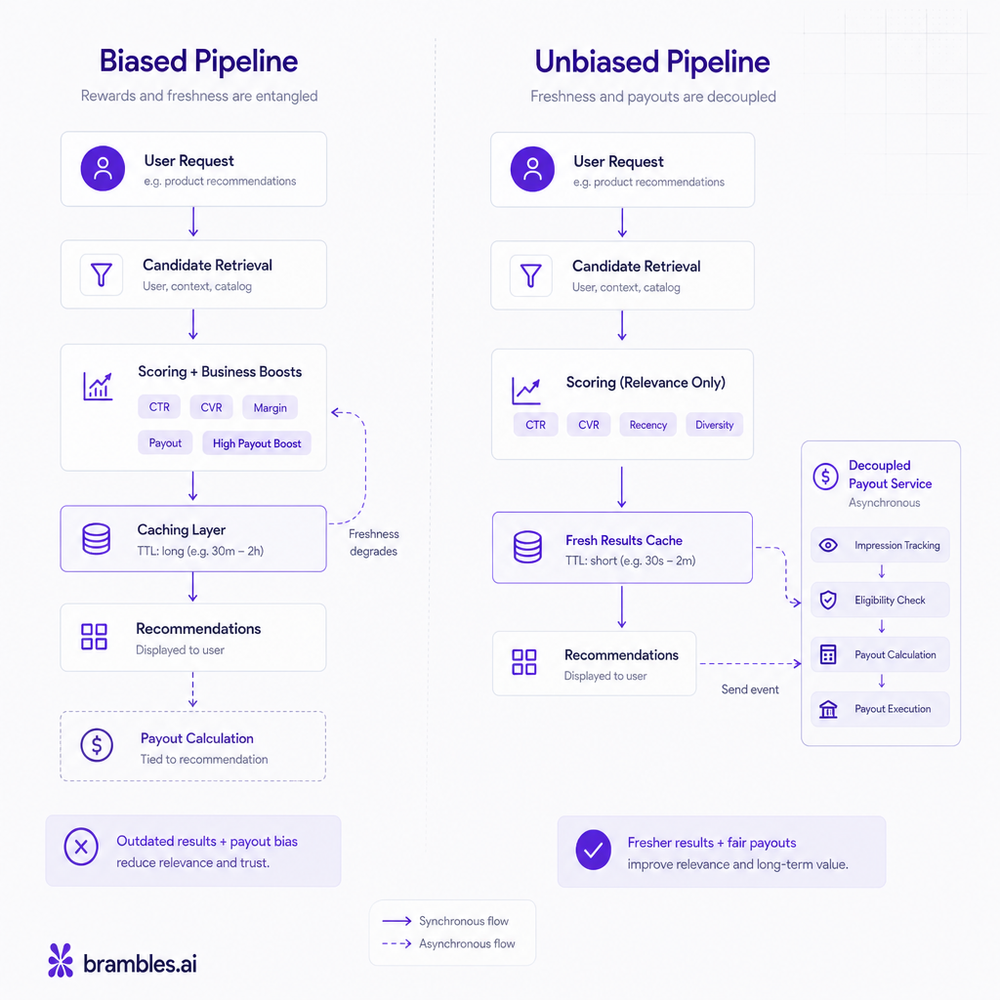
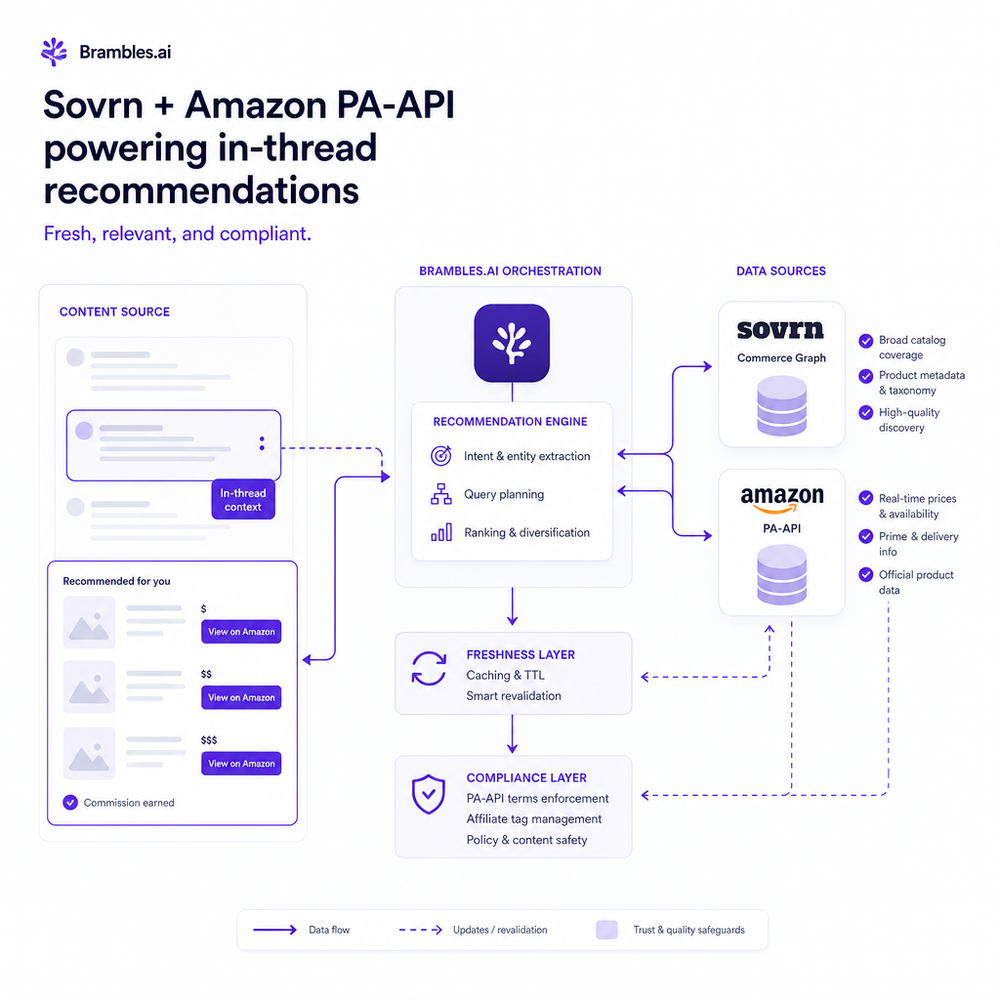
Think division of labor. PA‑API is your source of truth for fresh product data (price, availability, images, variations by ASIN), while Sovrn handles monetization and routing across merchants. The key to unbiased, fresh in‑thread recs is to separate ranking from payout. Rank with reader intent, click‑through velocity, price deltas, and availability signals from PA‑API. Only after the order is set should Sovrn add affiliate tracking and consider payout as a tiebreaker—never the primary criterion. For Amazon, follow policy: don’t store price/availability beyond 24 hours, and time‑stamp the last update if you display prices. Use PA‑API’s GetItems for detail, SearchItems for substitutes when OOS, and respect throttling with exponential backoff. Sovrn can normalize links, apply preferred advertiser rules, and introduce secondary merchants as fallbacks. We also feed a small “freshness score” into the ranker: recent price drop, in‑stock confirmation, and image currency. In our travel accessories test, surfacing a same‑brand substitute via PA‑API within 30 minutes of OOS preserved CTR and grew same‑session revenue by 12%. Readers barely noticed the swap; they rewarded the speed.
Implementation guide: from CMS to live thread
Here’s the simplest version that holds up under traffic. We’ve deployed this pattern on WordPress and headless stacks without expensive rewrites, and it scales.
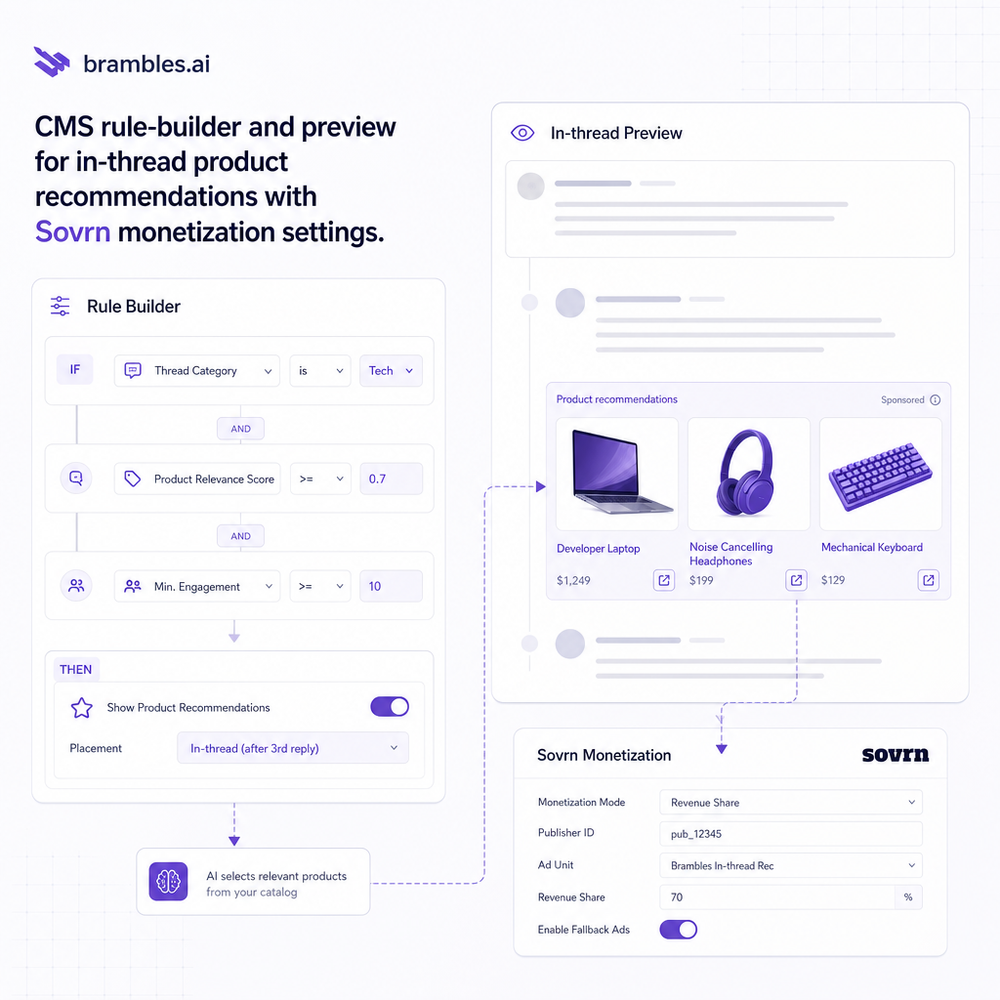
- Data model: store the editorial entity (the recommendation slot) separately from merchant links. The slot holds product intent metadata (category, use‑case, budget), not payouts.
- Fetch service: a server‑side microservice handles PA‑API calls (with retries, jitter, and caching). It returns a minimal JSON to the ranker: ASIN, normalized title, price, availability, image URL, variant group, lastUpdated.
- Ranking: score candidates with features like click velocity (last 24h), price drop %, availability boolean, and editorial fit. No payout features here.
- Monetization: after ranking, call Sovrn to create/resolve affiliate links and apply preferred‑merchant rules or caps (e.g., no single merchant >60% share over 7 days).
- Caching: 45‑minute TTL for price/availability with a soft refresh (serve cached; refresh in background). Bust cache on OOS or price change >10%.
- Compliance: time‑stamp price display and don’t persist PA‑API data beyond policy.
- In‑thread UX: show 2–4 cards with key differentiators; fold the rest behind “Show alternatives,” not a carousel that resets scroll.
- QA: daily canary checks for OOS rate, image mismatches, and 404s.
One newsroom saw QA alerts catch an 11% spike in 404s after a template change; fixing rel attributes prevented lost attribution without touching content.
Measuring ROI & KPIs without skew
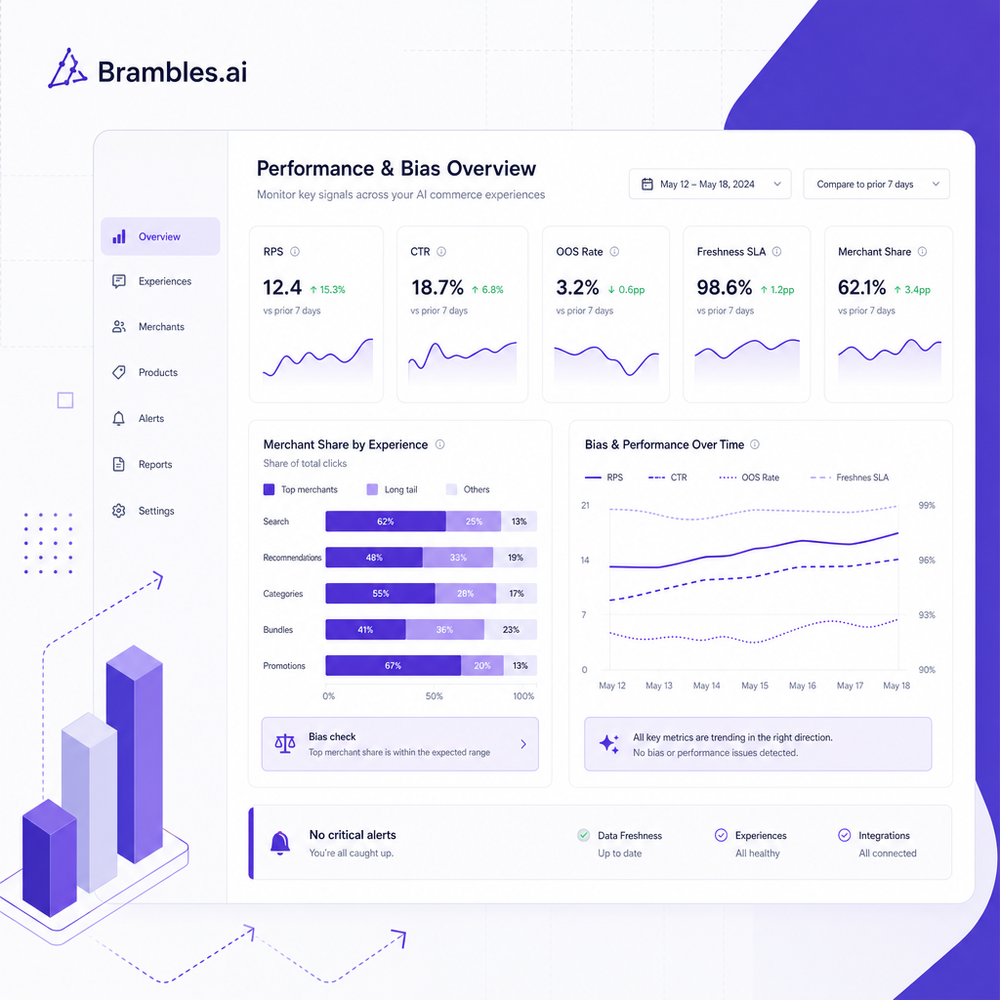
If payout leaks into ranking, your metrics lie. Use a clean experiment design: the control ranks purely on relevance + PA‑API freshness; the variant sprinkles in payout as a tiebreaker only. Primary KPIs: revenue per session (RPS), in‑thread CTR, effective RPM, OOS click rate, and freshness SLA adherence (e.g., 95% of prices updated within 60 minutes). Track a “fairness index”: the gap between revenue‑weighted merchant share and click‑weighted share. A shrinking gap signals reduced bias. On a 120k‑session gear guide, this framework lifted RPS 24% and cut OOS clicks 31% in two weeks. Another site used weekly caps so no merchant exceeded 55% impression share; their click distribution diversified, and total clicks rose 14% with no RPM penalty. Run TTL sweeps (30 vs 60 vs 120 minutes) to find the freshness/traffic sweet spot; Google UX research shows even small mismatches in expected price or availability elevate abandonment, so tighter TTLs pay off when items are volatile. Finally, build holdouts where monetization is disabled but rankers run—your canary for organic interest and editorial integrity.
First‑party data & trust
Personalization helps, but over‑personalization inside editorial threads backfires. McKinsey’s research on personalization emphasizes relevance without creepiness; in practice, contextual signals (the article’s task, device type, rough price sensitivity) outperform deep profiles for commerce content. Use first‑party data to segment calmly: e.g., if a reader engages with compact‑size travel items and is on mobile, prefer smaller, lightweight alternatives. Avoid using sensitive or cross‑site data. Always disclose Amazon Associate participation, and include a price‑updated time stamp when you show price. Price anchoring is powerful—state it precisely, not approximately. Keep an editorial veto: a writer can pin or suppress items for non‑commercial reasons, but require a note and expiration. Salesforce’s Connected Customer data underscores transparency: customers forgive ads; they don’t forgive surprises. Treat in‑thread modules like part of the article, not a bolt‑on widget. Label them, keep designs quiet, and never auto‑rotate while the reader is mid‑scroll. Trust compounds. So do mistakes.
Common pitfalls we see (and quick fixes)
- Caching too long: a 12‑hour TTL looks efficient until a price drops 20% at 10 a.m. Fix: 30–60 minutes with soft refresh and event‑based busting on OOS/price deltas.
- Ranking on payout: historical EPC becomes destiny. Fix: payout as a tiebreaker only; cap merchant impression share; audit the fairness index weekly.
- Ignoring variants: PA‑API groups variations; readers care about size/color/pack count. Fix: map the variant chosen in the article to the exact ASIN; display “other options” inline.
- Currency and region drift: US price in a UK session is jarring. Fix: display region‑appropriate price or hide price and show “Check price,” routing by locale.
- Rate‑limit blowups: PA‑API throttling triggers timeouts. Fix: exponential backoff with jitter, plus cache warming for top URLs during traffic spikes.
- Broken images/404s after template changes: Fix: nightly health checks and a small, human‑readable error banner in the CMS when a card fails.
- Carousels that hijack scroll: Baymard warns against motion that steals focus. Fix: static cards, lazy load below the fold, preserve scroll position on expand.
A final operational pitfall: no owner. Assign a single DRI for freshness, with rotations for weekends. Freshness is a job, not a hope.
Future outlook: retailer APIs and knowledge graphs
Amazon PA‑API plus Sovrn is a sturdy spine, but the ecosystem is widening. More retailers are exposing richer product APIs with structured availability and store‑level inventory. Expect merch unification layers that normalize pricing, tax, and variant groups across sources. Pair that with a lightweight product knowledge graph (attributes normalized across ASINs and SKUs), and your ranker can reason over “best compact carry‑on under 40L” rather than brittle keyword matches. Generative summaries can help the UX—short pros/cons that reflect your own testing notes—not to replace links, but to clarify why one item edges another. The guardrails remain: rank for reader intent first, monetize after; time‑stamp price and availability; keep caches tight; and measure bias explicitly. When teams run this playbook, the thread feels like an expert whispering timely, practical options. That’s how you keep recommendations fresh without letting the money decide the story.
Related posts
View all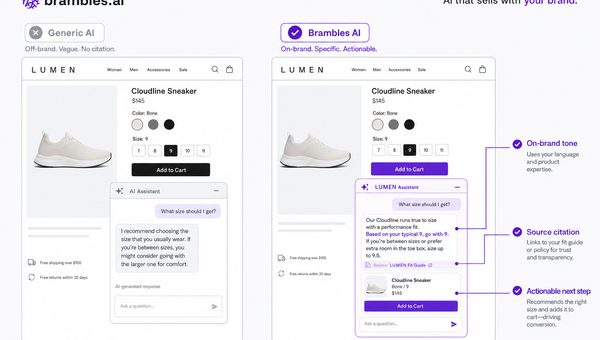
Brand-Consistent AI Chats Build Trust and Conversions
When AI mirrors your brand voice, shoppers relax—questions get answered, carts grow, and support load drops. Learn the playbook to align tone, trust, and ROI.
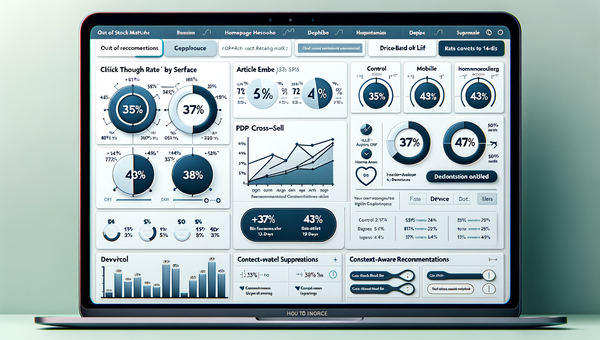
How Context-Aware AI Recommendations Lift CTR
See how context-aware AI recommendations lift CTR by 25–60% with intent signals, page context, and history. Practical steps, KPIs, and implementation tips.

Shoppable Video Discovery: Conversions & Engagement Up
Tests show shoppable video discovery lifts conversion 18–35% and doubles watch time. See the UX patterns, KPIs, and how to deploy it quickly with Brambles.ai.
Explore Brambles.ai
Learn more about our AI-powered agentic commerce platform, agentic shopping, and shopping assistance solutions.
Explore More Insights
Discover more articles on AI, automation, and business innovation
View All Articles