Revenue Share That Feels Fair: Writers, Editors, Site
A pragmatic revenue share model that credits writers, editors, and the site using real engagement, conversions, and updates—tested formulas and pitfalls.
Revenue Share That Feels Fair: Writers, Editors, Site
We switched a lifestyle network with 28 contributors from flat fees to an engagement-weighted revenue share. Within two months, 38% more evergreen posts were updated, average engaged time per article rose 12%, and author churn dropped 24%. The most skeptical editor sent a one-liner: “I finally get paid for invisible work.” A second experiment on a tech review site reallocated 15% of affiliate revenue to editors who tightened comparison tables and added spec corrections; RPM didn’t budge immediately, but affiliate AOV climbed 9% once readers hit clearer pages. Fairness didn’t just feel good—it moved the business. This guide distills what worked: how to credit writers, editors, and the site without spreadsheets that eat your weekends, using data you already have, and a model contributors can audit on their own.
What’s Broken in Most Revenue Splits
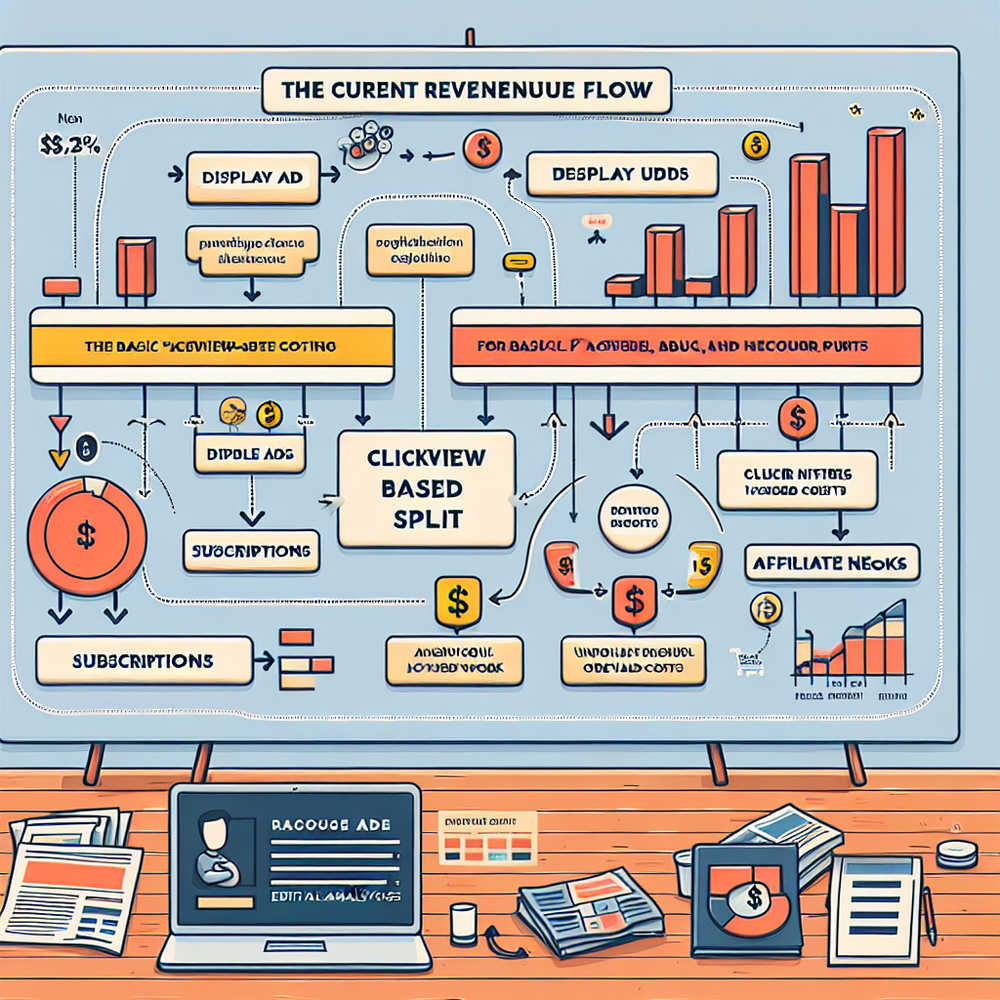
Flat-rate fees ignore upside, and pure pageview splits reward clickbait over clarity. Editors—whose line edits, schema fixes, and table formatting help posts convert—rarely see credit. The site fronting hosting, design, and sales overhead gets either too much or too little because “overhead” is a black box. The outcome: writers chase novelty, editors feel invisible, and evergreen libraries rot. We also see mismeasurement. Many revenue models still hinge on raw pageviews—easy to count, easy to game. Chartbeat’s research and Google UX studies repeatedly show engaged time track retention and purchase intent better than sheer clicks. Affiliate-heavy sites often over-credit last click, starving upstream explainer pieces that prime intent. Finally, opacity kills trust. If contributors can’t reconcile their payout with a transparent ledger and plain definitions (what’s gross, what’s net of fees), they assume the worst. Baymard Institute’s work on transparency reducing friction in e‑commerce has a cousin here: clear models reduce contributor friction and drive participation.
How a Fair, Engagement-Weighted Model Works
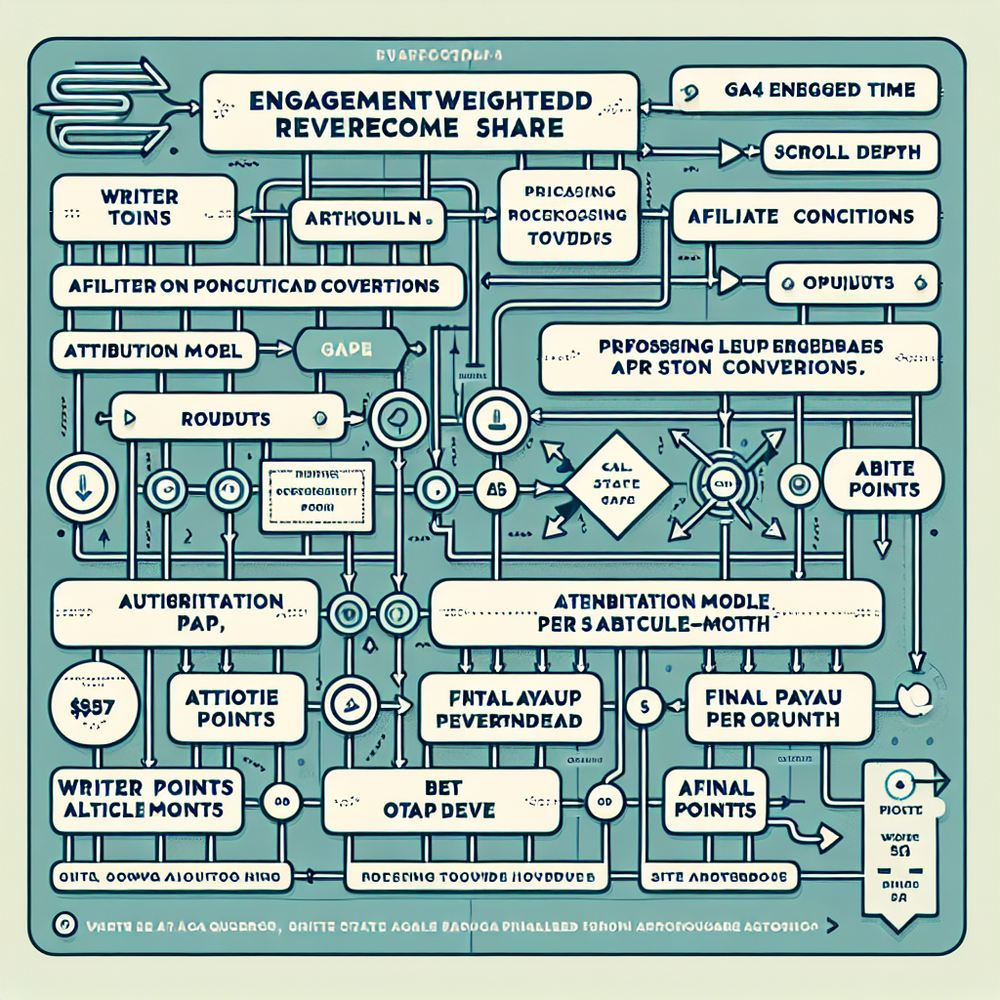
Start with the unit of fairness: the article-month. Each article generates a monthly revenue pool: Ads (impressions x net CPM), Affiliate (net of refunds, network fees), and Allocated Sponsorships (if the post was part of a package). Keep it net of platform fees to avoid back-and-forth later. Distribute that pool via credit points tied to contribution and performance. A simple baseline: Writer 60 points, Editor 20, Site 20. Now apply multipliers derived from quality signals: Engagement Multiplier (median engaged time vs section benchmark; cap at 1.3 to avoid runaway hits), Depth Multiplier (share of sessions with 75% scroll; cap 1.15), and Conversion Multiplier (U‑shaped multitouch: 40% first-touch, 40% last-touch, 20% middle touches for affiliate/sub goals). Update Credit pays the editor (or writer) who shipped a material revision (new section, refreshed comparison tables, new schema) within the last 60 days: a +0.1 multiplier to their role for that month. The site’s share covers hosting, design, legal, and sales, and can step down for ultra-lean teams. In practice, this model rewards the article that holds attention and helps users decide—without turning editors into ghosts. On a food site we coached, adding the update credit pulled 19 neglected recipes back into rotation and lifted organic by 7% month over month.
Implementation Guide: From Events to Payouts
You can ship this in a week if your tracking is sane. Step 1: Instrument engaged time and scroll depth. In GA4, ensure you have a reliable engaged_time_msec and a custom scroll_75 event; or use Parse.ly/Chartbeat as a source of truth. Step 2: Join revenue. Pipe affiliate order data (Impact, CJ, Rakuten) into BigQuery with order_id, product_category, commission_net, landing_url, and last_touch_url; normalize SKUs and currency. Step 3: Define article-month pools. For each article and month, compute AdsNet, AffiliateNet, and SponsorshipAlloc. Step 4: Attribution. Build a U‑shaped model across page_path touchpoints per session: first and last page get 40% each, remaining 20% spread across middle touches. Step 5: Multipliers. Calculate engaged time vs section median and scroll_75 rate; apply caps (1.3, 1.15). Step 6: Roles and updates. When a revision crosses a “material change” threshold (e.g., +/- 10% word count or schema_type updated), mark editor_update_credit=1 for that month. Step 7: Export to a contributor dashboard so everyone can reconcile. We’ve published a streamlined workflow that pairs a ledger with payouts and contributor logins via WordPress.

Measuring ROI and Proving It’s Fair
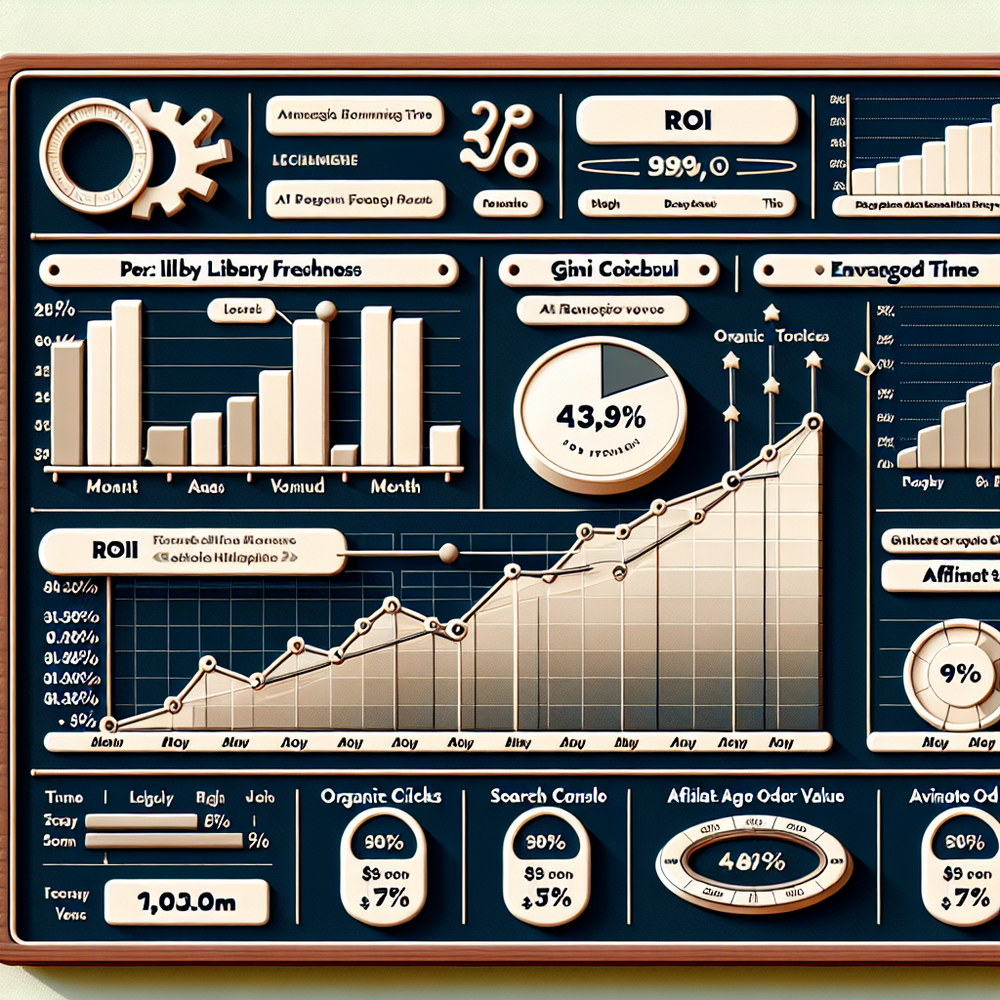
Set the bar with a pre/post. Metrics that matter: 1) Library freshness: share of top 200 evergreen posts updated in last 60 days. 2) Earnings distribution: Gini coefficient across contributors (watch it fall from 0.72 toward ~0.55 as long‑tail posts get credit). 3) Engagement uplift: median engaged time delta vs prior quarter. 4) Affiliate health: AOV and conversion rate on informational posts that assist but don’t close. 5) Author retention: percentage active contributors quarter over quarter. We ran a holdout on a 12M monthly-session publisher: half the categories stayed on flat fees, half moved to this model with editor update credit. After eight weeks, updated categories shipped 2.1x more refreshes, yielded +8% organic clicks (Search Console), and net contributor NPS climbed from 9 to 42. Crucially, site margin didn’t suffer because we pegged the site share to real overhead instead of a round number. Transparently publishing caps and definitions reduced disputes to near zero. Cite your sources when you evangelize: Chartbeat on engagement quality, Google UX Research on trust and transparency, and McKinsey’s work on performance visibility and productivity.
First-Party Data, Consent, and Contributor Trust
Trust grows when contributors can audit the math. Give them a real ledger: article-month line items, the “gross to net” path, and the exact multipliers applied. Define terms plainly: AdsNet excludes platform and ad serving fees; AffiliateNet excludes returns and network fees; SponsoredAlloc is the share explicitly tied to the post. Use first‑party analytics where possible (server-side events or GA4 with consent mode) and disclose the limits: private sessions, ad blockers, and attribution gaps. A short “How We Pay” page goes further than a PDF policy—especially when it shows a worked example. A travel site we worked with recorded a 31% drop in payout disputes after adding a public glossary and an FAQ that showed how update credit works on itineraries. Borrow from Baymard’s transparency lessons: clarity reduces friction. Borrow from Salesforce’s Connected Customer research: people reward brands that respect data. For editors, publish the update threshold logic and invite PRs for change logs. When the rules are visible, debate becomes productive instead of corrosive.
Common Pitfalls (and Practical Fixes)
Pageview bias creeps in when multipliers are weak. Fix: cap them, but make them meaningful; engaged time vs section medians works better than global targets. Last‑click affiliate bias starves explainers. Fix: apply U‑shaped or position‑based credit; show assist value in the dashboard so writers see why their deep dives matter. Editor invisibility persists if “material update” is vague. Fix: codify thresholds (e.g., schema updates, tables improved, 10% word delta) and log merges in Git or WordPress revisions. Overhead fights never end if the site share is arbitrary. Fix: peg it to a documented budget line (hosting, tools, ops) and revisit quarterly. Currency and refunds can whipsaw payouts. Fix: pay on a 60‑day lag for affiliate and FX‑normalize. Analysis paralysis is real. Fix: start with one section, one month, and iterate. A B2B publisher we helped tried five weights at once and stalled; they relaunched with just engaged time and update credit and hit a 17% lift in “reads to completion” within six weeks.
Future Outlook: Beyond Page RPM
As commerce gets baked into pages—shoppable cards, lead-gen modals—revenue attribution will get tighter and fairer if you design it that way. Think cluster-level credit for supporting posts and “pattern payouts” across a buyer’s journey, not just a single URL. Expect more first‑party identifiers and modeled conversions; build your ledger to store confidence scores so contributors see when a number is modeled, not observed. Editorial operations will also credit non-text contributions: art direction, data visuals, structured product tables. And as on‑page tools get smarter, update credit will matter more; evergreen content that’s re‑fact‑checked and re‑scored will out-earn hot takes. The north star remains unchanged: measure what helps readers decide, allocate fairly, and keep the rules visible. Tools can help you handle the plumbing so your team can argue about ideas, not math. If you need a turnkey way to surface these metrics and pipe payouts, use WordPress integrations that unify analytics, content updates, and contributor accounts.
Related posts
View all
Brand-Consistent AI Chats Build Trust and Conversions
When AI mirrors your brand voice, shoppers relax—questions get answered, carts grow, and support load drops. Learn the playbook to align tone, trust, and ROI.

How Context-Aware AI Recommendations Lift CTR
See how context-aware AI recommendations lift CTR by 25–60% with intent signals, page context, and history. Practical steps, KPIs, and implementation tips.

Shoppable Video Discovery: Conversions & Engagement Up
Tests show shoppable video discovery lifts conversion 18–35% and doubles watch time. See the UX patterns, KPIs, and how to deploy it quickly with Brambles.ai.
Explore Brambles.ai
Learn more about our AI-powered agentic commerce platform, agentic shopping, and shopping assistance solutions.
Explore More Insights
Discover more articles on AI, automation, and business innovation
View All Articles