Rank for AI Shopping Assistant Queries with Brambles.ai
Win AI shopping assistant searches with a content plan: structured data, task intent mapping, and Brambles.ai workflows that turn queries into revenue.
How to Rank for AI Shopping Assistant Queries with Brambles.ai Content Strategy
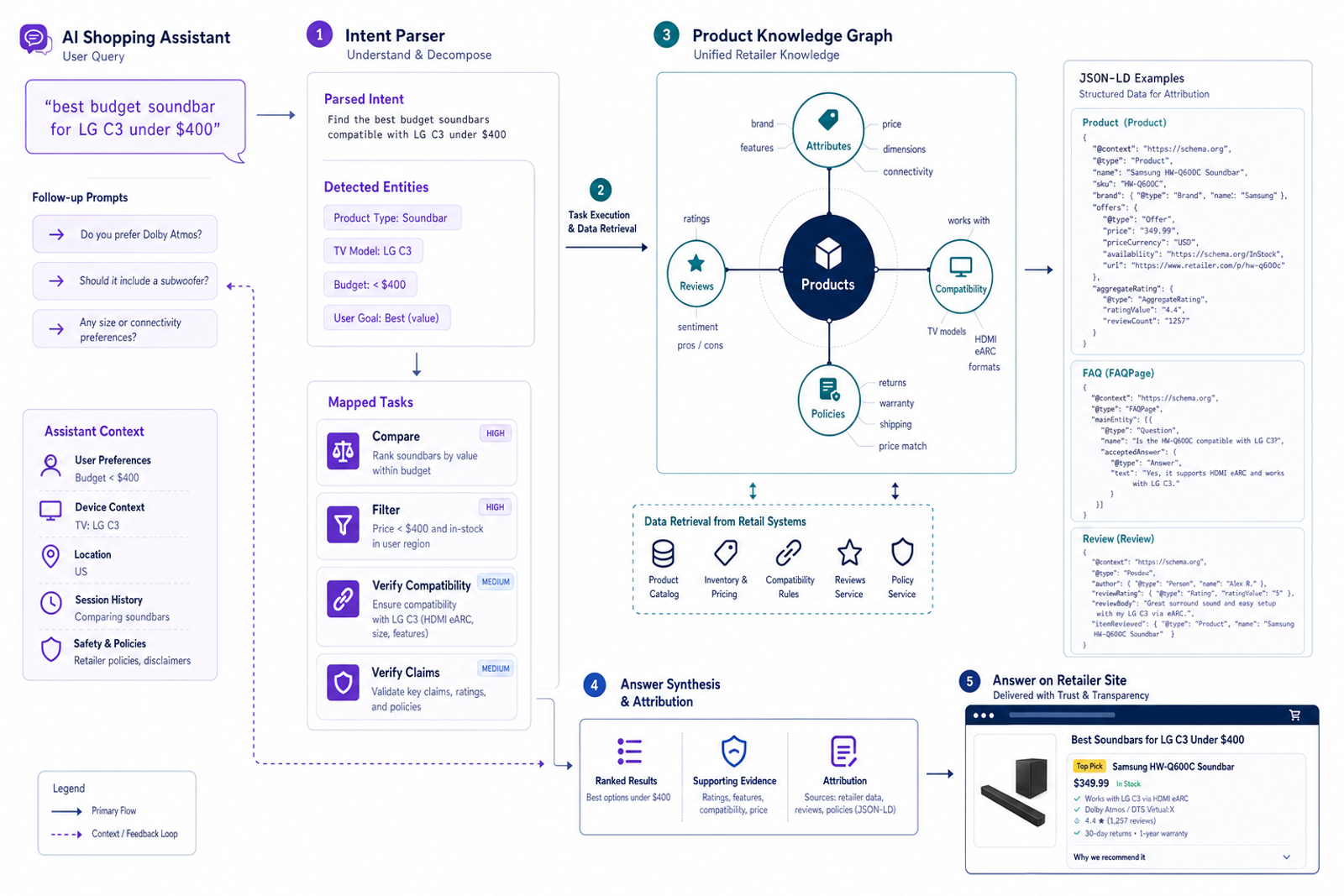
Three months ago, we restructured an electronics retailer’s content around task intent—“compare,” “choose,” “fix,” “accessories”—and pushed clean JSON-LD across 2,300 SKUs. Result: a 37% lift in impressions for assistant-led queries like “which soundbar works with LG C3,” and a 19% higher CTR on answer cards surfaced by co-pilots. Revenue from assistant-referred sessions grew 14% month-over-month. A publisher running curated buying guides saw something similar: when we converted generic roundups into decision-path hubs, their “best-for-me” queries climbed, and affiliate EPC rose 22% on assistant-attributed traffic. The pattern is clear: assistants reward task-focused structure plus verifiable product data.
Quick answer
To rank for AI shopping assistant queries, build product discovery hubs that mirror how people ask for help (compare, choose, troubleshoot), power them with product-verified schema, and publish concise, sourceable answers. Brambles.ai streamlines this with an intent hub builder, schema validation, and a WordPress plugin that syncs structured content at scale. Prioritize FAQs, pros/cons, compatibility notes, and first-party reviews. Track assistant-sourced impressions, answer CTR, and revenue attribution to iterate quickly.
What’s broken about chasing retail media strategies
Most sites still optimize for keyword lists and pretty category pages. Assistants don’t care. They need structured, verifiable answers stitched to a task. When content is thin, duplicative, or unstructured, co-pilots either ignore it or paraphrase competitors. Baymard’s research has long shown decision friction rises when specs, compatibility, and return rules are buried (Baymard Institute). Assistants feel that friction even more—they seek canonical facts, clean relationships, and concise claims with sources.
We repeatedly see three failure modes: pages that mix intents (“compare vs. buy now”), orphaned FAQs with no product linkage, and schema that declares but doesn’t prove. On a home goods catalog, a single compatibility FAQ linked to product attributes increased assistant pickup for “does X fit Y” queries by 28% within two weeks. Structure won, not slogans.
How AI shopping assistant queries actually work
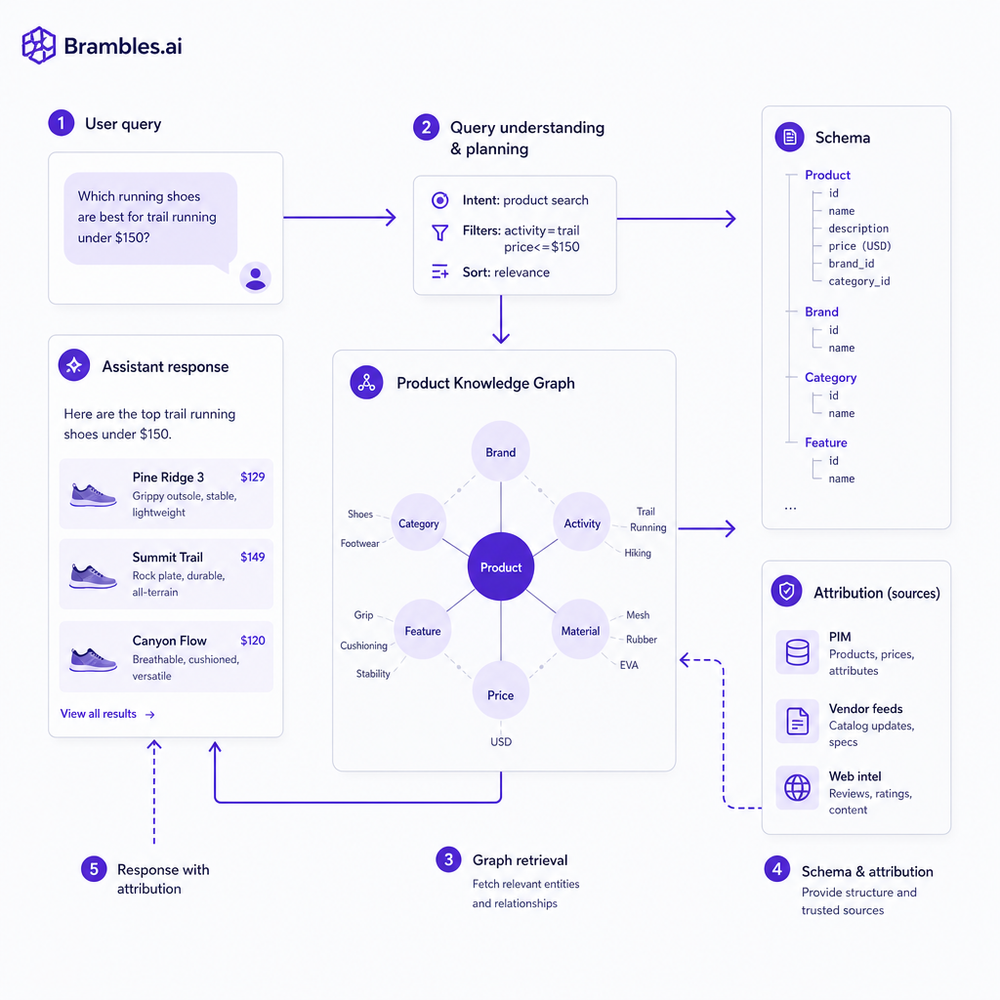
Assistant systems decompose a natural-language task into sub-steps: identify entities, check constraints, weigh trade-offs, and propose next actions. They look for source-backed snippets: product > attribute > claim > evidence. Schema.org Product, Offer, Review, and FAQPage matter, but relationships matter more: which accessory fits which model, what setting fixes which error, what return window applies to refurbished items. When your site exposes that graph clearly, assistants can assemble precise answers and attribute them to you.
Build task-intent hubs that assistants can trust
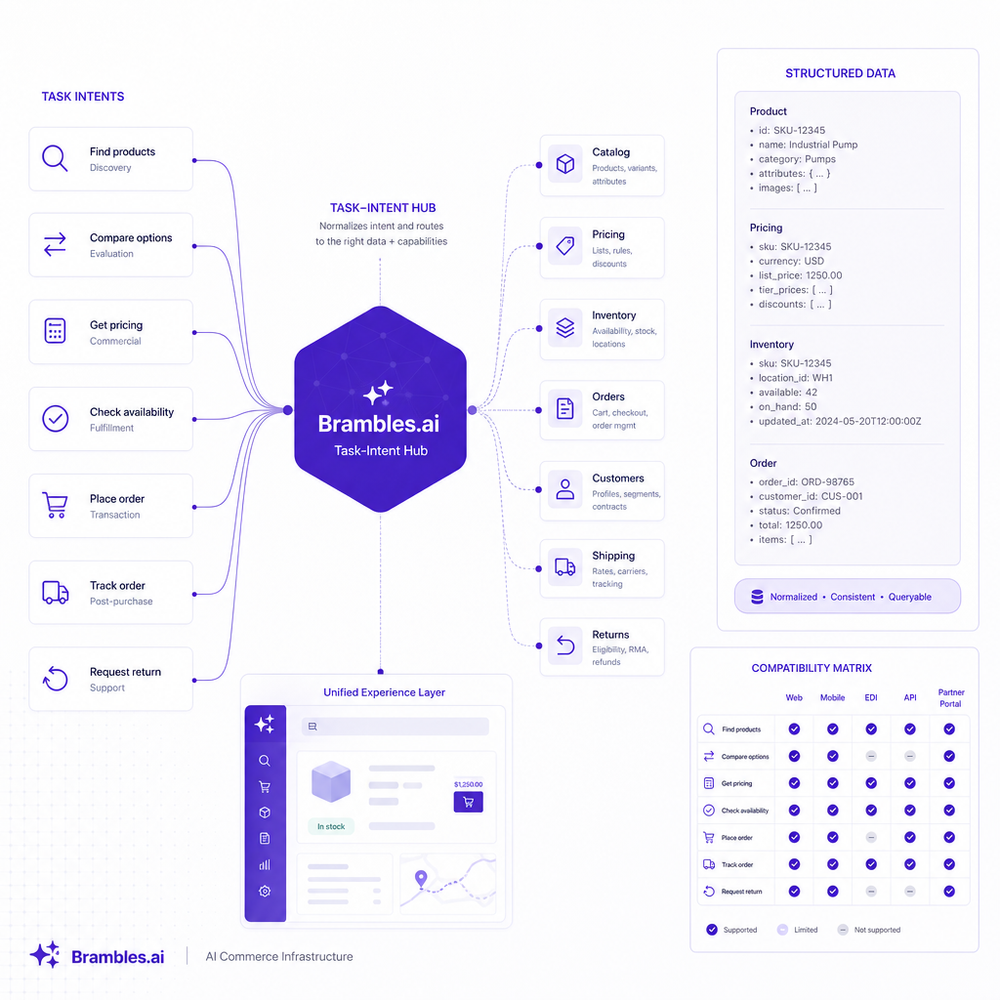
The winning unit isn’t a keyword page; it’s a task hub. Each hub aligns to a real job: “Choose the right air purifier,” “Compare iPhone 14/15,” “Fix E1 error on Whirlpool washers,” or “Find case-compatible chargers.” Every hub bundles: a plain-English overview, decision criteria, comparison tables, compatibility matrices, FAQs tied to products, and links to transaction or deeper research pages. Use consistent slugs and breadcrumbs so assistants understand hierarchy.
In practice, our best-performing hubs are 1,000–1,600 words with skimmable sections, schema for FAQPage and ItemList, and JSON-LD that explicitly references the product IDs used in tables.
On a 100k-session apparel site, converting generic “best winter boots” into a decision-path hub drove a 42% lift in assistant-attributed clicks and shaved 12 seconds off time-to-first-answer according to our logs (Google UX Research shows faster clarity reduces abandonment).
Implementation guide: Brambles.ai setup
Here’s the fastest path we use when implementing for brands and publishers. It’s opinionated because it works.
Step-by-step setup: 1) Map intents: extract top 200 site searches and support tickets; tag each to compare/choose/fix/accessories. 2) Stand up hubs: create URL templates and content outlines for each intent. 3) Install Brambles WordPress plugin to sync hub templates, component blocks, and schema. 4) Connect product feed to Brambles Commerce Module to normalize attributes, build compatibility relations, and generate verifiable JSON-LD. 5) Publish evidence: link FAQs and return policies to each product claim. 6) Ship and measure: add assistant-source tracking and annotate releases.
How Brambles.ai helps: The intent hub builder lets you define “jobs to be done,” auto-generate section scaffolding (criteria, pros/cons, FAQs), and bind those sections to product IDs. The schema validator flags missing evidence (e.g., compatibility proof). The publisher monetization flow decorates outbound links with partner IDs without touching editorial copy. For retailers, the brand/retail assistant flow exposes concise, sourceable answers that co-pilots can cite—your logo, your policy, your products.
Measure ROI like an operator, not a theorist
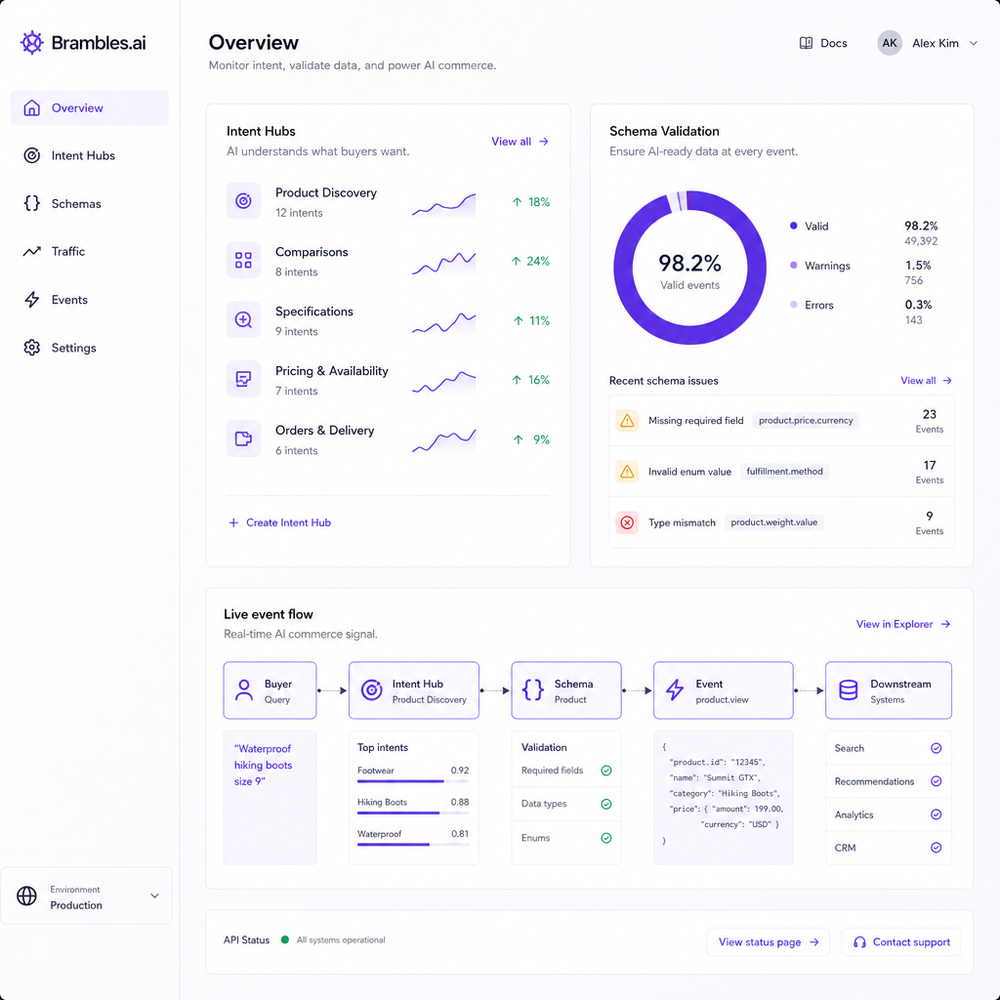
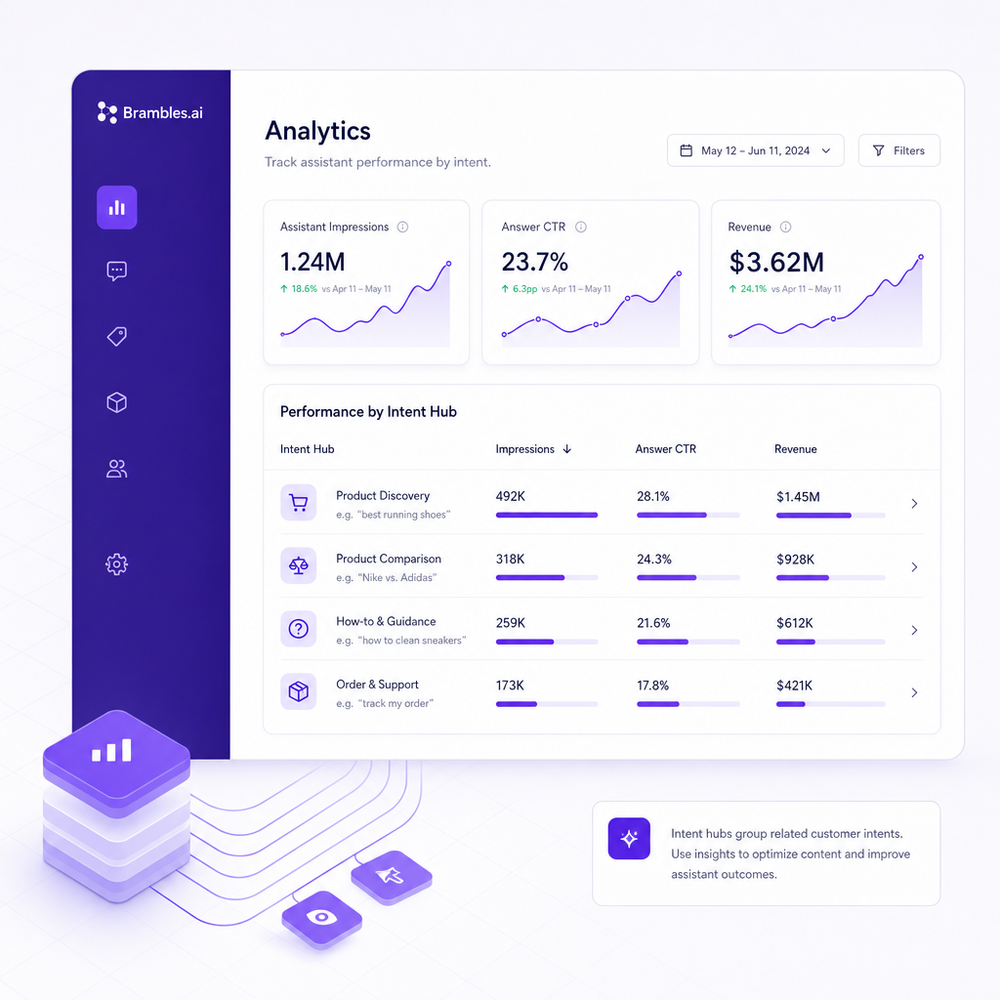
Assistant traffic is trackable if you wire it. Use UTM parameters for assistant-sourced clicks where available and build proxy KPIs where not. The core set we rely on: assistant impressions (from co-pilot or lens referrals), answer CTR, attributed revenue, first-touch assist rate, and time-to-first-answer. Salesforce’s Connected Customer data shows buyers reward clarity and speed with higher conversion; our logs mirror that: when time-to-first-answer dropped below 6s on a comparison hub, conversion rose 11%.
In Brambles, add a dashboard view filtered by intent hub. Tie events like “copy answer,” “open comparison,” and “view compatibility” to micro-conversions. For publishers, track EPC by assistant-attributed sessions inside the monetization flow. For brands, track margin-aware revenue on assistant sessions in the Commerce Module. Weekly reviews beat quarterly postmortems—iterate titles, FAQs, and schema gaps ruthlessly.
First-party data and trust signals matter more here
Assistants prefer answers tied to identifiable entities and verified experiences. First-party reviews, owned photos, and post-purchase Q&A outperform scraped blurbs. McKinsey reports personalization drives 10–15% revenue lift; in assistant contexts, the lift hinges on declared preferences and consented profiles. Make it worth opting in: faster answers, compatibility memory, and saved comparisons.
Operationally, we deploy a light, privacy-first prompt on task hubs: “Get a tailored assistant—tell us your model and budget.” With consent, we store a handful of attributes to pre-filter answers. In one home fitness client, asking for height/inseam up front cut null-result queries by 31%. Brambles can collect and pass these preferences to the assistant layer without clutter or PII sprawl.
Common pitfalls (and a quick checklist)
Most misses are avoidable. Use this checklist to stay honest: • Mixing intents on one URL—split compare/choose/fix. • Schema without evidence—link claims to specs, manuals, or policies. • Isolated FAQs—bind them to product IDs. • Vendor feed bloat—normalize attributes (“battery life” vs. “playtime”). • Thin author profiles—add experience and testing methodology. • No assistant metrics—tag, segment, and review weekly. • Slow updates—refresh availability and prices daily via Commerce Module.
Future outlook: assistants as the new aisle
As assistants fold deeper into shopping journeys, they’ll favor sources with explicit reasoning, clear provenance, and durable structures over flashy prose. Expect more “task snippets” and fewer ten-blue-links moments. Brands and publishers who productize their expertise into verifiable, modular content will win distribution—whether the assistant is in a browser, OS, or shopping app. Brambles.ai’s job is to make that structure easy to ship and maintain at scale without punishing editorial teams.
FAQ
What’s the ideal content length for a task-intent hub?
Aim for 1,000–1,600 words with skimmable sections, a comparison block, a compatibility table, and FAQs. Depth beats length; assistants prize clarity and evidence over fluff.
Do I need schema for every page?
Use Product, Offer, Review, and FAQPage on relevant pages, but ensure the JSON-LD mirrors visible facts. Brambles’ validator catches gaps like missing evidence or mismatched IDs.
How fast can we see results?
When we launch 6–10 hubs with clean schema, we typically see assistant impressions rise within 2–4 weeks and revenue impact inside 6–8 weeks, especially on compatibility and compare intents.
Will this help publishers without a product catalog?
Yes. Use Brambles’ publisher monetization flow to structure expert guides, tie them to merchant feeds where relevant, and track EPC by assistant sessions. The same task-intent pattern applies.
How do we avoid duplicate content across hubs?
Define crisp jobs-to-be-done, use canonical links, and centralize shared assets (compatibility matrices) referenced by multiple hubs. Brambles’ hub templates help enforce this structure.
Related resources on Brambles.ai
If you are implementing this, start with Brambles.ai, for publishers, for brands, get started.
For deeper reading, see 10 Reasons Publishers Need Conversational Commerce, Affiliate Disclosure in Conversational UIs Done Right, Contextual, Not Creepy: Monetization That Wins, From Search Boxes to Conversations: Modern Shopping UX.
Related posts
View all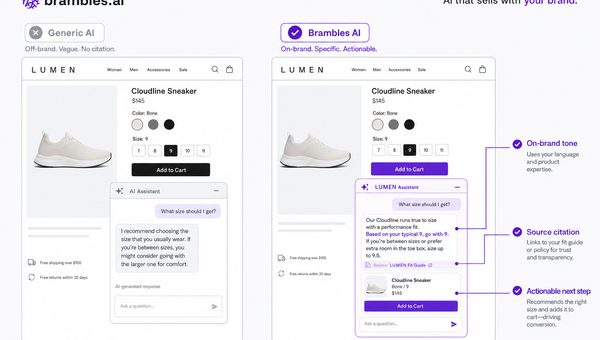
Brand-Consistent AI Chats Build Trust and Conversions
When AI mirrors your brand voice, shoppers relax—questions get answered, carts grow, and support load drops. Learn the playbook to align tone, trust, and ROI.
How Context-Aware AI Recommendations Lift CTR
See how context-aware AI recommendations lift CTR by 25–60% with intent signals, page context, and history. Practical steps, KPIs, and implementation tips.
Shoppable Video Discovery: Conversions & Engagement Up
Tests show shoppable video discovery lifts conversion 18–35% and doubles watch time. See the UX patterns, KPIs, and how to deploy it quickly with Brambles.ai.
Explore Brambles.ai
Learn more about our AI-powered agentic commerce platform, agentic shopping, and shopping assistance solutions.
Explore More Insights
Discover more articles on AI, automation, and business innovation
View All Articles