Measure Assist Revenue from AI Chat in GA4
Prove how AI chats contribute to sales without double counting. Learn event schemas, GA4 setup, and experiments to quantify assist revenue and incremental lift.
Three weeks after we rolled out an AI chat assistant on a 100k-session/month apparel site, last-click revenue looked fantastic—until we checked the BigQuery export. Half the “chat conversions” were also attributed to email and paid search. After we tightened our event schema and set assist rules in GA4 and the warehouse, assist revenue settled at 18% of total revenue with a verified 6.8% incremental lift from a 10% holdout. On a specialty electronics merchant, simply moving the chat prompt from the footer to PDP above the fold bumped the chat-assisted order rate from 12% to 21% and raised AOV 9%. The win wasn’t the bot; it was the measurement discipline. In this guide, I’ll show the event names, GA4 configuration, and experiment design we now reuse to measure “assist revenue” without double-counting or wishful thinking.
What’s Broken With Chat Attribution Today
Most teams track a single event—chat_opened—and call it a day. That inflates impact and masks cannibalization. Last-click models over-credit the channel that fires closest to purchase; multi-touch defaults rarely treat a conversation as a meaningful touch. Meanwhile, consent mode and privacy rules degrade session stitching and make naïve lookbacks noisy. Baymard’s work shows users abandon when details are hard to find; chat can plug those holes, but only if you isolate assisted outcomes from organic behavior (Baymard Institute). Salesforce reports most customers expect immediate answers; chat often meets that need, but without clean identifiers, those touches vanish or get over-counted (Salesforce State of the Connected Customer). We also see analytics teams miss cart-stage events—coupon application, variant clarification, shipping info—where chat most often intervenes. If you don’t capture those micro-moments, your warehouse will show correlation, not contribution.
How Assist Revenue Actually Works
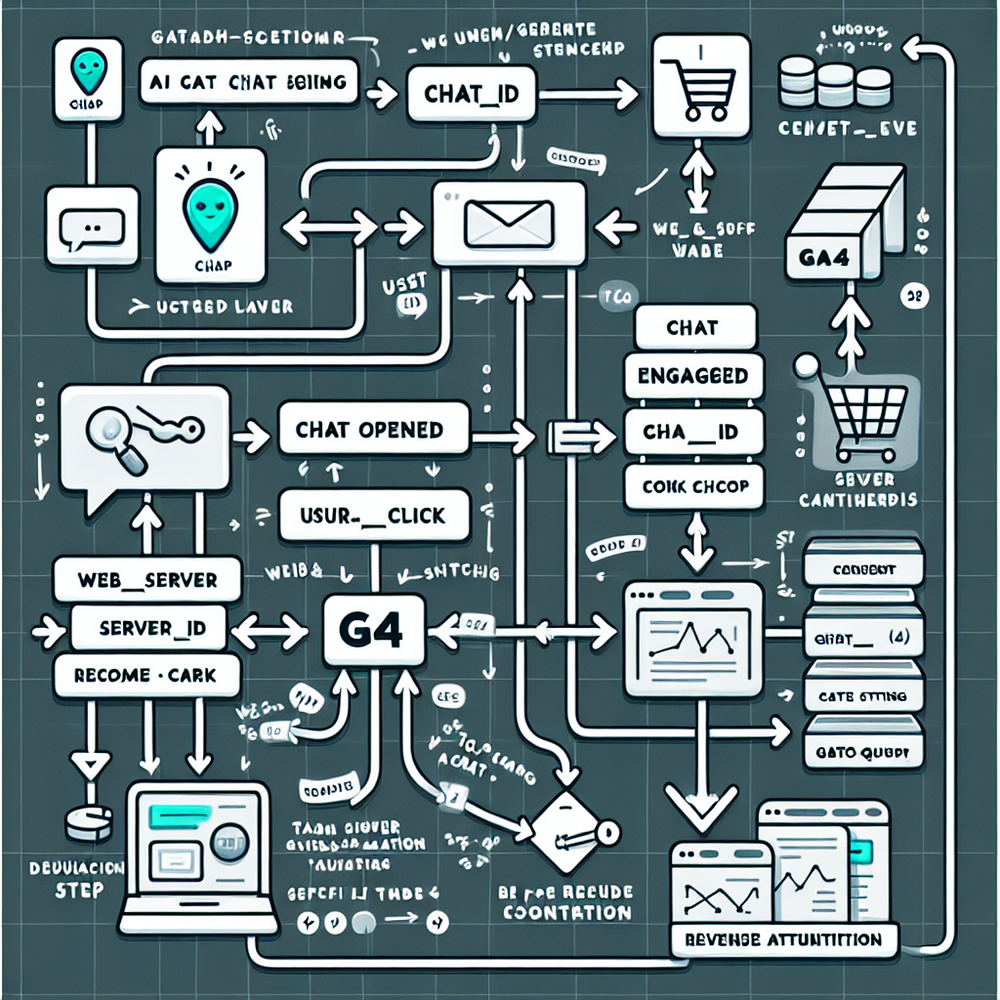
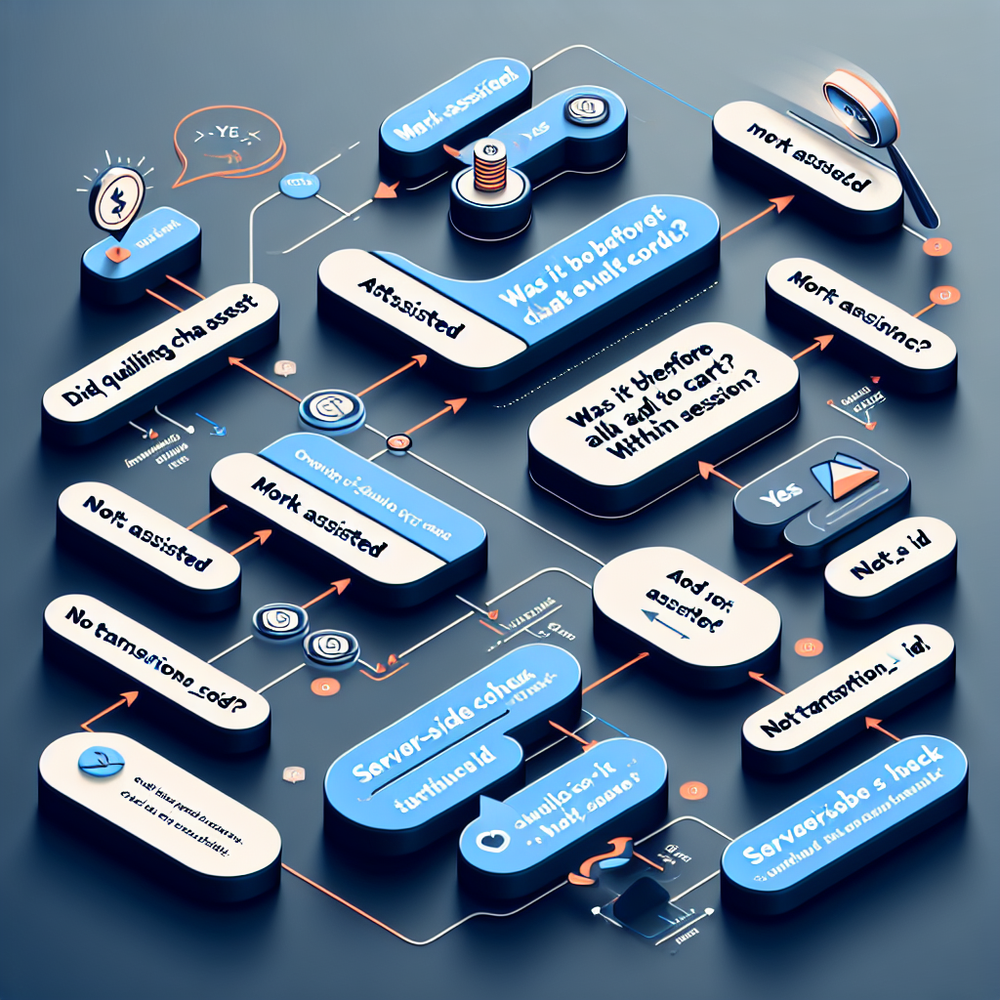
Assist revenue is the portion of purchase revenue where an AI chat interaction played a qualifying role—even if it wasn’t the final click. We operationalize this with two layers: a behavioral layer and an attribution rule. Behavioral events define what “meaningful help” is for your business, e.g., product clarification, sizing guidance, price/stock checks, or a recommendation click that moves the user forward. Attribution rules set the windows and dedupe logic. A practical baseline: mark a purchase as chat-assisted when at least one qualifying chat event occurs before add_to_cart or before purchase within the same session, or within a 24-hour lookback if user_id persists. We tie the purchase to chat via session_id or a conversation_id carried in event params and mirrored onto the purchase. For one cosmetics brand, purchases with chat_suggestion_clicked saw 14% higher AOV than non-chat purchases. But when the rule allowed any chat_opened in a 7-day window, assist rate jumped to 47%—and became meaningless. Tight definitions keep the number honest.
Implementation Guide: Events, IDs, and GA4 Setup
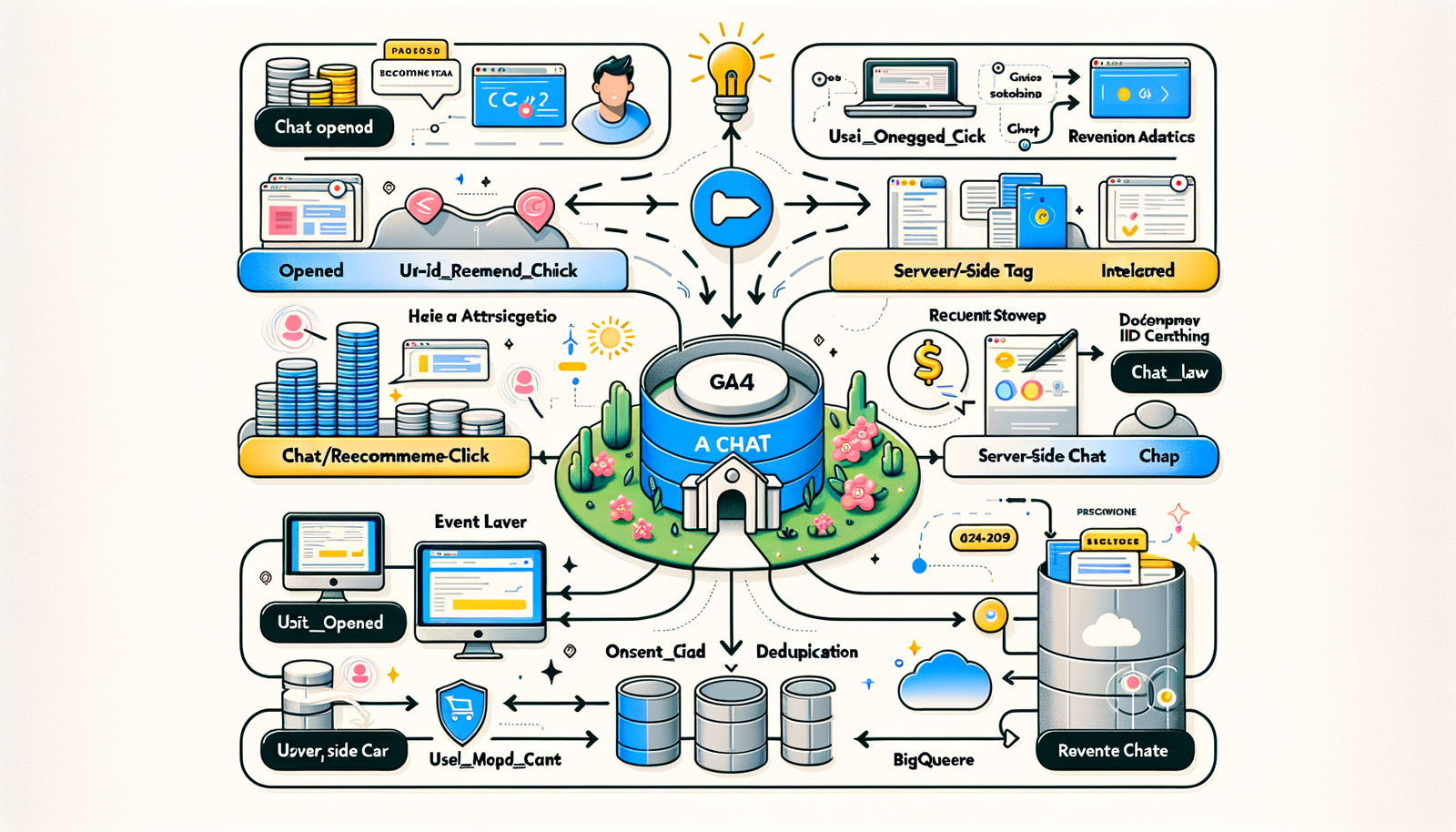
Start with a crisp event schema in your data layer. Required chat events: chat_opened (surface + placement), chat_engaged (first user message), chat_suggestion_shown (list of items/answers), chat_suggestion_clicked (product_id, suggestion_type), chat_to_cart (product_id, quantity), customer service chat_copy_coupon (code), chat_resolved (intent = sizing, compatibility, returns, etc.), and chat_transfer_agent (boolean). All events: session_id, user_id (when authenticated), conversation_id (persistent per thread), page_category, and time_to_first_response_ms. On purchase, send purchase with transaction_id and include conversation_id and chat_assisted_candidate=true if any qualifying chats occurred. GA4: register event-scoped custom dimensions for conversation_id, intent, suggestion_type; mark purchase as a key event. Create audiences: chat_engaged and chat_to_cart to analyze funnel. Use server-side tagging to enforce a single source of truth for transaction_id to prevent duplicate purchases. If you’re on WordPress, instrument via a lightweight plugin or a tag template; ensure your chat provider exposes hooks so GTM can push these events prior to GA4 send.
Measuring ROI & KPIs That Matter
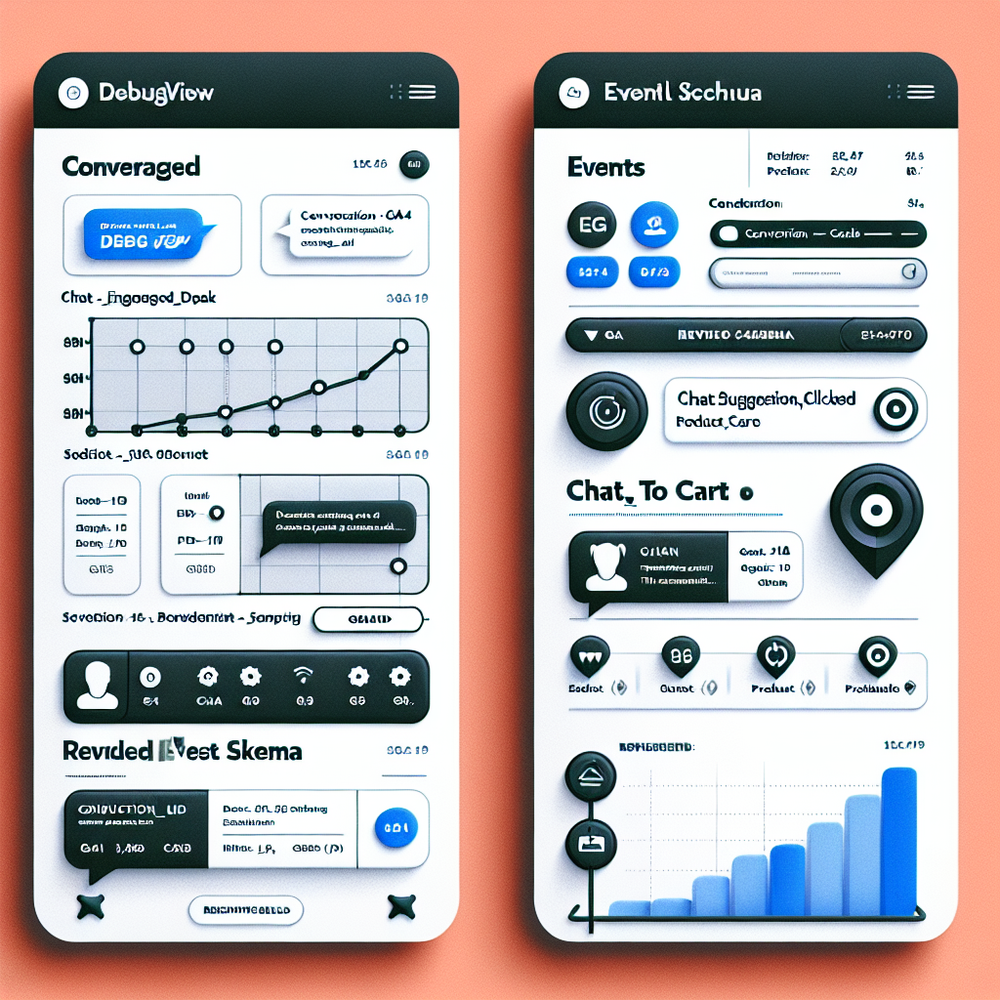
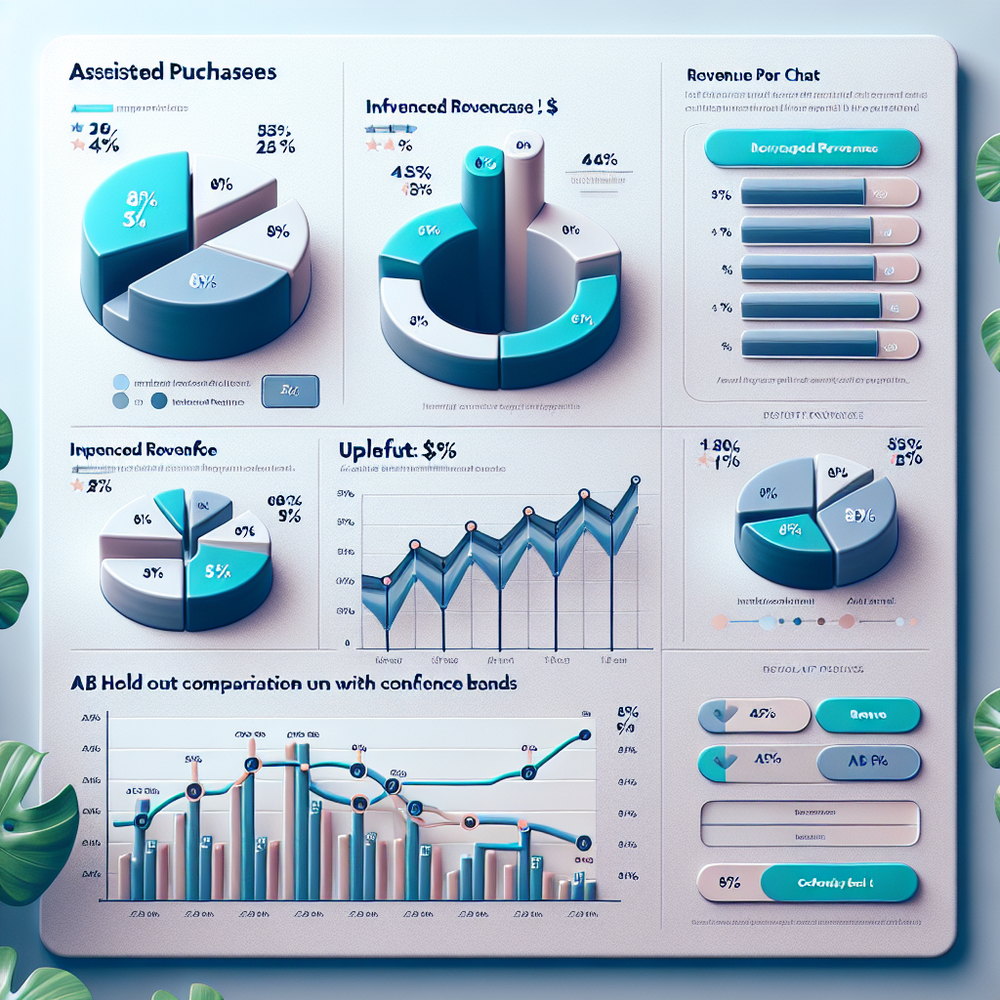
Define a small set of KPIs and wire them to queries you can rerun weekly: Assist rate = assisted purchases / total purchases. Influenced revenue = sum(purchase_revenue where assisted=true). Revenue per chat = influenced revenue / unique conversations. Uplift = (revenue per session exposed − revenue per session control) / control. Build a BigQuery job that joins purchase events to chat_* events by session_id or conversation_id with a pre-purchase constraint. For attribution, start simple: within-session rule and 24-hour lookback sensitivity. Validate with an incrementality test: suppress chat for 10–20% of eligible traffic (by cookie bucket) for two weeks. On a home-goods retailer, we ran a 15% holdout; exposed cohorts had 5.2% higher conversion rate and 7.9% higher AOV, netting a 9.8% revenue lift. Use Bayesian or CUPED-adjusted analysis if traffic is uneven. Report weekly: influenced revenue trend, uplift with confidence intervals, and a waterfall from impressions → engagement → assistance → purchase. McKinsey finds personalization drives 10–15% revenue lift; your chat is a personalization surface—prove your share, don’t assume it (McKinsey).
First-Party Data, Consent, and Trust
Assist measurement falls apart without identity hygiene. Use a first-party user_id when the user signs in; otherwise, rely on GA4’s session_id and a conversation_id cookie scoped to your domain. Respect Consent Mode v2 so analytics degrade gracefully; mark consent state in each event to avoid mismatches between GA4 and the warehouse. Never pass PII to GA4; keep emails hashed and only in your warehouse joins. If you run chat in multiple surfaces (web, app, POS), adopt a unified namespace for conversation_id and capture device class. For EU traffic, short lookbacks (session or 24 hours) are safer and often cleaner. Google UX research shows that clarity and speed strongly influence purchase intent; capturing intents and response times lets you prove the bot improved clarity, not just clicks (Google UX Research). One wholesale client captured VAT and compatibility questions through chat; when we added explicit intent logging (compatibility), assisted revenue attributed to those intents explained 32% of reduced returns—trust you can quantify.
Common Pitfalls and How to Avoid Them
Over-attribution: counting any chat_opened as an assist balloons numbers. Fix with qualifying events and pre-purchase ordering. Double-counting: affiliate, email, and chat can all claim the same order. Fix with server-side dedup keyed on transaction_id and a source precedence rule (paid > owned > assist). Coupon bias: bots that expose codes will look great but erode margin. Track chat_copy_coupon and evaluate contribution as revenue − discount cost. Non-revenue intents: returns policy or store hours shouldn’t count as assist on purchases. Bucket intents and include only those with forward progress (e.g., recommendation, compatibility, shipping cost). Window creep: a 7-day lookback turns correlation into causation; start session-scoped, then test 24 hours. Metric myopia: revenue per chat goes up when fewer people use the bot; pair it with assist rate and uplift. On a marketplace, shifting the chat prompt to “Ask about sizing” increased engagement 38% but lowered assist quality until we required chat_to_cart for credit; accuracy improved and reported assist revenue dropped 22%—a healthy correction.
Future Outlook: Beyond Session-Based Assistance
As LLM-powered chat expands into proactive guidance and post-purchase support, the assist surface will span discovery, checkout, and ownership. Expect two trends: identity-anchored conversations and outcome-based optimization. Identity means carrying conversation_id across devices and into CRM so chat can influence replenishment and cross-sell—measured as assisted lifetime value, not just assisted orders. Outcome optimization means training bots on cost-aware objectives (margin, return risk, inventory). In analytics, that pushes us from simplistic session lookbacks to sequence models (Markov, Shapley) or uplift modeling that targets only users likely to benefit from chat. Start small: get clean session-based assist working, layer on 24-hour lookbacks with intent weights, and maintain a permanent 5–10% holdout as a canary. The teams that win aren’t the ones with the flashiest bot—they’re the ones who can say, with evidence, how much revenue the bot assists, how much it truly adds, and at what cost to margin.
Related posts
View all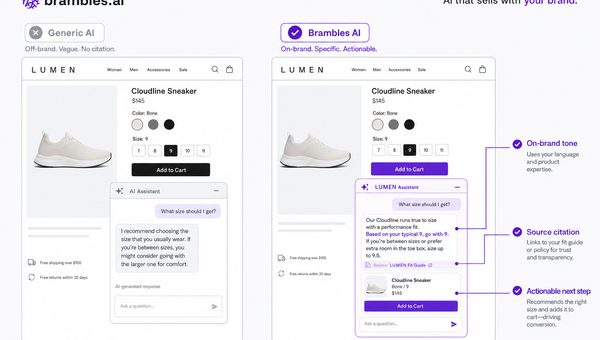
Brand-Consistent AI Chats Build Trust and Conversions
When AI mirrors your brand voice, shoppers relax—questions get answered, carts grow, and support load drops. Learn the playbook to align tone, trust, and ROI.
How Context-Aware AI Recommendations Lift CTR
See how context-aware AI recommendations lift CTR by 25–60% with intent signals, page context, and history. Practical steps, KPIs, and implementation tips.
Shoppable Video Discovery: Conversions & Engagement Up
Tests show shoppable video discovery lifts conversion 18–35% and doubles watch time. See the UX patterns, KPIs, and how to deploy it quickly with Brambles.ai.
Explore Brambles.ai
Learn more about our AI-powered agentic commerce platform, agentic shopping, and shopping assistance solutions.
Explore More Insights
Discover more articles on AI, automation, and business innovation
View All Articles