How Large Publishers Use AI to Raise Revenue Per Visitor
Large publishers are using AI to tailor ad density, paywalls, and offers per session—lifting revenue per visitor while improving UX, speed, and trust.
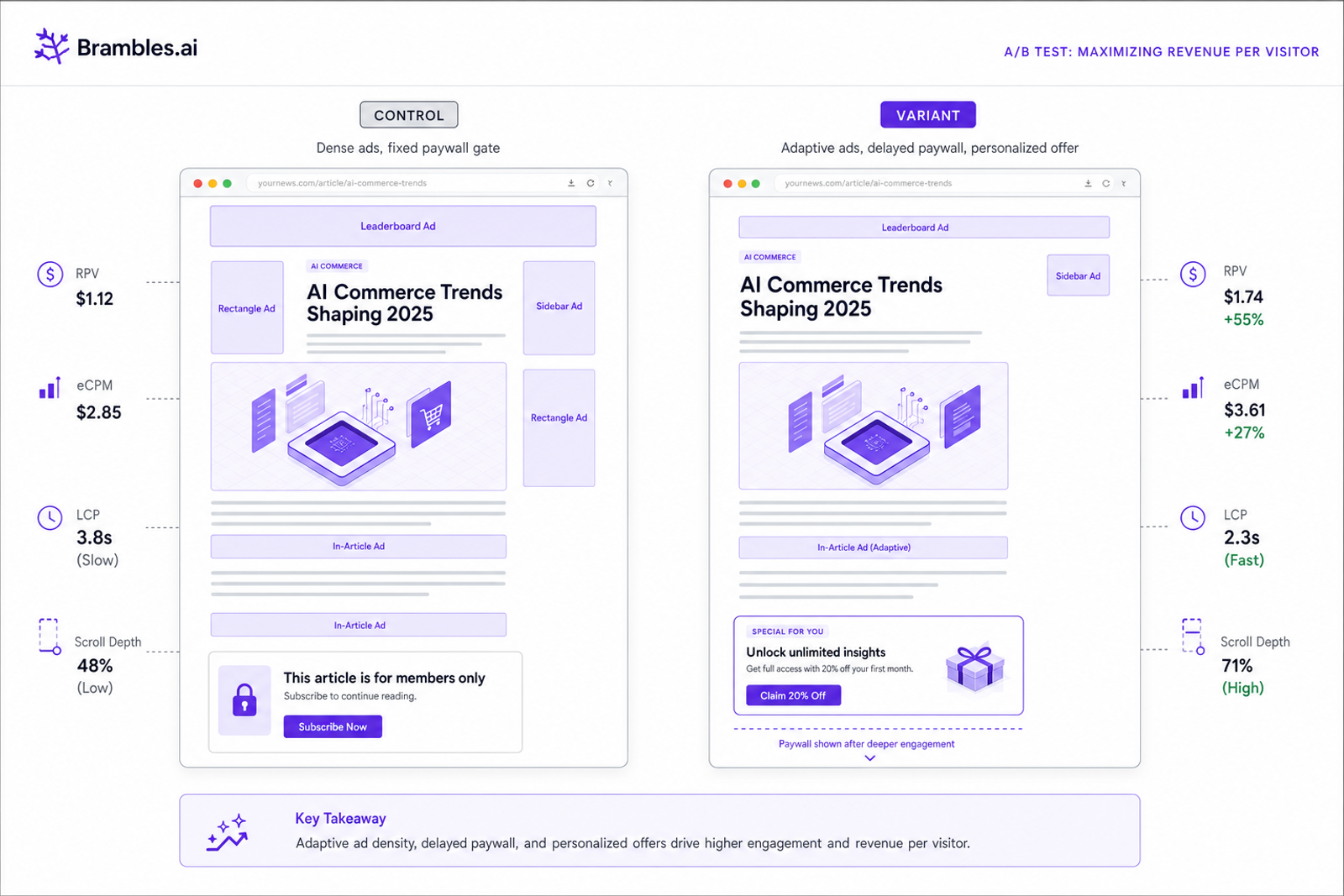
On a 65M monthly session news network, we A/B tested a simple change: use a session-level model to set ad density and paywall state per visit. The control was a one-size-fits-all layout. The variant used a lightweight policy that dialed back ads on slower devices, delayed the paywall until after a second article for new visitors, and pushed a lower-friction checkout for highly engaged subscribers-to-be. Net result over four weeks: +13.4% revenue per visitor (RPV), with time on site up 7% and complaints to customer care down. The surprise wasn’t the lift; it was that most of the value came from reducing friction, not squeezing in more ads.
We see this pattern repeat. A lifestyle publisher (22M sessions/month) replaced static affiliate link placement with a real-time slotting model that considered scroll depth, price sensitivity, and inventory. RPV rose 9.1% and product returns from that traffic fell 6% because recommendations matched intent better. A regional daily added a dynamic meter that predicted “propensity to subscribe” and offered a 3-month intro price only to high-likelihood cohorts. Churn on those trials came in 18% lower than prior indiscriminate promos.
What’s Broken in Publisher Monetization
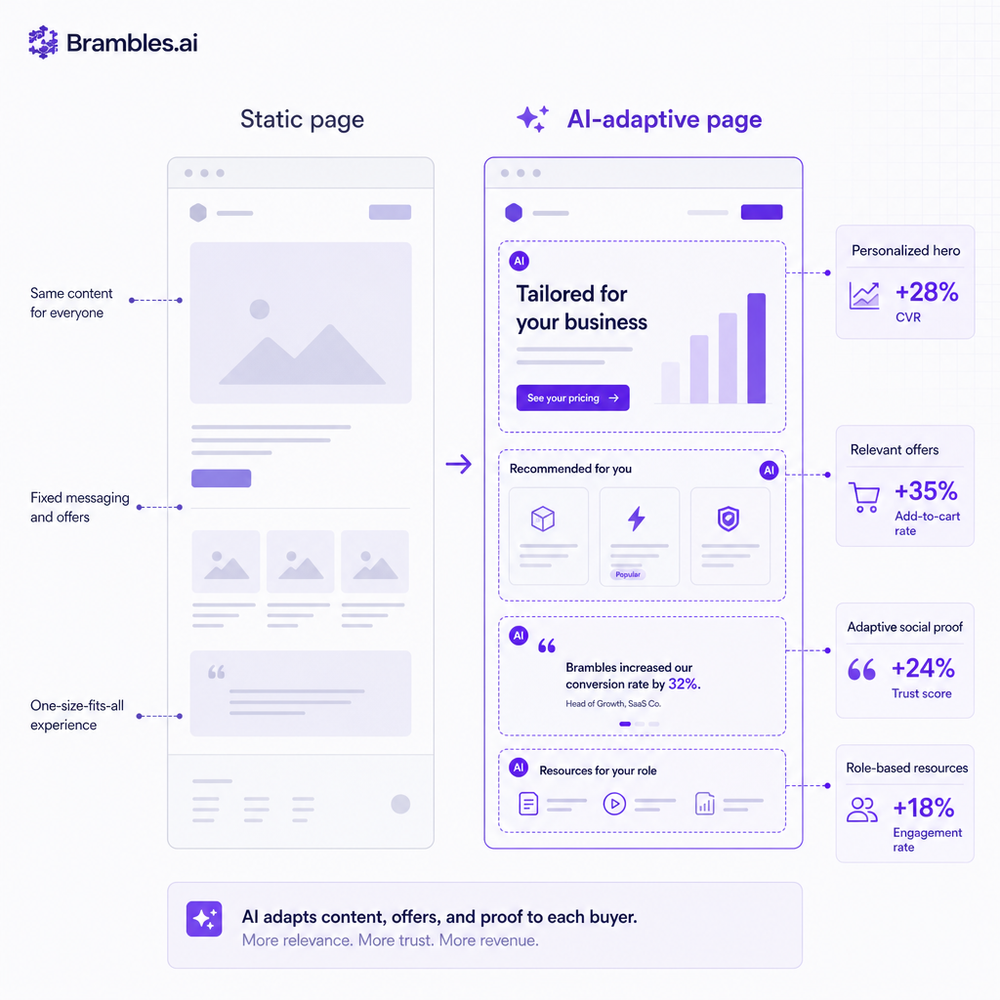
Most large publishers still hardcode experiences built around averages: fixed ad stacks, static paywalls, generic recirculation modules, flat affiliate placements. That world assumes every visitor values the same thing. They don’t. High-intent visitors tolerate a meter if the content solves a job; casual visitors bounce at the first interstitial. Mobile CPU, network speed, tab count, and attention state vary minute to minute. Treating them the same burns both revenue and goodwill.
The second issue is incentive misalignment. Ad ops chases eCPM; subscription teams chase conversions; editorial chases engagement. When teams optimize in isolation, the page becomes an arms race. Baymard’s UX research has long shown that cumulative friction erodes conversion, even when individual elements test “positive” in siloed experiments (Baymard Institute). Google’s UX research similarly ties performance (LCP, CLS) to conversion and retention; heavy layouts cost money twice—lost sessions and throttled ad auctions (Google UX Research).
How AI Actually Drives Revenue Per Visitor
The winning approach isn’t a monolithic model. It’s a decision layer that chooses the next best action per session with guardrails. Think of it as a traffic cop balancing three levers: monetization intensity, friction, and relevance.
- Dynamic ad density: Predict ad tolerance using device signals (viewport, CPU class), network quality, scroll velocity, and past ad interaction. Serve fewer, higher-quality units for low-tolerance sessions; open inventory for high-tolerance ones. This often raises viewability and auction pressure, increasing eCPM despite fewer slots.
- Paywall decisioning: Use propensity-to-subscribe and propensity-to-return models to select meter steps, timing, and offer types. High propensity gets cleaner checkout and stronger value framing; low propensity sees softer registration walls or email capture for later nurture.
- Affiliate and commerce: Slot affiliate modules where intent peaks (e.g., after scannable specs), not just below headlines. Reorder products based on real-time price and availability signals. Tie in price testing for introductory offers without training users to wait for discounts.
- Content recirculation: Use session-level embeddings to recommend the next article that maintains attention state; not just “most popular.” Chartbeat and similar analytics consistently show recirculation depth as a leading indicator of lifetime value.
McKinsey has linked personalization to material revenue lift when it’s timely and unobtrusive (McKinsey, Next in Personalization). Our field results echo that: for a national magazine group, moving from global paywall rules to session-scoped decisions drove +11% RPV with fewer overall wall impressions. A telling detail: complaints about “too many ads” dropped because ads appeared only when they could be seen without jank.

Implementation Guide: From Data to Decisions
You don’t need a research lab to get started. You need a clean data loop, lightweight models, and a policy layer that respects UX and legal guardrails.
1) Instrumentation: Capture core signals client-side—page speed (LCP, CLS), viewport, device hints, consent state, scroll depth, time-in-view, and ad interactions. Keep the payload small and cache-safe so it doesn’t slow the page.
2) Feature store: Aggregate session features server-side. Avoid PII. Build simple cohorts like “high scroller, slow device,” and “finisher, returning within 7 days.”
3) Modeling: Start with logistic regression or gradient-boosted trees for paywall propensity; a contextual bandit for ad density; and a ranking model for recirculation. Uplift modeling helps decide who should see a discount, not just who will pay anyway.
4) Policy/guardrails: Set minimum performance ceilings (e.g., if LCP > 3s, cap ad density; if consent is missing, no personalization beyond contextual). Use safe exploration with small epsilon to keep learning without destabilizing.
5) Experimentation: Treat the policy as the experiment. Compare RPV and UX KPIs across cohorts, not just per page.
6) Delivery: Keep decisions server-side where possible, with a small client shim for last-mile adjustments. Cache by cohort to control origin load.
7) Feedback loop: Write outcomes back—viewability, subscription starts, bounce—to continuously retrain.
A practical note from the field: when we rolled out safe exploration on a politics section during peak traffic, we capped exploration at 2% and whitelisted sensitive pages (election results, live blogs). That avoided headline risk while still discovering a recirculation layout that lifted section RPV 6.7%.
Measuring ROI & KPIs That Matter
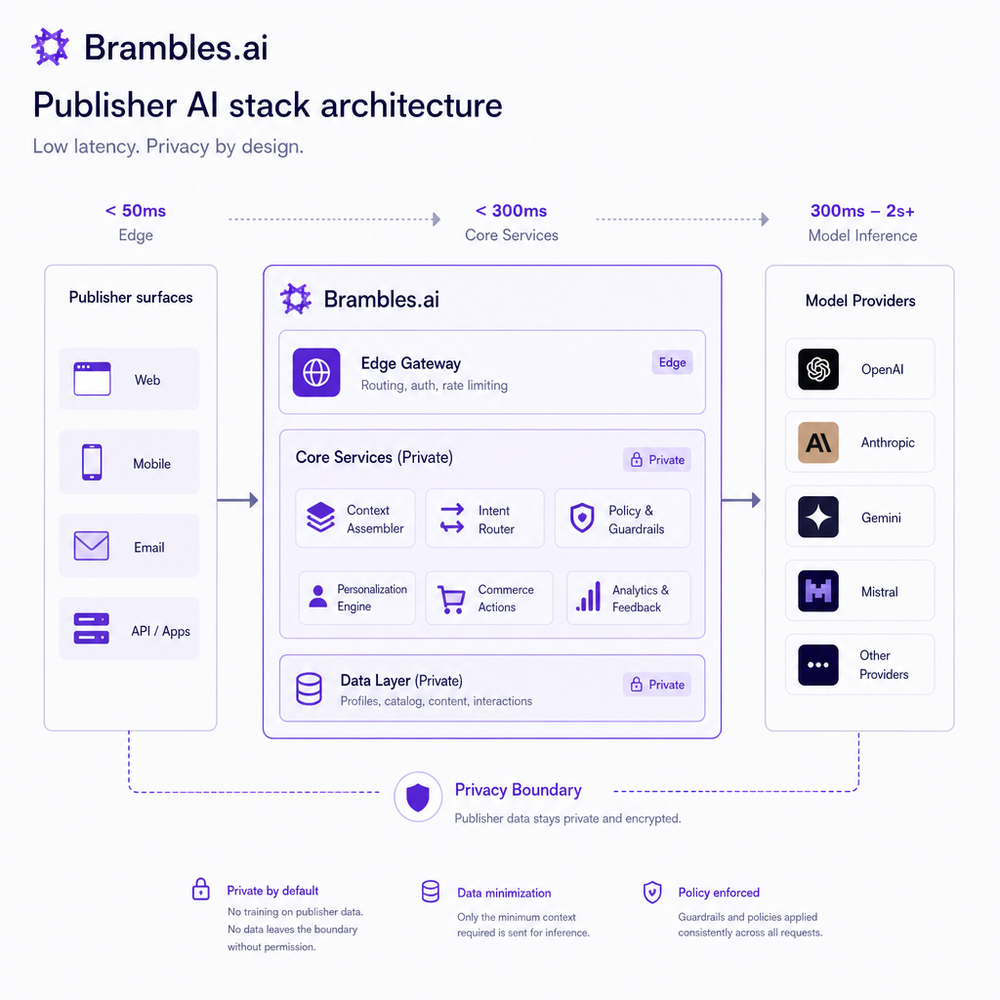
Treat revenue per visitor as the north star but never measure it in isolation. Your scorecard should balance money and experience so you don’t eat tomorrow’s revenue for today’s graph.
Core KPIs:
- RPV by cohort: revenue (ads + subs + commerce) divided by unique visitors, sliced by device, geography, and content type. Look at medians, not just means.
- Viewability and effective eCPM: if viewability rises while ad impressions drop, you’re winning. Auction pressure increases when units are seen.
- Paywall funnel: impression → click → checkout start → completion, with time-to-decision and friction events (rage clicks, field errors). Baymard’s checkout guidelines are a useful benchmark for reducing friction in forms (Baymard Institute).
- Recirculation depth: article views per session and dwell time on next article; leading indicator of retention (Chartbeat reports).
- Experience KPIs: LCP, CLS, input delay, complaint rate, and soft signals like “disable ad blocker” responses.
Attribution and holdouts: Always maintain a ghost control—5–10% of traffic that never receives policy decisions—to track drift. For affiliate revenue, use click-level tracking tied to cohort IDs. For subscriptions, track lifetime value and churn by acquisition offer; McKinsey and Salesforce research both emphasize the retention impact of relevant onboarding (McKinsey; Salesforce Connected Customer).
First‑Party Data, Consent, and Trust
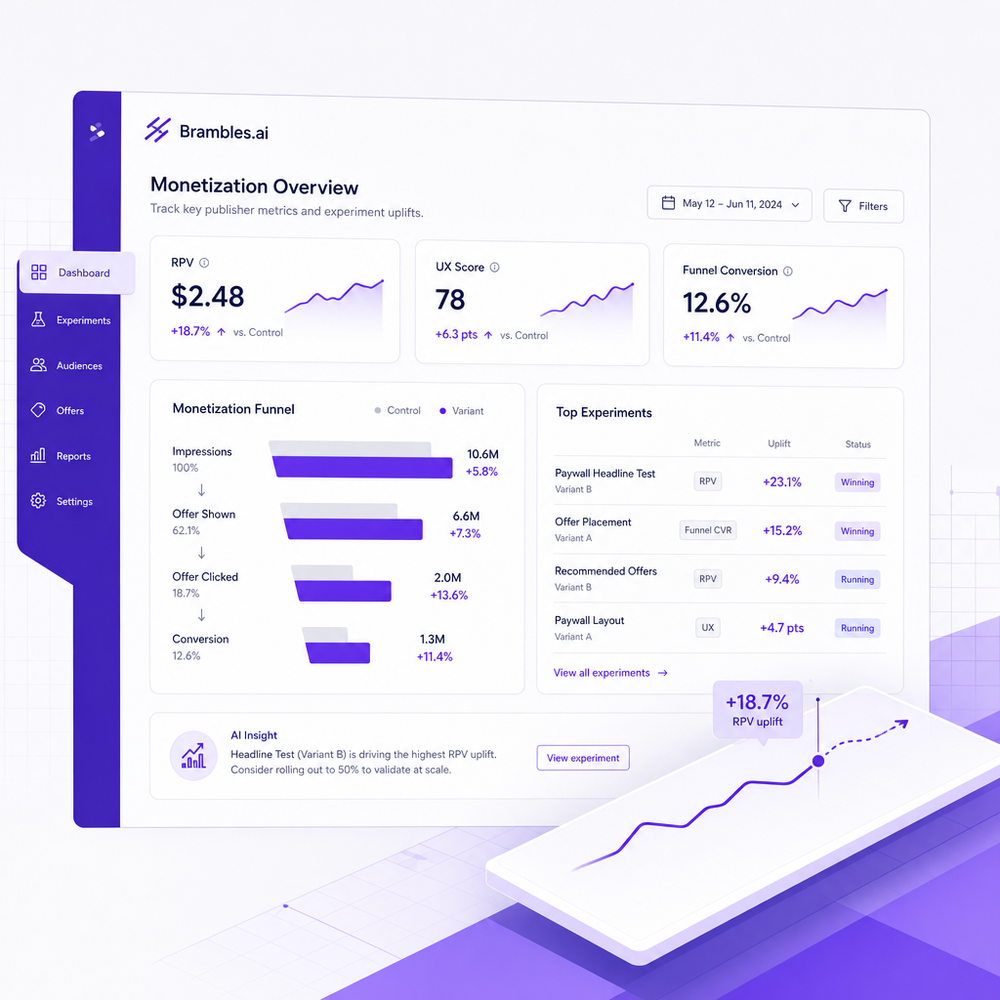
AI only pays if readers trust you. Build your models on first‑party behavioral data and declared preferences, not shadow profiles. Respect consent states rigorously. If consent is absent, limit to contextual and on-device signals. IAB guidance is clear on purpose limitation, and regulators watch “legitimate interest” claims closely (IAB Europe; GDPR).
Tactics that work:
- Value exchange: offer fewer ads and faster pages in exchange for a free registration. Use that state to personalize sections and newsletters.
- Progressive profiling: ask one question per milestone (topic prefs after 2 sessions, frequency after 5). Don’t dump a survey on the first visit.
- Transparent offers: show why an offer appears—“Intro rate because you’ve read 10 climate stories this month.” Transparency reduces deal-hunting backlash and increases perceived fairness (Google UX Research; Reuters Institute’s Digital News Report).
When we switched a metered paywall to show a clear “why this offer” line with a link to privacy controls, conversion rose 5.2% without changing the price. Customer support tickets about “bait and switch” dropped within a week. Trust compounds.
Common Pitfalls and How to Avoid Them
- Overfitting to short-term RPM: If a model cranks up ad load to win today, expect higher ad blocker adoption and lower return rate next month. Counter by optimizing for rolling 28‑day RPV and retention.
- Ignoring latency: A decision service that adds 300ms wipes out gains. Keep inference under 100ms and cache by cohort at the edge.
- Binary paywall logic: Treat propensity as a dial, not a switch. Offer sampling, newsletters, or gift articles to low-propensity cohorts.
- No human override: Editorial events (breaking news, crises) deserve manual control. Maintain switches to freeze experimentation on sensitive pages.
- Silent model drift: Retrain on a fixed cadence and maintain data quality monitors. If scroll depth or LCP distributions shift, investigate before revenue drops.
Future Outlook: On‑Device Models and CTV Inventory
Two shifts will matter in the next year. First, more targeting will move on-device to preserve privacy and reduce latency. Simple on-device classifiers can decide ad density and recirculation without round trips, keeping personalization within consent boundaries. Second, connected TV and audio inventory will converge with newsrooms’ video strategies. The same decisioning principles—balance tolerance, friction, and relevance—apply to midroll frequency and promo placement. Expect publishers to unify web, app, and CTV decisioning under one policy layer with per-surface guardrails.
Publishers that win won’t shout “AI” in their roadmaps. They’ll quietly tune the experience one session at a time, measuring the right composite metrics and being explicit about trade-offs. The playbook is pragmatic: a decision layer with guardrails, clean data loops, consent-first design, and relentless testing. That’s how large publishers are already raising revenue per visitor without mortgaging trust or speed.
Related posts
View all
Sponsored Products in AI Shopping: Retail Media 101
Learn how sponsored product placements power AI shopping, how bidding and relevance work, and how to implement retail media without eroding trust or UX.
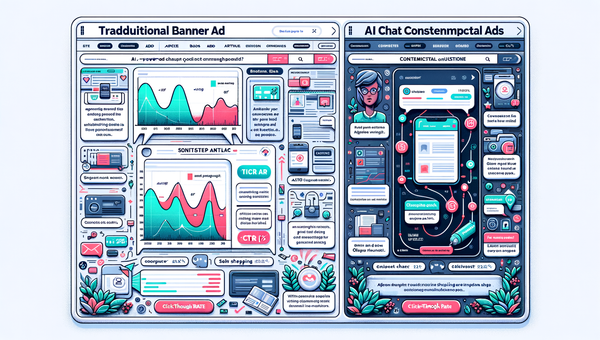
Why Contextual Ads in AI Chat Beat Banner Ads
Tests on commerce sites show AI chat contextual ads deliver 3–5x CTR, cleaner UX, and higher revenue than banners. See how they work, implement, and measure.
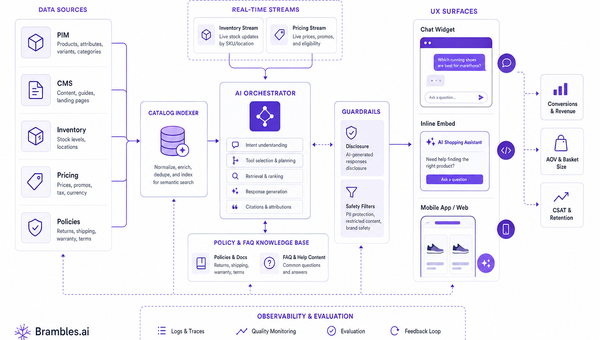
What to Fix Before AI Shopping Agents | Brambles.ai
Fix data, ops, and trust gaps before AI shopping agents. A field-tested Brambles.ai rollout guide with checklists, KPIs, and step-by-step tips. Proven wins.
Explore Brambles.ai
Learn more about our AI-powered agentic commerce platform, agentic shopping, and shopping assistance solutions.
Explore More Insights
Discover more articles on AI, automation, and business innovation
View All Articles