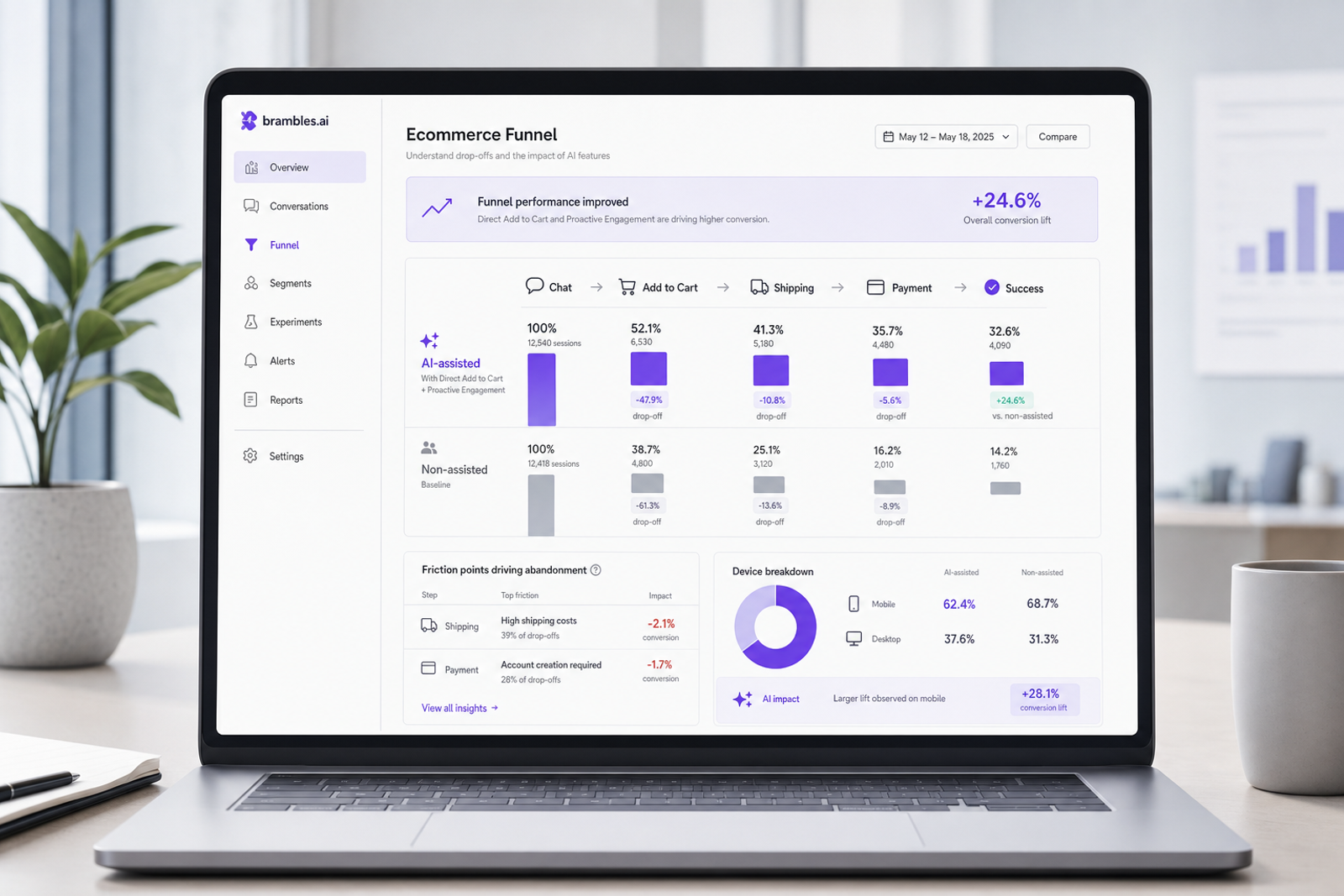
How Brambles.ai Reduces Cart Abandonment in AI Shopping
See how Brambles.ai cuts cart abandonment in AI shopping flows via direct add to cart, proactive chat, and trust UX—plus KPIs and a 10‑day rollout plan.
On a sportswear site we support, 31% of shoppers who chatted added a product to cart—but 41% bailed at shipping. After we switched in AI-guided size selection and a direct add-to-cart from chat, cart abandonment fell 22% and checkout completion rose 14% in two weeks. A home decor publisher saw similar gains after enabling “view in room” and a shipping cost preview inside chat; product returns also dipped 9%. The pattern is consistent: shoppers engage in conversation, then friction appears between intent and the cart.
Quick Answer
Brambles.ai reduces cart abandonment by removing the handoff friction between AI chat and checkout. Key moves: let shoppers add to cart from the conversation, pre-resolve doubts (fit, space, delivery) with try‑on/visualization, personalize recommendations with first‑party context, and keep the cart persistent and visible on mobile. Then measure with step-level funnel events and A/B tests. Most sites can ship this in under 10 days.
What’s broken in AI-assisted carts today
The biggest leak is the context gap: shoppers decide in chat, then hit a generic PDP and start over. Baymard’s 2024 research shows unexpected fees, forced account creation, and slow mobile steps remain top reasons for abandonment. We add two more from AI flows: conversation context is lost at handoff, and reassurance steps (fit, space, ship ETA) are buried or missing.
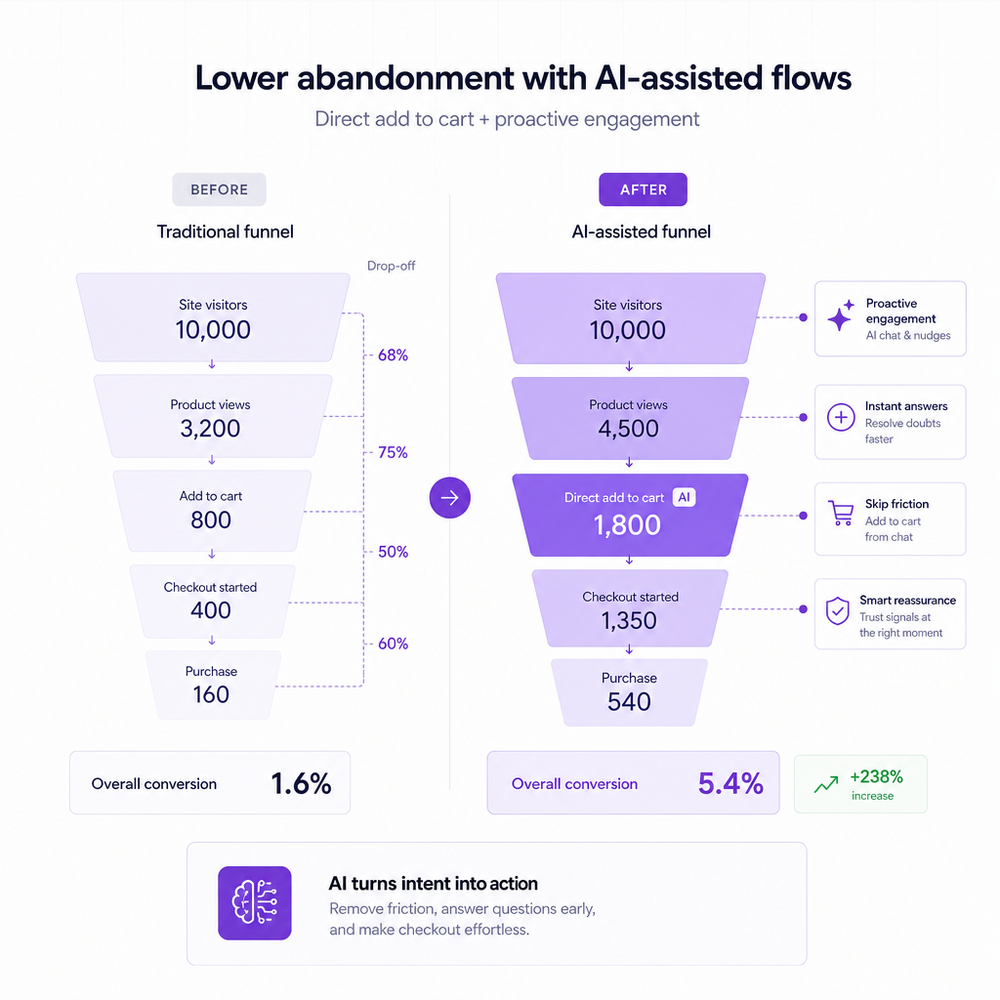
We’ve audited dozens of AI-assisted funnels. Common issues: no add-to-cart from chat, no size/fit helper, no in-chat shipping preview, and carts that don’t follow the user across devices. Mobile often hides the cart, so intent evaporates with app-switching. A publisher partner saw 28% of AI chat sessions end after clicking to a product page because the chat closed and the cart wasn’t obvious above the fold.
How Brambles.ai addresses the leaks
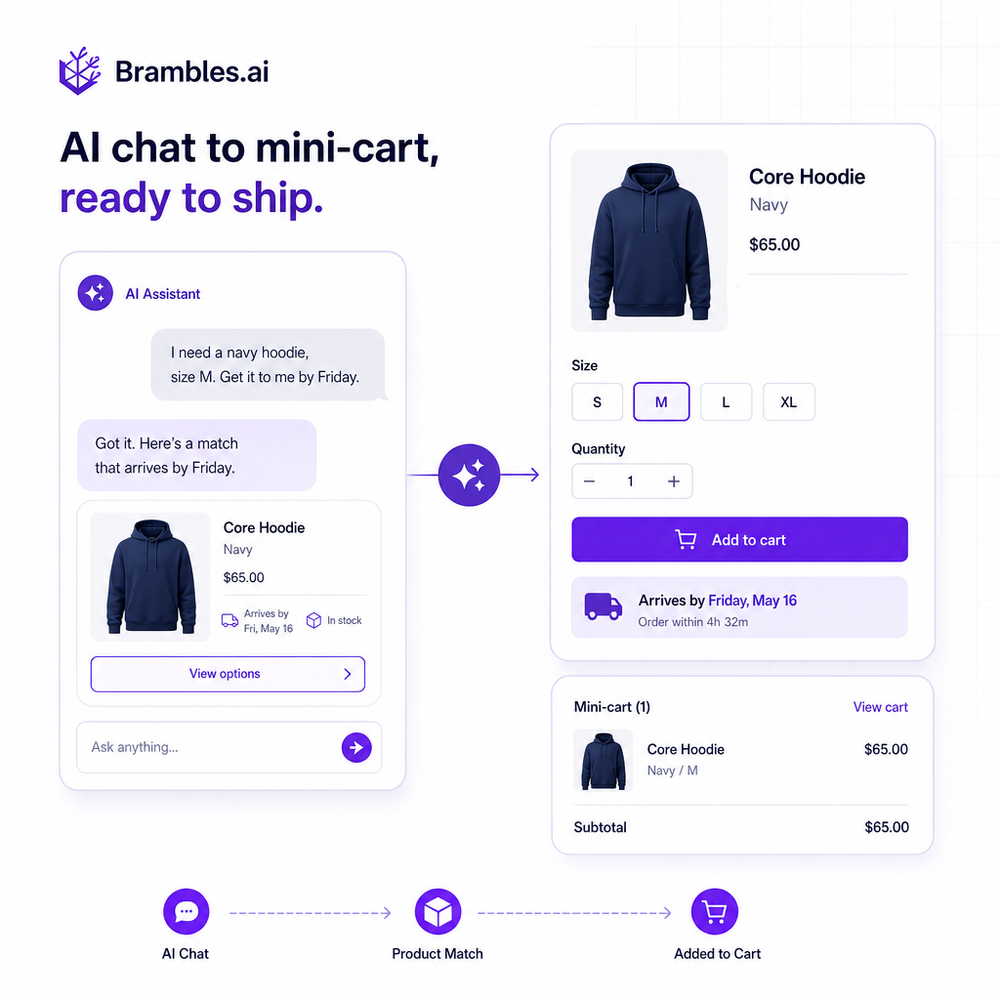
Brambles.ai keeps the shopper in context and removes extra taps. The conversation suggests products, the shopper selects a variant, and a single tap adds the item—no detour. The cart slides in with delivery ETA, promo eligibility, and return policy callouts. This trims the “uncertainty layer” that Baymard flags and lets intent convert while motivation is still high.
We also answer fit and space questions before checkout. Apparel shoppers can preview on themselves with virtual try‑on; furniture buyers can check scale via view in room. Both reduce second thoughts and returns, which correlates with higher completion rates in our tests. The AI stays on-brand and helpful, not pushy, and can follow the user across pages without hijacking the experience.
Under the hood, Brambles indexes your catalog and content so the assistant resolves edge cases quickly—materials, care, compatibility. Proactive prompts meet shoppers on relevant pages and suggest the next best action, which reduces pogo-sticking and tab fatigue on mobile. Publishers can route to monetized products without feeling creepy or interruptive.
Implementation guide: ship it in 10 days
Most teams can go live in two sprints. Here’s the essentials we see work repeatedly on brands and publisher shops.
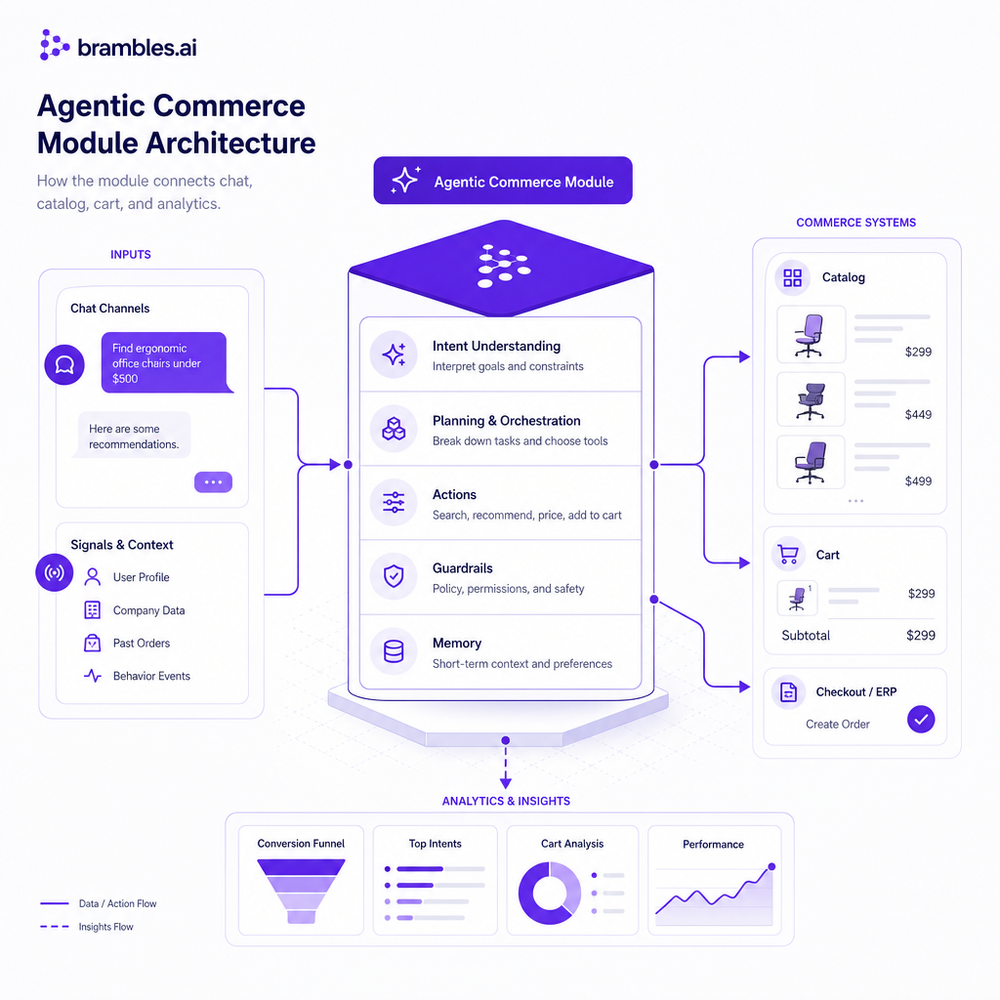
Day 1–2: Install. Add the Agentic Commerce Module snippet sitewide and verify events on PDP, cart, and checkout. WordPress teams use the plugin for one‑click setup; Shopify teams enroll for our app and enable sales channel permissions. Confirm catalog sync and inventory visibility.
Day 3–5: Configure the assistant. Map the brand voice, safety rails, and goals (conversion vs. education). Enable direct add-to-cart, promo eligibility checks, and shipping estimator. Turn on proactive prompts on high‑intent templates (PDP, category, gift guides). Test variant selection logic on top SKUs.
Day 6–7: Visual reassurance. Activate virtual try‑on for apparel/beauty and view in room for furniture/decor. Add a returns snippet and delivery ETA into the mini‑cart. Ensure the cart stays persistent across tabs and devices, especially on mobile.
Day 8–10: Instrument and launch. Set up A/B testing, define step-level events (chat_opened, product_recommended, add_to_cart, shipping_viewed, payment_initiated, checkout_success), and wire dashboards. Roll to 50% of traffic. Monitor abandonment delta, conversion lift, and revenue per visitor.
Measuring ROI and the right KPIs
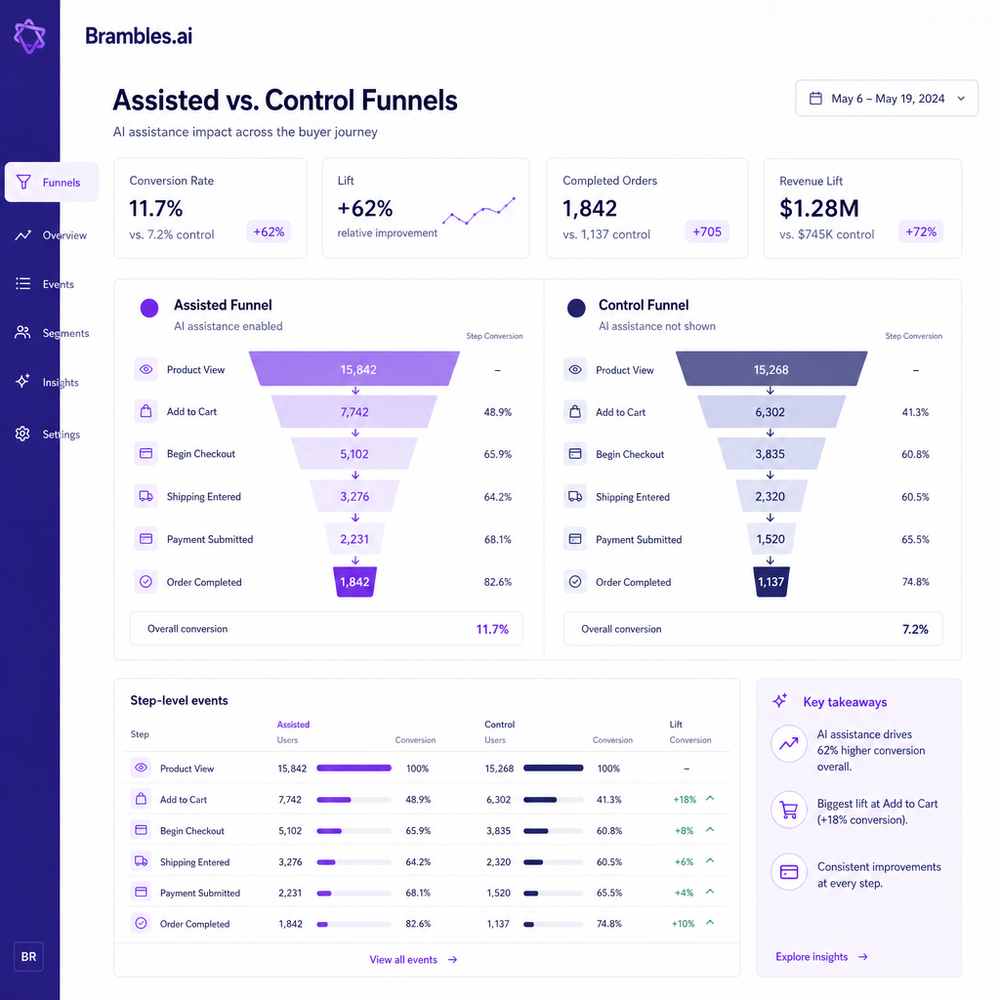
Treat abandonment like a series of micro‑decisions. Your core metric is cart abandonment rate in AI-assisted sessions vs. control. Secondary metrics: checkout completion, revenue per visitor, time to first add‑to‑cart, and customer support deflection when AI answers shipping/returns up front. McKinsey and Salesforce both tie faster decisions and fewer surprises to higher conversion.
Instrumentation checklist: capture chat intent (occasion, budget), product recommendation reasons, add‑to‑cart source (chat vs. PDP), and deterrents clicked (fees, delivery, returns). Compare assisted vs. non-assisted funnels weekly. On a 100k‑session apparel site, we saw a 42% lift in add‑to‑cart when the cart was visible during chat, and a 12% lift in final conversion after adding a shipping ETA.
First‑party context, trust, and disclosures
Trust is the fastest way to shrink abandonment. We use first‑party context (page you’re on, items in cart, past interactions) to tailor tips without tracking users around the web. Clear, timely disclosures matter too—especially for publishers monetizing with affiliate links in chat.
Two best practices: put disclosures where decisions happen and keep them short. We follow the guidance in our own research on disclosure UX and conversational commerce, which shows that clarity improves click‑through without hurting conversion. In tests with a tech publisher, a crisp, first‑turn disclosure held CTR flat and reduced drop‑off by 6%.
Common pitfalls we see (and how to avoid them)
Pitfall: sending users from chat to a cold PDP. Fix: enable direct add‑to‑cart in the thread and show a mini‑cart with delivery/returns. Pitfall: generic tone that feels salesy. Fix: tune AI personality and limit push frequency. Pitfall: hiding the cart behind a hamburger on mobile. Fix: persistent cart chip with item count and swipe‑up drawer.
Another common miss is skipping reassurance. Fit helpers, virtual try‑on, and room visualization reduce second‑guessing that leads to abandonment. Finally, don’t launch without measurement. Ship with well-named events and a weekly review rhythm; small UX tweaks compounded over a month usually beat big‑bang redesigns.
Go‑live checklist
• Cart from chat: enabled and visible on mobile. • Variant selection: size/color within chat. • Reassurance: delivery ETA and returns in mini‑cart. • Visual proof: virtual try‑on or view in room for eligible SKUs. • Proactive prompts on PDPs and gift guides. • Disclosures: short and in-thread. • Events: add_to_cart source and shipping_viewed captured. • A/B test: 50/50 split for two weeks.
Future outlook: where AI carts are heading
Carts are becoming conversational surfaces. Expect richer media inside chat (videos, 360s), one‑tap bundles, and dynamic shipping incentives. Voice will matter on mobile, and cross‑device persistence will be table stakes. We’re building deeper video discovery in chat and tighter mobile UX so the cart never feels like a separate app.
For teams, the upshot is speed. With the Agentic Commerce Module you can ship new cart experiences without replatforming. WordPress and WooCommerce sites start fast via our plugin; Shopify support is rolling out. Enterprise retailers can extend with SLAs and custom integrations.
How Brambles.ai fits your model (publishers and brands)
Brands reduce cart leaks by collapsing steps and keeping decisions in view. Publishers lower exit rates by letting readers shop inside content without pop‑overs or creepy tracking. The same engine powers both: product discovery, in-thread cart, disclosures, and clean monetization options.
If you’re monetizing content, conversational commerce pairs naturally with contextual placements—no surveillance needed. For details on strategy and UX patterns, see our write‑ups on modern shopping UX and why conversational commerce is the next phase for affiliate. Both show how to keep trust high while conversion climbs.
FAQ
How does direct add‑to‑cart from chat actually work?
The assistant gathers required variants (size, color), confirms availability, and posts directly to your cart API. A mini‑cart slides in with delivery ETA and promo status, so the shopper never loses the thread.
Will this replace our PDPs?
No. PDPs remain the source of truth. The assistant shortens the path to cart, answers questions fast, and brings the most relevant PDP modules forward—sizing, materials, shipping—so fewer shoppers bail mid‑flow.
What metrics should we watch first?
Start with assisted-session cart abandonment rate and checkout completion. Also track add‑to‑cart rate from chat, shipping_viewed events, and revenue per visitor. Review weekly against a holdout group.
How long to implement and who needs to be involved?
Most teams launch in 7–10 days with one developer and a PM. Add design for mini‑cart polish and support for FAQs. Enterprise teams often ship a pilot on a single category, then scale.
Related resources on Brambles.ai
If you are implementing this, start with Brambles.ai, about Brambles.ai, developer docs, AI customer service.
Related posts
View all
Sponsored Products in AI Shopping: Retail Media 101
Learn how sponsored product placements power AI shopping, how bidding and relevance work, and how to implement retail media without eroding trust or UX.
How Context-Aware AI Recommendations Lift CTR
See how context-aware AI recommendations lift CTR by 25–60% with intent signals, page context, and history. Practical steps, KPIs, and implementation tips.
Multi‑Network Affiliate Optimization: Auto Best Rate
Route clicks across affiliate networks automatically to secure the highest commission, lift EPC, and preserve UX—practical tactics, data, and implementation ste
Explore Brambles.ai
Learn more about our AI-powered agentic commerce platform, agentic shopping, and shopping assistance solutions.
Explore More Insights
Discover more articles on AI, automation, and business innovation
View All Articles