How Brambles.ai Raises AOV with Contextual Recommendations
Contextual recommendations that boost AOV, step-by-step. Real tests, UX tactics, and an implementation plan using Brambles to drive bigger multi-item carts.
How Brambles.ai Raises AOV with Contextual Recommendations
A beauty retailer we support swapped generic “You may also like” carousels for intent-aware suggestions triggered inside chat. Within two weeks, attach rate on travel-size add‑ons rose 31% and AOV climbed 12.4%. The difference wasn’t the catalog. It was timing, context, and a recommendation that answered the exact question the shopper had in that moment.
On a 100k‑session home decor site, pairing “view in room” with complementary pieces lifted multi‑item carts by 27% month‑over‑month; shoppers added rug pads and wall hooks when they saw how the hero item sat in their space. Another test on a publisher’s buying guide surfaced context‑matched alternatives from multiple merchants, increasing affiliate AOV by 18% while keeping disclosure crystal clear.
Quick Answer
Contextual recommendations lift AOV by reacting to real intent—page content, recent actions, and natural‑language questions—rather than guessing from stale segments. With Brambles, intelligent triggers suggest complementary items, variants, and bundles right where the shopper is engaged (chat, inline blocks, or on‑page prompts). Results arrive with prices and inventory, and shoppers can add to cart instantly, making multi‑item orders feel effortless.
What’s Broken with Traditional Upsells
Most upsell modules push static, popularity‑based items that ignore why a shopper is here. Baymard’s research has long shown that irrelevant cross‑sells add friction and are quickly tuned out. We still see hero‑slot recommendations that fight the primary task, or checkout add‑ons that feel like last‑minute spam rather than helpful finishing touches.
Two patterns consistently suppress AOV: recommendations that appear too early (before preference is clear) and those that arrive too late (after the decision is locked). Context matters. When the nudge reflects the product details a shopper is viewing or the question they just asked, conversion rises without sacrificing trust.
How Contextual Recommendations Work on the Platform
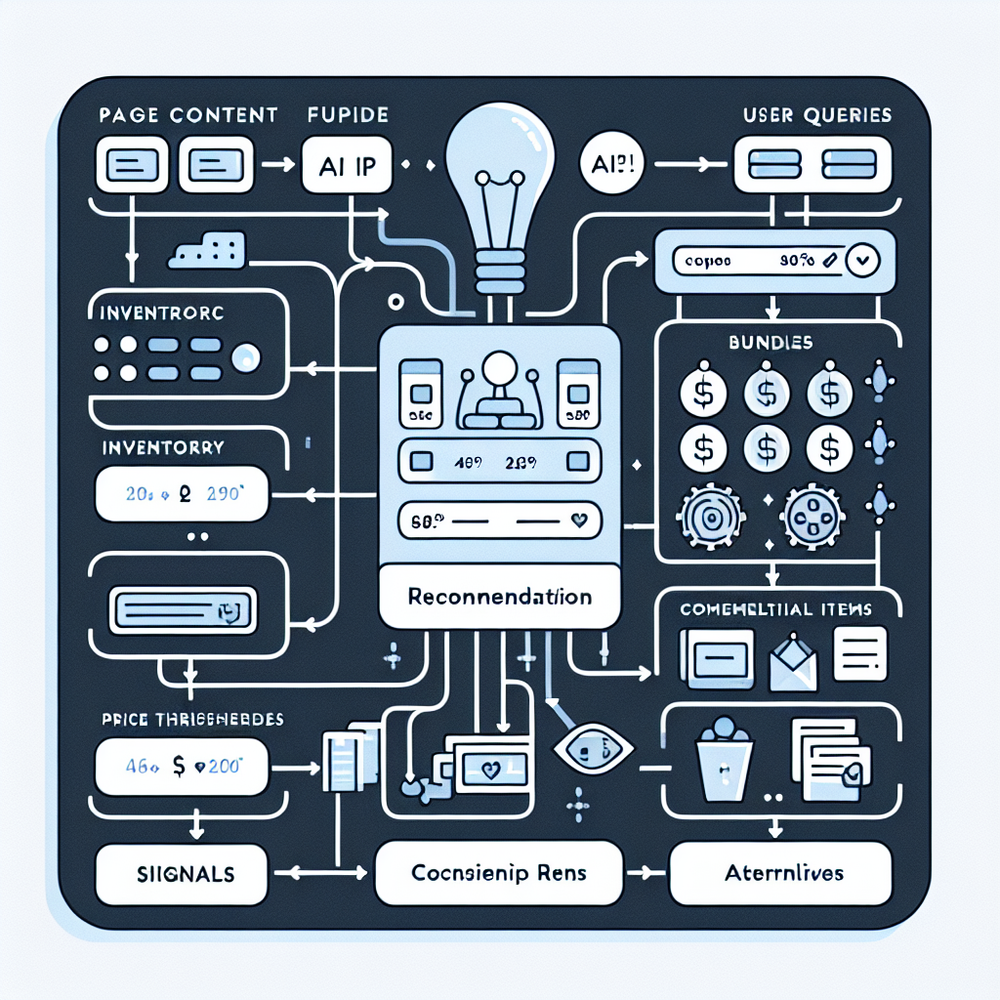
Context starts with understanding the page and the conversation. Content intelligence indexes your catalog, articles, and FAQs so results are relevant to the shopper’s current task, not just their past behavior. When someone asks “does this fit a 12×16 room?”, the engine can surface a rug, a compatible pad, and a tape measure—all instantly useful.
Proactive engagement watches real signals—scroll depth on a product detail, time on a category, or a question in chat—and offers timely, helpful nudges. It might suggest a care kit when leather boots are in view, or a bundle to clear free‑shipping thresholds. AI product discovery lets shoppers speak naturally (“need a wide desk under $300”) while returning complements that fit price, style, and compatibility in one pass.
To reduce friction, direct add to cart enables one‑tap add‑ons right inside chat or inline cards. Visual confidence amplifies AOV too: virtual try‑on helps shoppers see fit and finish for accessories, and view in room places furniture and decor at true scale—both of which raise the chance they’ll add the complementary item along with the hero product.
Publishers benefit too: contextual matches across multiple merchants drive higher‑value carts without pop‑up clutter. When recommendations are transparently disclosed and aligned to article context, readers click more, buy more, and return more often.

Implementation Guide: From Idea to Live in a Week
Choose your first placement. Start where intent is clearest: product detail pages, buying guides, or size/fit help in chat. Define one goal (e.g., +10% AOV) and one trigger (e.g., after 20 seconds on a PDP). Keep scope tight for rapid learning.
Install with a single snippet via the Agentic Commerce Module. Most teams add it in under an hour, then toggle features on in the dashboard. WordPress sites can one‑click install the plugin; Shopify stores can prepare for the app’s release and use the script in the meantime.
Set rules and guardrails. Map page signals to intents (“looking at leather boots” → recommend care kit), define price bands, and set free‑shipping threshold nudges. Use configuration to control tone, frequency caps, and merchandising rules. Developers can follow the quick start and tune widget behavior without touching your core stack.
Finally, measure and iterate. Launch to 10–20% of traffic, compare AOV, items per order, and attach rate. If attach rate is high but AOV flat, raise the price ceiling on complements or introduce bundles. When cart value is just shy of free shipping, trigger a tailored add‑on row that bridges the gap.

Measuring ROI & KPIs That Predict AOV Lift
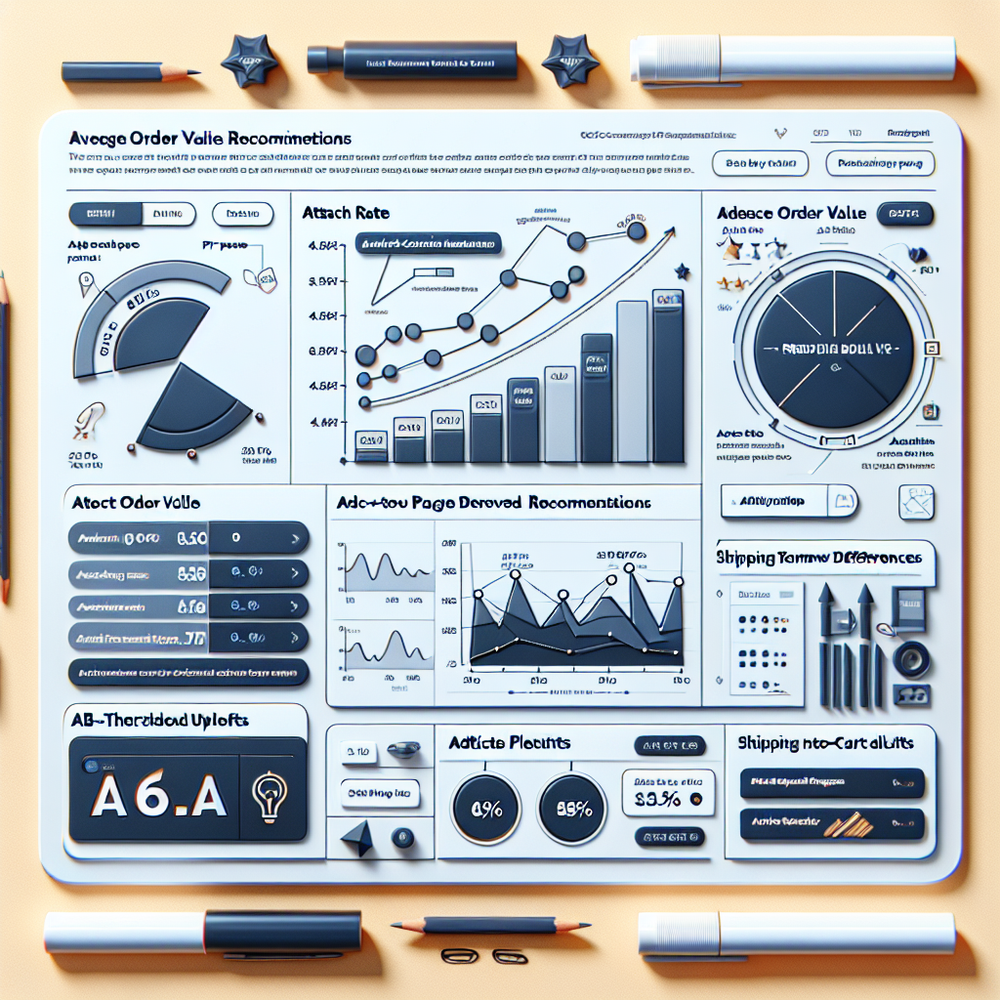
Track AOV, items per order, attach rate (orders with ≥1 add‑on), and incremental revenue per 1,000 sessions.
Pair this with engagement metrics: recommendation CTR, add‑to‑cart from recs, and the percent of shoppers who cross the free‑shipping threshold due to a suggestion.
McKinsey reports effective personalization drives 10–15% revenue lift on average; AOV is where a big slice shows up.
What good looks like in month one: +8–15% AOV on targeted traffic, 20–35% attach rate on obvious complements, and 5–8% of orders nudged over shipping thresholds. On a 50k‑SKU catalog we supported, simply switching to compatibility‑aware add‑ons cut irrelevant impressions by 46% and raised add‑to‑cart from recs by 29%.
Set baselines and segment results. PDP‑triggered recs perform differently from article‑embedded recs. Publishers can track affiliate AOV, EPC, and retailer mix; retailers watch margin impact and return rate on add‑ons. Keep variants and subscriptions in a separate view so one high‑price swap doesn’t skew attach rate.
First‑Party Data and Trust Drive Repeat AOV Gains
Contextual doesn’t require chasing users around the web. It uses page intent, live conversation, and first‑party behavior. That keeps relevance high and creepiness low. Readers and shoppers reward clarity, and trust scales better than dark patterns ever did.
Be explicit about affiliate relationships and what improves recommendations. Short, human disclosure beats legalese. For publishers, these practices consistently improve long‑term CTR and AOV across merchant mixes.
Common Pitfalls to Avoid
Avoid over‑eager prompts that interrupt the primary task. Cap frequency (e.g., 2 prompts per session), and never cover the add‑to‑cart button. Don’t recommend out‑of‑stock or incompatible items; index compatibility attributes and inventory before launch. Keep price anchoring sane: suggest 20–50% price‑ratio complements unless the shopper explicitly asks for premium.
Watch for “silent success.” If attach rate is healthy but revenue flat, your adds are too cheap; introduce bundles or higher‑value care kits. If CTR is strong but add‑to‑cart low, the cards likely hide key details—surface compatibility, return policy, and shipping ETA in the card.
AOV Optimization Checklist
- Place recs where intent peaks: PDPs, size/fit chats, buying guides.
- Use content intelligence to align complements to page content.
- Trigger proactive engagement after scroll or chat question; not on page load.
- Enable direct add to cart in chat and inline embeds to reduce friction.
- Visualize confidence with virtual try‑on or view in room where relevant.
- Nudge to free‑shipping thresholds with price‑aware suggestions.
- A/B caps: test 1 vs 2 prompts per session.
- Monitor AOV, attach rate, items/order, shipping‑threshold conversions weekly.
- For publishers, track affiliate AOV and EPC alongside disclosure CTR.
Future Outlook: Agentic Bundles and Retail Media
Generative bundling is moving beyond “people also bought.” Expect bundles assembled in real time around constraints the shopper states: budget, style, and logistics (deliver by Friday). Publishers can pair high‑intent bundles with tasteful sponsorships to grow non‑intrusive revenue while keeping recommendations useful.
Because the frontend is a drop‑in, engineering can iterate quickly. The agentic commerce module exposes the right hooks for custom logic, while brand customization and AI personality keep the experience on‑brand. If you’re on WordPress or preparing a Shopify rollout, you won’t need to refactor your stack to start testing.
If your team wants a cookieless path to bigger baskets without junky ads, this is the moment to test. Brambles.ai has helped both retailers and publishers ship contextual recommendations in days, not quarters—and prove AOV lift with clean experiments.
FAQ
How are contextual recommendations different from personalized ones?
Contextual recommendations respond to the current page, question, and live behavior. Personalization leans on historical profiles. You can run both, but context usually wins for first‑time or anonymous visitors and is faster to launch because it relies on first‑party signals.
What data do I need to start?
You’ll need a product feed (or merchant links for publishers), inventory and price, and access to page content. No third‑party cookies are required. The engine maps on‑page signals and chat queries to complements and bundles in real time.
Can this help publishers with affiliate revenue, not just retailers?
Yes. Contextual recs inside buying guides or product roundups raise EPC and average basket size across merchants. Clear disclosure and on‑page, conversational matching deliver higher‑quality clicks and more multi‑item orders.
How long does implementation take?
Most teams ship a first experiment in a few days: add the script, configure rules, QA, then A/B to 10–20% of traffic. WordPress installs are often same‑day. Complex catalogs with compatibility rules may take a week to tune.
Related resources on Brambles.ai
If you are implementing this, start with Brambles.ai, enterprise solutions, about Brambles.ai, developer docs.
Related posts
View all
Brand-Consistent AI Chats Build Trust and Conversions
When AI mirrors your brand voice, shoppers relax—questions get answered, carts grow, and support load drops. Learn the playbook to align tone, trust, and ROI.
Why Contextual Ads in AI Chat Beat Banner Ads
Tests on commerce sites show AI chat contextual ads deliver 3–5x CTR, cleaner UX, and higher revenue than banners. See how they work, implement, and measure.
Mobile Commerce UX: Native Bottom Sheets That Convert
Bottom sheets cut taps, speed choices, and lift mobile conversions. Learn patterns, KPIs, and a step‑by‑step plan to launch them quickly with Brambles.ai.
Explore Brambles.ai
Learn more about our AI-powered agentic commerce platform, agentic shopping, and shopping assistance solutions.
Explore More Insights
Discover more articles on AI, automation, and business innovation
View All Articles