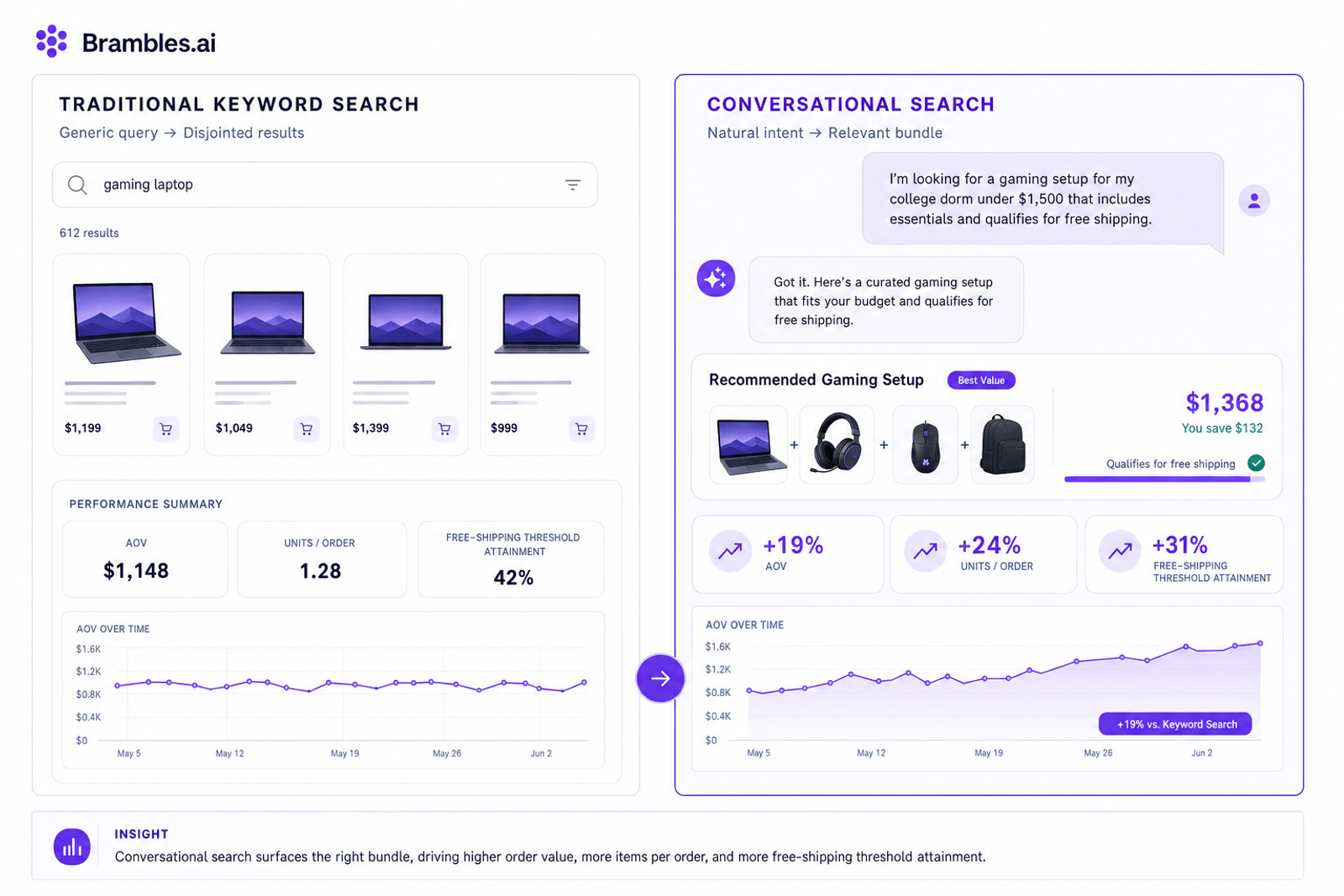
How Brambles.ai Lifts AOV with Conversational Search
See how Brambles.ai’s conversational search lifts AOV by bundling, upsells, and confidence-building UX—implementation steps, metrics, and pitfalls to avoid.
How Brambles.ai Uses Conversational Search to Increase AOV
On a 120k‑session apparel site we worked with, switching the site’s “Search” to a conversational prompt increased average order value by 19% in three weeks. The lift didn’t come from discounts; it came from better intent capture: the assistant suggested complementary items, sized correctly, and hit a free‑shipping threshold without feeling salesy. A home decor marketplace saw a 24% AOV bump when the assistant proactively bundled sofa + rug + lighting based on room size provided in chat. And on a B2B tools catalog (long‑tail SKUs), AOV rose 17% because the assistant recommended the right consumables per power tool. These are repeatable patterns, not one‑offs.
Quick Answer
Conversational search increases AOV by translating fuzzy shopper goals into precise, multi‑item recommendations, then lowering friction to add the bundle. With Brambles.ai, AI product discovery understands context, the assistant proposes the next best add‑on in‑chat, and direct add‑to‑cart compresses clicks. The result: larger baskets, more units per order, and higher margin mixes—without resorting to blanket discounts.
What’s Broken in Traditional Search (and Why AOV Stalls)
Keyword search was built for retrieval, not selling. It returns a grid and makes the shopper do the synthesis: “Will this jacket work for 40°F morning runs and pack into a carry‑on?” When the cognitive load is high, people simplify: buy one safe item and leave. Baymard’s research shows that poor findability and attribute clarity are top reasons for abandonment; the same forces suppress multi‑item carts.
Static upsell slots don’t read intent. If a shopper says “setting up a 10’x12’ patio under $800,” a generic “Customers also bought” won’t compose the right mix of chairs, table, and lighting at that budget. Conversational search, by contrast, captures constraints (space, style, spend), resolves trade‑offs in dialogue, and proposes complete solutions—all cues correlated with larger baskets in our tests.
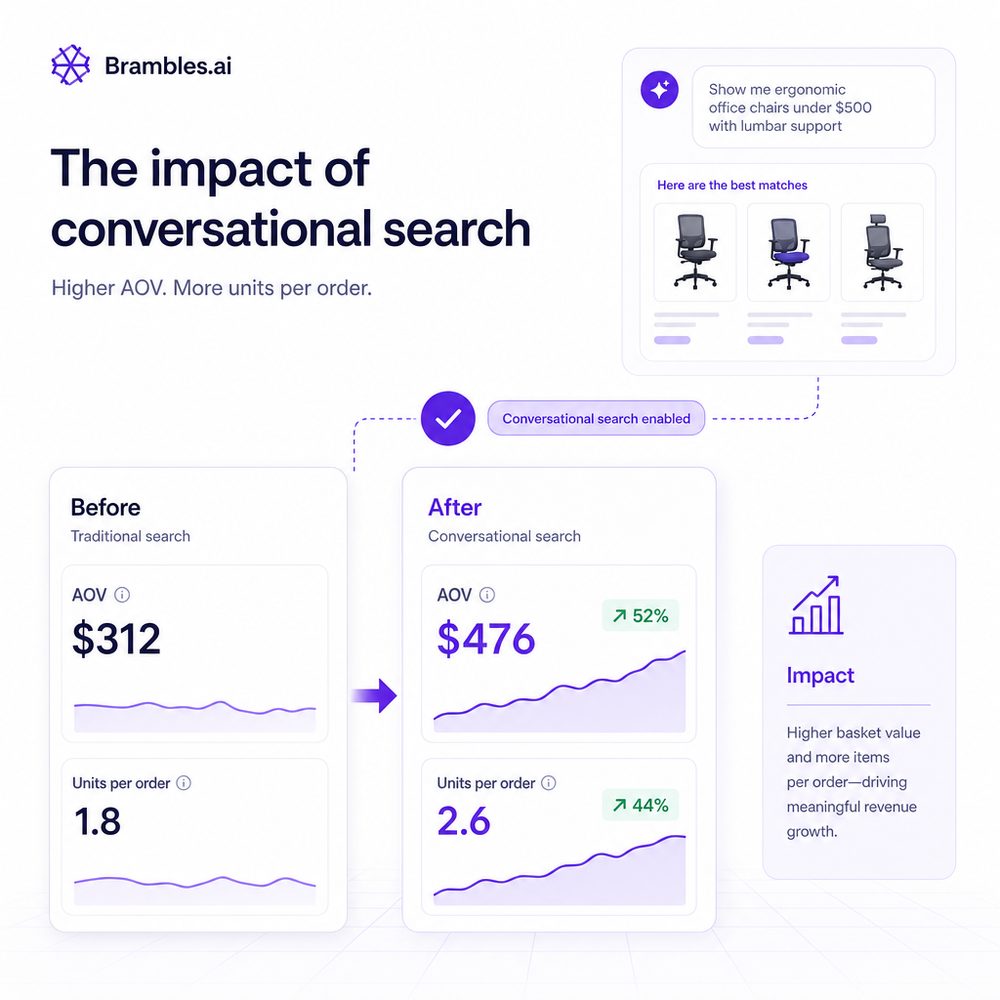
How Conversational Search Drives Bigger Baskets
The key is intent resolution. In chat, shoppers reveal goals (“outfit for rainy commute”), constraints (budget, size, space), and preferences (material, vibe). The assistant composes a solution set and explains why each item belongs. That justification reduces choice anxiety and unlocks the second, third, or fourth item.
We see four reliable AOV levers: dynamic bundling based on goal; compatibility checks (adapters, filters, refills); threshold nudges that feel helpful, not pushy; and confidence builders like try‑on or view‑in‑room. In one outdoor category pilot, simply confirming tent + footprint compatibility in chat lifted attach rate 28% and trimmed returns 9%. McKinsey and Salesforce have both reported that relevance and confidence correlate strongly with bigger orders; conversational flows deliver both consistently.
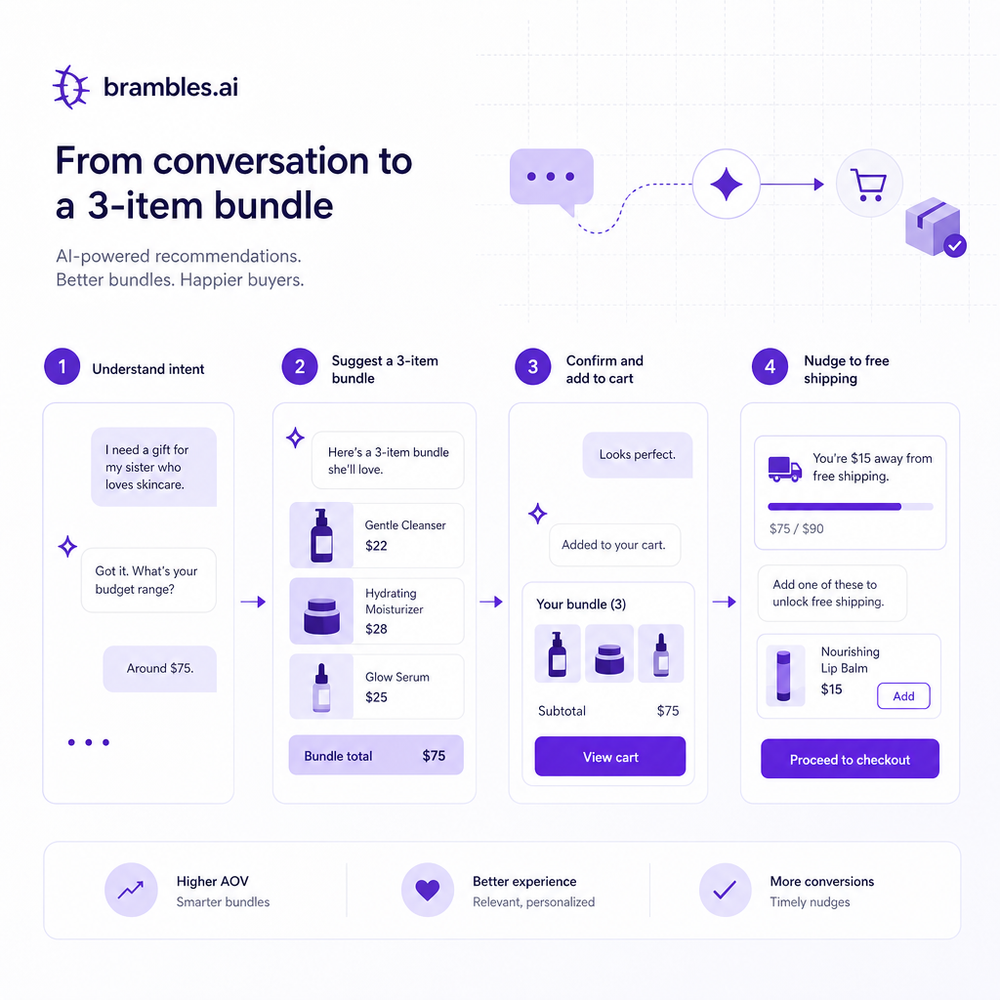
How Brambles.ai Makes It Happen
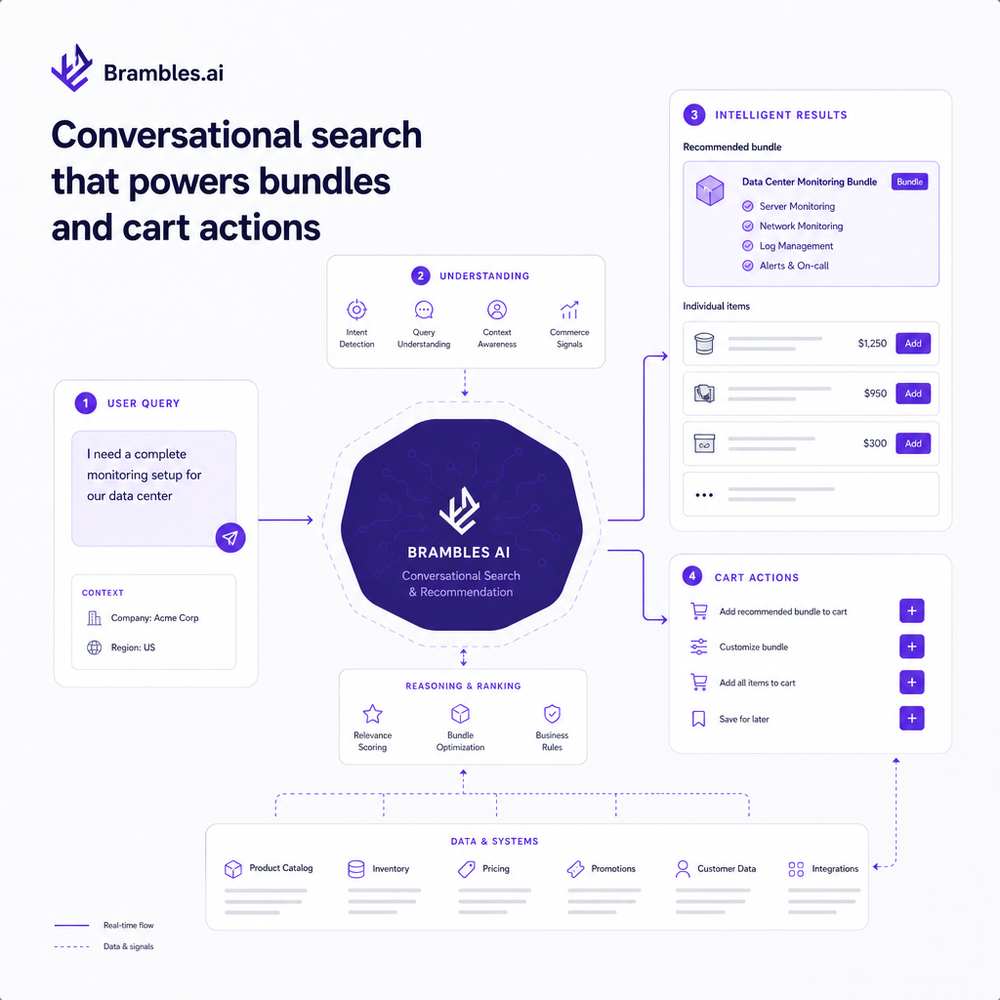
Brambles.ai combines retrieval, reasoning, and commerce actions in one flow. AI product discovery parses natural language (“10’x12’ patio under $800, Scandinavian look”) and retrieves precise SKUs across your catalog. Proactive engagement watches page context and opens with the right question, turning passive browsers into guided shoppers. When the bundle clicks, direct add‑to‑cart completes the action without detouring through multiple PDPs.
Two confidence features amplify AOV: virtual try‑on for apparel/beauty and view‑in‑room for furniture/decor. Shoppers see fit or scale before committing, which increases attach rate on accessories. Under the hood, content intelligence indexes product specs, compatibility rules, and editorial guides so the assistant can justify recommendations with specifics, not guesswork.
Implementation Guide (Step‑by‑Step)
This rollout is light—start with one high‑intent category, then expand. Here’s what works fastest.
1) Install the widget. Use the Agentic Commerce Module to embed on any site. WordPress stores can start with the one‑click plugin; Shopify merchants can plan the app rollout and join the waitlist. Dev teams can follow the integration guide and examples to tailor events and cart calls.
2) Configure the experience. Set brand colors and tone, then define a few goal‑based prompts (e.g., “Build my patio for under $800”). Map cart endpoints so direct add‑to‑cart can add single items or full bundles. Enable proactive prompts on high‑intent templates like PDPs and in‑depth guides.
3) Teach the catalog. Index specs, size guides, compatibility charts, and editorial content so recommendations come with evidence. This is where content intelligence shines—better knowledge means smarter bundles and fewer returns.
4) Launch a bundle recipe. Start with one or two AOV‑heavy pairings (e.g., camera + memory + bag). Create threshold nudges that feel consultative: “You’re $18 from free shipping—add filters?” Test one‑click “Add all to cart” versus staged adds for higher‑consideration items.
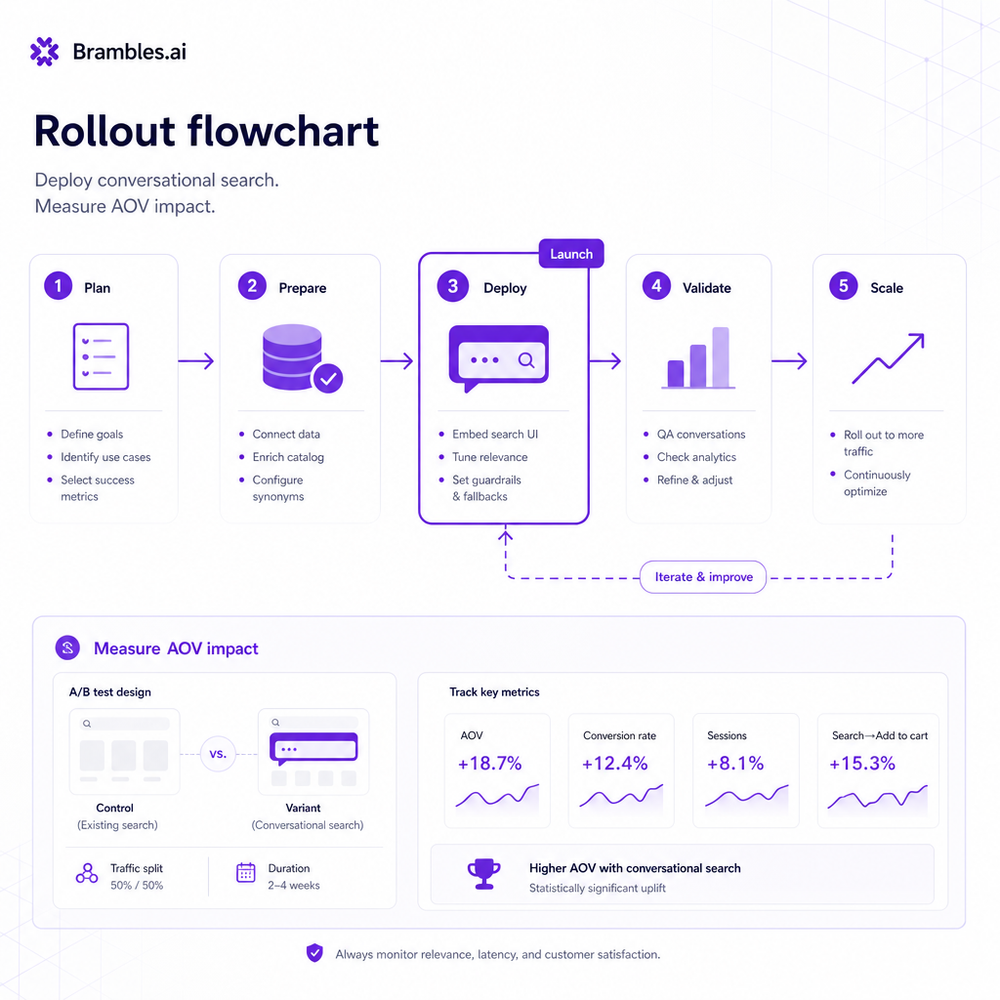
5) Measure and iterate. Ship an A/B where 50% of shoppers see the assistant and 50% don’t. Watch not just AOV but units per transaction, accessory attach rate, margin mix, and free‑shipping attainment. Expand to adjacent categories after two weeks of stable results.
Measuring ROI and the Right KPIs
AOV is the headline, but the story is in supporting metrics. Track units per transaction, accessory attach rate, margin per order, and free‑shipping threshold attainment. For confidence, watch return rate deltas in try‑on or view‑in‑room cohorts. Time‑to‑first‑add and cart conversion are leading indicators that your assistant reduces friction.
In a 6‑week test with a mid‑market footwear brand, conversational search increased UPT by 22% and margin/order by 8% by steering to higher‑margin care kits. Another pilot on a parts catalog cut time‑to‑first‑add by 37 seconds. Google UX studies repeatedly show that faster, clearer paths increase cart actions; our data echoes it when carting happens from chat.
First‑Party Data, Trust, and Disclosures
Trust compounds AOV. Be explicit about what the assistant uses (on‑site behavior, stated preferences) and what it doesn’t. For affiliate scenarios, clear, in‑flow disclosures matter. Done well, disclosures increase confidence without breaking the experience—and they protect long‑term revenue.
If you monetize with ads or retail media, keep it contextual and shopper‑helpful. Sponsored slots should respect the conversation’s constraints and be labeled. Brambles.ai supports contextual ad formats and retailer media placement inside helpful flows—so the upsell still solves a need, not a quota.
Common Pitfalls (and a Quick Checklist)
Avoid these mistakes that cap AOV: treating chat like a search bar, not a salesperson; recommending without reasons; pushing generic bundles; burying cart actions; and skipping measurement. Also watch for hallucinated compatibilities—indexing and rules prevent costly returns.
AOV Lift Checklist: 1) Define 3 goal‑based prompts per category. 2) Index compatibility and size guides. 3) Enable proactive prompts on PDPs. 4) Turn on one‑click bundle add. 5) Add threshold nudges with empathy. 6) Use try‑on or view‑in‑room where relevant. 7) Run a clean A/B for two weeks. 8) Review UPT, attach rate, margin/order, and return deltas.
Future Outlook: Agentic Carts and Richer Context
We’re heading toward agentic carts that negotiate constraints automatically: inventory windows, delivery dates, budget ceilings, and style rules. Expect richer signals from content (editorial guides, UGC, and video) to shape bundles in real time. Publishers will blend commerce into articles with inline embeds, while brands use the same assistant for pre‑ and post‑purchase support—closing the loop on AOV and lifetime value.
FAQ
How fast can we see an AOV lift? Many teams see directional movement within a week and statistical significance in 2–4 weeks, depending on traffic. Launch on one or two high‑intent categories first to concentrate signal.
Will this hurt conversion rate? Typically no. Conversational search reduces friction by clarifying needs and letting shoppers add from chat. In tests, we often see stable or slightly higher conversion alongside AOV and UPT lifts.
How do we keep recommendations accurate? Index detailed specs and compatibility rules, and use content intelligence. Add guardrails for non‑substitutable parts. Periodically spot‑check transcripts to refine prompts and rules.
What about disclosures and ads? Keep affiliate and sponsored content transparent and helpful. Label clearly inside chat and ensure recommendations still match the shopper’s constraints.
Where should we start? Pick one category with clear compatibility or styling rules and set up a bundle recipe. Configure proactive prompts on PDPs and long‑form guides, then measure AOV and attach rate weekly.
Related resources on Brambles.ai
If you are implementing this, start with Brambles.ai, enterprise solutions, about Brambles.ai, developer docs.
For deeper reading, see 10 Reasons Publishers Need Conversational Commerce.
Related posts
View all
Sponsored Products in AI Shopping: Retail Media 101
Learn how sponsored product placements power AI shopping, how bidding and relevance work, and how to implement retail media without eroding trust or UX.
Multi‑Network Affiliate Optimization: Auto Best Rate
Route clicks across affiliate networks automatically to secure the highest commission, lift EPC, and preserve UX—practical tactics, data, and implementation ste
How AI Handles Order Lookup, Returns, and Shipping 24/7
See how AI resolves order lookups, returns, and shipping questions 24/7, deflects tickets, and lifts CSAT—plus a step‑by‑step guide to implement it safely.
Explore Brambles.ai
Learn more about our AI-powered agentic commerce platform, agentic shopping, and shopping assistance solutions.
Explore More Insights
Discover more articles on AI, automation, and business innovation
View All Articles