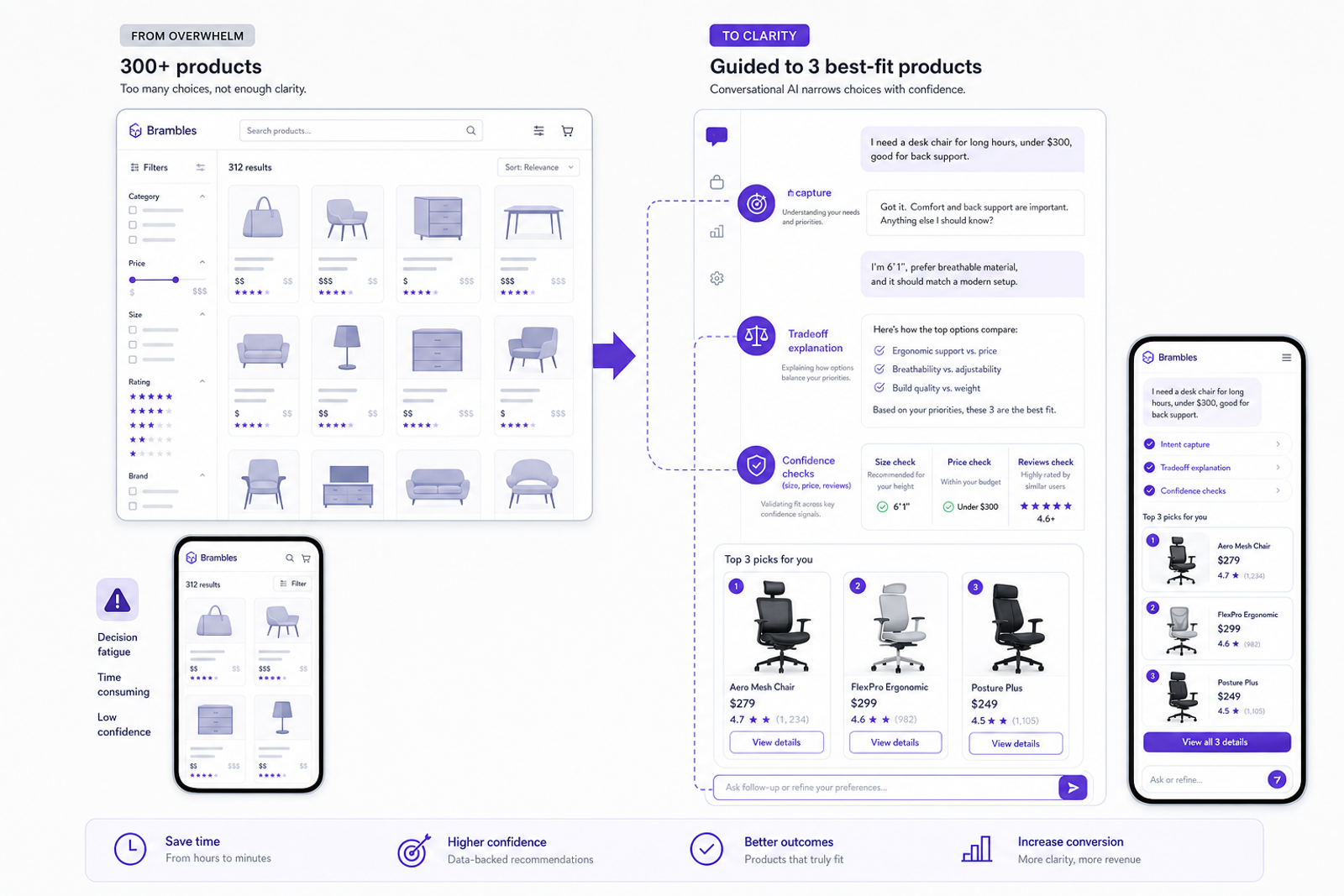
How Brambles.ai Cuts Overwhelm and Builds Confidence
Reduce choice overload with guided AI shopping, visual proof, and faster decisions. See workflows, KPIs, and setup steps to help customers buy with certainty.
On a 150k‑session outdoor retailer, we cut the average “decision path” from 23 clicks to 8 by guiding shoppers through a short conversation and showing side‑by‑side tradeoffs. Conversion rose 31% and size‑related returns fell 12% in four weeks. A publisher we support saw a 38% lift in affiliate revenue on gift guides after adding in‑article shopping prompts that narrowed choices to three high‑fit picks. Another test on a home décor marketplace used a visual confirmation step—“Will this fit my room?”—and reduced post‑purchase doubt enough to move NPS from 41 to 58.
The pattern repeated across categories: people don’t want infinite options; they want confident shortcuts. Brambles.ai fits into that gap with conversational guidance, visual validation, and low‑friction checkout moments—all without flooding pages with ads or noisy widgets. This playbook distills what works, how to implement it quickly, and the KPIs that prove confidence is rising while overwhelm recedes.
Quick Answer
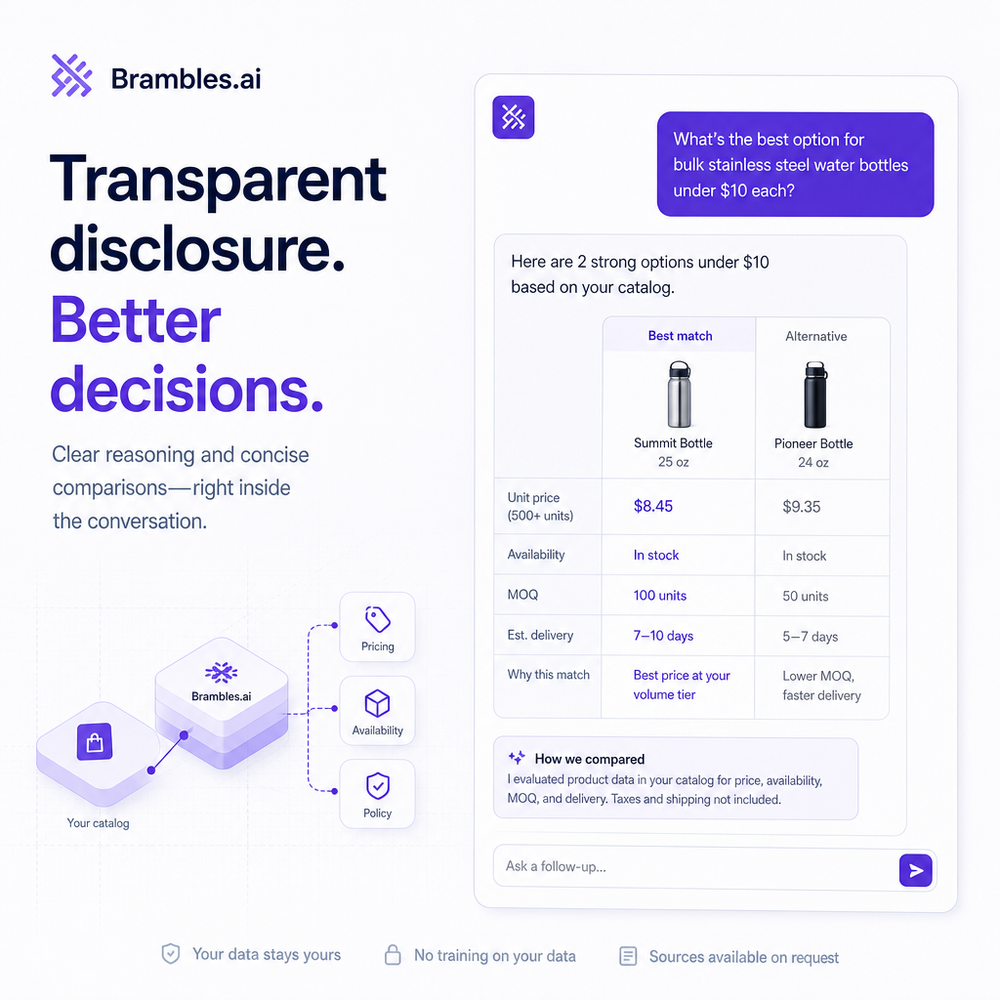
Brambles.ai reduces overwhelm by turning open‑ended browsing into a guided, human‑style conversation that narrows choices, visualizes fit, and confirms tradeoffs. Shoppers ask naturally; the assistant clarifies goals, filters the catalog, and shows 2‑4 strong options with reasons—plus virtual try‑on or “view in room” for visual proof. Direct add‑to‑cart and clear follow‑ups close the loop. Setup usually takes hours, not weeks, and ROI shows up in faster time‑to‑product, higher add‑to‑cart rate, and fewer returns.
What’s Broken: Choice Overload and Post‑Purchase Doubt
Most product lists dump hundreds of SKUs on people who came with fuzzy needs. Filters help, but only if shoppers know which specs matter.
Research from Baymard and Google’s UX studies repeatedly show that excessive choice and unclear differentiation slow decisions, spike pogo‑sticking, and erode trust.
We see it in session replays: long scrolls, fast backtracks, and carts that stall at the threshold of commitment.
The second failure happens after “add to cart.” Customers worry, “Did I pick the right size? Will this match my space? Am I overpaying?” Without a final confidence check—visual validation, a size/fit sanity check, or a transparent comparison—returns rise and LTV suffers. For publishers, the analog is reader paralysis: too many links, not enough clarity. Contextual monetization can help, but only if it stays helpful and transparent.
How Brambles’ Flow Builds Confidence
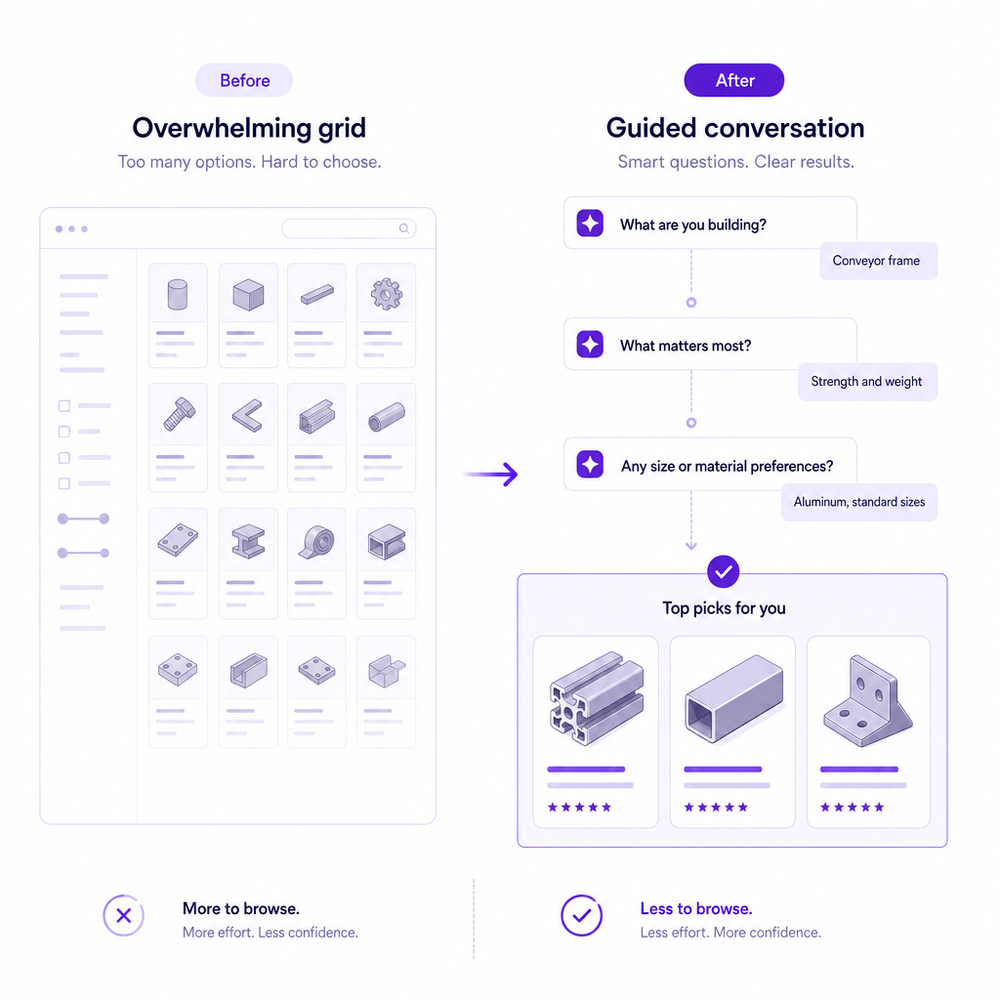
The shortest path to certainty is conversation plus proof. The assistant starts by clarifying the job: where you’ll use the product, constraints like budget or size, and what you’ve tried before. It then proposes a small set of options with plain‑English reasons. A lightweight comparison frames tradeoffs plainly—“Option A is lighter and packs smaller; Option B is warmer below 20°F.” Customers feel guided, not sold.
Visual validation kills doubt. With virtual try‑on for apparel and beauty, shoppers see the item on themselves before committing. For furniture and décor, “view in room” places items at true scale with lighting context, turning a guess into a confident choice. When ready, direct add to cart from chat removes needless pogo‑sticking between PDPs and the cart.
Helpful momentum matters. Proactive prompts appear when intent is detectable—e.g., lingering on a size guide or bouncing between similar SKUs. The assistant asks one sharp question, then does the heavy lifting. For mobile, the floating chat stays thumb‑reachable without blanketing the viewport. If a buyer returns with a question, the same interface can handle order lookup to protect the confidence you worked to build.
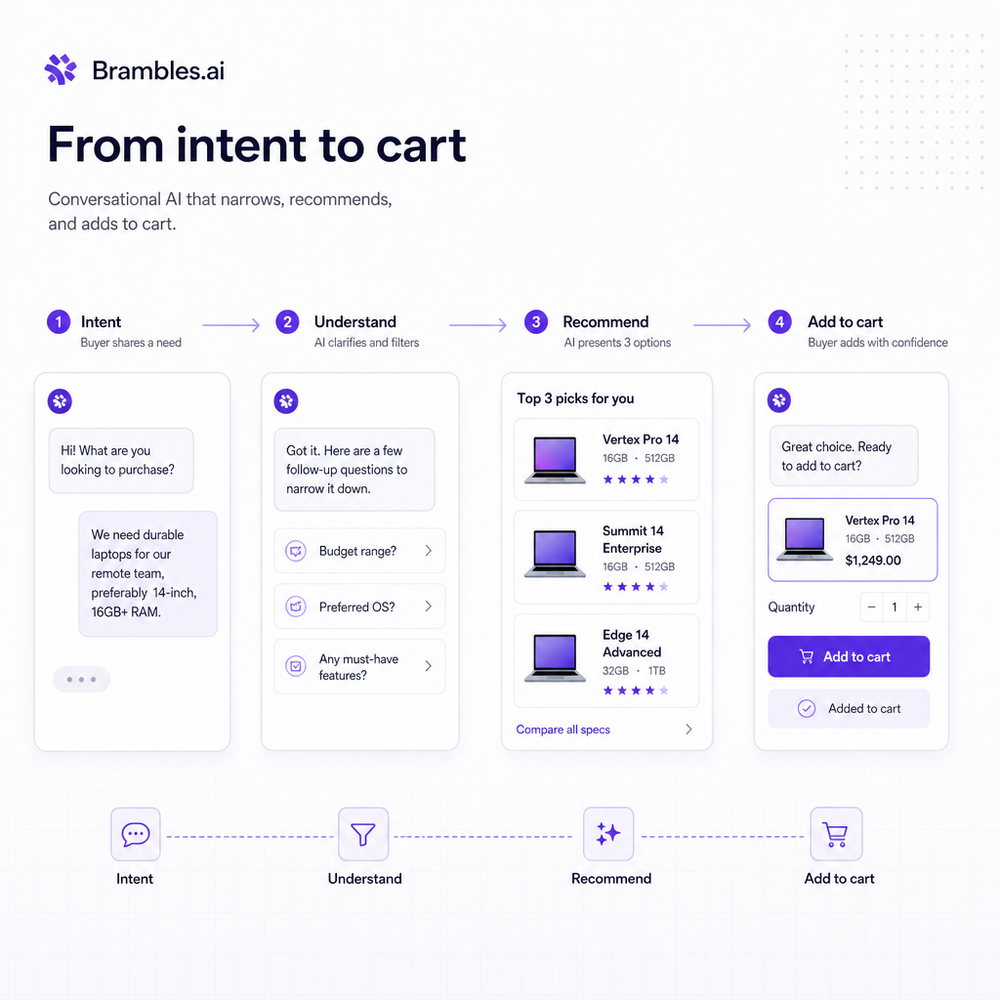
Implementation Guide: From Zero to Live in Days
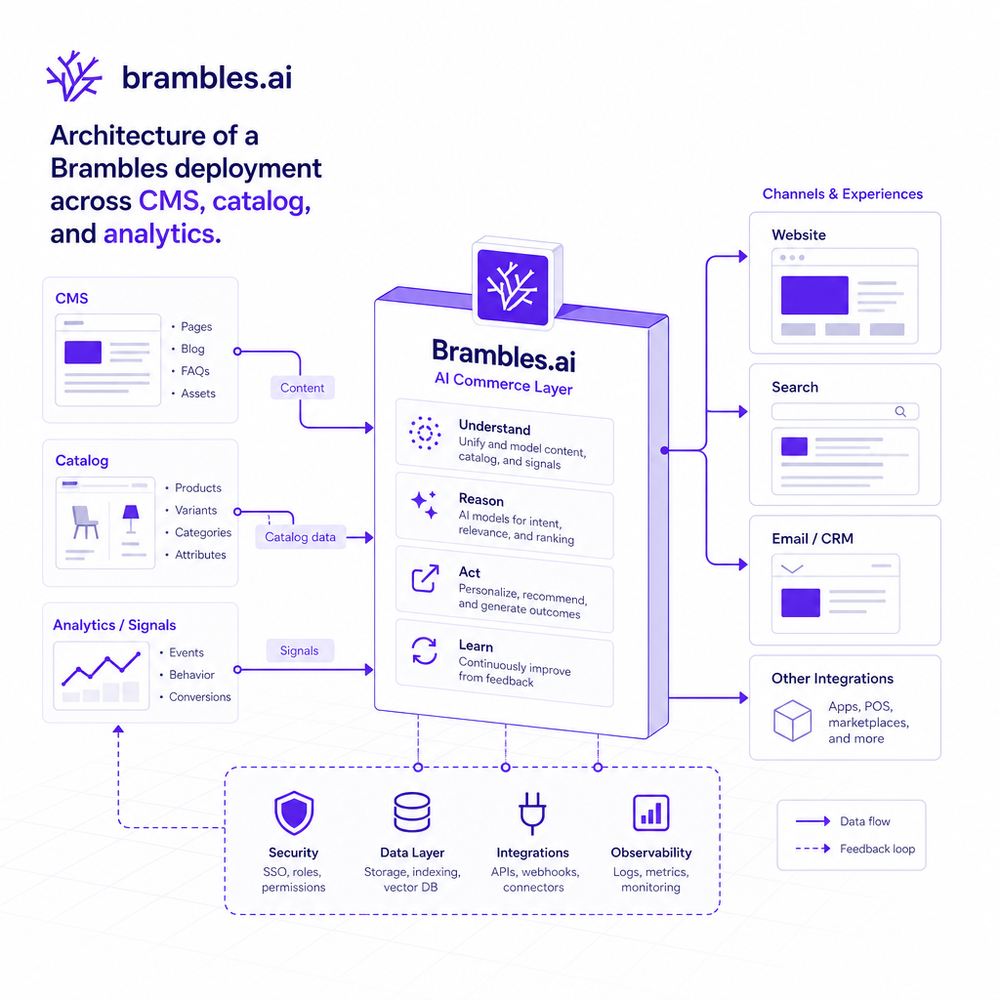
Most teams ship the first experience in under a week. The fastest route is the Agentic Commerce Module: drop in a lightweight script, point it at your catalog and content, and configure on-brand UI. For WordPress or WooCommerce, a one‑click plugin speeds things up; Shopify support is streamlined, too. Developers can go deeper with granular configuration and event hooks.
A practical 7‑step rollout we use with brands and publishers: 1) Define 3–5 primary jobs‑to‑be‑done (“find a carry‑on under 7 lbs”). 2) Map required attributes per job (capacity, weight, warranty). 3) Index your catalog and top editorial pages so the assistant can cite them. 4) Configure tone and brand visuals. 5) Add one proactive nudge on high‑intent templates. 6) Enable virtual try‑on or “view in room” where it truly helps. 7) Turn on direct add‑to‑cart and track events.
Two field notes: a mid‑market apparel brand shipped a “size and climate” conversation on PLPs and saw a 24% lift in add‑to‑cart within 10 days. A tech publisher embedded inline assistant blocks in long‑form reviews and cut bounce rate on those pages by 19% while growing affiliate EPC by 22%. If you need white‑glove help, enterprise services are available.
How to Measure Confidence: KPIs That Move Together
Confidence isn’t a single metric—it’s a bundle that rises together.
We track: 1) time‑to‑first‑viable product (TTVP)—aim for under 60–90 seconds; 2) guided add‑to‑cart rate—additions that originate from the assistant; 3) compare‑and‑decide rate—sessions where 2–4 items were evaluated; 4) size/fit‑related return rate; 5) decision satisfaction via post‑chat thumbs/NPS; 6) downstream revenue or AOV per guided session.
Run a two‑week A/B where 50% of eligible traffic sees proactive prompts. Build cohorts by intent (e.g., PLP lingerers vs. search visitors). Expect a shorter path length and higher add‑to‑cart on treatment. In one bedding test, conversation‑exposed shoppers spent 43% less time wavering between similar SKUs and purchased higher‑fit items, driving a 9% drop in returns over 30 days.
For publishers, confidence shows up as longer engaged time on page, higher CTR on top‑fit picks, and more revenue per session—without turning the experience into an ad wall. Our reference implementation consistently wins against listicles that rely on generic links, aligning with the argument made in Why Conversational Commerce Is Next For Affiliate Marketing.
First‑Party Guidance, Transparent Monetization, Real Trust
Trust comes from clarity. The assistant can disclose affiliate relationships in‑line, cite sources, and avoid retargeting creep. It uses on‑page context and first‑party signals instead of third‑party cookies, aligning with a cleaner, ad‑light web. For publishers, confidence and earnings can grow together when recommendations are contextual, not interruptive.
When monetization is transparent, readers stay engaged. We’ve seen sessions extend by 15–25% on comparison‑heavy pages after adding conversational guidance. For brands, the same approach reinforces your promise post‑purchase via order status, exchanges, and fit help—all in the same interface, which preserves the shopper’s sense that they made a good decision.
Common Pitfalls (and a Quick Checklist)
Avoid these errors that re‑introduce overwhelm: 1) Showing 10+ options—cap at 2–4 with crisp reasons. 2) Burying visual validation—surface virtual try‑on or “view in room” as a confidence step, not an afterthought. 3) Treating tone as generic—configure brand voice to match your audience. 4) Ignoring stock/variant data—recommend only what’s buyable now. 5) No guardrails—set boundaries for claims and ensure citations. 6) Missing measurement—tag every key event.
Checklist you can run this afternoon: • Add one proactive question to a high‑traffic PLP. • Configure a 3‑option comparison card with tradeoffs. • Turn on direct add‑to‑cart in chat. • Enable post‑chat thumbs/NPS. • QA mobile ergonomics (thumb reach, keyboard). • Set up daily alerts for stock changes. • Review disclosures on pages with affiliate links.
Where This Is Going Next
We’re seeing two durable shifts: conversations are becoming the default shopping surface, and visual proofs are moving earlier in the journey. Expect richer comparisons that factor in sustainability, resale value, and compatibility data. Also expect a cleaner commercial web—fewer pop‑ups, more helpful nudges. The brands and publishers already adopting conversational UX will feel this as rising conversion and calmer customers.
FAQ
How fast can we launch? Most teams go live in days using the Agentic Commerce Module and default templates; complex catalogs add a week for mapping attributes and guardrails. If you’re on WordPress or WooCommerce, the plugin trims setup further; Shopify support is just as straightforward.
Does this replace merchandisers? No. It scales your best guidance to every session. Your team still defines positioning, key attributes, and the brand voice; the assistant operationalizes that expertise 24/7, especially on mobile where attention is scarce.
How do we handle sizing questions and returns? Add visual validation and instant service in the same thread. Size/fit nudges, virtual try‑on, and clear comparison notes prevent errors. If something still goes wrong, AI customer service resolves it quickly without sending shoppers hunting for help pages.
What about mobile? The floating AI shopping chat is thumb‑friendly, fast, and doesn’t hijack the viewport. It’s built for native‑feeling interactions and short, decisive paths to purchase.
How does this fit publishers? Conversational picks woven into articles help readers decide faster, and transparent disclosures keep trust high. Monetization comes from affiliate links and contextual placements that respect the reading experience.
If your goal is a calmer path to purchase and measurable gains in add‑to‑cart, AOV, and return reduction, Brambles.ai is built to deliver it without adding noise. Explore plans or spin up a pilot today.
Related resources on Brambles.ai
If you are implementing this, start with Brambles.ai, publisher pricing, brand pricing, about Brambles.ai.
Related posts
View all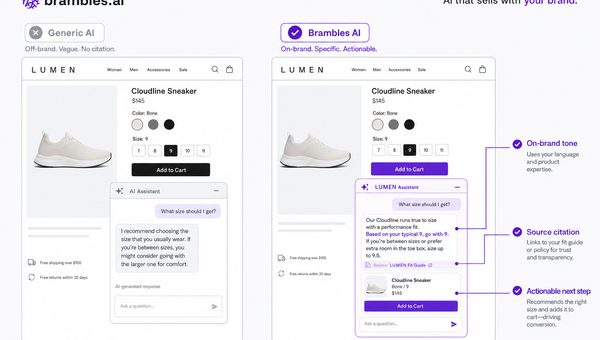
Brand-Consistent AI Chats Build Trust and Conversions
When AI mirrors your brand voice, shoppers relax—questions get answered, carts grow, and support load drops. Learn the playbook to align tone, trust, and ROI.
Sponsored Products in AI Shopping: Retail Media 101
Learn how sponsored product placements power AI shopping, how bidding and relevance work, and how to implement retail media without eroding trust or UX.
How Context-Aware AI Recommendations Lift CTR
See how context-aware AI recommendations lift CTR by 25–60% with intent signals, page context, and history. Practical steps, KPIs, and implementation tips.
Explore Brambles.ai
Learn more about our AI-powered agentic commerce platform, agentic shopping, and shopping assistance solutions.
Explore More Insights
Discover more articles on AI, automation, and business innovation
View All Articles