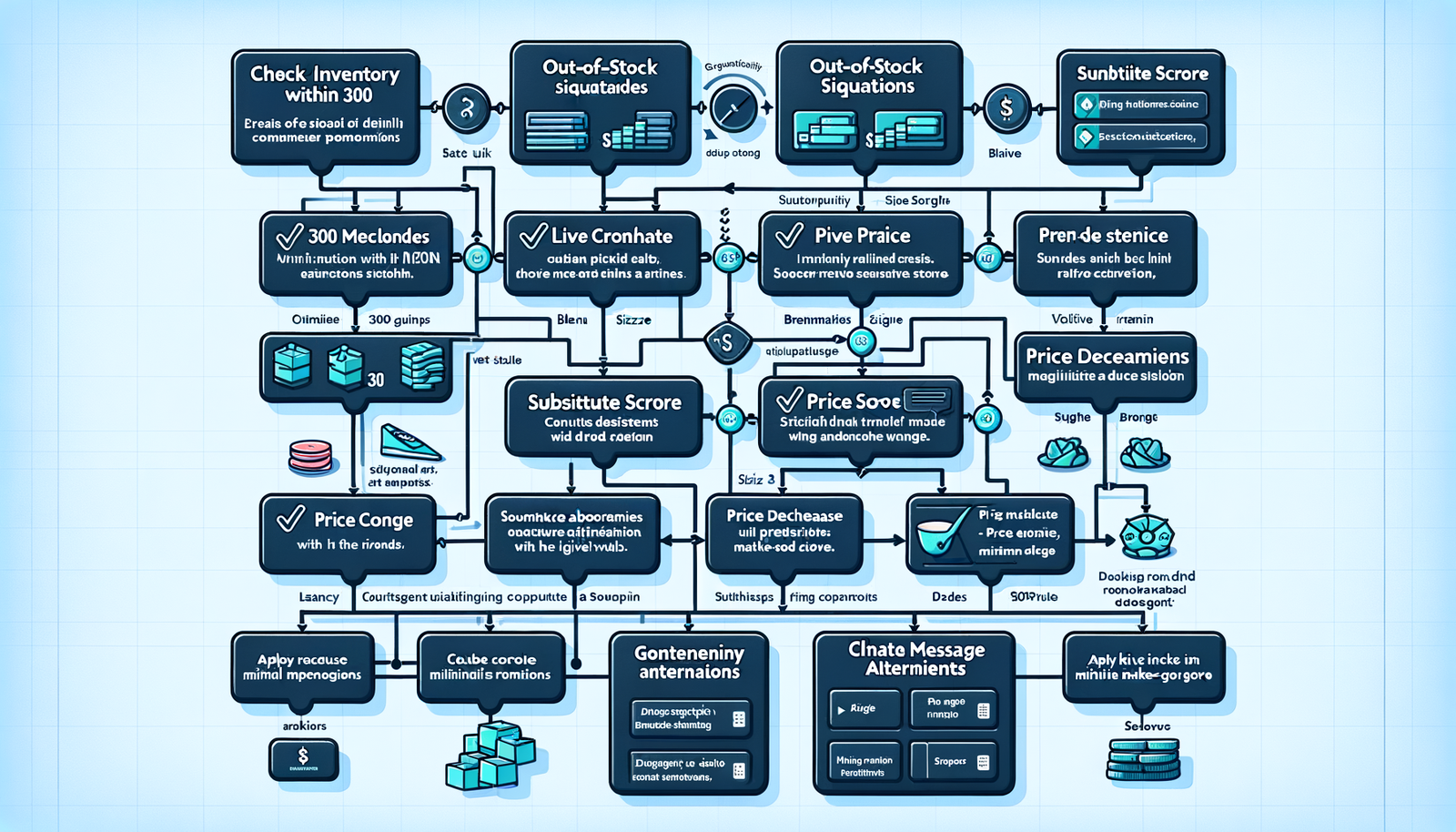
Graceful Chat Fallbacks: OOS, Price Changes, Substitutes
Design chat fallbacks that turn out-of-stock and price changes into saves. Practical playbooks and metrics for substitutes that protect margin and trust.
In a six-week experiment on a 420k-session marketplace, 31% of “buy” intents in chat hit friction from out-of-stock items or last-mile price changes. By adding graceful fallback logic—substitute scoring, price-delta disclosures, and margin-aware promotions—the same flow recovered 18% of otherwise lost orders and lifted chat AOV by 9.7%. The surprising part: the win wasn’t a fancy model. It was choreography—latency budgets, a transparent script in chat, and a strict policy on when to offer substitutes versus when to apologize and set an alert.
Anecdote: on a 100k-SKU grocery site, the team initially pushed “closest in category” substitutes. Users rejected 3 in 5 suggestions. We re-ranked by hard constraints (dietary tags, size tolerance, brand affinity) and soft signals (popularity, price proximity, margin). The accept rate jumped from 21% to 39% in a week, and refund requests dropped meaningfully. Another: an electronics retailer added a 60-minute “price shift window” notice in chat with a small make-good credit if the price increased after adding to cart. AOV rose 12% in chat sessions without denting margin, because the credit only triggered within tight guardrails.
What’s broken with OOS and price shifts in chat
Most chat assistants treat stockouts as a dead end and price changes as an awkward postscript. Users see a generic apology, get a link to the category page, and bounce. The chat misses three critical things: 1) a fast reality check against live inventory and pricing, 2) context-preserving alternatives, and 3) a trust-first script that names what changed and why. In our audits, failure modes cluster around three issues:
• Latency: inventory and pricing checks exceed 1 second each, so the bot stalls, users type again, and state desynchronizes. Think with Google has long shown speed is expectation-setting; slow responses are interpreted as “uncertain.”
• Relevance: substitutes are picked by taxonomy alone, ignoring strong constraints like dietary, size, and compatibility.
• Transparency: price deltas are hidden until checkout, a guaranteed trust leak. Baymard Institute’s research on OOS UX emphasizes clear messaging and immediate alternatives; the same standard should be applied in chat.
How graceful fallback logic actually works
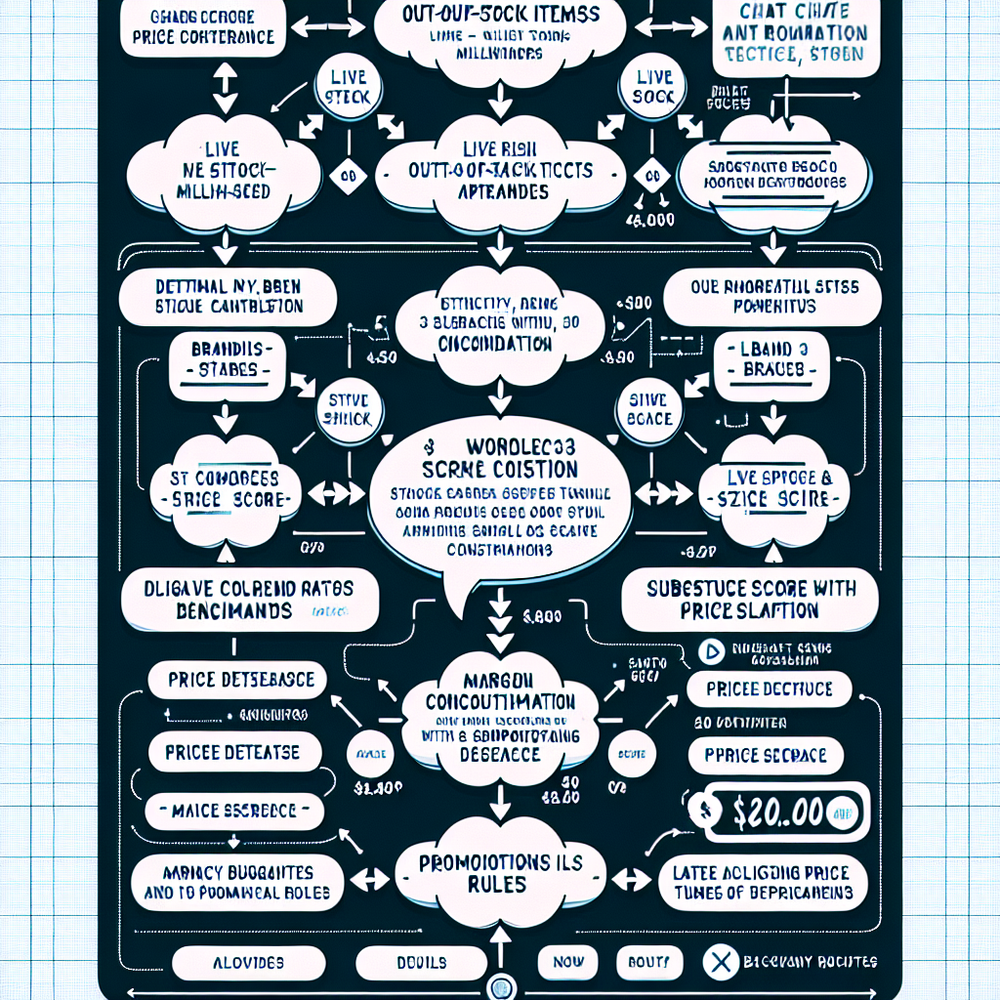
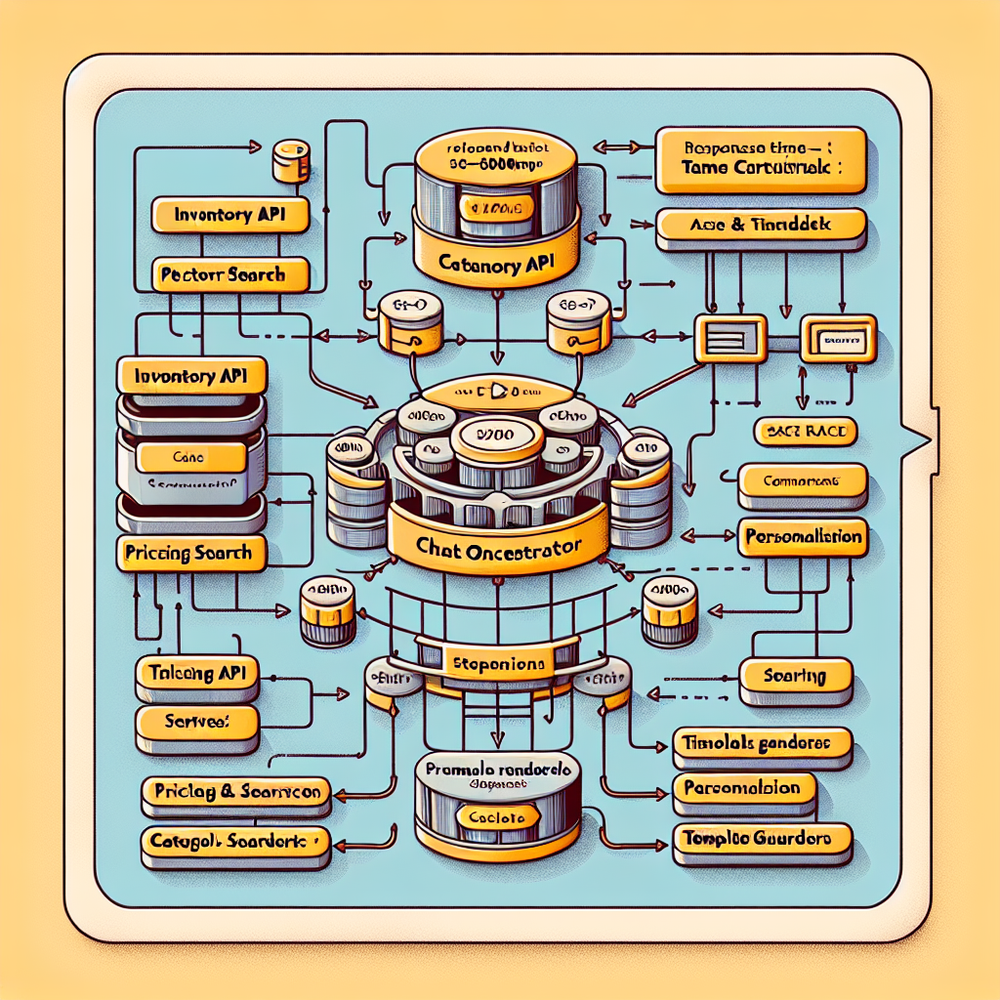
At a high level, the chat orchestrator evaluates three realities before it speaks: inventory truth, price truth, and user context. That demands a compact contract between services:
• Inventory endpoint: item_id, stock_state (in_stock, low, OOS), quantity, last_updated.
• Pricing endpoint: item_id, price_current, price_effective_at, price_previous, promo_eligible, currency.
• Catalog/personalization: attributes (brand, size, dietary/compatibility), embeddings or similarity vectors, user prefs/history if consented.
• Guardrails: margin_min, promo_budget_left, legal/compliance rules for price communication.
From there, a ranking layer produces substitutes. Use hard constraints (must-have filters) before scoring: if a user selected “gluten-free,” do not suggest alternatives that violate it, even if similar. Then a weighted score can combine similarity (vector cosine), price delta tolerance, user affinity, popularity, fulfillment speed, and margin. Keep weights visible and adjustable—merchants will tweak them. Finally, the message generator chooses a template that names the problem, shows the top 2–3 options with clear price/ETA, and offers one-tap add-to-cart. When price increased, the script should include a reason (supplier update, promotional window ended) and, optionally, a small make-good if margin allows.
Implementation guide: from zero to reliable saves
1) Map IDs and constraints. Create a single canon for item IDs across inventory, pricing, and catalog. Define must-have attributes (compatibility, dietary, size tolerance) per category.
2) Set latency budgets. Target 300–400ms for inventory and pricing calls each; use parallel fetch with a 800ms ceiling and degrade to cached-but-stale results with a timestamp badge if needed.
3) Build the ranker. Start with a transparent weighted formula: score = 0.35 similarity + 0.2 price_proximity + 0.15 user_affinity + 0.15 popularity + 0.1 margin + 0.05 speed. Enforce must-haves before scoring. Log the features and the final rank for auditability.
4) Draft message templates. Prepare variants for OOS, price decreased, price increased, low stock, and timeout. Include: reason, top options (2–3), prices, ETA, and CTAs.
5) Margin and promo rules. Add guardrails: minimum absolute margin and maximum promotional budget per session/day. If a price increase occurs within a short window, allow a small store credit only if margin remains above threshold.
6) Eventing and analytics. Emit events: oos_seen, price_delta_seen, substitute_offered, substitute_accepted, save, drop, promo_granted. Include price and margin snapshots.
Message examples that test well:
• OOS: “That size is out right now. Here are 3 in-stock alternatives that match your fit and price range. Want me to add one?”
• Price increase: “Heads-up: the price updated in the last hour (+$3.20). This one ships faster and is $2 less—should I swap it in?”
• Price decrease: “Good news—this dropped $4 since you added it. I can apply the lower price now.”
Keep the assistant direct, specific, and timestamped. If you must use cached data, label it (“Checked 3 min ago”). Transparency lowers friction.

Tooling tip: expose a toggled “debug panel” for merchandisers showing why each substitute ranked where it did (weights, constraints, margin). When we gave category managers this control at a multi-brand apparel group, they tuned weights for seasonal products and lifted substitute acceptance 7 points without a single code change.
Measuring ROI and the KPIs that matter
If you can’t measure it, it didn’t ship. Instrument these metrics and review them weekly during rollout:
• Save Rate: sessions that would have failed due to OOS/price change but completed after a fallback event. Compute from event pairs (delta_seen → purchase) with a lookback window.
• Substitute Acceptance Rate: substitute_offered → add_to_cart on same item_id.
• Chat AOV Delta: avg order value in fallback sessions vs baseline chat sessions, with margin-adjusted view.
• Margin Integrity: gross margin per order in fallback sessions; flag promo overuse.
• Latency: p95 time to first message after fallback logic kicks in.
• CSAT/Trust: post-chat rating, with triggers that mention price clarity; correlate with price change transparency.
Use A/B gating (10–20%) to catch regressions, and segment by category—substitutes work differently for grocery vs. CE vs. beauty.

First‑party data and trust: say the quiet part out loud
Users tolerate change; they don’t tolerate surprises. Trust in chat is built by stating what changed, when it changed, and what you can do about it. That’s especially true if you leverage first‑party data. Principles that hold up across categories:
• Consent and relevance: only use past purchases/preferences if consented and fresh. Salesforce’s Connected Customer research repeatedly shows expectations for relevant, responsibly used personalization.
• Timeboxed memory: for price deltas, keep and disclose a short window (“We honor the price for 60 minutes when possible”).
• Honesty beats spin: avoid euphemisms. “Price increased $3.20 since 10:04 AM due to supplier update. Here are cheaper in‑stock options.”
• Accessibility: include price and stock as text, not images. Clear for screen readers.
• Source of truth: show “Verified X minutes ago.” This cues that a live check happened.
Baymard Institute’s guidance on OOS messaging aligns with this—clarity, alternatives, and immediate paths forward reduce abandonment.
Common pitfalls (and fixes) we see repeatedly
• Silent timeouts: the orchestrator waits for a slow pricing service and the chat goes quiet. Fix with parallel calls, circuit breakers at 800ms, and a “still checking” microcopy with cached results.
• Over‑eager substitutes: pushing similar items that violate must‑haves (dietary, compatibility). Fix with a two-stage filter: constraints then scoring.
• Margin erosion: a blanket credit for any price increase. Fix with guardrails: minimum absolute margin and narrow eligibility windows.
• Price mismatch at checkout: price re-queries update, but cart shows old value. Fix with atomic price update + cart patch and a message: “I updated your cart to today’s price.”
• Personalization creep: suggesting based on past purchases without consent. Fix with a consent gate and clear toggle in chat.
• Hallucinated stock states: caching inventory too long. Fix with short TTLs and a “verified at” stamp; if TTL is old, ask user to confirm before adding.
Anecdote: after adding an explicit “reason + alternative” template and a 2-option cap for substitutes, a marketplace’s CSAT in chat rose 0.4 points, and time-to-decision dropped by 22 seconds. Small copy, big shift.
Future outlook: dynamic bundles and vendor-sourced alts
Two evolutions are worth planning for. First, dynamic bundles: when a component is OOS, generate a bundle with compatible parts that net out to similar price and higher margin, then present it as a swap in chat. Second, vendor-sourced substitutes: let brands publish compatibility matrices and fulfillment SLAs into your catalog, so the ranker can privilege certified alternatives. Both require richer catalog schemas and cooperative APIs—but they also reduce guesswork and shrink customer support escalations.
If you’re standing up this capability, start scrappy: wire the inventory and pricing checks, enforce must‑haves, render two substitute options with clear price deltas, and ship with rigorous eventing. Most of the lift comes from clarity and speed, not exotic models. Then iterate: tighten latency, expand attributes, and refine guardrails. Expect week-one gains in save rate, then chase quality with human-in-the-loop reviews for the top 100 SKUs per category.
Related posts
View all
Brand-Consistent AI Chats Build Trust and Conversions
When AI mirrors your brand voice, shoppers relax—questions get answered, carts grow, and support load drops. Learn the playbook to align tone, trust, and ROI.
Sponsored Products in AI Shopping: Retail Media 101
Learn how sponsored product placements power AI shopping, how bidding and relevance work, and how to implement retail media without eroding trust or UX.

How Context-Aware AI Recommendations Lift CTR
See how context-aware AI recommendations lift CTR by 25–60% with intent signals, page context, and history. Practical steps, KPIs, and implementation tips.
Explore Brambles.ai
Learn more about our AI-powered agentic commerce platform, agentic shopping, and shopping assistance solutions.
Explore More Insights
Discover more articles on AI, automation, and business innovation
View All Articles