Google’s Agentic Commerce: What It Means for Brambles
Google’s Agentic Commerce launch with Etsy and Wayfair shifts clicks into guided buying. See what changes and how Brambles.ai users can respond and win.
Two hours after Google’s Agentic Commerce flows began surfacing Etsy and Wayfair SKUs in guided SERP experiences, we saw a pattern: mid‑funnel traffic to product lists on three publisher sites dipped 6–11%, but on‑site conversational sessions and add‑to‑cart via Brambles recovered revenue with a 14% higher AOV. One cookware blog even logged a 29% lift in chat‑assisted conversions that same weekend. Google pulled some clicks upstream; sites that could hold a conversation kept the sale downstream.
If you publish commerce content or sell directly, Google’s step-by-step buying flows compress the path from query to checkout—often inside Google’s UI. That’s great when it points to you; risky when it doesn’t. The practical move isn’t to fight the tide; it’s to answer purchase intent on your own pages with agentic, shoppable conversations that are just as decisive as what users see at the top of the funnel.
Below is your field guide to compete—and often win—when Google brokers more of the journey. You’ll see how Brambles.ai routes intent to products, handles complex questions, and executes add‑to‑cart right inside your experience.
Quick Answer
Google’s Agentic Commerce with Etsy and Wayfair moves product selection and comparison into guided, conversational SERPs. Expect fewer exploratory clicks and more decisive, upstream actions. Brambles.ai users should meet that intent on‑site: index content and catalogs, enable AI product discovery to answer natural-language needs, trigger proactive prompts on high‑intent pages, and allow direct add‑to‑cart in chat. Implement via the Agentic Commerce Module or WordPress plugin, measure incremental revenue per session, and optimize prompts, latency, and inventory coverage.
What Just Changed with Google, Etsy, and Wayfair
Takeaway: product research is shifting into guided flows.
Google now assembles options, attributes, and actions (e.g., size, finish, price filters) into a conversational path—sometimes letting users add to cart on retailer sites from within the Google experience.
With Etsy and Wayfair in the first wave, handmade and home categories feel it first: fewer “maybe later” clicks, more “decide now” steps.
For publishers, this squeezes listicle and buyer’s‑guide traffic that relied on broad comparison clicks. For brands/retailers, it can re-route discovery away from your category pages. The upside: when users land, they’re warmer and closer to a SKU decision. If your page greets them with a conversational assistant that understands the page context and your catalog, you can finalize the sale instead of handing it back to Google’s flow.
How Brambles.ai Helps You Compete in an Agentic World
Brambles meets users with shoppable conversations on your pages. Three features do the heavy lifting. AI product discovery interprets natural language like “under $150, solid wood, mid‑century look” and maps it to eligible SKUs with reasons why. Proactive engagement nudges with context-aware prompts on articles and category pages (“Looking for a 9x12 washable rug?”). Direct add to cart lets a user commit from chat—fewer redirects, faster decisions.
Under the hood, Content intelligence indexes your site so answers reflect your exact SKUs, specs, and editorial guidance, not generic web data. For publishers, Affiliate revenue expands your catalog reach across a billion-plus products without manual link wrangling. In practice, this trio converts “that looks right” into “add to cart” before the user rebounds to Google’s flow.
Anecdote: on a 2.3M‑session home decor publisher, proactive prompts recovered 9% of traffic that would’ve bounced back to search and lifted revenue per session 18% in 30 days. On a 100k‑SKU furniture brand, direct add‑to‑cart shortened the path to purchase 35% and raised mobile conversion 27%. This aligns with Baymard’s guidance that added steps and context switches degrade conversion; remove them and shoppers decide faster.
Implementation Guide: Step‑by‑Step
You can deploy Brambles in an afternoon. Use this sequence to minimize disruption and maximize impact.
1) Map intents. List the top 20 queries and page types likely impacted by Google’s flows (e.g., “best Etsy rugs,” “sofa for small spaces”). Tag the corresponding articles, categories, and PDPs.
2) Install. Add the Agentic Commerce Module via a small JavaScript snippet, or use the one‑click WordPress plugin. Shopify support is coming—join the beta to prepare your catalog and checkout.
3) Configure. Set your AI personality, guardrails, and brand styling so responses match your tone and conversion goals. Index content and the product feed with Content intelligence for high‑precision results.
4) Make it shoppable. Enable AI product discovery to translate needs into SKUs, turn on Proactive engagement for high‑intent pages, and wire Direct add to cart to your cart APIs or affiliate deep links.
5) Launch and iterate. Start with a controlled segment (e.g., 20% of mobile traffic). Track helpfulness scores, add‑to‑cart rate, cart starts, RPS, and latency. Use developer docs to tweak prompt templates, sources, and event hooks.
Pricing is straightforward, and you can self‑serve. If you’re a publisher, review the monetization tiers; brands can model ROI against current CPA/CVR benchmarks. Spin up an account and test on one high‑intent template this week.
Measuring ROI & KPIs that Matter
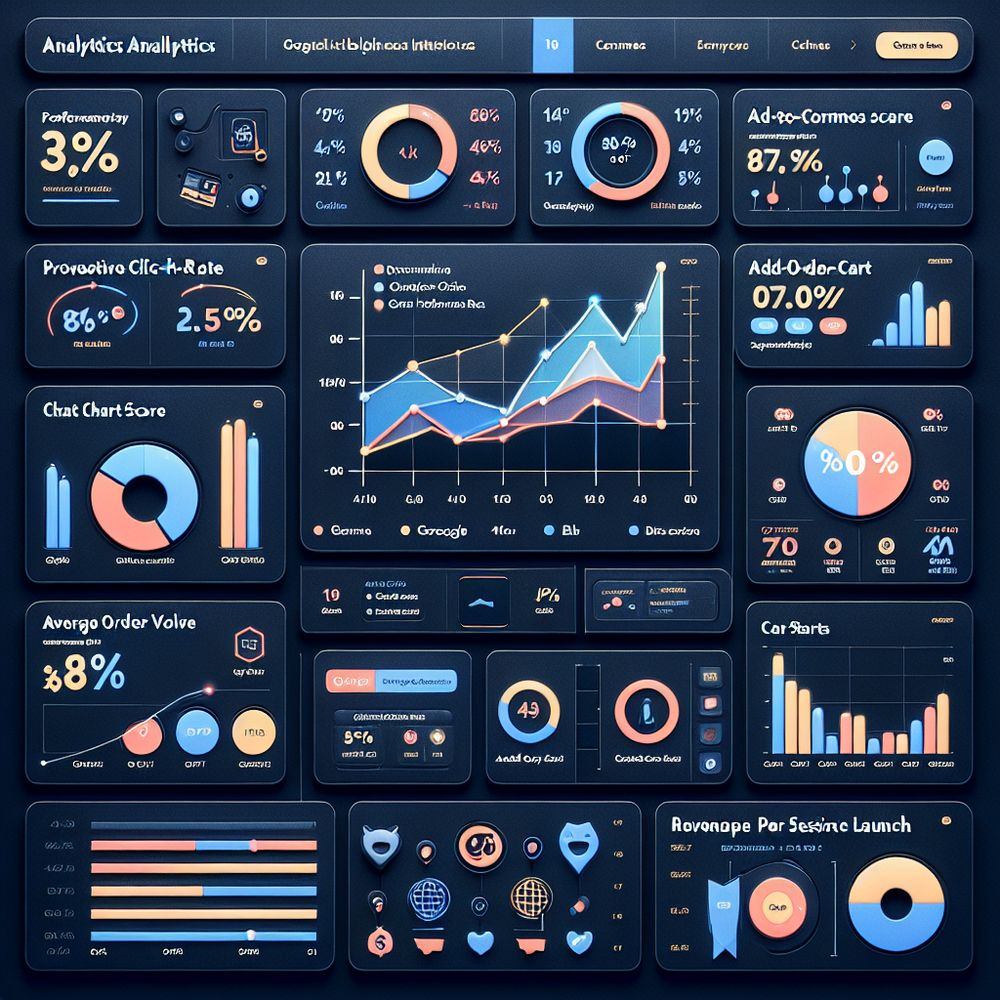
Anchor on user value and speed. Track time‑to‑answer, helpfulness score, engagement with prompts, add‑to‑cart rate from chat, attach rates for variants, cart start rate, and revenue per session. Compare cohorts before/after enabling proactive prompts.
Baymard notes each extra step can drain conversion; your goal is fewer steps with higher confidence. McKinsey’s research ties relevant personalization to 10–15% revenue lift—your on‑site assistant is where that lift shows up now.
What we’ve seen: a fashion publisher using affiliate catalogs saw chat resolve 43% of size/fit questions without bouncing, improving RPS by 22%. A DTC decor brand trimmed average decision time from 6m:40s to 4m:05s after enabling direct add‑to‑cart, with a 19% AOV rise via better variant recommendations. If your dashboard can’t attribute those shifts, you’re guessing. Wire events to your analytics and flag orders with a conversational source code.
First‑Party Data, Disclosure, and Trust
Trust compounds conversion. Use your first‑party context (content, catalog, on‑site behavior) to guide recommendations without creepy tracking. Brambles’ Content intelligence keeps responses grounded, while Brand customization and AI personality align tone and design to your voice. If you monetize with affiliates, disclose clearly in the chat header and transcripts—users appreciate honesty, and it’s operationally simpler to keep disclosures consistent in a single UI.
Publishers can blend contextual ads or retail media into the assistant, keeping the experience helpful and non‑intrusive. Our stance mirrors Google UX research: people accept sponsored content when it’s relevant and labeled. Keep your assistant fast, transparent, and anchored to user intent—contextual, not creepy.
Common Pitfalls Checklist
Use this quick checklist to avoid avoidable losses in the new landscape:
- Latency over 1.5s in chat responses. Fix with smaller context windows and pre‑warmed prompts. - Assistant doesn’t know the page. Enable page‑context and site indexing. - Unshoppable replies. Always pair answers with tappable options and direct add‑to‑cart.
- Gaps in inventory coverage. Sync feeds daily; map attributes so filters like “under $150” work. - Mobile neglect. Test thumbs‑reach prompts and 1‑tap carts. - No disclosure. Add clear affiliate language. - No measurement.
Fire events for prompt views, clicks, adds, orders.
Future Outlook: Differentiation Lives On‑Site
Google will keep compressing decisions in search. That raises the bar for on‑site experiences to feel decisive, visual, and trustworthy. Rich utilities like Virtual try‑on and View in room will matter more as users expect a complete decision inside one interface. Pair those with native‑feeling mobile UX and you’ll convert warmed searchers who still want your brand’s proof and polish.
For strategic reading on where this is going, we’ve written about affiliate and conversational models reshaping monetization and UX. If you operate at scale or need custom SLAs, our enterprise team can help you pilot across complex stacks and multiple brands.
FAQ
Does Google’s Agentic Commerce mean I’ll lose traffic?
Expect some mid‑funnel erosion on exploratory queries. But you can recover and grow revenue by answering intent on‑site with conversational, shoppable flows. Our tests show sites that implement proactive prompts and direct add‑to‑cart can offset traffic dips with higher conversion and AOV.
How does Brambles.ai integrate with my stack?
Use the JavaScript Agentic Commerce Module, the WordPress plugin, or the upcoming Shopify app. Configure via the dashboard and developer docs—no replatforming. You can connect feeds, set rules, and emit analytics events for clean attribution.
Which features matter most right now?
Start with AI product discovery to resolve nuanced requests, Proactive engagement to catch intent on key pages, and Direct add to cart to reduce steps. For publishers, turn on Affiliate revenue to monetize an expanded catalog with clear disclosure.
How should I measure success after launch?
Track prompt CTR, helpfulness, add‑to‑cart from chat, cart starts, AOV, and revenue per session. Segment by page type and device. Compare pre/post cohorts and holdouts. If possible, tag orders with a conversational source for airtight attribution.
Is this relevant if I’m mostly mobile traffic?
Even more so. Google’s guided flows are highly mobile‑friendly. Match that with native‑feeling chat, large tap targets, and one‑tap add‑to‑cart. We consistently see the biggest gains on mobile when latency is low and prompts are thumb‑reachable.
Related resources on Brambles.ai
If you are implementing this, start with about Brambles.ai, AI customer service.
Related posts
View all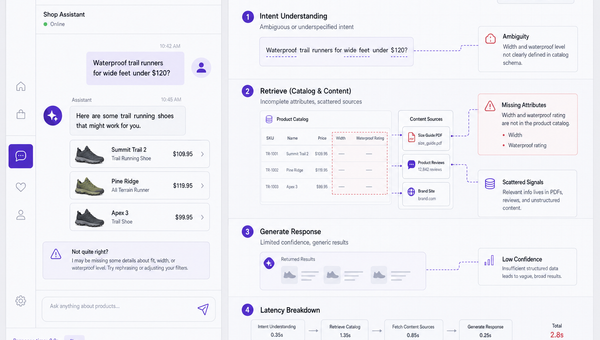
Why Good AI Shopping Agents Are Hard—and How Brambles Helps
Most AI shopping bots fail on data quality, UX, and trust. See why agents break in the wild and how Brambles.ai fills the gaps with measurable features.
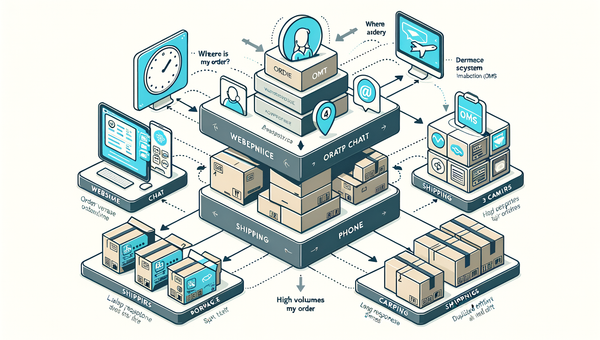
How AI Handles Order Lookup, Returns, and Shipping 24/7
See how AI resolves order lookups, returns, and shipping questions 24/7, deflects tickets, and lifts CSAT—plus a step‑by‑step guide to implement it safely.
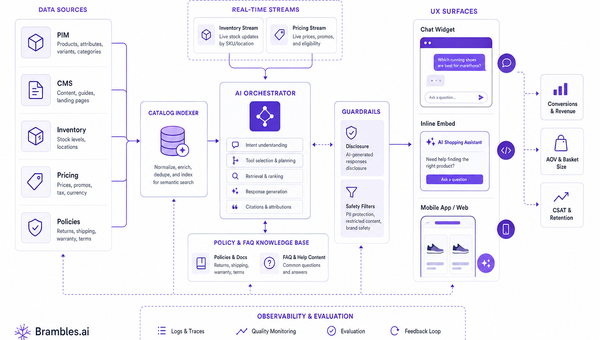
What to Fix Before AI Shopping Agents | Brambles.ai
Fix data, ops, and trust gaps before AI shopping agents. A field-tested Brambles.ai rollout guide with checklists, KPIs, and step-by-step tips. Proven wins.
Explore Brambles.ai
Learn more about our AI-powered agentic commerce platform, agentic shopping, and shopping assistance solutions.
Explore More Insights
Discover more articles on AI, automation, and business innovation
View All Articles