Future of Affiliate: Conversational Commerce & AI Search
Affiliate revenue is shifting to chat-first journeys. Learn how conversational commerce and AI search reshape attribution, UX, and ROI with steps and tools.
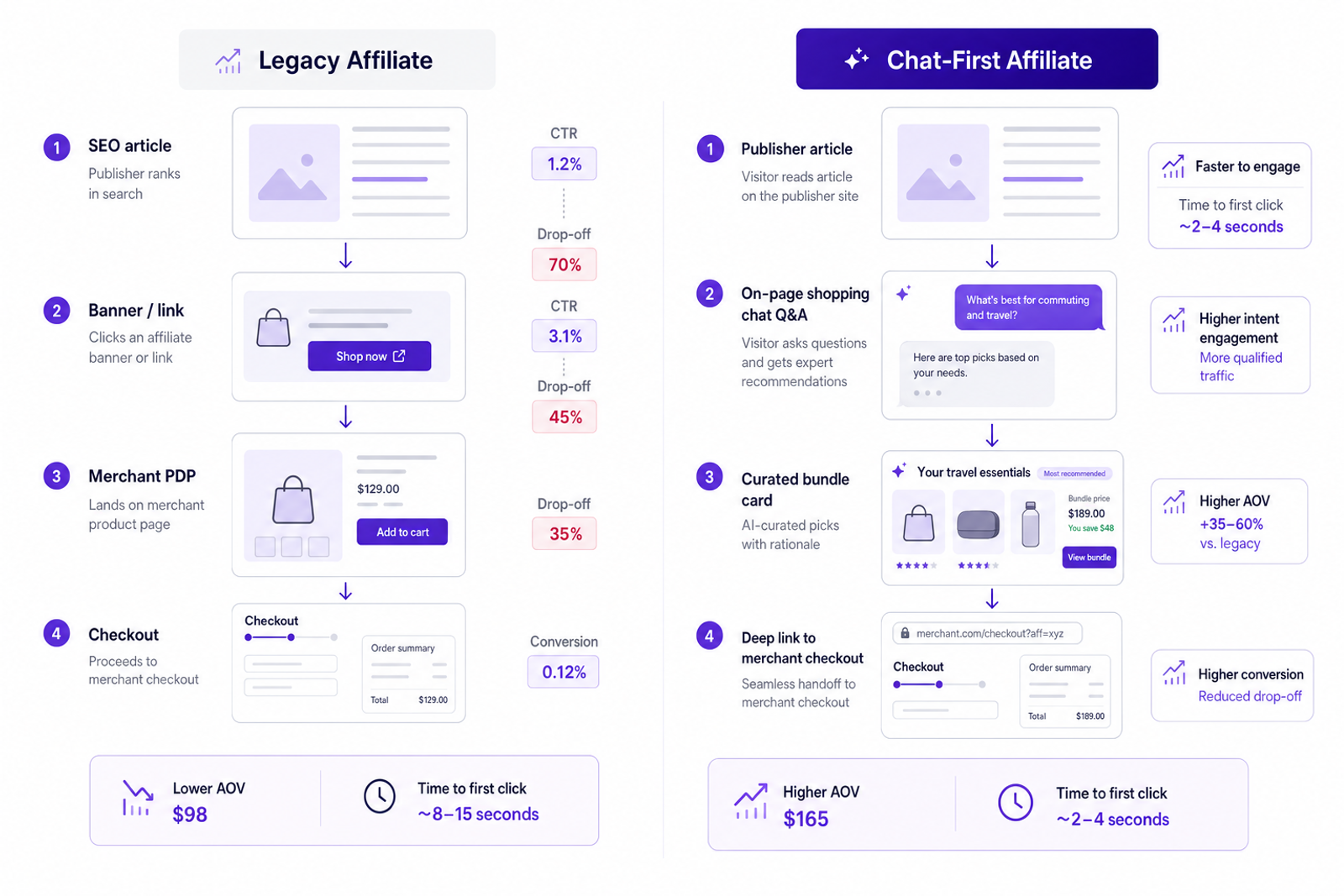
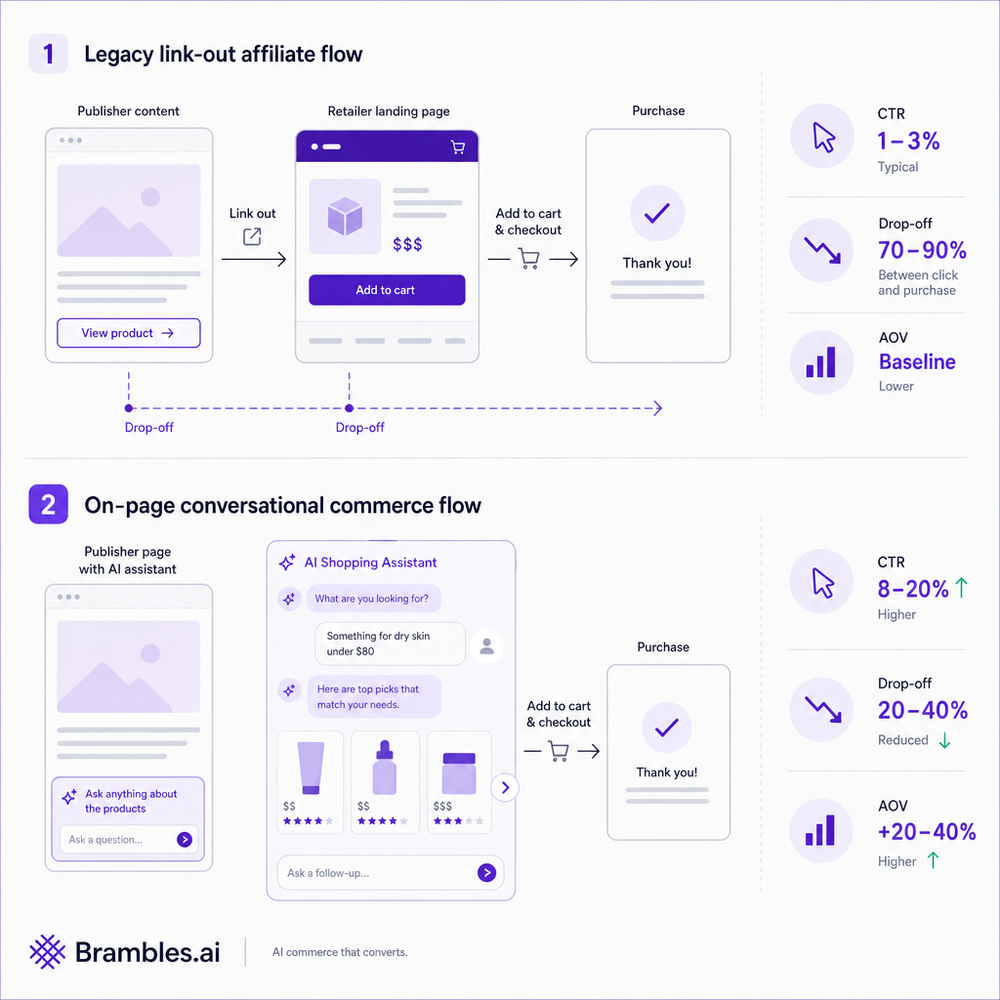
By August, three of the publishers we advise saw 23–28% of assisted affiliate sales originate from chat-first journeys on their pages. The surprising part wasn’t the volume—it was the quality. When a visitor asked, “What’s the best lightweight carry-on under $200?” the assistant built a 2-item bundle and deep-linked to two merchants; average order value (AOV) jumped 19% against a link-only control. On a 100k-session apparel site, chat-guided size/fit Q&A increased add-to-cart by 42% and cut time-to-first-click by 36%. That’s not a gimmick; it’s a new funnel. And AI search is the accelerant: as answer engines reduce traditional SERP clicks, affiliate content gets surfaced as a citation or a product card inside the conversation. If you can’t be chosen—or credited—inside the chat, you’re invisible. The next phase of affiliate is conversational commerce stitched to trustworthy, privacy-safe attribution. Below is how the stack works, how to implement it without breaking your editorial experience, and how to measure whether the chat is lifting new revenue or cannibalizing what you already had.
What’s Broken in Affiliate Right Now
Last-click still dominates payouts while the journey itself is fragmenting. Shoppers don’t move neatly from SERP to listicle to merchant PDP anymore; they bounce between AI answers, short video, and on-page chat. Cookie deprecation and ITP have already dented traditional tracking, and server-to-server postbacks remain underutilized by publishers. Meanwhile, AI summaries strip links from context, and some answer engines collapse many pages into a single conversational citation—useful for the user, brutal for attribution. UX contributes to the leakage: Baymard’s research consistently finds that product uncertainty (fit, compatibility, returns) is a top reason for abandonment, especially on mobile (Baymard Institute, 2024). Affiliates often send users into that uncertainty without preemptive Q&A. We also see duplication: two links to the same SKU via different networks cause credit fights and confused UTMs. The result is effort without incremental revenue clarity. If you can’t resolve shopper intent in-stream and pass deterministic identifiers to merchants, you’re flying blind.
How Conversational Commerce + AI Search Actually Works
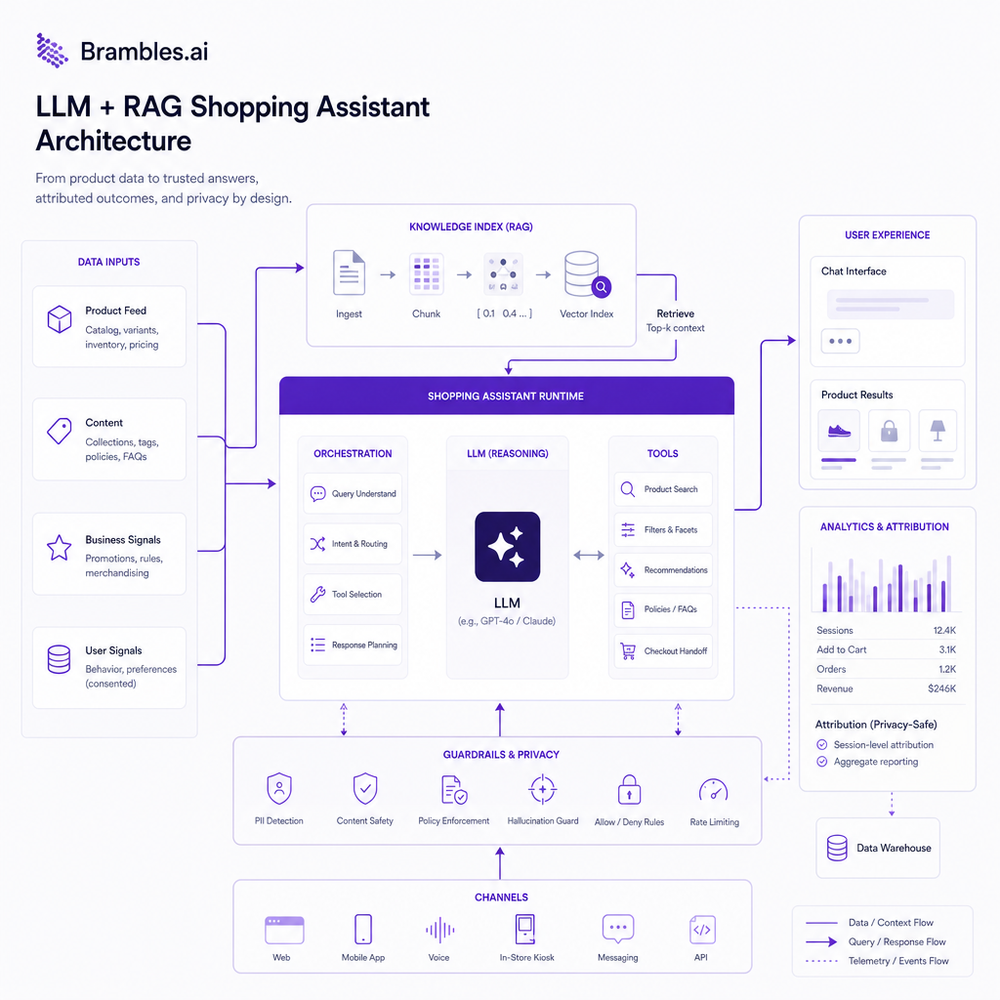
The modern flow pairs an LLM-powered shopping assistant with indexed, trustworthy data. Start with a product catalog (merchant or aggregator) that includes price, stock, variant, shipping, and returns. Ingest it into a vector index and keep a relational source of truth for current inventory. Wrap the assistant with guardrails so answers are extractive, not imaginative: every recommendation must cite SKUs and merchants. When a reader asks, “Quiet air purifier under $150 for a studio,” the assistant retrieves candidates, justifies them with specs (CADR, filter type), and offers deep links tagged by program and network. For attribution, use linkless options where possible: signed server-to-server postbacks from merchant to publisher, or transactional webhooks carrying a hashed session key synced during chat. If you rely on links, use canonical deep-link templates and override parameters to prevent network duplication. To play nicely with AI search, embed structured citations in your content (schema.org/Product, pros/cons, prices) so answer engines can surface clean snippets and keep your brand visible even when the click never happens (Google UX Research; schema best practices).
Implementation Guide (Publisher + Merchant)
You can phase this in without boiling the ocean. Here’s a pragmatic roadmap we’ve used across lifestyle, tech, and home categories:
- Data hygiene: Normalize product feeds to include title, price, variant, stock, shipping/returns, GTIN, and canonical URL. Validate with schema.org/Product in your article templates.
- Retrieval setup: Build a vector index from product copy, specs, and editorial notes. Keep an authoritative real-time store (SQL/NoSQL) for price/stock to avoid hallucinating availability.
- Intents and templates: Define allowed intents (compare, budget finders, compatibility checks) and deterministic response templates that always show SKU, merchant, and why it fits.
- Links and linkless: Prefer server-to-server postbacks where merchants allow them. Otherwise, generate canonical deep links with consistent subid/utm patterns.
- Placement: Launch chat just below the first screenful of content; avoid obscuring editorial. Pre-seed the assistant with the article’s context.
- Governance: Log every cited field and source. If the model can’t verify a spec, it must say so and provide an alternative link to the merchant PDP.
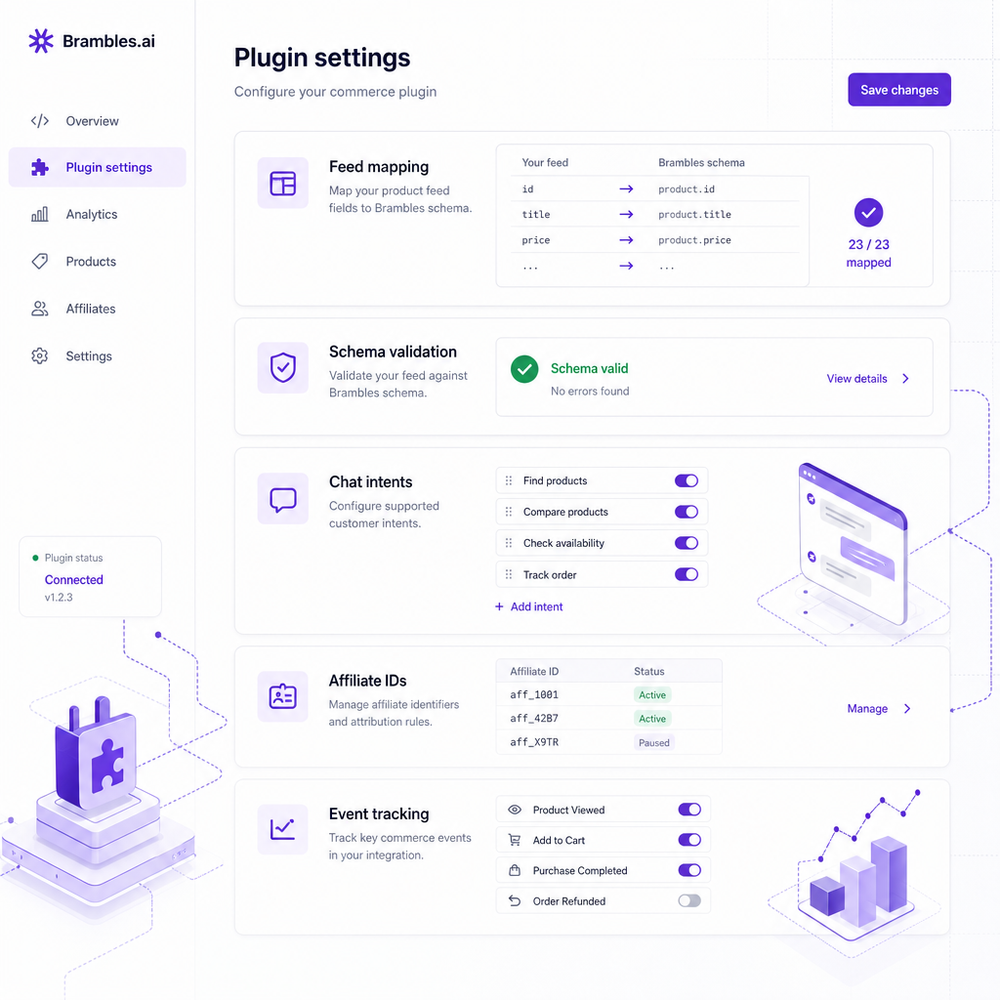
- WordPress: Use a plugin for feed mapping, intent controls, and analytics events; map affiliate IDs per merchant and network.
- Merchant enablement: Expose a secure webhook or S2S endpoint that accepts order ID, SKU list, value, and the session hash for attribution.
In an early-stage test with a mid-market electronics publisher, this framework lifted assist rate to 31% and delivered a 12% net-new revenue lift after cannibalization controls.
Measuring ROI, Not Hype
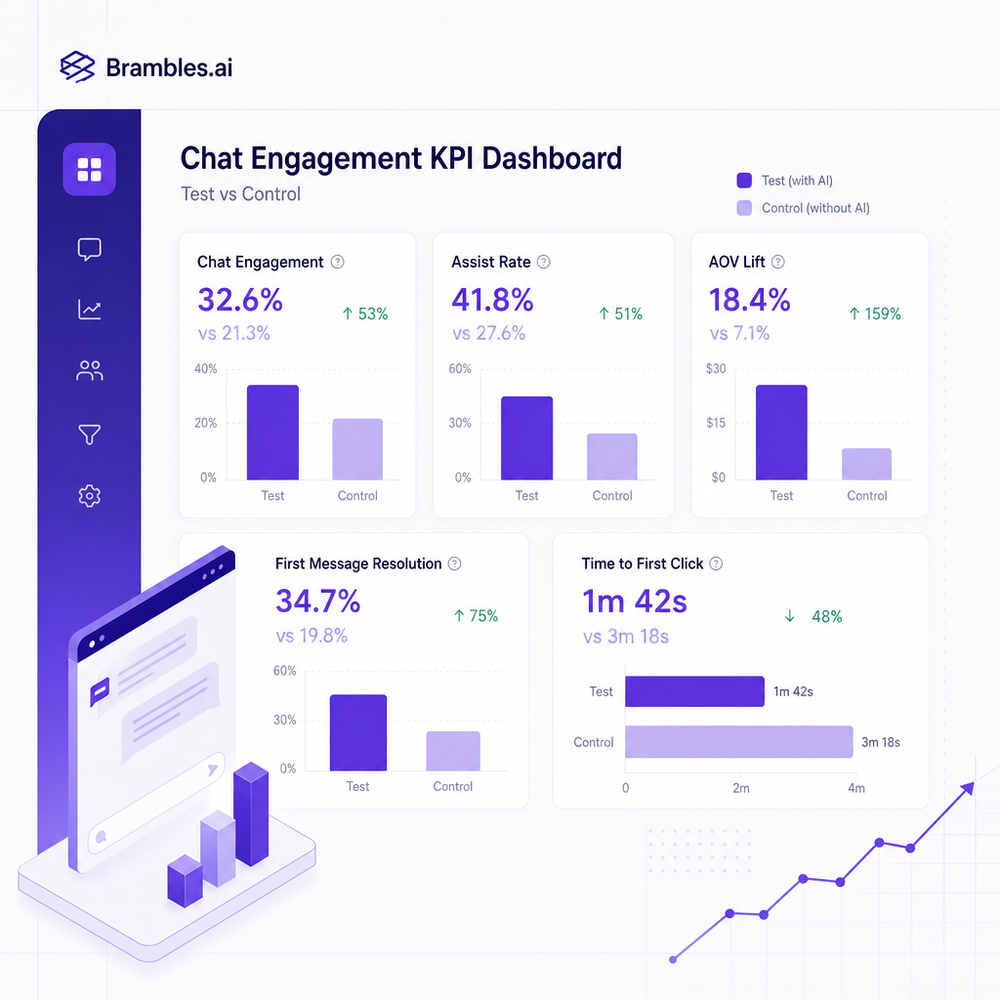
Decide up front what counts as incremental. We use a holdout design: 10–20% of sessions get a minimal inline box (“See recommended picks”) while the rest get full chat. KPIs to track:
- Chat engagement rate: sessions that open chat / eligible sessions. Benchmarks: 12–25% for commerce-heavy articles.
- Assist rate: orders with any chat event in their path. Watch for meaningful lift, not just touch.
- AOV lift: average order value delta for chat-assisted vs. non-assisted orders, controlled by category.
- Time-to-first-click: proxy for decision friction; faster is typically better on mobile.
- First Message Resolution: % of chats that click a product within two messages.
- True incremental revenue: (test group revenue − control revenue) − media cost.
Instrument an event taxonomy: chat_started, query_submitted, recommended_sku, deep_link_click, order_confirmed. Align to channel reporting so finance can reconcile payouts. In one home improvement rollout, a comparison intent (“Which drill for maple hardwood?”) raised First Message Resolution to 63% and grew attach rate on drill bits by 21%. Cite sources when you reference macro trends: McKinsey notes that personalized, real-time experiences can drive 10–15% revenue lift in retail; Salesforce’s Connected Customer report shows 73% expect vendors to understand their needs—chat should prove it, not claim it (McKinsey, Salesforce).
First-Party Data, Trust, and Compliance
Conversational commerce is a trust contract. Ask for the minimum viable info at the right moment. Zero-party inputs—budget, room size, shoe size—beat aggressive email gates. Make consent explicit and layered: analytics only, personalization, and offers as separate toggles. Keep PII out of your chat logs by default; persist only intent and product interactions. Publishers who do this well earn more than a click—they earn a reason for the reader to return. Practical setup: store a hashed session identifier, intent transcripts, and the list of recommended SKUs. For privacy-safe attribution, merchants should pass order metadata via server-to-server in near real time (SKU, value, coupon, session hash). Bonus: you get SKU-level commissioning without pixel fragility. Google UX Research highlights that trust signals—clear pricing, availability, returns, and who’s recommending—lower perceived purchase risk; Baymard’s guidelines echo the need to surface returns and warranty policies pre-click. Disclose affiliate relationships plainly; align with FTC guidance with on-page labels near the chat and the recommendations, not buried in the footer.
Common Pitfalls (And How to Avoid Them)
- Hallucinated specs: If your assistant can’t verify a field, it must say so and link to a PDP. Use deterministic templates that only surface indexed facts.
- Stale inventory: Schedule frequent price/stock refresh jobs; drop SKUs from recommendations if data is older than a threshold.
- Double-tagged links: Maintain a canonical deep-link map; prevent network collisions by enforcing one source of parameter truth.
- Cannibalization: Use holdouts, compare gross margin impact, and monitor coupon leakage.
- Pushy UX: Don’t let the chat modal hijack the page. Place it beneath the intro and keep content scannable.
- Lack of editorial voice: Tie recommendations to your testing or review protocols. “Why we picked it” builds credibility and improves conversions.
A publisher in the outdoor niche learned the hard way: a “best backpacking stove” chat launched without a compatibility intent. Return rate spiked 11% due to wrong fuel type. Adding the intent and a simple safety check cut returns below baseline within two weeks.
Future Outlook: From Links to Conversations to Carts
AI search will compress clicks into decisions. Expect answer engines, from Google’s AI Overviews to independent chat search apps, to blend content, prices, and availability into a single conversational moment. Affiliates will win by being the decision system—not merely the destination. Three shifts to anticipate: (1) Linkless attribution will spread as merchants standardize S2S or receipt-level webhooks, enabling SKU-level commissions and post-purchase upsell credit. (2) Agentic shopping flows will trigger tasks—price alerts, restock pings, fit calculators—without making the user hunt for widgets. (3) Checkout will move closer to the content: cart APIs and embedded checkout will streamline the last mile, subject to compliance. Editorial teams that invest in structured data, verified specs, and transparent policies will be the ones cited inside AI answers. We’re already seeing publishers negotiate higher commission tiers for chat-assisted conversions with clear incrementality proofs. If you’re starting now, pick one high-intent category, wire up structured recommendations, and prove the lift before scaling network-wide.
Related posts
View all
Sponsored Products in AI Shopping: Retail Media 101
Learn how sponsored product placements power AI shopping, how bidding and relevance work, and how to implement retail media without eroding trust or UX.
How Context-Aware AI Recommendations Lift CTR
See how context-aware AI recommendations lift CTR by 25–60% with intent signals, page context, and history. Practical steps, KPIs, and implementation tips.
Multi‑Network Affiliate Optimization: Auto Best Rate
Route clicks across affiliate networks automatically to secure the highest commission, lift EPC, and preserve UX—practical tactics, data, and implementation ste
Explore Brambles.ai
Learn more about our AI-powered agentic commerce platform, agentic shopping, and shopping assistance solutions.
Explore More Insights
Discover more articles on AI, automation, and business innovation
View All Articles