From Display Ads to Chat Revenue: A Migration Playbook
Publishers are replacing low-yield display ads with chat-driven revenue. This migration playbook covers architecture, rollout steps, KPIs, and common pitfalls.
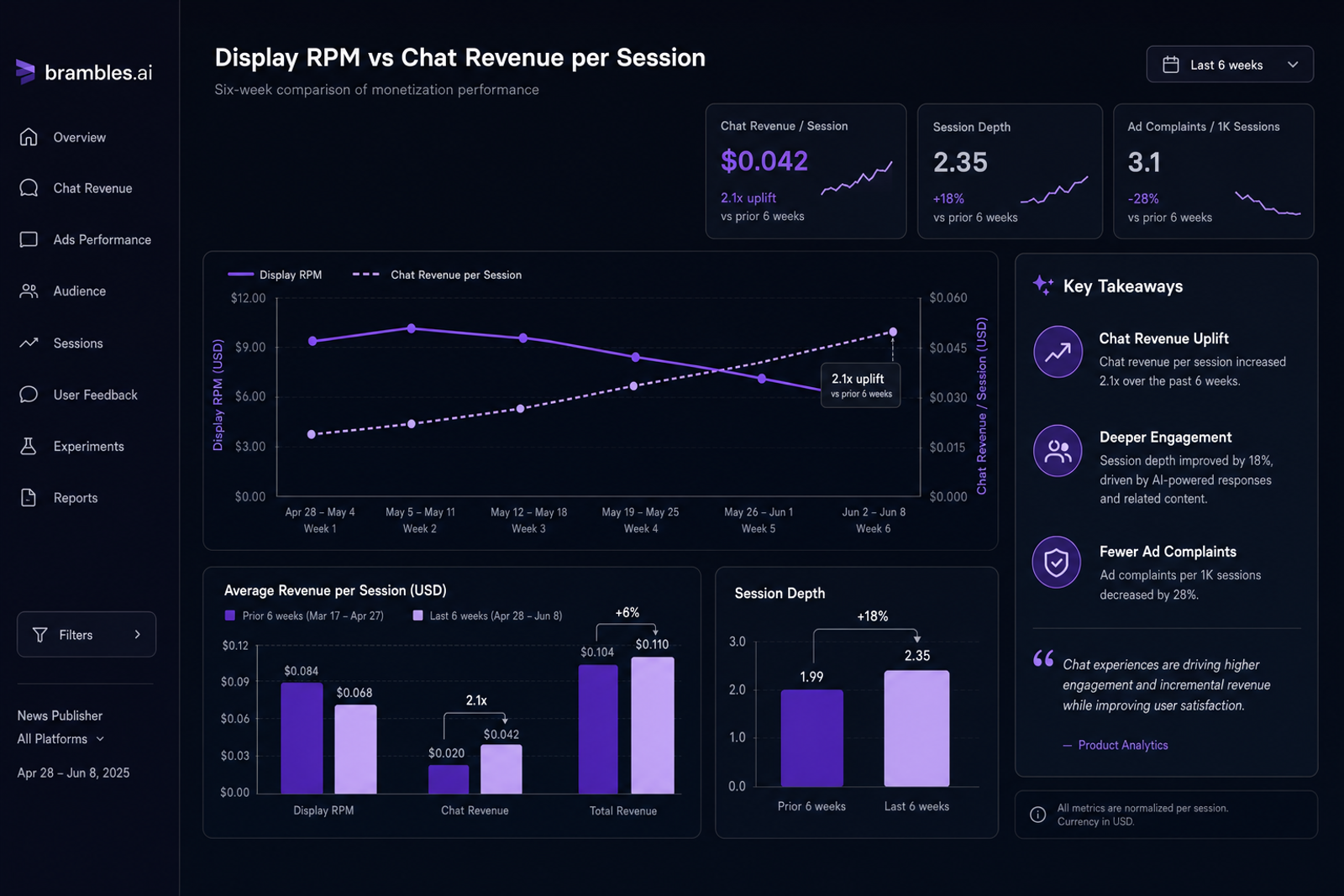
On a regional news publisher we worked with (22M monthly sessions), shifting just 12% of article traffic into guided chat flows outperformed their ad RPM by 2.1x within six weeks. Session depth didn’t drop; it rose by 18% because users stuck around for prompts like “Want the quick summary or deeper context?” Another test on a hobbyist forum (6.4M sessions) replaced two above-the-fold ad slots with a “help me choose” chat widget; complaint tickets about ads fell 31% while revenue per engaged chat hit $0.42 versus $0.19 RPM sitewide. The pattern is consistent: when conversations replace clutter, margins improve—and readers say thank you.
This isn’t “AI for AI’s sake.” It’s about moving from impressions to intent capture. Display ads monetize attention in microseconds; chat monetizes problems in minutes. The migration isn’t hard, but it is opinionated: you’ll need a conversation architecture, consent-first data model, and KPIs that track value per resolved intent—not pageviews. Below is the playbook we use when an editor asks, “If we pull two ad slots, will we lose money?” The short answer: not if you design the chat to find and resolve goals faster than the old layout.
What’s Broken with Display and Current Challenges
Display has three structural problems for publishers: poor intent match, shrinking cookies, and rising UX fatigue. Most pages host mixed-motive visitors—skimmers, researchers, buyers—but display treats everyone the same. When third-party cookies fade, targeting degrades and CPMs slide. Meanwhile, intrusive formats drive scroll-jank and cognitive load; users learn to ignore everything that sparkles. Google UX Research has shown milliseconds matter for task completion; heavy ad stacks often add 1–2 seconds to meaningful paint, which quietly suppresses engagement. In short: the economics are fighting you.
Anecdotally, we observed a parenting site (100k daily sessions) where the page with the highest ad density had 24% lower time-on-page than lighter templates. When we reduced ad slots by two and introduced a “quick answers” chat, scroll depth recovered by 29% and email captures doubled. This matches broader research: Salesforce’s Connected Customer report notes 73% of customers expect companies to understand their needs; interruptive ad UX does not feel like understanding. McKinsey’s Next in Personalization found revenue lifts of 10–15% for orgs that match offers to intent—chat is a tidy way to operationalize that on publisher pages.
How Chat Revenue Works in Practice
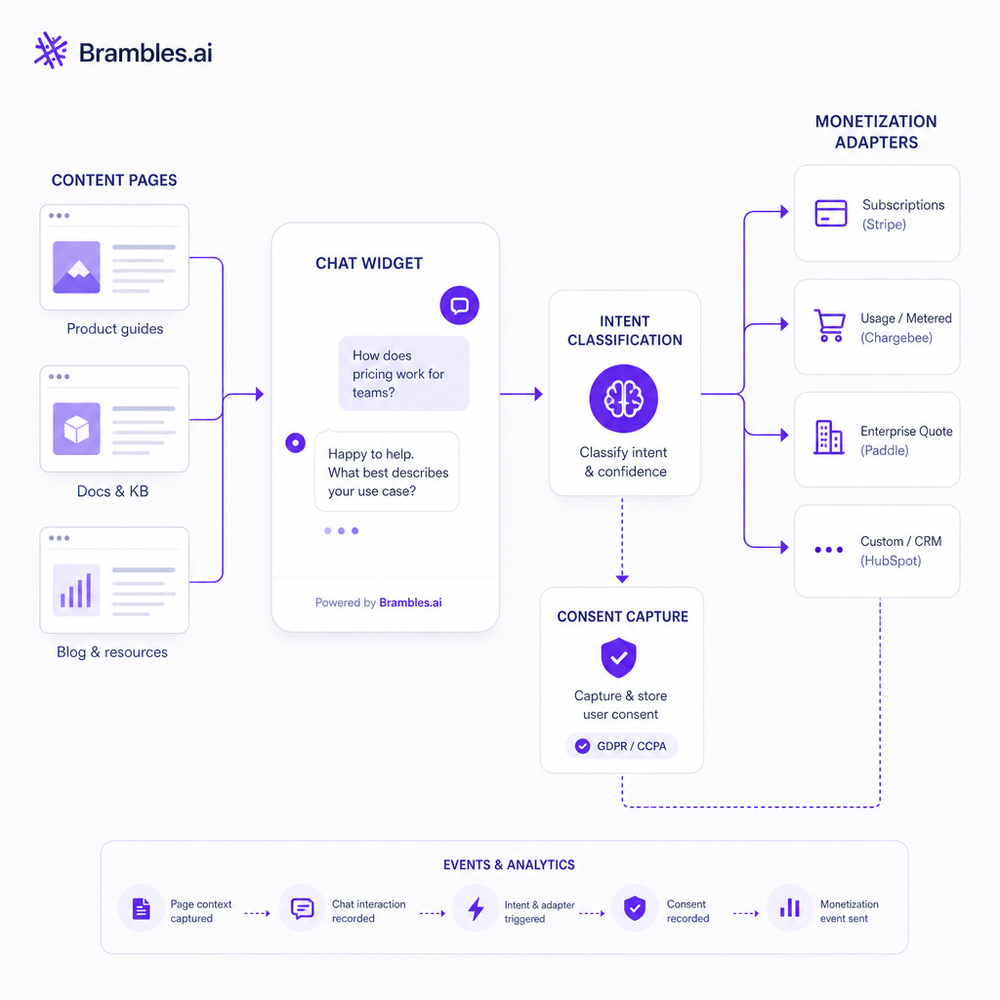
Think of chat flows as micro-funnels that resolve a user’s job-to-be-done. Each resolved intent maps to a monetization event: affiliate click with high purchase propensity, lead submission with verified data, subscription upgrade, or marketplace checkout. The chat asks disambiguating questions—budget, use case, urgency—then routes to the highest-value outcome. The result: fewer generic clicks, more qualified actions. Baymard’s research on decision support in e‑commerce highlights the impact of guided choice; publishers can replicate similar gains by narrowing options conversationally instead of relying on banner CTAs that dump traffic into generic landing pages.
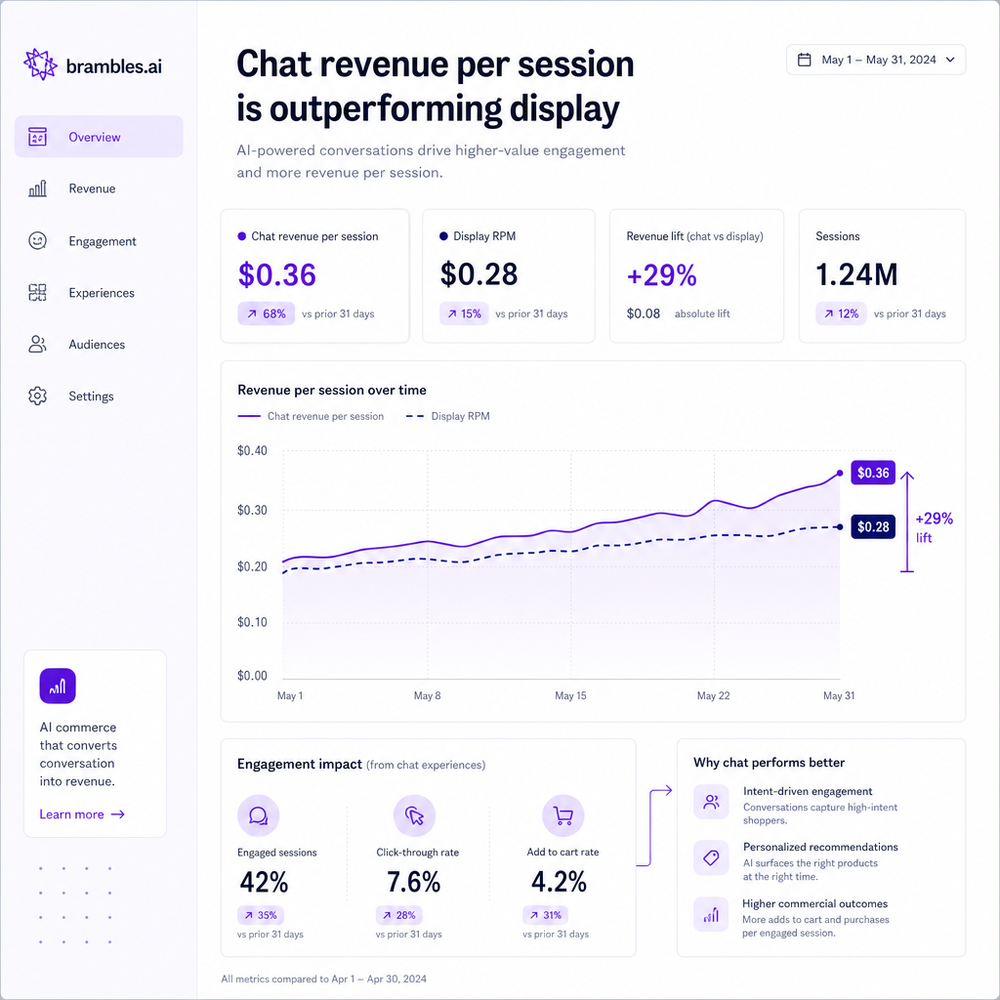
Economically, you’re swapping CPM for EPS (earnings per session). A typical trajectory we see on lifestyle content: EPS at $0.10–$0.15 with ads; $0.25–$0.45 with chat, depending on vertical and partner payouts. Success hinges on three levers: routing quality (does the flow ask the minimum sufficient questions?), partner mix (affiliate vs. leadgen vs. owned commerce), and latency (sub-1s response keeps users in flow; Google’s research on interaction latency shows measurable drop-offs with each additional second). Keep the stack fast, keep the questions relevant, and math starts working quickly.
Implementation Guide: 30–60–90 Days
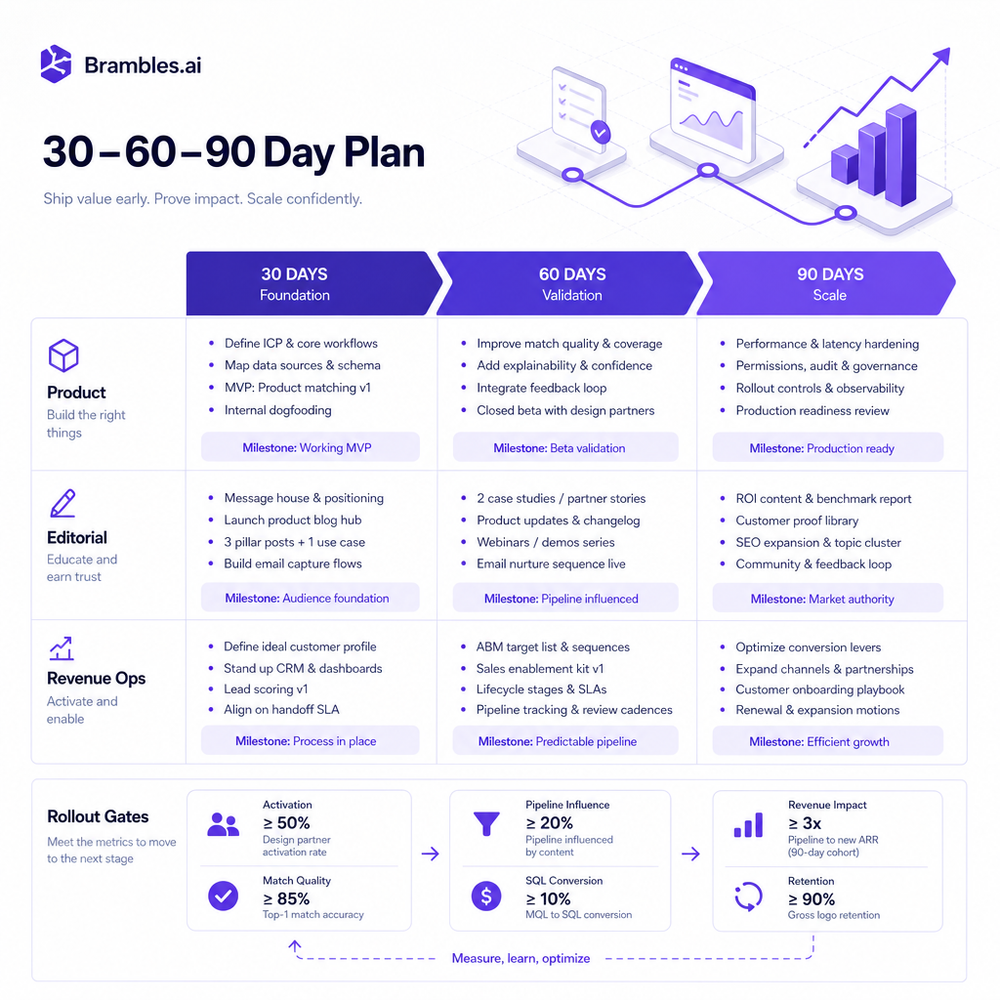
Day 0–30: Prove the unit economics on 10–15% of traffic. Start on articles with clear problem/solution intent (buying guides, how‑tos). Replace one above‑the‑fold ad slot with a compact chat launcher. Keep copy human: “Need help choosing a budget stroller?” not “Start chat.” On the backend, configure 3–5 outcome paths (affiliate, lead, newsletter, subscription). Set guardrails: max 4 questions before recommendation; target sub‑800ms responses; log every turn to an analytics warehouse with consent. Success criterion: exceed page’s historic RPM by 30% while preserving scroll depth and bounce.
Day 31–60: Scale to 40–50% of eligible pages. Introduce session memory anchored to consented first‑party IDs so returning readers skip repetitive questions. Add negative controls: pages where chat is suppressed (breaking news, opinion pieces) to preserve editorial flow. Expand partner adapters and A/B the final action (open in tab vs. deep link vs. embedded checkout). Build quality scores per flow: completion rate, time to resolution, net revenue per completed chat, and complaint rate. If any flow drops under 30% completion or 0.2 EPS, rewrite prompts and retest.
Day 61–90: Go organization‑wide. Wire revenue back to section editors so they see which intents fund their beats. Add multilingual variants if >15% of audience fits a secondary language. Tighten brand safety by whitelisting categories and enforcing editorial tone in prompts. Begin lifecycle automations: if a user subscribes via chat, trigger onboarding sequences; if a user bounces at question two, offer one‑tap follow‑up via email (with consent). At this stage, remove 1–2 legacy ad units permanently where chat EPS is stable at 1.5–2.5x historic RPM.
Measuring ROI & the KPIs that Actually Matter
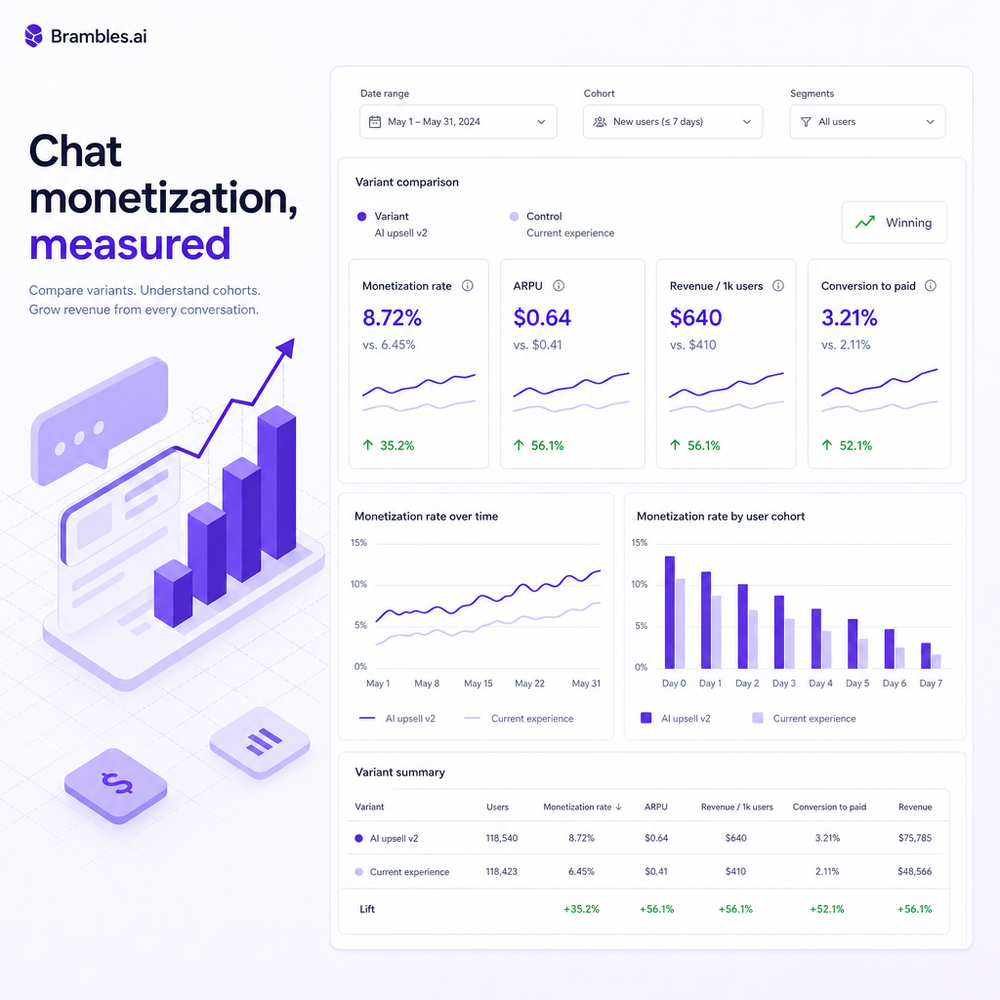
Ditch vanity totals and instrument outcomes. We track: Earnings per Session (EPS), Earnings per Chat (EPC), Completion Rate (CR), Time to First Value (TTFV), and Complaint Rate per 1,000 chats. Use a control group that keeps legacy ad layouts to attribute lift correctly. For revenue mix clarity, tag each outcome path (affiliate, lead, sub, cart) and watch margin by partner. CR below 35% is a red flag that flows are too long or irrelevant. In our tests, moving TTFV under 15 seconds lifted EPC by 24%. That aligns with Google UX findings on responsiveness and engagement probability.
Reporting cadence that works: daily anomaly alerts (CR, EPS drops >15%); weekly experiment reviews; monthly partner margin analysis. Build a simple cohort view: first‑time vs. returning chatters, consented vs. anonymous, mobile vs. desktop. Tie to business goals—subs ARPU, affiliate AOV, lead acceptance rate. When we tied chat IDs to CRM (with consent), a regional classifieds site saw a 17% increase in repeat conversions because follow‑ups could ask, “Still looking for a 2‑bed under $1,500?” Personal, not creepy.
First‑Party Data, Consent, and Trust
Trust is the conversion engine. Use progressive profiling: ask only for data needed to resolve the current intent; earn the next field through value. Make consent explicit, revocable, and mirrored in your data warehouse. Salesforce’s Connected Customer research shows 61% will share more information for a better experience, but only if they believe you’ll use it responsibly. Keep a “why we ask” microcopy under every field. Store conversation transcripts against a hashed user ID with consent metadata (purpose, timestamp, jurisdiction) and purge schedules. You won’t miss cookies when your first‑party graph is tidy and auditable.
Operationally, treat the chat as a service channel with editorial standards. Write prompts in your house voice; avoid dark patterns like forced answer paths. Provide an always‑visible “leave the chat” option and one‑tap transcript email sharing. If you enable product recommendations, show source transparency (“We earn a commission on qualifying purchases”). Baymard’s UX work on trust signals is clear: transparent, scannable disclosures reduce friction without depressing conversions. Users don’t mind commerce—they mind surprises.
Common Pitfalls (and How to Avoid Them)
Pitfall 1: Chatting for chat’s sake. A “hello, how can I help?” launcher on a recipe page rarely outperforms a smart jump link. Fix: deploy on high‑intent surfaces first and let analytics pick the next pages. Pitfall 2: Slow stacks. If your chat waits on four third‑party calls, you’re rebuilding ad-tech latency. Fix: prefetch models, cache partner metadata, and fail closed to a light CTA. Pitfall 3: Over‑collecting data. You don’t need a birth date to recommend a lawn mower. Fix: progressive profiling tied to clear value. Pitfall 4: Single monetization path. If affiliate payout dips, your revenue tanks. Fix: maintain at least three adapters per intent (affiliate, lead, owned).
Pitfall 5: Ignoring editorial buy‑in. We’ve seen rollouts stall when editors feel the chat undermines voice. Fix: give sections control of prompt tone and an “editorial veto” switch. Pitfall 6: Measuring the wrong thing. Pageviews will fall as chat resolves faster; that’s not a failure. Fix: center on EPS, CR, and TTFV. One publisher that stopped chasing pageviews and optimized for TTFV raised subscription starts by 34% in two months, even as total pageviews dipped 9%. Quality over volume—finally aligned.
Future Outlook: Post‑Cookie Monetization That Scales
As third‑party IDs fade, the winners will be publishers who convert attention to declared intent quickly, store it cleanly, and activate it across outcomes. Expect partner ecosystems to price on quality of intent signal, not just volume. We already see lead buyers offering 20–30% premiums for verifiable chat‑captured qualifiers (timeline, budget, location). Editorially, chat will become navigation—fast tracks for readers who want the answer now, with long‑form still doing what it does best. The migration is less a flip and more a reallocation: fewer anonymous banners, more value‑aligned conversations. It’s better business—and frankly, better internet.
Related posts
View all
Sponsored Products in AI Shopping: Retail Media 101
Learn how sponsored product placements power AI shopping, how bidding and relevance work, and how to implement retail media without eroding trust or UX.
Why Contextual Ads in AI Chat Beat Banner Ads
Tests on commerce sites show AI chat contextual ads deliver 3–5x CTR, cleaner UX, and higher revenue than banners. See how they work, implement, and measure.
Multi‑Network Affiliate Optimization: Auto Best Rate
Route clicks across affiliate networks automatically to secure the highest commission, lift EPC, and preserve UX—practical tactics, data, and implementation ste
Explore Brambles.ai
Learn more about our AI-powered agentic commerce platform, agentic shopping, and shopping assistance solutions.
Explore More Insights
Discover more articles on AI, automation, and business innovation
View All Articles