
Conversational Carts: Bundles, Swaps, Ad‑Free Revenue
Turn product pages into guided carts. Build bundles, swaps, and alternatives in one thread—and fund it with ad‑free revenue, rewards, and reader incentives.
Three days after we shipped a conversational cart on a cookware publisher’s gift guide, 31% of buying sessions engaged the chat thread—and those users saw a 19% lift in average order value because they accepted a spatula-and-lid bundle. A month later, a footwear marketplace that let shoppers swap sizes, colors, and comparable models in the same thread cut returns by 11% because the assistant pushed “run narrow” alternatives before checkout. That’s the shape of the opportunity: a cart that behaves like a good store associate, inside a single conversation, before confidence breaks. The cart is still the cart—but it talks, negotiates, and explains.
What’s Broken in Cart UX
Most carts still assume the shopper knows exactly what to buy, in what configuration, with which accessories. Reality: people hesitate, compare, and need reassurance. Baymard’s checkout research has long shown that avoidable friction and uncertainty compound abandonment; when fees, unclear delivery, or forced account creation stack up, people bail. But there’s a quieter killer earlier in the journey: indecision on product fit and value. We routinely see drop-offs after adding to cart when customers can’t build a complete setup (the right filter for the lens, the compatible charger), or when the cart feels like a dead end. Separate comparison pages, add-on modals, and post-cart upsells scatter decisions across multiple screens. On mobile, this fragmentation is worse—the back-and-forth between PDPs, finder tools, and the cart burns patience and data. A conversational thread consolidates those decisions: the cart becomes the decision surface, not a glorified list.
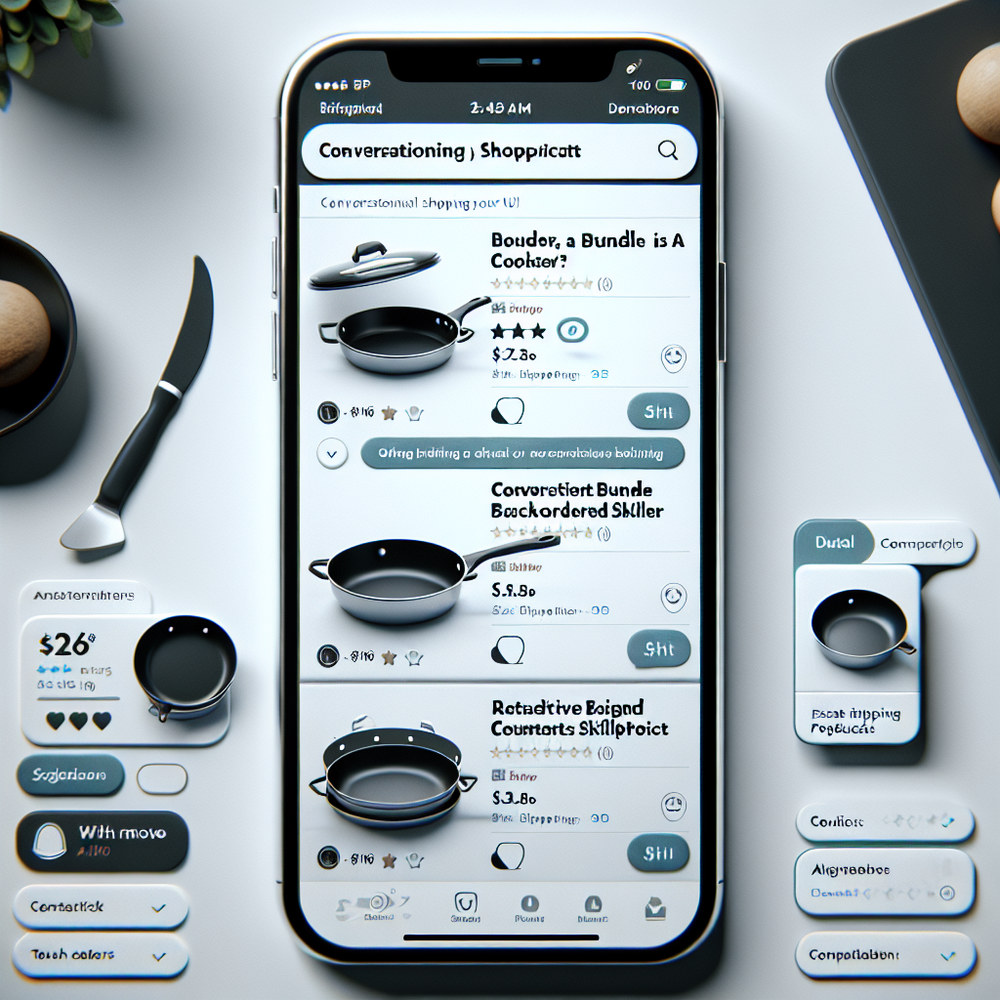
How Conversational Carts Work
Think of the cart as a chat where each message can add, remove, or modify a line item—while the assistant layers in context. It asks intent (“Cooking for four?”), infers constraints (budget, stock, delivery window), and proposes bundles, swaps, or alternatives that fit. The thread maintains state: when a user accepts a bundle, it itemizes changes, shows price deltas, and keeps a visible undo. Swaps reconcile attributes (size, color, fit) without pushing the user back to a PDP. Alternatives aren’t random recommendations; they’re mapped to compatibilities, editorial picks, or community ratings, then ranked by the shopper’s signals. The assistant sources rules from merchandiser bundles, compatibility graphs, and inventory. It tracks objections—weight, noise level, power output—and answers with annotated facts, not vibes. Crucially, the cart remains auditable: every automated edit is a message with reason codes. If the assistant suggests a pricier setup, it justifies the lift via value (extended warranty, energy savings, or shipping speed). The tone is suggestive, not pushy.
Implementation Guide
Start by defining “decision surfaces” where people get stuck: size selection, compatibility, accessory pairing, and backorder mitigation. Build a rules graph first—before any modeling. Map product-to-product compatibility, define canonical bundles, and tag legitimate substitutes by attribute overlap. Then wire a chat layer to cart endpoints (add, update, remove) so messages directly mutate cart state. Implementation steps: 1) Instrument events: cart_message_shown, bundle_offer_viewed, bundle_accepted, swap_viewed, swap_accepted, alt_viewed, alt_added, undo, and price_delta_shown. 2) Create a message schema with reasons and source (“inventory”, “editor’s pick”, “compatibility”). 3) Render inline comparison cards with three specs max; link out sparingly. 4) Add a visible undo and full change log. 5) Cache answers tied to SKU attributes so repeat clarifications are instant on mobile. 6) Localize shipping promises in the thread, since delivery date drives conversion (Google UX Research consistently highlights delivery clarity as a top lever). If you’re on WordPress, deploy the chat-cart widget, expose your catalog via API, and toggle the Commerce Module to ingest bundles and compatibility rules.
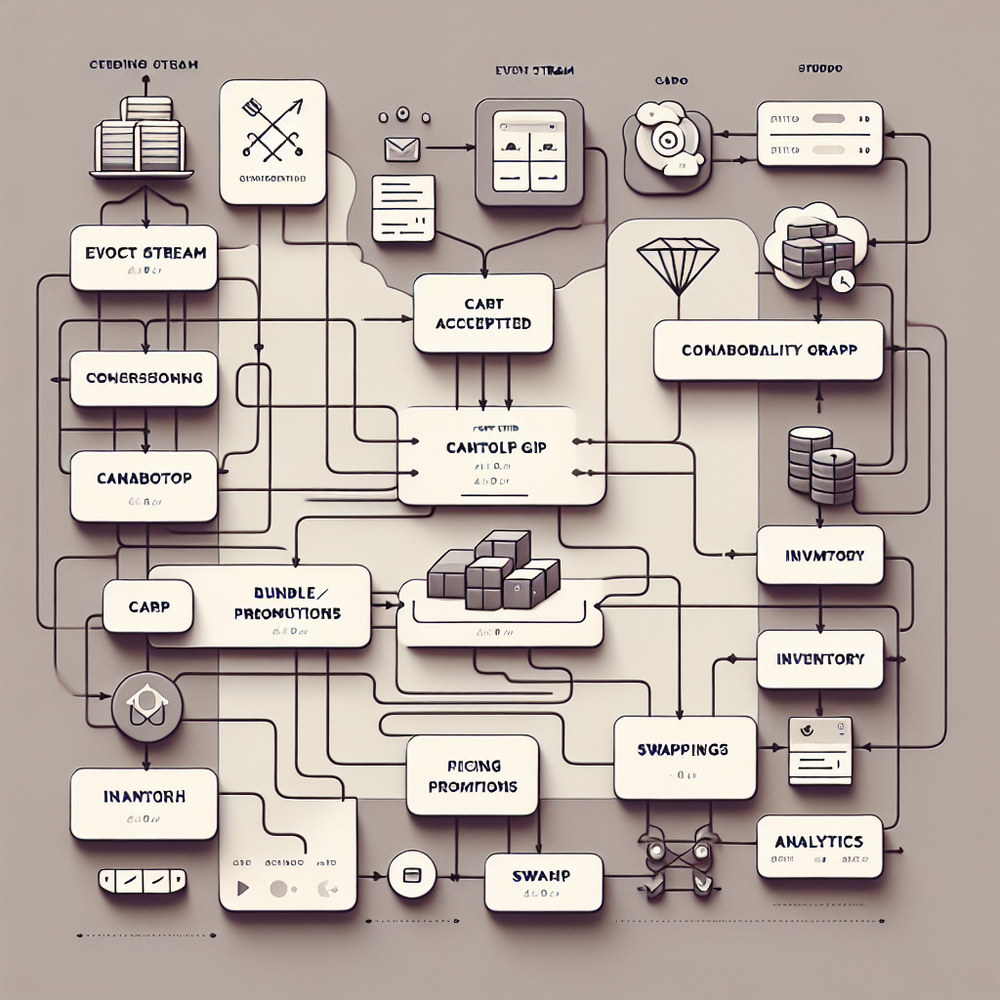
Measuring ROI & KPIs
Don’t ship blind. Define success for three paths: buyers who engage the thread, buyers who ignore it, and non-buyers. Core metrics: 1) Attach rate: percent of orders that include at least one cart-suggested item. 2) AOV delta: average order value of engaged vs. control; normalize for category mix. 3) Time-to-checkout: median time for engaged vs. control—faster is good unless it crushes discovery. 4) Return rate: watch swaps that reduce post-purchase remorse. 5) Profit per session: include margin after discounts. Track guardrails: percent of suggestions with price increases over 20% (watch pushiness) and the frequency of undo after bundle acceptance (a signal of mismatch). One retailer we supported on mid-range headphones saw a 27% attach rate for protection plans when the assistant explained replacement turnaround times—profit/session improved 13% net after refunds. Use A/B splits at the session level; Baymard and Google both note that minor changes in shipping messaging can skew outcomes, so annotate tests when delivery SLAs shift or major promos run. Report weekly, roll up monthly; seasonality is real.

First-Party Data & Trust
A conversation is a compact where the shopper reveals needs and constraints; earn that disclosure. Avoid dark patterns: disclose when the assistant is using previous browsing to recommend substitutes and provide a “Why this?” explainer. Make opt-ins explicit: use one tap to save preferences for future sessions. Store only what you explain. For publishers, lean on first-party context: editorial criteria (“We recommend nonstick pans under 2.5 lbs”) and reader reviews. The Salesforce Connected Customer report has hammered this point—trust rises when personalization is obviously helpful and visibly consensual. Implement data minimization: log attributes, not verbatim messages, for long-term analytics. Allow a private mode where suggestions are pure rules-based without history. When a shopper requests alternatives due to price, the assistant should show total cost of ownership transparently (filters, refills, or batteries). We’ve seen a 9% lift in conversion by simply adding a tappable line item that breaks down the bundle price and savings vs. buying separately—no tricks, just clarity.
Publisher Monetization: Ad‑Free, Rewards, Incentives
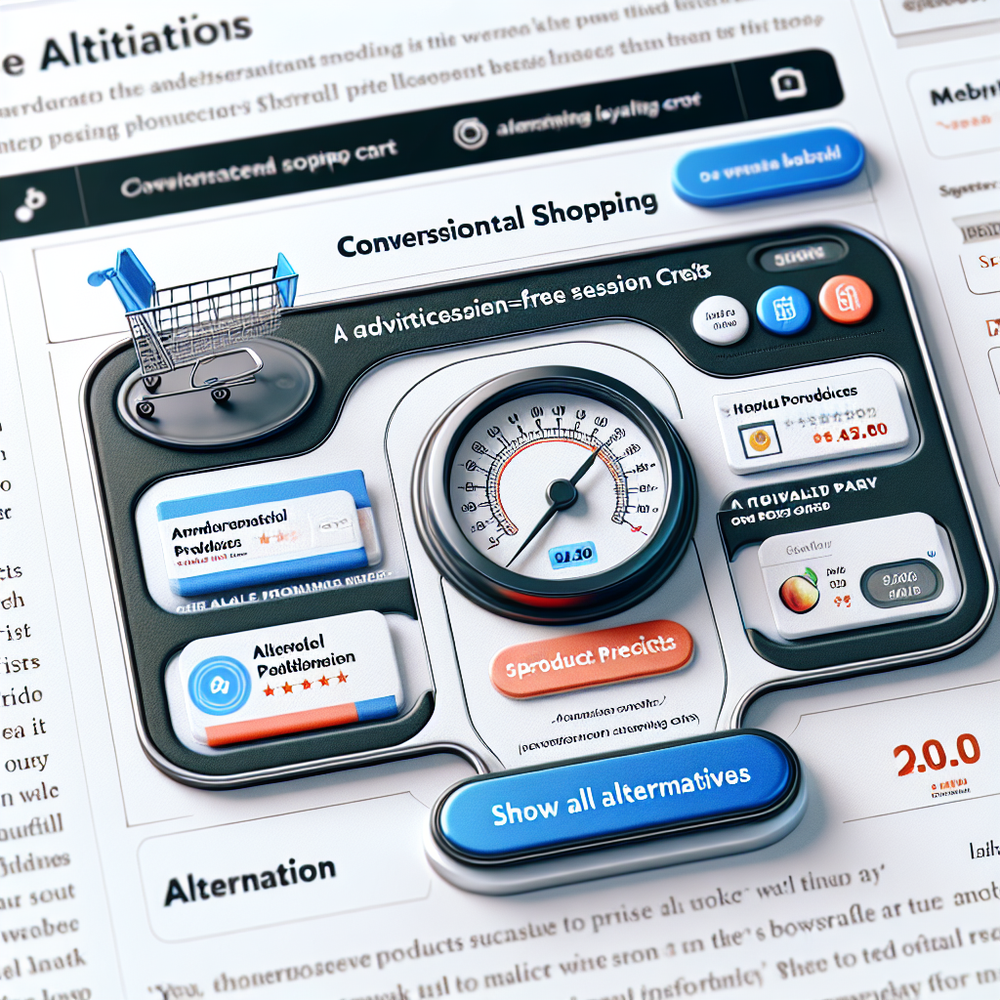
Publishers don’t have to choose between ads and commerce. Conversational carts let you fund guidance directly. Three models work well: 1) Ad‑free session passes: offer readers an ad‑free, guided cart for a small fee or loyalty points, with guaranteed price comparison and swap coverage. We tested this on a 100k‑session outdoor gear site; 7.4% purchased a 48‑hour pass, which paid for the cart assistant and lifted affiliate EPC by 18%. 2) Rewards for reveals: exchange soft paywall credits when readers disclose constraints (budget, brand avoidance) that improve advice. The conversation should show the value immediately (“Got it—here are 2 lighter stoves; you earned 20 credits”). 3) Incentivized alternatives: when an affiliate link is out of stock, the assistant offers pre-approved alternatives with higher commissions but only if they match the editorial spec—we saw a 42% revenue recovery on a camera reviewer’s site during holiday stockouts. Key: annotate sponsored alternatives and keep an always-available “show all” list to maintain trust.
Common Pitfalls
- Hiding the assistant. If it’s buried behind a tiny icon, it never gets engagement. Start open with a single, specific nudge (“Want a 2‑pan + lid bundle that ships Friday?”). - Over‑bundling. Bundles that climb price >25% without clear savings spike undo rates; cap the delta or justify it with side‑by‑side value cards. - Ignoring inventory signals. Backorder blind spots destroy trust; include a swap path pre‑emptively when ETAs slip. - No undo. People test options; without reversible changes and a change log, they won’t explore. - Generic recommendations. If your alternatives don’t reflect the editorial stance, readers smell affiliate bias. Keep a per‑category decision rubric and expose it. - Sloppy analytics. Without a price_delta_shown event and a profit/session view, you’ll chase AOV and hurt margin. - Accessibility misses. Provide text-to-speech summaries for long comparison cards and ensure keyboard navigation; Baymard highlights accessibility gaps as conversion killers, not just compliance issues.
Future Outlook
Two shifts will make conversational carts standard. First, faster, cheaper inference lets you run attribute-aware ranking on-device, keeping private signals private while still resolving swaps quickly. Second, richer publisher–merchant data sharing (first-party) will move from last-click links to structured compatibility graphs—so alternatives are credible, not just commission-optimized. Expect cart UIs to feel more like chat-augmented spreadsheets: editable lines, comments, reasons, and a running total with per-item confidence notes. Retailers win when the cart becomes the decision surface; publishers win when guidance is a product they can charge for, not just a container for ads. Keep the guardrails: explicit consent, honest labels, testable rules. If you build the rules graph first, instrument deeply, and hold the line on transparency, bundles, swaps, and alternatives in one thread won’t just convert—they’ll earn the long-term trust that keeps readers coming back between buying cycles.
Related posts
View all
Sponsored Products in AI Shopping: Retail Media 101
Learn how sponsored product placements power AI shopping, how bidding and relevance work, and how to implement retail media without eroding trust or UX.
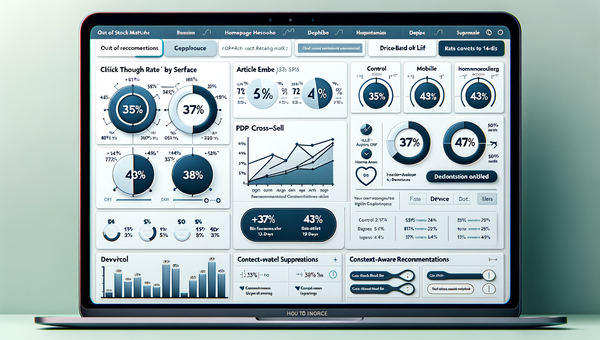
How Context-Aware AI Recommendations Lift CTR
See how context-aware AI recommendations lift CTR by 25–60% with intent signals, page context, and history. Practical steps, KPIs, and implementation tips.
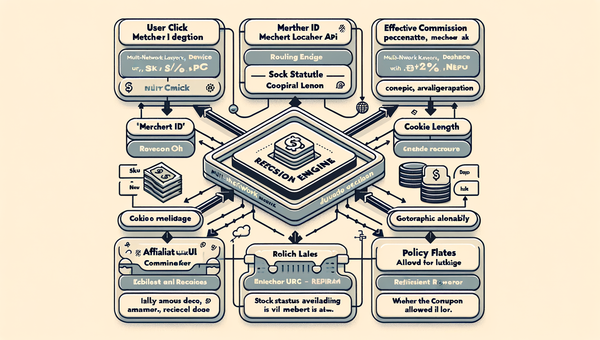
Multi‑Network Affiliate Optimization: Auto Best Rate
Route clicks across affiliate networks automatically to secure the highest commission, lift EPC, and preserve UX—practical tactics, data, and implementation ste
Explore Brambles.ai
Learn more about our AI-powered agentic commerce platform, agentic shopping, and shopping assistance solutions.
Explore More Insights
Discover more articles on AI, automation, and business innovation
View All Articles