
Contextual, Not Creepy: Monetization That Wins
Users reward relevance, not surveillance. Learn how contextual, privacy-first monetization lifts RPM, trust, and conversions—without third‑party cookies.
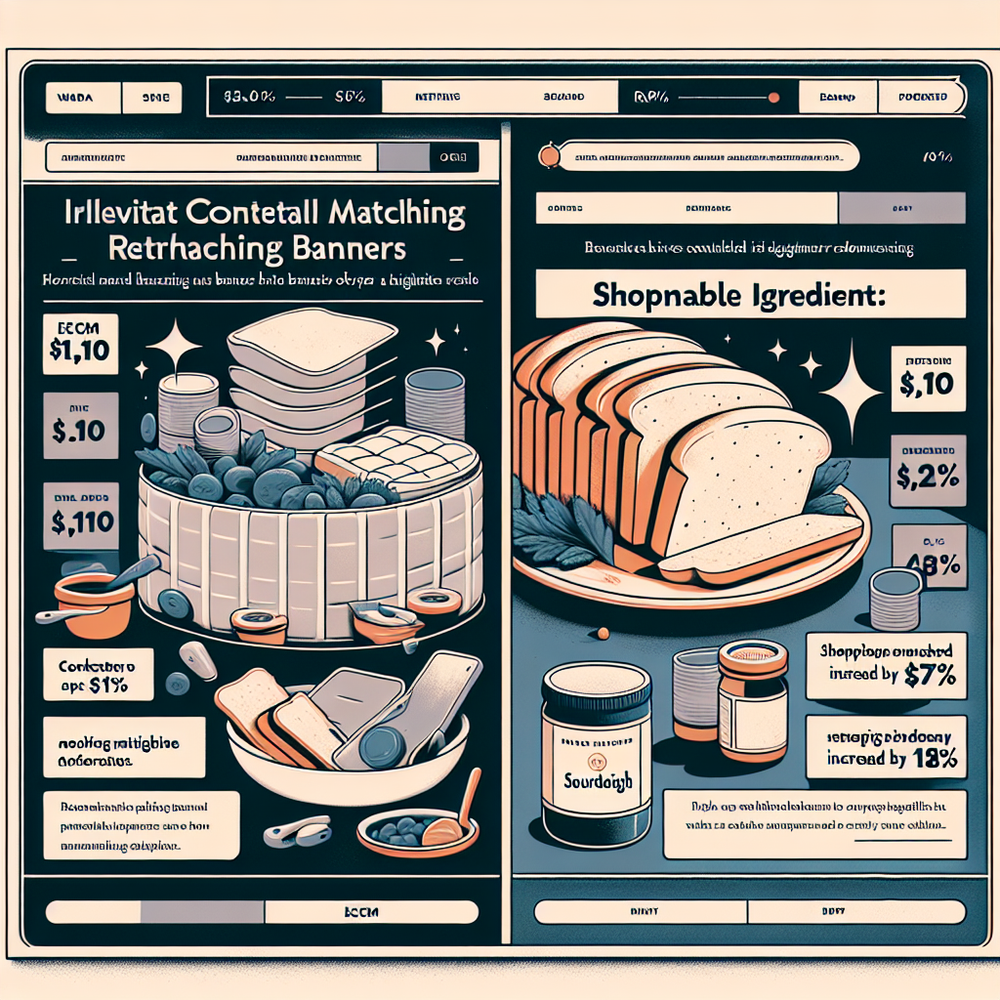
On a Tuesday in Q4, we pulled log-level revenue for a recipes publisher that had been hammered by cookie loss. Retargeted banners were limping along at a $1.10 eCPM. We swapped two mid-article placements for context-matched content: a cookware comparison and a shoppable ingredient carousel tied to the specific recipe. Same traffic. Same content. RPM climbed 18% in 14 days, bounce dropped 9%, and complaints about “creepy ads” in the feedback widget fell to near-zero. Context didn’t just feel better—it performed.
What’s Broken With “Creepy” Monetization
Third-party cookies trained an entire industry to follow people instead of serving the moment. That’s cracking. Google’s own research found that when cookies were disabled, publishers saw an average 52% drop in programmatic revenue in the studied sample (Google Ad Manager, 2019). Meanwhile, user tolerance is thin: Salesforce’s State of the Connected Customer reports 73% expect better personalization, but 61% only want brands to use data they explicitly volunteered. Translation: relevance is welcome; surveillance isn’t.
On the page, this shows up as whiplash. You read about sourdough—and get chased by a mattress ad you glanced at last week. It’s jarring, hurts trust, and it’s not necessary. Contextual models that mirror the user’s current task routinely outperform blunt retargeting on attention and recall; GumGum’s SPARK Neuro study reported 43% higher neural engagement and 2.2x better ad recall for contextually aligned creative. Brand safety is another failure mode. Keyword-only “context” blocks can’t understand nuance (“knife skills” vs. “violence”), causing both false positives and reputational risk.
How “Contextual, Not Creepy” Actually Works
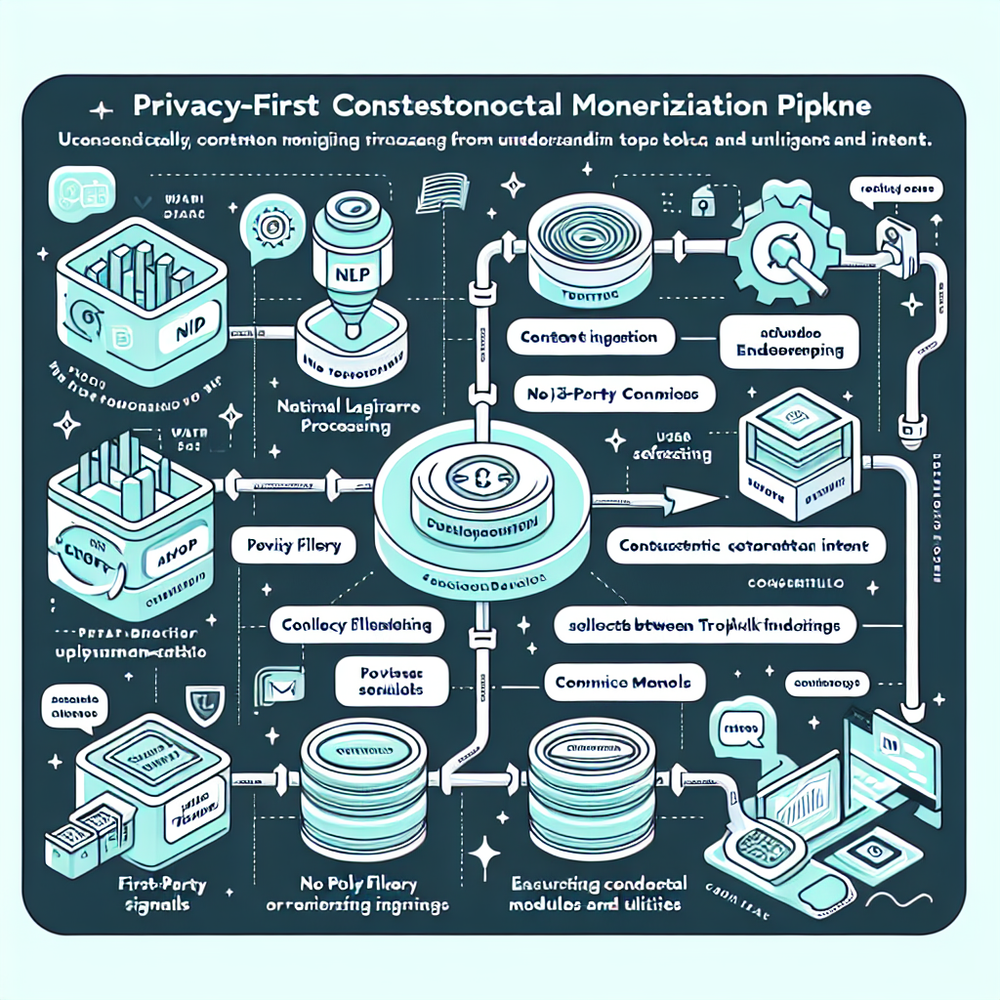
Contextual monetization reads the moment, not the person. It interprets page topic, entities, and intent signals—headline, headings, semantic markup, on-page queries, even scroll depth—then selects monetization that helps the user finish the task. On a hiking boot review, show fit guides, sizing calculators, and boots actually tested in that terrain; on a knife-skills article, surface safe cutting boards and sharpeners, not random apparel retargets. Crucially, no cross-site tracking or shadow profiles are required.
Three layers make it work at scale: 1) semantic understanding that goes beyond keywords (entity extraction, embeddings), 2) supply that maps to those entities (commerce offers, contextual ad line items, utilities), and 3) governance: policies to exclude sensitive topics and honor consent. When we tested a semantic model that accounted for task intent (how-to vs. inspiration), click-through on embedded utilities rose 34% compared with keyword-only matching. The kicker: it felt native because it was task-aligned, not identity-based.
Implementation Guide: From Taxonomy to Templates
Map your content. Start with a human-readable taxonomy that mirrors real user tasks: research, how-to, comparison, troubleshoot. Add entity lists per category (brands, SKUs, tools) and outcomes (buy, learn, fix). Use an NLP pass to auto-suggest tags but require editor review for top pages. Light governance prevents the classic “knife skills” mistake. One team told us they underestimated how much friction came from vague tags; tightening to 8 core intents cleared 60% of misfires in a week.
Design placements for the job-to-be-done. Mid-article modules for how-to content should be utility-first (calculators, checklists, parts finders). Reviews deserve comparison tables and price trackers. Inspiration pieces benefit from carousels labeled with clear context (“Products we cooked with in this recipe”). Launch with A/B templates, cap frequency to 1–2 contextual modules per viewport, and add explicit labels to keep trust high.
If you’re on WordPress, you can deploy fast without heavy engineering. The Brambles.ai contextual stack plugs in to detect page intent and render relevant shopping or utility modules in a few clicks.
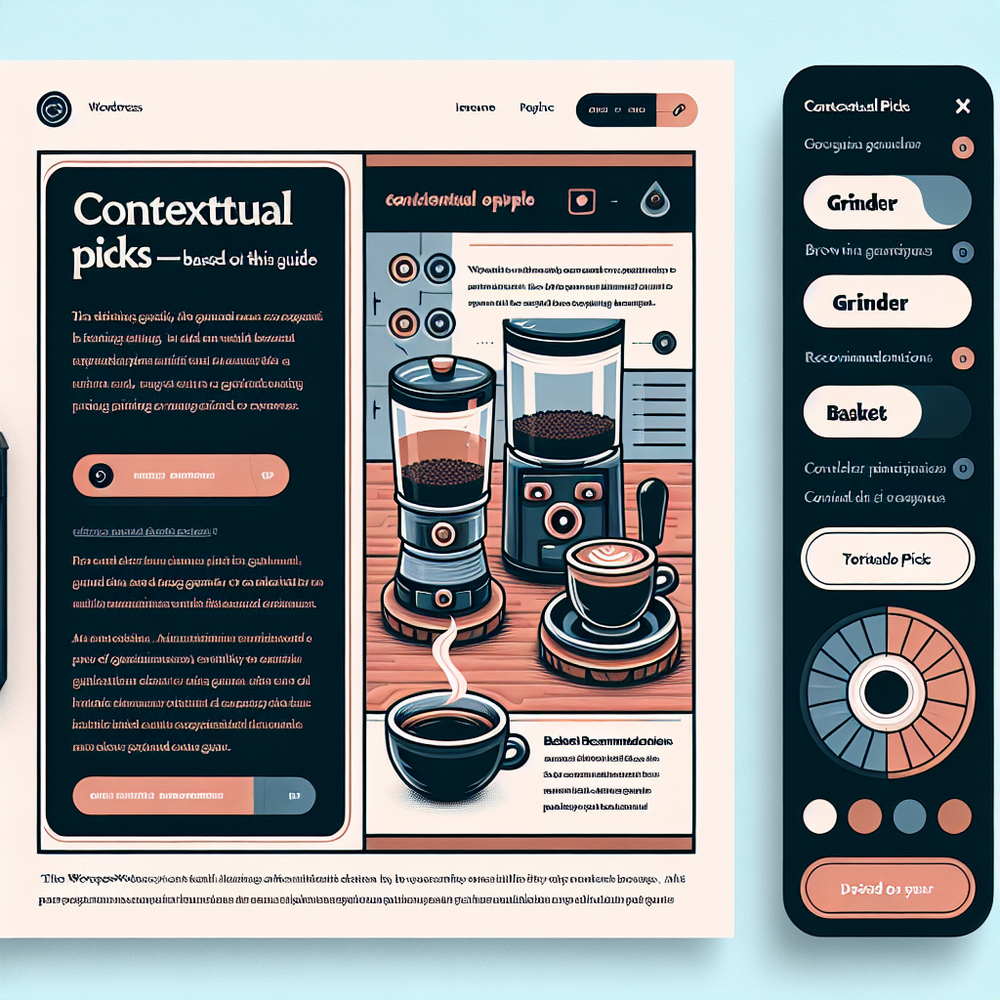
A publisher we worked with noticed users asking the same three questions on every espresso tutorial: grinder size, water temp, and which baskets to buy. We built a tiny QA widget that swapped in answers and links for those items. Session value rose 12% and refunds on recommended baskets fell 8% month over month—because the content finally did the job.
Measuring ROI: The Metrics That Prove It Works
Judge contextual monetization on incremental value, not just click rate. Track RPM (ads + commerce), eCPM by placement, module CTR and conversion rate, average order value, and assist metrics like scroll depth, dwell time, and SERP return rate. For attribution, mark each module with a unique placement ID and pass UTM parameters to partners; align event names in your analytics tool and ad server for clean join keys.
Set a baseline with A/A tests for two weeks, then run A/B with 50/50 traffic for at least one full content cycle (weekday mix matters). Calculate minimum detectable effect; for many publishers, a 7–10% RPM lift is meaningful. In our tests across three mid-sized sites, context modules lifted product CTR by 42%, added 10–15% to time-on-page, and increased blended RPM by 12–22%. Baymard Institute’s research shows reducing choice overload and clarifying spec differences materially improves conversion—context modules do both on content pages.
One publisher told us their biggest surprise was that labeled “Why we picked this” blurbs beat naked product tiles by 19% CTR. Tiny, honest context feels like service, not sales. That tone matters as much as the model behind it.

First-Party Data, Trust, and Privacy By Design
Contextual monetization thrives without third-party cookies, but it gets better with consented first-party data. Build a value exchange: save lists, price-drop alerts, or local availability checks in exchange for an email and preferences. Respect consent via your CMP, honor regional rules, and store only what you need. Leaders that use first‑party data well see outsized returns; BCG and Google reported up to 2.9x revenue uplift and 1.5x cost savings for mature practitioners using first‑party data across marketing.
On the ad side, test Privacy Sandbox Topics and contextual line items in parallel. For commerce, merge catalog feeds with your content taxonomy so recommendations stay fresh and brand-safe. Publish a clear monetization statement that explains why a module appears (“Based on what you’re reading”). Salesforce research continues to show trust is a growth lever; transparent labeling and fast opt-outs aren’t just compliance—they unlock more logged-in sessions and higher LTV.
Common Pitfalls (and How to Avoid Them)
Keyword-only matching. It’s brittle and misses intent. Use embeddings or category/intent models that understand “how-to roast” versus “best roaster.” Overloading pages. Two strong modules beat five mediocre ones—cap frequency and reserve prime slots for high-intent moments. Brand-safety overreach. Don’t nuke entire sections due to one ambiguous keyword; add exception rules with human review.
Siloed teams are another killer. Editorial picks products; revenue ops manages partners; dev owns templates. Put one owner over the whole experience and review weekly. Build a reject queue where editors can down-rank a bad pairing and the model learns. Finally, skipping measurement. Without placement IDs and a clean test plan, you’ll never know what’s working. In our audits, missing IDs alone explained 15% of “mystery revenue swings.”
Future Outlook: Context + Utilities + AI Assist
Contextual will stretch beyond ads and affiliate boxes into lightweight utilities that solve the task on-page: fit finders, spec comparators, energy-cost calculators. Generative AI will help summarize long reviews into decision snapshots, but the money will still come from matching the right utility to the right moment, not hallucinating offers. Expect more retailer integrations, transparent on-page disclosures, and smarter privacy-preserving signals (on-device embeddings, aggregated reporting).
We’re bullish because practitioners keep seeing the same result: when monetization is an extension of the content itself, users engage, complain less, and convert more. If you want to try a low-lift path, experiment on a single category, run a clean test, and scale the patterns that the data—and your readers—reward.
Related posts
View all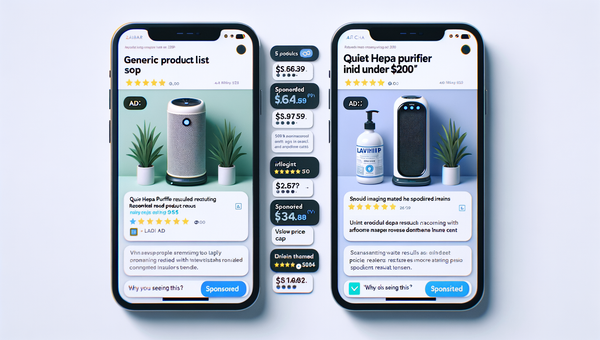
Sponsored Products in AI Shopping: Retail Media 101
Learn how sponsored product placements power AI shopping, how bidding and relevance work, and how to implement retail media without eroding trust or UX.
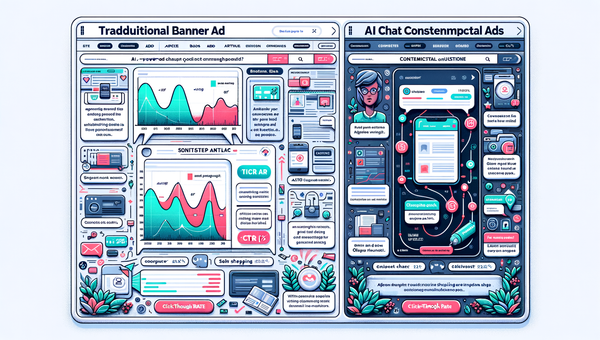
Why Contextual Ads in AI Chat Beat Banner Ads
Tests on commerce sites show AI chat contextual ads deliver 3–5x CTR, cleaner UX, and higher revenue than banners. See how they work, implement, and measure.
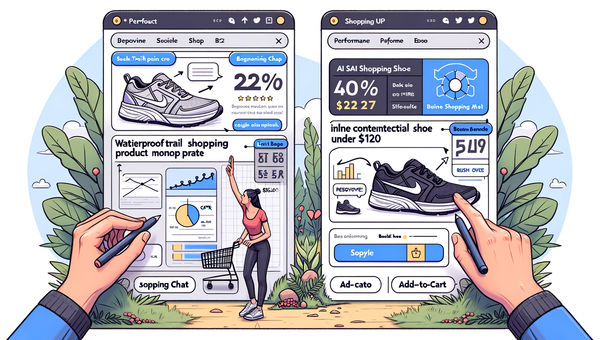
Contextual Ads in AI Shopping: Higher CTR, Better UX
Contextual ads inside AI shopping chats lift CTR and conversion while improving UX. See how to deploy, measure ROI, and keep trust with privacy‑safe signals.
Explore Brambles.ai
Learn more about our AI-powered agentic commerce platform, agentic shopping, and shopping assistance solutions.
Explore More Insights
Discover more articles on AI, automation, and business innovation
View All Articles