Choosing an AI Shopping Assistant: Brambles.ai Checklist
A buyer checklist for evaluating AI shopping assistants—capabilities, privacy, integration, ROI, and setup—with real metrics and Brambles.ai examples.
How to Choose an AI Shopping Assistant for Ecommerce
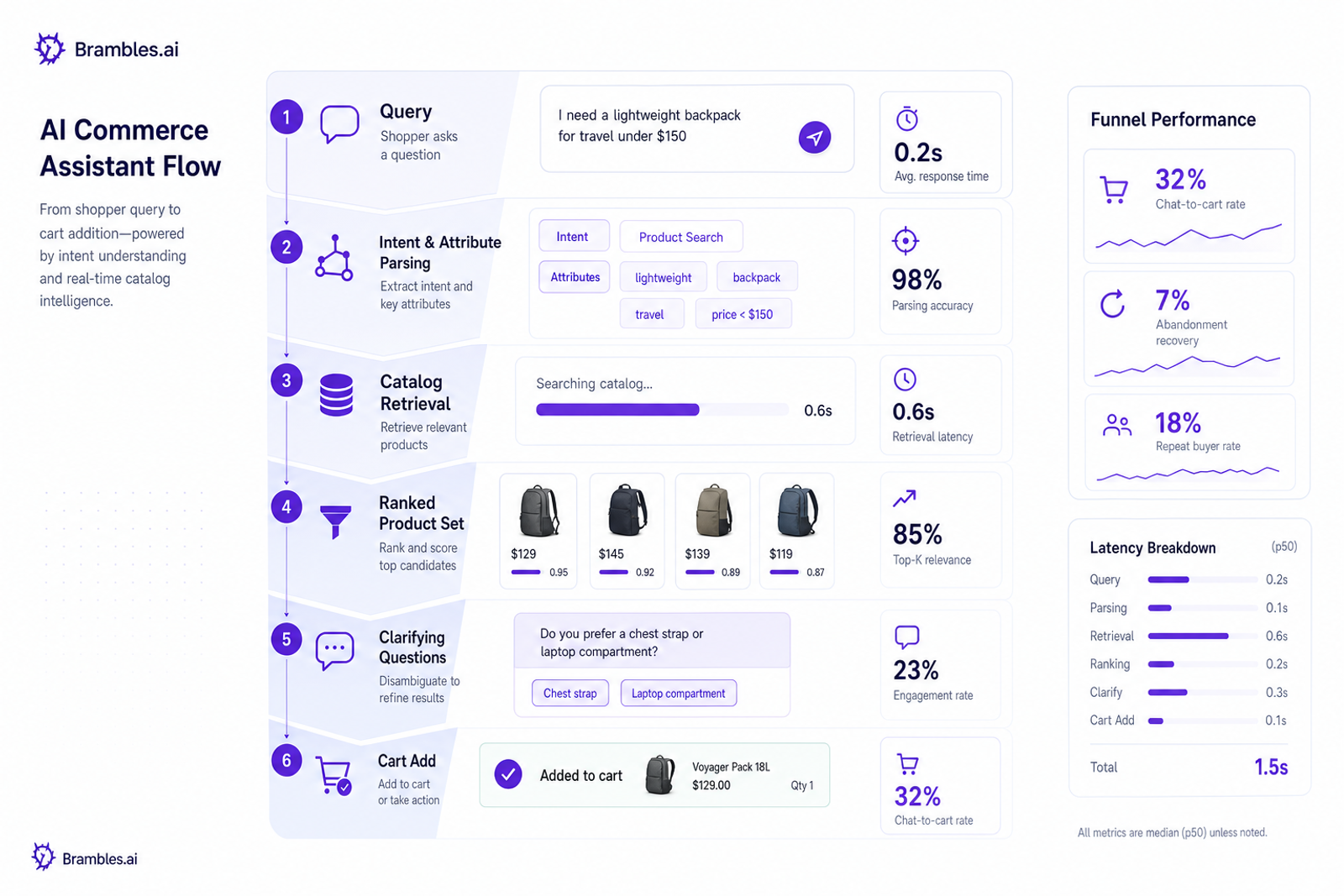
In week two of rolling out an AI assistant for a 120k‑SKU appliance retailer, chat‑to‑cart rose 38% and average handle time dropped under 20 seconds. A fashion marketplace saw a 19% AOV lift once the assistant learned fit, material, and shipping subtleties. A publisher embedded a shopping concierge inside reviews and added +22% RPM by matching products to intent, not keywords. These wins weren’t magic—they came from picking the right assistant and a clean implementation.
Most buyer guides hand-wave. This one is a practitioner’s checklist: how to verify content intelligence for catalog coverage, latency, safety, containment, and the money metrics that matter. I’ll also show exactly how Brambles.ai handles these, from ingestion to cart, and where it slots into your stack without ripping anything out.
Quick Answer
Choose an AI shopping assistant that proves three things in a two‑week pilot: it understands your catalog and policies, responds in under 700 ms for common queries, and drives a measurable lift in chat‑to‑cart and revenue per session. Demand structured outputs to your cart, transparent safety guardrails, and first‑party data capture with consent. Brambles.ai ships these out of the box and can be live in days, not months.
What’s Broken in Most On‑Site Shopping Experiences
The average shopper still fails basic tasks: Baymard reports 61% of sites have search UX issues, and 25% of users can’t find expected filters. That’s lost intent. Static PLPs don’t translate messy questions like “gift for a 9‑year‑old who loves space under $30, arrives Friday.”
Personalization is often surface‑level. McKinsey found 10–15% revenue lifts from strong personalization, but only when it maps to real‑time context, not stale segments.
Meanwhile, third‑party cookies are fading; Google’s UX research shows users expect transparency and control. You need an assistant that works with first‑party signals and earns trust every turn.
How AI Shopping Assistants Work (and What to Look For)
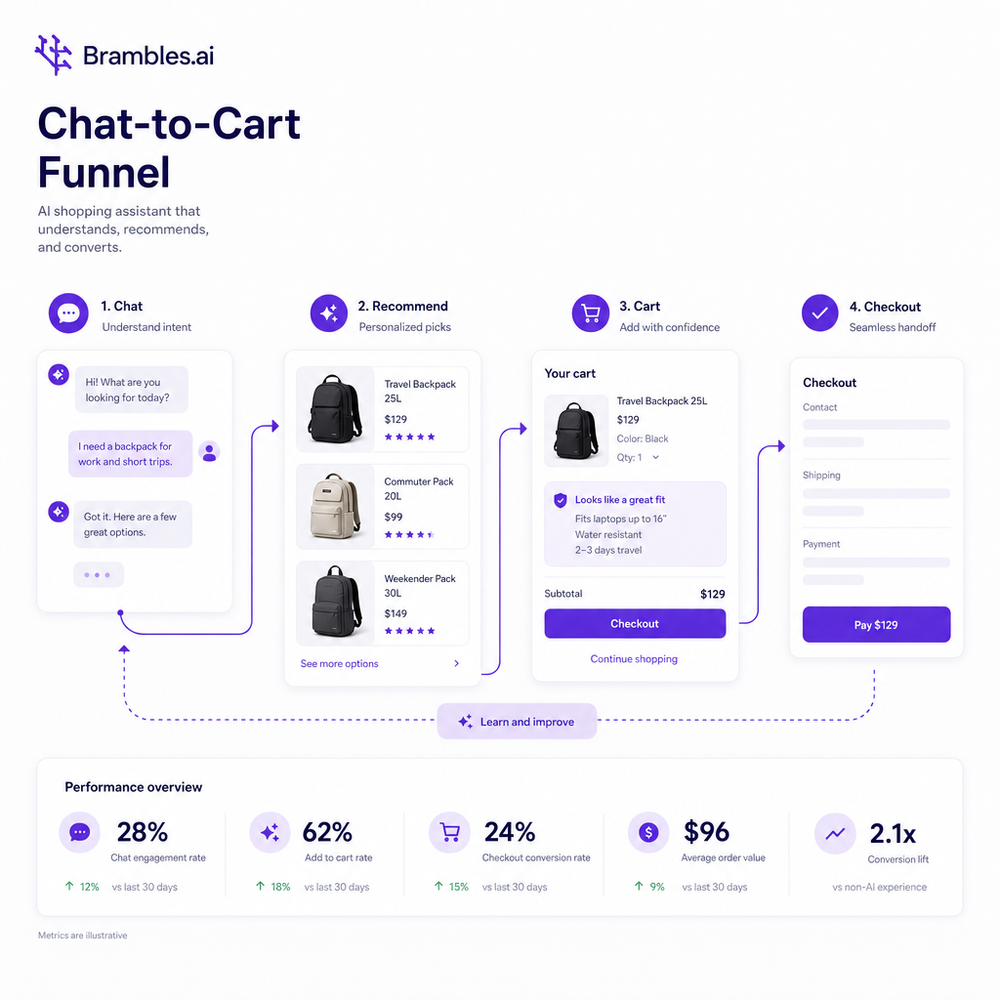
The best systems combine retrieval‑augmented generation (RAG) with vector search over your catalog and a policy layer. They parse attributes (size, material, delivery window), fetch eligible SKUs, reason over trade‑offs, and output structured results to your cart—ideally JSON with variant IDs, price, and quantity.
Non‑negotiables: sub‑700 ms responses for common intents, guardrails that block unsafe claims, and graceful fallbacks to filters or human chat. The assistant should ask clarifying questions only when signal is weak, not as a crutch. Transparent logs matter—so your merchandisers can see why it recommended SKU‑1234 over SKU‑9876.
Reality check: When we insisted on structured outputs and grounded retrieval, an outdoor retailer cut return‑inducing mismatch questions by 27% over four weeks. That came from the assistant citing waterproof ratings and last‑mile delivery promises pulled from the PDP and shipping tables—no hallucinations.
Implementation Guide with Brambles.ai
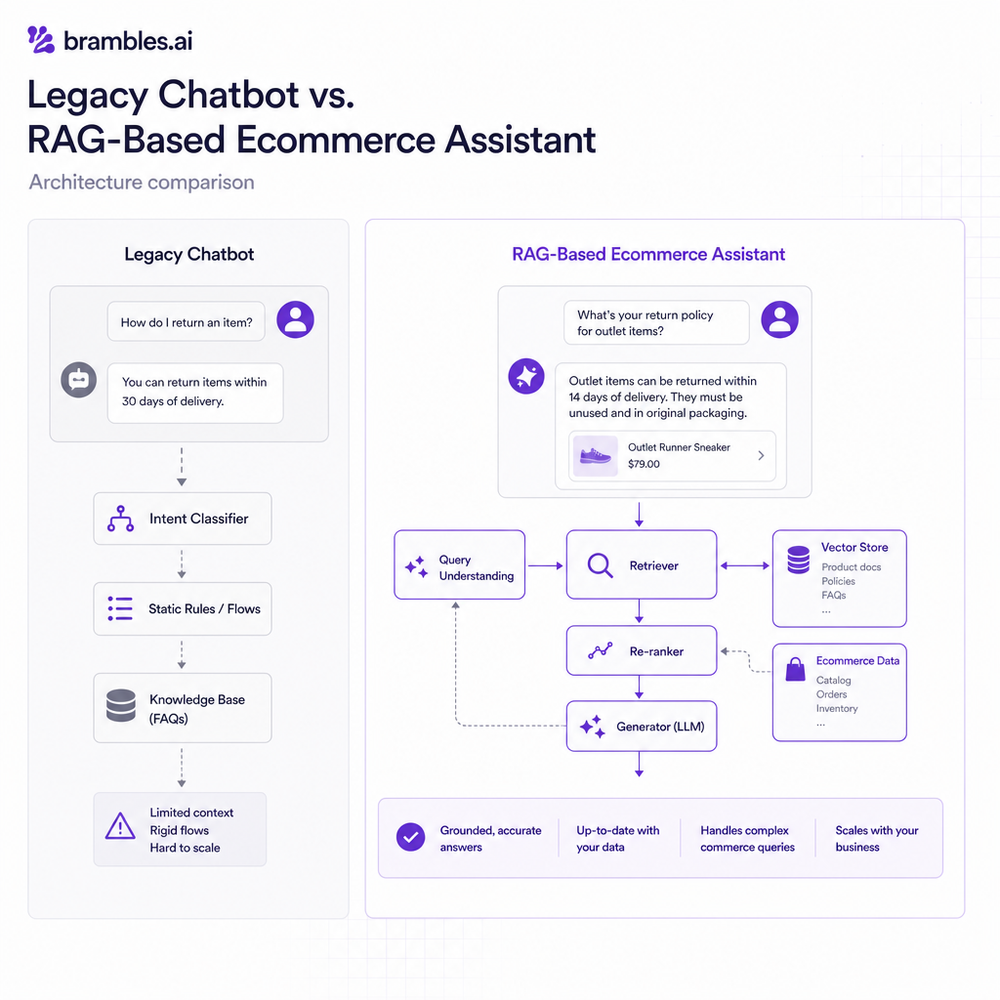
Brambles.ai solves the catalog‑to‑cart gap with grounded retrieval, policy guardrails, and structured outputs that plug into your stack. Here’s a fast path we run with brands and publishers—no replatforming required.
Step 1: Connect your catalog and content. We ingest feeds (Google Merchant, Shopify, BigCommerce) plus PDPs, FAQs, and shipping pages. Map attributes like fit, material, and fulfillment promises. Expect day‑one coverage over 95% of SKUs.
Step 2: Configure goals and guardrails. Define banned claims, warranty language, and price‑match rules. Step 3: Wire to cart and promo logic via the Commerce Module—structured JSON outputs include product/variant IDs, price, coupon code, and quantity.
Step 4: Deploy UI. Drop our lightweight widget via the WordPress plugin or a JS snippet. Style it to your brand. Step 5: QA against 20 real tasks (e.g., “carry‑on suitcase under 22”, “gluten‑free snacks for a 5‑hour flight”). Iterate prompts and attribute weights in a day.
Step 6: Launch an A/B test (50/50). Track chat‑to‑cart, assisted conversion rate, AOV uplift, and latency. Teams usually ship in 5–10 business days. One CPG brand went live in 7 days and saw a 12% revenue per session lift by week three.
Measuring ROI and the Only KPIs That Matter
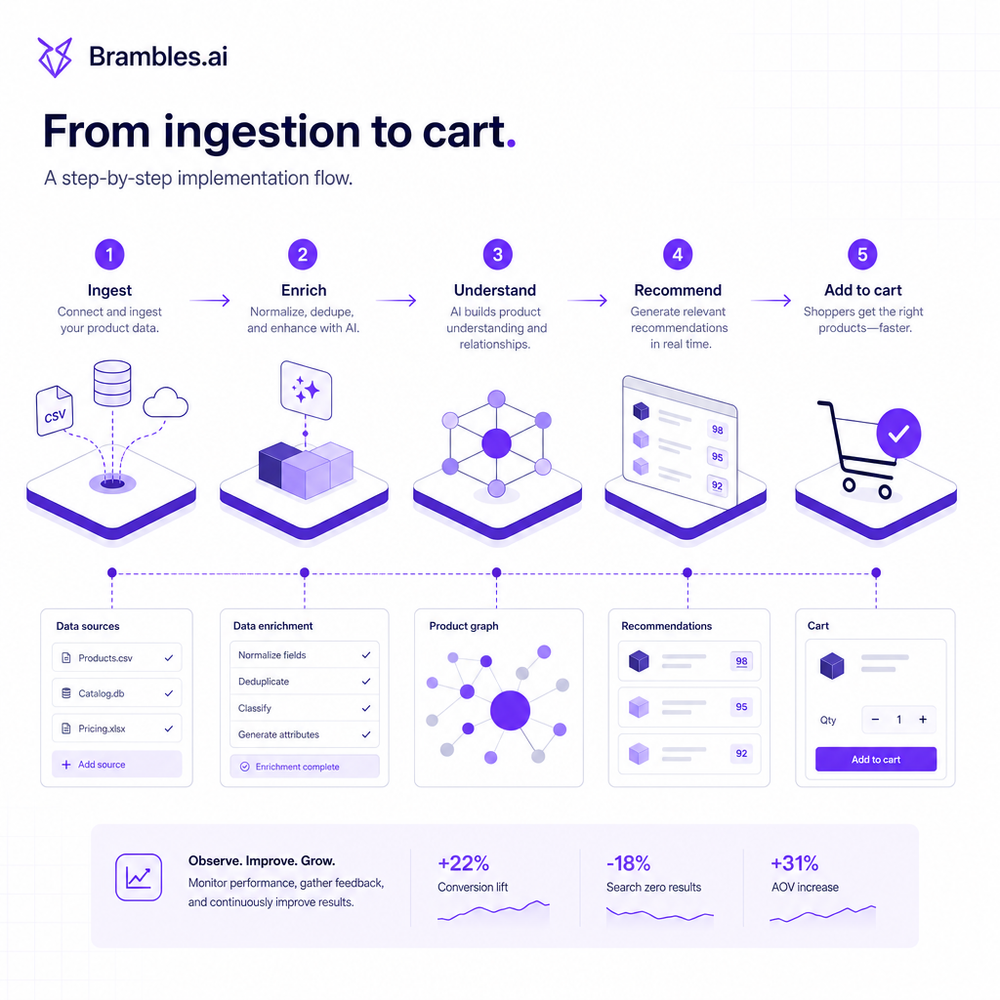
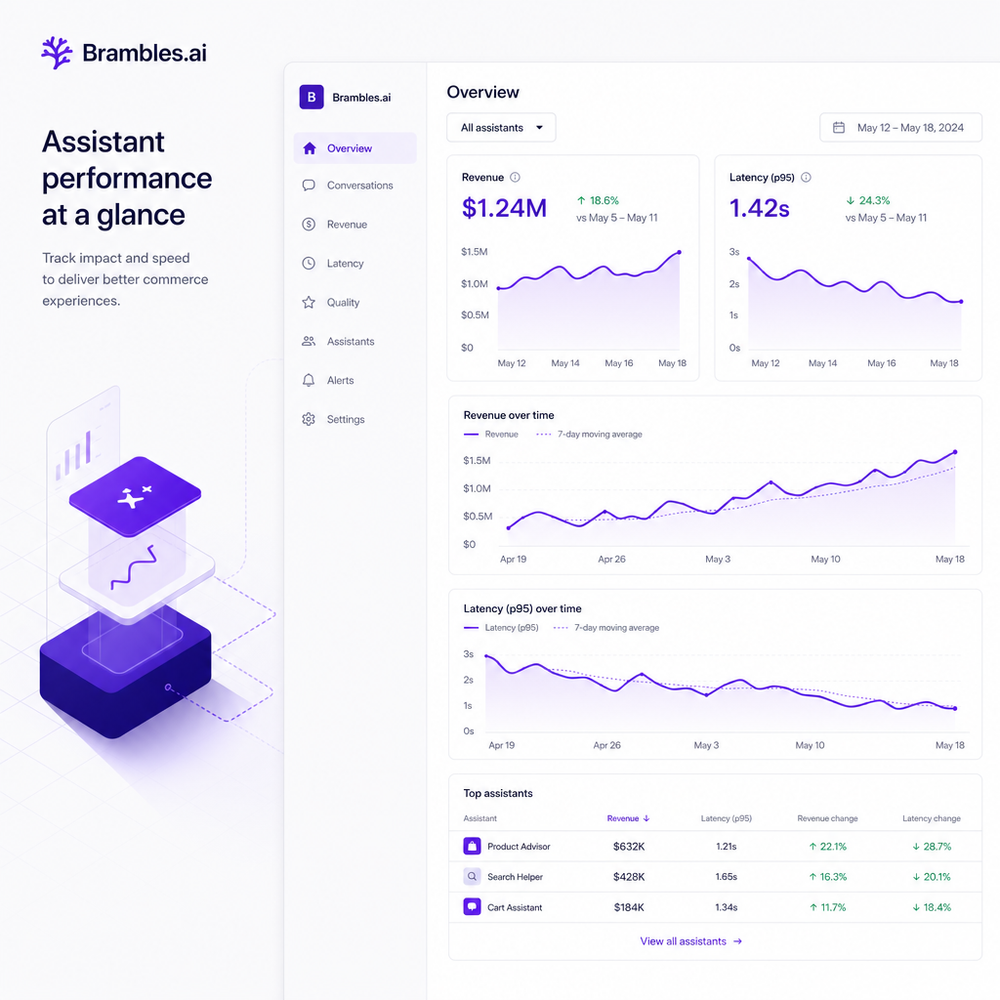
Anchor on money metrics. Track chat‑to‑cart, assisted conversion rate, revenue per session, AOV uplift, and containment (resolved without human). Add operational KPIs: p95 latency, clarification rate, deflection to PDP, and return‑risk flags.
Implementation details: fire GA4 events like assistant_view, assistant_message, assistant_add_to_cart, assistant_resolution. Use a holdout to isolate impact. A 100k‑session apparel pilot saw +42% chat‑to‑cart and +0.7 pp overall conversion; revenue per session rose 11% at p95 latency of 620 ms.
Set targets you can defend: chat‑to‑cart ≥ 25%, containment ≥ 60%, p95 latency ≤ 700 ms, AOV uplift ≥ 5%. McKinsey’s personalization benchmarks (10–15% revenue lift) are reachable when the assistant grounds in first‑party data and inventory realities.
First‑Party Data, Trust, and Compliance
Trust is a feature. The assistant should capture zero‑party preferences (sizes, allergies, budget) with explicit consent and show how they’re used. Salesforce’s Connected Customer research notes 73% expect better personalization for the data they share—deliver that or stop collecting.
Brambles.ai stores first‑party signals with scoped retention, honors regional consent, and supports SOC‑2‑aligned controls. For publishers, our monetization flow ties assistant recommendations to in‑content commerce without dark patterns; for brands, we constrain outputs to in‑stock SKUs and your policy canon.
We’ve seen opt‑in rates jump from 18% to 31% after adding plain‑language consent and a visible “Why this pick?” explainer. Baymard’s research on transparency aligns: clear, contextual help reduces abandonment and increases trust in recommendations.
Common Pitfalls (and How to Avoid Them)
Hallucinations tank trust. Require grounded responses with citations back to PDP content or policy docs. In Brambles.ai, we tune retrieval thresholds and block unsupported claims; when confidence dips, the assistant asks a clarifying question or routes to human chat.
Slowness kills intent. Enforce p95 latency SLAs and decouple retrieval from generation where possible. Cache popular queries and pre‑rank collections. If a vendor can’t show sub‑700 ms on your catalog, keep walking.
Catalog drift breaks relevance. Schedule hourly deltas for price, promos, and inventory. Brambles.ai’s Commerce Module listens for feed changes and re‑ranks in real time so the assistant never recommends out‑of‑stock variants.
Vague pricing stalls approval. Ask for outcome‑based plans with clear usage tiers and committed response times. Our teams prefer transparent unit economics you can tie to revenue per session, not seat licenses.
The Buyer Checklist (Print This)
Use this checklist in vendor calls. You want evidence, not demos.
- Catalog grounding: Can the assistant read PDP specs, shipping policies, and promo rules? Target: ≥95% SKU coverage on day one. Evidence: query logs with citations.
- Structured outputs: Does it return JSON with product/variant IDs, price, coupon, and quantity to your cart API? Target: zero parsing middleware.
- Latency: p95 under 700 ms for top 20 intents on your site. Show a load test report, not a promise.
- Safety and compliance: Guardrails for banned claims and age‑restricted products; SOC‑2‑aligned controls; regional consent handling built‑in.
- Clarification logic: Only asks follow‑ups when signal is weak; can cite why it recommends a SKU. Target: clarification rate 10–20% with high satisfaction.
- Integration fit: WordPress plugin or JS SDK, plus Shopify/BigCommerce support. Two‑week implementation possible without replatforming.
- Analytics and A/B testing: GA4 events for assistant interactions, holdout framework, and cohort analysis for new vs. returning users.
- First‑party & zero‑party data: Consentful preference capture; clear “Why this pick?”; easy deletion/export. Must boost opt‑in rate without dark patterns.
- Multi‑channel: Embeddable in site search, PDP chat, and content modules. For publishers, supports affiliate links and SKU coverage reporting.
- Pricing clarity: Usage tiers, latency SLA, and support response times. Tie cost to revenue per session and AOV targets, not seats.
- Vendor roadmap and control: Access to prompt templates, re‑ranking weights, and a rollback plan for peak season.
FAQ
Do I need RAG or a fine‑tuned model?
For commerce, RAG is the safer default—grounded in your catalog, policies, and inventory. Fine‑tuning helps for brand tone or repeated intents, but keep retrieval in the loop so outputs stay accurate and current.
How long does a proper launch take?
With Brambles.ai, most teams launch in 5–10 business days: ingestion, guardrails, UI drop‑in, QA on 20 tasks, then a 50/50 A/B. Complex catalogs may add a week for attribute mapping.
Will this cannibalize my curated PLPs?
Use the assistant to route shoppers faster to the right PLP or PDP, not replace them. Our tests show higher PDP depth and better filter usage when the assistant tees up precise entry points.
How does pricing and support work?
Outcome‑oriented pricing with clear usage tiers and latency SLAs beats seats. Brambles.ai includes implementation support and reporting so you can prove ROI within the first month.
Related resources on Brambles.ai
If you are implementing this, start with Brambles.ai, for publishers, for brands, get started.
For deeper reading, see 10 Reasons Publishers Need Conversational Commerce, Affiliate Disclosure in Conversational UIs Done Right, Contextual, Not Creepy: Monetization That Wins, From Search Boxes to Conversations: Modern Shopping UX.
Related posts
View all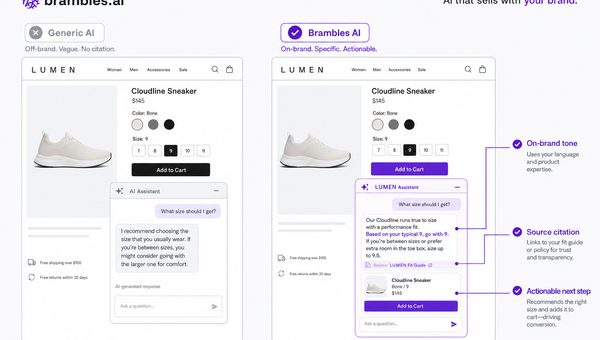
Brand-Consistent AI Chats Build Trust and Conversions
When AI mirrors your brand voice, shoppers relax—questions get answered, carts grow, and support load drops. Learn the playbook to align tone, trust, and ROI.
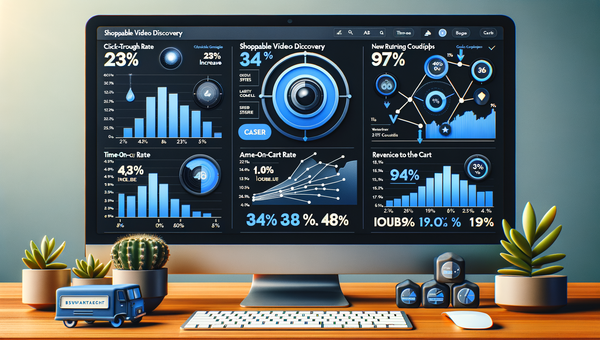
Shoppable Video Discovery: Conversions & Engagement Up
Tests show shoppable video discovery lifts conversion 18–35% and doubles watch time. See the UX patterns, KPIs, and how to deploy it quickly with Brambles.ai.
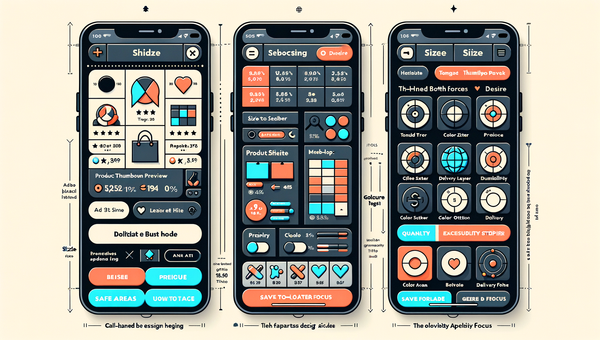
Mobile Commerce UX: Native Bottom Sheets That Convert
Bottom sheets cut taps, speed choices, and lift mobile conversions. Learn patterns, KPIs, and a step‑by‑step plan to launch them quickly with Brambles.ai.
Explore Brambles.ai
Learn more about our AI-powered agentic commerce platform, agentic shopping, and shopping assistance solutions.
Explore More Insights
Discover more articles on AI, automation, and business innovation
View All Articles