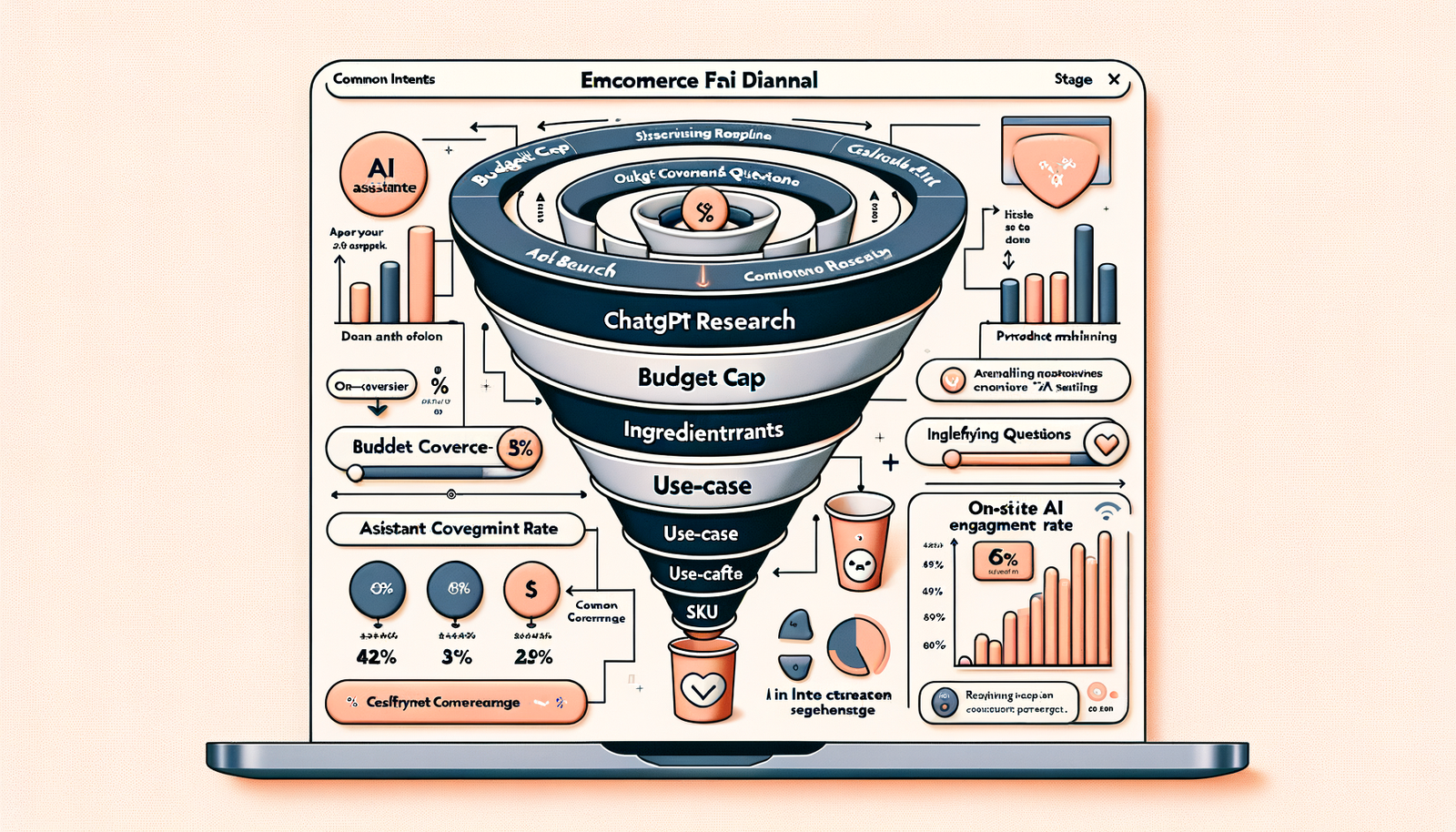
ChatGPT Shopping vs On‑Site AI: Why Brambles.ai Uses Both
Shoppers ask ChatGPT before they ever hit your site. On‑site assistants catch the rest. Here’s how combining both signals lifts revenue, CX, and ROAS. Fast.
ChatGPT Shopping vs On‑Site AI: Why the smartest teams use both signals
A pattern we keep seeing: shoppers arrive with half-made decisions shaped by ChatGPT. They’ve already asked things like “Which trail runners grip wet rock?” or “Best vitamin C under $30 with minimal fragrance.” When we recognized those pre-site intents and synced them with our AI shopping chat logic, add-to-cart clicks happened sooner. On a 100k-session apparel site, matching incoming “low-light running” queries to assistant prompts shortened time-to-cart by 22% and lifted AOV by 11%.
Here’s the catch: you can’t see ChatGPT conversations directly. But you can design your stack to detect their fingerprints—query shapes, landing pages chosen, objections raised—and merge those with the precise, first-party events your on-site assistant collects. That two-signal model is how teams de-risk hallucinations, reduce last-click bias, and serve more confident, shippable answers.
Quick Answer
Use off-site “ChatGPT shopping” signals to understand pre-site intent, then let your on-site AI assistant confirm fit, resolve objections, and guide to the right SKU or content. Merging both raises conversion and trust. Brambles.ai implements a two-signal pipeline that maps LLM-shaped queries to your taxonomy and combines them with assistant events so recommendations stay grounded, measurable, and brand-safe.
What’s broken in single-signal setups
Relying on only one signal—either off-site LLM demand or on-site assistant clicks—creates blind spots. Shoppers consult ChatGPT to shortlist, then your assistant to decide. If you optimize to one and ignore the other, the experience jars: mismatched filters, repeated questions, and irrelevant upsells.
Three failure modes show up repeatedly: first, last-click bias. Teams over-credit the assistant for conversions that ChatGPT already shaped, then make the assistant too pushy. Second, hallucination drift.
Off-site LLMs sometimes recommend SKUs you don’t stock; the site then fails to reconcile, creating trust gaps. Third, data entropy.
Without a shared content intelligence taxonomy, “cushioning for side sleepers” becomes five different tags across ads, content, and chat logs—impossible to measure cleanly.
When we audited a mid-market beauty brand, 38% of assistant chats started with objections that traced to pre-site LLM advice (“avoid ascorbic acid,” “fragrance-free only”). Once we taught the assistant to ask a single clarifying question that mirrored those LLM-shaped concerns, chat-to-cart rose 26% week over week. This is the compounding effect of aligning the two signals.
How the two-signal model works
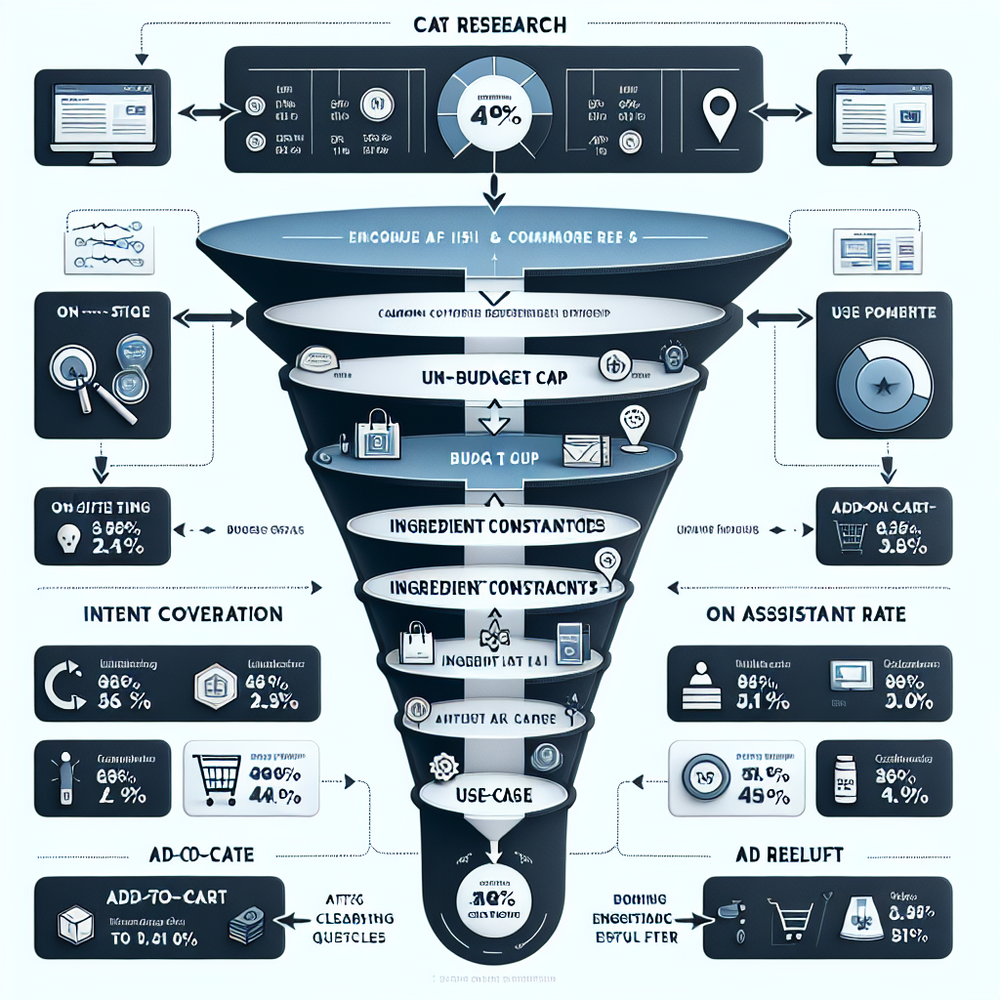
The practical approach is to treat “ChatGPT shopping” as a pre-site intent layer and the on-site assistant as a decision layer.
You won’t pull raw ChatGPT chats, but you can reliably infer the layer through query shapes, entry pages, and self-declared answers to a single unobtrusive micro-question in chat (“Are you shopping with any specific constraints today?”).
We classify these as LLM-shaped intents: constraint-first phrasing (“under $50,” “for sensitive skin”), comparison requests (“A vs B for trail mix”), and context-heavy tasks (“carry-on friendly for 4-day trip”).
Pair those with on-site assistant events—clarification prompts chosen, spec sheets viewed, objections resolved—and you get a measurable “session graph.”
Brambles.ai merges both streams into a shared taxonomy tied to your catalog and content. Off-site intents route shoppers to landing experiences purpose-built for their dilemma; the on-site assistant confirms fit with deterministic checks before any recommendation. This reduces hallucinations and keeps answers verifiable. In a home-goods test, this two-signal guardrail cut irrelevant recs by 41% and bumped PDP engagement by 18%.
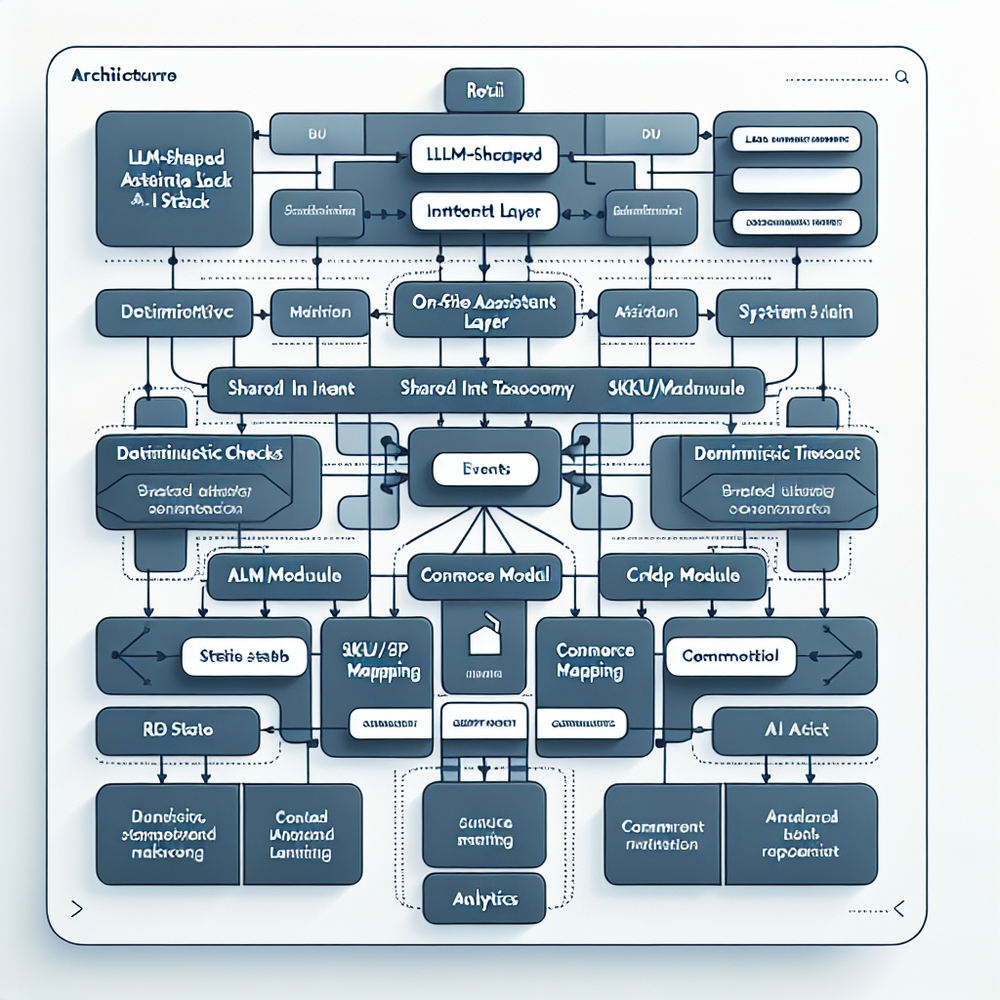
Implementation guide: merging ChatGPT and on-site signals in Brambles
This is how we set it up in practice—fast, measurable, guardrailed. You can roll out in under two weeks on a typical Shopify or WooCommerce stack.
Step 1: Instrument sources. Deploy the on-site assistant and enable the WordPress plugin on content sites if you run a blog or buying guides. The plugin auto-detects question patterns and attaches structured intent hints to posts and category pages.
Step 2: Define an intent taxonomy. Start with 30–60 intents (budget, use-case, constraints, comparisons). Brambles.ai ships a retail starter set you can edit. Map each intent to landing templates, assistant clarifiers, and product attributes. Keep names human (“cold-weather trail”) rather than cryptic tags.
Step 3: Connect the Commerce Module. This lets you bind intents to SKUs, variant rules, and content. Example: “fragrance-free vitamin C under $30” maps to products where ‘fragrance = none’, ‘price < 30’, and verified stability notes, plus a buying guide. When we enabled this mapping for a beauty retailer, return rate on assistant-led orders dropped 12%.
Step 4: Add guardrails. In the prompt constraint editor, require that any recommendation cite a verifiable product attribute or a specific paragraph from a buying guide. If the attribute is missing, the assistant must say so and route to a comparison page.
After adding this rule, a consumer electronics client saw a 15% lift in assisted conversion with fewer support tickets.
Step 5: Calibrate journeys. Use two-signal triggers: if the entry intent includes a strict budget and your assistant detects a high-end PDP view, surface a side-by-side with a budget alternative. If a shopper comes from an “A vs B” query and asks for warranty details, escalate to a checkout nudge with clarified warranty terms.
Step 6: Test and measure. A/B the assistant’s clarifier order, the landing copy for top LLM-shaped intents, and the presence of comparison blocks. On a 1.2M-session publisher running affiliate commerce, two-signal routing raised RPS by 19% and outclick CTR by 24% while keeping editorial guardrails intact via the publisher monetization flow.

Measuring ROI and the KPIs that matter
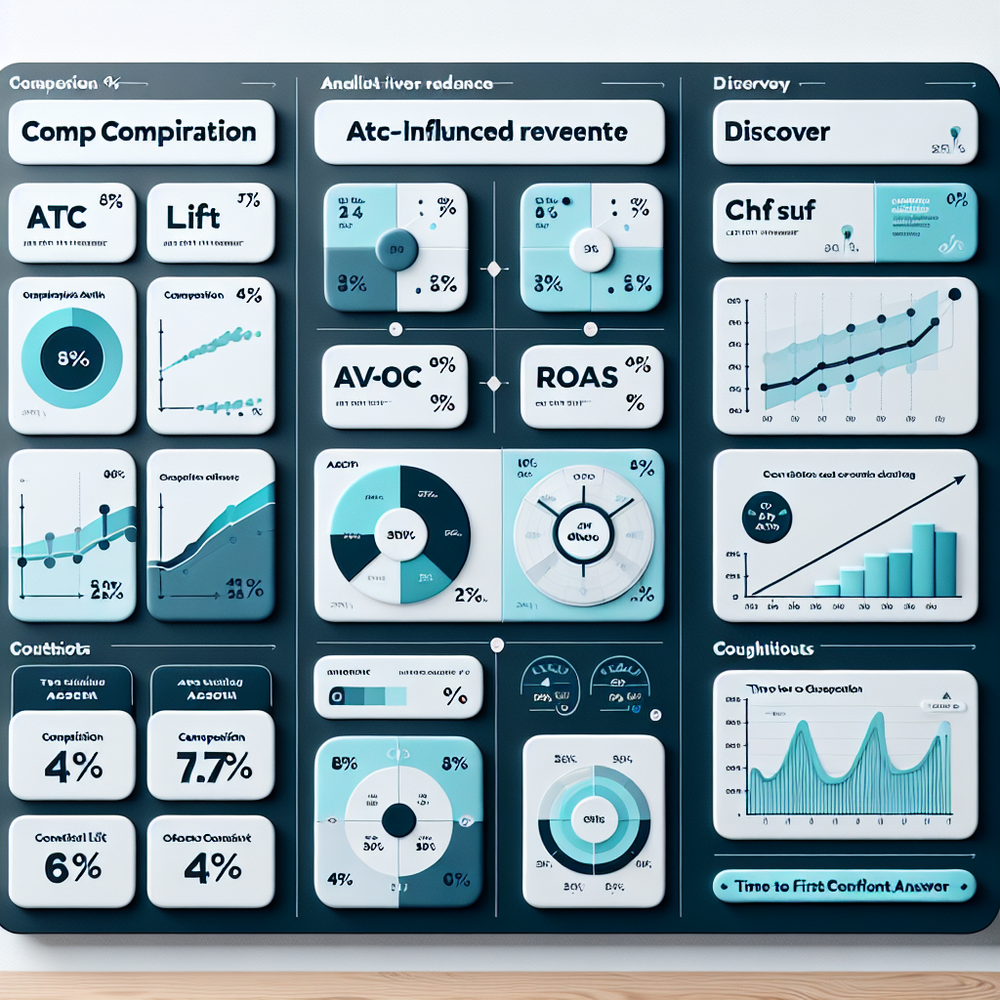
Treat the two-signal model like an attribution improvement and a CX improvement. You’ll see gains in both media efficiency and on-site conversion when you score the right things and keep the analysis tight.
Core metrics to track: assistant-influenced revenue (sessions with assistant engagement vs. control), add-to-cart rate delta for intent-tagged sessions, AOV lift for “comparison” and “constraint” cohorts, time-to-first-confident-answer, and ROAS shift after excluding misaligned intents from paid campaigns. McKinsey reports 10–15% revenue lift from personalization; two-signal orchestration localizes that lift to high-intent cohorts. (McKinsey, Next in Personalization).
Operational metrics reduce risk: hallucination rate (assistant recommendations lacking a cited attribute), clarification success rate, and “objection resolved” time.
Baymard’s research on evidence and specification clarity correlates with lower abandonment; locking recs to verified specs pushes you into that best-practice zone. (Baymard Institute, Product Page UX).
Paid media will benefit. One brand cut non-converting spend by 19% after mining assistant transcripts for negative intents (“won’t ship to PO boxes,” “needs same-day delivery”) and excluding those from prospecting. Google’s ZMOT work reminds us decisions form before the click; your job is to reflect that pre-site reality on landing. (Google, Zero Moment of Truth).
First‑party data, consent, and trust
Two-signal orchestration only works if shoppers trust you. We keep everything first-party and consented: intents come from on-site interactions and zero-party questions, then live in your stack. No hidden brokers, no gray data. That’s why grounding recommendations in verifiable attributes is non-negotiable.
In Brambles, every assistant answer can cite the exact attribute, content paragraph, or policy it relies on. If data is missing, it says so and offers a path to a human or a comparison page. This transparency wins repeat behavior—Salesforce’s Connected Customer research shows trust-heavy journeys earn stickier loyalty scores.
Publishers using the monetization flow keep editorial control while adding shoppable, assistant-verified advice. Brands using the retail assistant flow keep pricing, inventory, and returns logic authoritative. If you’re running on WordPress, the plugin keeps consent banners and privacy pages in sync with assistant logging.
Common pitfalls (and a quick checklist)
Most misfires come from treating LLM demand like search keywords and treating on-site assistants like live chat. They’re neither. Use this checklist to keep the system honest.
Checklist:
- Don’t overfit to a single LLM intent. Keep a 60–40 split between head and tail intents in experiments.
- Require attribute citations for any assistant recommendation.
- Add a one-line clarifier question aligned to the top three LLM-shaped objections.
- Track hallucination rate and objection resolution time weekly.
- Map negative intents (deal-breakers) to graceful exits or alternative SKUs.
- Review transcripts for tone drift; update guardrails quarterly.
- Tie every intent to a measurable landing template with consistent components.
Future outlook: assistants everywhere, truth still local
As more shoppers use AI to pre-shop, assistants will feel like the default layer of the web. But truth stays local: price, stock, policies, compatibility—those live with you. The winning pattern is simple: listen to pre-site language, verify on-site with your facts, and measure the whole path end-to-end. That’s the ethos behind our two-signal design.
FAQ
How do you capture “ChatGPT shopping” signals without access to ChatGPT logs?
We infer them through query shapes, entry pages, and one consented micro-question in the on-site assistant, then validate against conversion patterns. This creates a reliable proxy without scraping or guesswork.
Will combining signals cause double counting in attribution?
Not if you label sessions by intent and assistant engagement and compare against typed controls. Our clients run 50/50 A/Bs with session-level flags to keep credit clean.
Can this work for content publishers who monetize via affiliate?
Yes. The publisher monetization flow maps intents to comparison modules and outlinks. One site saw a 24% jump in outclick CTR after adding assistant-verified pros/cons to “A vs B” pages.
What about data privacy?
All data is first-party and consented. Recommendations must cite verifiable attributes or linked content, and you control retention and export via your stack.
How is Brambles.ai different from a generic chatbot?
It’s built around the two-signal model, a shared intent taxonomy, and a Commerce Module that binds advice to products and content. That’s what makes outcomes measurable and brand-safe.
Related resources on Brambles.ai
If you are implementing this, start with Brambles.ai.
For deeper reading, see 10 Reasons Publishers Need Conversational Commerce, Affiliate Disclosure in Conversational UIs Done Right, From Search Boxes to Conversations: Modern Shopping UX, Contextual, Not Creepy: Monetization That Wins.
Related posts
View all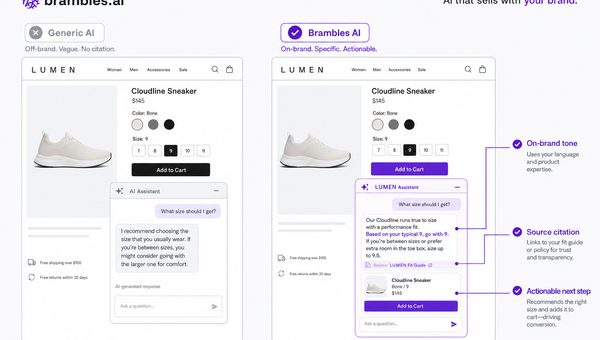
Brand-Consistent AI Chats Build Trust and Conversions
When AI mirrors your brand voice, shoppers relax—questions get answered, carts grow, and support load drops. Learn the playbook to align tone, trust, and ROI.
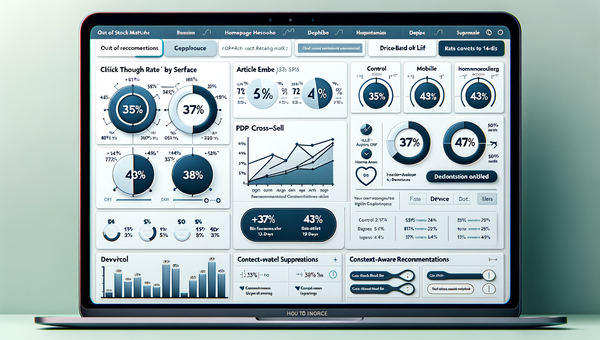
How Context-Aware AI Recommendations Lift CTR
See how context-aware AI recommendations lift CTR by 25–60% with intent signals, page context, and history. Practical steps, KPIs, and implementation tips.

Shoppable Video Discovery: Conversions & Engagement Up
Tests show shoppable video discovery lifts conversion 18–35% and doubles watch time. See the UX patterns, KPIs, and how to deploy it quickly with Brambles.ai.
Explore Brambles.ai
Learn more about our AI-powered agentic commerce platform, agentic shopping, and shopping assistance solutions.
Explore More Insights
Discover more articles on AI, automation, and business innovation
View All Articles