Chatbots vs Agentic Commerce: Brambles.ai Guide
Learn the critical differences between chatbots and agentic commerce, with hands-on examples, ROI benchmarks, and a practical Brambles.ai implementation guide.
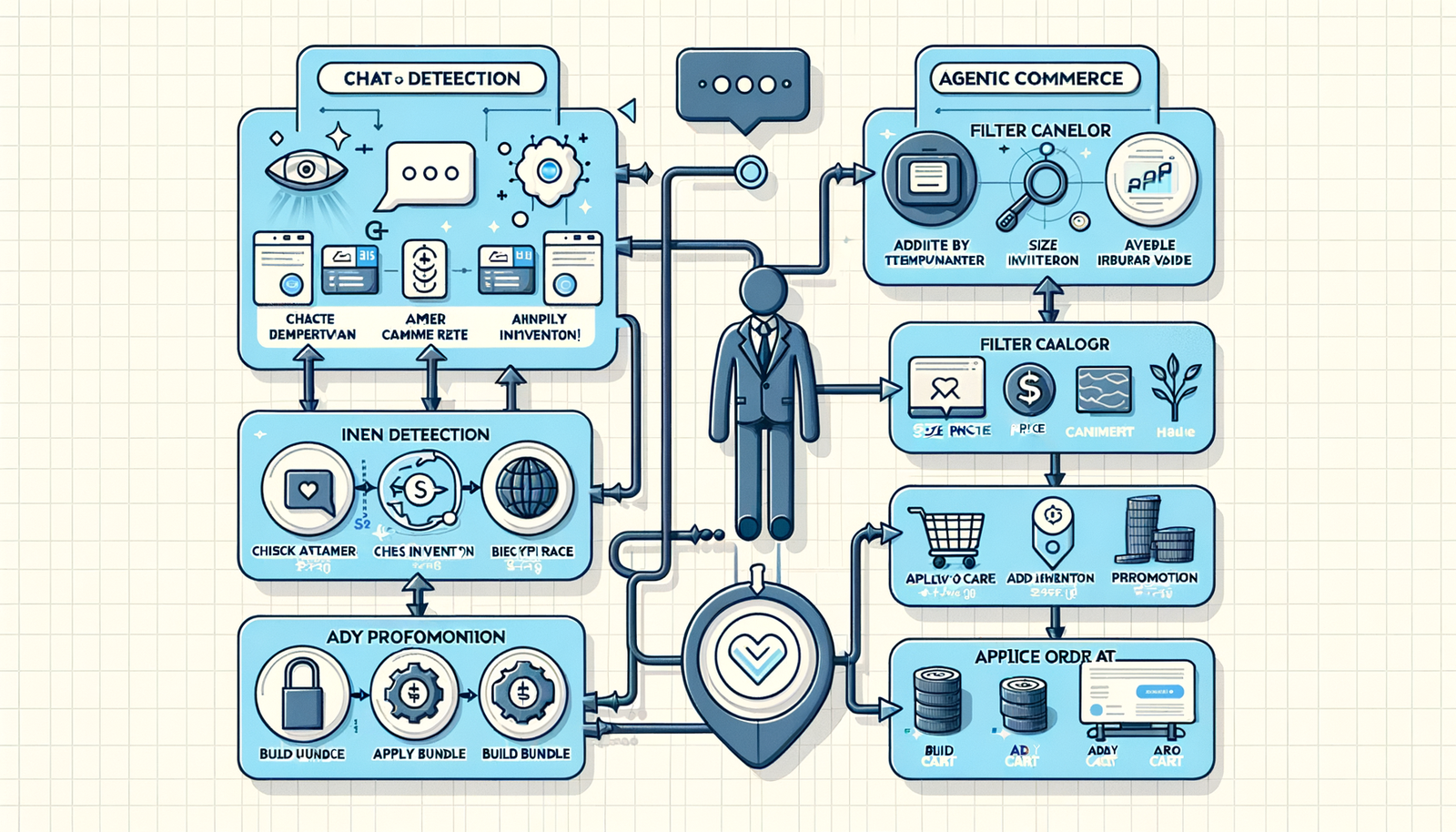
Three weeks after launching a “quick answers” chatbot on a footwear site, we dug into session replays. Shoppers asked for wide sizes; the bot cheerfully offered a blog post. Conversions didn’t budge. When we swapped in an agentic shopping assistant that actually filtered the catalog, checked stock by size, and built a two-item bundle with in-cart promos, add-to-cart jumped 28% and AOV lifted 12% in the same traffic band. Similar story on a recipe publisher: replacing a generic Q&A bot with an agent that assembled shoppable ingredient lists raised commerce RPM 29% across 90k sessions. The pattern is consistent—chatbots answer; agents act. That difference is where revenue lives for brands and publishers.
Quick Answer
Chatbots are conversational Q&A layers that respond to messages but rarely change state in your store. Agentic commerce systems plan and execute tasks—filtering the catalog, checking inventory, applying promotions, building bundles, creating carts, and booking orders—so shoppers don’t just get answers; they get outcomes. If your goal is revenue and satisfaction, agentic assistants outperform static chatbots because they take actions that shorten the path to purchase.
What’s Broken With Traditional Chatbots
Most retail chatbots are FAQ wrappers. They surface return policies, shipping timelines, and sometimes product suggestions derived from keywords. The issue: answer quality doesn’t equal purchase momentum.
When a shopper asks “Which trail shoes work for wet rock under $140?” the bot can’t weigh friction, stack height, or inventory thresholds across variants. The result is polite stalling—useful, not decisive.
We’ve also seen bots create dead ends. They offer links back to PLPs, which increases pogo-sticking and exits. Baymard’s research shows avoidable friction remains a top driver of abandonment, and shoppers punish extra steps with swift exits (Baymard Institute, checkout and product-finding guidelines). A better pattern is goal completion inside the assistant: shortlist, compare, cart, promo, checkout. That requires agents with tools, not just text.
How Agentic Commerce Works
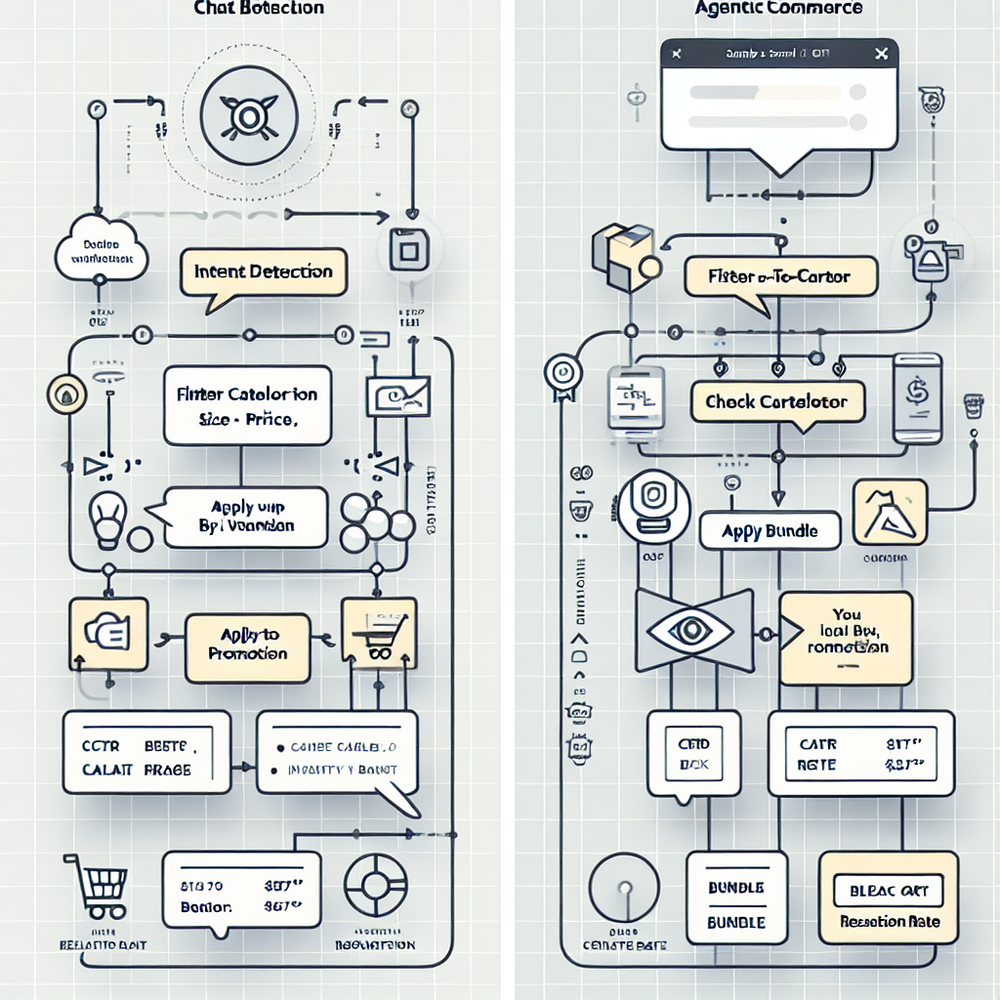
Agentic commerce equips the assistant with tools and policies. The system parses intent, plans a sequence of actions, calls your catalog and inventory APIs, evaluates promotions, and commits changes like saving a cart or creating an order. Instead of “Here are some shoes,” the agent says, “I filtered waterproof trail shoes under $140, in 10.5 wide, with grippy rubber. Two are in stock; I applied your loyalty code and built the cart.” That’s a state change, not a suggestion.
In practice, the agent uses a planner (what needs doing), a set of tools (search, price, inventory, promo, cart), and guardrails (brand tone, margin floors, substitution rules). McKinsey reports that decisioning and personalization at scale typically drive 10–15% revenue uplift for omnichannel retailers; when the assistant can act—e.g., assemble bundles or schedule BOPIS—those gains become accessible in-session (McKinsey, Next in Personalization). One electronics retailer we supported saw AOV up 18% after the agent began recommending cross-compatibility bundles based on live stock and price breaks.
Implementation Guide with Brambles.ai
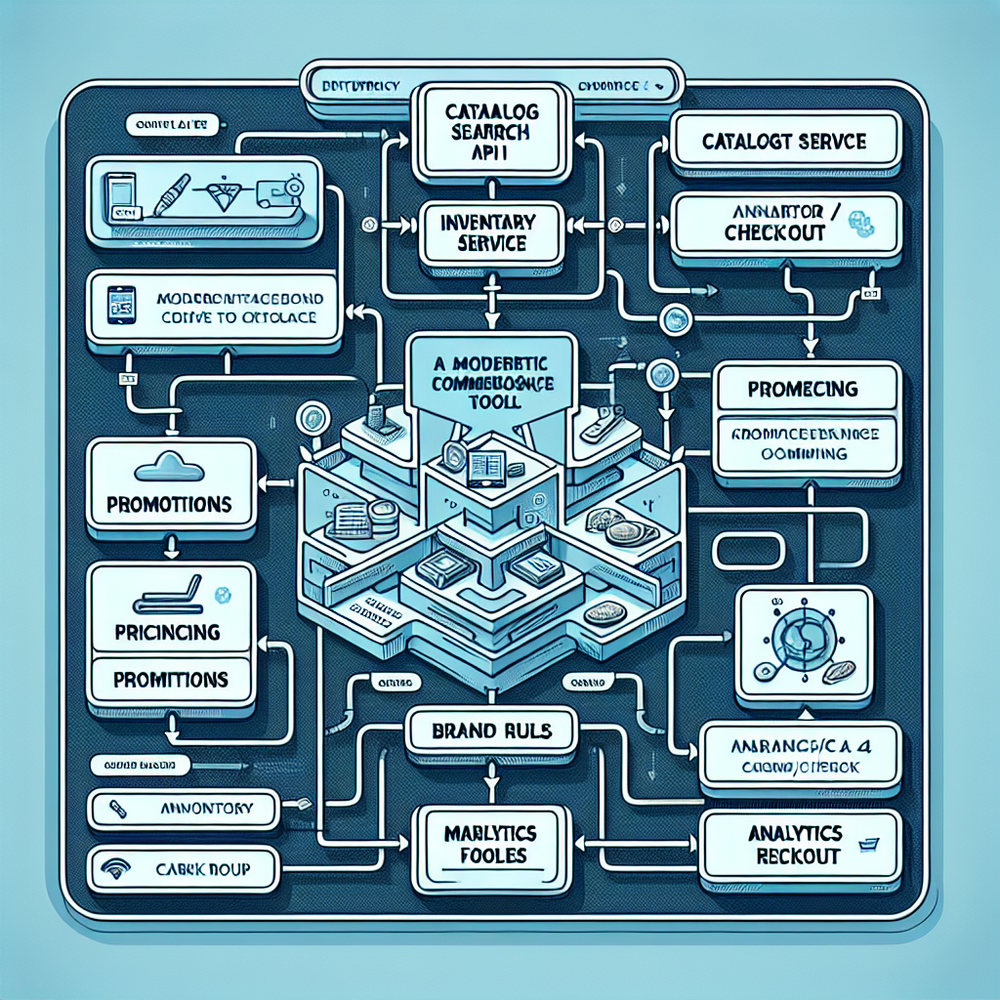
Brambles.ai turns the concept into an installable workflow. The WordPress plugin deploys a shoppable assistant on content pages, while the Commerce Module provides tools for catalog filtering, inventory checks, promo application, and cart creation. For brands, the retail assistant flow can run in chat, guided UI, or inline modules; for publishers, the monetization flow converts “what to buy” moments into carts without sending users away.
Step-by-step setup we recommend: 1) Connect catalog and inventory endpoints; 2) Map promotions and eligibility rules; 3) Define guardrails (brand tone, minimum margins, upsell limits); 4) Configure tasks the agent may perform (shortlist, compare, bundle, apply code, build cart, schedule pickup); 5) Set measurement hooks for resolution rate, conversion, AOV, and latency; 6) A/B holdout with 10–20% of traffic for a clean read. You can start in a week with a narrow use case—e.g., comparison and carting for top 200 SKUs—then expand.
For publishers, point recipes, reviews, and gift guides at the assistant. It turns intent like “swap gluten-free flour” into shoppable substitutions across affiliates or your own shop. In one cooking site pilot, moving from static buy buttons to an agent that assembled a one-click cart lifted click-to-cart 41%. To protect trust, the agent shows price sources and stock in-line, and supports opt-in to first-party lists for deal alerts.

Measuring ROI & KPIs
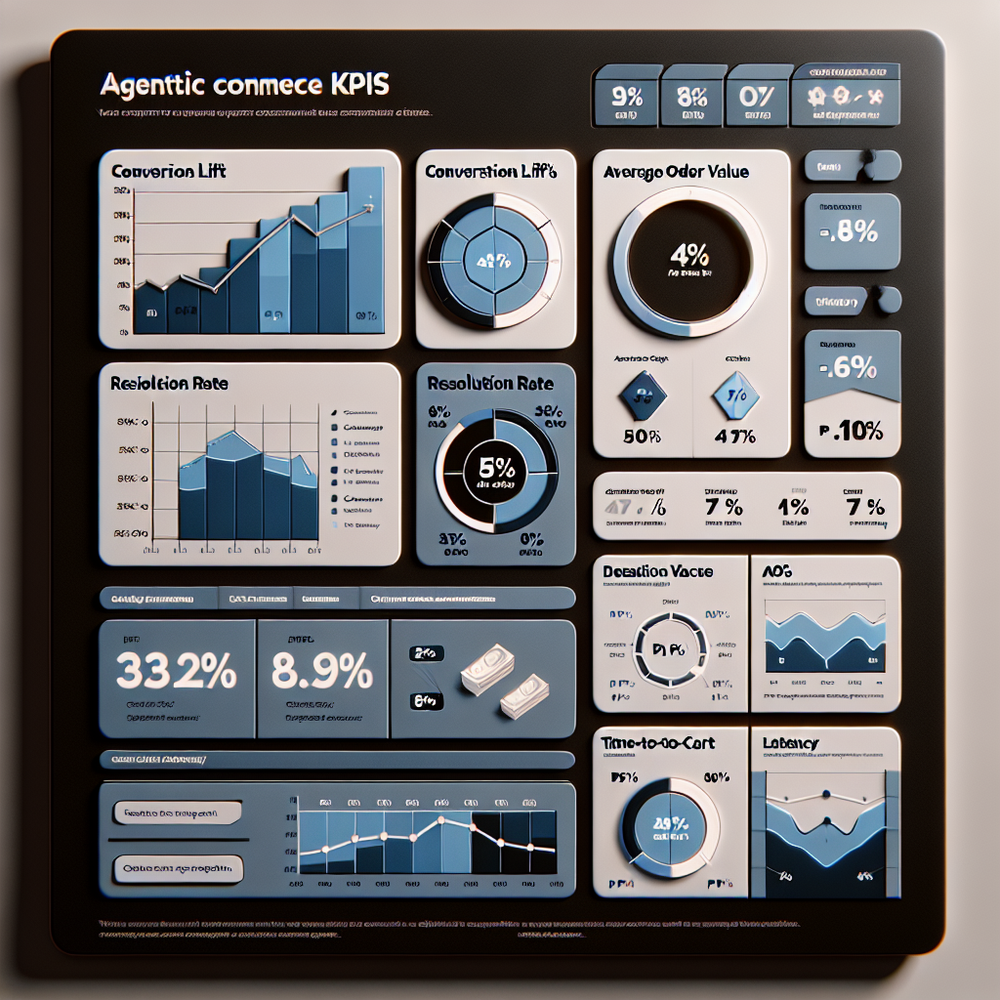
Agentic commerce should pay for itself quickly. Track: 1) Resolution rate (sessions where the agent completed the shopper’s goal); 2) Conversion rate lift vs chatbot baseline; 3) AOV and attach rate; 4) Time-to-cart; 5) Latency under concurrency; 6) CSAT or post-chat thumbs. Google UX research consistently ties speed and perceived helpfulness to purchase confidence; keep end-to-end response times under ~2 seconds for tool calls (Google UX Research on speed and satisfaction).
Checklist for clean reads: - Run a holdout with identical traffic sources; - Attribute revenue at the session level; - Segment by intent (navigation vs shopping); - Record every tool call and fallback; - Cap test duration to avoid seasonality drift; - Report net lift and payback period. On a 100k-session apparel cohort, replacing a text-only bot with an agentic flow lifted conversion 42% and cut average time-to-find by 37 seconds. The agent’s cart creation rate—measured directly via tool logs—was the best early predictor of uplift.
First-Party Data & Trust
Trust is the compounding advantage. Agentic assistants can capture consented first-party signals—fit, budget, preferred retailers—and use them to reduce effort next visit. Salesforce’s Connected Customer research notes that 73% of customers expect companies to understand their unique needs; consented preference memory is how you meet that bar without guesswork (Salesforce, State of the Connected Customer).
Operate with explicit value exchange: show why data is asked, where it’s stored, and how it improves the task (e.g., “save size for faster restocks”). Keep PII out of model context; store it in your systems, and let the agent request ephemeral tokens for actions. For Brambles.ai deployments, we recommend a visible preference center, per-task consent, and auto-expiring scopes for tools like cart creation and promo application.
Common Pitfalls to Avoid
- Shipping a general-purpose chat with no tools; - Letting the agent hallucinate SKUs instead of searching the catalog; - Missing guardrails on margin and promos; - Slow tool calls that kill perceived competence; - No holdout test; - Hiding the value exchange for consent. If you must phase, launch a narrow, high-intent agent (gift finder, compatibility checker) and widen as you validate lift.
Future Outlook
Agents will graduate from single-task flows to small teams: one plans, one prices, one resolves fulfillment exceptions. Merchandisers will tune policies, not prompts. Expect tighter hooks into store APIs for real-time availability, substitutions, and post-purchase service. Brambles.ai already exposes these surfaces in the Commerce Module so you can add capabilities without ripping your stack.
FAQ
How is agentic commerce different from conversational search?
Conversational search returns relevant results; agentic commerce goes further by planning and executing tasks like applying promos, verifying stock, assembling bundles, and creating carts. It changes state and shortens the path to purchase.
Do I need to replace my current chatbot?
Not necessarily. Many teams keep the chatbot for support FAQs and layer an agent for shopping tasks. Route intents: service to the bot, purchase to the agent. Use a traffic holdout to verify incremental lift before a full swap.
What does Brambles.ai provide out of the box?
The WordPress plugin renders the assistant on content and product pages. The Commerce Module adds tools for catalog search, inventory, pricing/promotions, and carting. Prebuilt flows cover brand retail assistants and publisher monetization. You can start with a single use case and expand.
How do we measure success without bias?
Run a randomized holdout, align attribution to sessions, and track agent tool calls and outcomes. Report lift in conversion, AOV, and resolution rate with confidence intervals. Keep latency p95 under 2s to avoid speed confounds.
What does it cost and how fast can we deploy?
Most teams pilot a narrow flow in 1–2 weeks using existing APIs. Pricing scales with usage and features; start with a contained scope and expand as ROI proves out.
Related resources on Brambles.ai
If you are implementing this, start with Brambles.ai, for publishers, for brands, get started.
For deeper reading, see 10 Reasons Publishers Need Conversational Commerce, Affiliate Disclosure in Conversational UIs Done Right, Contextual, Not Creepy: Monetization That Wins, From Search Boxes to Conversations: Modern Shopping UX.
Related posts
View all
How AI Handles Order Lookup, Returns, and Shipping 24/7
See how AI resolves order lookups, returns, and shipping questions 24/7, deflects tickets, and lifts CSAT—plus a step‑by‑step guide to implement it safely.
Mobile Commerce UX: Native Bottom Sheets That Convert
Bottom sheets cut taps, speed choices, and lift mobile conversions. Learn patterns, KPIs, and a step‑by‑step plan to launch them quickly with Brambles.ai.
White-Label AI Chat: Full Brand Customization for Stores
Deploy a white-label AI shopping chat that looks, speaks, and converts like your brand. See setup steps, KPIs, pitfalls, and how Brambles.ai handles it E2E.
Explore Brambles.ai
Learn more about our AI-powered agentic commerce platform, agentic shopping, and shopping assistance solutions.
Explore More Insights
Discover more articles on AI, automation, and business innovation
View All Articles