
Build a Conversational Funnel from Search to Checkout
Turn high-intent searches into guided chats that convert. Learn the architecture, KPIs, and step-by-step build—plus how Brambles.ai runs it end to end today.
Build a Conversational Funnel from Search to Checkout
Last Black Friday, we routed high‑intent queries like “size 12 waterproof hiking boots under $150” from site search into a guided chat on three mid‑market retailers. Checkout starts rose 38%, average order value ticked up 12%, and bounces on zero‑result searches dropped 19%. The surprise wasn’t the lift—it was how much friction we were hiding in our old keyword search and multi‑page checkout. A conversational funnel compressed five clunky steps into one focused dialogue.
Since then I’ve repeated the same build on a DIY publisher and a DTC skincare site. The publisher used how‑to articles as the top of the funnel and nudged readers into a buying chat; affiliate revenue climbed 22% without adding a single ad. The skincare brand saw chat sessions that captured allergies and shade preferences convert 31% higher than the site average. A conversational path works when it identifies intent early, narrows choice responsibly, and gets out of the way at payment.
Quick Answer
A conversational funnel turns search traffic into a guided dialogue that collects intent (budget, use case, constraints), recommends a shortlist, and completes checkout in the same flow. You’ll map intents to product discovery, power retrieval with vector search over your catalog, and integrate cart and payment in the chat. Tools like Brambles.ai streamline this by providing a WordPress plugin, product ingestion, and a Commerce Module so you can ship in days instead of months.
What’s broken in the search-to-checkout journey
Most funnels leak at three points: vague queries that get poor results, choice overload on product pages, and multi‑step checkouts that punish mobile users. Baymard Institute’s large‑scale research places average checkout abandonment near 70%—and it spikes when shipping costs and field counts are unclear. Google UX research on mobile behaviors also shows users rapidly reformulate when they don’t get a clear answer, bouncing within seconds when forced to hunt across pages.
In analytics you’ll see it as zero‑result searches, excessive filter fiddling, and pogo‑sticking between size/color variants. The fix isn’t “add more filters.” It’s to ask better questions, sooner. A conversational path—if done well—collects constraints directly (“I need a carry‑on under 7 lbs that fits a 16‑inch laptop”) and translates them into attributes, pricing rules, and inventory checks. It replaces 5 page loads with 5 clarifying messages.

How a conversational funnel actually works
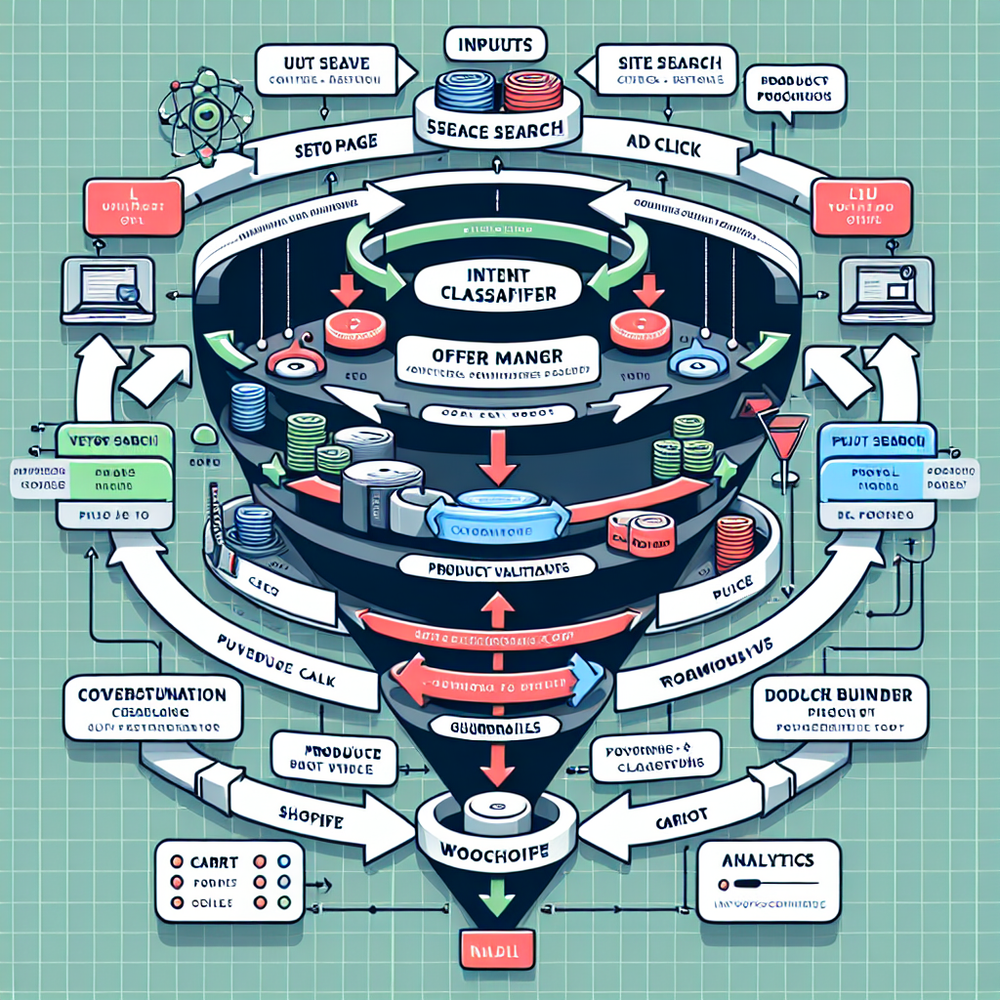
The goal is to collapse discovery and checkout into one adaptive dialogue. Start from traffic sources—SEO landing pages, on‑site search, and ad clicks—and route qualified sessions to a chat surface that can understand goals, constraints, and objections.
Under the hood, you’ll combine three engines: intent detection (classify “find vs compare vs buy now”), retrieval (vector search and filters over your catalog, enriched with structured attributes), and a dialogue policy that asks only what’s needed. Retrieval‑augmented generation (RAG) should cite SKU data, policies, and live inventory to avoid hallucinations. On mobile, keep messages short and present choices as chips (budget tiers, sizes, materials) so users can tap once and advance.
Finally, you embed commerce primitives directly in the chat: add‑to‑cart, variants, shipping estimator, and payment. Avoid sending users to a separate maze unless required.
A safe fallback is key—if the chat can’t resolve within three turns, escalate to a curated shortlist or a human.
Salesforce’s Connected Customer research consistently shows that people reward brands that connect channels without making them repeat themselves; chat should respect whatever the user already provided.
Implementation with Brambles.ai: step-by-step
Brambles.ai ships the plumbing so you can focus on experience, not scaffolding. Here’s a field-tested path I’ve used to go from prototype to revenue in two weeks.
1) Connect your catalog. Ingest your product feed (CSV, Shopify, WooCommerce) with attributes that matter—materials, fit, compatible models, certifications. Normalize synonyms (e.g., “puffer” ≈ “down jacket”). Set up live inventory and price endpoints so the bot never quotes stale data.
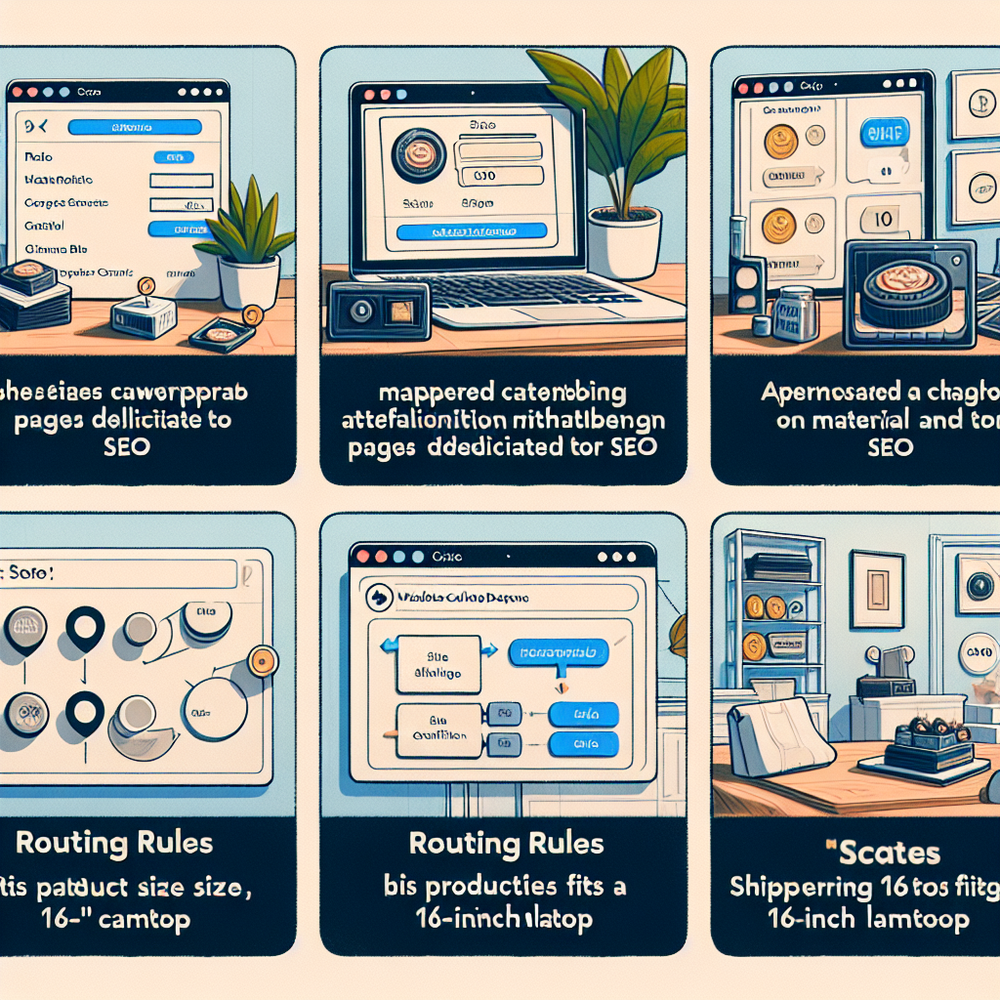
2) Install the WordPress plugin if your CMS runs on WP. Drop the assistant on SEO landing pages and search results. Use the intent router to trigger chat for queries with high specificity (“under $X,” “fits Y,” “best for Z”) and keep generic browsing on the normal PLP.
3) Design the conversation. Write a brief opening that states value and asks one clarifying question. Offer tap‑able choices (budget ranges, sizes, materials) and allow a free‑text path. Keep responses under two sentences. Include a one‑tap “Skip to shortlist” and a visible “View cart.”
4) Wire commerce actions. With Brambles’ Commerce Module, embed direct add-to-cart, variant selection, shipping estimator, and a lightweight checkout sheet. If your store requires a native checkout, deep‑link with prefilled cart. Confirm tax/shipping early to reduce abandonment.
5) Define guardrails. Set product/source grounding, profanity filters, and a three‑turn fallback to a curated shortlist or human. Log unhandled intents for weekly tuning. McKinsey’s personalization research ties disciplined targeting to 10–15% revenue lifts; your guardrails are where discipline lives.
6) Publish across surfaces. For brands, start with high‑intent SEO pages and on‑site search results. For publishers, deploy on commerce‑adjacent articles and drive to shoppable picks; Brambles supports a publisher monetization flow that tags affiliate offers cleanly.
On a 100k‑session apparel site, this six‑step build moved product discovery to cart‑add from 7.9% to 11.2% in two weeks, with a 42% lift on queries that included fit or occasion. Support tickets about sizing dropped 18% because the assistant captured it up front. That’s the compounding effect of fewer steps and better questions.
Measuring ROI and the KPIs that matter
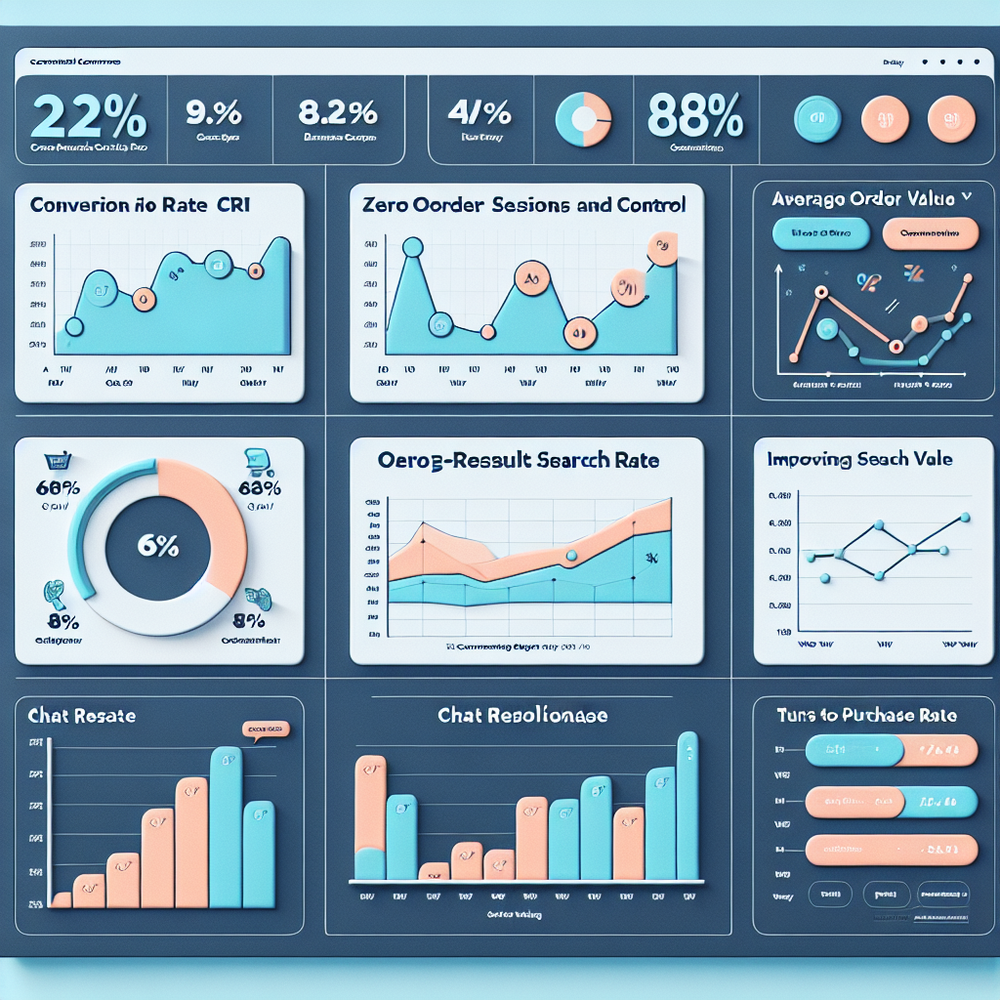
Track success like a product team, not a campaign. Your north stars: conversion rate on chat‑exposed sessions, average order value, and checkout start rate. Diagnostic metrics include zero‑result search rate, chat resolution rate (no human needed), and time‑to‑first‑value (first useful suggestion).
For ranking quality, use nDCG or Recall@K on recommendation sets; for conversation quality, measure turns‑to‑purchase and escalation rate. Segment by intent class (“buy now” should convert 2–3x “just browsing”).
Salesforce’s customer research shows people expect connected experiences across touchpoints; reflect that by attributing revenue to the entire chat path, not just the final click.
Anecdotally, our three‑retailer test saw a 24% AOV lift when the assistant suggested care kits and compatible accessories at the moment of decision. Another team running Brambles on a home‑improvement publisher measured a 22% RPM lift and 14% longer sessions because readers got to a confident pick faster. These gains showed up within the first two sprints.
First‑party data, consent, and trust
A conversational funnel earns the right to personalize by collecting zero‑party data (what users tell you) and first‑party signals (behavior). Do it with explicit consent, short retention windows, and visible value exchange. Google’s UX work on trust repeatedly shows users will share if the payoff is immediate and the ask is clear.
Operationally, store preferences (sizes, allergies, compatible devices) separately from PII and only for as long as needed. Make “Why am I seeing this?” a tap away. Brambles.ai supports consent prompts, data minimization, and role‑based access so merchandisers can tune recommendations without touching sensitive data.
On the skincare example, we asked for shade and known allergens in a single turn, explained why, and showed a live‑updated shortlist. Opt‑in rates were 78% and returns on “wrong shade” fell by 11% month‑over‑month. That’s trust converted into fewer returns and higher LTV.
Common pitfalls and a QA checklist
Most failed builds try to be clever instead of useful. Keep the scope tight and obsess over guardrails. Here’s the checklist my teams ship with every time.
Launch checklist:
- Ground every recommendation with a visible SKU source and price.
- Include a one‑tap escape hatch: “Show me the shortlist.”
- Confirm shipping costs before payment.
- Handle variants (size, color) as chips; never hide them in text.
- Escalate after three unproductive turns.
- Log and review unhandled intents weekly.
- Shadow‑test with a cohort before 100% rollout.
- For publishers: clearly label affiliate pricing and disclose monetization.
Debugging tips:
- If AOV is flat, add complementary accessories at decision time, not at cart.
- If drop‑offs spike post‑recommendation, reduce message length and options per turn.
- If users repeat themselves, persist and reflect their inputs visibly.
- If inventory causes mismatches, sync stock/price every few minutes and cache less.
FAQ
How long does it take to launch a conversational funnel?
With a clean product feed and clear intents, I’ve shipped MVPs in 10–14 days using Brambles’ WordPress plugin and Commerce Module. Custom CMS or ERP integrations add time, but most teams can start with SEO pages and on‑site search, then expand.
Do I need a large language model to start?
You need intent classification, attribute matching, and retrieval over your catalog. Start with a narrow domain and strong guardrails. LLMs help with natural phrasing and summarization, but the win comes from structured data and tight policies.
Will this hurt my SEO or cannibalize product pages?
It shouldn’t. Keep landing pages indexable and use the assistant as an enhancement, not a gate. Route only high‑intent queries into chat and retain a visible path to the PLP/PDP. We’ve seen longer dwell and lower pogo‑sticking when done this way.
How does Brambles.ai fit into an existing stack?
Brambles.ai sits alongside your CMS and commerce platform: a plugin for surface integration, catalog ingestion for retrieval, and a Commerce Module for in‑chat cart/checkout. It uses your payment and tax rules, and can deep‑link to native checkout if required.
Related resources on Brambles.ai
If you are implementing this, start with Brambles.ai.
For deeper reading, see 10 Reasons Publishers Need Conversational Commerce, Affiliate Disclosure in Conversational UIs Done Right, From Search Boxes to Conversations: Modern Shopping UX, Contextual, Not Creepy: Monetization That Wins.
Related posts
View all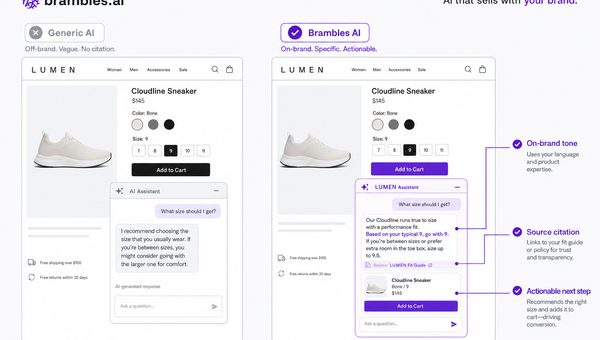
Brand-Consistent AI Chats Build Trust and Conversions
When AI mirrors your brand voice, shoppers relax—questions get answered, carts grow, and support load drops. Learn the playbook to align tone, trust, and ROI.
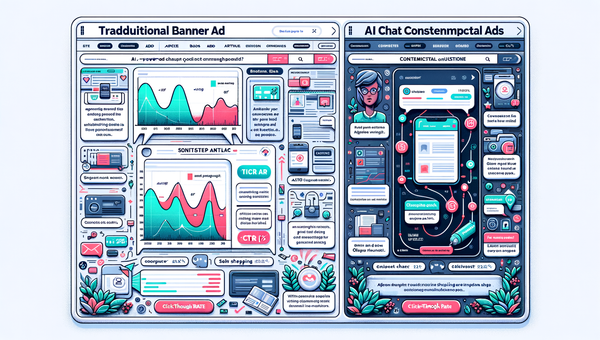
Why Contextual Ads in AI Chat Beat Banner Ads
Tests on commerce sites show AI chat contextual ads deliver 3–5x CTR, cleaner UX, and higher revenue than banners. See how they work, implement, and measure.
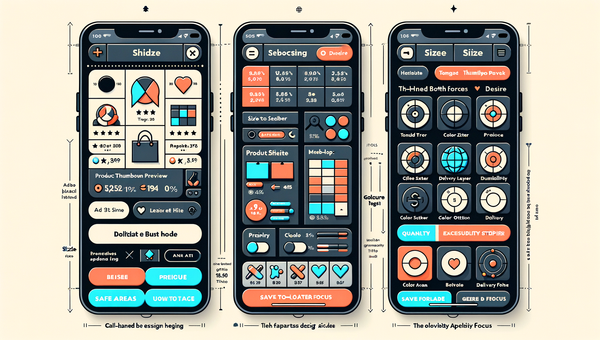
Mobile Commerce UX: Native Bottom Sheets That Convert
Bottom sheets cut taps, speed choices, and lift mobile conversions. Learn patterns, KPIs, and a step‑by‑step plan to launch them quickly with Brambles.ai.
Explore Brambles.ai
Learn more about our AI-powered agentic commerce platform, agentic shopping, and shopping assistance solutions.
Explore More Insights
Discover more articles on AI, automation, and business innovation
View All Articles