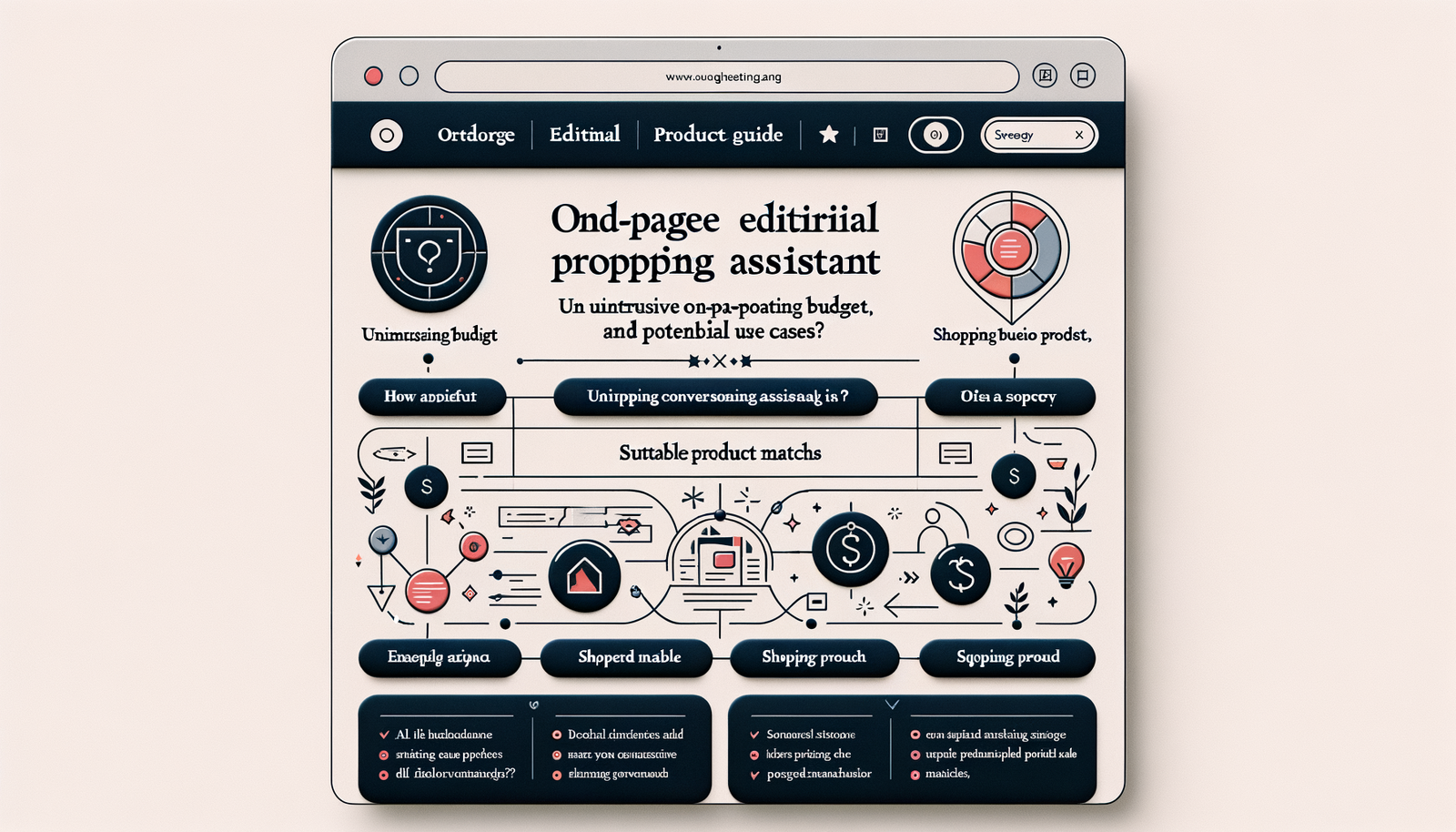
Brambles.ai’s Vision: Cookieless, Ad‑Free Shopping
Third‑party cookies are ending. Here's how Brambles.ai powers ad‑free, conversational shopping that lifts revenue and trust with first‑party data at scale.
A home-and-garden publisher we support removed 12 display ad slots on their top gift guide, shaved 1.2 seconds off LCP, and watched affiliate revenue per session rise 38% in two weeks. The twist: we didn’t add more links—we asked fewer, better questions. A conversational guide surfaced three intent-revealing prompts (“Budget,” “Who’s it for?,” “Indoor vs. outdoor?”), then matched answers to in-stock products. No retargeting pixels, no lookalikes, no third-party cookies. Just a fast page and a shopping dialogue that felt like a helpful salesperson—minus the pushy upsell.
What’s broken with ad-funded shopping journeys
Third‑party cookies are sunsetting—Chrome throttled 1% of users in early 2024 and is moving to 100% deprecation through the Privacy Sandbox timeline. Retargeting and audience extension are wobbling. Meanwhile, readers learned to ignore banners years ago; ad blocking sits above one‑third of users globally, and on cluttered pages, product links fight with slow scripts and “accept cookies” walls. Baymard Institute pegs average cart abandonment at ~70%; slow sites and irrelevant recommendations add friction. In one audit, we saw five trackers firing before any content became readable. That’s a tax on trust and on revenue.
Performance matters. A Google/Deloitte study found a 0.1s improvement in mobile site speed correlated with retail conversions rising up to 8%. When pages are light and intent is understood, people buy. When they’re heavy and noisy, they bounce. And with cookies fading, squeezing more from surveillance-driven ads makes less sense than architecting a first‑party, consented path to purchase that respects attention.
How the Brambles.ai model works (without cookies or ads)
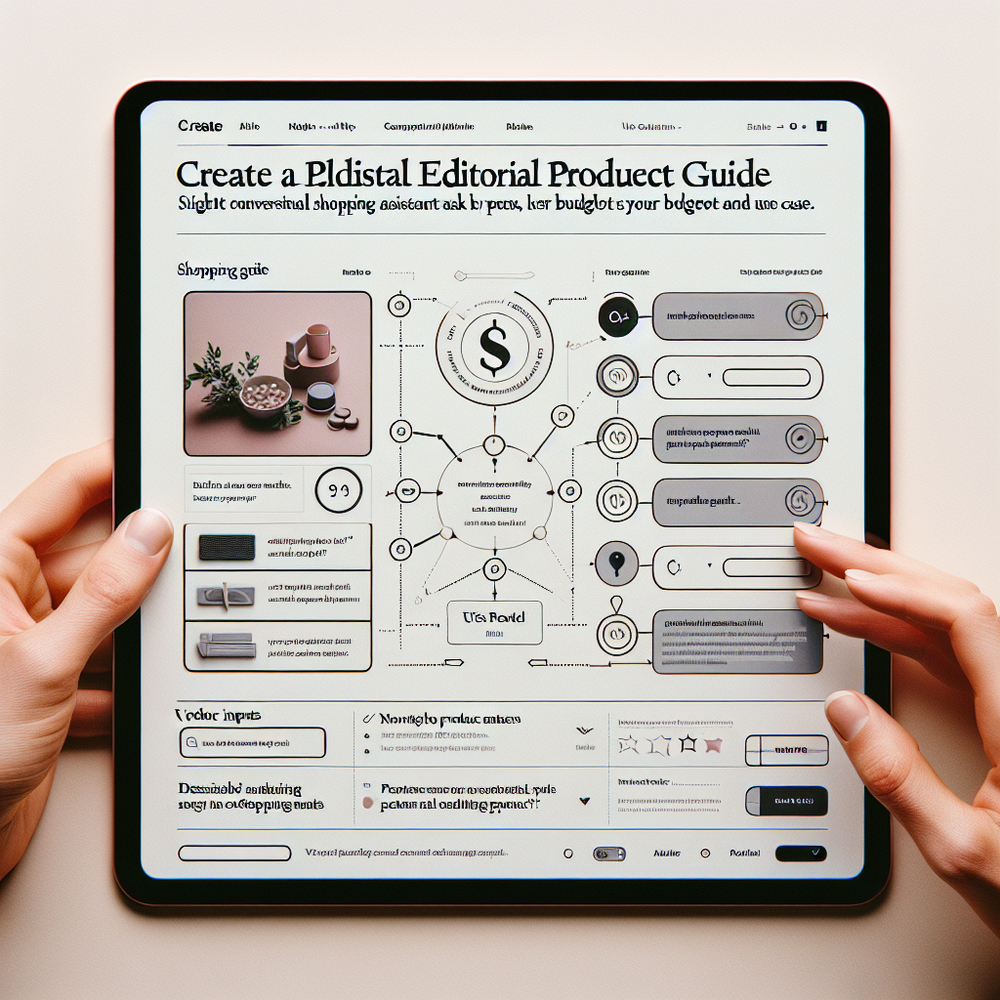
Brambles.ai embeds a lightweight, on‑page assistant that learns from your editorial taxonomy and product catalog. It uses retrieval augmented generation (RAG) to ground answers in your existing guides, reviews, and merchant feeds, so the assistant doesn’t “wing it.” Instead of third‑party cookies, the system relies on event‑level first‑party signals (queries, clicks, dwell time) and zero‑party inputs (voluntary answers to 1–3 short questions).
When a visitor says, “I need a 10‑cup coffee maker under $150,” the assistant maps that to structured attributes (capacity, price ceiling, brew method), fetches in‑stock items, and cites the relevant paragraph from your review. Pricing, availability, and variants come via merchant feeds or APIs; affiliate links remain intact. This creates a guided, ad‑free journey: the conversation narrows intent; the content builds trust; the catalog converts. One team told us they underestimated how much friction came from “choice overload”—answering two questions lifted CTR by 22% week over week.
Implementation guide: from install to lift in under 30 days
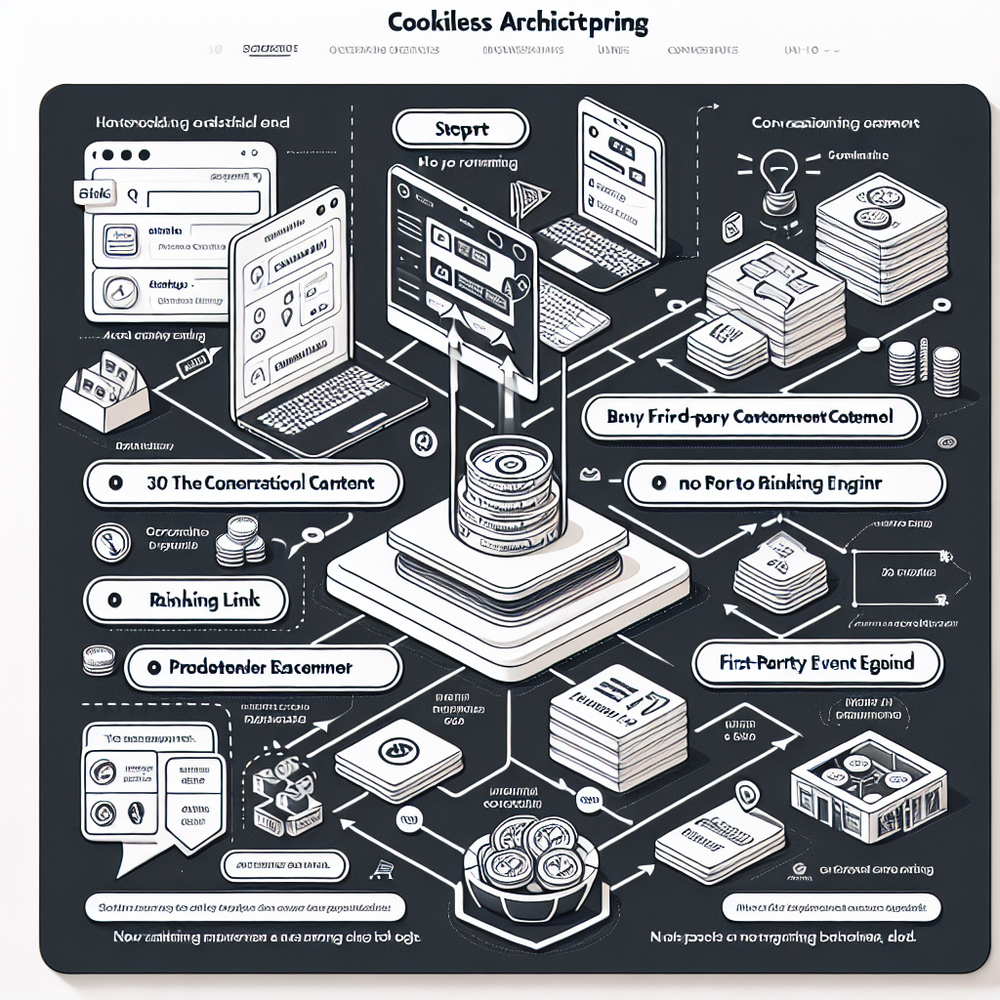
Week 1: Install and connect. Add the plugin, place the assistant where buying intent naturally spikes (top of guides, end of reviews, sidebar in gift hubs). Map your taxonomy—if your site says “espresso” and your feed says “pump machine,” normalize now. Import feeds or connect merchant APIs. We usually start with 3–5 high‑velocity categories to prove lift fast.
Week 2: Grounding and prompts. Enable RAG over your evergreen commerce content. Write two to three intent prompts that feel human (“What size family are you shopping for?” beats “Select capacity range”). Add transparent microcopy about data use. Instrument events: impressions, question views, responses, product opens, merchant clicks, and purchases (via postback or order ID reconciliation).
Week 3–4: Tune ranking and QA. Define relevance rules: price bands, availability, merchant priority, margin, warranty. Create guardrails to avoid off‑topic or medical/financial advice. Run A/Bs on tone and the number of questions. In our tests, the biggest surprise was that a single, well‑phrased budget prompt outperformed a three‑question flow by 11% in completed journeys for under‑$100 products.
Measuring ROI and the KPIs that actually matter
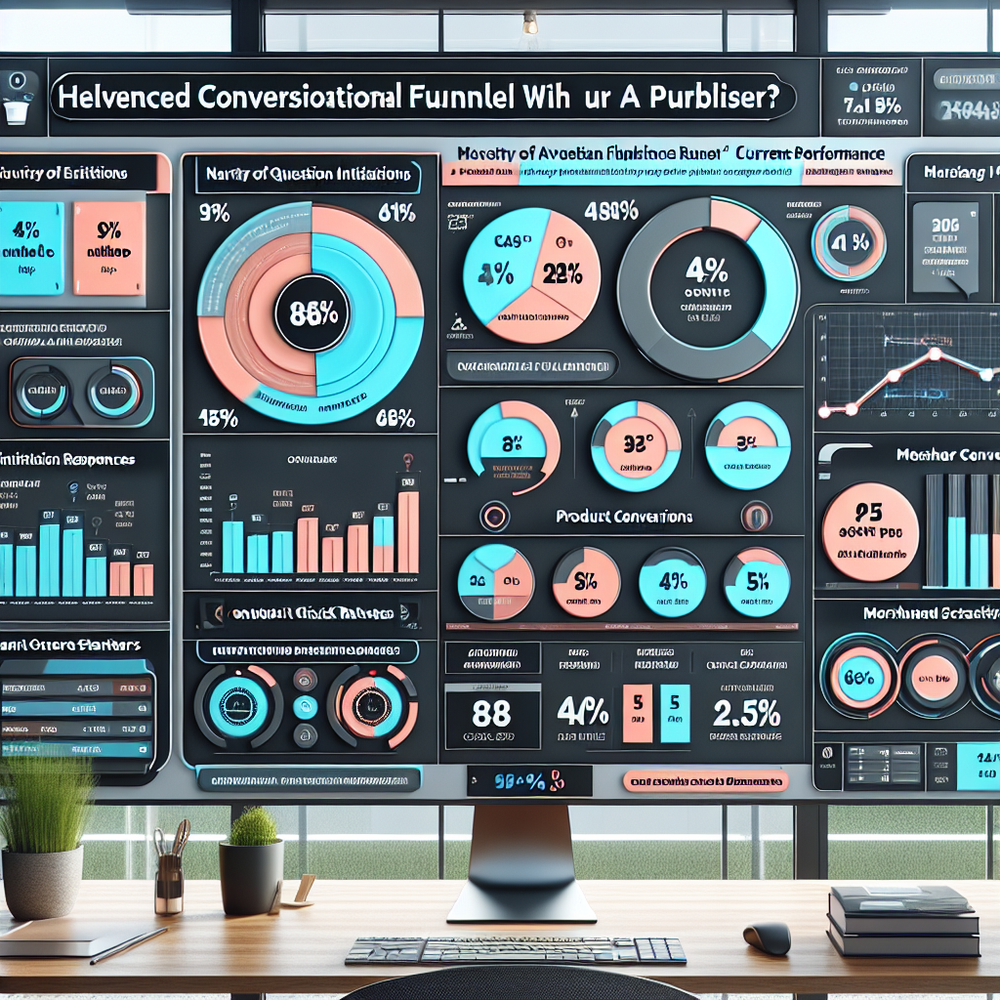
We start with baselines: RPM (revenue per thousand pageviews), RPS (revenue per session), affiliate CR, AOV, and out‑click rate to merchants. Then we measure deltas after enabling the assistant. For a mid‑market tech publisher, a conversational flow on five buying guides drove a 42% lift in RPS and a 17% increase in merchant conversion rate over 21 days. Average time on page rose 24 seconds; exit rate fell by 9%.
Quantify what’s incremental. Hold out 10–20% of traffic for a no‑assistant control. Attribute purchases via order ID callbacks or affiliate sub‑IDs. Watch misattribution: when pages speed up, existing revenue may shift from view‑through ads to affiliate. That’s good, not cannibalization. McKinsey reports that tailored experiences can drive a 10–15% revenue lift and 20% higher customer satisfaction; conversational guides deliver that personalization without audience buying. A publisher we worked with noticed users asking the same three questions about warranties—adding those answers boosted clicks on extended‑warranty SKUs by 14%.
First‑party data, trust, and privacy by design
Trust is the strategy. We collect only what’s necessary and volunteered: answers to on‑page questions, click paths, and session‑level context. No third‑party cookies, fingerprinting, or cross‑site identifiers. Consent language is plain: why we ask, how long we keep it, and how it improves recommendations. Salesforce’s State of the Connected Customer found that 61% of consumers are comfortable with personalization if companies are transparent and give control—so we do exactly that with opt‑in toggles and clear settings.
Technical notes: data is stored as first‑party events with pseudonymous session IDs. We honor regional signals (GDPR, CCPA/CPRA) and surface a quick‑view privacy panel in the assistant. Sensitive categories are excluded by policy. Retrieval is scoped to your site’s content; no external training on user data. If a question asks for PII, the assistant declines and routes to a safe fallback. One team told us they were surprised how many users voluntarily shared budget ranges when we explained the benefit in 12 words and a single toggle.

Common pitfalls (and how to avoid them)
- Unstructured catalogs. If “stainless steel” appears in prose but not as an attribute, retrieval misses it. Fix with consistent schema and property mapping (brand, price, dimensions, key features).
- Over‑asking. Three to five questions can feel like a form. Start with one, preferably budget or use case; add a second only if confidence is low.
- Latency. If the assistant waits on slow merchant APIs, users stall. Cache top SKUs and fall back gracefully.
- Hallucinations. Ground every answer with citations to your article sections; block brand claims you can’t verify.
- Over‑monetizing. Pushing high‑commission items that mismatch the query kills trust. Weight relevance first, then margin.
Operationally, dedicate an owner for taxonomy, another for merchant feeds, and a third for QA. Weekly: review the top 50 queries with no results and create micro‑content snippets or add SKUs. Monthly: reconcile affiliate IDs and commission tiers; we’ve seen 8–12% revenue left on the table due to broken tracking parameters. When we tested a “bestsellers only” fallback for sparse categories, conversion improved 9% without harming relevance scores.
Future outlook: on‑device AI and product knowledge graphs
The near future is faster and more private. Expect more on‑device inference for short queries, trimming server hops and further reducing data exposure. Product knowledge graphs—think GS1 attributes enriched by your review language—will power richer comparisons without tracking users around the web. Google’s Privacy Sandbox will continue limiting cross‑site identifiers; winning stacks will lean on first‑party signals and high‑quality content to train retrieval layers. Our bet: publishers who blend deep editorial expertise with commerce data will outperform retail media networks on consideration content, because they already own trusted moments of research.
If you want to move quickly, start with your top three buyer’s guides, wire in the assistant, and measure lift against a clean control. It’s a practical, cookieless route to ad‑free revenue that respects readers and outlasts platform changes.
Related posts
View all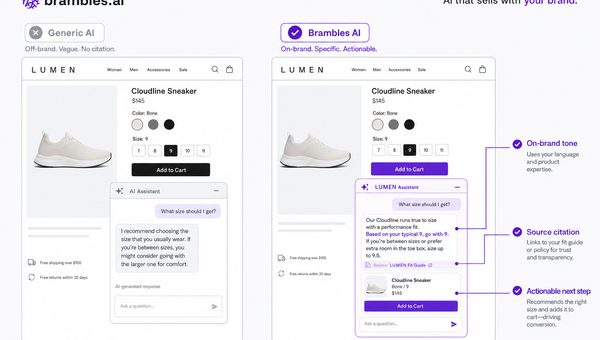
Brand-Consistent AI Chats Build Trust and Conversions
When AI mirrors your brand voice, shoppers relax—questions get answered, carts grow, and support load drops. Learn the playbook to align tone, trust, and ROI.
Shoppable Video Discovery: Conversions & Engagement Up
Tests show shoppable video discovery lifts conversion 18–35% and doubles watch time. See the UX patterns, KPIs, and how to deploy it quickly with Brambles.ai.
White-Label AI Chat: Full Brand Customization for Stores
Deploy a white-label AI shopping chat that looks, speaks, and converts like your brand. See setup steps, KPIs, pitfalls, and how Brambles.ai handles it E2E.
Explore Brambles.ai
Learn more about our AI-powered agentic commerce platform, agentic shopping, and shopping assistance solutions.
Explore More Insights
Discover more articles on AI, automation, and business innovation
View All Articles