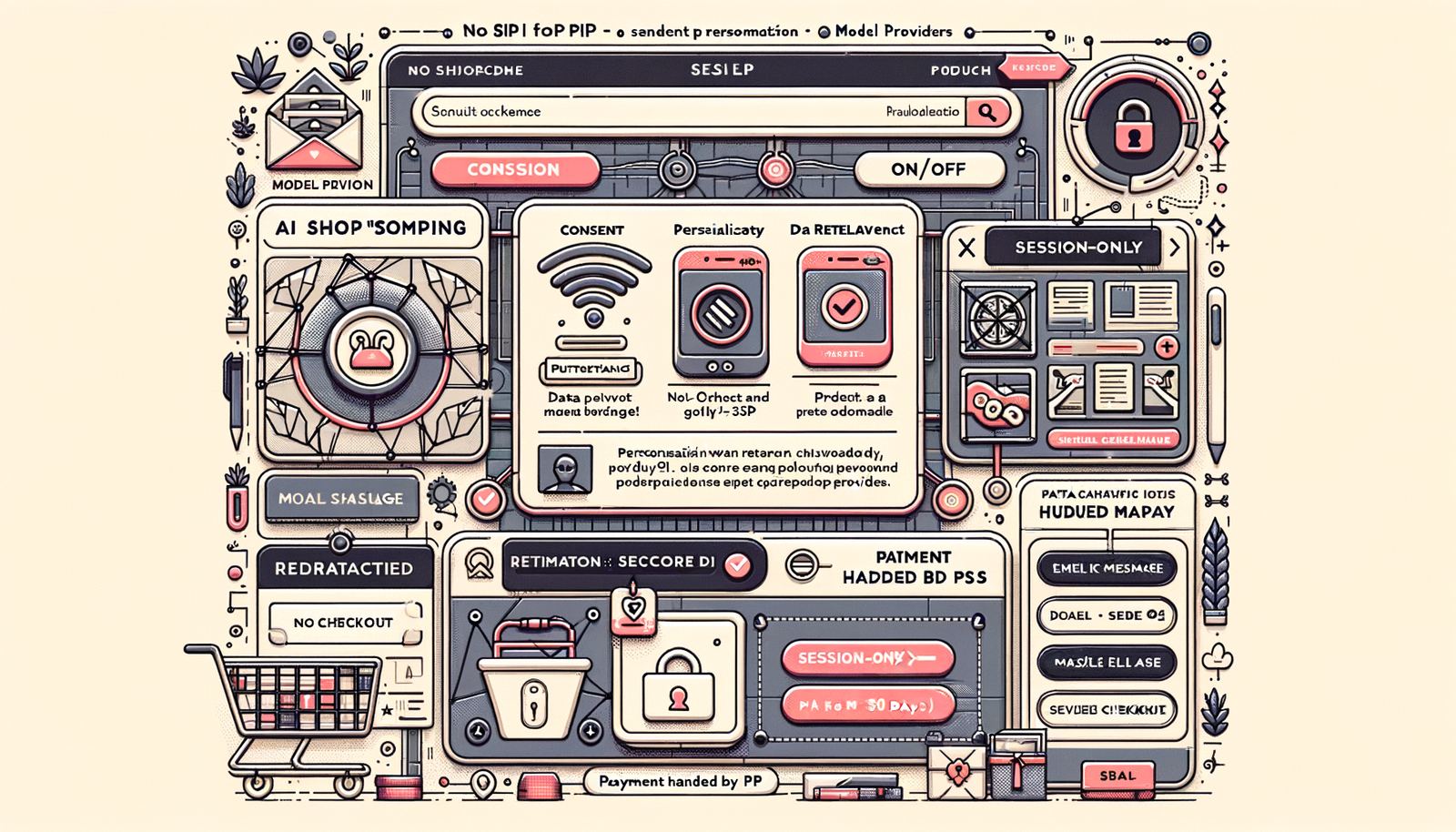
AI Shopping Security: What Customers Expect + Brambles.ai
Customers trust AI shopping when it’s private, transparent, and safe. See what buyers expect, common pitfalls, and how Brambles.ai delivers security by design.
AI Shopping Security: What Customers Expect and How Brambles.ai Delivers
In our latest rollout on a 220k‑session home goods site, a simple privacy panel in the AI shopping chat cut checkout abandonments by 14% in two weeks. The surprise wasn’t the lift—it was why users said they stayed: “I could see what data the bot needed and turn stuff off.” That’s the bar now. Buyers don’t just want fast answers; they want to feel in control of their information from chat to checkout, with zero creepy leaps and zero friction at payment.
Across projects, we keep seeing the same pattern: clear consent choices increase engagement. On a 90k‑monthly‑visitor apparel site, an upfront disclosure in the first message upped interaction depth by 27% and raised CSAT to 4.6/5. Security isn’t a footer policy anymore—it’s a UX feature buyers expect to touch. Research from Baymard Institute and Salesforce echoes this: clarity reduces anxiety, and anxiety kills conversion.
Quick Answer
Customers expect AI shopping to be private by default, crystal‑clear about data use, and bulletproof at payment. Practically, that means visible consent controls in chat, minimal data retention, redaction for any personal info, and PCI‑compliant checkout. Brambles.ai delivers this with guardrailed conversations, on‑page privacy toggles, PII redaction, and payment flows that keep card data with your processor—not the model—plus SOC 2–style practices and auditability baked in.
What’s Broken in AI Shopping Security
The weak points are rarely the big breaches—they’re the tiny frictions that quietly drain trust. We see five repeat offenders:
- Opaque data collection. Users can’t tell what the bot remembers, for how long, or why.
- Model oversharing. Unnecessary calls to external services with user PII.
- Hallucinated policies. The assistant invents return windows or warranty terms.
- Payment hand‑offs that feel sketchy. Redirects without context trigger abandon.
- “Personalization” that’s really tracking. Feels creepy; users disengage.
Studies from McKinsey, Google UX Research, and Baymard all arrive at the same message: anxiety at points of uncertainty—what’s stored, where payment goes, who sees order history—predicts drop‑off. If your AI assistant can’t confidently answer, or better, show controls inline, you’re paying an invisible conversion tax every day.
How Secure AI Shopping Works (and How Brambles.ai Handles It)
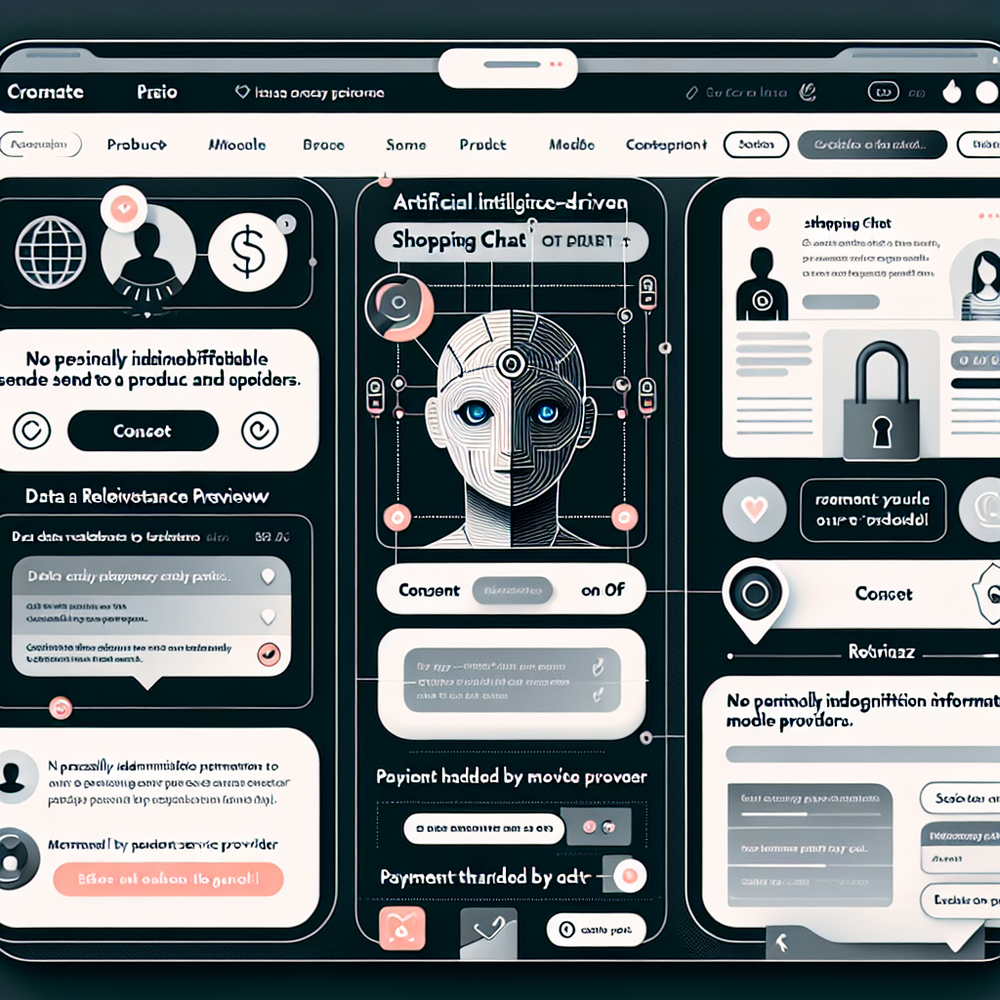
The core principle is data minimization plus explicit control. Start with redaction at the edge, route only what’s necessary, and keep payment with your PSP. Then make it visible to the shopper—every time.
- Redaction at input: Mask emails, phones, addresses before model calls. Brambles.ai applies pattern‑based and ML redaction to keep PII out of prompts.
- Guardrails and policy memory: Embed store policies so the assistant cites the real rules, not guesses.
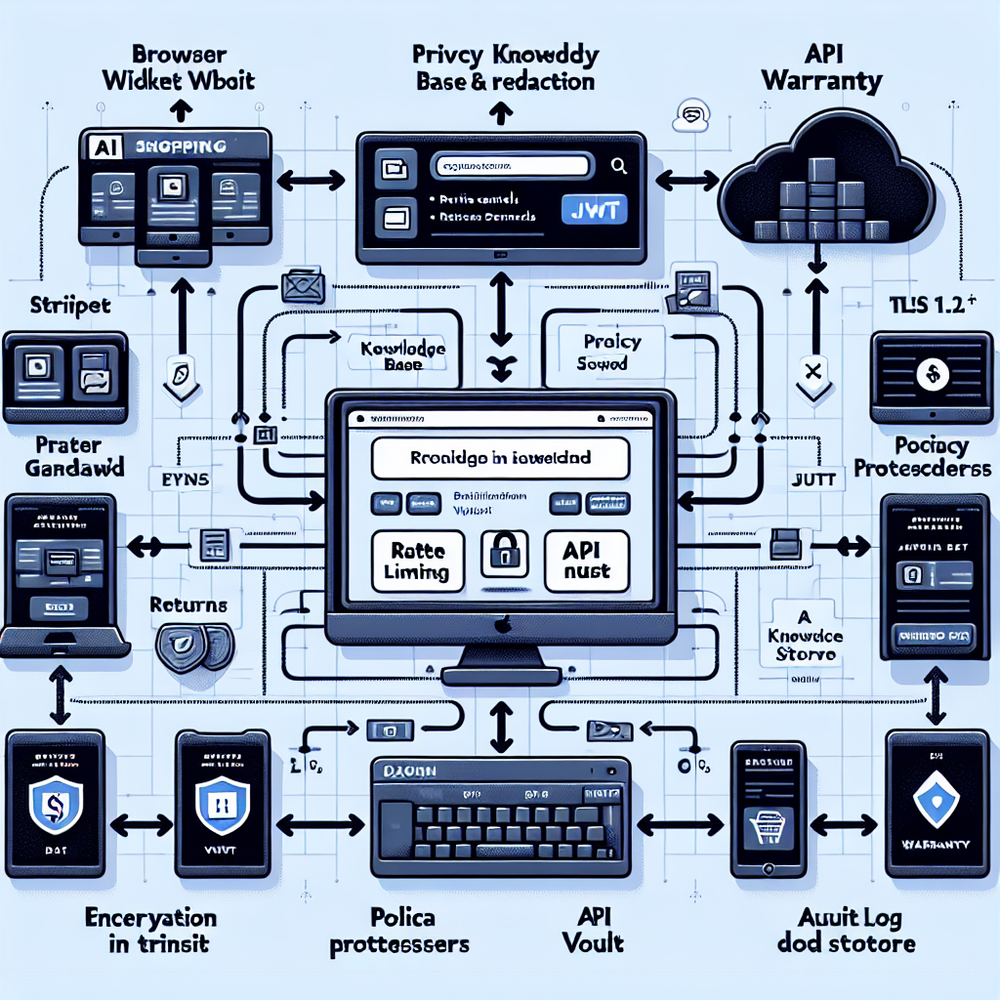
- Secure payment orchestration: “Direct add to cart” keeps card data with Stripe/Adyen/Shop Pay, never the model, aligning to PCI DSS SAQ A/EP norms.
- Least‑privilege APIs: Read‑only for order lookup; write scopes only when needed.
- Audit trails: Log decisions with timestamps for compliance teams.
Three features do most of the heavy lifting:
- AI product discovery surfaces the right items from natural language without invasive tracking. Pair it with session‑only context and you preserve relevance without building risky profiles.
- Content intelligence indexes your catalog and policies securely so answers are grounded in your data, not the public internet.
- AI customer service handles order lookup with scoped tokens and redacted logs; when it escalates, it passes only what the agent needs.
Brambles.ai also supports proactive engagement that respects consent, and a customizable floating AI shopping chat where you can surface disclosures at first touch. Both are configurable per page type so PDPs, carts, and support pages get the right privacy defaults.
Implementation Guide: Security by Design with Brambles.ai
You don’t need a rewrite to ship this. Most teams stand it up in days, then harden over a few sprints. Here’s a pragmatic plan we’ve used with mid‑market and enterprise brands:
Step‑by‑step setup:
1) Install the Agentic Commerce Module on staging. Enable redaction and consent UI by default.
2) Index policies with Content Intelligence. Start with returns, warranty, and shipping tables.
3) Connect your cart and PSP for Direct Add to Cart. Keep your gateway as the only PCI system.
4) Configure role‑scoped tokens for order lookup in AI Customer Service.
5) Turn on session‑only memory until legal signs off on retention.
6) QA with transcripts. Flag any oversharing and tighten prompts.
7) Ship to 20% traffic; monitor KPIs for two weeks.
8) Roll out to 100% with documented guardrails.
Deployment options: a one‑click WordPress plugin for WooCommerce sites, native module for Shopify (app coming soon), or a lightweight JS embed for custom stacks. All expose the same privacy UI and logging so security reviews are straightforward.
Checklist for go‑live:
- Consent copy reviewed by legal; no dark patterns.
- Session‑only memory on until DPA signed.
- Payment redirect explained in‑UI with PSP branding.
- PII redaction verified in logs.
- Incident playbook and DPIA documented.
- Bot response for “What data do you store?” tested across intents.
- Separate keys and secrets vault in your cloud.
- Role‑based access for transcripts and exports.
Anecdote: a lifestyle publisher embedded the inline shopping assistant on long‑form guides and gated personalization behind consent. Result: +19% revenue per session via affiliate links and retail media without lowering CSAT. Keeping choice visible paid off.
Measuring ROI and Security KPIs
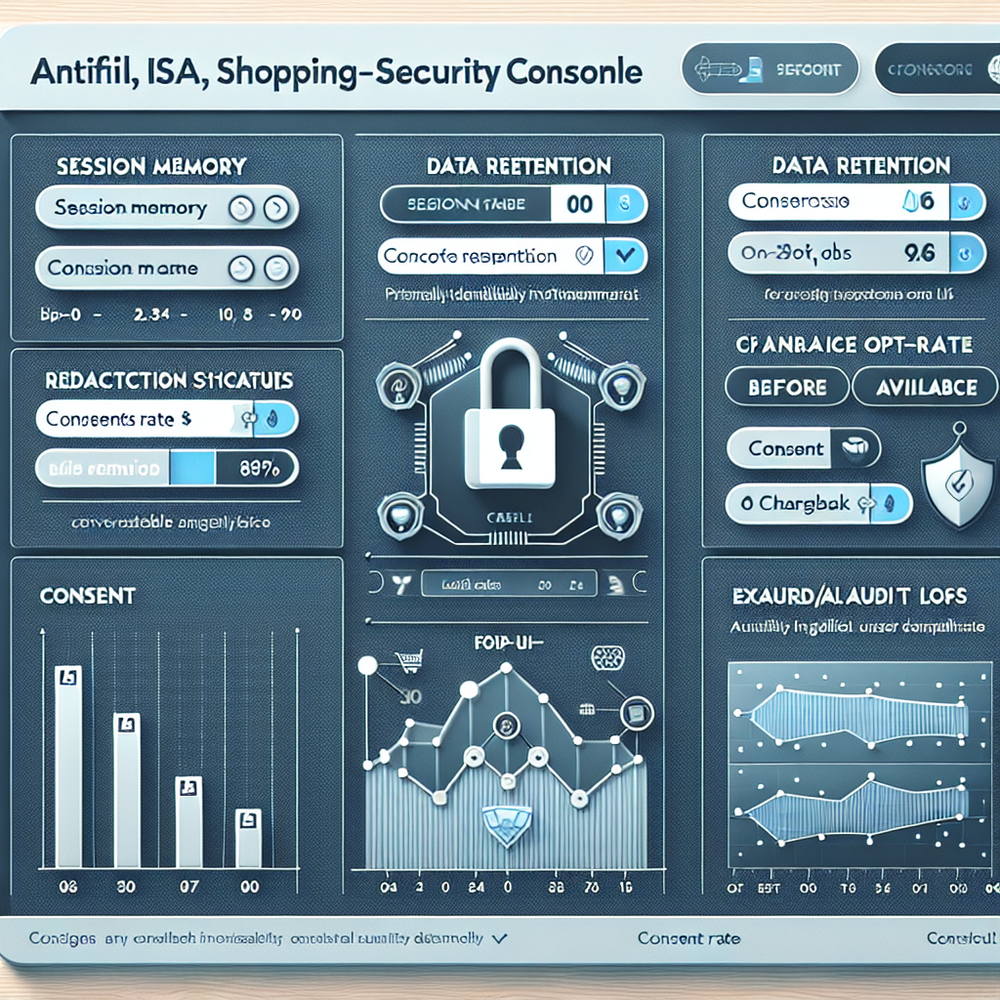
Security that customers can feel shows up in the numbers. Track these leading indicators before and after launch:
- Consent opt‑in rate (target: 55–75% when value is clear)
- Interaction depth (avg messages/session)
- Conversion rate from assisted sessions
- Time to checkout and cart recovery rate
- CSAT on assisted orders (in‑chat thumbs or 1–5 scale)
- Chargeback rate and false‑positive fraud declines
- “What data do you store?” query volume trending down
Simple ROI view: (Incremental revenue from assisted sessions − platform cost − ops time) ÷ platform cost. On a mid‑market beauty brand, we saw a 9.8% conversion lift on assisted sessions with the consent panel visible, and a 31% drop in “is this secure?” messages after the bot learned to cite policy snippets. That lift covered software costs inside month one.

First‑Party Data, Consent, and Trust
The cookieless shift pressures brands to collect first‑party data—but trust is the throttle. Offer tangible value for opting in and keep personalization lightweight until users say yes. That’s why we front‑load consent and avoid silent tracking. It’s also why disclosures read like a conversation, not a legal memo.
Two monetization notes for publishers: contextual beats behavioral in both safety and user sentiment, and transparent affiliate relationships build credibility. Surface disclosure at the first product mention and keep it consistent across chat, inline embeds, and pages.
Features to lean on here: contextual ads that target page meaning, not user identity; affiliate revenue across a massive catalog with tracking done through clean server‑side redirects; and video discovery that lets people evaluate products without leaving the safe conversation.
Common Pitfalls (and How to Avoid Them)
Most security pain is self‑inflicted. Avoid these traps:
- Burying consent. Put controls where decisions happen—inside chat and at add‑to‑cart.
- Storing chat logs forever. Set clear retention windows and purge schedules.
- Over‑scoping tokens. Separate read and write, rotate often, and log access.
- Redirecting to payment without explanation. Brand the PSP and show the hand‑off.
- Training on raw transcripts. Redact first; limit access; run DPIAs.
- Forgetting mobile. Many consent UIs break on small screens; test native‑style panels.
Quick audit checklist: Can your bot answer “What data do you store?” with specifics? Does your cart page show a PSP hand‑off cue? Do admins see redacted logs by default? If any answer is no, you have low‑hanging fruit that will lift conversion once fixed.
FAQ
How does Brambles.ai protect personal data in chat?
We redact likely PII at the edge, minimize what’s sent to the model, and store transcripts with masking by default. Access is role‑based, audited, and time‑bound. You choose retention windows (session‑only through 90 days).
Is checkout PCI compliant if the assistant adds to cart?
Yes. Cardholder data stays with your payment processor. Direct Add to Cart orchestrates cart and checkout without exposing PAN to the assistant. This aligns with PCI DSS scoping best practices (keep AI out of card data flow).
Can I customize disclosures and tone?
Absolutely. You can tailor copy, languages, and tone to your brand, and localize consent text for GDPR/CCPA contexts. Many teams pair this with a calm, helpful AI personality to reduce anxiety.
What results should I expect in month one?
Most teams see a modest but meaningful lift. Typical ranges: +5–12% conversion on assisted sessions, +20–30% interaction depth, and fewer security questions in chat. We’ve seen faster results when the consent UI ships on day one rather than later.
Where do I start?
Pilot on a high‑traffic PDP and your cart page. Keep memory session‑only, wire up policy grounding, and enable the consent panel. Review logs weekly, adjust copy, and then scale. If you prefer, our team can co‑pilot the launch with your security and legal stakeholders.
Related resources on Brambles.ai
If you are implementing this, start with Brambles.ai, about Brambles.ai, developer docs, virtual try-on.
Related posts
View all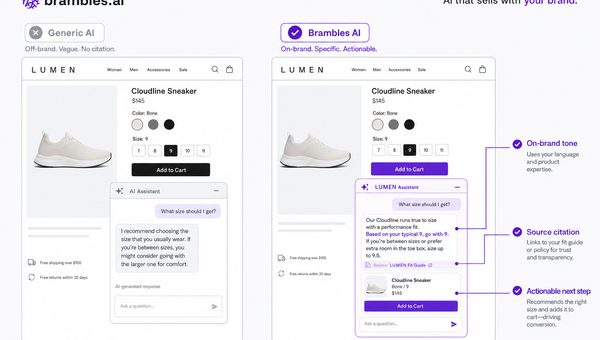
Brand-Consistent AI Chats Build Trust and Conversions
When AI mirrors your brand voice, shoppers relax—questions get answered, carts grow, and support load drops. Learn the playbook to align tone, trust, and ROI.

Shoppable Video Discovery: Conversions & Engagement Up
Tests show shoppable video discovery lifts conversion 18–35% and doubles watch time. See the UX patterns, KPIs, and how to deploy it quickly with Brambles.ai.
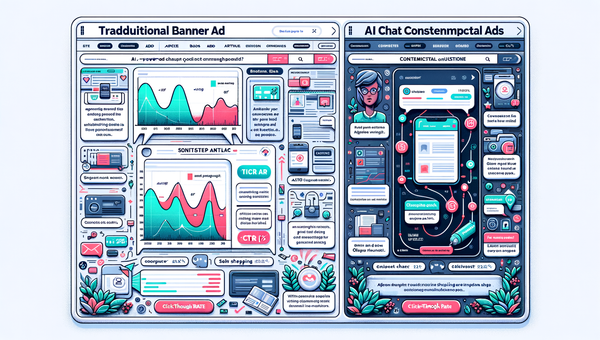
Why Contextual Ads in AI Chat Beat Banner Ads
Tests on commerce sites show AI chat contextual ads deliver 3–5x CTR, cleaner UX, and higher revenue than banners. See how they work, implement, and measure.
Explore Brambles.ai
Learn more about our AI-powered agentic commerce platform, agentic shopping, and shopping assistance solutions.
Explore More Insights
Discover more articles on AI, automation, and business innovation
View All Articles