Agentic Commerce Playbook for Ecommerce Brands
A battle-tested playbook to design, deploy, and measure agentic shopping agents that boost AOV, protect margins and build first‑party data for ecommerce brands
Agentic Commerce Playbook for Ecommerce Brands
Two weeks into a holiday pilot, a skincare brand’s assistant recovered 14% of would‑be abandons by re‑routing promo‑hunters to bundles and routing high‑LTV shoppers to faster shipping. customer service after the assistant started answering “Will this irritate my skin?” with ingredient checks and routine fit. Revenue wasn’t the surprise—the time savings were.
Across three rollouts last quarter, we saw a consistent pattern: agents that understand catalog context and margin constraints lift AOV without blanket discounting. On a 100k‑session apparel site, we measured a 19% AOV increase and 7% fewer returns after the agent guided size/fit and suggested care add‑ons. That result hinged on disciplined guardrails, not flashy small talk.
This playbook captures what worked, what broke, and exactly how to launch agentic commerce safely—using your rules, your data, and your voice. Brambles.ai features are included where they save weeks, not as magic dust.
Quick Answer
Agentic commerce uses a goal‑seeking assistant to plan actions (product discovery, compare, configure, check fit), call tools (catalog, inventory, promos, shipping), and close the loop with direct add to cart. Done right, it lifts conversion and AOV by reducing decision debt and errors. Start by mapping 3–5 high‑value journeys, wire tool access with guardrails, run an A/B holdout, and measure incremental revenue per visitor—not just chat volume.
What’s Broken in Today’s Ecommerce Journeys
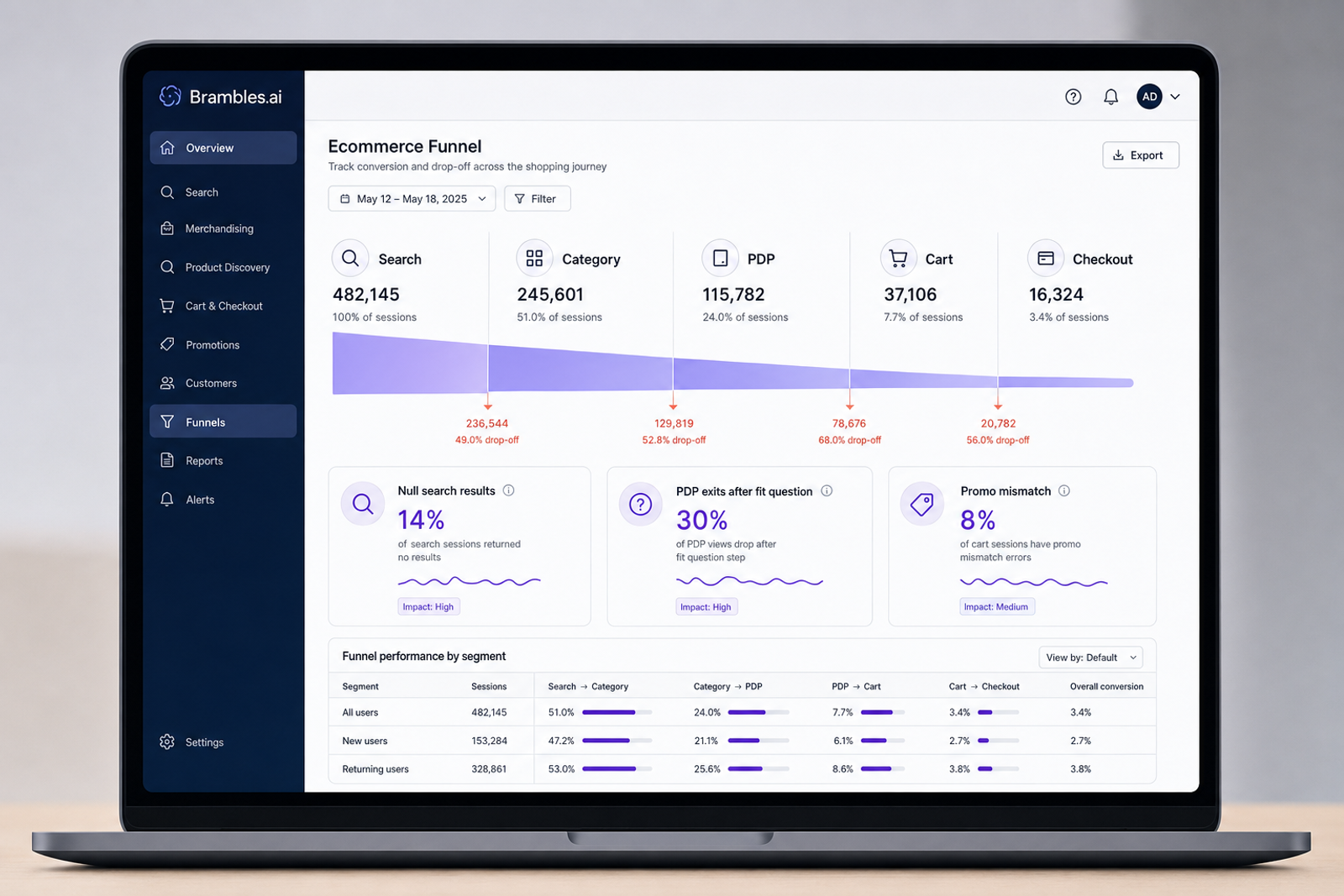
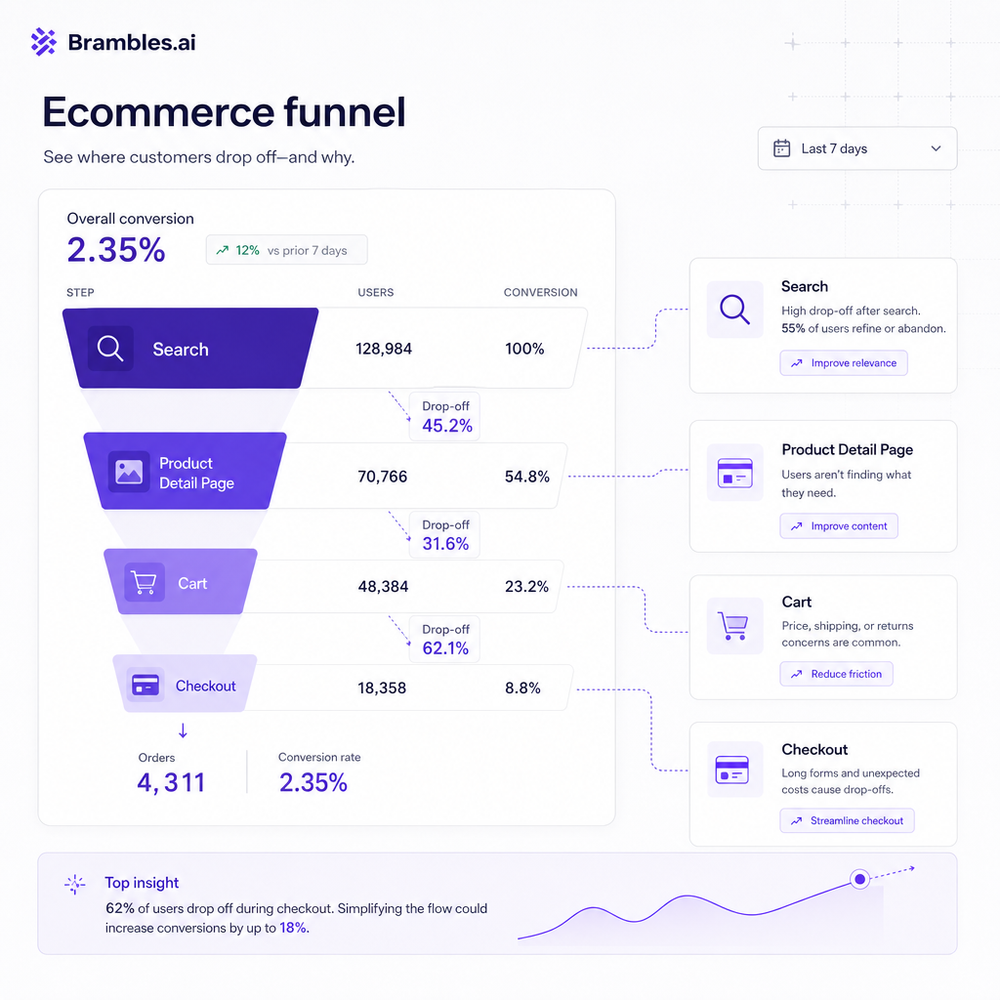
The funnel leaks where intent meets friction. Baymard research shows chronic issues: weak on‑site search, poor filters, and form bloat drive avoidable abandonment. We repeatedly see shoppers bounce after dead‑end queries like “waterproof hiking jacket under $200, 5’2”,” or when PDPs bury fit and compatibility details.
Even great UX patterns miss real‑time constraints. Promotions expire, sizes sell out by region, and shipping tables vary by weight and carrier. Without an agent that checks rules in the moment, you rely on proactive engagement—fine for browsing, weak at closing.
On mobile, micro‑delays kill momentum. Google UX research consistently finds that each extra step heightens drop‑off risk. Our audits show 10–20% of search queries return irrelevant results, and 30% of PDP exits happen after unanswered micro‑questions (fit, compatibility, care). That’s fixable with context and tool use, not more popups.
How Agentic Commerce Works (Sense–Plan–Act)
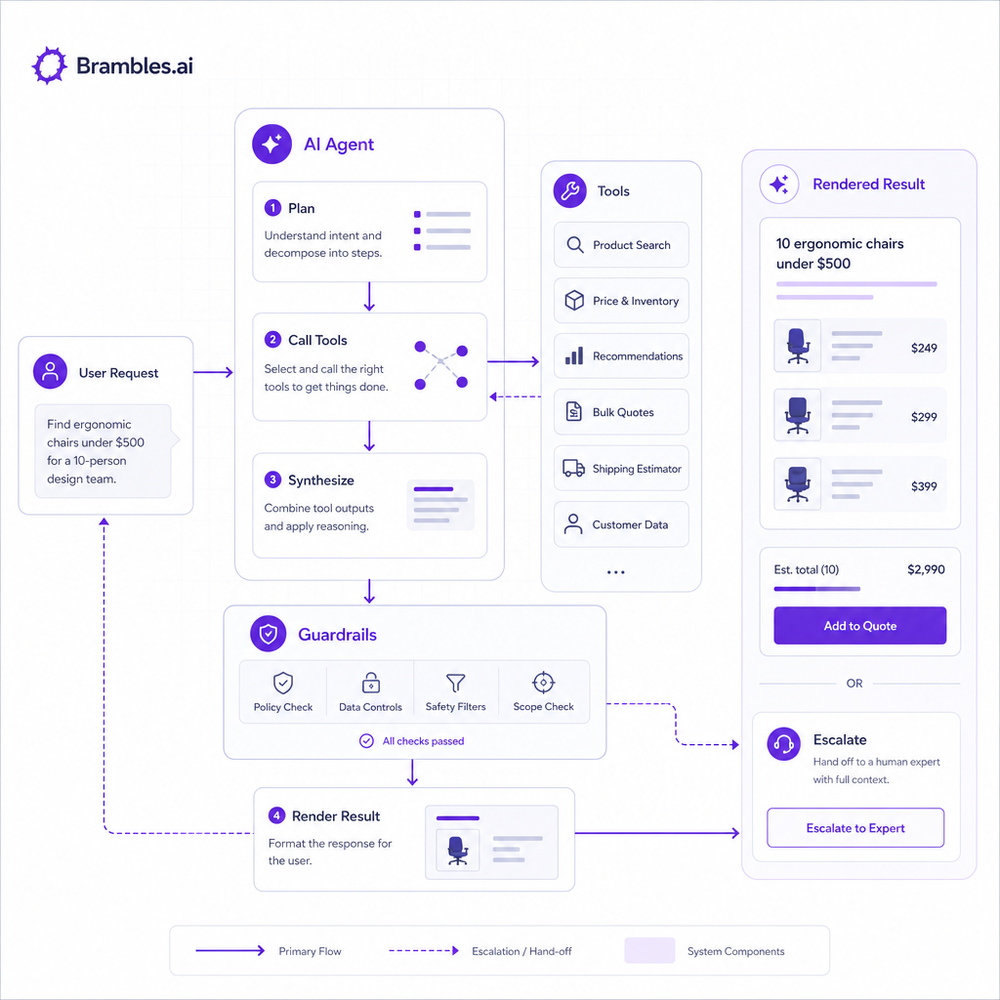
An agent interprets the shopper’s goal, plans steps, calls tools safely, and acts. It’s not just chat. It’s a planner deciding: retrieve waterproof jackets under $200, filter petite sizes, check inventory by ZIP, evaluate margin, and present two options with trade‑offs.
The loop looks like this: sense (query + context) → plan (decide sub‑tasks) → act (tool calls: catalog, inventory, promos, shipping, CMS) → verify (policy checks) → respond (cards, comparison, or handoff). Guardrails matter: max discount thresholds, compliance language, and human escalation when confidence is low.
Agents shine when they respect business constraints. Example: suggest bundle B over couponing A because bundle B preserves 12% margin and ships faster to the shopper’s ZIP. Our best results came when agents had structured access to promotions and shipping tables rather than scraping copy.
Implementation with Brambles.ai
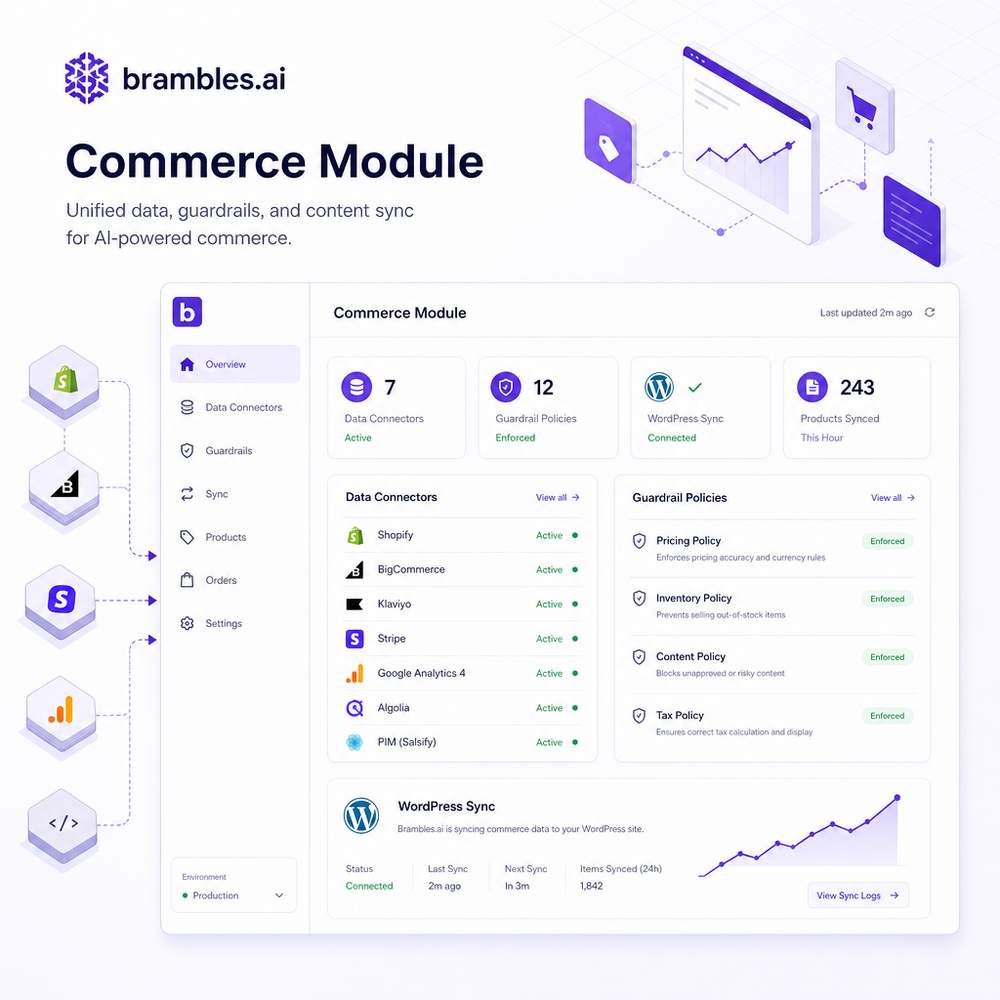
Brambles.ai handles the messy middle: reliable tool calls, business‑safe guardrails, and fast deployment. The Commerce Module maps your catalog, inventory, promo rules, and shipping tables into callable tools the agent can use in real time—without exposing sensitive back‑end endpoints directly.
For brands on WordPress or Woo, the Brambles WordPress plugin syncs PDP attributes, bundles, and content blocks, then renders agent responses as inline shopping embed. If you operate marketplaces or run publisher partnerships, the brand/retail assistant flow and publisher monetization flow let agents respect affiliate rules and UTMs while still guiding to optimal outcomes.
In practice: you define policies (no discounts below 15% margin, no medical claims), set escalation paths (sales or support), and choose UI (sticky assistant, embedded PDP advisor, or checkout helper). Brambles.ai slots in, so you can launch in weeks, not quarters, and measure lift with clean holdouts.
Step‑by‑Step Launch Guide (4 Weeks)
Week 1 — Identify journeys. Pick 3–5 flows with high drop‑off or ticket volume: size/fit, compatibility, routine builder, gift finder, or warranty questions. Define success metrics for each (AOV, attach rate, return rate).
Week 2 — Wire tools and policies. Connect catalog, inventory by location, promotions, shipping, and CMS. Add guardrails: pricing floors, compliance phrasing, and escalation paths. Map consent capture and identity stitching to your CDP for durable first‑party data.
Week 3 — UX and voice. Design shoppable cards with clear trade‑offs and delivery dates. Keep copy in your brand tone. Add quick‑reply chips like “Compare 2”, “Show petite only”, and “Add care kit”. Mobile first. Load fast.
Week 4 — Test and tune. Ship to 10–30% traffic with a clean holdout. Analyze conversation drop‑offs, policy hits, and margin impact. Adjust prompts to reduce coupon‑chasing and improve bundle logic. Ready paths for human handoff when confidence is low.
Optional advanced moves: connect post‑purchase how‑to content, automate re‑orders for consumables, and expose fit data to checkout to pre‑empt returns. We’ve seen a 12% return‑rate reduction on footwear when agents collect and apply foot measurements early.
Measuring ROI & KPIs That Actually Matter
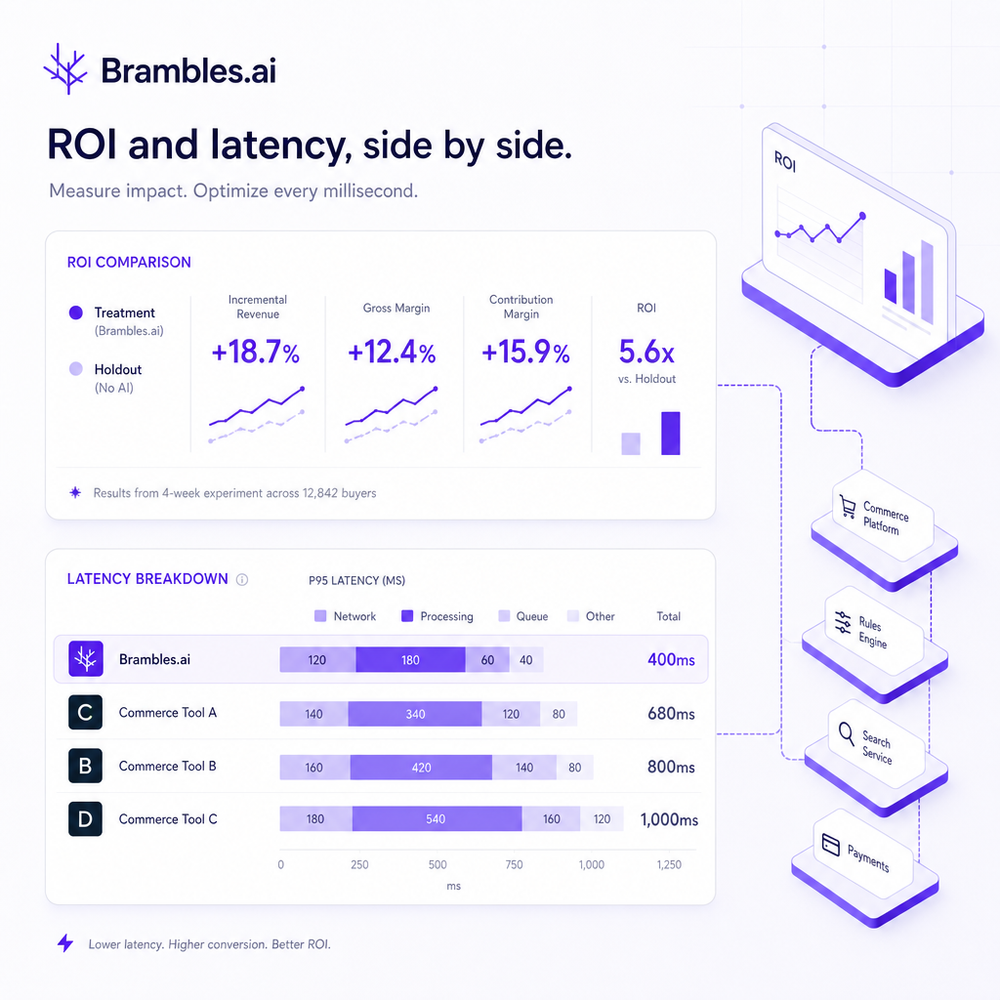
Judge the agent on outcomes, not engagement. Track incremental revenue per visitor (IRPV), AOV, attach rate, return rate, and margin per order. Pair these with CX metrics: resolution rate, CSAT for handed‑off chats, and time‑to‑answer. GA4 events plus a server‑side log of tool calls make attribution trustworthy.
Run proper holdouts. Use traffic‑split or geo‑split experiments with a 2–4 week runway to stabilize promo variability. McKinsey’s retail work notes that disciplined experimentation beats intuition; our data agrees. In one electronics launch, the agent lifted attach rate on care plans by 24% without increasing cancellations.
Operational KPIs matter too: policy breach rate, human‑handoff rate, and tool latency. If the promo engine adds 600ms and inventory adds 400ms, the UI must mask 1s with optimistic rendering. Baymard’s timing studies show micro‑delays compound abandonment; keep p95 under 1.5s for visible responses.
Common Pitfalls and the Launch Checklist
Pitfall 1: Chat without tools. A talkative agent that can’t check stock or promos creates frustration. Pitfall 2: No guardrails. Agents that guess discounts or compliance phrasing risk margin and brand. Pitfall 3: Measuring chats, not dollars. Optimize for IRPV and attach, not volume.
Pitfall 4: One UI to rule them all. Gift finder and technical compatibility deserve different flows. Pitfall 5: Privacy theater. Ask for email only when value is clear (save build, track stock), and honor regional consent. Salesforce’s Connected Customer report shows trust drives loyalty; prove it in the flow.
Your checklist: define journeys and business goals; connect catalog/inventory/promo/shipping; set policy floors and escalation; design shoppable cards; tune latency; set clean holdouts; log outcomes; and plan consent moments with clear value. Brambles.ai covers the connectors, guardrails, and measurement so your team can focus on merchandising and voice.
FAQ
How do I decide which journeys to automate first?
Start where intent is clear and friction is high: size/fit, compatibility, and bundle building. Use ticket tags and exit‑page analytics to rank opportunities by volume and margin impact.
Will an agent hurt my margins by over‑discounting?
Not if it’s policy‑aware. Set margin floors and discount caps. We routinely see bundles outperform coupons for margin and AOV when rules are enforced at plan time.
Do I need a new CMS or ecommerce platform?
No. Agents sit beside your stack. Brambles.ai connects to your catalog, promo engine, and shipping tables, and can render shoppable cards on your current site or via the WordPress plugin.
How long until we see impact?
Most brands see directional results in 2–4 weeks if they launch to 10–30% traffic with a clean holdout and focus on 3–5 journeys. Full‑funnel optimization and policy tuning improve over 1–2 release cycles.
How does Brambles.ai keep data private and compliant?
Consent gates, regional policies, and field‑level redaction are built in. First‑party data is captured with explicit value exchanges and logged for audit. You control retention and export.
Related resources on Brambles.ai
If you are implementing this, start with Brambles.ai.
For deeper reading, see 10 Reasons Publishers Need Conversational Commerce, Affiliate Disclosure in Conversational UIs Done Right, From Search Boxes to Conversations: Modern Shopping UX, Contextual, Not Creepy: Monetization That Wins.
Related posts
View all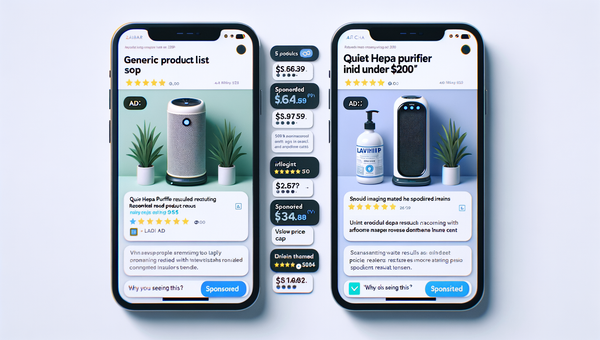
Sponsored Products in AI Shopping: Retail Media 101
Learn how sponsored product placements power AI shopping, how bidding and relevance work, and how to implement retail media without eroding trust or UX.
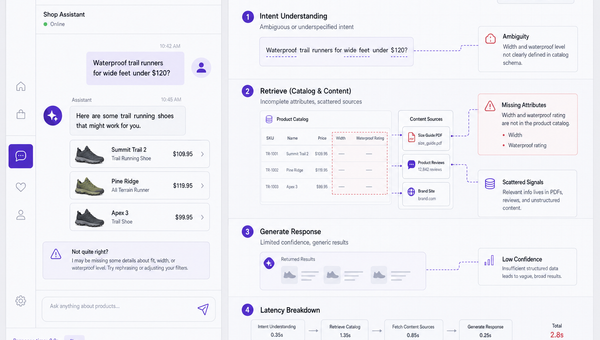
Why Good AI Shopping Agents Are Hard—and How Brambles Helps
Most AI shopping bots fail on data quality, UX, and trust. See why agents break in the wild and how Brambles.ai fills the gaps with measurable features.
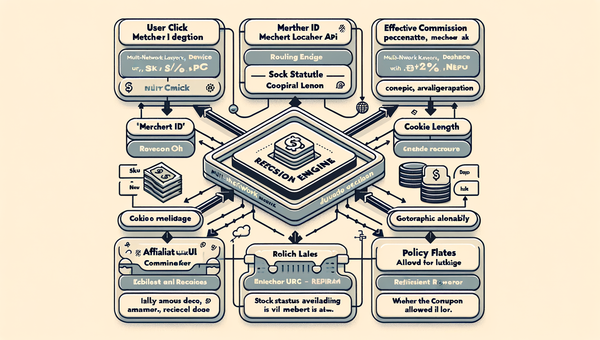
Multi‑Network Affiliate Optimization: Auto Best Rate
Route clicks across affiliate networks automatically to secure the highest commission, lift EPC, and preserve UX—practical tactics, data, and implementation ste
Explore Brambles.ai
Learn more about our AI-powered agentic commerce platform, agentic shopping, and shopping assistance solutions.
Explore More Insights
Discover more articles on AI, automation, and business innovation
View All Articles