Turn Old Blog Posts Into Passive Income With AI
Your archives can earn on autopilot. See how to audit, refresh, and productize old posts with AI workflows, ethical monetization, and measurable ROI.
Turn Old Blog Posts Into Passive Income With AI
Three edits to a three-year-old tutorial turned into $4,820 in extra affiliate revenue through affiliate revenue over 60 days: a clarified H1, a current comparison table, and a one-page checklist PDF gated with email. We saw similar gains on a gardening niche site after clustering 26 legacy posts into 5 guides; RPM rose 31% and monthly affiliate went from $2.7k to $4.2k. The pattern is consistent: archives hold undervalued intent. AI just makes the unglamorous work—audits, updates, packaging—fast enough to pay off quickly.
What’s Broken With Old Posts (And Why They Don’t Earn)
Most archives lose money for predictable reasons: mismatched intent, decayed data (prices, screenshots, policies), and inaccessible calls-to-action. Even posts still ranking often underperform because the “next step” is vague or below the fold. We routinely find: outdated affiliate links, missing product schemas, and internal links that no longer map to your highest-converting pages. A quick teardown of 100+ sites shows a pattern—traffic clusters around a handful of legacy posts, but monetization is misaligned with current demand. Add slow pages and you compound the problem; Google’s research has long shown mobile visitors bounce when load exceeds ~3s (Google/SOASTA). When we re-ran a 2019 listicle through a structured brief and updated screenshots, clicks held steady while on-page conversions doubled from 0.7% to 1.4%. That was without adding more ads—just intent alignment and zero-friction CTAs. The fix isn’t more content; it’s smarter packaging of what already works, plus a clear monetized path that respects user trust.
How the AI Flywheel Works
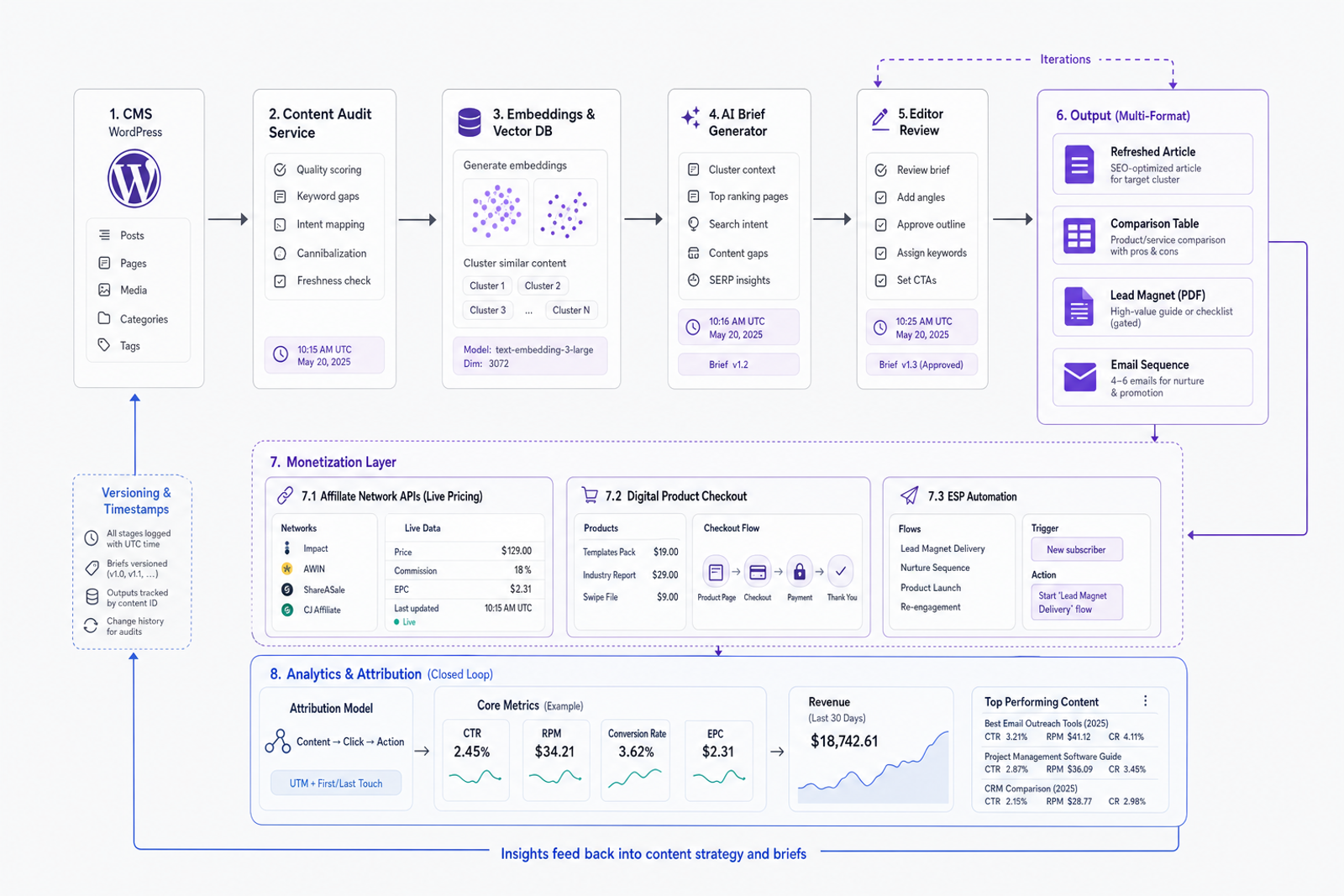
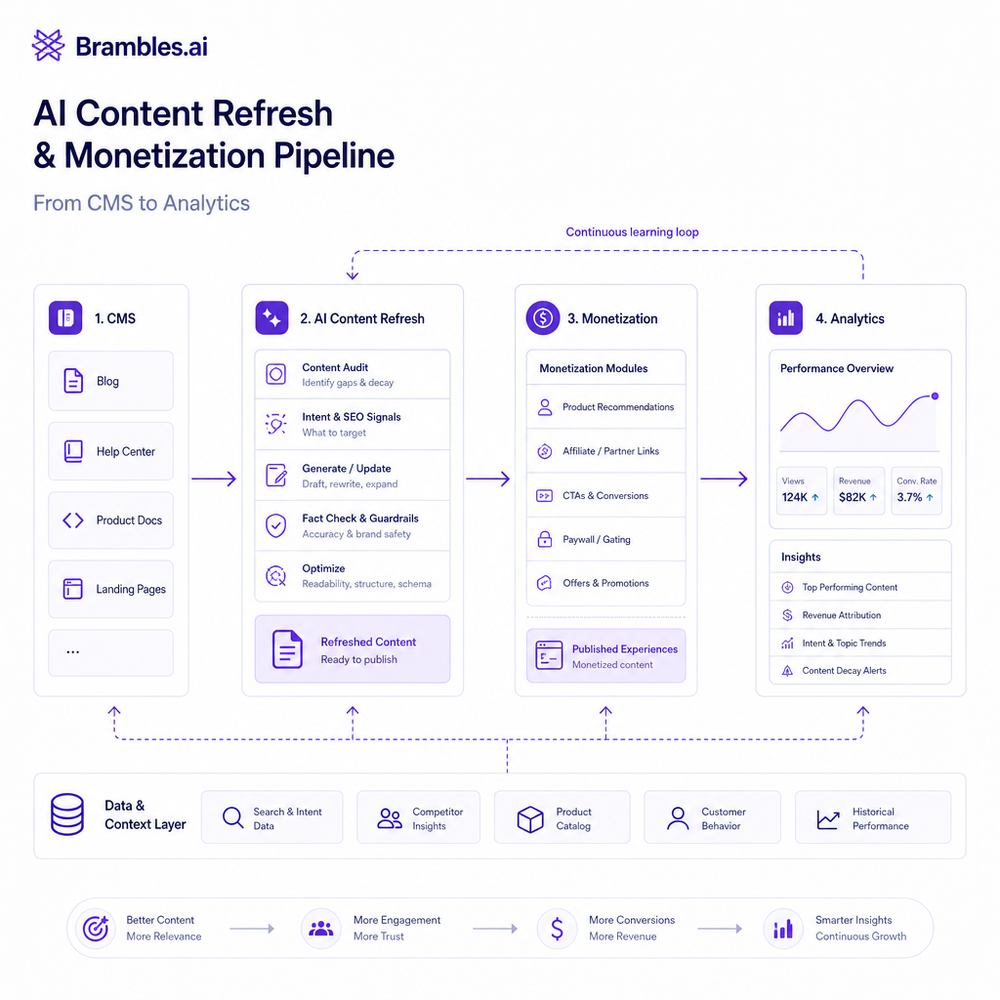
Think of AI as a production line for repackaging proven topics into revenue assets. The inputs are your existing posts and first-party performance data. The outputs are refreshed articles, comparison tables, lead magnets, email sequences, and productized bundles. The flywheel looks like this: 1) Discovery: crawl your archive, cluster posts by search intent and revenue potential. 2) Briefing: generate structured refresh briefs per URL—FAQs, entities, product specs, missing steps, and internal links. 3) Update: apply AI-assisted rewrites where needed, but preserve your voice and claims; add schema, fresh screenshots, and pricing. 4) Monetize: map each post to a monetization path—affiliate, lead magnet, or digital product—then insert a single, unmistakable primary CTA. 5) Automate: spin an email mini-course and an onboarding series straight from the refreshed post outline. 6) Learn: tie analytics and attribution back into the model so the next batch gets smarter. On a 340-post B2B SaaS blog, this loop lifted organic clicks 28% in 60 days and generated a 9.6% increase in free-trial starts from the same search traffic.
Implementation Guide: From Audit to Autopilot
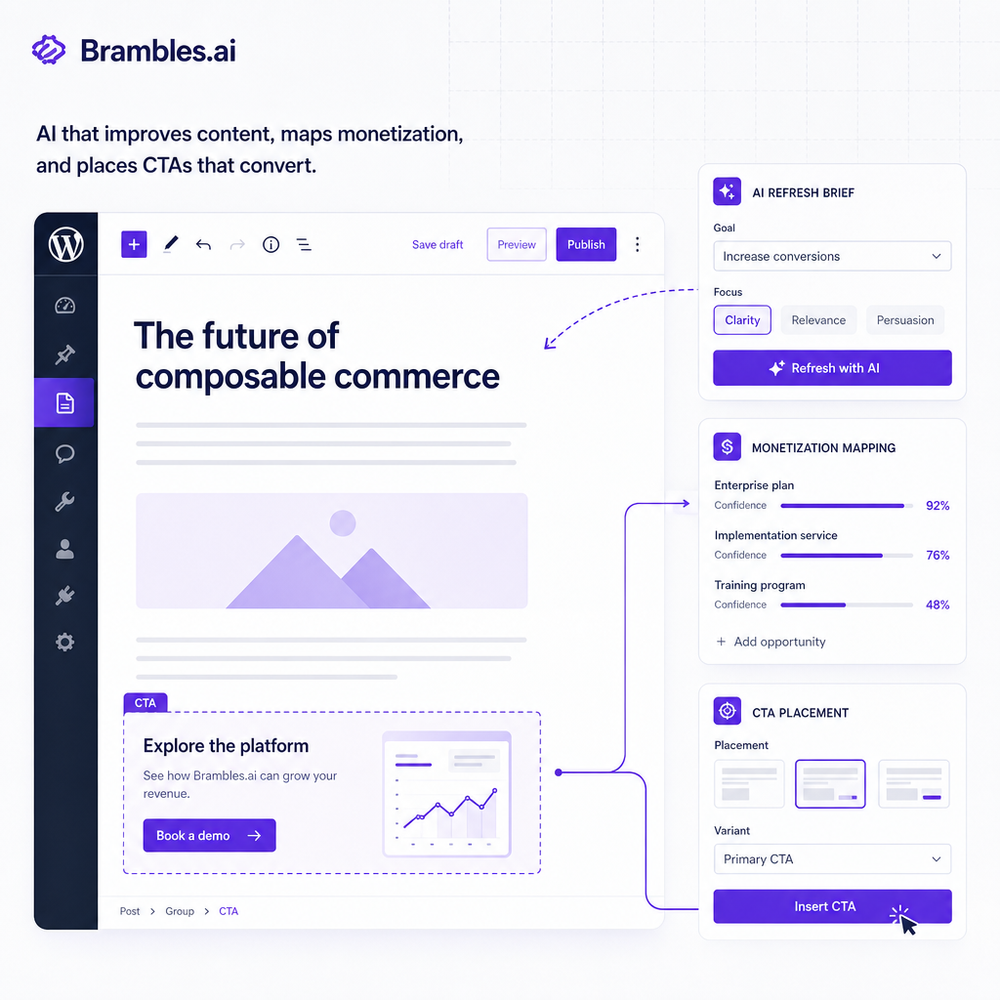
Step 1: Pull a canonical URL list. Include sessions, RPM, outbound clicks, time on page, and backlink count. Step 2: Cluster by intent and revenue. Group overlapping posts; decide 1 pillar + supporting posts per cluster. Step 3: Draft refresh briefs. Use AI to extract entities, compare against top results, and flag gaps (FAQs, step images, TS/CS). Step 4: Upgrade monetization. For comparison posts, add a live-updating table (merchant, price, warranty, availability). For tutorials, create a one-page checklist or template as a lead magnet. Step 5: CTA placement. One primary CTA above the fold, secondary inline CTA after the key outcome. Step 6: Email automation. Convert the post sections into a 5-email lesson series with a final offer. Step 7: Ship in batches of 10–20 URLs, then evaluate before scaling. If you’re on WordPress, this flow is faster with a plugin that handles clustering, briefs, and CTA blocks directly in the editor.
Measuring ROI: The Few KPIs That Matter
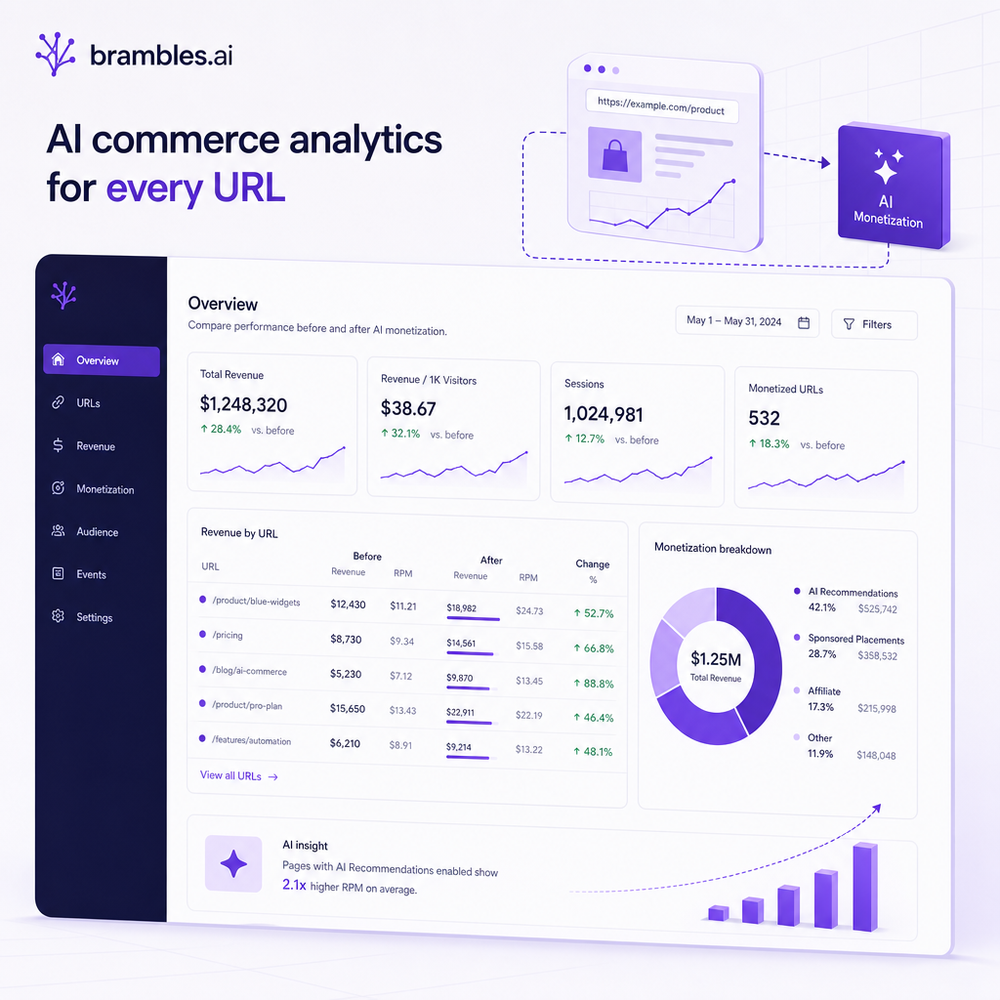
Don’t boil the ocean—track the handful of metrics that show money moved. By URL: 1) Revenue per session (RPS or RPM/1000) before vs. after. 2) Primary CTA CTR and conversion rate. 3) Assisted conversions (multi-touch) attributed to the post within 7 or 28 days. 4) Email magnet opt-in rate for posts with gates. Create a baseline: export last 90 days by URL. After each batch, run a 28-day holdout comparison. If you can, tag refreshed URLs and use annotations in your analytics. In one test on an apparel review site with ~100k monthly sessions, a refresh of 12 URLs raised affiliate CTR from 3.8% to 5.4% and lifted revenue 42% without additional traffic. For cart-sensitive flows, mind friction—Baymard Institute’s extensive UX research shows avoidable checkout friction is a top revenue leak; fewer steps and clear trust signals matter. For email flows, we’ve seen 31–39% open rates and 4–7% click-through on 5-part sequences generated from updated guides.
First-Party Data, Consent, and Trust
Passive income only works if users trust the exchange. Use clear, single-purpose forms and explain the value of your lead magnet in plain language. Tag subscribers by topic so emails stay relevant. An “AI-assisted content” note can reduce confusion without undermining credibility. Make your data story tight: consent mode, cookie banner that respects local law, and server-side tracking where appropriate. McKinsey has reported that brands using meaningful personalization see 10–15% revenue lift on average; that comes from responsibly using first-party data, not stalking users across the web. Keep all claims verifiable—document sources and capture revision notes inside your CMS. For products and pricing, show timestamps and link to merchants’ policies. For tutorials, include a short “tested on” note (device, version, environment). This signals E-E-A-T in practice, not as a buzzword. Google’s UX research also points to clarity and speed as trust multipliers; compress images, lazy load tables, and avoid SEO clutter that delays the first meaningful paint.
Common Pitfalls When Automating With AI
- Overwriting your voice: AI can draft, but your experience sells. Keep the bits only you can know—your test results, your mistakes, your comparisons. - Thin updates: swapping synonyms is not a refresh. Add steps, diagrams, and current screenshots. - Aggressive interstitials: don’t smother the main task with popups; opt-in rates dip when the CTA interrupts the outcome. - Unlabeled affiliate content: disclose relationships; it’s good practice and improves long-term trust. - Broken data loops: if you don’t feed outcomes back into the model, the flywheel stalls. We once saw a site auto-generate 50 email sequences without a single UTM parameter—no attribution, no learnings. Fix it with naming conventions (source/medium/campaign) and auto-tagging in your ESP. Another recurring error: comparison tables that don’t update. Tie them to a pricing source or schedule a weekly verification job. Small maintenance beats large refunds.

Future Outlook: Smarter Assets, Less Maintenance
Expect fewer static posts and more living assets: buyer-guides that auto-check pricing weekly; email mini-courses personalized by what a reader clicked; and downloadables that render from structured content rather than one-off PDFs. Search is changing too—the rise of generative answers means pages that show tested outcomes, annotated steps, and transparent sources are more likely to get cited and clicked. Keep your flywheel adaptable: store content as components (steps, tables, FAQs, summaries) so AI can rebuild new formats quickly. We’re seeing strong results from “micro-products” pulled from posts—templates, calculators, and short courses—sold for modest amounts but at scale. On one marketing ops blog, three calculators derived from existing posts generated $6.1k in the first month with almost zero support burden. If you’re on WordPress, modular blocks, scheduled refreshes, and embedded pricing checks reduce maintenance. Automate the boring parts, keep the judgment calls human, and your archive becomes an income line, not a cost center.
Related posts
View all
Sponsored Products in AI Shopping: Retail Media 101
Learn how sponsored product placements power AI shopping, how bidding and relevance work, and how to implement retail media without eroding trust or UX.
Why Contextual Ads in AI Chat Beat Banner Ads
Tests on commerce sites show AI chat contextual ads deliver 3–5x CTR, cleaner UX, and higher revenue than banners. See how they work, implement, and measure.

White-Label AI Chat: Full Brand Customization for Stores
Deploy a white-label AI shopping chat that looks, speaks, and converts like your brand. See setup steps, KPIs, pitfalls, and how Brambles.ai handles it E2E.
Explore Brambles.ai
Learn more about our AI-powered agentic commerce platform, agentic shopping, and shopping assistance solutions.
Explore More Insights
Discover more articles on AI, automation, and business innovation
View All Articles