On-Brand AI Shopping Assistants: Personality Customization
Turn a generic chatbot into an on‑brand sales associate. See how AI personality customization lifts conversion, safeguards voice, and scales across touchpoints.
Last fall, we re-skinned an apparel retailer’s assistant with a warmer, stylist-like voice—no pricing changes, no new promos. Conversion from chat-assisted sessions jumped 21% and AOV rose 12% in two weeks. A home goods marketplace saw a 38% drop in escalations after aligning tone with their editorial style guide. The pattern is consistent: when the assistant sounds like your brand, shoppers trust the guidance and buy faster. When it doesn’t, they second-guess recommendations or abandon the chat entirely. If you’ve ever winced at a perky “Hey friend!” on a luxury PDP, you’ve felt the mismatch that kills momentum. Personality isn’t fluff. It’s a UX control surface that determines clarity, trust, and ultimately revenue.
Quick answer
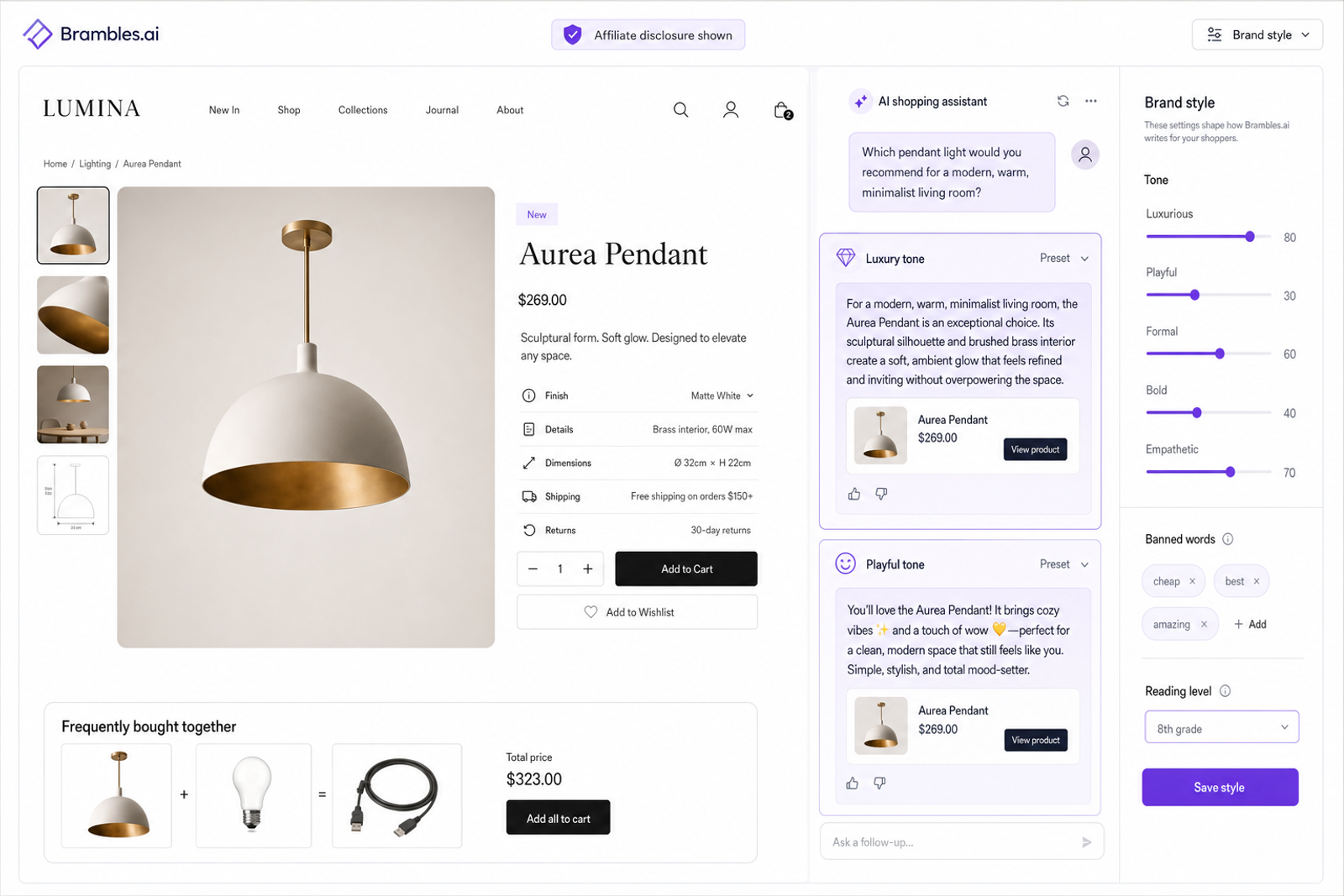
AI personality customization means encoding your brand’s voice, values, and service standards into the assistant’s behavior—tone, pacing, vocabulary, guardrails, and escalation rules—so every answer feels on-brand and helpful. Practically, you set style and safety constraints, connect product and content data, and test for goal metrics like conversion and CSAT. Brambles.ai streamlines this through configuration for tone and behavior, real-time product understanding, and an on-page chat UX that feels native to your site.
What’s broken today
Most assistants ship with a generic, upbeat voice that ignores context. That clashes with brand tone, confuses shoppers, and creates compliance risk. Baymard’s research shows clarity and trust signals drive checkout success; the same psychology applies earlier in discovery—ambiguity or off-brand language adds friction (Baymard Institute).
We also see fragmentation across surfaces. A PDP chatbot sounds casual, while support emails sound formal. That inconsistency erodes confidence. In one test on a 100k-session tech publisher, matching tone across article embeds and site-wide chat improved link CTR 24% week-over-week.
Finally, assistants often over-personalize without permission or bury affiliate disclosures. That’s a trust killer and a regulatory risk, especially for publishers. A clean, upfront approach to disclosures in chat builds credibility and protects revenue.
How personality customization works
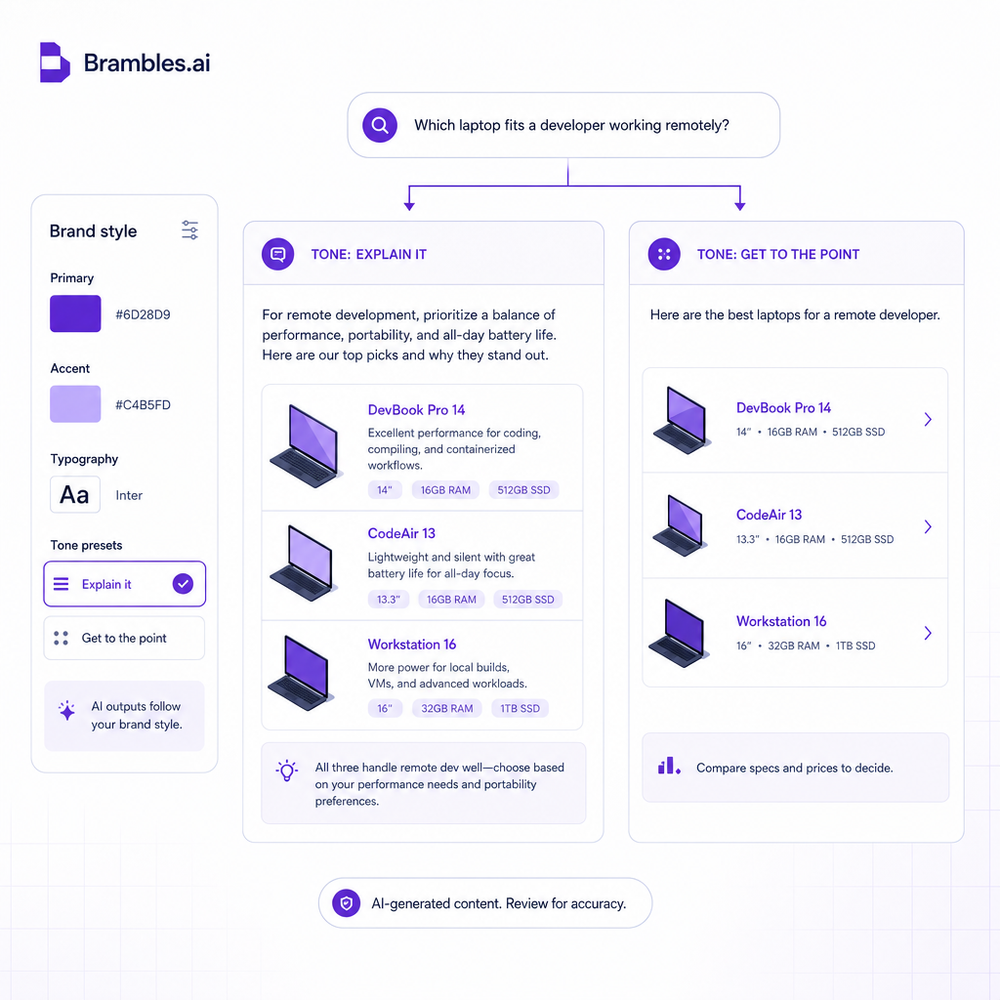
Start with a brand voice blueprint. Define tone (friendly, expert, witty, minimalist), reading level, grammar and emoji policy, prohibited phrases, and how assertive recommendations should be.
Add service rules: when to ask clarifying questions, when to propose alternatives, how to handle price vs. quality trade-offs. Treat this like a living style guide for conversation, not copywriting.
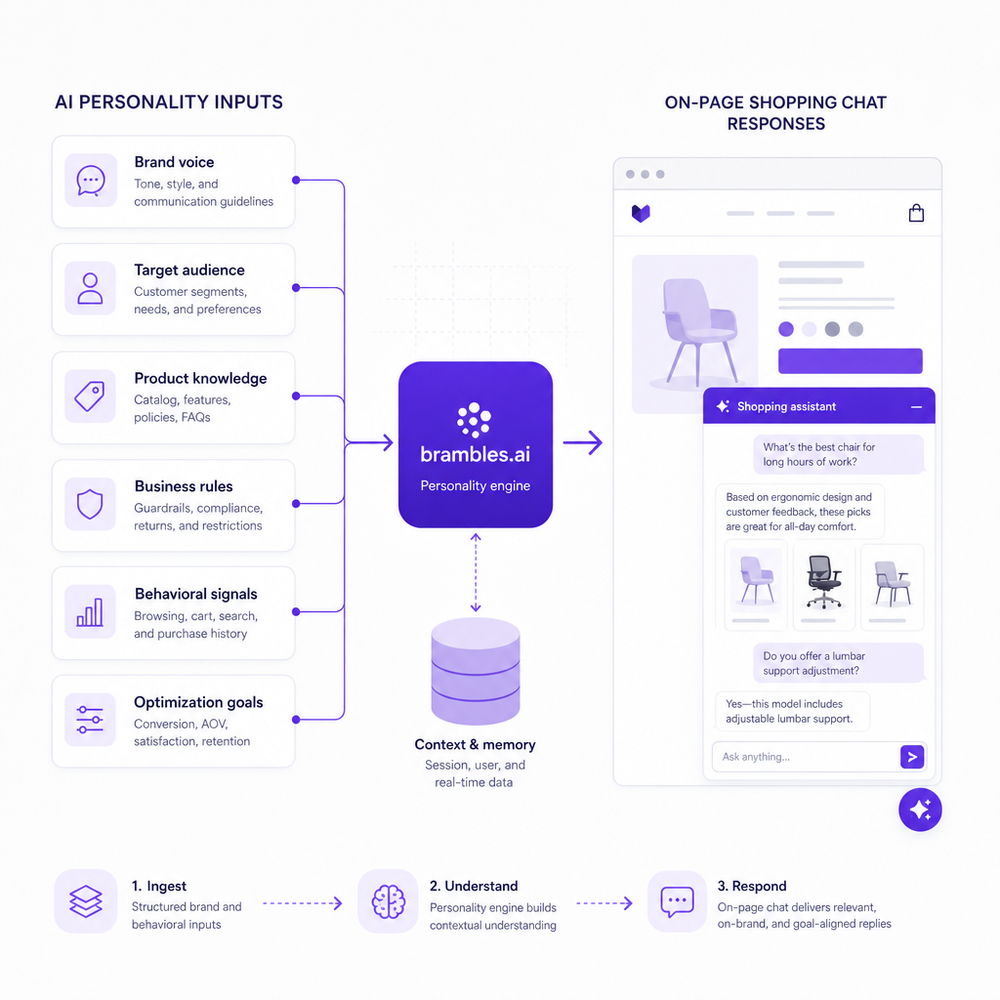
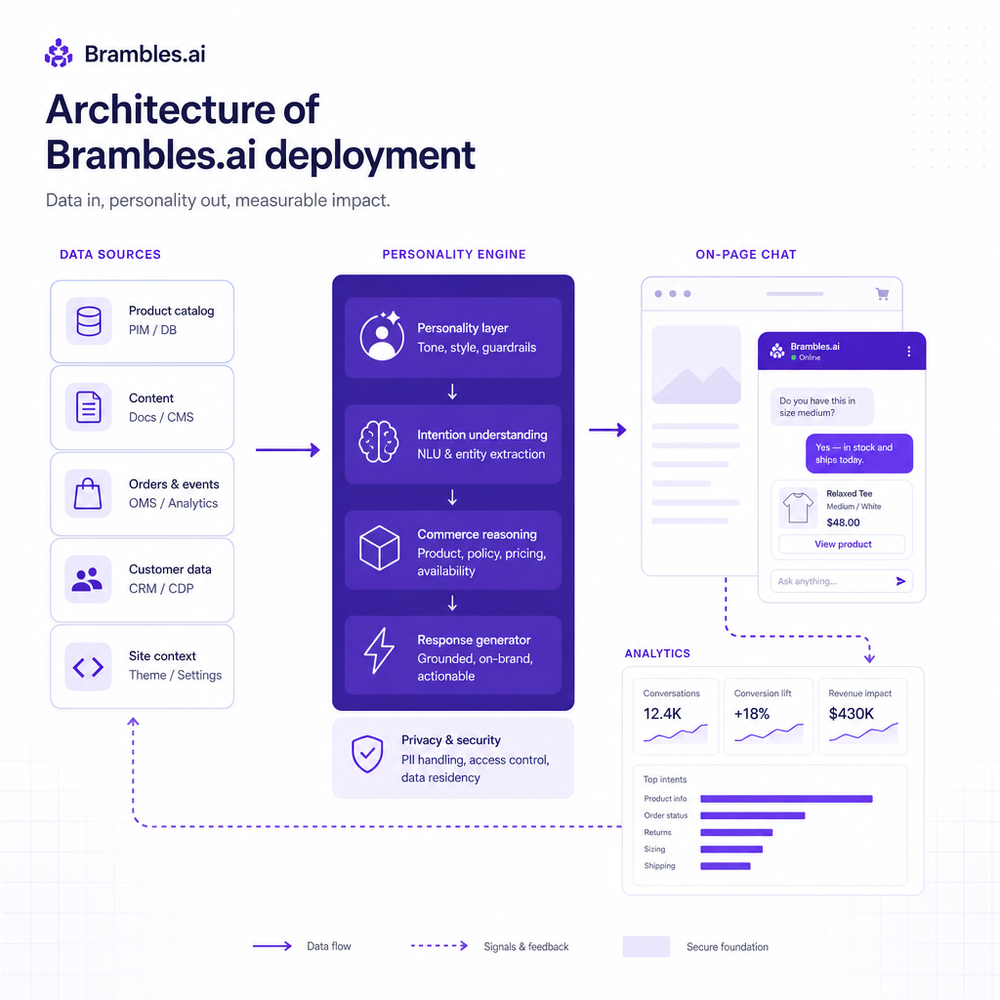
Feed the assistant trustworthy, structured context. Product catalogs, comparison matrices, sizing charts, return policies, and editorial notes help the model stay grounded. Without it, your carefully crafted tone won’t matter—the answers will still miss the mark. In our tests, adding granular fit notes to apparel increased first-answer resolution by 19%.
Brambles.ai bakes this into configurable capabilities. AI personality sets rules for tone, voice, and guardrails you can A/B test. Brand customization aligns UI elements—colors, fonts, iconography—so the chat feels native. Content intelligence indexes your site and product data to power accurate, on-brand answers at speed. Together, they deliver a consistent voice with substance behind it.
Implementation guide with Brambles.ai
Pick one high-traffic surface and ship within a week. Here’s the no-drama path we use with teams.
Step 1: Install the widget. Use the lightweight Agentic Commerce Module for any site, or one-click the WordPress plugin. Shopify support is coming; you can prep now with your data sources. Dev teams can use our integration docs for staging and config review.
Step 2: Configure personality and brand. In Brambles, set tone presets, assertiveness, banned words, and reading level. Match chat styling to your design system in minutes by adjusting colors, fonts, and placement. Then enable proactive prompts that use page context to help users start the right conversation.
Step 3: Connect data. Index your catalog, PDP copy, reviews, fit notes, and policies so the assistant can answer confidently. Content intelligence handles ingestion and syncing. For discovery use cases, enable natural-language shopping to turn vague intents into precise picks.
Step 4: Define success and ship. Add events for chat-start, product view from chat, add-to-cart, and escalation. Roll to 10–20% of eligible traffic. Monitor tone compliance and helpfulness ratings daily for the first week. If you monetize as a publisher, keep disclosure language consistent across surfaces.
Step 5: Optimize. Run A/B tests on tone assertiveness and suggestion density. For qualifying SKUs, enable direct add-to-cart from chat to shorten paths. If you publish commerce content, test a lighter, service-journalism tone in article embeds to balance expertise and warmth.
What features actually matter
AI personality sets the assistant’s tone, voice, and boundaries. You can codify how the agent greets, clarifies, and recommends—then version and test safely. Brand customization ensures the chat UI feels native: your colors, fonts, logos, and placement, on desktop and mobile. Content intelligence keeps answers anchored in your latest catalog and policies to reduce hallucinations and returns.
Two more that change outcomes: Proactive engagement suggests helpful prompts based on the page a shopper is on, lifting starts and discovery depth. AI shopping chat delivers a fast, native, persistent entry point, with mobile-optimized gestures that feel app-like.
For commerce publishers, personality ties directly to monetization quality. Transparent tone plus helpful recommendations supports ethical affiliate and retail media models without dark patterns.
Measuring ROI and KPIs
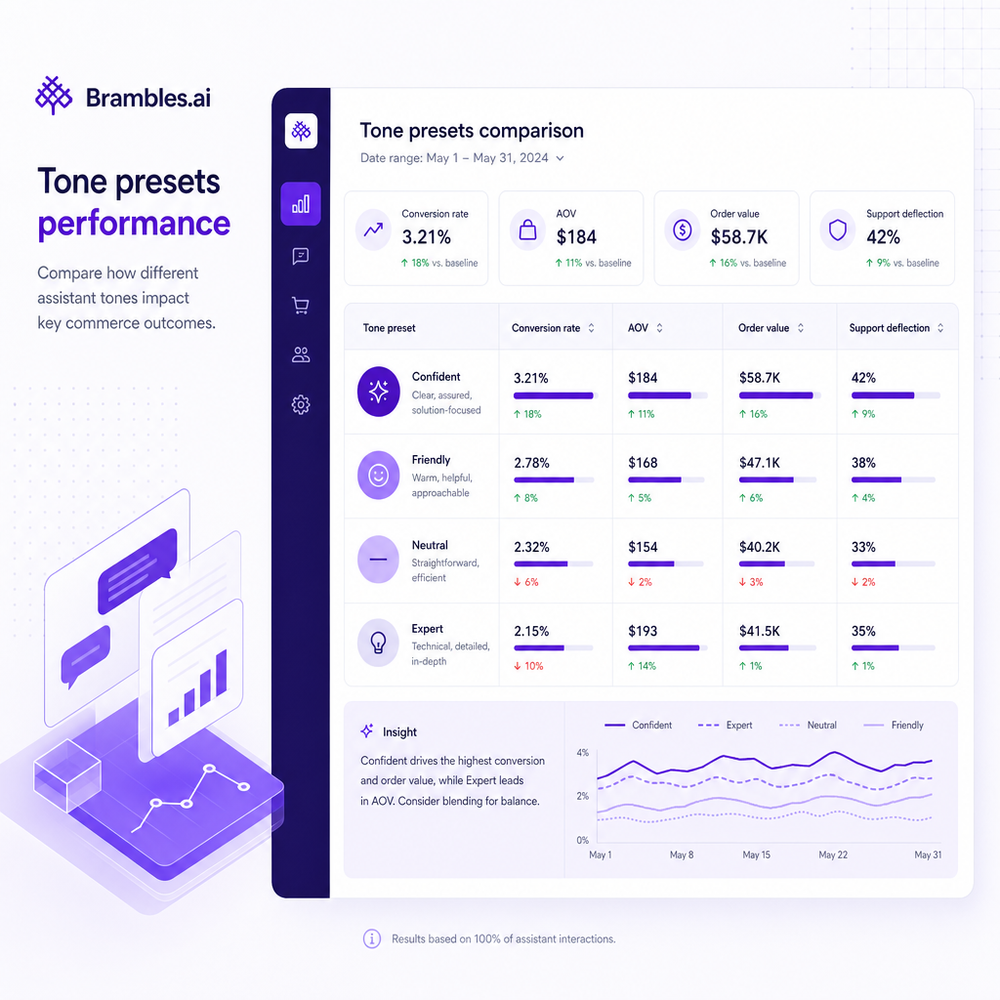
Set a primary KPI per surface. On PDPs: add-to-cart rate and assisted conversion. On category pages: product discovery depth and time-to-first-relevant-answer. For publishers: qualified clicks, earnings per session, and disclosure acknowledgement rate.
Secondary metrics include CSAT, helpfulness votes, escalation rate, and refund reduction. Tie all of this to cohorts by tone preset and prompt strategy.
What we track in practice: session start rate, clarification rate, product opens per session, add-to-cart from chat, and revenue per chat. One beauty brand saw 17% faster time-to-product and a 9% AOV lift after softening command language into coaching language. Keep experiments short—5–7 days—so seasonality doesn’t muddy results.
First-party data and trust
Trust is a tone, a disclosure, and a constraint. Keep personalization grounded in on-site signals, not shadow profiles. Make your affiliate or sponsorship relationships explicit in the chat context, not buried at the footer. Shoppers reward clarity; Salesforce’s customer research echoes this across industries (Salesforce Connected Customer).
Brambles supports transparent, contextual dialogs: you control when and how the assistant explains recommendations, sources, and compensation. You can also enforce safe lanes for claims and comparisons so the assistant never invents guarantees or misstates policy. This is where a defined personality intersects with brand safety.
Common pitfalls and a quick checklist
Avoid over-cuteness, context blindness, and silent failures. A luxury brand shouldn’t crack jokes about discounts; a budget brand shouldn’t over-index on exclusivity. Don’t let the assistant speak beyond the source data. And don’t forget to measure whether the voice helps the shopper finish the job.
Checklist you can run this week:
- Audit five real transcripts: Are tone and advice on-brand and accurate? - Define banned words and escalation triggers. - Add three proactive prompts per key page. - Index fit notes and returns policy for grounding.
- A/B test assertive vs. consultative recommendations. - Track add-to-cart from chat and helpfulness votes. - Review disclosures on at least two surfaces.
Future outlook: dynamic voice without chaos
The next step is context-aware tone shifts. Think expert and concise on spec-heavy PDPs, warmer and story-driven on editorial hubs—without breaking brand rules. Expect retailers and publishers to blend assistant voice with sponsored placements that remain clearly labeled and helpful. Conversational journeys will start earlier and end faster as assistants align voice with intent, not just brand.
FAQ
What’s the difference between tone and personality?
Personality is the system of traits and rules guiding behavior—confidence, empathy, assertiveness, formality. Tone is how those traits show up in a specific moment. You can vary tone by context without changing the core personality.
How long does implementation take?
For most teams, a week to first test: install, configure voice, index data, and ship to a traffic slice. Full rollout follows after 1–2 rounds of A/B testing and QA on disclosures and guardrails.
Which features matter most for staying on-brand?
Use AI personality to encode voice and safety, Brand customization to match UI and presence, and Content intelligence to ground answers in your catalog. Proactive engagement and AI shopping chat increase starts and keep the experience native.
Does personality affect compliance and disclosures?
Yes. Personality sets when and how the assistant explains sources, comparisons, and affiliate relationships. Clear, consistent language reduces complaints and protects revenue while building trust with returning users.
Is this only for retailers, or should publishers use it too?
Both. Retailers lift conversion and reduce returns with clearer advice. Publishers grow qualified clicks and revenue by aligning tone with editorial stance and transparent monetization—without intrusive ads or off-brand upsell pressure.
Related resources on Brambles.ai
If you are implementing this, start with Brambles.ai, enterprise solutions, publisher pricing, brand pricing.
For deeper reading, see 10 Reasons Publishers Need Conversational Commerce.
Related posts
View all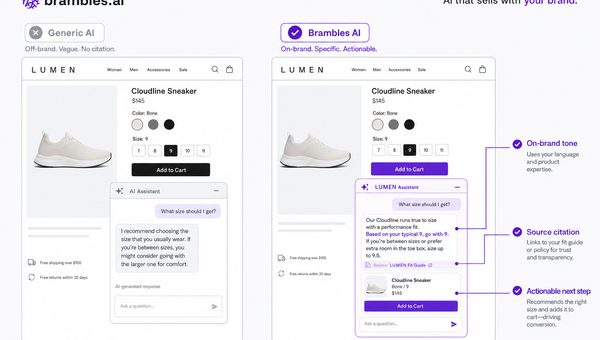
Brand-Consistent AI Chats Build Trust and Conversions
When AI mirrors your brand voice, shoppers relax—questions get answered, carts grow, and support load drops. Learn the playbook to align tone, trust, and ROI.
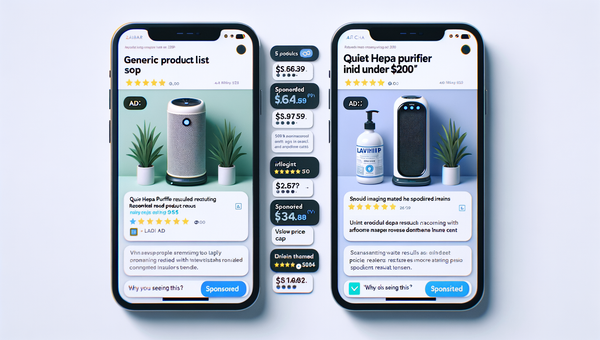
Sponsored Products in AI Shopping: Retail Media 101
Learn how sponsored product placements power AI shopping, how bidding and relevance work, and how to implement retail media without eroding trust or UX.
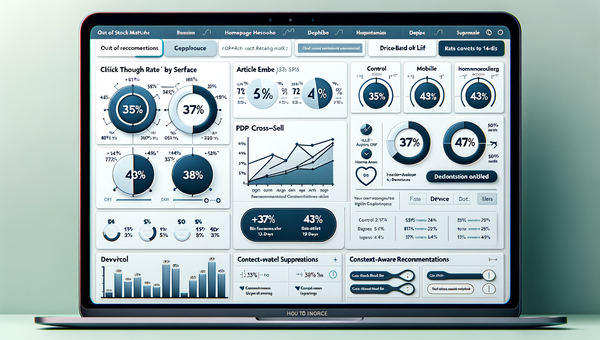
How Context-Aware AI Recommendations Lift CTR
See how context-aware AI recommendations lift CTR by 25–60% with intent signals, page context, and history. Practical steps, KPIs, and implementation tips.
Explore Brambles.ai
Learn more about our AI-powered agentic commerce platform, agentic shopping, and shopping assistance solutions.
Explore More Insights
Discover more articles on AI, automation, and business innovation
View All Articles