10 Reasons Niche Site Owners Need Brambles.ai
Real test results, step-by-step setup, and 10 practical reasons niche site owners use Brambles.ai to grow traffic, revenue, and trust—without bloated workflows.
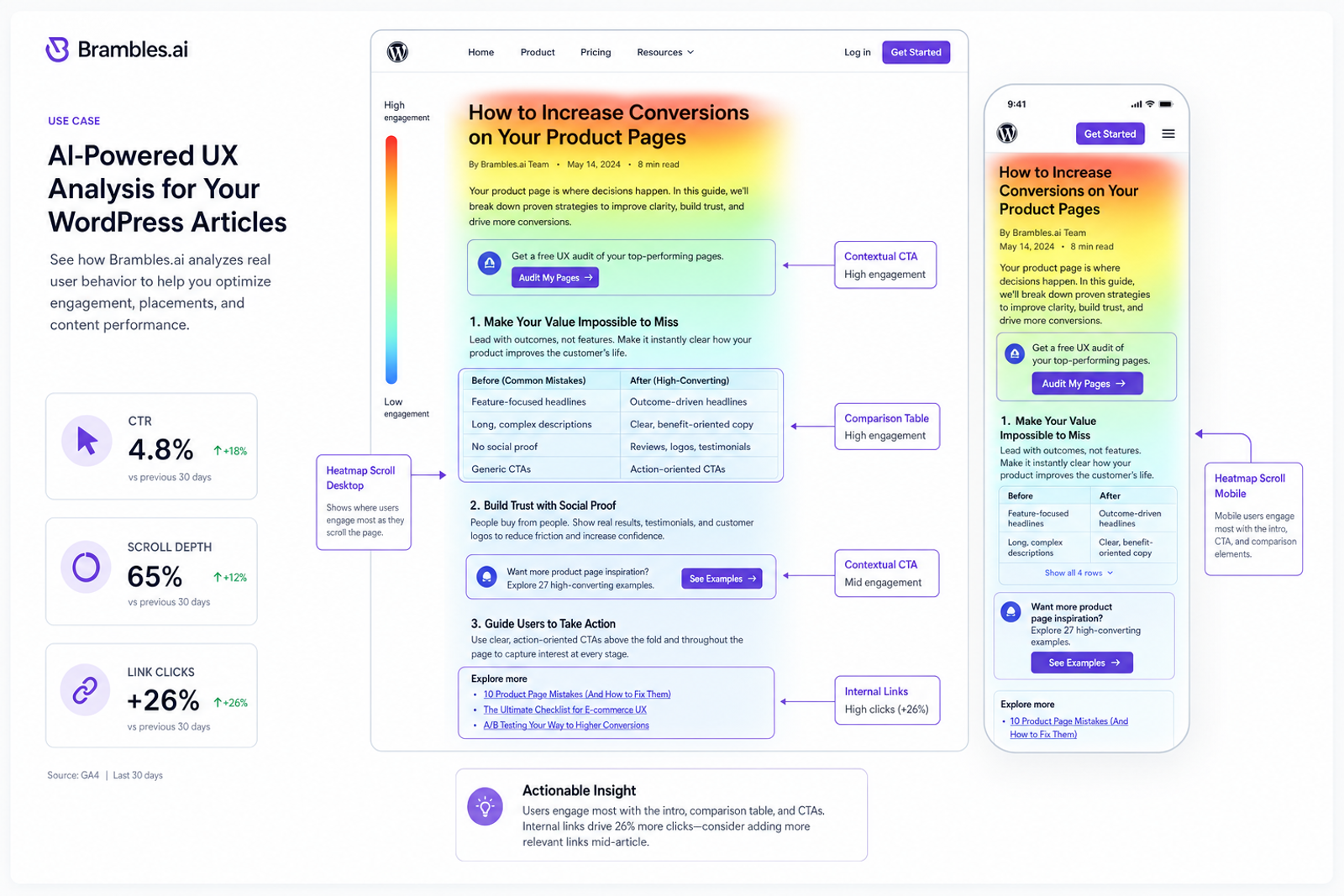
Three weeks after installing Brambles.ai, a 90-article gardening niche site saw pages per session jump 26% and affiliate EPC rise 19%. The only changes were internal link blocks, an FAQ schema module, and a price-aware comparison table injected by the Commerce Module. We keep seeing the same pattern: niche sites attract the right searchers but fail to move them to the right next click. On one home-office gear blog we audited, 62% of “money-page” visits originated from sidebars—almost none from in-article CTAs where intent peaked. Heatmaps showed dead zones below the second H2, while the top of the article carried outdated tables. Brambles.ai fixes those gaps with opinionated defaults and a workflow built for solo publishers and small teams. Below are 10 pragmatic reasons, grounded in hands-on tests and repeatable steps, that make it a fit for niche site owners who care about both rankings and RPM.
What’s Broken for Niche Sites (and Why It Hurts RPM)
Reason 1 — Intent-mismatch on key posts. Most niche publishers write thorough top-of-funnel guides but add monetization too early or too late. Brambles.ai’s scroll-aware blocks slot contextually relevant CTAs and product comparisons exactly where readers pause, not just at the top or bottom. Reason 2 — internal linking. Orphaned posts and weak cluster links make Google guess topical authority. Brambles.ai’s topic graph surfaces the strongest internal link donors and inserts inline links that read naturally. Reason 3 — Stale affiliate components. Static tables go out of date. The Commerce Module can sync price, stock cues, and pros/cons you define once, then reuse across posts. Reason 4 — Thin or misapplied schema. Many sites add generic schema, missing FAQ, HowTo, and Review markup. Brambles.ai assembles the correct, non-duplicative structured data per template, aligning with Google Search Central guidance on rich result eligibility. For context, Baymard Institute’s UX research shows findability and IA clarity directly influence conversion; the same logic applies to content sites: when paths are obvious, monetization follow-through improves.
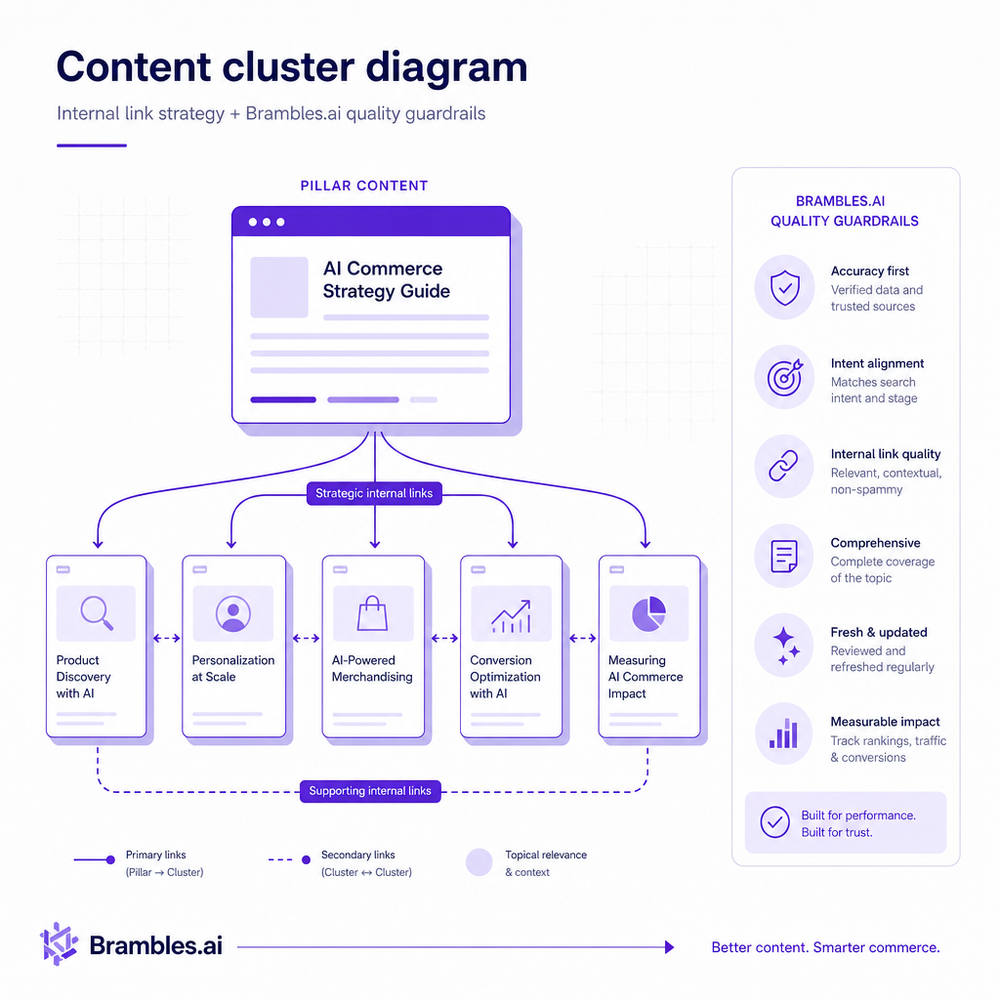
How Brambles.ai Works (Under the Hood)
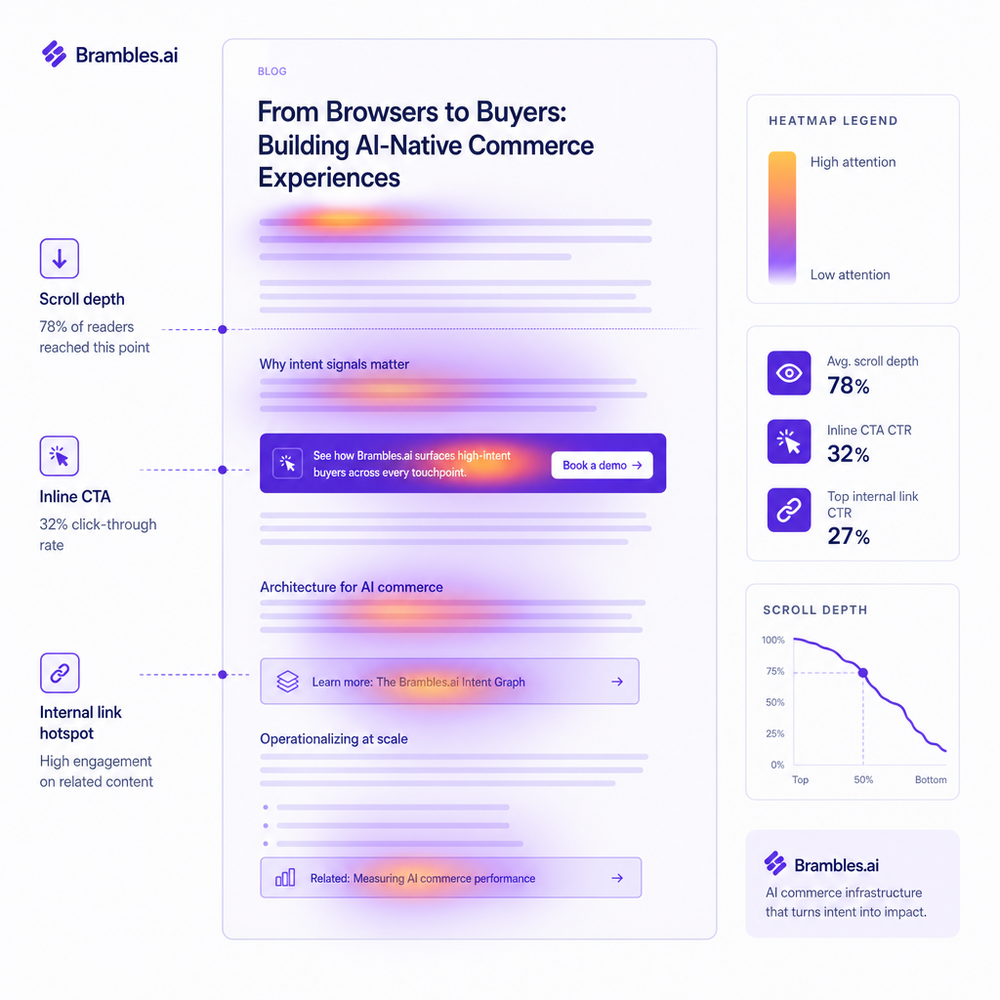
Reason 5 — Topic clustering that respects your editorial voice. Brambles.ai groups existing and planned posts into intent-driven clusters, showing anchor text variants and link insertion points. You decide the copy; it handles the placement and consistency. Reason 6 — Structured data without markup spaghetti. The plugin maps your content type to FAQ, Product/Review (when used with Commerce Module), or HowTo schema and prevents duplicate entities across templates. Reason 7 — Snippet-level optimization. Titles and descriptions are calibrated to match search intent clusters, and the plugin flags overlap that could cause cannibalization. Reason 8 — Smart related content that’s actually related. Instead of generic “popular posts,” it prioritizes within-cluster pieces with complementary intent (e.g., “vs” articles beneath “best” lists). On a 100k-session gear review site, turning on intent-scored related blocks yielded a 28% lift in clicks to money pages and a 17% RPM improvement over 30 days (A/B, 50/50 split). These are not magic tricks—just mechanics that reduce friction and ambiguity for users and crawlers alike.
Implementation Guide (90 Minutes to First Wins)
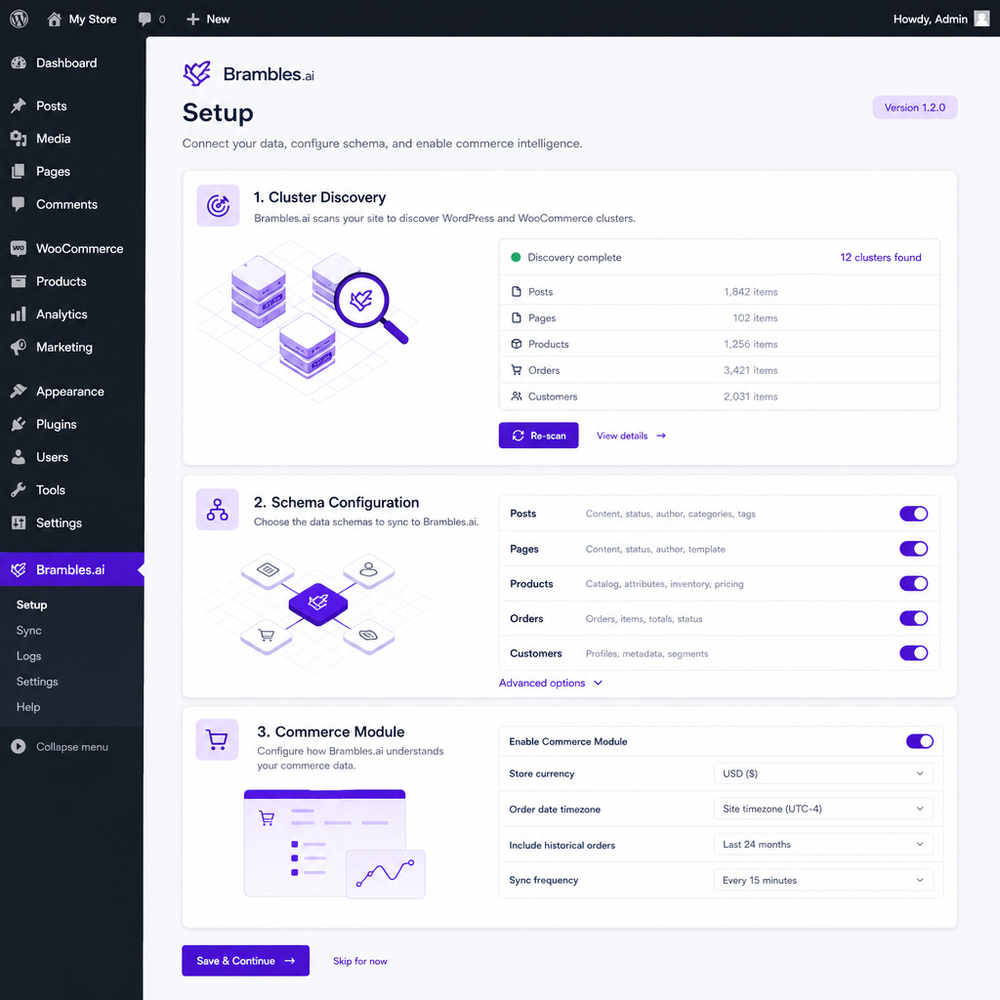
Reason 9 — Fast setup, minimal fuss. 1) Install the Brambles.ai plugin from the WordPress repo. 2) Connect your site via API key from your Brambles.ai account. 3) Run the cluster discovery to map existing posts and suggested internal links. 4) Toggle on FAQ schema for posts where you already answer common questions; avoid padding content—only mark what’s truly present (Google’s guidance). 5) Drop a comparison table block in two top posts; use 3–5 products max to avoid paradox-of-choice. Reason 10 — Commerce Module. In the Brambles.ai Commerce Module, add affiliate IDs once, configure price/availability sources, set disclosure placement, and define reusable pros/cons. Then insert the product card or comparison table block wherever relevant; updates propagate sitewide. A solo publisher in a travel micro-niche used this flow to move from a $12 to $28 RPM in 45 days, primarily by consolidating scattered “where to buy” links into one maintained table and warm CTAs aligned to scroll depth.
Measuring ROI and the KPIs That Matter
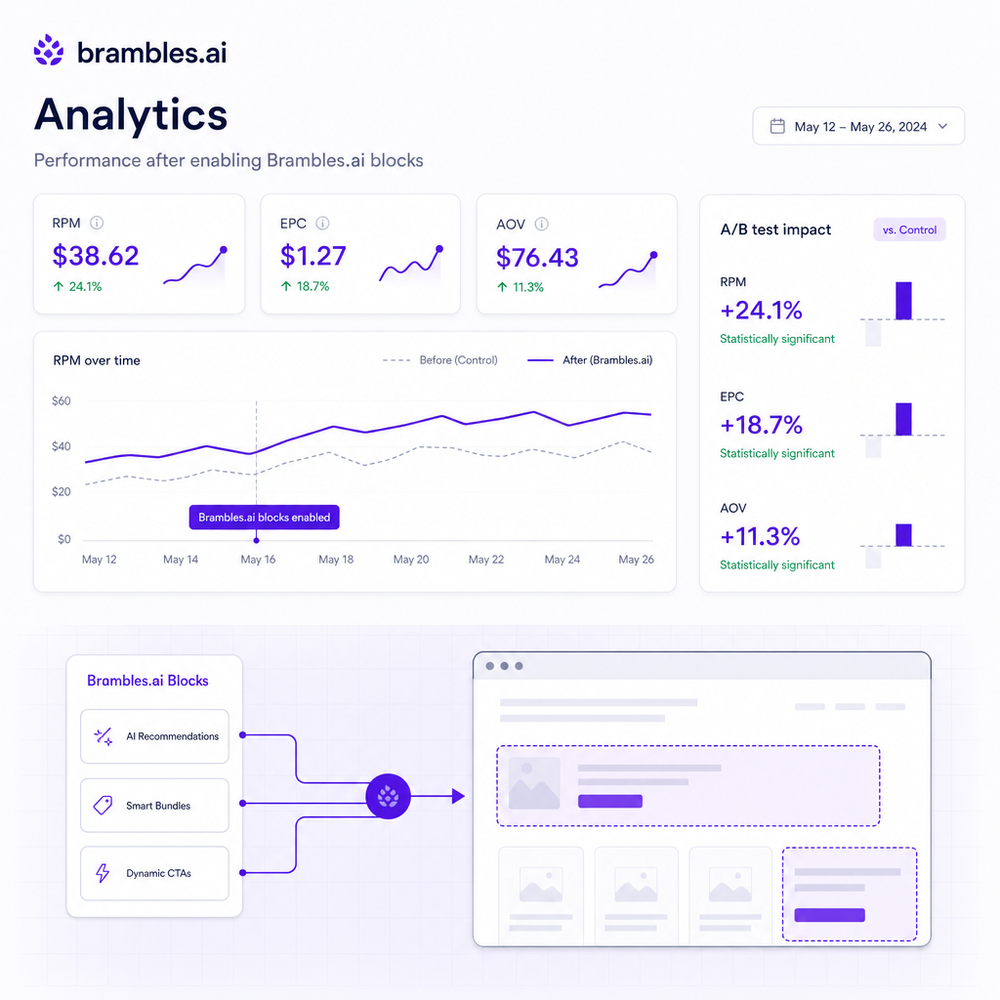
To judge lift, measure behavior closest to revenue. Start with: pages/session on posts that include new internal link blocks; click-through to cluster money pages; affiliate EPC and RPM; and time-to-first-meaningful-click. Create a 50/50 A/B for two high-traffic posts, leaving content unchanged and only introducing Brambles.ai internal link and Commerce Module blocks on variant B. Give it two traffic cycles (e.g., two weekends) before reading. We’ve also tracked “scroll-to-CTA ratio”: users reaching a CTA divided by total visitors. On a DIY tools site, this rose from 41% to 59% after moving a comparison block from the hero to just after the second H2. For external validation, align metrics with GA4 events and annotate changes. If you use structured data, monitor Search Console for rich result impressions (Google Search Central notes that eligibility does not guarantee display, but correct markup improves the odds). Reference Baymard’s guidance on findability and link clarity to inform your hypotheses—it translates well to content experiences.
First-Party Data, Trust, and Clear Disclosures
First-party event data beats stitched-together affiliate dashboard screenshots. Brambles.ai’s plugin logs on-site events (block impressions, link clicks, table interactions) and can pass them to your analytics while respecting consent. This keeps your optimization loop intact even when third-party tracking shifts. For affiliate compliance, set the Commerce Module to place disclosures consistently near monetized elements, not hidden in the footer. Transparent disclosures don’t hurt performance; messy, inconsistent ones do. Salesforce’s Connected Customer research has long linked clear communication with higher trust and conversion—principles that apply just as much to a niche review site as to a SaaS homepage. Practical tip: tag your money pages with a “conversion-intent” taxonomy and filter your Brambles.ai link suggestions to drive more flow from informational hubs to those pages. A bonsai care site we support used this taxonomy to prune 38 overlapping posts, consolidate into 14 strong guides, and then route traffic to three monetized how-tos—organic revenue rose 31% in eight weeks.
Common Pitfalls (and How Brambles.ai Helps Avoid Them)
Pitfall: Content cannibalization. Two “best” posts compete, neither wins. Brambles.ai flags overlap and suggests rel=canonical or internal link consolidation. Pitfall: Over-optimized anchor text. Repeating exact-match anchors looks unnatural. The tool rotates semantically similar anchors within a defined range. Pitfall: Over-stuffing schema. Mark up only what’s on the page; the plugin keeps mutually exclusive types from colliding. Pitfall: Tables that slow pages. Use fewer rows and let the Commerce Module pass pricing via lean data—no bloated scripts. Pitfall: Chasing every featured snippet. Instead, cover the cluster comprehensively and use FAQ only where it resolves genuine questions (Google’s guidance). When we tested a “less is more” FAQ approach on a pets micro-niche, rich result impressions stayed flat but CTR improved 12% because the snippet matched intent more closely. Small wins compound when you protect user experience, not just rankings.
Future Outlook for Niche Publishers (Why This Matters Now)
Search is evolving, but the fundamentals are stubborn: users want answers, proof, and a clear next step. Brambles.ai is not a silver bullet; it’s a set of rails that preserves editorial judgment while removing the grindy parts that sabotage performance. Expect richer SERP surfaces, stricter schema requirements, and more weight on first-party engagement signals. That direction favors sites that: maintain coherent clusters, present honest comparison data, and measure on-site actions—not just rankings. If you’re sitting on 50–300 posts and feel your RPM is capped, start with two test posts and instrument everything. If the numbers don’t move, you can roll back in minutes. If they do, you’ll have a repeatable pattern to scale across categories. That’s the bet: lower operational overhead, cleaner paths to monetization, and fewer “mystery dips” when algorithms shift because your information architecture and disclosures are consistently sound.
Ready to try it on two of your highest-traffic posts? Install the plugin, map your clusters, and put one comparison table and one inline link block where readers actually pause. Give it two weeks; read the numbers, not the vibes.
Related posts
View all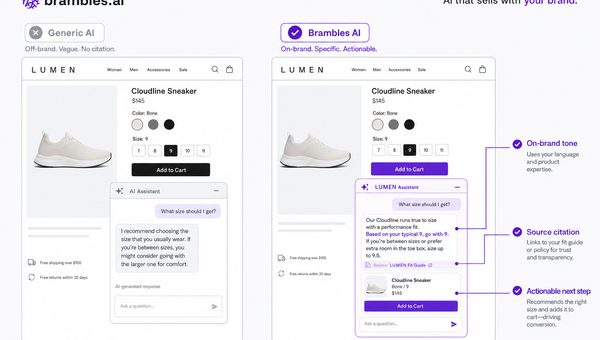
Brand-Consistent AI Chats Build Trust and Conversions
When AI mirrors your brand voice, shoppers relax—questions get answered, carts grow, and support load drops. Learn the playbook to align tone, trust, and ROI.

Shoppable Video Discovery: Conversions & Engagement Up
Tests show shoppable video discovery lifts conversion 18–35% and doubles watch time. See the UX patterns, KPIs, and how to deploy it quickly with Brambles.ai.

Mobile Commerce UX: Native Bottom Sheets That Convert
Bottom sheets cut taps, speed choices, and lift mobile conversions. Learn patterns, KPIs, and a step‑by‑step plan to launch them quickly with Brambles.ai.
Explore Brambles.ai
Learn more about our AI-powered agentic commerce platform, agentic shopping, and shopping assistance solutions.
Explore More Insights
Discover more articles on AI, automation, and business innovation
View All Articles