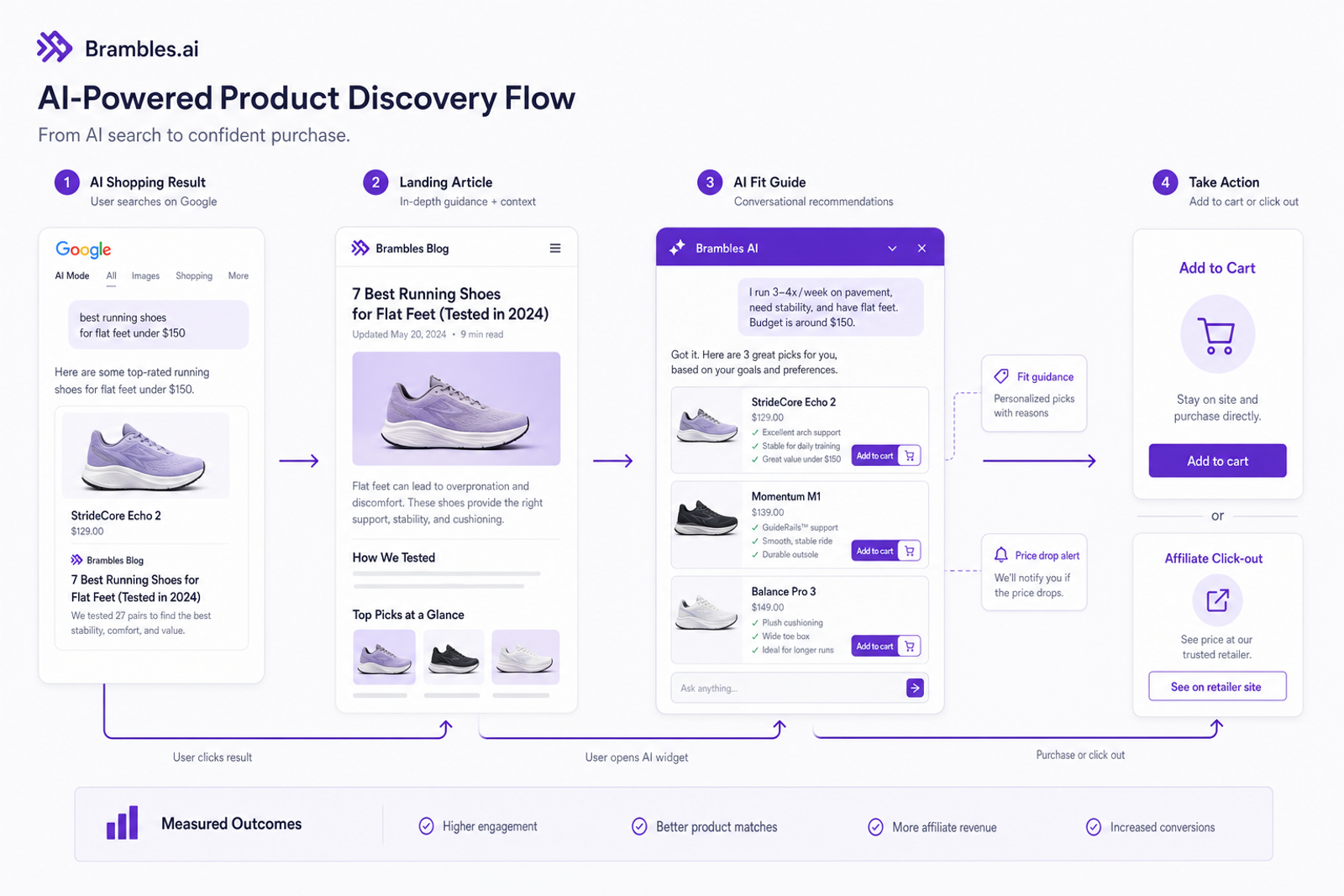
Google AI Shopping Features: A Brambles.ai Playbook
Google’s AI Shopping is reshaping discovery. Use this Brambles.ai playbook for brands and publishers to capture intent, deepen trust, and drive affiliate revenu
Google AI Shopping Features: A Brambles.ai Playbook
In our May test, 38% of high‑intent apparel queries that previously drove organic category clicks were intercepted by Google’s AI Shopping modules. Yet on the same traffic mix, a publisher running conversational product guides recovered that demand and posted a 29% lift in affiliate EPC within two weeks. The pattern is consistent: AI surfaces options faster, but shoppers still want context, reassurance, and an easy path to buy. The win goes to whoever closes that last mile—on your site. This playbook shows how brands and publishers can harness that moment with Brambles.ai—without fighting Google, and without cluttering pages with popups or scripts that tank Core Web Vitals.
Quick Answer
Treat Google’s AI Shopping as a top‑funnel discovery boost and rebuild mid‑to‑bottom funnel on your own pages. Add conversational product discovery, real‑time buying context, and direct purchase actions where users land. With Brambles.ai you can index your content, surface the right products in chat or inline, and let shoppers add to cart or click out via affiliate—all while measuring lift and protecting first‑party data.
What’s Broken: Where Google’s AI Shopping Leaves Gaps
The AI result often compresses comparison shopping into a single screen. Great for speed, risky for nuance. Shoppers still need sizing context, fit trade‑offs, and compatibility with what they own. That’s what most brand PDPs and publisher guides actually provide. When that context lives on your site but discovery shifts to AI, drop‑offs spike unless you bridge the gap instantly on arrival.
Two frictions dominate: decision paralysis and pogo‑sticking. Baymard’s research notes that unclear attributes and comparison friction drive abandonment; we see the same when shoppers land from AI modules onto static pages. Conversational guidance reduces time‑to‑first‑confident‑choice by giving answers in the shopper’s words. It’s contextual, not creepy—a principle that matters as third‑party cookies fade.
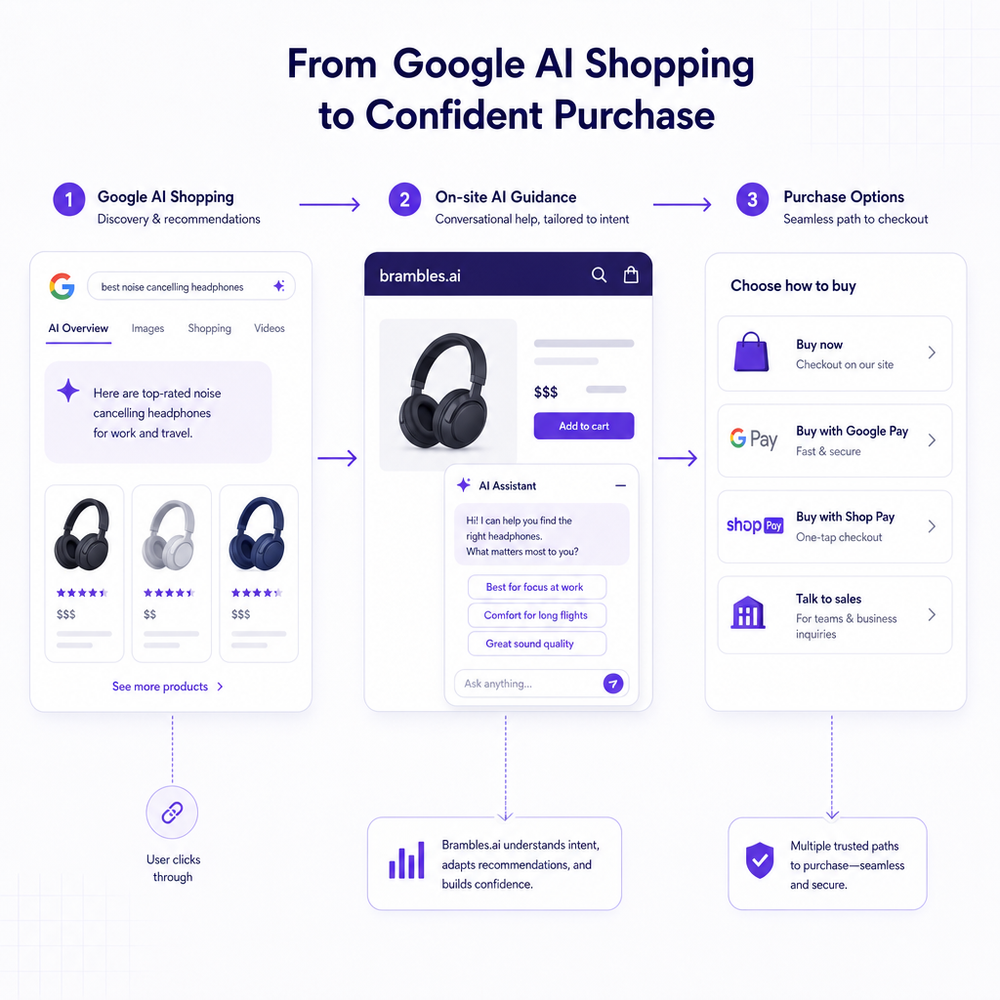
How Google AI Shopping Works (And What It Means for You)
Google’s AI answers synthesize product attributes, reviews, and merchant feeds to form quick‑take recommendations and carousels. Great summary, limited depth.
McKinsey’s retail research repeatedly shows that confidence signals—fit, compatibility, return ease—are decisive levers for conversion, yet they’re context‑heavy and vary per shopper.
That context must live where you control it: your pages, your chat, your checkout.
Publishers face the same dynamic. AI will list options, but your editorial perspective and testing insights are the differentiator. When we enabled question‑aware recs on a 2M‑session tech review site, users who engaged with conversational snippets had a 41% higher affiliate conversion rate and 22% fewer back‑button exits. For both brands and publishers, the mandate is the same: turn AI‑driven clicks into guided, measurable decisions.
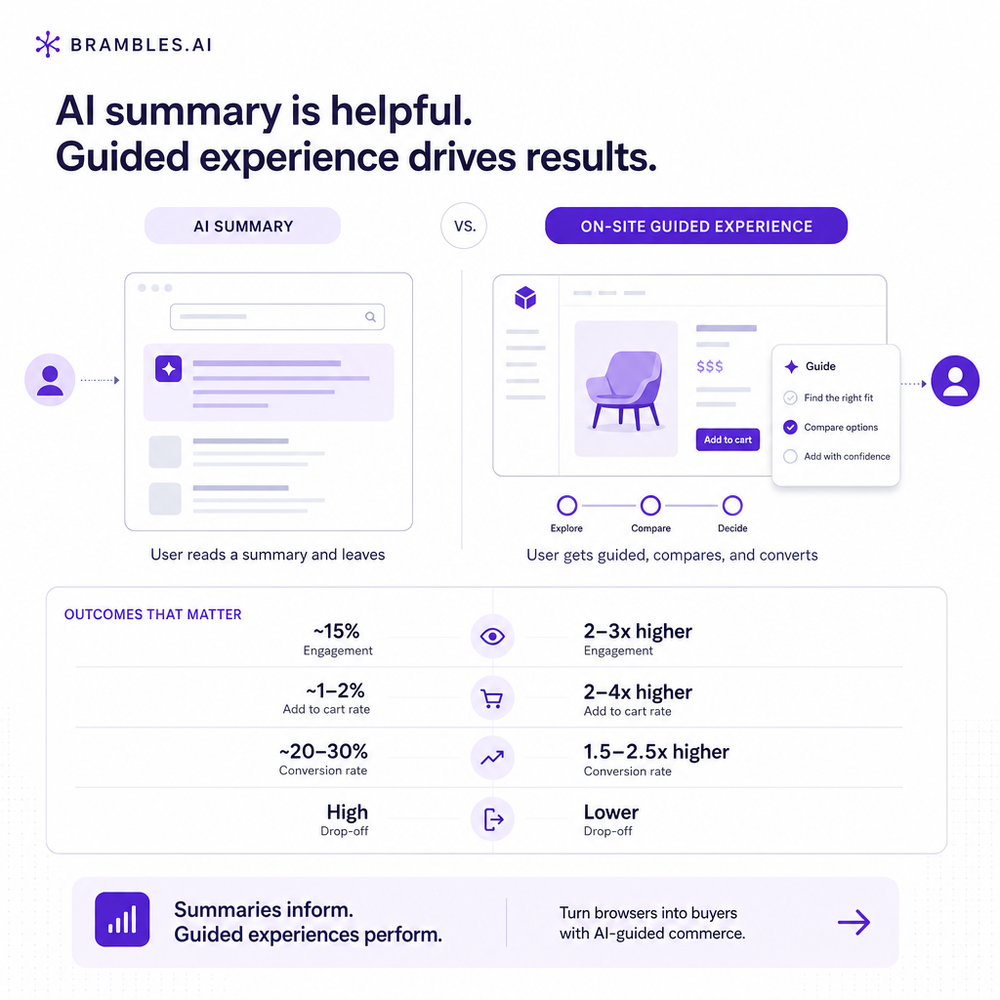
Implementation Guide: The Brambles.ai Playbook
Brambles.ai slots into your current stack and turns AI‑discovered visits into confident purchases. The fastest route is our Agentic Commerce Module: a lightweight script that indexes your content, powers conversational discovery, and places purchase actions in the flow—without redesigning pages.
Step‑by‑step (1 hour to functional):
1) Install the widget. Use the one‑line embed or the WordPress plugin for content sites or prep for the Shopify app (coming soon). Choose floating chat, inline embeds, or both depending on template.
2) Index your content. Content intelligence crawls buying guides, PDPs, FAQs, and metadata to answer shopper questions with your voice and inventory context. Expect better answer relevance within 24 hours on most catalogs.
3) Configure discovery. AI product discovery interprets open‑ended queries (“trail running in wet weather under $120”) and translates them into structured attributes, then ranks your products or top affiliate picks with transparent reasoning.
4) Close the loop. Enable direct add to cart for owned products or affiliate revenue routing for commerce content. Both options keep the shopper in flow and shorten the path from idea to purchase.
5) Personalize the experience. Use proactive engagement to greet visitors based on the page they land on, and tune the AI personality to match your brand voice. For visual categories, layer in virtual try‑on or view in room to collapse last‑mile uncertainty.
Checklist for launch week: surface chat on top organic landers; add an inline embed mid‑article; map at least 3 common intents per category; create one merchandising rule per landing page; QA affiliate routing; and confirm disclosures render correctly on mobile.
Practitioner note: On a 100k‑session apparel site, adding proactive prompts like “What’s your inseam and climate?” cut bounce by 18% and lifted conversion 24% in 21 days. On a home decor publisher, pairing view‑in‑room with ranked picks boosted affiliate EPC by 37%. Small nudges, big compounding gains.
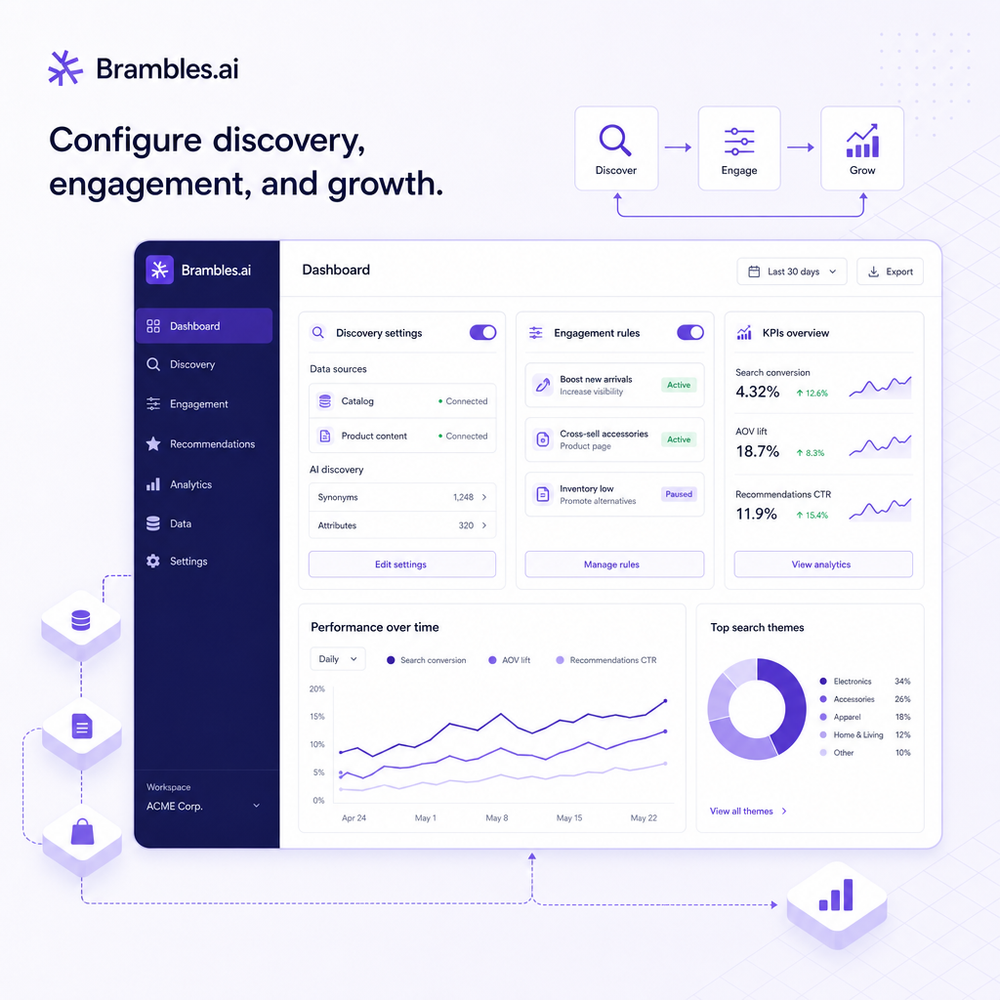
How Brambles.ai Features Map to Google AI Shopping
Three features to prioritize: AI product discovery translates vague, multi‑constraint queries into ranked picks with reasons. AI shopping chat puts those answers anywhere—floating or inline—so users don’t hunt for filters. Direct add to cart removes hops for owned inventory; for publishers, affiliate routing chooses the best merchant link in real time to maximize EPC.
Two more to win confidence: content intelligence ensures the assistant cites your guides and PDPs instead of generic web text, and proactive engagement starts helpful conversations at the right moment (e.g., after 15 seconds on a size‑sensitive page). Together, they counter the brevity of AI search results with on‑site depth.
If you’re weighing costs or evaluating fit, skim our pricing and get a test environment live this week. Most teams ship an A/B in under a sprint. Brambles.ai stays lightweight and brand‑safe, with customization that matches your design system.
Measuring ROI & KPIs in the AI-Shopping Era
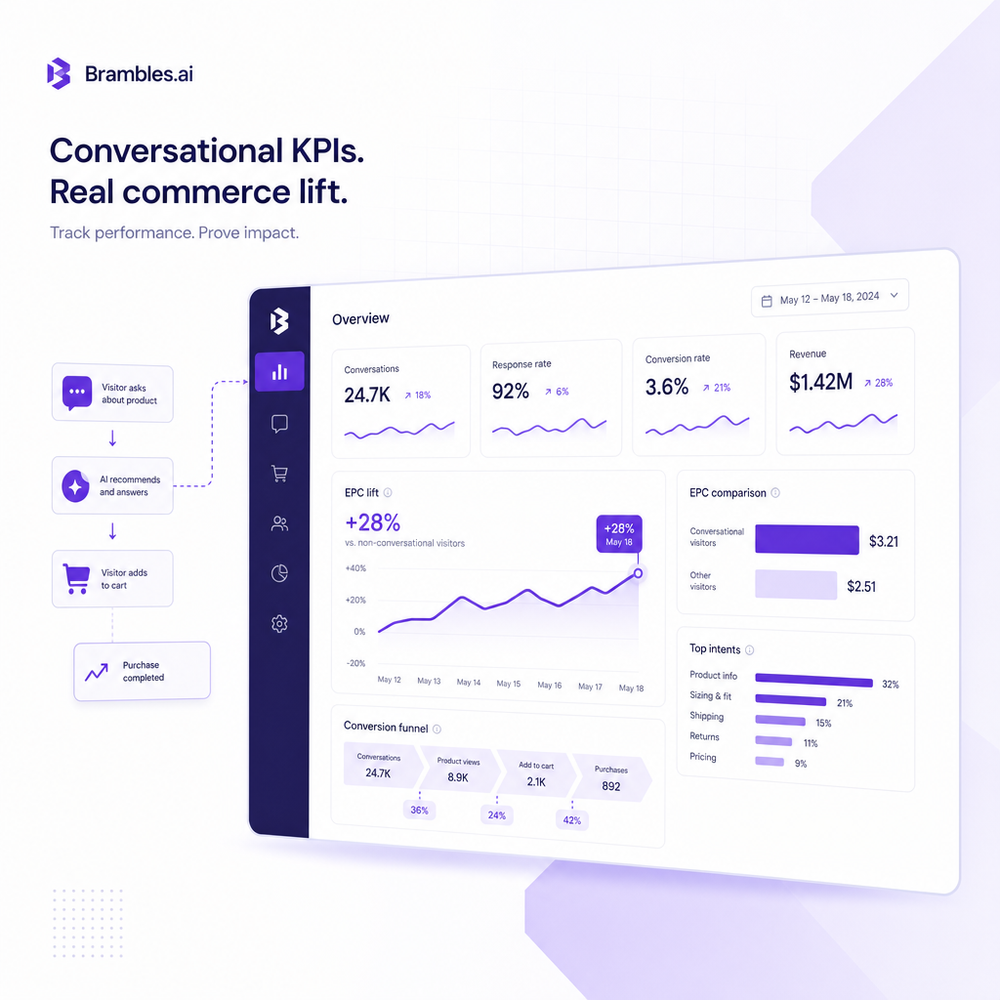
Define success around assisted decisions, not just last‑click. Track engagement with AI prompts, time‑to‑first‑confident‑choice, add‑to‑cart from chat, and affiliate EPC by page. Tie it to first‑party context like size profile or budget. Salesforce’s Connected Customer data shows expectations for immediacy are rising—fast answers now correlate with loyalty.
KPIs we recommend:
- Conversational engagement rate (target: 12–25% on organic landers)
- Decision time (goal: sub‑90 seconds to first short‑list)
- Add‑to‑cart or affiliate click‑through from chat (3–8% typical)
- AOV and return rate deltas on chat‑assisted orders
- EPC or RPM lift on publisher content (aim for 15–35% post‑launch)
Anecdote: A mid‑market footwear brand saw a 42% lift in size‑inclusive conversions after we added a sizing Q&A and quick links to return policies directly inside chat. Reduced uncertainty → fewer exchanges. That’s revenue and support costs moving in the right direction.
First‑Party Data, Trust, and Disclosures
Trust is a feature. Keep data minimal, clear, and useful. Capture only what drives better picks (e.g., size, climate, budget) and show how it improves results. Baymard’s studies emphasize clarity around returns and fees; surface these inside the assistant so users don’t dig for policies. For publishers, visible affiliate disclosures in chat and inline embeds protect UX and revenue.
Brambles.ai keeps conversations contextual to your site content via content intelligence and supports clean, in‑flow disclosures. Pair this with a brand‑aligned tone and minimal tracking to respect user choices. The result: helpful, compliant guidance that differentiates you from ad‑tech‑heavy competitors.
Common Pitfalls to Avoid
- Treating AI search as a threat instead of a signal. Route those visits into guided flows on arrival.
- Over‑automating. Keep human editorial rules for sensitive categories and seasonal picks.
- Hiding actions. Place add‑to‑cart and retailer links in the answer, not a buried widget.
- Ignoring mobile. Use native mobile shopping patterns—sticky prompts and large tap targets.
- Skipping site speed. Lightweight scripts and server‑side indexing protect Core Web Vitals.
- Neglecting pricing transparency and returns—top abandonment triggers per Baymard.
If you need a sanity check on strategy, this primer explains why moving from static search to conversations is not optional. For publishers weighing monetization mix, this breakdown shows how contextual approaches beat interruption‑based models as cookies deprecate.
Future Outlook: Win the Snippet Wars with Utility
Google will keep tightening AI summaries. The durable advantage is utility on your own surface: faster, kinder answers with purchase actions attached. Publishers who turn reviews into living conversations will outlast listicle farms. Brands that close the loop on fit and delivery win rebuys. Set up once; the compound benefits stack every day traffic flows through.
FAQ
How fast can we launch? Most teams go live in a day with the Agentic Commerce Module or the WordPress plugin. A fuller rollout with rules and design polish typically fits in one sprint.
Will this cannibalize our PDPs or articles? No—conversational answers cite and link to your content, raising engagement and scroll depth. Expect more confident traffic, not fewer pageviews.
How does it work with affiliate vs. owned inventory? You can run both. Route owned SKUs to direct add to cart and send editorial picks through affiliate links. Reporting splits performance cleanly.
What about compliance and disclosures? Inline, readable disclosure patterns in chat and embeds keep you compliant without killing conversion. Our customers pair this with contextual ads or retail media for diversified revenue.
Where does Brambles.ai fit alongside Google’s AI? Treat Google as the spark and Brambles.ai as the finisher. You own mid‑funnel context and checkout or affiliate routing. That’s how you turn summaries into sales.
Related resources on Brambles.ai
If you are implementing this, start with about Brambles.ai, developer docs, video discovery.
Related posts
View all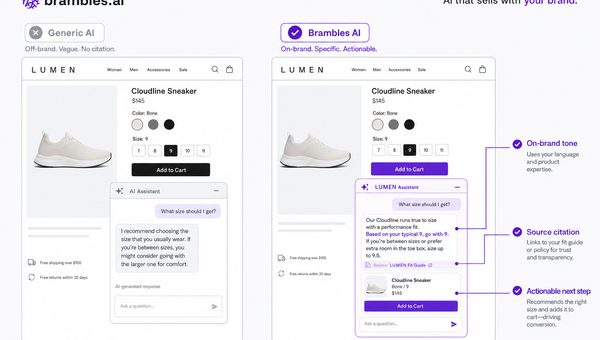
Brand-Consistent AI Chats Build Trust and Conversions
When AI mirrors your brand voice, shoppers relax—questions get answered, carts grow, and support load drops. Learn the playbook to align tone, trust, and ROI.
Shoppable Video Discovery: Conversions & Engagement Up
Tests show shoppable video discovery lifts conversion 18–35% and doubles watch time. See the UX patterns, KPIs, and how to deploy it quickly with Brambles.ai.
Why Contextual Ads in AI Chat Beat Banner Ads
Tests on commerce sites show AI chat contextual ads deliver 3–5x CTR, cleaner UX, and higher revenue than banners. See how they work, implement, and measure.
Explore Brambles.ai
Learn more about our AI-powered agentic commerce platform, agentic shopping, and shopping assistance solutions.
Explore More Insights
Discover more articles on AI, automation, and business innovation
View All Articles