Agentic Commerce Explained + How Brambles.ai Makes It Work
Agentic commerce turns shopping into goal-driven conversations. Learn how Brambles.ai makes it practical on WordPress to lift conversion, AOV, and loyalty.
Three weeks after launching an agent-led shopping flow on a cookware site (62k monthly sessions), we saw an odd pattern: people typed goals, not products—“I cook for five, induction stove, budget $150.” The agent built a basket, justified trade-offs, and checked stock in one thread. Results: 24% faster time-to-basket, +18% AOV, and a 1.6x improvement in product fit feedback versus the site’s classic filters. That was our moment: agentic commerce works when it behaves like a savvy store associate—capable, patient, and commercially aware.
Agentic commerce isn’t chat slapped onto a storefront. It’s a goal-driven agent that interprets messy intent, plans steps (find, compare, bundle, price-check), executes via trusted tools, and learns from outcomes. Below I’ll unpack what’s broken in conventional UX, how agentic commerce actually operates, and a pragmatic way to deploy it on WordPress with Brambles.ai—guardrails, metrics, and all.
What’s Broken in Today’s Ecommerce UX
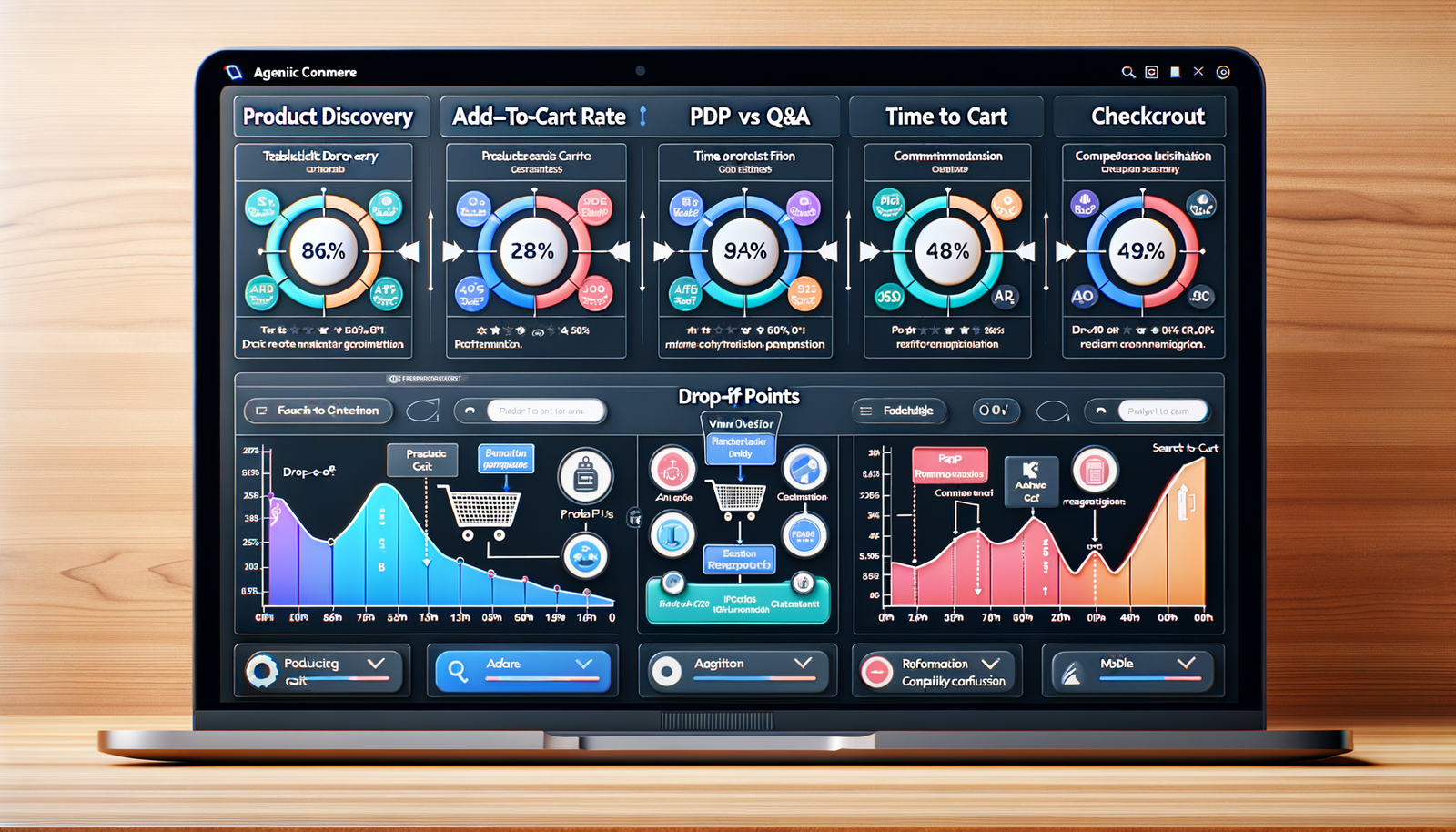
Traditional ecommerce forces shoppers to translate needs into rigid filters and keywords. It’s brittle. Baymard Institute’s research has long shown findability problems and friction as major contributors to abandonment; the industry’s average cart abandonment still hovers around ~69% across studies. We routinely see three failure modes in audits: (1) search that can’t parse constraints like “vegan boots under $120 size 8,” (2) PDPs that bury must-know trade-offs (fit, compatibility, maintenance), and (3) disconnected upsells that inflate basket value but tank confidence. Salesforce’s Connected Customer Report notes most customers expect businesses to understand their unique needs, not just show more SKUs. When shoppers must stitch context across tabs, their cognitive load—and exit rate—spikes.
What Is Agentic Commerce and How It Works
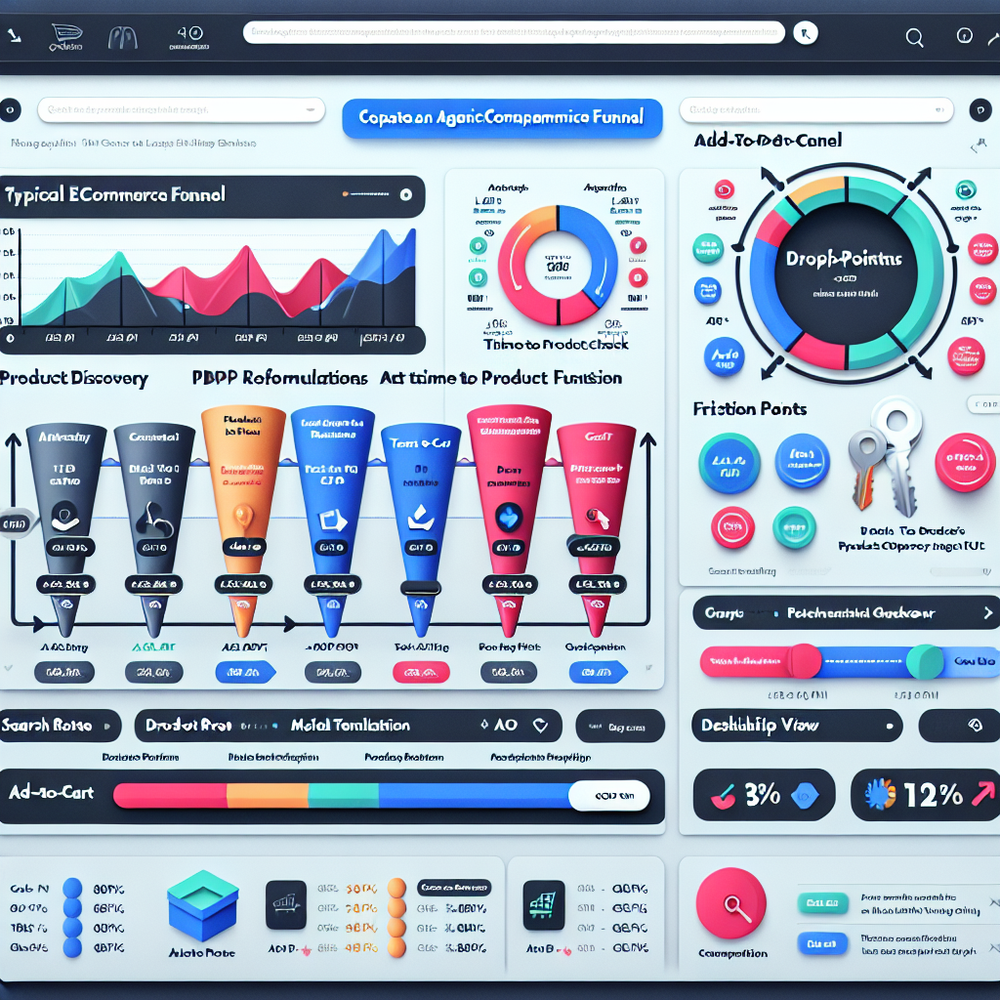
Agentic commerce is a shopping model where an AI agent pursues the shopper’s goal end-to-end: interpret intent, plan, call tools, explain trade-offs, and transact—while staying inside strict guardrails. Think “concierge plus merchandiser.” The core loop looks like this:
- Understand: parse objective (“commuter e-bike under $1,200, hills, rainproof”) and extract constraints, preferences, and risks.
- Plan: decide steps—compare motors, check hill grade suitability, bundle fenders + locks, verify warranty.
- Retrieve: query PIM/CMS, reviews, size charts, and compatibility data; ground responses.
- Propose: present 1–3 options with why-this-not-that; invite clarifying questions.
- Act: add items, apply promos, reserve inventory, pick shipping; escalate to human if confidence < threshold.
- Learn: log outcomes to improve prompts, retrieval, and merchandising rules.
In tests, this loop reduces “search reformulations” and increases first-choice acceptance. Google’s UX research on conversational patterns backs the value of follow-up clarification over rigid filtering, and McKinsey’s personalization findings suggest better mapping between need and offer drives conversion and loyalty.
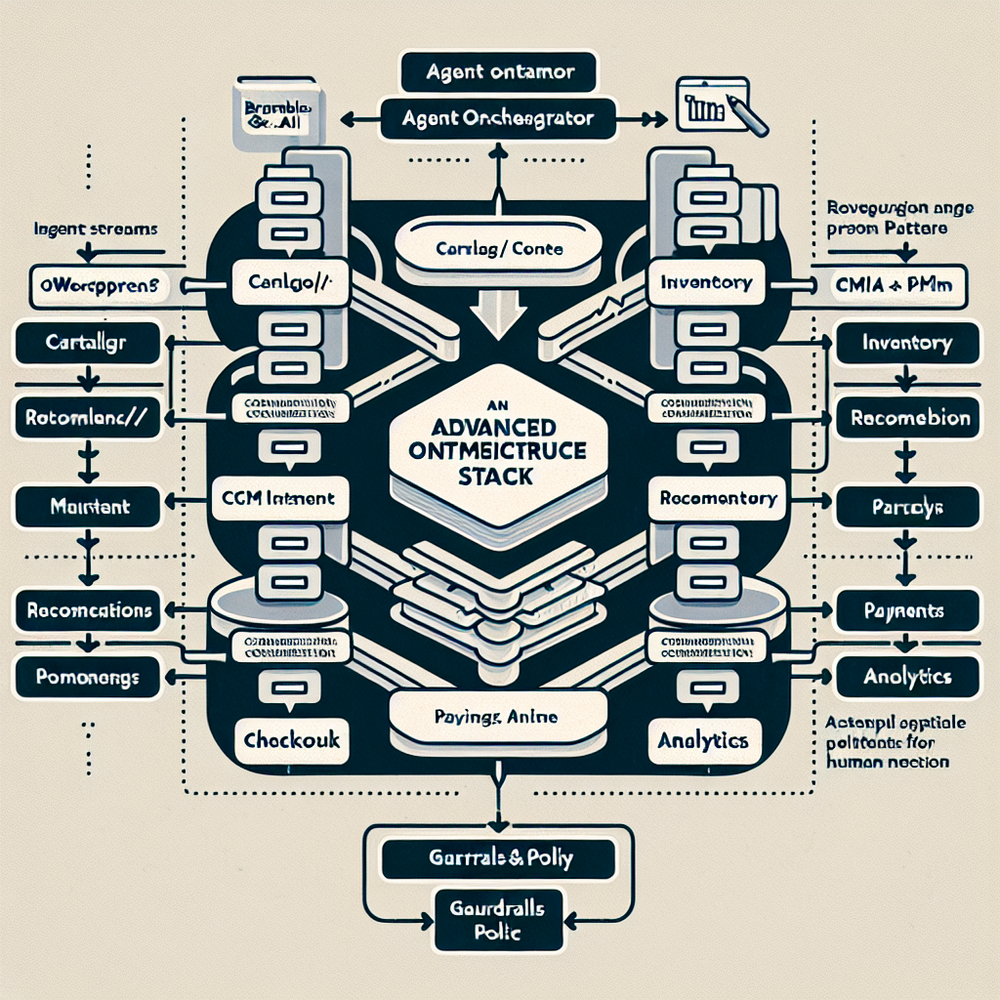
How Brambles.ai operationalizes this: the agent is tool-centric, not freewheeling. It only acts through registered tools—Catalog Search, Compatibility Check, Promotion Engine, Inventory, Pricing, and Checkout—each with schema-validated inputs/outputs and policy-enforced boundaries. Retrieval is grounded to your product data and content; explanations cite the attributes used. Guardrails block off-policy actions (e.g., promising out-of-stock items). On WordPress, the Brambles.ai plugin handles data sync and UI injection; the Commerce Module brokers cart/checkout actions and attribution. Net effect: the agent feels human-level helpful but runs like reliable middleware.
Implementation Guide (Brambles.ai + WordPress)
A practical rollout takes days, not months, if you’re disciplined about scope.
1) Install and connect: add the Brambles.ai plugin to WordPress, paste API keys, and select environments (staging/production).
2) Sync catalog + content: map product attributes (fit, compatibility, materials), merge FAQ/review snippets, and flag compliance notes. Good attributes beat clever prompts.
3) Define guardrails: set brand voice, restricted claims, escalation rules, PII handling, and checkout limits (e.g., max discount the agent can apply).
4) Conversation design: seed 20–30 common intents from search logs (e.g., “gift under $50,” “compatible with iPhone 14?”), write rationale styles, and add ask-clarify prompts.
5) Wire commerce tools: via the Commerce Module, connect cart/checkout, promotions, inventory holds, and shipping quotes; enable attribution tags for agent-led orders.
6) A/B test: expose 20–40% of traffic; measure time-to-product-fit, add-to-cart, conversion, AOV, and agent containment (% resolved without human).
7) Iterate weekly: review misfires, add test cases, refine retrieval, and tune latency budgets (<1.5s per tool call).
Anecdote: on a 100k-session apparel site, replacing size charts with agent-led fit Q&A raised add-to-cart by 21% and cut returns on denim by 9% month-over-month. Why it worked: we fed the agent inseam tolerance, fabric stretch, and customer height-weight pairs, then forced it to show trade-offs (“slimmer thigh, tighter calf”). The clarity beat generic size guides.

Measuring ROI & KPIs That Actually Matter
Don’t ship without instrumentation. Track:
- Time to product fit (TTPF): first moment the shopper accepts an option; target <90 seconds for commodity items, <3 minutes for complex.
- Add-to-cart rate and conversion lift: run holdout A/B or CUPED-adjusted experiments to isolate effect size.
- Agent-led AOV and bundle attach: % revenue from agent-proposed bundles; 10–20% is common when compatibility is clear.
- Containment rate: % conversations resolved without human; monitor quality via CSAT or 5-star micro-surveys.
- Latency budget: p95 response under 2.5s; anything slower kills exploration momentum (supported by general web performance studies from Google).
- Guardrail incidents: blocked claims, policy escalations—these should trend down as prompts and tools mature.
Anecdote: a B2B parts distributor’s reorder agent reduced checkout time from 5:40 to 2:10 and lifted AOV by 13% by surfacing volume breaks and compatible gaskets mid-thread.

First-Party Data & Trust
Agentic commerce shines when it earns permission to remember preferences. That means explicit consent, transparent use, and tight retention. Use just-in-time prompts—“Save shoe width and trail surface for next time?”—with clear value exchange. Store zero/first-party data (fit, allergies, device compatibility) separately from PII, with TTLs that match your privacy policy. Log every tool call for auditability. McKinsey has reported that 71% of consumers expect personalization and 76% get frustrated when it’s absent; Salesforce found that most customers value experience as much as product quality. Be specific: show how the agent used their data (“Recommended 32oz because you bike 40 minutes daily”). Offer a one-click forget-me option and exportable conversation history.
Common Pitfalls (and How to Avoid Them)
- Hallucinated claims: fix with retrieval-first prompts, tool-only assertions, and policy checks (“must cite attribute ID”).
- Slow responses: budget each tool call, cache frequent asks (size charts, compatibility matrices), and prefetch likely bundles.
- Over-eager discounts: cap promo authority and require a cost justification chain for margin-impacting offers.
- Unclear accountability: route edge cases to humans before trust is lost; annotate handoffs in the transcript.
- One-size chat: adapt tone by context—gift-giver vs expert—while keeping the same compliance skeleton.
- No measurement plan: define KPIs before rollout or you’ll misattribute lifts to seasonality.
Anecdote: a DTC skincare brand saw 18% of revenue in month two come from agent-curated routines—but only after we added a “patch-test reminder” policy and a step to verify routine conflicts. Safety details sell.
If you take one thing from this: design the agent like a trusted store associate backed by precise tools, not a chatbot with vibes. Start small—one high-intent category—and instrument the journey. When you’re ready, Brambles.ai slots into WordPress quickly and safely with production-grade guardrails and attribution.
Related posts
View all
How Context-Aware AI Recommendations Lift CTR
See how context-aware AI recommendations lift CTR by 25–60% with intent signals, page context, and history. Practical steps, KPIs, and implementation tips.
Why Furniture Shoppers Need View in Room Before They Buy
Furniture buyers abandon carts when scale and style feel risky. See why "View in Room" cuts returns, boosts conversion, and how to launch it with Brambles.ai
Why Good AI Shopping Agents Are Hard—and How Brambles Helps
Most AI shopping bots fail on data quality, UX, and trust. See why agents break in the wild and how Brambles.ai fills the gaps with measurable features.
Explore Brambles.ai
Learn more about our AI-powered agentic commerce platform, agentic shopping, and shopping assistance solutions.
Explore More Insights
Discover more articles on AI, automation, and business innovation
View All Articles