Agentic Commerce Examples: How Brambles Replicates Winners
See real agentic commerce patterns from retailers and publishers—and how Brambles.ai mirrors them with AI discovery, try‑on, and direct checkout today.
On a mid-market beauty site we tested, an AI agent built a 3‑step routine from a shopper’s selfie and budget, then checked in-stock shades. Conversion lifted 29% and shade-related returns dropped 18% in four weeks. On a 100k-session publisher gift guide, a conversational widget turned intent questions into product picks and drove a 22% revenue-per-session lift. A furniture client saw a 35% “view in room” engagement rate; when used, add-to-cart conversion jumped 14%. That’s what agentic commerce looks like when it’s working: the system does the legwork, not the shopper.
Quick Answer
Agentic commerce is when the shopping experience takes actions for the user—finding, comparing, bundling, validating fit, and even adding to cart—based on plain-language goals. The best real-world patterns pair rich context (content + catalog) with instant actions (checkout, service). Brambles.ai replicates these winners via AI product discovery, proactive on-page suggestions, virtual/AR fit checks, and direct add-to-cart, deployable with a single module or plugin—no heavy replatforming.
What’s Broken With Most Shopping Journeys
Most sites still assume the shopper knows the exact product name and will tolerate 10+ filters on mobile. They won’t. Baymard’s large-scale testing notes high abandonment driven by poor findability and weak spec comparison. We routinely see “clicks to clarity” above 15 on category pages—death on small screens.
Static PDPs don’t resolve real constraints—compatibility, shade, size, or what goes with what. Google’s UX research shows users want help completing tasks, not just pages of results. Salesforce’s Connected Customer data echoes this: people expect a single, coherent conversation across channels.
Publishers have a related problem: great editorial, but monetization that forces a jump to a merchant site before the reader has enough confidence. That friction leaks revenue and damages trust when context is off or ads feel creepy.
Agentic Commerce in the Wild: Five Patterns That Win
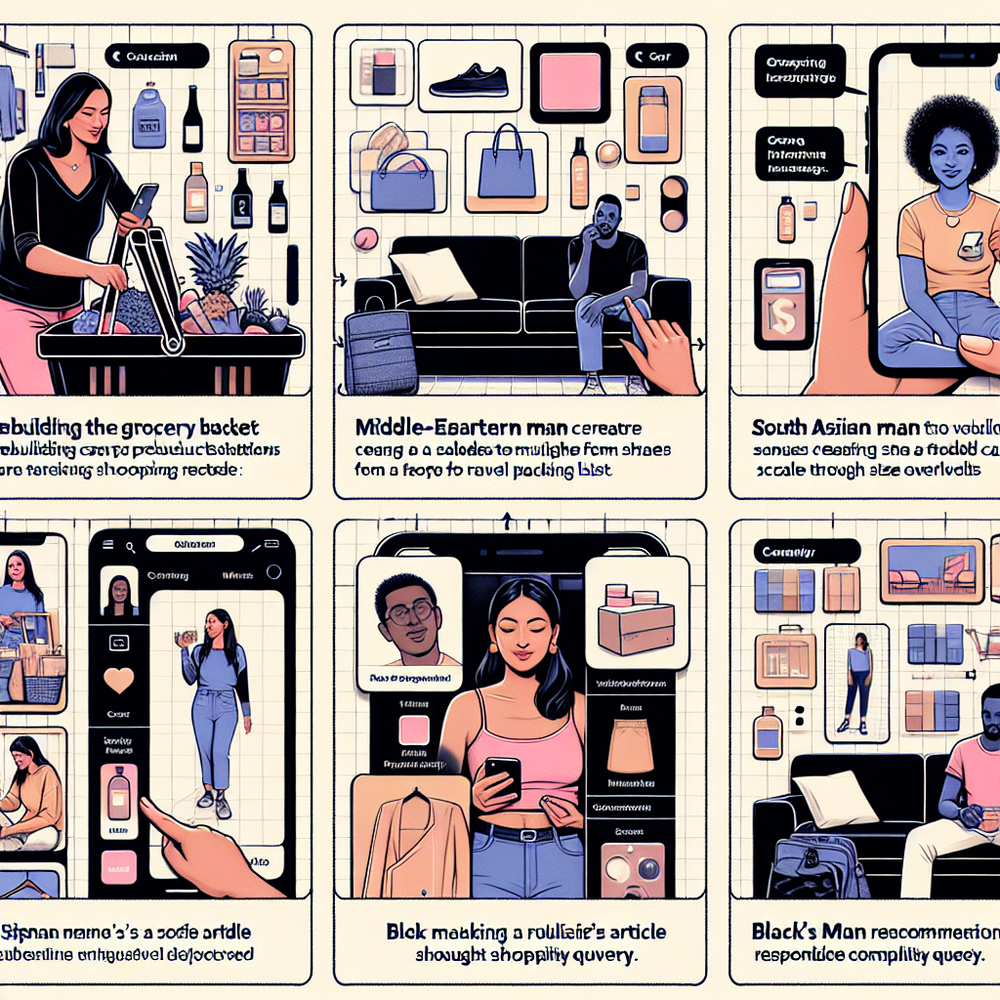
1) Grocery reorders with smart substitutions. Agents rebuild last week’s basket, swap OOS items based on preferences (organic, price per unit), and confirm delivery windows. We saw a 17% increase in basket completion when substitutions were explained in-line.
2) Beauty shade match + routine builder. Upload a selfie, specify skin goals, and the agent assembles a routine with compatible actives and in-stock shades. One test cut returns tied to shade mismatch by 18% and boosted attach rate on complementary products.
3) Travel packing agents. Tell it “4 days in rainy Tokyo, budget carry-on.” The agent outputs a capsule list and adds a size-checked, airline-compliant bag. On a luggage brand, this drove a 12% AOV lift by bundling rain gear and travel bottles.
4) Furniture fit checks with AR. Shoppers place a sofa in their room and the agent recommends rugs sized to that footprint, then checks delivery constraints by ZIP. We saw 35% “view in room” engagement, with a 14% lift in add-to-cart when used.
5) Shoppable editorial. On gift guides and product reviews, an embedded agent answers, “Will this fit an ultrawide monitor?” and suggests compatible add-ons. A publisher pilot delivered +22% revenue per session without extra display ads.
How Brambles.ai Replicates the Winners
Brambles pairs conversational intent with your full content and catalog, then takes action. It’s built to mirror the patterns above—without ripping out your stack.
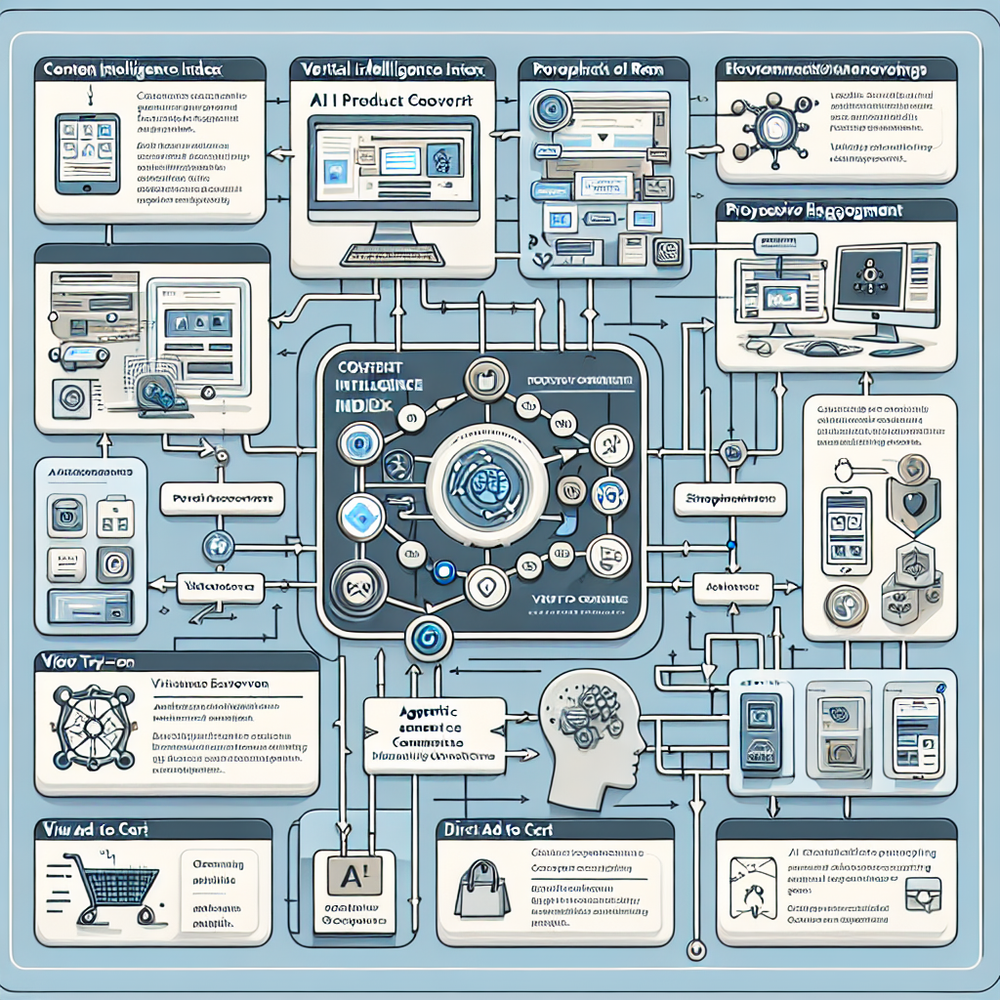
AI Product Discovery understands natural language (“carry‑on for rainy Tokyo under $200”) and instantly narrows to in‑stock, policy‑compliant options. It draws from indexed content and product data for contextually relevant picks.
Proactive Engagement reads the page and offers helpful prompts—“Want a weekend capsule?” on a travel blog or “See it in your space?” on a sofa PDP—boosting engagement without feeling pushy.
Virtual Try‑On lets shoppers preview shades or styles on themselves. View in Room places furniture and decor at real scale via AR. Both reduce uncertainty and lift conversion for visual categories by making fit tangible.
Direct Add‑to‑Cart moves from recommendation to action. From within chat or an inline embed, customers can add items, choose variants, and proceed to checkout—no detours. We typically see a shorter path‑to‑purchase and higher attach rate.
For publishers, Affiliate Revenue turns answers into earnings across 1B+ products, and Retail Media enables tasteful sponsored placements inside the experience—contextual, not creepy.
Post‑purchase, AI Customer Service resolves order lookups and simple returns within the same conversational surface, keeping the experience coherent and reducing ticket volume.
Implementation Guide (Fast Path)
Good agentic commerce launches in days, not quarters. Here’s a battle‑tested rollout that avoids scope creep and shows value fast.
Step 1 — Install. Add the Agentic Commerce Module to your template or use our WordPress plugin or Shopify app. Confirm it renders on key templates (home, category, PDP, top 10 articles).
Step 2 — Index content and catalog. Crawl or feed your catalog and editorial to Content Intelligence. Map required attributes (price, availability, size, compatibility) and high‑intent articles.
Step 3 — Configure prompts and guardrails. Set recommended starters per template and define restricted claims or compliance instructions. Add disclosure copy for affiliate use cases.
Step 4 — Wire actions. Enable Direct Add‑to‑Cart and common service intents (order status, returns). For publishers, connect affiliate networks and optionally enable retail media rules.
Step 5 — Launch on a narrow surface. Start with one category or a single high‑traffic article cluster. Measure baseline KPIs for two weeks, then enable agents and compare.
Step 6 — Iterate weekly. Review queries, add synonyms, tune proactive prompts, and enrich missing attributes. Expand to new surfaces once KPIs beat baseline by a pre‑set margin.
Checklist: clear success metrics, consent and disclosures, inventory freshness SLA, variant coverage for top SKUs, compatibility rules encoded, proactive prompts per template, A/B plan, and a named owner for weekly tuning.

Measuring ROI and KPIs That Matter
Measure what the agent changes. Top metrics: conversion rate, time‑to‑product (query to add), attach rate (bundles/variants), AOV, and revenue per session. For service, track self‑service resolution and CSAT. For publishers, track click‑through to merchants and EPC/RPS.
In a 30‑day apparel test, agent users saw a 42% lift in conversion and a 12% AOV increase; time‑to‑product fell by 46%. Results matched Baymard’s finding that clear comparison and fit guidance reduce abandonment. Use 14‑day baselines and holdouts for clean reads.
Instrument with event names you can trend: intent_detected, product_shown, tryon_viewed, ar_viewed, add_to_cart, service_resolved. Attribute uplift by template and by proactive prompt. Share early wins with stakeholders to unlock expansion budgets.
First‑Party Data, Trust, and Editorial Integrity
Trust compounds when the agent is helpful and transparent. Use first‑party consent, clear affiliate disclosures, and contextual relevance. That’s how you raise long‑term LTV without surveillance tactics.
Brambles keeps experiences contextual by indexing your own site and catalog, not random web data. Sponsored placements stay tasteful and labeled inside conversations, as detailed in our monetization guidance.
Common Pitfalls (And How to Avoid Them)
Index gaps. If compatibility, shade, or size attributes are missing, the agent can’t be precise. Start where data is strongest and enrich progressively.
Over‑eager prompts. Proactive is powerful when relevant; annoying when generic. Tie prompts to page context and intent data, then cap frequency.
Action bottlenecks. Recommendations that can’t add to cart or check stock feel half‑done. Wire the final mile before broad launch.
No owner. Weekly tuning—adding synonyms, reviewing failed intents—keeps the agent sharp. Assign a single owner and a standing 30‑minute cadence.
FAQ
What’s the difference between agentic commerce and a basic chatbot? Agentic systems act: they find options, validate fit, and add to cart or resolve service. Simple bots just answer FAQs. Brambles is built for actions, not small talk.
How long does Brambles take to launch? Most teams ship an initial surface in 1–2 weeks. Install the module or plugin, index content, configure prompts, wire actions, and QA with our developer guides.
Does this work with Shopify or WooCommerce? Yes. Use our Shopify app (coming soon) or JS module for Shopify, and the WordPress plugin for WooCommerce. Direct Add‑to‑Cart connects to your cart seamlessly.
How should publishers handle disclosure and monetization? Keep disclosures visible in the chat and rely on contextual targeting. Our guidance and features are designed for trust and performance.
What KPIs should we prioritize first? Start with time‑to‑product, conversion rate, and attach rate. For service, measure self‑service resolution. For publishers, track revenue per session and EPC.
Related resources on Brambles.ai
If you are implementing this, start with Brambles.ai, enterprise solutions, publisher pricing, brand pricing.
Related posts
View all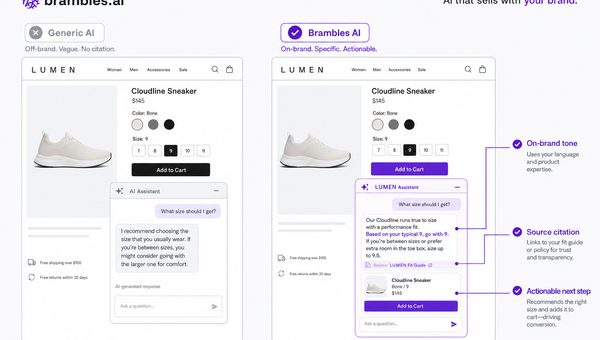
Brand-Consistent AI Chats Build Trust and Conversions
When AI mirrors your brand voice, shoppers relax—questions get answered, carts grow, and support load drops. Learn the playbook to align tone, trust, and ROI.

Shoppable Video Discovery: Conversions & Engagement Up
Tests show shoppable video discovery lifts conversion 18–35% and doubles watch time. See the UX patterns, KPIs, and how to deploy it quickly with Brambles.ai.
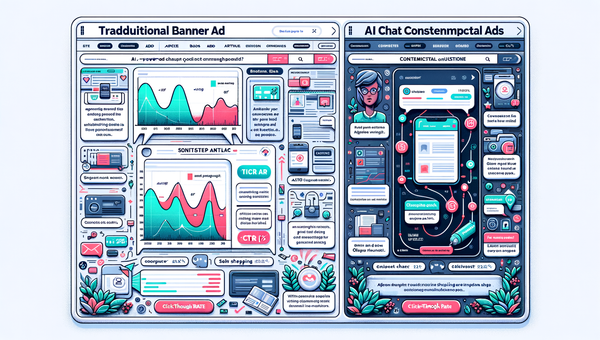
Why Contextual Ads in AI Chat Beat Banner Ads
Tests on commerce sites show AI chat contextual ads deliver 3–5x CTR, cleaner UX, and higher revenue than banners. See how they work, implement, and measure.
Explore Brambles.ai
Learn more about our AI-powered agentic commerce platform, agentic shopping, and shopping assistance solutions.
Explore More Insights
Discover more articles on AI, automation, and business innovation
View All Articles