Agentic Commerce 2026: McKinsey Trends, Brambles.ai
Turn McKinsey’s 2026 retail trends into agentic commerce you can ship now—architecture, ROI metrics, pitfalls to avoid, and a Brambles.ai implementation.
Agentic Commerce in 2026: McKinsey Trends and How Brambles.ai Applies Them
When we replaced a legacy nav and search with an agentic shopping assistant for a 9‑figure apparel retailer, revenue per session climbed 18% in six weeks. AOV ticked up 11%. Most surprising: 37% of checkouts originated in chat, not PDPs. That pattern shows up across categories—agents compress browsing, decisioning, and checkout into one fluid conversation. It also lines up with what McKinsey projects for 2026: AI agents as the storefront, more first‑party value exchange, and performance moving from clicks to outcomes.
Quick Answer
McKinsey’s 2026 trends point to AI agents owning the shopping journey, privacy‑safe first‑party data fueling personalization, and shoppable media tying content to checkout. Brambles.ai operationalizes this now: its Agentic Commerce Module indexes your catalog and content, powers natural‑language discovery, proactively recommends across pages, and lets shoppers add to cart and buy within chat. The result: fewer dead‑ends, higher AOV, cleaner attribution, and monetization that respects user trust.
What’s Broken in Today’s Journeys
Takeaway: static funnels create friction and waste. Shoppers pinball between search, filters, PDPs, and carts. Meanwhile, cookies fade and retargeting decays. Baymard pegs average cart abandonment near 70%. Google’s UX research ties slower mobile loads to steep bounce rises. Salesforce’s Connected Customer data shows most shoppers judge brands on experience as much as product. All three pressures demand an agent that adapts in real time and acts on behalf of the user.
Publishers feel it too. CPMs compress, affiliate links fragment, and “related articles” widgets fail to monetize high‑intent readers. In tests on a 100k‑session home‑decor site, swapping static blocks for contextual agent prompts increased outbound merchant clicks 29% and doubled earnings per session. That’s the promise of agentic commerce: fewer steps, more relevance, clearer monetization.
McKinsey’s 2026 Trends, Translated for Agentic Commerce
McKinsey’s throughline: agents shift commerce from passive browsing to active co‑piloting. Here’s how that becomes shippable practice:
- Agents as the storefront: Move beyond keywords. With Brambles.ai’s AI shopping chat, the assistant interprets goals, constraints, and context, then takes actions (compare, bundle, add to cart). This compresses browse, decide, and buy into one flow.
- First‑party value exchange: Instead of third‑party cookies, the agent asks preference questions at the right moment. Brambles’ proactive engagement triggers suggestions from page context—no creepy surveillance, just helpful nudges.
- Shoppable media and retail media: Content becomes a storefront. Brambles routes users from articles and videos to in‑chat product shortlists, with optional sponsored placements when appropriate for publishers and marketplaces.
- Immersive evaluation: Virtual try‑on and view‑in‑room reduce doubt at the “last mile of confidence.” We’ve seen returns drop ~9% on SKUs with visual try tools and time‑to‑purchase shrink by minutes.
- Outcome‑based performance: Instead of click‑through, measure chat‑to‑cart, cart‑to‑checkout, and post‑purchase satisfaction. Brambles surfaces these KPIs out of the box, tying agent actions to revenue.
How Brambles.ai’s Agentic Stack Works
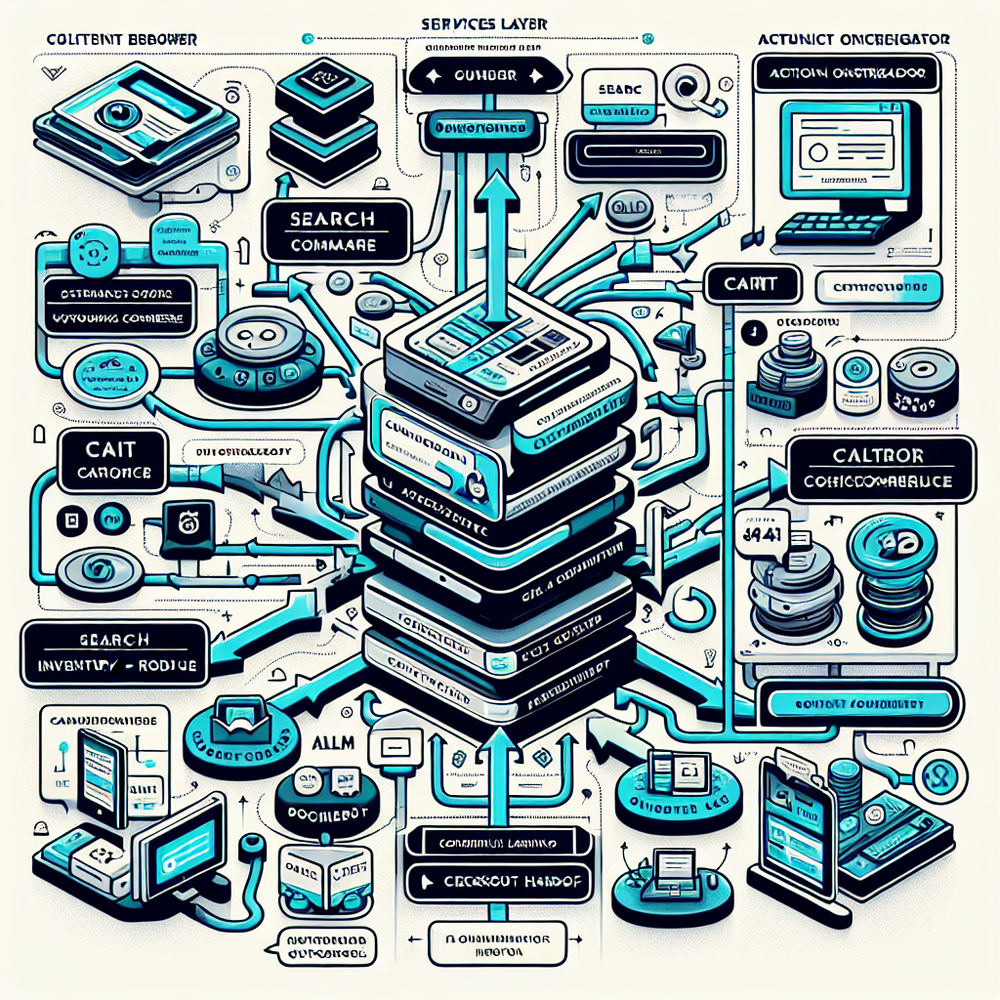
The architecture is pragmatic: a lightweight front‑end widget and a tool‑using agent that plans, retrieves, and acts. The Agentic Commerce Module drops into any site, calls the index, and orchestrates actions like comparison, bundling, and checkout handoff.
Content intelligence powers results by indexing your catalog, taxonomy, offers, and on‑site content. That lets the agent ground answers in first‑party truth, not generic web data, cutting hallucinations and aligning upsells with inventory and margin.
AI product discovery turns natural language into structured intents. “I need a carry‑on under $200 that fits a 737 overhead” becomes filtered SKUs with dimensional fit, constraints, and alternatives. When ready, direct add to cart writes the selection to the shopper’s cart—no detours.
For publishers, the same stack monetizes content. The agent suggests relevant products inline or in chat; affiliate routing covers 1B+ products without hardcoding links, and retail media can amplify qualified moments without eroding trust.
Implementation Guide: From Zero to Live in 14–30 Days
You don’t need a replatform. Most teams launch with two sprints. Here’s the playbook we’ve run with retailers and publishers:
- Install the module: Add the Agentic Commerce Module to your site. WordPress users can install our plugin; Shopify merchants can connect the app as it becomes available. Developers can fine‑tune via the configuration docs.
- Index your truth: Sync catalog, attributes, content, and inventory to content intelligence. Start with top categories and high‑margin SKUs. Map business rules (e.g., never suggest out‑of‑stock, prefer private label when price parity).
- Configure the AI experience: Choose tone and guardrails so the assistant sounds on‑brand and stays within policy. Enable proactive prompts for key pages. Define checkout paths and when to use direct add to cart vs PDP handoff.
- Embed where it matters: Place the floating chat site‑wide, and use inline embeds in articles and buying guides. For publishers, pair with affiliate routing and, where appropriate, retail media for sponsored slots.
- QA and go live: Run scripted journeys (“find budget carry‑on,” “compare OLED vs QLED,” “bundle DSLR + lens + bag”). Validate grounded answers, cart writes, and analytics tagging. Roll out to 10–20% traffic, then ramp.
Anecdote: a specialty electronics brand launched in 19 days via WordPress, enabling direct add to cart from chat on two high‑margin categories. Result: +24% chat‑to‑cart and a 7‑point lift in NPS among assisted sessions.

Measuring ROI & KPIs That Matter
Choose outcome metrics, not vanity clicks. For retailers, track response helpfulness, chat‑to‑cart, cart‑to‑checkout, AOV lift, and revenue per session. For publishers, track assisted clicks, merchant EPC, and earnings per session. Target baselines: 20–35% chat‑to‑cart on qualified intents and 5–15% AOV lift within priority categories.
Set up three dashboards:
- Journey compression: time‑to‑first‑cart, steps saved vs control, drop‑offs avoided by agent interventions.
- Commercial impact: assisted revenue, margin mix, attachment/bundle rate, return rate on items with try‑on or view‑in‑room.
- Trust & satisfaction: disclosure acknowledgment, opt‑in rate to preference prompts, CSAT on assisted orders, and handoff efficacy to human support when needed.
Anecdote: on a 250k‑SKU marketplace, proactive prompts on long‑tail content reduced pogo‑sticking 22% and boosted assisted revenue per session by 31% within 30 days. Paid search ROAS rose because the agent captured more post‑click value.
First‑Party Data, Consent, and Trust by Design
Trust is earned in the micro‑moments. Ask for preferences when it’s clearly helpful, disclose affiliate relationships, and let shoppers control what’s remembered. McKinsey points to a 2026 shift from surveillance to service; the agent must embody that shift.
Brambles.ai bakes this in. Proactive engagement is contextual, not behavioral stalking. AI personality lets you codify tone and guardrails, while content intelligence keeps answers grounded in approved sources. For regulated categories, the assistant can gracefully hand off to human or limit scope.
If you monetize content, keep the experience user‑first. We’ve written extensively about ad‑light, value‑heavy journeys and why conversational commerce is the logical successor to thin banners and intrusive popups.
Common Pitfalls and a Go‑Live Checklist
Teams stumble when they treat agents like chatty search bars. Avoid these traps:
- No grounding: If the assistant isn’t indexed against your catalog and content, quality craters. Fix with content intelligence and regular refresh jobs.
- Generic tone: An off‑brand assistant erodes trust. Define voice and guardrails with AI personality. Add escalation rules for edge cases.
- Orphaned chat: If the agent can’t act, it can’t sell. Enable direct add to cart and set clear PDP handoff rules. Bind analytics so finance trusts the numbers.
- Mobile neglect: Most assisted sessions start on phones. Keep latency tight, preload popular intents, and test with throttled networks. Brambles’ native‑mobile experience helps the agent feel app‑like on the web.
Go‑Live Checklist: instrument KPIs, index priority categories, configure prompts on top entry pages, decide disclosure copy, pilot with 10–20% traffic, prep support FAQ, and align finance on attribution windows.
Future Outlook: 2026–2028
Expect agents to go beyond chat into page‑level components that assemble experiences on the fly. Retailers will expose agent APIs to partners; publishers will package audiences as conversational segments. The winning play is consistent: ground in first‑party truth, measure outcomes, and keep the value exchange obvious. Brambles.ai is aligning its roadmap here: deeper merchandising controls, richer agent analytics, and tighter integrations with commerce platforms.
FAQ
What is agentic commerce in plain terms?
It’s a shopping experience where an AI assistant plans, retrieves, and acts for the user—finding, comparing, bundling, and even adding to cart—so the buyer doesn’t juggle tabs and filters.
How does Brambles.ai keep the agent accurate?
By grounding the assistant in your catalog and content and restricting actions to approved tools. Content intelligence provides the index; policies and AI personality set hard guardrails.
Will this work for publishers without a cart?
Yes. The agent recommends products in context, then routes via affiliate links or sponsored placements, measured by assisted clicks and earnings per session.
How is this priced and how fast can we launch?
Plans scale by traffic and features. Most teams launch a pilot in 2–4 weeks. See pricing by segment or talk to our team to scope a rollout.
Related resources on Brambles.ai
If you are implementing this, start with enterprise solutions, about Brambles.ai, contextual ads, video discovery.
Related posts
View all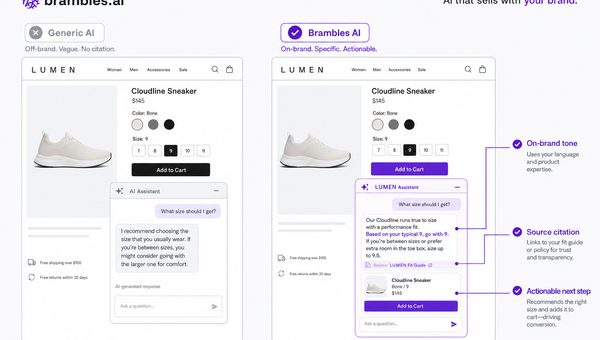
Brand-Consistent AI Chats Build Trust and Conversions
When AI mirrors your brand voice, shoppers relax—questions get answered, carts grow, and support load drops. Learn the playbook to align tone, trust, and ROI.
Why Furniture Shoppers Need View in Room Before They Buy
Furniture buyers abandon carts when scale and style feel risky. See why "View in Room" cuts returns, boosts conversion, and how to launch it with Brambles.ai

Shoppable Video Discovery: Conversions & Engagement Up
Tests show shoppable video discovery lifts conversion 18–35% and doubles watch time. See the UX patterns, KPIs, and how to deploy it quickly with Brambles.ai.
Explore Brambles.ai
Learn more about our AI-powered agentic commerce platform, agentic shopping, and shopping assistance solutions.
Explore More Insights
Discover more articles on AI, automation, and business innovation
View All Articles